Category Archives: Norman Jewison

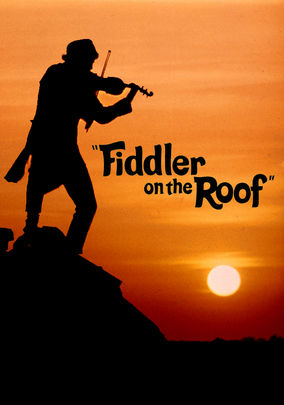
Fiddler on the Roof-1971

Fiddler on the Roof-1971

Director Norman Jewison

Starring Topol, Norma Crane, Rosalind Harris

Top 250 Films #29

Scott’s Review #123
499456

Reviewed July 21, 2014

Grade: A

Fiddler on the Roof is a fantastic musical from 1971 based on the popular stage version. It tells the story of a Russian Jewish family living in tumultuous times, both before and during the Russian Revolution.

The film has everything and is very well made, truly doing justice to the stage version. It contains dancing, drinking, festive parties, love, and sing-alongs. It also includes politics, hardships, and tragedy.

Led by the patriarch of the family, Teyve, played fantastically by Topol, he explains (often narrating directly to the audience, which is a goldmine in style) life in his Russian village with five daughters and no sons and an overbearing wife. They are a poor family and struggle to make ends meet.

They navigate life with the help of song and dance, dealing with situations such as romance, primarily focusing on the three oldest girls, and the political upheaval surrounding their country.

It is tough for a film version of a famous musical to be top-notch and even compare to the stage version, but the film is excellent- “Tradition”, “Matchmaker”, and “If I Were a Rich Man” immediately stick in the viewer’s head.

The film has a rich, earthy feel, with a predominance of brown and grey colors. Russian history is explored, lending it complexity and an educational quality, rather than merely providing a simple, feel-good experience. To put it simply, the story is layered and not one-note.

Politics, progressive thinking versus conservatism, and the generation gap are explored and the characters learn and adapt to a changing world, especially the parents.

One interesting aspect is the progressive onset of the Russian Revolution as it gradually drew closer.

Fiddler on the Roof is quite lengthy (179 minutes), but does not seem that long. This film (and play) is a marvel.

Oscar Nominations: 3 wins-Best Picture, Best Director-Norman Jewison, Best Actor-Chaim Topol, Best Supporting Actor-Leonard Frey, Best Scoring: Adaptation and Original Song Score (won), Best Sound (won), Best Art Direction, Best Cinematography (won)
The Cincinnati Kid-1965

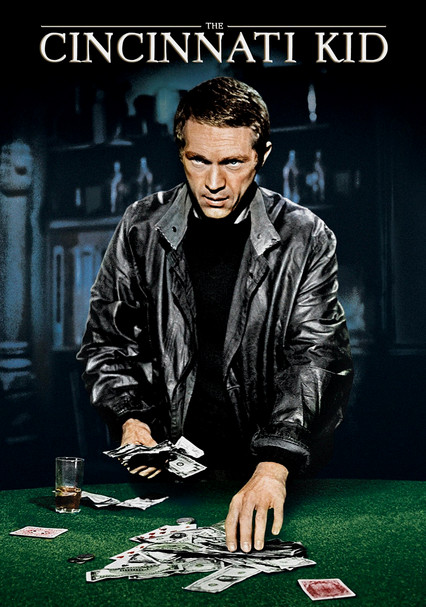
The Cincinnati Kid-1965

Director Norman Jewison

Starring Steve McQueen, Karl Malden

Scott’s Review #1,138

Reviewed April 29, 2021

Grade: B

I suppose anyone really into poker playing or similar casino games might be partial to The Cincinnati Kid (1965), especially if they are a die-hard Steve McQueen fan.

But for those with no interest in the ‘sport’ and who think that McQueen is a royal douche who received a modicum of film success, the film is a marginally decent effort.

For those who don’t know, Steve McQueen, the actor and not the British filmmaker, was nicknamed the “King of Cool” and played the anti-hero in most of his films.

His heyday was from the mid-1960s through the early 1970s, and he garnered success by repeatedly playing the same role. He was notorious for insisting his hair was perfect, being selfish, and being a royal prick.

He died of cancer in 1980.

An earlier film of his, The Cincinnati Kid (1965), is set in Depression-era New Orleans, though the film’s severe 1960s look makes it almost impossible to determine that it’s not the 1960s.

Eric Stoner (Steve McQueen) is a cocky poker player nicknamed the Cincinnati Kid who challenges longtime champ Lancey “The Man” Howard (Edward G. Robinson) to a showdown at the table, where a war of persistence and luck ensues.

To add energy, Rip Torn is cast as Slade, a villainous man who seeks revenge against Howard and tries to help Stoner best him.

In addition to the inevitable final poker game, Stoner is immersed in a romance with good girl Christian Rudd (Tuesday Weld) as he tries unsuccessfully to fend off the seductive advances of his best friend Shooter’s (Karl Malden) girlfriend (Ann-Margret), who is also a close friend of Christian.

Romance and double-dealing are in the air in this film.

The main draw is McQueen because he is charismatic and carries the by-the-numbers film. The story point appears to be a battle between youth (Stoner) and seasoned wisdom (Howard), but other than the fantastic finale involving (what else!) a tense game of cards, I didn’t find the primary story experience all too interesting.

There are other impressive aspects, however, such as the trimmings.

Realistic is how the actors handle the playing cards, speak the game terminology, and smoke a fat cigar, adding some good authenticity to the film. The New Orleans flavor provides some culture, and many black actors appear in minor roles that at least give some representation of the actual southern city.

Despite the talented cast, only McQueen shines.

Weld and Ann-Margret are incredibly one-note characters and opposites (good girl and bad girl) with little development. Malden is the moral compass of the film but otherwise has little importance to do.

Interestingly, Norman Jewison replaced original director Sam Peckinpah shortly after filming began. He described The Cincinnati Kid as his “ugly duckling” film that enabled him to transition from the light films he previously made and take on more serious films and subjects.

Cinema lovers know he directed the 1971s Fiddler on the Roof, a completely different film.

I wonder if Jewison’s heart was in this film or if he did the best he could with a subject that was not close to his heart.

Knowing Peckinpah’s brilliant work, I wonder if he would have made The Cincinnati Kid darker and more violent.

One scene that turns my stomach is a gruesome and violent cock-fighting scene. Any animal cruelty makes my blood boil, so I turned my head and refused to watch the scene or the group of merrymakers sitting around cheering the bloodbath.

The Cincinnati Kid (1965) is an enjoyable watch for poker lovers or fans of Steve McQueen. It is also not bad for casual fans.

Though I have not seen it, I understand that The Hustler (1961) is a similar-themed and better-made film.