Category Archives: Steven Berkoff

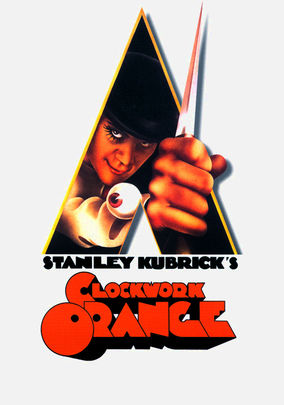
A Clockwork Orange-1971

A Clockwork Orange-1971

Director Stanley Kubrick

Starring Malcolm McDowell, Patrick Magee

Top 250 Films #11

Top 10 Most Disturbing Films #7

Scott’s Review #295
383466

Reviewed December 11, 2015

Grade: A

A Clockwork Orange (1971) is a groundbreaking Stanley Kubrick film, and my personal favorite in his collection, with his movies appearing on my Top 100 Favorite Films list.

Adapted from the 1962 Anthony Burgess novel, once thought unfilmable, it becomes a psychedelic, creative, and fascinating experience from start to finish.

Bizarre and thought-provoking, Kubrick tells the story of a London sociopath living in futuristic London, and the strange behavioral modifications performed on him after he is apprehended by the police, in an attempt to “reform” him and transition him into a valuable member of society.

The film explores profound social and psychological themes, posing thought-provoking questions about these weighty topics.

Interspersed with classical music and featuring excellent, colorful sets, A Clockwork Orange is a masterpiece in bizarre cinematic artistry.

Alex DeLarge loves classical music (specifically Beethoven), violence, and hanging out with friends. He constantly skips school, beats people up, and parties with his friends. His pet snake is his best friend, and his parents seem afraid of him.

Finally arrested after murdering an odd lady with dozens of cats, Alex is sent away to prison, where he volunteers for an experimental “Ludovico” technique, which Alex assumes is a “get out of jail free” card.

What follows is a freakish, uncomfortable experience for Alex.

The film contains startling and disturbing scenes throughout- when Alex and his team of “droogs” become inebriated from a concoction of milk laced with drugs and embark on an evening of self-proclaimed ultra-violence, they drive to the country where they break into wealthy author F. Alexander’s house and beat him, crippling him for life.

They rape his wife while forcing him to watch, all the while Alex happily sings “Singin’ in the Rain,” timing the beats of the song to acts of violence.

The brutality and creativity of this scene are mesmerizing and certainly unforgettable.

We, the audience, might despise a character like Alex; however, we feel sympathy for him as his “reformation” begins. A disturbing scene, which is forever embedded in my mind, involves the attachment of a contraption forcing Alex’s eyelids wide open.

At the same time, he watches violent scenes and is administered a drug to make him sick, thereby associating the violence with illness.

He becomes psychologically screwed up.

Alex (thanks to an excellent portrayal by Malcolm McDowell) is charismatic and humorous and, in some warped way, quite likable to the audience, despite his devious ways.

A Clockwork Orange continues to disturb me after multiple viewings – who can forget the sinister grin that Alex wears and the creepy eyelash with mascara that he sports?

The film sends an interesting message about human nature as Alex turns from predator to the hunted. We ask: “Are human beings naturally prone to violence?”

The direction of the film is breathtaking – the weird colors, the (as traditional with Stanley Kubrick) long-shot camera angles, and the intense musical crescendos.

The genre of classical music is a fantastic and ominous choice, almost adding a level of sophistication to Alex and the violence.

The weird supporting characters (Alex’s parents, the probation officer, and his parents’ roommate) and the suddenly fast-forwarded sex scenes were unheard of for their time.

Immensely creative and unconventional filmmaking, with a moral message and thought-provoking questions about humanity, A Clockwork Orange (1971) is a groundbreaking, fantastic, trippy experience.

A masterpiece from top to bottom.

Oscar Nominations: Best Picture, Best Director-Stanley Kubrick, Best Screenplay Based on Material from Another Medium, Best Film Editing
Barry Lyndon-1975

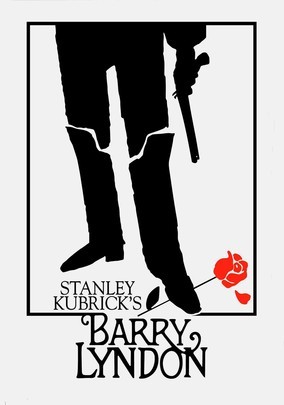
Barry Lyndon-1975

Director Stanley Kubrick

Starring Ryan O’Neal, Marisa Berenson, Patrick Magee

Top 250 Films #44

Scott’s Review #211

284790

Reviewed January 4, 2015

Grade: A

Barry Lyndon (1975) is a sprawling, beautiful film by famed director Stanley Kubrick. The film is set in the 18th century.

Extremely slow-paced yet mesmerizing, every shot looks like a portrait, and the inventive use of real candlelight in certain scenes makes this film a spectacle in its subdued beauty, to say nothing of the gorgeous sets and costumes.

The film is nothing short of a marvel to view.

The story centers around Ryan O’Neal, who plays an Irishman named Redmond Barry.

Redmond is a poor Irishman, but he is an opportunist. The film follows his life as he travels throughout Ireland, England, and Germany, becoming involved in duels, being robbed, impersonating an officer, being reduced to a servant, gambling, marrying a rich widow, and feuding with his stepson.

When he woos and marries the wealthy Countess of Lyndon, he settles in England to enjoy a life of wealth and sophistication. He changes his name to Barry Lyndon.

His ten-year-old stepson, Lord Bullingdon, becomes a lifelong enemy as their hatred escalates, and he is the focal point of Act II of the film.

The supporting cast is filled with unique characters, and in particular, the three sinister characters (Lord Bullingdon, Mother Barry, and Reverend Runt) are delicious to watch, especially when they square off against one another, as with Runt and Mother Barry.

Barry’s two love interests (Lady Lyndon and a German war widow) are entertaining to watch, and Lady Lyndon’s costumes are exquisite. Furthermore, Chevalier de Balibar, a wealthy gambler who takes Barry under his wing, is a delight.

As with many masterpieces, the film would not be as wonderful without the great casting.

My three favorite scenes include the vicious confrontation between Mother Barry and Reverend Runt- an initially polite conversation between two selfish characters gradually spins into viciousness, the duel between Barry Lyndon and Lord Bullingdon- bitter rivals square off in an awkward yet dramatic duel, and when Barry passionately kisses his dying friend- an unexpected homoerotic scene.

Barry Lyndon delves into the issue of class and class distinctions, clearly defining the haves and the have-nots, and the struggles of the poor to obtain wealth by any means and of the wealthy to retain their good fortunes.

With a running time of over three hours, it may initially turn viewers off, but as time goes on, the film will grip the viewer and not let go.

Having now seen Barry Lyndon (1975) four times, I enjoy the film more each time as I become more absorbed in and immersed in the masterpiece.

It’s like a fine wine- it gets better with each taste.

Oscar Nominations: 4 wins-Best Picture, Best Director-Stanley Kubrick, Best Screenplay Adapted from Other Material, Best Scoring: Original Song Score and Adaptation or Scoring: Adaptation (won), Best Costume Design (won), Best Art Direction (won), Best Cinematography (won)

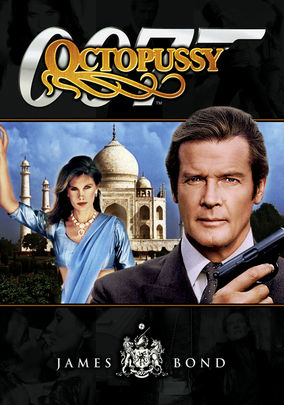
Octopussy-1983

Octopussy-1983

Director John Glen

Starring Roger Moore, Maud Adams

Scott’s Review #716

Reviewed January 17, 2018

Grade: A-

Hardly regarded as one of the most stellar of entries in the James Bond franchise, 1983’s Octopussy is nonetheless a guilty pleasure of mine.

This is undoubtedly due to the film being the first installment that I was allowed to see in the movie theater and is filled with exciting memories.

As the film stands in current days it is perfectly fine, containing all of the enjoyable elements necessary for a good Bond film- interesting villains, solid action, and gorgeous women. Perhaps at times suffering from a bit of silliness, Octopussy is still quite the fantastic watch.

Roger Moore, admittedly looking slightly aged and sagging, returns to the fold as 007, the shaken, but not stirred action hero known as James Bond. However, he is, true to form, as witty and suave as he always is with witty one-liners and a mischievous smirk.

Moore ritualistically infuses the character with a measure of comedy- a wink of the eye or a raised eyebrow adds humor to the character so than any other actor who has portrayed Bond.

In this installment, Faberge eggs, clowns, and gorilla suits are featured. Attempting to escape from East Berlin to West Berlin, 009- dressed as a circus clown, is murdered on the estate of a British Ambassador while attempting to deliver a fake Faberge egg.

Assuming the Soviets are involved, MI6 instructs Bond to investigate the matter, and a complex smuggling ring is uncovered- featuring a gorgeous female smuggler named Octopussy (Maud Adams), along with sinister Afghan exiled prince Kamal Kahn (Louis Jourdan), and his bodyguard, Gobinda.

Watching the film in 2018, and even though it was made in 1983, Octopussy does not suffer from the dreaded “1980s look” that so many other films do and seems surprisingly clean and fresh.

The colors are vibrant- especially in the prevalent circus and clown scenes, and the best two scenes- the airplane and train scenes- still bristle and crackle with good action.

As the climax to Octopussy culminates, the inevitable heroine and main Bond girl- Adams’s “Octopussy”, has been bound and gagged and taken hostage by the baddies in a fleeing airplane, Bond grabs hold of the fuselage, and begins a harried flight over the mountains of remote India, clinging for dear life.

The scene climaxes with an exciting fight scene atop the rooftop of the speeding plane as Bond and Gobinda fight to the death as Kamal unsuccessfully attempts to twist and turn the plane and rid themselves of pesky Bond.

The scene is still compelling and loses none of its appeal over the years, never appearing dated.

The train sequence is still relevant but does suffer from a small dose of silliness. The action is plentiful as Bond races against time to prevent a Russian missile from detonating and killing thousands of American citizens, and worthy of note is the timely Cold War subject matter of the Russians versus the Americans- plentiful in American cinema during this time.

As Bond dons a phony-looking gorilla outfit- embarrassing even for the comical Roger Moore- he can successfully take off the costume and sneak out of a train car, all before the three seconds that it takes for Gobinda to turn around and slice the head off of the gorilla thinking it is Bond.

Suspension of disbelief is required.

Impressive is the female empowerment slant that is evident. From the strong businesswoman character that Adams portrays- she is decisive, intelligent, and savvy, she is neither cowering nor impressionable and cannot be bullied or pushed around.

Albeit her name, “Octopussy”, does teeter on male chauvinism. Be that as it may, her gang of feminist followers, all wielding assault rifles, are quite inspiring and, at this point, unusual for a Bond film- typically masculine leaning.

Octopussy (1983) is an overlooked, under-appreciated, too easily dismissed slice of goodness served up with a bit of comedy, plenty of action, and good solid villains- everything that makes a Bond film a Bond film.

The film is worthy of a viewing.

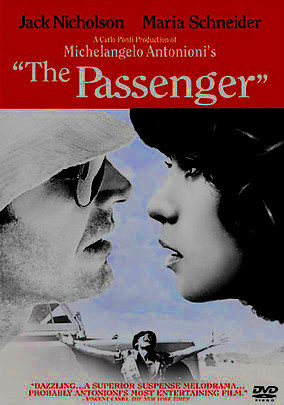
The Passenger-1975

The Passenger-1975

Director Michelangelo Antonioni

Starring Jack Nicholson, Maria Schneider

Scott’s Review #259

70042799

Reviewed July 19, 2015

Grade: A

A true art film in every sense of the word, The Passenger (1975) is a thinking man’s film, not for those content to munch on popcorn and escape the day’s stressors.

It’s custom-made for a film fan willing to ponder its meaning, revel in its slow pace, and appreciate it as an art form.

The Passenger is tough to “get” for most of its over-two-hour running time, but its complexities are also its most beautiful qualities.

To say that the film will leave the viewer with questions is quite an understatement, but it is pleasing to analyze and draw conclusions about its meaning.

Michelangelo Antonioni directed this film and is well known for Blowup (1966) and Zabriskie Point (1970), neither of which I have seen as of this writing.

Jack Nicholson stars as a journalist named David Locke, who is on location in Africa (specifically the Sahara Desert in Chad).

David’s assignment is to produce a documentary film. While there, he mysteriously assumes the identity of a businessman named Robertson, who he finds dead in his hotel room.

This task is easy because David and Robertson look very much alike. As events unfold, it becomes clear that Robertson is involved in arms dealing and smuggling related to the ongoing civil unrest in the country.

Flashbacks reveal David’s former life, including his friendship with the businessman and his relationship with his wife, Rachel, and these scenes are interwoven with the current action until the narrative becomes more linear.

The film is complex, to say the least. The initial scene, in which David spontaneously decides to switch identities, is excellent. We wonder what David’s motivations are, and what is the appeal of his taking over another man’s life? Who is the man? Why is David so unhappy in his own life?

The film succeeds immeasurably because the plot is not simply told to the audience, as in so many other mainstream films. Events seem genuine and not forced for plot purposes.

In the current time, wherever in London, Rachel sadly mourns the assumed “death” of her husband David, though we learn that Rachel has secrets of her own she has been hiding and suffers from tremendous guilt.

To further complicate matters for everyone, she is attempting to find the businessman, since she has learned that he was the last person to see her husband alive. Also mixed into the story is a mysterious young woman whom David meets when the story moves to Barcelona, Spain.

What makes The Passenger so compelling to me is its intricacies- story as well as camera styles. The seven-minute-long shot towards the end is brilliant filmmaking, and the climax is quietly intense.

The camera focuses on a hotel room, then switches to the parking lot, and returns to the hotel room. I was transfixed by the character of David, struggling to empathize with him while all the while enjoying an intelligent character study interwoven with a story of political intrigue.

I do not claim to understand everything about The Passenger and will surely need more viewings to make sense of it all, but the film fascinates me.

In a time of mediocre films, how refreshing to stumble upon a forgotten relic from 1975 and have a renewed appreciation for film as an art form.