Category Archives: Henry Gibson

Nashville-1975

Nashville-1975

Director Robert Altman

Starring Lily Tomlin, Keith Carradine, Karen Black

Top 250 Films #3

Scott’s Review #47
60001541

Reviewed June 19, 2014

Grade: A

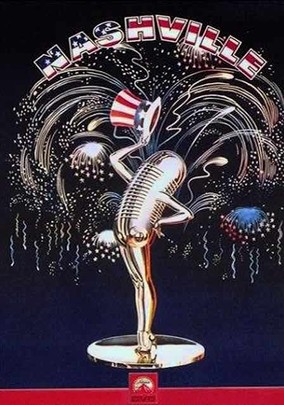
Nashville (1975)  is a brilliant film.

I have found that with each subsequent viewing, it creeps higher and higher on my list of favorite movies of all time.

The style is unique (largely improvised) and epitomizes creative freedom in the film during the 1970s.

Director Robert Altman lets his actors express themselves, even allowing them to write their songs; the dialogue overlaps at times, which results in a natural feeling as the viewer watches the cast of twenty-four principals intersect over five days at a political rally/country music festival.

It is pure Robert Altman at his finest.

Nashville is a satire of the political arena of the early 1970s, particularly the Vietnam conflict and its politicians.

The film certainly questions and challenges the government with an ironic patriotic setting (Nashville).

The country music industry was in uproar upon the film’s initial release. It is a layered film that can be discussed and appreciated, and every character is cared about.

I cannot adequately describe the multitude of nuances in each scene that are noticed over time.

Each character, even those with limited screen time, is vital to the story, as are the political elements —the questions of war, policies, and so on.

The chaotic bits and individual storylines come together at the end, and many background happenings are exciting to watch and take note of throughout each viewing.

With each experience, the audience will notice more and more. I certainly do.

Lily Tomlin, for example, plays Linnea, a haggard mother of deaf children with a supportive husband, a woman who, on the surface, is heroic; yet, she is a complex character. She is bored with her life and falls in love with a young musician despite the guilt and repercussions.

The musician in question is Tom Frank, played by Keith Carradine. Handsome and self-absorbed, he arrives in Nashville to dump his bandmates in hopes of a solo career and beds many willing females.

He also lashes out at a soldier at the airport, saying, “Kill anyone lately?”

Despite his unlikable character, Carradine gives one of the most beautiful performances in the film when he sings “I’m Easy”.

Several of the female characters assume he is singing the song for them, but who is he truly singing it for — if anyone?

Another character to analyze is Barbara Jean, played by Ronee Blakley. A frail yet very successful country singer, she is in and out of hospitals as she frets about her replacement singer stealing her thunder.

Her insecurities rise to the surface.

Insecurity is a common theme among the characters. Many of them are unsure, afraid, or lack confidence in their musical talent, relationships, or themselves.

These are only three examples of the twenty-four richly layered characters- some ambitious, some falling apart, others meandering through life.

Many songs throughout were written and performed by the actors themselves.

Nashville (1975) is storytelling and filmmaking at its best. A creation by Altman that is deservedly admired, revered, and heralded as a significant influence.

It is studied in film schools as it should be.

Oscar Nominations: 1 win-Best Picture, Best Director-Robert Altman, Best Supporting Actress-Ronee Blakley, Lily Tomlin, Best Original Song-“I’m Easy” (won)
The Long Goodbye-1973

The Long Goodbye-1973

Director Robert Altman

Starring Elliott Gould

Top 250 Films #50

Scott’s Review #830

Reviewed November 14, 2018

Grade: A

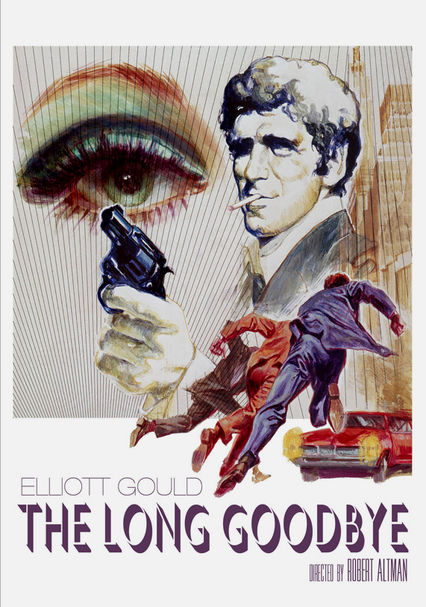
Nearly a full-fledged character study of one man’s moral fiber, The Long Goodbye (1973) is an edgy piece of direction by the famous mastermind Robert Altman.

The setting of Los Angeles’ underbelly is both fabulous and practical, as is the dim lighting and excellent camera work prevalent throughout. The film is not cheery, but rather bleak, which suits me just fine, given the dreary locale.

Perhaps a more obscure Altman offering, but the film sizzles with zest and authenticity.

The film is based on a story written by Raymond Chandler in 1953.

Altman, however, opts to change the setting from 1950 to present times- 1970s Los Angeles and present a film noir experience involving deceit and shenanigans where all is not as it seems.

I think this is a wise move and I could not help but draw many comparisons (mainly the overall story) to Chinatown (1974), released the year after The Long Goodbye, but a film much better remembered.

Elliott Gould is wonderful as Phillip Marlowe, a struggling private investigator, and insomniac. He is asked by a friend, Terry Lennox, for a ride to the Mexico border one night and agrees to do the favor.

This leads to a mystery involving police, gangsters, and Eileen and Roger Wade after Phillip is questioned regarding his connection to Terry, who is accused of murdering his wife Sylvia.

The seedy side and complexities of several characters are revealed as the story unfolds and the plot gradually thickens.

My favorite aspects of The Long Goodbye are not necessarily the primary storytelling, though the writing is filled with tension.

As the film opens an extended sequence featuring a “conversation” between Phillip and his cat is both odd and humorous. The finicky feline refuses to eat anything other than one brand of cat food. As Phillip tries reasoning with the cat through talking and meowing, he is forced to venture out in the middle of the night to an all-night grocery store.

Altman, known to allow his actors free-reign for improvised dialogue, appears to allow Gould to experiment during this scene.

Phillip’s neighbors, a bundle of gorgeous twenty-something females, seem to do nothing except exercise on their balcony, get high, and request he buy them brownie mix for a “special occasion”.

As they stretch topless, usually in the background and almost out of camera range, they are a prime example of an interesting nuance of the film. The girls are mysterious but have nothing to do with the actual plot adding even more intrigue to the film.

In one of the most frightening scenes in cinematic history and one that could be straight from The Godfather (1972), crazed gangster, Marty Augustine (Mark Rydell), slices the beautiful face of his girlfriend to prove a point to Marlowe.

In a famous line, he utters, “That’s someone I love. You, I don’t even like.” The violent act is quick, unexpected, and fraught with insanity.

Finally, the film’s conclusion contains a good old-fashioned twist worthy of any good film noir. In the end, the big reveal makes sense and begs to raise the question “why did we trust this character?”

In addition to the viewer being satisfied, Marlowe also gets a deserved finale and proves that he cannot be messed with nor taken for a fool.

The Long Goodbye is undoubtedly the best film of Gould’s career. With a charismatic, wise-cracking persona, the chain-smoking cynic is deemed by most as a loser. He is an unhappy man and down on humanity but still wants to do what is right. He lives a depressed life with few friends and the company of only his cat.

While he is marginally entertained by his neighbors, he goes about his days only barely getting by emotionally. Gould is brilliant at relaying all these qualities within his performance.

The addition of the title theme song in numerous renditions is a major win for the film and something noticed more and more with each repeated viewing. The ill-fated gangster’s girlfriend hums along to the song playing on the radio at one point, and a jazz pianist plays a rendition in a smoky bar.

This is an ingenious approach by Altman and gives the film a greater sense of mystery and style.

There is no question among cinema lovers that Robert Altman is one of the best directors of all time.

In his lengthy catalog filled with rich and experimental films, The Long Goodbye (1973) is not the best-remembered nor the most recognizable.

I implore film fans, especially fans of plodding mystery and intrigue to check this great steak dinner of a film out.

Magnolia-1999

Magnolia-1999

Director Paul Thomas Anderson

Starring Tom Cruise, Julianne Moore, John C. Reilly

Top 250 Films #67

Scott’s Review #777

Reviewed June 21, 2018

Grade: A

Paul Thomas Anderson is one of my favorite modern directors. In my opinion, his best film is Boogie Nights (1997), but he has also created other dark offerings, such as Phantom Thread (2017) and Inherent Vice (2014).

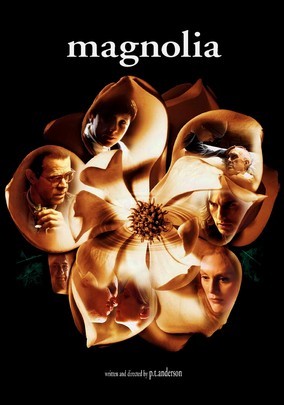
Arguably, his most distinctive effort might be Magnolia (1999), a cerebral film that explores themes of forgiveness and the meaning of life.

An ambitious effort, featuring a stellar ensemble cast, makes the film a fantastic experience.

Set in the San Fernando Valley (a mountainous area of Los Angeles), the film resembles David Lynch’s Mulholland Drive (2001) in its setting and oddness, as well as its unusual dialogue and offbeat characters.

A narrator explains three situations of extreme coincidence and surmises that chance may not be the only responsible party. Anderson then weaves an intricate tale involving numerous characters, intersecting lives, and a riveting climax on a rainy California day (an oddity in itself!).

The plot begins when we meet Jim Kurring (John C. Reilly), a police officer who is called to investigate a disturbance.

After finding a woman’s body in an apartment closet, events turn bizarre as a children’s game show host (Philip Baker Hall), his estranged daughter (Melora Walters), the show’s former producer, Earl (Jason Robards), who is dying from cancer, his drug-addicted wife Linda (Julianne Moore), Earl’s male caretaker (Philip Seymour Hoffman), a former game show champion (William H. Macy), and finally, an intense motivational speaker (Tom Cruise).

Quite a bevy of talented actors!

As the plot progresses mysteriously, the connections among the characters are revealed, and their peculiar motivations begin to take shape.

For example, Linda, who married Earl for his money, seems to have an epiphany and demands her lawyer change Earl’s will. Later, a character may have a connection to Earl and Linda, but is it all as it seems?

In Magnolia, the film is so wonderfully strange that it leaves the audience guessing for most of its running time.

Bizarre scenes are commonplace throughout the film. My favorite one is a marvelously creative scene. Suddenly, frogs begin to fall out of nowhere from the Los Angeles sky, with numerous consequences for the characters.

The incident causes a ripple effect, of sorts, as many of the characters’ fates are determined. Though one may not be able to make heads or tails of this scene or take complete logic from it, it’s enthralling all the same.

Magnolia has an overall quirky tone- sometimes upbeat, sometimes melancholy- that I adore. Films that are tough to figure out and feature an interesting musical score are so rich in flavor.

Aimee Mann is responsible for composing many of the songs on the musical soundtrack, so much so that she received a title credit on the soundtrack itself. Mann infuses her music with moody, diverse richness and ambient essentials.

Many actors make frequent appearances in Paul Thomas Anderson’s films. Magnolia alone seems almost like a Boogie Nights reunion with Moore, Walters, Macy, Baker Hall, and Philip Seymour-Hoffman to name just a handful.

The amazing aspect is that all of the aforementioned actors play vastly different, and arguably even more complex roles than they did in Boogie Nights.

Similar to Quentin Tarantino’s actors appearing in many of his films, this must be a creative treat for them.

There is no doubt that Magnolia (1999) is a complex, dream-like film. Open to interpretation and reflection, I find it a brilliant movie that I would like to revisit and dive into further with each viewing, hopefully for a better understanding and even deeper appreciation.

Oscar Nominations: Best Supporting Actor-Tom Cruise, Best Screenplay Written Directly for the Screen, Best Original Song-“Save Me”