Category Archives: Ingrid Pitt

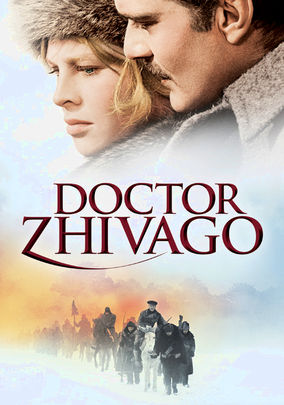
Doctor Zhivago-1965

Doctor Zhivago-1965

Director David Lean

Starring Julie Christie, Omar Sharif, Rod Steiger

Top 250 Films #31

Scott’s Review #42
449931

Reviewed June 18, 2014

Grade: A

Doctor Zhivago (1965) is a great film to watch on a cold night or throughout the crisp winter or holiday season.

The film is a classic masterpiece directed by the talented David Lean (Lawrence of Arabia, 1962, A Passage to India, 1986), whose perfectionism is evident in his epic films.

Nearly every scene could be a painting, so the cinematography alone is reason enough to become enchanted with art.

Of course, the story is also a goldmine as a sprawling decades-long love story unfolds amid the ravages of the bloody Bolshevik Revolution.

The film is set in the bitter cold of Russia (though all scenes were shot in Spain), and the harshness of the climate and the war combine with a doomed love story set against the backdrop of numerous battles and wartime conditions.

Nearly all sequences are set in winter, and the blustery, icy effects are set against numerous scenes of cozy, candlelit cabins or more extravagant, glowing surroundings.

Viewers must be surrounded by fire, flaming candles, or another form of warmth as a snowstorm or blizzard rages outside for a perfect viewing experience.

A large-screen television or a cinema is simply a must to watch this film, as it is epic on the grandest scale.

Omar Sharif and Julie Christie (a gorgeous star in her day) are cast perfectly as Uri and Lara, young forbidden lovers enthralled with one another but involved with significant others.

The film dissects their initial meeting and their story over the years, experiencing marriages, births, and deaths throughout the ravages of Russia in the early twentieth century.

Despite their affairs, neither is deemed unsympathetic—quite the contrary.

Audiences will fall in love with the pair and become enchanted as they watch their love-tortured adventures unfold.

Sharif and Christie are just magnificent and utterly believable as a couple.

The set pieces are magnificent and flawless in design and detail (my favorite is the Ice Palace).

The cinematography is breathtaking, and the content is remarkably close to the superior novel by Boris Pasternak, evoking a sense of “really being there” in the viewer.

Doctor Zhivago (1965) is a brilliant film, perfect for a snowy winter evening.

Oscar Nominations: 5 wins-Best Picture, Best Director-David Lean, Best Supporting Actor-Tom Courtenay, Best Screenplay Based on Material from Another Medium (won), Best Music Score-Substantially Original (won), Best Art Direction, Color (won), Best Cinematography, Color (won), Best Costume Design, Color (won), Best Film Editing
The Wicker Man-1973

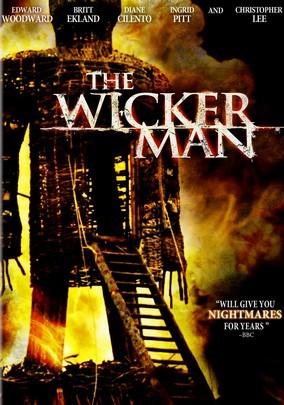
The Wicker Man-1973

Director Robin Hardy

Starring Edward Woodward, Christopher Lee

Top 250 Films #199

Top 40 Horror Films #28

Scott’s Review #245

60021185

Reviewed May 31, 2015

Grade: B+

The Wicker Man is a cult horror film from 1973 that is considered one of the finest by horror critics.

While the film does not enamor me quite as much as some other favorites in the horror genre (Halloween, Rosemary’s Baby, The Shining, Dressed to Kill, and Suspiria) immediately spring to mind while thinking of 1970s-style horror gems, I cannot help but admire The Wicker Man’s creativity and religious overtones.

Despite not awarding the film a solid “A” rating, I look forward to viewing it again, and perhaps, over time, as some films do, it will see an adjustment in its scoring.

Set on an island in the Scottish Hebrides, named Summerisle, a devout Christian (Edward Woodward) named Sergeant Howie travels to the island in search of a missing young girl named Rowan Morrison, thought to have disappeared under mysterious circumstances.

The inhabitants are vague, aloof, or hostile towards the policeman. He is immediately disturbed to notice the group worships Celtic gods and notices other strange acts of worship and sexual behavior (a naked dance), which he resists and disapproves of.

He is tempted by a gorgeous seductress, Willow, played by Britt Ekland, most notably known as a Bond girl in The Man with the Golden Gun, and butts heads with the island leader, Lord Summerisle, played by horror legend Christopher Lee.

As he attempts to locate the missing girl, he uncovers some very dark goings-on around the island as the annual Mayday harvest celebration approaches. He deduces that Rowan is slated to be the sacrifice at the celebration, and he races to find her before it is too late.

But is there more to the island than meets the eye?

The Wicker Man is not mainstream fare, and that is what I admire most about it, as well as its British flair. It strives to challenge the norm in horror and to question who is right, who is wrong, and who the audience should champion.

Religion and the occult have been portrayed in horror films for eons, but rarely given a normal face. Typically, the villains are scary, horrid, or even cartoonish, clearly defined as bad.

Despite all the townspeople being in on the sacrifice, they seem ordinary. They raise their kids, farm, run stores, and teach the kids in a classroom setting.

On the surface, they appear wholesome, and that is part of what makes The Wicker Man so scary. Rosemary’s Baby did the same thing.

Typically, any sort of satanic overtones or human/animal sacrifices frighten audiences, especially if the culprits could be their neighbors, friends, or even loved ones. The realness is unnerving.

Differing, controversial, religious beliefs are a prevalent theme throughout The Wicker Man, as are elements of good vs. evil.

The film is not predictable. It delves into questions of morals and beliefs- for example, Howie is a virgin- saving himself for marriage and trying to be a good, decent person.

He is the moral center of the film and, in his belief, everyone on the island is either perverted, crazy, or a sinner.

By this logic, Howie looks down on others who are dissimilar to him and comes across as preachy. I do not get the impression that the film wants the audience to love Howie- or hate him.

The balance between the old gods (Christianity) and the new gods (Celtic paganism) makes the film interesting.

The shocking conclusion involving an enormous, life-sized, burning wicker man is terrifying beyond belief and, by far, the best part of the film, as the hero must come to terms with his fate.

The final thirty minutes are quite spectacular, from the final twist to the ending.

My lack of an exceptional grade for The Wicker Man stems from it being a tad too slow-moving. Perhaps a few additional jumps or frights along the way would have been beneficial, but, on the other hand, it is not a scary film, nor does it try to be.

It is, however, quite intelligent and, I suspect, will increase my enjoyment with each subsequent viewing.

A fine addition to the relics of classic horror, The Wicker Man (1973) is a creative, mysterious, and left-of-the-center film.

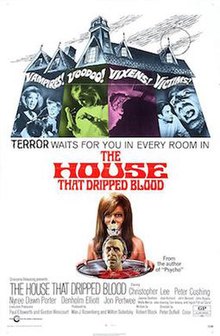
The House That Dripped Blood-1971

The House That Dripped Blood-1971

Director Peter Duffell

Starring Christopher Lee, Peter Cushing

Scott’s Review #1,408

Reviewed October 31, 2023

Grade: B+

Any horror project featuring Christopher Lee and Peter Cushing is worth a watch, and The House That Dripped Blood (1971) includes both actors, though, sadly, not in any scenes together.

The British horror anthology is spooky and perfect for the Halloween season. The action surrounds a hulking house where bad events occur regardless of who inhabits it.

The film is divided into four short stories explaining the circumstances surrounding the individual inhabitants.

The production is low budget, which is perfect for a film like this, but the title makes it seem bloodier and gorier than it is.

All of the stories were initially written and later adapted into scripts by Robert Bloch.

Below is a summary, review, and rating of each vignette.

Framework: B+

Shortly after renting an old country house, a well-known film star, Paul Henderson, mysteriously disappears, and a local Sergeant calls Inspector Holloway (John Bennett) from Scotland Yard to investigate.

When he inquires at the local police station, he is told some of the house’s history.

He soon learns how four tenants met macabre fates.

The ‘Framework’ sequence sits between the vignettes and provides good context, but it’s largely just the interplay between Inspector and Sergeant.

This serves as an introduction to each chapter and ties the events together.

Method for Murder: A-

Charles Hillyer (Denholm Elliott) is a struggling writer who specializes in horror stories. He and his wife Alice (Joanna Dunham), move into the house thinking it will serve as inspiration. Charles creates a devious character named ‘Dominic’ after he ‘imagines’ seeing him outside a window.

Charles soon starts to see Dominic, who begins stalking and tormenting him.

My second favorite of the four chapters, I all but guessed the ‘twist’ from the get-go, but I was surprised by the ‘twist on top of a twist,’ which pleased me.

It’s great when a villain thinks they’ve gotten away with murder, only to be murdered themselves.

Waxworks: B+

Retired stockbroker Philip Grayson (Cushing) moves into the house with plans to read, garden, and relax. Though initially he occupies himself with his hobbies, he quickly becomes lonely. One day, while wandering around town, he happens upon a wax museum.

Grayson explores the museum and finds a sculpture of a dead woman he had loved. The museum’s proprietor explains that he based the likeness of the sculpture on his late wife, who had been executed after murdering his best friend.

Despite featuring Cushing, it’s a moderately good story but lacks the compelling nature of a couple of the other vignettes.

It’s less about the house itself and more about the wax museum and obsession as the subject matter.

While decent, Waxworks didn’t blow me away either.

Sweets to the Sweet: A

Widower John Reid (Lee) moves into the house next door along with his odd young daughter Jane (Chloe Franks). John hires former teacher Ann Norton (Nyree Dawn Porter) to tutor Jane. Ann bonds with Jane and helps her overcome a fear of fire.

Ann suspects John of abusing Jane, but is there more to the story? Why doesn’t he let Jane play with other children or with toys, and why does he do his best to keep her isolated?

Is there something wrong with Jane?

This is the best installment and has a resemblance to The Innocents (1961), featuring a governess and a spooky child. Viewers will find themselves switching allegiances to the characters as the story moves quickly.

The Cloak: B+

Finally, horror film actor Paul Henderson (Jon Pertwee) moves into the house while starring in a vampire film being shot nearby.

Irritated by the cast and crew’s lack of maturity or talent, he decides to buy a realistic cloak for his character (who happens to be a vampire). The shop he makes his purchase from is run by the enigmatic Theo von Hartmann (Geoffrey Bayldon), who eerily offers him a black cloak.

This one plays like a Hammer Horror Dracula installment and is good but not great. Less happens within the confines of the house than I’d like, and Paul is an unlikable character.

The action on the movie set and in the shop are the best parts.

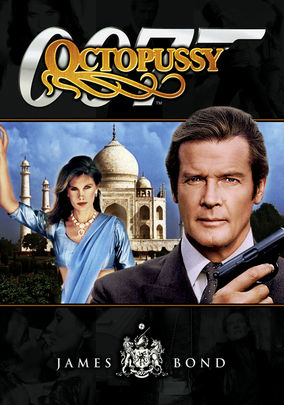
Octopussy-1983

Octopussy-1983

Director John Glen

Starring Roger Moore, Maud Adams

Scott’s Review #716

Reviewed January 17, 2018

Grade: A-

Hardly regarded as one of the most stellar of entries in the James Bond franchise, 1983’s Octopussy is nonetheless a guilty pleasure of mine.

This is undoubtedly due to the film being the first installment that I was allowed to see in the movie theater and is filled with exciting memories.

As the film stands in current days it is perfectly fine, containing all of the enjoyable elements necessary for a good Bond film- interesting villains, solid action, and gorgeous women. Perhaps at times suffering from a bit of silliness, Octopussy is still quite the fantastic watch.

Roger Moore, admittedly looking slightly aged and sagging, returns to the fold as 007, the shaken, but not stirred action hero known as James Bond. However, he is, true to form, as witty and suave as he always is with witty one-liners and a mischievous smirk.

Moore ritualistically infuses the character with a measure of comedy- a wink of the eye or a raised eyebrow adds humor to the character so than any other actor who has portrayed Bond.

In this installment, Faberge eggs, clowns, and gorilla suits are featured. Attempting to escape from East Berlin to West Berlin, 009- dressed as a circus clown, is murdered on the estate of a British Ambassador while attempting to deliver a fake Faberge egg.

Assuming the Soviets are involved, MI6 instructs Bond to investigate the matter, and a complex smuggling ring is uncovered- featuring a gorgeous female smuggler named Octopussy (Maud Adams), along with sinister Afghan exiled prince Kamal Kahn (Louis Jourdan), and his bodyguard, Gobinda.

Watching the film in 2018, and even though it was made in 1983, Octopussy does not suffer from the dreaded “1980s look” that so many other films do and seems surprisingly clean and fresh.

The colors are vibrant- especially in the prevalent circus and clown scenes, and the best two scenes- the airplane and train scenes- still bristle and crackle with good action.

As the climax to Octopussy culminates, the inevitable heroine and main Bond girl- Adams’s “Octopussy”, has been bound and gagged and taken hostage by the baddies in a fleeing airplane, Bond grabs hold of the fuselage, and begins a harried flight over the mountains of remote India, clinging for dear life.

The scene climaxes with an exciting fight scene atop the rooftop of the speeding plane as Bond and Gobinda fight to the death as Kamal unsuccessfully attempts to twist and turn the plane and rid themselves of pesky Bond.

The scene is still compelling and loses none of its appeal over the years, never appearing dated.

The train sequence is still relevant but does suffer from a small dose of silliness. The action is plentiful as Bond races against time to prevent a Russian missile from detonating and killing thousands of American citizens, and worthy of note is the timely Cold War subject matter of the Russians versus the Americans- plentiful in American cinema during this time.

As Bond dons a phony-looking gorilla outfit- embarrassing even for the comical Roger Moore- he can successfully take off the costume and sneak out of a train car, all before the three seconds that it takes for Gobinda to turn around and slice the head off of the gorilla thinking it is Bond.

Suspension of disbelief is required.

Impressive is the female empowerment slant that is evident. From the strong businesswoman character that Adams portrays- she is decisive, intelligent, and savvy, she is neither cowering nor impressionable and cannot be bullied or pushed around.

Albeit her name, “Octopussy”, does teeter on male chauvinism. Be that as it may, her gang of feminist followers, all wielding assault rifles, are quite inspiring and, at this point, unusual for a Bond film- typically masculine leaning.

Octopussy (1983) is an overlooked, under-appreciated, too easily dismissed slice of goodness served up with a bit of comedy, plenty of action, and good solid villains- everything that makes a Bond film a Bond film.

The film is worthy of a viewing.