Tag Archives: Crime Thriller

One Battle After Another-2025

One Battle After Another-2025

Director Paul Thomas Anderson

Starring Leonardo DiCaprio, Sean Penn, Chase Infiniti

Scott’s Review #1,497

Reviewed October 20, 2025

Grade: A

In my opinion, one of the modern great directors, Paul Thomas Anderson has released One Battle After Another (2025), a film rich with thrills and relevance. Sought to be made for years, the film is inspired by the 1990 novel Vineland by Thomas Pynchon with some narratives by Anderson peppered in.

Undoubtedly, Anderson was influenced by the current state of the United States in terms of immigration issues and tyrancy in the ICE (United States Immigration and Customs Enforcement) organization.

While immigration is not a new hot button issue, the inhumanity heaved onto ‘illegal immigrants’ and some US citizens is current as well as powerful.

Additionally, a frightening tone of racism and ‘white power’ is an underlying theme of the film contrasting covert hatred by a group of white supremisists with the humanity of revolutionaries who attack the political system.

Therefore, the film has an overwhelming modern feel.

Otherwise, the breakneck twists and turns and action make One Battle After Another the crown jewel in storytelling fun and an Anderson offering that could easily be added to his top 5 of all time.

Events follow an ex-revolutionary explosive device expert, “Ghetto” Pat Calhoun / “Rocketman” / Bob Ferguson (Leonardo DiCaprio) who is forced back into his former combative lifestyle when a corrupt military officer pursues him and his daughter.

With new identies, they had assumed they could live a peaceful life of tranquility but they were in for a rude awakening.

Set in present times, the film begins fifteen years before events later in the story but with a clear linkage. This ensures the audience is invested in the characters especially in the latter half as we get to know them better.

While DiCaprio can never deliver a bad performance and firmly grips the lead role as the intelligent yet comically clumbsy Bob, other actors shine making One Battle After Another an ensemble piece dripping with award worthy performances and hefty accolades.

DiCaprio improvises his way through the script with stutters and stammering enveloping his character with endearing qualities like forgetting a vital password or falling off a roof. Nonetheless, he possesses sentimenal and introspective moments towards his life and teenaged daughter, Willa Ferguson / Charlene Calhoun, played by Chase Infiniti.

Infiniti is tremendous in what is her breakout role playing a mixed race girl attempting to lead an everyday life while having to pay for the crimes and mistakes of her parents.

Playing confident, yet scared and vulnerable, Infiniti is quite the find. Is she destined to follow in her parents footsteps?

Teyana Taylor is brutally talented as she plays Perfidia Beverly Hills, a tough as nails, take no prisoner, kick ass young woman known to tease and humiliate her prey strictly for laughs.

Regina Hall and Benicio del Toro leverage their kind hearted and supportive characters with emotional flare and some needed humor especially on the part of del Toro.

The standout, however is Sean Penn. Giving a bravura performance as the hated and racist Colonel Steven J. Lockjaw, a military officer who pursues the French 75, he sneers and pouts, never playing the character over the top or for laughs.

He truly believes he comes from a superior race while bedding the women he despises.

A three-way highway car chase scene nearly rivals classic sequences in The French Connection (1971) and The Getaway (1972). As three separate drivers points of views are featured along a hilly highway with deadly results the audience is treated to rear view mirror and reaction shots.

I honestly did not know what would happen next and was delighted at the outcome.

Hopefully, as the years go by One Battle After Another (2025) will be remembered for embracing different genres and delivering a powerhouse final product. With great acting, editing, storytelling, and action the film has got it all.

Add in a timely message and you’ve got yourself a gem.

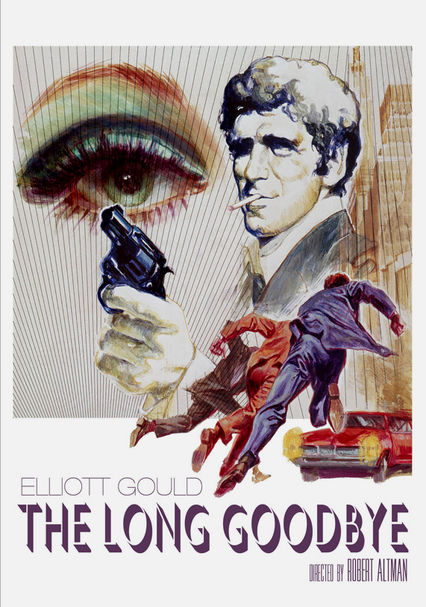
The Long Goodbye-1973

The Long Goodbye-1973

Director Robert Altman

Starring Elliott Gould

Top 250 Films #50

Scott’s Review #830

Reviewed November 14, 2018

Grade: A

Nearly a full-fledged character study of one man’s moral fiber, The Long Goodbye (1973) is an edgy piece of direction by the famous mastermind Robert Altman.

The setting of Los Angeles’ underbelly is both fabulous and practical, as is the dim lighting and excellent camera work prevalent throughout. The film is not cheery, but rather bleak, which suits me just fine, given the dreary locale.

Perhaps a more obscure Altman offering, but the film sizzles with zest and authenticity.

The film is based on a story written by Raymond Chandler in 1953.

Altman, however, opts to change the setting from 1950 to present times- 1970s Los Angeles and present a film noir experience involving deceit and shenanigans where all is not as it seems.

I think this is a wise move and I could not help but draw many comparisons (mainly the overall story) to Chinatown (1974), released the year after The Long Goodbye, but a film much better remembered.

Elliott Gould is wonderful as Phillip Marlowe, a struggling private investigator, and insomniac. He is asked by a friend, Terry Lennox, for a ride to the Mexico border one night and agrees to do the favor.

This leads to a mystery involving police, gangsters, and Eileen and Roger Wade after Phillip is questioned regarding his connection to Terry, who is accused of murdering his wife Sylvia.

The seedy side and complexities of several characters are revealed as the story unfolds and the plot gradually thickens.

My favorite aspects of The Long Goodbye are not necessarily the primary storytelling, though the writing is filled with tension.

As the film opens an extended sequence featuring a “conversation” between Phillip and his cat is both odd and humorous. The finicky feline refuses to eat anything other than one brand of cat food. As Phillip tries reasoning with the cat through talking and meowing, he is forced to venture out in the middle of the night to an all-night grocery store.

Altman, known to allow his actors free-reign for improvised dialogue, appears to allow Gould to experiment during this scene.

Phillip’s neighbors, a bundle of gorgeous twenty-something females, seem to do nothing except exercise on their balcony, get high, and request he buy them brownie mix for a “special occasion”.

As they stretch topless, usually in the background and almost out of camera range, they are a prime example of an interesting nuance of the film. The girls are mysterious but have nothing to do with the actual plot adding even more intrigue to the film.

In one of the most frightening scenes in cinematic history and one that could be straight from The Godfather (1972), crazed gangster, Marty Augustine (Mark Rydell), slices the beautiful face of his girlfriend to prove a point to Marlowe.

In a famous line, he utters, “That’s someone I love. You, I don’t even like.” The violent act is quick, unexpected, and fraught with insanity.

Finally, the film’s conclusion contains a good old-fashioned twist worthy of any good film noir. In the end, the big reveal makes sense and begs to raise the question “why did we trust this character?”

In addition to the viewer being satisfied, Marlowe also gets a deserved finale and proves that he cannot be messed with nor taken for a fool.

The Long Goodbye is undoubtedly the best film of Gould’s career. With a charismatic, wise-cracking persona, the chain-smoking cynic is deemed by most as a loser. He is an unhappy man and down on humanity but still wants to do what is right. He lives a depressed life with few friends and the company of only his cat.

While he is marginally entertained by his neighbors, he goes about his days only barely getting by emotionally. Gould is brilliant at relaying all these qualities within his performance.

The addition of the title theme song in numerous renditions is a major win for the film and something noticed more and more with each repeated viewing. The ill-fated gangster’s girlfriend hums along to the song playing on the radio at one point, and a jazz pianist plays a rendition in a smoky bar.

This is an ingenious approach by Altman and gives the film a greater sense of mystery and style.

There is no question among cinema lovers that Robert Altman is one of the best directors of all time.

In his lengthy catalog filled with rich and experimental films, The Long Goodbye (1973) is not the best-remembered nor the most recognizable.

I implore film fans, especially fans of plodding mystery and intrigue to check this great steak dinner of a film out.

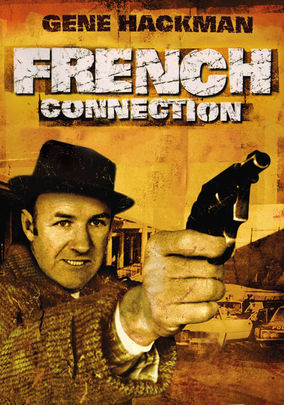
The French Connection-1971

The French Connection-1971

Director William Friedkin

Starring Gene Hackman, Roy Scheider

Top 250 Films #71

Scott’s Review #342

60011660

Reviewed January 9, 2016

Grade: A

The French Connection had the notable distinction of being the first R-rated film to win the coveted Academy Award for Best Picture in 1971.

This praise, similar to The Silence of the Lambs being the first horror film to win Best Picture in 1991, is well worth pointing out and is quite honorary.

The film succeeds, both for me and other critics, due to its unique camerawork style, shot in a documentary manner, and the use of quick edits.

It is much more intricate in every way than the traditional crime thriller.

Gene Hackman stars as the feisty detective, Jimmy “Popeye” Doyle, who along with his partner, Buddy “Cloudy” Russo, (Scheider) are determined to crack the case of a massive heroin smuggling syndicate from France.

The narcotics are flowing into New York City and the duo is determined to get to the bottom of the drug ring, figuring out who is the mastermind and defeating their foe.

The primary culprit is a suave French drug lord named Alain Charnier, brilliantly played by Fernando Rey.

Throughout the film, the action is non-stop, traversing throughout Manhattan and Brooklyn, via subway, and car, as Popeye becomes more and more obsessed with the case.

Director William Friedkin, who also directed the legendary 1973 film, The Exorcist, deserves a heap of praise for creating a film of this caliber. The French Connection can be enjoyed by all and is well beyond the limitations of a “guy film”- it is much more than that.

The editing and frenetic pacing work wonders for the film, all the while not ruining the experience or overshadowing the good plot. Quite simply, the film is a chase across New York City.

Friedkin distinguishes the boroughs by making Manhattan seem sophisticated and stylish, and Brooklyn dirty, grizzled, and drug-laden.

The settings are perfect.

The best scene in the film is the well-known car chase throughout New York City. Popeye is determined not to lose his man, the man riding in a subway on an elevated platform. Popeye steals a car and proceeds to chase the subway narrowly missing pedestrians, including a woman with a baby carriage, as he recklessly weaves in and out of traffic at a high speed, to keep pace with the train.

This is a phenomenal scene as the excitement and tension continue to build.

The conclusion of the film and the final scene is cynical and also leaves the audience perplexed and unsure of what has transpired.

The French Connection is open to good discussion and even interpretation, a novel aspect of the action film.

Providing a tremendous glimpse into 1970s Manhattan and Brooklyn, The French Connection is an exciting film that oozes with thrills, car chases, and a good story.

The film is unique in style and still holds up incredibly well- one of my favorites in the action genre.

Oscar Nominations: 5 wins-Best Picture (won), Best Director-Richard Friedkin (won), Best Actor-Gene Hackman (won), Best Supporting Actor-Roy Scheider, Best Screenplay Based on Material from Another Medium (won), Best Sound, Best Cinematography, Best Film Editing (won)

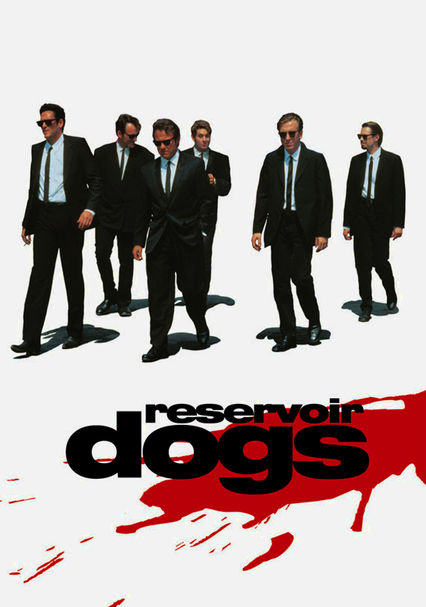
Reservoir Dogs-1992

Reservoir Dogs-1992

Director Quentin Tarantino

Starring Tim Roth, Harvey Keitel, Steve Buscemi

Top 250 Films #107

Scott’s Review #1,332

Reviewed January 9, 2023

Grade: A

Reservoir Dogs (1992) is the film that began an essential transition in cinema history. The 1980s saw way too many watered-down or oversaturated films with enough sappy or melodramatic thematics to make a seasoned cinema lover want to gag and run for a good television series.

The 1990s were different. It’s impossible to think of the decade in film and not speak the name Quentin Tarantino, an iconoclast who took the crime thriller genre and riddled it with violence, dark humor, comic book-style characters, and dozens of other eccentricities and spun the world on its heads.

It was needed.

But before anyone begins to assume Reservoir Dogs is the most fantastic Tarantino film, it’s not. Many list it as his weakest catalog entry. That’s open to the opinion of course but in my view, the influence of the film accounts for much of my enjoyment of it.

It’s not as developed and stylized as Django Unchained (2012) or as powerfully fucked up or odd as Pulp Fiction (1995), but the rawness, the gore, and the go-for-broke scenes that are shot like a play, and the small-budget make watching Reservoir Dogs a reminder of the genius that is Tarantino.

Countless scenes mirror sequences to come in his later films so much so that a game can be played to discover where something played out in another Tarantino film.

The film gave new recognition and merit to the independent film genre which was huge and provided doors flying open to young filmmakers everywhere who had ideas and just needed to get their films known.

The influence of Reservoir Dogs is unmeasured and a double feature of Reservoir Dogs and Pulp Fiction is suggested. Even though the latter was released later, most people saw Pulp Fiction first and then discovered Reservoir Dogs.

A group of unsavory thieves assemble to pull off the perfect diamond heist. It turns into a bloody shit show when one of the men turns out to be a police informer. But which one is it and who is responsible for the ambush?

As the group begins to question each other’s guilt, the tensions and suspicions threaten to blow up the situation before the police step in and save the day. But how many will die first?

Tarantino cleverly casts himself in a small role as Mr. Brown and names all the men using the same formal title. There is Mr. White (Harvey Keitel), Mr. Orange (Tim Roth), Mr. Blonde (Michael Madsen), Mr. Blue (Edward Bunker), and finally Mr. Pink (Steve Buscemi) who is my favorite of all.

In 1992, many scenes were shocking. When sinister Mr. Blonde cuts off the ear of a cop and prepares to set him on fire the brutality and sadism are hard to watch.

The blood-soaked Mr. Orange lies in a pool of blood through nearly the entire film. As his skin turns whiter and whiter and his clothes redder and redder it’s an example of masterful cinema and creativity.

The few exterior shots are in Los Angeles which gives the film a low-budget, raw look.  It’s to be celebrated as the potent sun and grizzled veneer of the city of angels are on display.

I’m not a fan of the lack of female representation but this only enhances the muscle and masculinity of the characters. As they sit in a diner mulling over whether tipping is necessary we could easily be in a men’s locker room witnessing banter about getting laid, or watching an episode of Seinfeld.

There are no romantic entanglements to mess up the plot or no rescuing the girl from criminals to contend with. The closest we come is a couple of homoerotic moments of men embracing men amongst bullets and blood.

Reservoir Dogs succeeds as a whodunit, a heist film, and a vile look at the inhumanity of some of the characters.

The influence and relevance of Reservoir Dogs in 2023 are as abundant as they were in 1992. Cinema is like fine wine and sometimes the more time that goes by the more appreciation is warranted for a film.

It’s not perfect and is unpolished and sometimes underdeveloped but it’s been emulated so many times that it’s become a blueprint of the crime thriller.

Independent Spirit Awards: 1 win-Best Supporting Male-Steve Buscemi (won)

Zodiac-2007

Zodiac-2007

Director David Fincher

Starring Jake Gyllenhaal, Mark Ruffalo, Robert Downey Jr. 

Top 250 Films #223

Scott’s Review #1,134

Reviewed April 16, 2021

Grade: A

Zodiac (2007) is an excellent film in its own right. The attention to detail circa the 1960s and 1970s is spot on and adds to the flavor of the entire experience. The locale of San Francisco is moody and lurking with the antics of the self-professed Zodiac Killer.

With excellent acting, the sum of its parts adds up to a wonderful film experience.

The film is incredibly well-paced, character-driven, and layered in rich texture. What more can be asked of a cinematic production? It simply has it all and will engage any viewer craving mystery and intrigue.

David Fincher, as the director’s chair, creates a world unto itself with carefully crafted sets, artistic nuances, and of course a superb story. A lesson learned is that sometimes evil exists and cannot be caught despite best efforts and the ramifications are endless.

Painfully, the characters in Zodiac slowly realize this.

Zodiac is based on the best-selling non-fiction book by Robert Graysmith, a pivotal character in the film. The novel is very similar to James Elroy’s 1987 novel The Black Dahlia, another unsolved case set in California.

The film tells the story of the manhunt for the Zodiac Killer, a serial killer who terrorized the foggy San Francisco Bay Area during the late 1960s and early 1970s.

Investigators (Mark Ruffalo, Anthony Edwards) and reporters (Jake Gyllenhaal, Robert Downey Jr.) become obsessed with learning the killer’s identity and bringing him to justice.

Meanwhile, Zodiac claims victim after victim and taunts the authorities with endless and specifically graphic letters, bloodstained clothing, and cryptic messages shrouded in menacing phone calls.

The case remains one of the United States’ most infamous unsolved crimes.

Much of the acclaim must go to the three actors cast in the central roles and Gyllenhaal is top of his game in the leading role. As cartoonist Robert Graysmith he is the main hero and the person who spearheads the investigation, prompting disbelievers to listen to him.

Gyllenhaal is sensitive, sympathetic, and obsessed and at first, perceived to be a laughing stock, but audiences will immediately get behind the man and this is thanks to Gyllenhaal’s powerful acting.

The character-driven approach continues as Mark Ruffalo gives a wonderful portrayal of Inspector David Toschi. The tough-as-nails and no-nonsense approach led Toschi into obsession and fudging evidence.

Finally, Robert Downey Jr. provides energetic gusto as Paul Avery, a journalist who turns to drugs and alcohol because of the intensity and emotional investment in the case.

Plenty of red herrings make the film fun and the prime suspect of Arthur Leigh Allen, played by character actor John Carroll Lynch may or may not be the assailant.

It’s breathtaking watching all the twists and turns in this ferociously complex film.

Zodiac is based on real events and reportedly is extremely historically accurate. Fincher and others spent eighteen months conducting their investigation and research into the Zodiac murders.

So, authenticity is everywhere in this film.

Watching a film beginning in 1969 and ending in 1983 is a joy for someone who grew up in that era. Fincher drizzles the film with timely automobiles, clothes, and other sets so it appears to be walking into a time capsule.

I’m sure this only will add to the viewer’s enjoyment.

For fans of films based on the Zodiac Killers, the 1971 film Dirty Harry, starring Clint Eastwood delivers an exceptional experience based on the real-life case.

But Fincher’s Zodiac is just as good.

Despite the behemoth running time- two hours and thirty-seven minutes, Zodiac (2007) is an edge-of-your-seat thriller. The pulsating yet prowling pace is worth several viewings to appreciate the juiciness of all of the elements David Fincher offers.

A hefty round of applause is deserved.

Seven-1995

Seven-1995

Director David Fincher

Starring Brad Pitt, Morgan Freeman

Top 250 Films #230

Scott’s Review #780

Reviewed June 29, 2018

Grade: A-

Many films containing a similar theme as Seven (1995) have come along over the years- some good, most mediocre. The mixture of homicidal detectives tracking crazed killers has been done ad nauseam and more often than not, done with either poor writing or a predictable outcome-or both.

Instead of being a run-of-the-mill film, Seven serves as a representative blueprint of the tautness and unpredictability that can be achieved by using a familiar yet compelling concept, provided there is good writing and good direction.

The film is incredibly brutal and riveting.

Respected director David Fincher gathers an all-star cast of Hollywood heavies including Brad Pitt, Morgan Freeman, Kevin Spacey, and Gwyneth Paltrow, all of whom add to the well-crafted script.

It also brings the talent level to respectability and, as great as the story is, with weaker actors, the stakes would not have been as high and the film may have even been ruined.

A serial killer is on the loose in Los Angeles- detective duo William Somerset (a very good Freeman) is set to retire and is tasked with finding the killer. He is partnered with David Mills (Pitt), a young, hot-tempered man who has just moved to the city with his wife Tracy (Paltrow).

Unbeknownst to David, Tracy is pregnant and unsure whether to keep the child- this point factors in heavily as events unfold.

The killer is using the seven deadly sins: greed, gluttony, sloth, lust, pride, envy, and wrath, as his motivation for the creative slayings.

In retrospect Seven is very similar to the still-to-come Fincher work, 2007’s Zodiac, so much so that both films could be watched in sequence- one being a true story, the other pure fiction.

Both focus on the serial killer element with a message, they each have marvelous psychological intrigue and purpose. There are cat-and-mouse scenes aplenty for fans to enjoy.

At the risk of this point being a total stretch, I’d also argue that 1971’s Dirty Harry influenced Zodiac, Seven, and The Silence of the Lambs (1991).

A heinous killer shrouded in intelligence, danger, and motivation is a commonality of all of the aforementioned films, and numerous studies of each of the killers could be dissected if time permits.

Each killer is calculating and manipulative.

On that note, Kevin Spacey gives a tremendous performance as the cold and villainous John Doe. Clever and inventive, his victims are intended to suffer and suffer greatly.

Some of the kills could be included in the best of the torture-horror franchise, Saw (2004), as they are very twisted and carved in brutality.

A supermodel is disfigured after being given a choice to call for help or overdose on pills, representing pride. A man is forced to consume food until his stomach ruptures, representing gluttony. Spacey portrays his role as calm, cool, and collected, eliciting a terrifying response from audiences, especially as he toys with the detectives.

Still coming into his own as an actor in 1995, Pitt proves he can almost measure up (though not quite) with big-boy acting talents Spacey and Freeman. Playing an ambitious man eager to prove himself in “the big city” with his pretty wife in tow, Pitt’s David is wholesome and family-oriented, yet has an edge.

All around the likable hero, Pitt is perfectly cast in the role and a large part of its success.

The frightening final sequence still resonates with me after all of these years since Seven was released. In a classic standoff between Doe and the detectives, as is typically the case in these types of films, the ultimate climax is twisted, psychological, and gruesome.

I did not see this shocker coming as it culminates in lives being forever changed. The expressions and actions of Freeman, Pitt, and Spacey are superlative.

Seven (1995) is a film basking in riches. On par with the best of the best in serial killer films, it is powerfully directed by Fincher. The film is fraught with grisly symbolism and its share of suspenseful sequences.

With powerful acting, it is a film relevant and watchable decades after the original release. Perhaps not quite on the level as Dirty Harry or The Silence of the Lambs, but pretty damned close and that is impressive in itself.

Oscar Nominations: Best Film Editing

Cruising-1980

Cruising-1980

Director William Friedkin

Starring Al Pacino, Paul Sorvino, Karen Allen

Scott’s Review #1,469

Reviewed March 9, 2025

Grade: B+

Cruising is a 1980 effort that brought the LGBTQ+ community into mainstream cinema at least for a brief moment shortly before HIV/AIDS changed its image and trajectory.

The film was derided by critics and gay rights protesters who believed it stigmatized them.

Decades later, Cruising has become more accepted and even admired by some, especially in the LGBTQ+ community. It’s a film that most community members have heard of, allowing it to make its mark in cinema history.

William Friedkin, famous for directing The French Connection (1971) and The Exorcist (1973), writes and directs the film, loosely adapting it from a novel by The New York Times reporter Gerald Walker.

The story is about a serial killer targeting gay men, particularly the men associated with the leather scene in the late 1970s. A psychopath is scouring New York City gay clubs and viciously torturing and stabbing gay men to death.

Resembling the victims physically, Detective Steve Burns (Al Pacino) is asked to wear leather attire, and frequent the city’s hardcore clubs to lure the killer.

As Steve becomes immersed in club hopping, he begins to identify with the subculture more than expected. Meanwhile, he behaves distantly around his girlfriend, Nancy (Karen Allen), the police force’s homophobia becomes apparent and the killer remains at large throughout one hot summer.

Initially, Richard Gere was slated to star but Pacino ended up with the role.

Pacino, being Pacino, gives it his all in an uneven script and unclear character motivations. The ending is exceptionally muddled and peculiar, leaving an unsatisfying feeling, while I also somewhat admire its ambiguity.

Dusting off this relic was an absolute pleasure. It gave me a glimpse into the LGBTQ+ leather scene of long ago, with authentic New York City gay clubs and clubgoers.

Cruising also features a variety of exterior NYC locales, such as Columbia University, the Meat Packing district, and an opening view of the Manhattan skyline.

Though too young to remember the scene being showcased, I do remember traveling into Manhattan to go to work with my father as a very young boy and the dangerous city I was always warned about.

Friedkin and cinematographer James Contner exceptionally depict New York City in the late 1970s/early 1980s. The gritty and crime-ridden streets capture the time like similar films Taxi Driver (1976) and Gloria (1980) did.

I also adore seeing the clubs and bars from an LGBTQ+ perspective, though I’m unsure if non-LGBTQ community members would appreciate this aspect of the film.

Nonetheless, fans of Pacino should add this to their list. While not on par with his most tremendous role as Michael Corleone in The Godfather series (1972-1995), he was in his prime before he started overacting and taking on inferior roles.

It’s also a damned good crime thriller!

Cruising reminds me of a Dirty Harry (1971) film only set in NYC, particularly the killer. With a low and taunting voice, and a fondness for teasing his victims before killing them, the similarities are apparent and work well.

The killer’s motivation is weakly explained in a flashback with his father.

Since we more or less see the killer’s identity early on, the film is not so much a whodunit until the final scene when another character is found dead after the killer is apprehended.

Is the new killer Steve or the victim’s jealous boyfriend? Is Steve closeted? These questions are left unanswered.

The production is superior and the glowing park scenes with shadows and insect sounds only enhance the thrills and perils of the characters.

The film shows plenty of bare male asses unusual for this time in American cinema and dares to show plenty of simulated and apparent complete on sex. Forty minutes of X-rated male-on-male action footage needed to be cut, in which Pacino may or may not have participated.

While the screenplay has gaping holes and the conclusion less than satisfying, Cruising (1980) is a win in my book for showcasing an unrepresented group of people and taking me back to a fascinating time.

Woman of the Hour-2023

Woman of the Hour-2023

Director Anna Kendrick

Starring Anna Kendrick, Daniel Zovatto, Autumn Best

Scott’s Review #1,448

Reviewed October 21, 2024

Grade: A-

I never thought of Anna Kendrick as a quality film director or even a director. Her most notable acting role was Up in the Air in 2009 and I had nearly forgotten about her until watching the Netflix film Woman of the Hour (2023) in which she stars and directs.

She impressed the hell out of me in her directorial debut and since the film industry still needs more female directors I hope Kendrick keeps at it.

Woman of the Hour premiered at the Toronto International Film Festival in September 2023 but wasn’t released by Netflix until October 2024 so it’s technically a 2023 film.

Kendrick creates an intelligent work that serves as a compelling and taut thriller and a lesson in misogyny and objectification. Yes, it’s set in the 1970s and an argument can be made that society has progressed in that regard but not nearly enough as this film starkly reminds us.

An aspiring actress, Cheryl Bradshaw (Kendrick), who has had little success finding roles, is talked into appearing on an episode of the popular game show ‘The Dating Game’.

She crosses paths with a prolific serial killer, Bachelor #3 on the television show, 1978. He is Rodney Alcala (Daniel Zovatto) who is feared to have raped and murdered over one hundred women.

The audience is well aware of the actions of Alcala since the action goes back and forth from the present times (1979) and New York City in 1971 when he presumably killed his first victim.

I felt uncomfortable from the first scene and remained this way during the one hour and thirty-four minute running time. The film was too short.

Alcala doesn’t lurk around corners or break into apartments brandishing a butcher knife. Instead, he sweet-talks the women into posing for photographs or offers to help them out of a jam to gain their trust.

Kendrick doesn’t play softball with the audience. She gets the action going with a brutal scene where Alcala takes photos of a young woman in the plains. After he gets the woman to open up about her painful breakup with an ex-boyfriend, he strangles her. He revives her, then strangles her to death.

The victim is pitiful since she is already distressed over her ex. The audience sees a glimmer of hope in her eyes when she considers she may have finally met a nice guy. There is slight trust and it’s heartbreaking to see reality strike the poor woman.

Kendrick does it again in a side story from 1979 when events finally ended climatically. A young runaway named Amy, played wonderfully by Autumn Best, meets Alcala and spontaneously goes hiking with him in a remote location.

Best, through Kendrick, plays wounded not as victimized but as a strong woman with a will to live. Hardly cowering, she instead channels energy and outsmarts her pursuant.

I was continually impressed with how Kendrick weaved a thriller with female empowerment.

As good as those scenes are, the best sequence is during The Dating Game since there is so much going on.

We see the creepy Alcala and know that Cheryl will choose him. He knows how to schmooze, capitalizing on the other bachelor’s weaknesses. After he wins, bachelor #2 whispers a warning to Cheryl.

It gave me goosebumps.

Daniel Zovatto is a standout as the killer. His facade of Mr. Nice Guy made me trust him as most people would. He appears kind, friendly, and helpful. When he suddenly turns evil the actor gives a creepy smile on par with the one from the horror film Smile (2022).

I shudder thinking about the smile and film and Woman of the Hour (2023) has followed me since watching it.

An impressive directorial debut, Kendrick has the chops necessary to continue her journey. She acts well but her director talents are her superpower.

10 Rillington Place-1971

10 Rillington Place-1971

Director Richard Fleischer

Starring Richard Attenborough, Judy Geeson, John Hurt

Scott’s Review #1,424

Reviewed March 22, 2024

Grade: A

Richard Fleischer has directed films such as Dr. Doolittle (1967) and Soylent Green (1973) that are remembered better than 10 Rillington Place (1971).

That’s a shame because the film is one that I hadn’t seen nor heard of but is chilling, macabre, and masterful in its bleakness and atmosphere.

It’s also wonderfully acted.

One can’t help but notice the stark similarities to Frenzy, an equally disturbing and great 1972 film by Alfred Hitchcock.  Did this film influence the master of suspense to create that one? Only he knows the answer to that question.

Mostly set in one dreary apartment building in London named 10 Rillington Place it tells the true story of the British serial killer John Christie (Richard Attenborough), who committed many of his crimes in the tall terraced house, and the miscarriage of justice involving his neighbor, the simple-minded Timothy Evans (John Hurt).

Timothy was used by John as a scapegoat for the murders.

John is a seemingly model citizen but a killer, as the audience witnesses in the first scene. He poses as a kindly doctor who convinces naive women that he can cure whatever might ail them whether it be aches and pains or making a pesky pregnancy go away.

He usually strangles them to death and buries them in a makeshift graveyard in the pretty garden in front of his residence.

The main story in 10 Rillington Place follows John as he cons a pregnant bride (Judy Geeson) struggling financially to utilize his help and medical methods. John’s dutiful and clueless wife, Ethel (Pat Heywood) slowly discovers her husband’s shenanigans but will she fall prey as his next victim?

Of course, Richard Attenborough steals the show as the demented killer with a calm, cool, and collected exterior. As an average-looking Joe type, he can use his trusting appearance to his advantage.

I’d trust him.

Attenborough became an Academy Award-winning director for 1982’s Gandhi so he knows his craft well. He also directed Cry Freedom in 1987 and Chaplin in 1992.

In actor mode, he is phenomenal in the crazed killer role. His greatest skill is his demeanor. Thoughtful and pondering he never plays psycho or nuts. He is careful but that’s part of his creepiness. With every noise, he peers out the window drawing the living room curtain ever so slightly revealing his face.

Hurt and Geeson are terrific as the young couple with the cards stacked against them. They are simply looking for tranquility and the means to raise their child.

Simplicity is a winning formula and most of the film is subdued thanks to Fleischer’s laid-back direction techniques.

The look of 10 Rillington Place is perfection. The colors are muted and faded giving a dank and depressing look. Even a bright red velvet sofa appears dark and dreary.

As Timothy and Beryl agree to lease the top floor flat this will not bode well for them and somehow we can just sense this.

Towards the end of the film, it is almost too much to bear with the knowledge that John strangles a toddler to death and unceremoniously stuffs the child, wrapped in a blanket in a washroom.

Brilliantly, the murders rarely happen onscreen and with none of the principal characters. That’s what’s so haunting about the film and reminds me of Hitchcock’s Frenzy.

Remember the scene where the necktie killer lures a female victim upstairs to her death? There is silence and a shot of the staircase for seemingly an eternity until the killer descends the stairs.

We know what’s happened.

What we don’t see is sometimes much more frightening than what we do see.

The ghastly reveal at the end of 10 Rillington Place that the story is based on real-life events packed a punch since I didn’t have this knowledge going into the film.

Thankfully, 10 Rillington Place (1971) has received its just desserts in terms of praise and achievement in recent years. This proves that great films are like cream and rise to the top…..eventually.

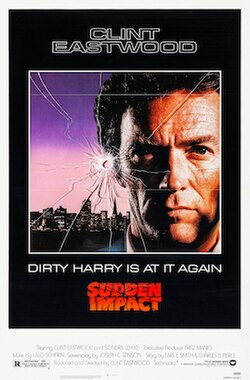
Sudden Impact-1983

Sudden Impact-1983

Director Clint Eastwood

Starring Clint Eastwood, Sondra Locke

Scott’s Review #1,388

Reviewed August 12, 2023

Grade: B+

The groundbreaking and highly influential Dirty Harry, released in 1971 spawned four sequels. Sudden Impact (1983) is the third. It is directed, produced by, and stars Clint Eastwood (making it the only Dirty Harry film to be directed by Eastwood himself) and co-starring Sondra Locke, the star’s longtime girlfriend.

On the surface, the film is standard fare and relatively conventional featuring slick cinematography, a predictable story, shoot ’em-ups, and cartoon villains.

It’s also quite bloody and violent with a theme of justice being served.

Exactly what you’d expect from any action/thriller to come out in the two decades following the original.

The cliches and story setups had by 1983 been seen in so many crime thriller genre films that they feel tired and stale and can be predicted at length.

The expected Dirty Harry catchphrase in Sudden Impact is, “Go ahead, make my day” which is probably what the film is best remembered for though some assume the famous line appears in Dirty Harry.

This isn’t a glowing testament for Sudden Impact.

United States President Ronald Reagan embarrassingly used the “make my day” line in a March 1985 speech threatening to veto legislation raising taxes.

The secret weapon of Sudden Impact though is the inclusion of Locke who is a tour de force in acting and raises the film quite a bit. Her romance with Eastwood (on and off the silver screen) simmers with chemistry making Sudden Impact feel like a much better film than it is.

Jennifer Spencer (Sondra Locke) is a thirty-something blonde bombshell who along with her much younger sister was gang raped, but the crime went unpunished. She now hunts down those responsible one by one and gruesomely shoots them in the testicles before killing them.

She’s not a gal to be messed with.

The murders attract the attention of Harry Callahan (Eastwood), who is on a forced vacation due to his violent approach to police work.

The case gets complicated when Harry develops a relationship with Jennifer, and it’s up to Harry to make the right decision when Jennifer’s life is threatened for a second time.

Locke and Eastwood always do well with marginal material- think Bronco Billy (1980) or Every Which Way But Loose (1978). Both of those films are more comical so it’s riveting to see them co-star in a violence-based thriller.

Not to dwell on Locke (okay, I must), but she’s the best part of Sudden Impact. The first scene involves one of her vigilante murders and her cold, calm, steadiness is magnificent. Through icy eyes, she is filled with rage though is wise and calculating.

When she is not blowing balls to bits, Jennifer leads a successful life as an author and escapes to a whimsical carnival town outside San Francisco to focus on her work. She also finds time to finish killing the remaining members of the gang of rapists.

Locke mesmerizes in every scene she appears in.

Eastwood is good too but his character is the same grizzled, sick of criminal, guy with a gun he’s been since the beginning. Harry’s arguments with the suits in the top office are tired and the actors cast are handily stock types.

The win is Eastwood’s scenes with Locke. As they share dinner there is a romantic tenderness that perfectly offsets the rest of the story. We ask, will he send her to prison or let her go when he inevitably finds out she’s the killer?

Is she justified?

The rapists are cartoon-like and poorly cast and there is no character development. The main villain, Mick (Paul Drake) shrieks and wails and delivers his dialogue in over-the-top fashion. He’s a poor man’s ‘Scorpio’ who he tries to emulate.

A female villain, an assumed lesbian named Ray Parkins, in a purely politically incorrect fashion, has every lesbian stereotype imaginable.

I liken Sudden Impact (1983) to a McDonald’s meal. A greasy Big Mac, fries, and a shake. It’s not fine dining but it’s satisfying and one knows exactly what to expect. Only in this case, Locke is the special sauce.

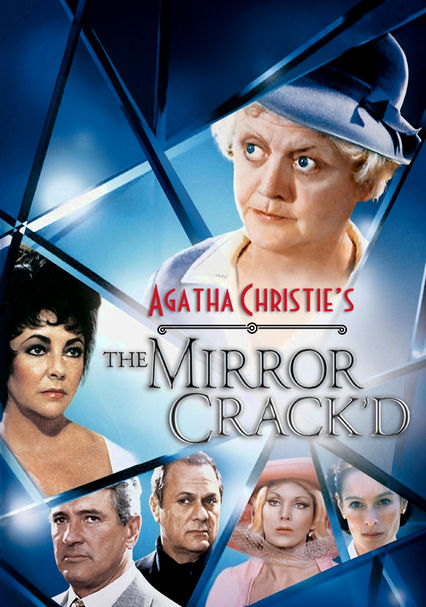
The Mirror Crack’d-1980

The Mirror Crack’d-1980

Director Guy Hamilton

Starring Angela Lansbury, Elizabeth Taylor, Rock Hudson

Scott’s Review #1,371

Reviewed June 22, 2023

Grade: B+

I’m a sucker for any sort of whodunit especially based on an Agatha Christie novel. Some of her treasures like Murder on the Orient Express and Death on the Nile have made for quality filmmaking in the crime thriller genre.

With The Mirror Crack’d (1980) director Guy Hamilton (he directed four James Bond films) collects some of Hollywood’s finest stars and creates an adaption with British authenticity and a knock-it-out-of-the-park finale twist that I didn’t see coming.

Any fans of the long-running CBS sleuth series Murder, She Wrote from the 1980s are treated to gleeful clues that the film influenced the series. Both star the iconic Angela Lansbury.

The main character and murder solver in The Mirror Crack’d is a kindly old woman named Miss Marple played by Lansbury. The actress is aged via makeup to look much older than she was at the time. Lansbury does a good job with the speech and mannerisms of one of her character’s age.

Jane Marple (Lansbury) is tickled pink when two glamorous Hollywood actresses, Marina Rudd (Elizabeth Taylor), and Lola Brewster (Kim Novak), arrive in her quaint English village to shoot a movie.

Drama is sprinkled in when it’s revealed that the two actresses despise each other.

At a welcome reception related to the film, Marina engages in conversation with a longtime fan named Heather Babcock and is momentarily distracted. Soon afterward, the fan collapses and dies, poisoned by a drink intended for Marina.

Pleasure is had by the incorporation of so many stars some way past their prime. My favorite is the dynamic duo of Taylor and Hudson as a married couple. Fans will recall that Hudson’s sad death due to A.I.D.S. in 1985 led to Taylor championing a crusade for research with which the government then refused to be associated.

Her efforts and star power led to tremendous progress to be made as the disease ravaged the world’s LGBTQ+ community.

So, any scene centered on Taylor and Hudson is heartfelt and a pure treat.

Otherwise, the cast of characters is positioned in a familiar pattern to reveal almost everyone would have a reason to kill the glamorous star. Could it be her sexy blonde rival? Or the cranky producer of the film played by Tony Curtis? Or even her hubby Jason?

Geraldine Chapman appears as Ella Zielensky who is secretly in love with Jason and has a good reason to want Marina out of the way. Especially suspicious are her trips to a phone booth to call an unknown person accusing them of murder.

The setting adds value as the small English village is cute and picturesque. Marple’s cottage is perfectly dressed with colors and patterns well suited for her character.

The Mirror Crack’d has a couple of misfires and sometimes has a television movie feel. The comparisons to Murder, She Wrote while nice are also detractors since it makes the film seem like a small screen effort.

The time is supposed to be 1953 and the characters are dressed appropriately but it doesn’t feel authentic. The real year 1980 feels more believable despite the costumes.

While it doesn’t drag a bit it also isn’t quite as good as the aforementioned Murder on the Orient Express (1974) or Death on the Nile (1978).

For a good old-fashioned detective story based on a storied author, one could do worse than watching The Mirror Crack’d (1980). Sure there are other better-produced efforts but the film is a solid, entertaining watch with glamorous stars incorporated.

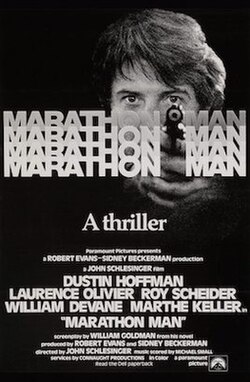
Marathon Man-1976

Marathon Man-1976

Director John Schlesinger

Starring Dustin Hoffman, Laurence Olivier, Roy Scheider

Scott’s Review #1,359

Reviewed April 29, 2023

Grade: A-

Writer, William Goldman, was involved in two politically charged, taut thrillers released in 1976 that can easily be watched back to back. Fast-paced and rapidly edited, thrilling action-packed offerings are on the menu.

The Academy Award-winning All the Presidents Men (1976) and Marathon Man (1976) are highly recommended since both are in the same vein. They are part of why I love 1970s cinema so much freedom and rich character development combined with a sole vision are admirable traits.

John Schlesinger, famous for Midnight Cowboy (1969) and other films, directs.

Both films are written by Goldman and each stars actor Dustin Hoffman so the similarities are endless. And yet, each has its own identity.

In Marathon Man, Thomas “Babe” Levy (Hoffman) is a Columbia graduate student and long-distance runner, residing in New York City. His older brother, Doc (Roy Scheider), is a government agent chasing down a Nazi war criminal named Szell (Laurence Olivier).

Babe does not know Doc’s career until a tragic event finds him involved in a plot of stolen gems and sadistic madmen. Even his girlfriend, Elsa (Marthe Keller), becomes a suspect as everything Babe believes to be true is suddenly turned upside down.

At over two hours there is not a slow moment in the film.

We meet Babe as he runs throughout New York City so that the audience learns his obsession with running could correlate to his need to escape from something.

This proves to be true when we learn the brother’s father committed suicide after being investigated during the Joseph McCarthy era when civilians were suspected and accused of being communists.

So, the backstory made me sympathize with Babe and Doc and fleshed them as characters. Hoffman and Scheider are superb and show the different nuances between the personalities of the brothers. Doc is sophisticated and Babe is common, though highly intelligent.

The musical score, created by Michael Small must be mentioned. Oftentimes in film, the score serves as more or less ‘background music’ and can go unnoticed. This is not the case in Marathon Man and several times I noticed the music-enhancing sequences, especially when peril was involved.

I was pleased when I learned that the iconic Laurence Olivier plays the villain, Szell, in the film. He is believable as a vicious German Nazi who specializes in a unique brand of dental work. First blonde and then bald, the physical nature of the role is showcased. He also calmly performs torturous tactics using dental tools.

Marathon Man is made up of a series of scenes that will either enthrall, make the audience squirm, or in some cases both.

Speaking of dental work, any viewer who has a phobia or dislike of going to the dentist may want to fast forward past the sequence when Babe is forced to endure some stylized poking and prodding. Szell and his henchmen are convinced that Babe knows more than he is letting on and are determined to make him reveal all.

Early on, a terrifying scene centering on road rage in Manhattan is as good as it gets and reveals the gist of the plot. Nazis, anti-semitism, and a fiery gasoline truck encompass a speedy and argumentive car chase scene.

The sequence is heart-racing, nail-biting, and revealing.

Others flesh out the film like a quiet lunch at a lovely French restaurant. Doc takes Babe and Elsa out where they dine on lavish courses of creamy, sophisticated cuisine and wine. The richness of the food and culture enhances the earlier scenes set in Paris.

The final thirty minutes of Marathon Man are the best part. A series of shootouts in the suburban rural farmland and foot chases in downtown Manhattan culminate in a showdown between Babe and Szell near a water tank in Central Park.

A strong appeal for viewers is experiencing scene after scene in New York City as many exteriors were shot there.

The plot of Marathon Man (1976) is sometimes too complicated and all events do not add up satisfyingly. The who’s who and realism is a tough sell but it hardly matters. The film entertains and is a high-energy thrill ride and that is more than enough for me.

Oscar Nominations: Best Supporting Actor-Laurence Olivier

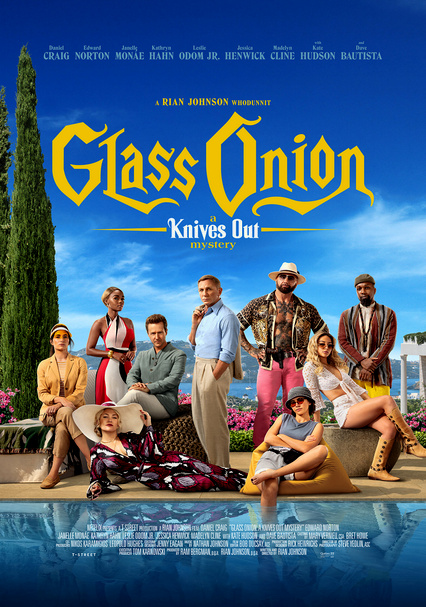
Glass Onion: A Knives Out Mystery-2022

Glass Onion: A Knives Out Mystery-2022

Director Rian Johnson

Starring Daniel Craig, Edward Norton, Janelle Monáe

Scott’s Review #1,331

Reviewed January 5, 2023

Grade: B

I teetered over grading Glass Onion: A Knives Out Mystery (2022), referred to as Glass Onion, a B+ or a B, but the hardline critic in me won out on this day.

If I hadn’t compared it so much to the deliciously witty and inventive Knives Out from 2019, I might have given it a generous B+ rating. Still, it’s also impossible not to compare the two, since the setups and similarities are too apparent.

Rian Johnson, who returns to the fold as director, writer, and co-producer, pays tribute to the fabulous Agatha Christie murder mystery whodunits and the Hercule Poirot detective inclusion with the delightful Daniel Craig as the lead, reprising his role as master detective Benoit Blanc, as he takes on an exciting new case.

A Greek island owned by ultra-billionaire Miles Bron (Edward Norton) serves as the setting for the Southern detective’s latest adventure, which unfolds as a group of the tech giant’s friends gather for a murder mystery party that quickly turns deadly.

I couldn’t watch Miles without thinking of Elon Musk, the current controversial social media Twitter chief executive officer, in all his juvenile buffoonery.

Appearances by top stars Janelle Monáe, Kate Hudson, Kathryn Hahn, and Leslie Odom Jr., and a surprise cameo by Hugh Grant round out the cast. Along with Craig and Norton, this brings enough star power to create buzz.

It’s also appealing that Benoit, a clear ode to Poirot, is the only character who is the same from the first Knives Out story. His character is immediately developed when we see him soaking in a bathtub in his Manhattan apartment, conversing with a male voice offscreen.

He refuses to leave the tub during the very topical COVID pandemic, making the entire film feel incredibly timely and relevant.

Let’s see what happens when the film ages ten years.

We later learn that his husband, Phillip (Hugh Grant), lives with him, and Blanc is gay. How wonderful to incorporate an LGBTQ+ presence into a main character, and icing on the cake is that the studly James Bond actor is all in.

With Blanc’s vague sexuality revealed, the exciting mystery commences with many twists and turns among the characters, led by a fantastic dual performance by Monáe. She plays sophisticated New Yorker Andi and her southern sister Helen Brand.

The other characters are a mixed bag with Hudson and Hahn playing ridiculous, over-the-top roles as a washed-up fashion designer and an aspiring governor, respectively.

But the cartoon character award goes to former WWE professional wrestler David Bautista as the weird, buff guy, Duke Cody, who barely keeps his clothes on.

Still, the characters are a hoot, and the anticipation of how they all connect, who has screwed over whom, and why, is slowly revealed in fun form.

Not to be outdone, there are even revelations of who is screwing whom in the bedroom.

The story isn’t as interesting as the one in Knives Out. The ingenious script is lost, and by the end, it’s a case of who cares? All we want to know is who’s dead and who’s alive, and what does the Mona Lisa have to do with anything?

The cast undoubtedly had a ball making Glass Onion, and the sunny Greek Island locale is a great choice. As the players bask in the sun and saunter around in bikinis, sipping a cocktail or three amid peril, it is great fun for the cast and viewers alike.

It’s unclear if Johnson will create another installment of the Knives Out collection, but I’m on board if he does. I’ve been fascinated by the whodunit genre for as long as I can remember.

Glass Onion: A Knives Out Mystery (2022) isn’t quite as riveting or satisfying as Knives Out (2019), but the film is still enjoyable, thanks to its superior, glossy production values and a great cast.

Oscar Nominations: Best Adapted Screenplay

The Enforcer-1976

The Enforcer-1976

Director James Fargo

Starring Clint Eastwood, Tyne Daly, John Mitchum

Scott’s Review #1,330

Reviewed January 2, 2023

Grade: B+

The Dirty Harry film series is pure, gooey 1970s machismo entertainment.

Featuring a vigilante-type police detective who rids the world of the bad guys is pleasure personified if not all that realistic. In these films there exists only the good versus the destructive and social issues, if they are explored, are not the most relevant part of the film but more reasoning as to why the events are occurring.

Nonetheless, the films are top-notch in action with quality gun fights and violence creating a powerful crime thriller film franchise that still holds up well.

They are much better than the similar yet uninspired and poorly acted Death Wish films featuring Charles Bronson.

The Enforcer (1976) is a third of five films from 1971 until 1988 following the 1971 masterpiece Dirty Harry and the nearly as good Magnum Force in 1973.

This one provides a slightly progressive and feminist approach that would also continue in 1983’s Sudden Impact and adds some much-needed humor creating a lighter touch.

Feminism is the inclusion of a female cop due to a new affirmative action initiative who goes toe to toe with the masculinity and conservatism of our main character.

Officer “Dirty Harry” Callahan (Clint Eastwood) is reassigned from homicide to personnel after his latest use of excessive force exhausts his outranking superiors. Demoralized, he angrily assumes his duties while a new case disrupts the San Francisco Bay Area.

A new terrorist group calling themselves the People’s Revolutionary Strike Force organizes a series of crimes in San Francisco, hoping to enrich themselves. Led by Bobby Maxwell (DeVeren Bookwalter) they wreak havoc and create fear.

When they kidnap the mayor (John Crawford) and steal rockets and rifles for their next attack, Harry and his new female partner, Inspector Kate Moore (Tyne Daly), must stop the terrorists.

To measure up to 1971’s Dirty Harry is a nearly impossible feat but The Enforcer continues the rhythm with largely the same basic script. A main part of the fun is watching the grizzled Callahan feud with his superiors and being reduced to working with a female cop.

Naturally, he and Moore eventually become buddies and I like the lack of sexual chemistry. She’s not interested in his affection and neither is he so their relationship is focused on serving and protecting the public.

Daly is terrific in the role of Moore which led to her career-defining role in the television series Cagney and Lacey. Rather than playing her as a bitch she is warm and determined to immerse into a man’s world.

She’s a great character but unfortunately is not explored as much as she could have been.

The filmmakers also keep the setting of San Francisco intact which is a wise move and a treat for those moviegoers that love a good exterior sequence or two.

A fabulous final sequence finds the events of the film heading to a Giants game at the historic Candlestick Park and finally a showdown at Alcatraz Island. These trimmings are so necessary to fans anticipating the juicy and pulsating locales of the populous city.

No, Eastwood is not the greatest actor in the film but he is the best at playing Callahan. He carries the film seamlessly and will make conservatives smirk as he endures the irritations of liberal-minded decision-makers.

A weak explanation of the real motives of the terrorist group is unimportant. It’s the violence, the thrills, the chases, and Eastwood and Daly that make this movie pure fun.

The Enforcer (1976) doesn’t challenge or add to the creativity of cinematic art but provides a shoot-em-up experience featuring a confident and charismatic main character.

Forever immersed in the good tidings of 1970s cinema is enough to continue the successful string of Dirty Harry films.

Minority Report-2002

Minority Report-2002

Director Steven Spielberg

Starring Tom Cruise, Colin Farrell, Samantha Morton

Scott’s Review #1,318

Reviewed November 27, 2022

Grade: B+

If you study his body of film work, the fascinating thing about acclaimed director Steven Spielberg is the growth and groundbreaking cross-genre categorization of many of his films.

Traversing blockbuster popcorn films like Close Encounters of the Third Kind (1977) and E.T. the Extra-terrestrial (1982) to heavy drama with the 1993 masterpiece Schindler’s List, the man can do it all.

With 2002’s Minority Report, he bravely delves into science-fiction territory with a crime thriller and action tint. The film is tough to follow and mostly reminds me of Inception (2010), a Christopher Nolan vehicle influenced by this film.

Despite the cerebral tone, Minority Report is a fascinating study of futuristic crime-fighting styles with enough twists and turns to keep me engaged though I confess at times having no real idea what was going on plot-wise.

The casting of Tom Cruise is a major win. Who better to carry a film like this except maybe Bruce Willis though Cruise is a better actor. Nonetheless, he is believable as a crime chief with a slick edge and a wicked smile.

Unsure whether or not to trust him he remains at the heart of the success of the film.

Based on a story by science fiction writer Philip K. Dick, ‘Minority Report’ contains a perfect premise to bring to the big screen. Set in Washington D.C. in 2054, police are now intelligent enough to utilize psychic technology to arrest and convict murderers before they commit their crimes.

The setup is fabulous and rife with possibility.

Cruise plays Chief John Anderton, the head of this Precrime unit, and is himself accused of the future murder of a man he hasn’t even met. Following an audit, it is predicted that in thirty-six hours, Anderton will kill a man who is a stranger to Anderton.

Anderton flees, prompting a manhunt led by Witwer (Colin Farrell).

It is revealed that Anderton joined the Precrime program after his son was kidnapped and never found. He is depressed, withdrawn, and addicted to hard drugs, and his wife Lara (Kathryn Morris) has since left him.

But is this all a setup and are others involved in the conspiracy?

The plot goes way off the rails in terms of explanation or logic but the fun is in trying to put the never-ending puzzle pieces together. Truthfully, after a while, I simply gave up this approach and enjoyed the visual eye candy and terrific futuristic style.

I rarely am a proponent of visuals over storytelling but the intelligence of the sequences and the thrilling nature of the acting assured me there was something there. I just wasn’t completely getting it.

Since it’s directed by Spielberg I was confident that the complexities I was being served were not shit. I was comforted by this knowledge and my enjoyment escalated.

Enough props can’t be handed out for Cruise’s dynamic performance parlayed by the coldness and harshness of the overall tone of the film.

Many of Spielberg’s films are heartwarming but this was not to be found in Minority Report (2002) and I liked it even more for that reason.

Spielberg gets another win by suckering me into a cinematic world that he magically can create. This time with perplexities and perhaps even some influence from the Matrix (1999) movies.

Oscar Nominations: Best Sound Editing

The Talented Mr. Ripley-1999

The Talented Mr. Ripley-1999

Director Anthony Minghella

Starring Matt Damon, Jude Law, Gwyneth Paltrow

Scott’s Review #1,259

Reviewed May 27, 2022

Grade: A

The Talented Mr. Ripley (1999) is a psychological thriller that is Hitchcockian and would make the famous director, the esteemed Alfred Hitchcock, damned proud.

The film contains suspense, thrills, mystique, and great writing, and is an exceptional adaptation of the 1955 Patricia Highsmith novel of the same name.

A fun fact is that Highsmith also wrote the novel on which Hitchcock’s 1951 film Strangers on a Train was based.

In my opinion, the title role is the best of Matt Damon’s lengthy career, rivaling that of his debut in Good Will Hunting (1998), also a tremendous effort. His riveting portrayal showcases that he plays several layers simultaneously: calculating, sinister, vulnerable, jealous, and unhinged.

Sometimes all at once.

He shockingly was omitted from the Best Actor Oscar list which is unforgivable considering his great work. Instead, he was nominated in later years for lesser films like Invictus (2010) and The Martian (2016).

With his blonde clean-cut hairstyle, short and parted on the side, and big, studious glasses, he is half wholesome and half creepy.

The fact that the character is gay is icing on the cake and delicious for a film set in the 1950s when having an alternative lifestyle was strictly forbidden.

The setting is mainly lavish and sunny coastal Italy in the late 1950s. Tom Ripley (Damon) craves a lifestyle of luxury and manipulates his way into the life of wealthy playboy Dickie Greenleaf (Jude Law).

When Dickie’s father asks Tom to bring his errant son back home to America, Dickie, and his beautiful expatriate girlfriend, Marge Sherwood (Gwyneth Paltrow), never suspect the dangerous extremes to which Ripley will go to make their lifestyle his own.

The best part of The Talented Mr. Ripley is the compelling suspense and the twists and turns that result. It’s astounding how many layers of the plot exist without the experience being confusing or paced poorly.

Speaking of the pacing, this is another achievement of the film. Director Anthony Minghella wisely quickens the action from the snail’s pace of his earlier film The English Patient (1996) which I loved.

We immediately know much about Tom and how he makes his living by charming people and forging signatures to make ends meet. His innocent deceit soon turns fatal as he spirals downward and becomes a pathological liar and sociopath in addition to a cold-blooded murderer.

Law is tremendous as Dickie and the bold character is ambiguous in his sexuality while Tom’s is clearer. I love this about Law’s character. He is handsome and a lady’s man which would make him ripe for the picking for a closeted gay man in the 1950s to become enamored.

The key to ponder is whether the feeling is mutual or not. This remains ambiguous.

The acting, superior in every way, is made all the richer because the film is a character study, and the relationship between Tom and Dickie is cleverly dissected.

The best scene occurs on a small boat as tensions reach a crescendo between the two men. This results in dire activity.

Besides the action starting in New York, the rest of the story takes place in Italy and is mostly shot on location. This only enhances my enjoyment of the film because it showcases the Mediterranean and southern Italy more than the more familiar cities.

Not to disappoint, astounding sequences in Rome and Venice do occur.

Because of the cinematography and locales, the film has a glossy and polished look which is terrifically counterbalanced to the darkness of the story. Think American Psycho (2000) but more subdued with a larger budget.

The Talented Mr. Ripley (1999) is one of the best to emerge from a decade in cinema that was terrific. It is not as well-remembered as some others but I strongly encourage a watch to uncover a series of riches led by bold storytelling.

Oscar Nominations: Best Actor in a Supporting Role-Jude Law, Best Screenplay Based on Material Previously Produced or Published, Best Art Direction, Best Costume Design, Best Original Score

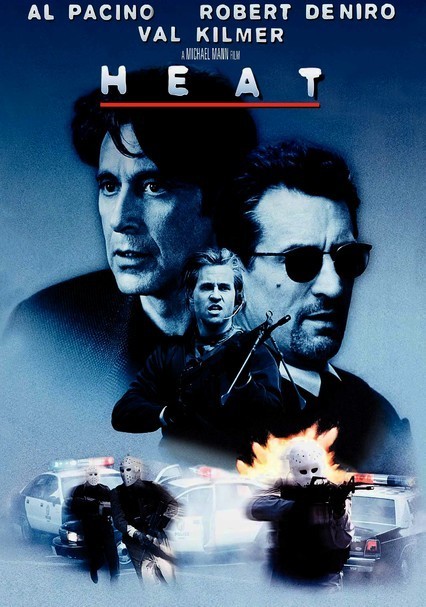
Heat-1995

Heat-1995

Director Michael Mann

Starring Al Pacino, Robert De Niro, Val Kilmer

Scott’s Review #1,228

Reviewed February 12, 2022

Grade: A-

Fans of the popular 1980s NBC television series, Miami Vice will recall that Michael Mann was the Executive Producer of the show during its run.  He has a distinctive crime thriller style that goes perfectly well with Heat, a sizzling 1995 offering starring two film greats-Al Pacino and Rober De Niro.

The fact that the pair do not appear too often on screen together can be forgiven because when they are the stars align and the power of quiet scenes cannot be outdone. I savored over the moment when they first appeared together. Quality over quantity.

De Niro plays Neil McCauley, a lifelong criminal who is trying to handle damage control caused by one of his men, while also planning one last big heist before retiring to parts unknown. He meets a lovely young Los Angeles-based artist played by Amy Brenneman in a diner and the two plan to relocate abroad.

Meanwhile, Lieutenant Hanna (Al Pacino) is a seasoned officer attempting to track down McCauley and his cohort while dealing with the chaos in his own life, including the infidelity of his wife (Diane Venora) and the unhinged mental health of his stepdaughter (Natalie Portman).

McCauley and Hanna discover mutual respect, even as they try to thwart each other’s plans. The two characters become doppelgangers of one another. The situation comes to a cat-and-mouse-based conclusion on the tarmac of LAX airport.

To say that Heat is a by-the-numbers 1990s thriller is a fair assessment although it’s way better than that classification and it’s of that genre.

For starters, the acting is superior, and obviously, De Niro and Pacino bring a level of professionalism to the film in the lead roles. My favorite scene is not the one you’d most expect me to say but rather a quiet and powerful chit-chat in a small coffee shop. They are rivals, having lived opposite lives, and yet have troubled lives that mirror each other.

Without a doubt, Hanna wants to bring McCauley to justice, and yet he admires him and sees parts of himself in the man. The feeling is mutual and the two actors relay this revelation without actually speaking the words. Viewers immerse themselves into the characters pivoting from this powerful scene.

There are a ton of characters in Heat but each one feels like he or she has much to offer. Juicy storylines are introduced but never forgotten even if not part of the main canvas. Hanna’s wife and stepdaughter play a central part in the final act even though they mainly appear during the first chapter.

In supporting roles, Val Kilmer and Ashley Judd share beautiful chemistry and a melancholy storyline as a damaged couple trying to survive surrounded by a life of crime.

At two hours and fifty-two minutes, there is plenty of time for each character to make their mark.

I love the rich character development that Heat offers but sometimes it’s admittedly tough to keep track of the motivations of the characters and how they tie into the main action.

Mann’s style is all over the place and even the musical score brought me back to the episodic song intervals that Miami Vice created. The moody and dark atmosphere of dingy and crime-infested Los Angeles is perfectly placed against glossy and glamorous high-rise and sprawling estate scenes. The bright and luminous city skyline is a feast for the eyes.

The cop/criminal dynamic is the main draw as Heat flexes its masculine muscles scene after scene. A bloody bank heist gone wrong at the beginning of the film cements what Mann is trying to create here. A guy’s film with enough juice to hook the introspective film viewer too.

Not remembered as well as it probably should be, Heat holds up surprisingly well when put up against similar but hokey 1990s action films like Lethal Weapon and the Die Hard films.

Though there’s not a whole lot that is new in Heat (1995), rich writing and powerful acting win out every time, and of course, Pacino and De Niro are worth the price of admission.

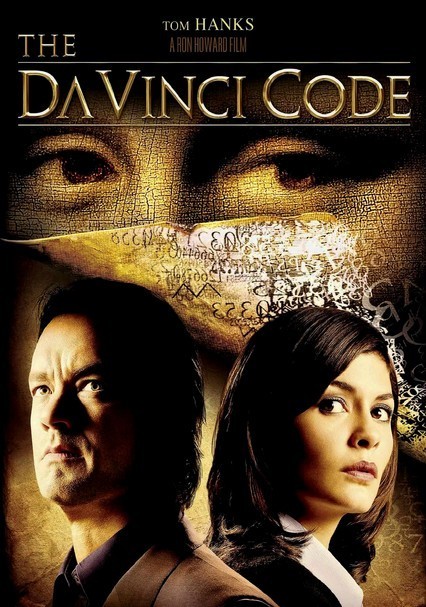
The Da Vinci Code-2006

The Da Vinci Code-2006

Director Ron Howard

Starring Tom Hanks, Audrey Tatou

Scott’s Review #1,223

Reviewed January 23, 2022

Grade: B+

Based on the best-selling 2003 novel written by Dan Brown, Ron Howard directs the film version of The Da Vinci Code (2006). Since I haven’t read the novel at this writing I cannot fully give a fair assessment from the perspective of comparison but my hunch is that the book is superior to the film.

Isn’t it usually?

The film is entertainment personified and Howard wisely casts a big name like Tom Hanks to draw audiences to the theaters.

It’s a slick and adventurous thrill-ride which is all well and good but it’s also a type of film that you can see once, enjoy for what it is, and then never need to see again.

The most fun is the controversy the film, like the book, encountered.

It was met with especially harsh criticism by the Catholic Church for the accusation that it is behind a two-thousand-year-old cover-up concerning what the Holy Grail is, the concept that Jesus Christ and Mary Magdalene were married, and that the union produced a daughter.

So, those who are sensitive or uptight about religion may want to skip the film and the novel.

But this is Hollywood, after all, and Howard and Hanks do what they do best. They create and produce a fun, solid, blockbuster flick.

When the curator of the Louvre is found murdered in the famed museum’s hallowed halls, Harvard professor Robert Langdon (Tom Hanks) and cryptographer Sophie Neveu (Audrey Tautou) must untangle a deadly web of deceit involving the works of Leonardo da Vinci.

The most enjoyable parts are the locales and the focus on art. The famous Louvre in Paris, France permitted to film relevant scenes at their premises but only a replica of the Mona Lisa was used during filming as the crew was not allowed to illuminate the original work with their lighting.

The Westminster Abbey scenes were instead filmed at Lincoln and Winchester cathedrals.

The Parisian nightlife is gorgeous and murky in its depiction and a plentiful helping of sequences are shot throughout the United Kingdom with Scotland and England receiving the most representation.

So, while strict limitations were harbored, there is an international flavor to The Da Vinci Code that works wonderfully, especially for those who have traveled to those locations.

For art lovers, particularly of da Vinci himself, there is satisfying respect for the art. I always attempt to improve my art knowledge so this film is helpful to me and the novice art fan to educate themselves and learn more about the subject.

Hanks, as usual, carries the film in his steady-Freddy approach.

While not as compelling as his roles in either Philadelphia (1993) or Forrest Gump (1994), the actor can convey his suspicious plight and the need and desire to solve the complex puzzle.

Audiences will follow suit.

The Da Vinci Code (2006) was riddled with bad reviews and jest mostly at its ridiculous plot and absurd story. While there is a grain of truth to this, I found the film enjoyable entertainment and that’s all I expected out of it.

The film pleases and satisfies if not taken too seriously.

The Good Liar-2019

The Good Liar-2019

Director Bill Condon

Starring Ian McKellen, Helen Mirren

Scott’s Review #1,201

Reviewed November 26, 2021

Grade: B+

The Good Liar (2019) is a well-acted film, but by the numbers, the thriller is made as well as it can be, thanks to superior acting. Casting British heavyweights Ian McKellen and Helen Mirren automatically provides enough star power and credibility to save any lame plot.

This is the first time the actors have appeared in a film together, though they have appeared on stage together.

The film moves briskly, and there is never a moment of boredom. While the main storyline at first is intriguing, the inevitable twist at the end is satisfying. Suspension of disbelief is required, and a portion of the backstory is unnecessary.

Nothing is as it seems.

Roy Courtnay (McKellen) is a dashing career con man. He is suave and used to getting what he wants out of people, to their advantage and disadvantage. He cagily dips into the online dating pool and stumbles upon an older woman named Betty McLeish (Mirren) ripe for the picking.

She is rich, divorced, and lonely.

What could go wrong?

As Betty opens her life and home to him, Roy is surprised to find himself caring about her, turning what should be a cut-and-dry swindle into the most treacherous tightrope walk of his life.

Betty’s grandson, Steven (Russell Tovey), constantly annoys Roy when he questions Roy’s intentions and urges his grandmother to be wary of the man.

As the plot began, I kept thinking that there was no way Betty could be so gullible, lonely, or not. This kept me engaged until the big reveal that filled the final thirty minutes or so. If The Good Liar did not contain something more than the banal plot, it would have been a real dud.

To continue with the storyline element, Betty’s ultimate motivations, while clever, are hard to believe. Not to ruin any plot points, but the whole Nazi component from the 1940s feels superfluous and easy. The revenge motives feel extremely plot-driven and are meant as a thrown-in explanation.

From a timeline perspective, it also doesn’t make much sense. If events take place during present times, it would put Roy and Betty in their 90s! The characters are assumed to be in their mid-70s.

Despite Roy being the villain, I fell in love with him. His shenanigans appealed to me despite my better judgment. His trickery when he feigns a knee injury to manipulate Betty while dashing into a corporate meeting minutes later was enamoring instead of mortifying.

The chemistry between McKellen and Mirren is tremendous. Both actors know how to carry a film and are confident in their abilities. This comes across onscreen, and the romantic element works.

The Good Liar also gets respect from me for featuring actors in their golden years in leading roles.

Bill Condon has directed various films, including Chicago (2002) and Dreamgirls (2006). The Good Liar is hardly on this level or one of his finest, but the director adds enough seasoning to assure a compelling experience.

The locales of London and later Berlin, Germany, are robust and a treat for any viewer who is partial to international filming—I am! Plenty of busy London streets and German architecture appear during the film.

McKellen and Mirren’s slickness and excellent acting save The Good Liar (2019) from the drivel it might have been with lesser actors and inferior direction. Instead, it’s a clever film that toys with its viewers, keeping them engaged until the end.

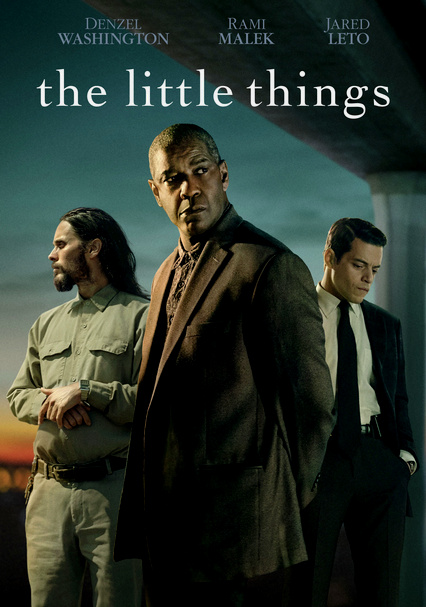
The Little Things-2021

The Little Things-2021

Director John Lee Hancock

Starring Denzel Washington, Rami Malek, Jared Leto

Scott’s Review #1,191

Reviewed November 5, 2021

Grade: B

The serial killer genre in film always fascinates me. Gems like Dirty Harry (1971), The Silence of the Lambs (1991), Seven (1995), and Zodiac (2007) immediately spring to mind as top-of-the-heap works.

John Lee Hancock, who directs The Little Things (2021), thinks so too, as he borrows from those pictures throughout his film.

The film features superior acting and a fantastic mood, complemented by practical musical score elements and absorbing cinematography of Los Angeles and its surrounding areas.

The script must have been compelling enough to attract heavyweights like Washington, Malek, and Jeto to join on board.

Despite these wins, The Little Things is lackluster and ultimately disappoints. I was ready to award it a solid B+ if not for the confusing and unsatisfying conclusion, which reminds me of a weak copy of those mentioned above, Seven.

Deputy Sheriff Joe “Deke” Deacon (Washington) joins forces with Sgt. Jim Baxter (Malek) to search for a serial killer who’s terrorizing Los Angeles. The blueprint is similar to a case that Deacon worked on and ended with a deadly mistake and his resulting heart attack.

As the pair track the suspected culprit, a loner named Albert Sparma (Leto), Baxter becomes aware of Deke’s inner demons and risks going down the same emotionally wrecked path.

A cat-and-mouse game ensues with Sparma continually toying with both Deke and Baxter.

The story is familiar territory and sets the stage for the rest of the film. How many times in film have we seen a detective tortured over a case? Despite Sparma being the only real suspect and presumed serial killer, we never do learn whether or not he did the deeds.

One girl who escaped the killers’ clutches may recognize Sparmas’ boots, but is dismissed after concluding that, since he is in police custody, he must be the killer.

The opening sequence is excellent despite using a direct rip-off of the scene in The Silence of the Lambs where the girl is cruising down an empty desert road at high speed, singing a rock song without a care in the world.

Thankfully, they had her crooning a different song, but the scene mirrors the other. She is pursued by a killer in another car. The scene is a terrific way to start.

The ensemble does good work with the characters they play. Leto gets the showiest role while Washington plays yet another police detective, a role he now can probably play in his sleep, but always does well.

Malek was cast based on the success of his Oscar-winning portrayal of Freddie Mercury in Bohemian Rhapsody (2018).

Leto received enough acclaim to earn a Screen Actors Guild Award nomination and a Golden Globe nomination. This prompted me, and undoubtedly others, to see The Little Things, which suffered at the box office due to the COVID-19 pandemic.

I didn’t buy the period of 1990-1991 for a second, regardless of how many shiny Chevy Impalas were used in the production. None of the characters looked like the time that it was supposed to be, though I admired the now old-fashioned diners and storefronts they used.

I don’t know much about Hancock, who both directs and writes The Little Things, but looking at his filmography, he has produced such works as The Blind Side (2009) and Saving Mr. Banks (2013).

Since both of these films are safer works, it’s unsurprising that much of the film resembles watching an episode of CSI.

Hancock could do with a dose of rawness over sleekness in his next film.

The Little Things (2021) pales in comparison to other, better-known genre films and will not be remembered well, despite making a valiant effort to play with the big boys.

Unfortunately, it’s a minor league experience that borrows too heavily from other films and therefore lacks a distinct identity.

I shudder to think of the result if not for the big stars who appear.

The Friends of Eddie Coyle-1973

The Friends of Eddie Coyle-1973

Director Peter Yates

Starring Robert Mitchum, Peter Boyle

Scott’s Review #1,151

Reviewed June 11, 2021

Grade: B+

Borrowing heavily from the standard cop thriller films that emerged during the early 1970s but containing a unique cynicism and a point of view all its own, The Friends of Eddie Coyle (1973) is a taut and engaging crime thriller that will please fans of the genre but never bailing on those cinema fans seeking a more intellectual experience.

The Boston landscape is plentiful and a treat for fans of locale shoots and 1970s qualities.

A superior film based against the many similar films to be created during the decade, there is a moroseness that encompasses the experience. I felt sorry for the main character and The Friends of Eddie Coyle lacks a clear good guy versus bad guy standard. This helps the film.

What I’m trying to say is that those crime thriller fans desiring a clear hero or standard characterization might be unsatisfied or miss the point, though the bank robbery scenes alone are worth the price of a ticket.

Some say Robert Mitchum, cast in the title role gives his finest film performance but I wasn’t entirely blown away.  The film is an ensemble and at times Eddie Coyle feels like a supporting character.

Think Ma Rainey in Ma Rainey’s Black Bottom (2020).

Instead, I ruminated over his brilliant performances in my two favorite films of his, The Night of the Hunter (1955) and Ryan’s Daughter (1970).

His performance is fine but all the actors bring their A-game.

Aging low-level Boston gunrunner Eddie Coyle (Mitchum) is fearful of the possibility of several years of jail time for participating in a truck hijacking in neighboring New Hampshire. Having a wife and kids dependent on him, and feeling old and desperate, he volunteers to funnel information to Dave Foley (Richard Jordan), an ATF agent.

Eddie buys some guns from another gunrunner, Jackie Brown (Steven Keats), then gives him up to Foley, but the agent isn’t satisfied. Panicked, Eddie decides to also give up the gang of bank robbers he’s been supplying, only to find that Foley already knows about them, and the mob believes Eddie snitched.

These events do not bode well for poor Eddie who now has a mark on his back.

The Friends of Eddie Coyle has a handful of plots happening simultaneously. There is Eddie’s predicament, the saga of the bank robbers and the bank owners they put in peril, and a bartender played by Peter Boyle (of television Everybody Loves Raymond fame), who is also an informant.

The stories intertwine but sometimes not quite enough and a conclusion over how the players relate is sometimes unclear.

From the get-go, I was reminded of Dirty Harry (1971) which arguably propelled the cop/crime thriller/crime drama to mainstream audiences.

Dave Grusin gets credit for the music composition and creates a similar score to Dirt Harry with funky tempo, and time-relevant arrangements. They work and fit the times perfectly.

Differing from Dirty Harry, which is a superb film in many ways, is the messaging. Whereas, Dirty Harry professes a good vs. bad approach and a conservative pro-gun stance, The Friends of Eddie Coyle doesn’t partake in schooling the audience on the viewpoints of most cops.

The bad guys are complex and nuanced characters with worries and fears to wrestle with themselves.

The location sequences are plentiful and give the film authenticity and Boston appreciation. The classic Boston Garden is featured as two characters attend a Boston Bruins hockey game. The Charles River, downtown, and surrounding areas like Quincy are featured. Director, Peter Yates certainly creates a blue-collar, Irish-represented community.

Lovers of classic 1970s American automobiles will be in heaven. I spotted a Ford Galaxy, a Chevy Impala, and similar full-sized cars. One character drives a green muscle car. I mean, there are tons and tons of car sequences in this film.

With the seedy Boston underworld, a terrific performance by Robert Mitchum, and enough guns, car chases, and bank robberies to satisfy the action audience, The Friends of Eddie Coyle (1973) is a win.

The film didn’t stick with me as much as I would have liked but it’s a striking entry in the crime thriller genre.

The French Connection II-1975

The French Connection II-1975

Director John Frankenheimer

Starring Gene Hackman, Fernando Rey

Scott’s Review #1,148

Reviewed June 2, 2021

Grade: B

The French Connection, the winner of the coveted Best Picture Academy Award for pictures released in 1971, is a brilliant film, holding up well as a cream-of-the-crop cop film.

An action film winning an Oscar is as rare as a horror film winning it. It’s rare.

The decision to make a sequel is debatable but The French Connection II (1975) forges as a decent action crime thriller but hardly on par with the original.

Is anyone surprised?

Sequels rarely usurp their predecessors especially when The French Connection is such a superior genre film. In a way, Part II didn’t have much of a chance measured up against Part I.

Films like The Godfather only come around once in a lifetime.

Unfortunately, William Friedkin did not return to the fold to direct, replaced by John Frankenheimer, best known for the nail-biting The Manchurian Candidate (1962).

Thankfully, Gene Hackman did return. He helps the film from an acting perspective and gives his all in a tough role. His partner, played by Roy Scheider does not appear and is not mentioned.

Picking up a couple of years after the first one ended, Detective “Popeye” Doyle (Hackman) is still hot on the heels of cagey and sophisticated drug trafficker Charnier (Fernando Rey).

Doyle hops a flight to lovely Marseilles, France. Away from his familiar New York City territory, he struggles to assimilate himself in a strange city and conquer the drug ring to bring Charnier down.

Doyle is accosted and spends time as a dreary heroin addict in rough confines before being tossed away and forced to recover cold turkey style. He becomes even more determined to bring the bad guys to justice- dead or alive.

As a stand-alone action film, The French Connection II is not a bad experience. It is certainly better than the still-to-come 1980s doldrums like the Die Hard and Lethal Weapon cop/buddy films that marginalized the genre into cookie-cutter popcorn films.

The gripping New York City is replaced by the equalling compelling French landscape. Gorgeous locales like the French Riviera and the Meditteranean Sea are featured but Marseilles is not Paris. There exists a seediness and dirtiness that helps the film a bit.

Hackman acts his ass off, especially as a drug addict. I shudder to think of a weaker actor trying to pull off this acting extravaganza. From scenes featuring his withdrawals to his drug cravings is exciting to watch and showcase Hackman’s wonderful acting chops.

But the intent is to produce a good action film after all and that effort is mediocre. The French Connection II is simply not as compelling as The French Connection and despite some decent chase scenes and a cool finale where Doyle gets his satisfaction, there is little else but by-the-numbers activity.

To be fair, the final fifteen minutes is the best part of the film.

Remember the frightening car chasing a subway sequence? Or the delicious cat-and-mouse subway sequence between Doyle and Charnier?

Brilliant scenes like this do not exist.

A few clichés are bothersome. Predictably, Doyle stands out like a sore thumb in France and his hot-headedness emerges quickly, offending or pissing off the French authorities. He is not the most likable character and I frequently found myself rooting for the bad guys!

I don’t think I was supposed to.

Other implausibilities occur like the boneheaded decision to send Doyle to Marseilles, to begin with. Was he the only detective, including the French authorities, capable of catching Charnier?

What was the point of the old-lady heroin addict stealing Doyle’s watch?

A shadow of The French Connection, The dull titled The French Connection II (1975) is a weaker effort but still respectable as compared to other genre films.

This is mostly because of the French landscape and the return of Gene Hackman.

Absence of Malice-1981

Absence of Malice-1981

Director Sydney Pollack

Starring Paul Newman, Sally Field

Scott’s Review #1,055

Reviewed August 20, 2020

Grade: A-

Absence of Malice (1981) is a terrific, slick crime thriller that while compelling and way above average in content, feels like a studio creation and a starring vehicle for its two A-list stars.

There is little wrong with this since Paul Newman and Sally Field are top-notch talents and the resulting project has tension, thrills, and a relevant concept.

I loved the Miami locales as the hot and steamy atmosphere helped set the proper tone tremendously with sizzling romance and intrigue. Despite feeling manipulated by the casting, the film nonetheless feels fresh and authentic.

The film compares to 1976’s magnificent All the President’s Men as far as story and looks go, though Absence of Malice is much more mainstream.

The former has more grit and dirt while the latter adds some romance that may or may not have been a wise decision and the chemistry between Newman and Field is mediocre, but it’s the story that works.

In rock n roll terms, Absence of Malice is the opening act to All the President’s Men’s headliner. They make a perfect double-bill.

Field plays Megan Carter, an ambitious young journalist who writes a scathing article implicating Michael Gallagher (Newman), a successful liquor wholesaler with ties to a criminal family, with the disappearance of a labor leader.

When he confronts Megan, she sees his side, and the duo team up to find the truth. Complicating matters is their mutual attraction which leads to romantic interludes.

The initial setup seems like a ploy to have Megan and Michael at odds and then fall madly in love. Fortunately, the story has more depth than that.

Any trite 1980s or 1990s romantic comedy uses the same trick. No, not only do sparks fly but the characters realize that Megan was duped to write the article. This sets off a series of events to figure out who wants to frame Michael and why. And why Megan has been “chosen” to help see this through.

There is plenty of political espionage and other things to keep the audience engaged. Similar genre films would flood movie theaters throughout the decade becoming watered down.

If Absence of Malice was released in 1988 or 1989 it would not have had the same effect as it did upon release in 1981.

The soggy 1980s style of filmmaking had not yet appeared, so I like to think of Absence as more of a 1970s film.

Sally Field is a Nancy Drew type, a sleuth determined to solve a mystery. She is assertive, yet feminine with a trendy hairstyle.

Newman is, well, Newman. Aging handsomely with his dazzling blue eyes he can charm the pants off any woman. I didn’t quite buy the romantic element and not because he is at least twenty years older than she. He is suave and charming, and she is so strait-laced that the romance doesn’t work.

The film would have been better as a buddy film with a male and a female buddy.

Supporting stars flesh the film out nicely, especially Melinda Dillon who is fabulous in the role of Teresa Perrone, the conflicted friend of Michael’s who serves as his alibi.

In a nicely crafted side story, she suffers because her abortion is revealed to the public. Teresa, a devout Catholic must decide between life and death. Admirable is it to give a supporting character a good, juicy story.

Pollack is the right director for the job and he successfully crafts a thriller that is laden with liberal beliefs and serves up a message film without losing the tension.

Absence of Malice (1981) has snippets of style and tone reminiscent of some of his other films like They Shoot Horses, Don’t They (1969), The Way We Were (1973), and The Electric Horseman (1979).

My mind wanders thinking about a potential Robert Redford/Jane Fonda pairing instead of Field and Newman, or some combination of a Barbra Streisand/Newman/Redford/Fonda mix.

I am not sure if Absence of Malice (1981) is still on anyone’s radar, but some forty years later the message couldn’t be timelier.

When journalists are regularly attacked by government officials for providing “fake news” or “alternate facts” this film is a refreshing reminder that more often what they seek is to uncover corruption and get to the truth.

Oscar Nominations: Best Actor-Paul Newman, Best Supporting Actress-Melinda Dillon, Best Original Screenplay

Uncut Gems-2019

Uncut Gems-2019

Director Ben Safdie, Josh Safdie

Starring Adam Sandler, Idina Menzel

Scott’s Review #1,049

Reviewed August 5, 2020

Grade: A-

The Safdie brothers have quickly emerged as a directing force to be reckoned with, producing two “gems” in only three years.

Co-written by Ronald Bronstein, the final product is jagged, fast-paced, and frighteningly intense.

Uncut Gems (2019) follows up the similarly themed Good Time (2017), giving star Adam Sandler his most significant role yet.

Yes, his performance even rivals the brilliant one in Punch-Drunk Love (2002), leading him to his first Independent Spirit Award win for Best Male Lead.

He was robbed of an Oscar nomination. We can’t have everything.

Playing a loud-mouthed Jew is hardly new territory for the actor. Think of most of his screwball comedies from the 1990s and 2000s before he delved into serious actor territory. In the dreadful Jack and Jill (2011), he played two of them!

But a trip down memory lane is surely not what the actor prefers; instead, he undoubtedly prefers to veer off course to more mature movies for the latter part of his film career. Uncut Gems made money, so let’s hope so.

We meet Howard Ratner (Sandler) following his first-ever colonoscopy, which leaves him anxious and irritable.

On better days, he is needier and a somewhat lovable teddy bear as he carries on an affair with his employee, Julia (Julia Fox), and his estranged wife Dinah (Idina Menzel), who has agreed to a divorce after Passover.

Howard runs KMH, an upscale jewelry store in the Diamond District section of New York City. How he manages to land and carry on with both gorgeous ladies is a mystery, but Dinah is a kept woman, and Julia’s father is in the jewelry industry, thus explaining why Howard is.

There is something particularly charismatic about Howard that draws other characters and the viewers to him.

As revealed at the beginning of the film and the main storyline, Howard has made a deal with Ethiopian Jewish miners in Africa to obtain a valuable black opal and sell it to him at a low price, presumably so that he can make a substantial profit from it in the United States.

It is also quickly established that Howard is a mess, owing $100,000 to his brother-in-law and loan shark. To complicate matters, his shady business associate brings basketball star Kevin Garnett into Howard’s shop.

After spotting the opal, he asks to borrow it for one night with his NBA Championship ring as collateral. This cannot end well, and it doesn’t.

The subsequent activity in Uncut Gems is crude, foul-mouthed, and off-putting to some. I have friends who watched eight or twelve minutes of it and either turned it off or left the theater in a huff.

If you are expecting a comedy rife with potty jokes or other juvenile humor, look elsewhere.

This is the real deal, with a deadly ending that is impossible to imagine. I loved the settings of Manhattan, Long Island, and Mohegan Sun in Connecticut the best.

The Safdie brothers have two major knacks. They can craft tense, edge-of-your-seat crime thrillers like nobody’s business with a pulsating backdrop and a herky-jerky editing style. They can also catapult A-list actors teetering on the verge of being typecast for specific roles into the deep waters of creativity and sink or swim risk.

No better example than Robert Pattinson’s risky turn as a grizzled bank robber in Good Time (2017), shedding his sterile, pretty-boy image that The Twilight (2008-2013) films brought him. This led to his fantastic turn in The Lighthouse (2019).

The soon-to-be household name directing team does not deserve all the credit, though, even though the men serve in a variety of key positions, including acting, editing, shooting, mixing sound, and producing their films.

Sandler has become an interesting and versatile actor as he forges into the drama vein. Happy to roll up his sleeves and do an indie film for little money (like he needs it!), he proves that an unlikeable character can have hints of likability, black humor, and pizzazz.

He completely embodies Howard, making the audience love and hate him. He balances two women, schemes to get rich, and neglects his kid’s school play, yet he is appealing.

Let’s ceremoniously proclaim 2019 as the year that stars previously known for generic films, determined to break out with challenging and fantastic roles, were shunned by the Academy.

Jennifer Lopez, shockingly snubbed for Hustlers (2019), is being punished for years of mediocre films such as Maid in Manhattan (2002) and Monster-in-Law (2005), which join her compadre Sandler in two of the biggest snubs of the decade, with Uncut Gems (2019).

Perhaps an Oscar will be in their future if they stay the course and remain true to the work.

Independent Spirit Award Nominations: 3 wins- Best Feature, Best Male Lead-Adam Sandler (won), Best Director-Benny Safdie and Josh Safdie (won), Best Screenplay, Best Editing (won)

Knives Out-2019

Knives Out-2019

Director Rian Johnson

Starring Ana de Armas, Daniel Craig

Scott’s Review #969

Reviewed December 17, 2019

Grade: B+

Knives Out (2019) is a cleverly constructed whodunit, crafted in a style not dissimilar from the famous board game Clue. This facet is mentioned by one character during a scene in the film.

With a sizable cast of film stars, both young and old (mostly old), the result is a good time, featuring intelligent writing, surprises, and a crowd-pleasing tone. The project is presented by a cast who undoubtedly had a ball during filming.

The point of the film is to try and figure out whodunit and why, in perfect murder mystery form.

It is explained through narration that wealthy crime novelist Harlan Thrombey (Christopher Plummer) has invited his family to flock to his mansion for his eighty-fifth birthday party. The next morning, Harlan’s housekeeper Fran finds him dead, apparently having slit his own throat.

An anonymous figure hires private detective Benoit Blanc (Daniel Craig) to investigate the situation. When Blanc arrives at the grand estate to interrogate family and friends, tidbits of scandal and intrigue slowly emerge as layers are revealed.

The sizable cast features Hollywood stalwarts like Jamie Lee Curtis (Linda, Harlan’s daughter), Don Johnson (Richard, Harlan’s son-in-law, and Linda’s husband), Chris Evans (Ransom, Harlan’s grandson), Michael Shannon (Walt, Harlan’s youngest son), and Toni Collette (Joni, widow of Harlan’s deceased son Neil).

Helpful is how the film takes the time to introduce and explain each prominent character, so that the viewer has a good sense of who’s who and how one character relates to the others before the tangled web unravels.

The delicious aspect of Knives Out is the numerous twists and turns it offers throughout its runtime.

Surprisingly, it was a key revelation exposed quite early on, so that the pacing is more left of center than classic whodunits of days past. Once the new story arc is revealed, the plot thickens further, and we know that more events will ultimately unfold, as the story cannot be this simple.

This successfully kept me engaged as a viewer throughout the entire experience.

Having witnessed the previews at length and the way the trailer presents a Hercule Poirot/Agatha Christie/Jessica Fletcher-type sleuth to solve, it was delightful to see one character snuggling on the couch, absorbed in an episode of the 1980s television series “Murder, She Wrote.”

Director Rian Johnson offers several sly homages to influential tidbits of pop culture that helped shape his film and retain its amusement.

Another momentous positive is the incorporation of a political discussion among the family as they brood and fret over how much money they stand to inherit from their dead patriarch.

Donald J. Trump, a man who catapulted the United States into controversy post-2016, is never mentioned by name. Still, immigration, children in cages, and expletives are carefully hurled about in his honor, so there is no question about the connotations.

Harlan’s caregiver is Marta (Ana de Armas), the heroine of the film and the standout, whose mother is an undocumented immigrant.

So political overtones abound.

Knives Out seamlessly blends dark humor with traditional mystery, ensuring it never loses its edge. The big reveal at the end is neither brilliant nor disappointing. It simply bubbles to the surface after numerous red herrings and lies.

The final sequence is palpable, and savvy viewers will wonder what one character will possibly do next to either please or anger the rest of the characters.

Might a sequel be at hand?

A film not meant to be high art or anything more than an entertaining good time, Knives Out (2019) achieves its intent by offering an experience reminiscent of an Agatha Christie tale that is fun for the audience.

The benefits are reaped, as the film received an enormous box office return. Thanks in large part to a talented cast, a gloomy mansion, and wealthy individuals faced with peril and comeuppance, these elements make for a wonderful recipe for a good, solid mystery.

Oscar Nominations: Best Original Screenplay