Category Archives: Bob Clark

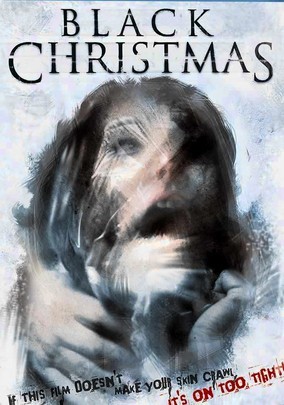
Black Christmas-1974

Black Christmas-1974

Director Bob Clark

Starring Olivia Hussey, Margot Kidder, John Saxon

Top 250 Films #39

Top 40 Horror Films #9

Scott’s Review #309
70057846

Reviewed December 29, 2015

Grade: A

Black Christmas (1974) is one of my all-time favorite horror films and, in my opinion, an underappreciated classic.  Somehow, it is just not the first, second, or third film mentioned when most discuss the influential horror films of years past.

My hubby and I make sure to watch it every holiday season.

It largely influenced Halloween (another of my passions), particularly from the killer’s point of view, camera shots, and the seasonal element.

It is pretty horrifying in several key scenes, in fact, and I am proud to list it among my favorite films.

Black Christmas is a must-see for fans of the horror genre.

The setting (a cold and snowy Christmas) is perfect, and the film is shot quite darkly. There are Christmas lights and carolers to create a significant winter holiday atmosphere. Most of the film takes place at night, and the location is primarily inside a vast, somewhat creepy sorority house. The ambiance is well thought out.

Several sorority girls, led by boozy Barb (Margot Kidder) and sweet-natured Jess (Olivia Hussey), prepare to depart for the holiday season by having a small farewell Christmas party. Recently, the girls have been harassed by a prank caller spouting nonsensical gibberish daily.

As in true horror fashion, the girls are systematically offed one by one as events turn dire. Two subplots that ultimately merge with the central plot include Jess’s pregnancy with her suspicious boyfriend, Peter, and the search in the park for a missing young girl.

The best part of Black Christmas is that it is an honest, raw film, made on a small budget, that eschews gimmicks and contrivances.

It has authenticity.

A disturbing film for sure,  one victim being posed in a rocking chair continuously rocking back and forth next to the attic window, while said victim is bound in plastic wrap, holding a doll, mouth, and eyes wide open, is one of the most chilling in horror film history.

The nuances of the killer also scare, and the brilliance of this is that his motivations are mysterious and unclear (in large part, the success of Michael Meyers as well). We never fully see the killer except for his shape and eyes, and that is the brilliance of the film.

The one slight negative of the film is the decision to portray the cops as incompetent. The desk sergeant, in particular, is a complete dope- one wonders how he got his job- as a sexual joke by one of the girls goes over his head while the other detectives laugh like fools.

Why is this necessary? I suppose for comic relief, but isn’t that the purpose of Mrs. Mac, the overweight, boozy sorority mother?  Her constant treasure hunt for hidden booze (the toilet, inside a book) is comical and fun.

Her posing and posturing in front of the mirror (she is a very frumpy, average woman) are a delight and balance the heavy drama.

The conclusion of Black Christmas is vague and fantastic and works very well. Due, once again, to the police errors, the final victim’s fate is left unclear as we see her in a vulnerable state, unaware that the killer is lurking nearby.

We only hear a ringing phone and wonder what happens next.

My admiration for Black Christmas (1974) only grows upon each viewing as I am once again compelled to notice more and more ingenious nuances in the film.

Can’t wait until next Christmas to watch it again.
A Christmas Story-1983

A Christmas Story-1983

Director Bob Clark

Starring Peter Billingsley, Darren McGavin, Melinda Dillon

Top 250 Films #208

Scott’s Review #968

Reviewed December 16, 2019

Grade: B+

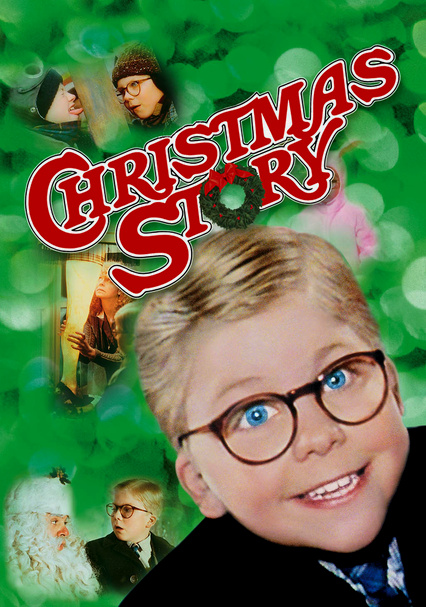
A festive holiday film sure to be watched during late December, A Christmas Story (1983) is a wholesome family treat with heart and a good slice of Americana. A clever gimmick of an adult narrating the story of his childhood holiday experience feels both fresh and nostalgic.

Some hairstyles, looks, and camera styles feel more like the 1980s than the 1940s and the subject matter of a gun becomes questionable with the passing years, but the film enchants and warms the soul with famous cult classic moments mixed in making the film memorable.

The central character is Ralphie Parker (played as a child by Peter Billingsley and voiced as an adult by Jean Shepard). Nine-years-old and clad in distinguished eye-glasses, he anticipates the approaching Christmas holiday with both excitement and trepidation.

He longs for his dream gift, a Red Ryder Carbine-Action 200-shot Range Model air rifle, which every adult he meets hazards “You’ll shoot your eye out.” Determined, he schemes to find a way to make his dreams come true and his parents to buy that gun, while avoiding the neighborhood bully.

The film has mass appeal in the casting department with each principal actor adding value, and the story just feels warm. With the lesser talent, the results may have been over-the-top, forced, or too melodramatic.

Accolades are especially deserved by Billingsley, who carries the film with his sincerity and giant blue eyes.

He is a natural and fantastic actor, especially during the more emotional scenes. Ralphie’s mother, father, and teacher are wonderful in their respective parts adding the right level of earnestness and pizzazz in support roles.

A Christmas Story gets props for avoiding any silly romantic story-line commonplace in “feel good” films of similar ilk. The plot is clearly defined and the antics of Ralphie make the film fun, but not too sentimental or corny.

Cringe-worthy is the thought of a little neighborhood girl that Ralphie might want to impress. The little boy’s somewhat infatuation with his teacher is innocent and whimsical and not to be taken too seriously.

The incorporation of now-legendary props and story points adds texture and comfort to the viewing experience, especially the lamp in the shape of a woman’s leg and a high-heeled shoe.

The garish prize Ralphie’s father wins after entering a contest becomes his pride and joy making his wife and the neighbors cringe. Assuming the piece is lavish art mistaking the word “fragile” for a fancy Italian word, the scene is humorous.

The final scene of the family being reduced to eating Christmas dinner in a Chinese restaurant after their turkey is ruined still provides a smile.

As the years pass the scene teeters on racist and has been changed during stage productions to avoid controversy. The Asian characters possess too many cliched stereotypes for my taste, but the intent is innocent and wraps the film nicely.

Peculiar and noticeable with each viewing experience, is the glaring locale of Hammond, Indiana when the film is shot in and around Cleveland, Ohio. The famous Higbee’s Department Store in downtown Cleveland is pivotal to the story and world-renowned, so the Indiana locale is perplexing and out of place.

Many may not realize the Cleveland surroundings, but eagle-eyed viewers will take notice. The exteriors look nothing like Indiana.

Known for having aired since 1997 on television stations TNT or TBS in a marathon titled “24 Hours of A Christmas Story”, the event has consisted of twelve consecutive airings of the film on both Christmas Eve and Christmas Day each year.

This has resulted in its being deemed one of the best Christmas movies ever made and exposed new generations to the work.

I’m not convinced it is “the best”, but nothing feels cozier on a cold holiday night snuggled by the fire than this cult classic. 

Deathdream-1974

Deathdream-1974

Director Bob Clark

Starring Richard Backus, John Marley, Lynn Carlin

Scott’s Review #1,175

Reviewed September 3, 2021

Grade: B+

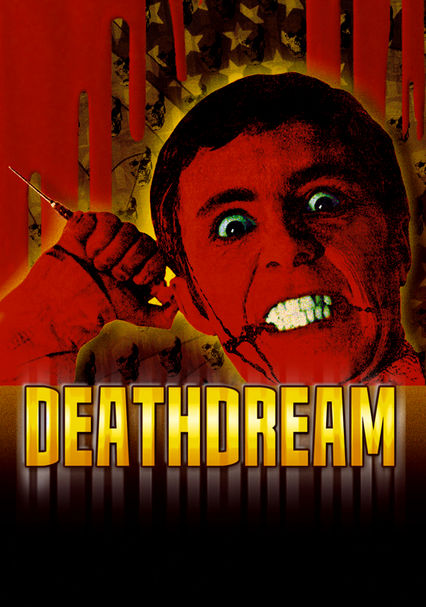
Deathdream (also known in some circles as Dead of Night) is a 1974 horror film directed by Bob Clark and written by Alan Ormsby that plays like a very good science-fiction-meets-gruesome-horror episode of The Twilight Zone.

This is not to say it’s amateurish, though in certain ways it is; mostly, it’s just that the dialogue is spotty. Rather, it has the feel of an episodic adventure more than an actual film. This makes perfect sense, since it was inspired by W. W. Jacobs’s short story “The Monkey’s Paw”.

The film was shot in a town named Brooksville, Florida, which is unusual in itself and provides a genuine Southern quality, like when the family sits down for a hearty meal.

Usually, horror films stick to Hollywood studio locales or cheaper areas like Canada to film.

Deathdream stars Richard Backus, John Marley, and Lynn Carlin.

The premise immediately intrigues me. A middle-aged married couple, Charles and Christine,  (Marley and Carlin) receives the devastating news that their son Andy (Backus) has died in the line of duty during the Vietnam War. They’re overcome with grief, to say the least.

Before the news, Christine seems overly chatty and a bit peculiar, while Charles is much older than his wife.

Soon after, Andy, very much alive, hitches a ride with a truck driver whom he then murders. He arrives home and is not the same, seeming to be zombie-like and in a trance, not the same boy who left for Vietnam a year earlier.

As a classic film lover, I was immediately tickled pink by actor John Marley’s appearance onscreen.

Associated with Love Story (1970) and The Godfather (1972), with the latter forever etched in my memory as the film director who is made “an offer he can’t refuse” by way of his gorgeous horse Khartoum, it was a treat to see him in a horror film.

I noticed facets of Deathdream that reminded me of one of my favorite horror films, Black Christmas (1974), not realizing they were both directed by Bob Clark. Deathdream serves as the perfect opening act to that most influential horror film.

An organ/synthesizer effect immediately caught my ear with more than a tad of fright. I instantly recognized it as the spooky noise emitting from the Black Christmas musical score. And both use a rocking chair prop with fantastic results. The creaking sound brought chills up and down my spine.

Can you believe this guy also made Porky’s (1981) and A Christmas Story (1983)? Talk about versatility.

It’s clear the film was made on a shoestring budget, but it proves, in a mighty way, that, as with British Hammer horror pictures, creativity can ooze out of a small budget. Terrific is what the crew does with the special effects. Instead of cheesy or campy, they are thrilling.

The story could be construed as silly or ridiculous. Andy is some vampire or zombie who needs others’ blood to reinvigorate his decaying body, which, on paper, makes little sense. The only reason he comes back from the dead (we see him killed in combat onscreen) is because he promised his mother he’d return home.

Beyond that, under the surface is a message about the war that I found powerful and that usurps the horror genre the film inhabits. It’s not just another horror film- it has a deeper subtext.

Though Clark is never overt about it, Andy has post-traumatic stress disorder, something not yet realized in the early 1970s and certainly not talked about. Clark’s message is clear.  Andy is a young man whose life has been ruined unnecessarily.

Despite being a film aficionado, I had not heard of Deathdream (1974) until quite recently. It’s an overlooked gem like so many others in the horror genre, but horror fans, fans of message films, and those looking for a good scare can appreciate this one.

It deserves some love.