Category Archives: Leonard Rossiter

2001: A Space Odyssey-1968

2001: A Space Odyssey-1968

Director Stanley Kubrick

Starring Keir Dullea, Gary Lockwood

Top 250 Films #10

Scott’s Review #314

207856

Reviewed December 31, 2015

Grade: A

In my opinion, 2001: A Space Odyssey (1968) is a masterpiece, pure and simple, and must be seen repeatedly to allow the message and the experience to sink in.

It is one of those films comparable to a fine wine – it just gets better and better with age, and this is palpable in deep thought, allowing the viewer to experience the rich taste of film art.

The delicious quality is meant to be savored and enjoyed- the slow pace and odd elements only enrich the film. Needless to say, it is one of my favorite Stanley Kubrick films.

Simply an epic journey through space.

Made in 1968, and not 2001, the film challenges and breaks down barriers in film, as Kubrick makes a film that he wants to make, and the results are genius.

The film contains no dialogue during the first twenty or the last twenty minutes.

The film begins in the African desert millions of years ago as the evolution of man is apparent- two tribes of ape-men dispute over a watering hole. A black monolith appears, and one of the tribes is guided to use bones as weapons.

Millions of years later, we meet a team of scientists, led by Dr. David Bowman and Dr. Frank Poole, as they embark on a mission aboard the United States spacecraft, Discovery One, on a journey to Jupiter.

The ship is mainly controlled by an intelligent, talking computer named HAL 9000, nicknamed “HAL”. Hal boasts that he is “foolproof and incapable of error”. As events unfold, the film dives into a study of humans versus technology in a cerebral game of mental chess.

The film is very tough to review analytically, as it is so intelligent and visually stimulating – it must be experienced. It challenges the viewer to think and absorb the events occurring.

Visually, it is breathtaking and still holds up shockingly well from this perspective. The use of classical music throughout- especially in dramatic scenes is effective.

The stunning scene where David and Frank converse about their suspicions regarding “HAL”, as the intelligent computer system looks on, is incredibly compelling. The scene is enhanced by the simple presence of an orange light, which seemingly displays a myriad of emotions (surprise, rage) in the viewer’s mind.

2001: A Space Odyssey (1968) is an enduring masterpiece.

Oscar Nominations: 1 win-Best Director-Stanley Kubrick, Best Story, and Screenplay Written Directly for the Screen, Best Art Direction, Best Special Visual Effects (won)
Oliver!-1968

Oliver! -1968

Director Carol Reed

Starring Mark Lester, Oliver Reed, Jack Wild

Top 250 Films #38

Scott’s Review #203

822391

Reviewed December 10, 2014

Grade: A

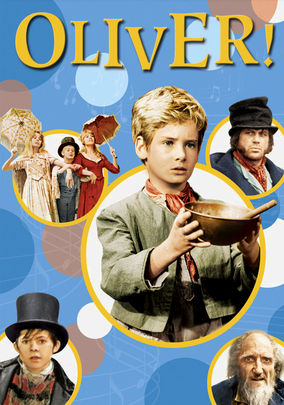
Oliver! is a 1968 film based on Charles Dickens’ novel Oliver Twist, which was later adapted into a successful stage musical. The film surprisingly won the Academy Award for Best Picture that year.

Surprising, not because Oliver! is poor, it is magnificent, but it was not predicted to take home the honor.

Telling the tale of the woeful orphan Oliver, the film comes across as a dark musical with a wholesome, happy-ending feel, primarily because of its musical compositions, which inevitably lend a cheerier tone.

When the film begins, Oliver lives in a despicable orphanage outside of London. A drawing of straws forces meek Oliver to ask for more gruel.

After being deemed a problem child, he is sold for cheap to an undertaker, where he is bullied. Defeated, Oliver makes his way towards the big city in hopes of finding his fortune.

He then meets sinister characters such as Fagin, the Artful Dodger, and Bill Sikes, as well as the sympathetic Nancy and Mr. Brownlow.

I love the musical numbers in the film, and for me, they are the film’s strongest aspect. The film would have been much darker had it not been for the musical.

Numbers such as “Consider Yourself”, “Food, Glorious Food”, and “As Long As He Needs Me” stick with audiences for days.

The entertaining songs lighten the somber moments- as noted earlier, when meek Oliver dares to ask for more gruel, the enchanting “Food Glorious Food” cannot help but be hummed along to, which lightens the mood of the scene.

I also enjoy how the film contains the long-ago popular trend of containing two acts with an intermission in between- very grand and classy, and an aspect of the film I wish would return in today’s movies.

The London art direction is magnificent, revealing a cold, industrial feel, mixed in with a warm, sunny atmosphere when Oliver stays at the palatial estate of Mr. Brownlow.

The bright and enchanting musical number “Who Will Buy?” is the perfect backdrop for this setting and my favorite number.

Nancy (Wallis) is one of the most complex characters- a prostitute, she happily sings, in denial about her life, in “It’s a Fine Life”, secretly wishing her life was better than it is.

Later, conflicted over helping Oliver or standing by her man, she sings a melancholy number, “As Long As He Needs Me”, which cements her role as a tragic, sad character.

However, as she leads a drunken barroom in a dance of “Oom-Pah-Pah”, the drama is thick when she attempts to help Oliver at the risk of putting her own life in severe jeopardy.

Shani Wallis fills the character with heart and feeling.

Oliver! is a much darker film than one might imagine.

Curiously rated G, the film should have at least been rated PG. The film’s heart is that of a children’s movie- to me personally, a turn-off, but the film is much stronger than that.

Some subject matters (like pedophilia) are toned down from Dickens’ novel, but not completely toned down.

Examples- the novel made clear overtones of child abuse by the thieves by Fagin, yet there is none of that in the film. Contrasting this, the film blatantly shows the beating death of Nancy, albeit out of camera range, but the audience gets enough of a glimpse to ascertain what is happening.

The shooting and swinging death of Bill Sikes borders on brutality.

A glaring flaw of the film is that Oliver’s voice is dubbed by a female singer rather than actor Mark Lester. To me, it’s pretty apparent the voice is not male.

The character of Bill Sykes is convincingly played by Oliver Reed, nephew of director Carol Reed.

Perfect around holiday time, Oliver! (1968) is a terrific musical drama to be enjoyed for eons to come.

Oscar Nominations: 5 wins-Best Picture (won), Best Director-Carol Reed (won), Best Actor-Ron Moody, Best Supporting Actor-Jack Wild, Best Screenplay Based on Material from Another Medium, Best Score of a Musical Picture-Original or Adaptation (won), Best Sound (won), Best Costume Design, Best Art Direction (won), Best Cinematography, Best Film Editing

Barry Lyndon-1975

Barry Lyndon-1975

Director Stanley Kubrick

Starring Ryan O’Neal, Marisa Berenson, Patrick Magee

Top 250 Films #44

Scott’s Review #211

284790

Reviewed January 4, 2015

Grade: A

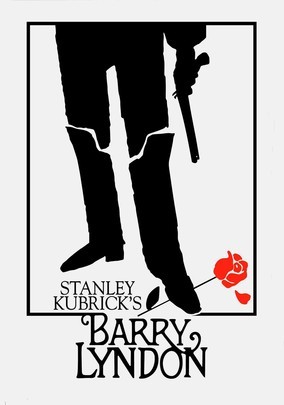
Barry Lyndon (1975) is a sprawling, beautiful film by famed director Stanley Kubrick. The film is set in the 18th century.

Extremely slow-paced yet mesmerizing, every shot looks like a portrait, and the inventive use of real candlelight in certain scenes makes this film a spectacle in its subdued beauty, to say nothing of the gorgeous sets and costumes.

The film is nothing short of a marvel to view.

The story centers around Ryan O’Neal, who plays an Irishman named Redmond Barry.

Redmond is a poor Irishman, but he is an opportunist. The film follows his life as he travels throughout Ireland, England, and Germany, becoming involved in duels, being robbed, impersonating an officer, being reduced to a servant, gambling, marrying a rich widow, and feuding with his stepson.

When he woos and marries the wealthy Countess of Lyndon, he settles in England to enjoy a life of wealth and sophistication. He changes his name to Barry Lyndon.

His ten-year-old stepson, Lord Bullingdon, becomes a lifelong enemy as their hatred escalates, and he is the focal point of Act II of the film.

The supporting cast is filled with unique characters, and in particular, the three sinister characters (Lord Bullingdon, Mother Barry, and Reverend Runt) are delicious to watch, especially when they square off against one another, as with Runt and Mother Barry.

Barry’s two love interests (Lady Lyndon and a German war widow) are entertaining to watch, and Lady Lyndon’s costumes are exquisite. Furthermore, Chevalier de Balibar, a wealthy gambler who takes Barry under his wing, is a delight.

As with many masterpieces, the film would not be as wonderful without the great casting.

My three favorite scenes include the vicious confrontation between Mother Barry and Reverend Runt- an initially polite conversation between two selfish characters gradually spins into viciousness, the duel between Barry Lyndon and Lord Bullingdon- bitter rivals square off in an awkward yet dramatic duel, and when Barry passionately kisses his dying friend- an unexpected homoerotic scene.

Barry Lyndon delves into the issue of class and class distinctions, clearly defining the haves and the have-nots, and the struggles of the poor to obtain wealth by any means and of the wealthy to retain their good fortunes.

With a running time of over three hours, it may initially turn viewers off, but as time goes on, the film will grip the viewer and not let go.

Having now seen Barry Lyndon (1975) four times, I enjoy the film more each time as I become more absorbed in and immersed in the masterpiece.

It’s like a fine wine- it gets better with each taste.

Oscar Nominations: 4 wins-Best Picture, Best Director-Stanley Kubrick, Best Screenplay Adapted from Other Material, Best Scoring: Original Song Score and Adaptation or Scoring: Adaptation (won), Best Costume Design (won), Best Art Direction (won), Best Cinematography (won)

The Witches-1967

The Witches-1967

Director Cyril Frankel

Starring Joan Fontaine, Kay Walsh, Alec McCowen

Scott’s Review #1,096

Reviewed December 29, 2020

Grade: B

Legendary film actress Joan Fontaine chose a Hammer horror film as her final role. While not high-brow art, these films are an entertaining treat for horror fans.

They are frequently macabre, clever, and make the most of a small budget.

In The Witches (1967), Fontaine leads the way, adding class and huge star quality. The film is good, but not great, with an unfulfilling ending. The cinematography and Fontaine’s involvement are the best aspects.

Also worthy of mention in the acting department is Kay Walsh, a talented British actress, who is terrific as the seemingly kind woman who becomes a crazed witch. She adds professionalism to a pivotal role. The other supporting actors play their parts well, ensuring that the craft of acting is respected.

I adore the British flair that Hammer films always have.

Fontaine plays Gwen Mayfield, an English schoolteacher who accepts a new job as the headmistress of the local school in the quaint village of Heddaby. The quiet town is exactly what Gwen needs after suffering a nervous breakdown while residing in Africa.

She experiences a small flirtation with the Reverend Alan Bax (Alec McCowen), who confesses that he is not overly religious. Stephanie is his sister, played by Walsh.

Before long, Gwen becomes immersed in the worlds of two of her students, Ronnie (Martin Stephens) and Linda (Ingrid Brett). Ronnie insists that Linda is being abused, which prompts Gwen to investigate. Meanwhile, Gwen discovers a voodoo doll and sleuths to find out what is going on in the village.

Events lead her to a sanitarium, and finally to a coven of witches, intent on human sacrifice.

The Witches has a late-1960s look and feel, which adds some sophistication. Gwen is draped in stylish clothes and jewelry and wears a cute, trendy bob haircut.

The set design is cool, with groovy, colorful furniture that makes the tight budget work to its full advantage.  Alan and Stephanie’s estate is particularly impressive with modern furniture, drapes, and various trimmings.

Another positive is the hefty amount of exterior sequences offered.

Director Cyril Frankel, who directed many episodes of the popular British television series The Avengers, provides a similar production, so The Witches feels like a long episodic series. The luxurious English village is sunny, calming, and atmospheric, brightening the film’s atmosphere.

This nicely counterbalances the themes of demons, voodoo, and witches.

Frankel builds the story momentum throughout The Witches at a good pace, but this is lost in the final act, which is way too abrupt. During the first three-quarters of the production, we are led to believe that Gwen is either crazy, imagining the strange events, or that one of the townspeople is gaslighting her.

It’s easy to deduce that the latter is what is going on, and the fun is figuring out who is doing the dirty deeds.

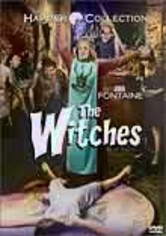
When the culprit is revealed (and it’s displayed on the cover art!), the conclusion is underwhelming. An attempted cemetery human ritual to remove life from Linda and infuse it into Stephanie so that she can live forever is weak.

After an odd sequence of the townspeople dancing and writhing around like nutcases in an unintentionally laugh-out-loud example of overacting, Gwen foils Stephanie’s plan. The witch succumbs to death, a victim of her heinous plan backfiring.

It is hinted that Gwen and Alan (who are revealed to be good) will forge a romance in the future, but I would have liked to have gotten a stronger sense of their budding attraction during the film. Still, it is likely the two will ride off into the sunset together, safely.

While not as gory as other Hammer films, The Witches (1967) instead features exceptional performances and tells a decent story, interesting until the low-key finale.

I expected a bit more from the ending, which simmers out instead of electrifying.