Category Archives: Bruce Glover

Who Killed Teddy Bear?-1965

Who Killed Teddy Bear? -1965

Director Joseph Cates

Starring Sal Mineo, Juliet Prowse, Elaine Stritch

Scott’s Review #1,526

Reviewed April 5, 2026

Grade: A-

Enshrouded with groovy, almost psychedelic camera shots and black-and-white filming, Who Killed Teddy Bear? (1965) has tremendous style and cinematic creativity.

The film also shows the seedy nature of 1960s New York City, a time when crime increased, and the once culturally and artistically safe haven was suddenly shrouded in filth and danger.

This sets the stage for a film about stalking, menacing, and murder.

Frequent exterior shots of Manhattan, including 42nd Street, Central Park, and Times Square, make it feel relevant and alive. I’m glad these were incorporated over solely studio sets.

Additionally, taboo subjects like lesbianism, pornography, and incest are explored, enhancing a stark direction in cinema from the wholesome 1950s to the edgy 1960s, to the intensity of the 1970s, when the envelope in filmmaking was gloriously pushed and pushed.

Combined with the experimental visuals, the film is a measured success.

The overall story, though, disappoints due to ambiguous motivations and an unsatisfying conclusion.  Right off the bat, the cover art essentially gives away the film’s predator, which the film sets up as a whodunit of sorts.

Nonetheless, thanks to its daring, I rank Who Killed Teddy Bear? as a compelling, impressive effort despite some reservations about the writing.

The film follows Norah Dain (Juliet Prowse), a nightclub disc jockey and aspiring actress living alone in a sublet apartment in Manhattan. Norah begins to receive a series of obscene phone calls from someone who seems to be watching her every day.

She also finds a decapitated teddy bear in her apartment.

Suspects like police detective, Dave Madden (Jan Murray), whose own wife was raped and murdered, and takes a personal interest in Norah and her case, and a waiter at the nightclub, Lawrence Sherman (Sal Mineo),  who lives with and cares for his nineteen-year-old sister Edie (Margot Bennnett), who has a brain injury and has the mind of a child, are introduced.

Of course, we know from the very first scene that the stalker is a man, but we don’t know his motivations or why he targets Norah in particular.

Does he have a mental illness, merely obsessed with a pretty girl, or are his reasons more personal? What does the teddy bear have to do with anything?

In an opening scene, and what could have been influenced by Hush, Hush, Sweet Charlotte (1964), a young girl falls down the stairs, clutching a teddy bear that she ultimately drops.

Is the stalker out for revenge for a past wrongdoing, and what does Norah have to do with that? How does Marian Freeman (Elaine Stritch), the older, experienced manager of the nightclub who takes a personal interest in Norah, fit into the puzzle?

Mineo gives an impressive performance right alongside Prowse, and his character is the most interesting to dissect once the film concludes. Nearly rivaling his performance in Rebel Without a Cause (1955), his character is flawed, ruined, and emotionally scarred, and we yearn to know more about him.

Sadly, there is more left to learn.

Prowse deserves praise for carrying the film and exuding cautious rebellion and a thirst for life. Norah refuses to cower in her apartment; instead, she lives her life, yearning for freedom in the big city, and Prowse captures this wonderfully.

Aspects of Peeping Tom (1960) and Psycho (1960) regarding voyeurism and ‘mommy issues’ can be seen in Who Killed Teddy Bear? and in the yet-to-come Black Christmas (1974), which may have been influenced by the film.

I can’t find much about director Joseph Cates, but he has a masterful cutting-edge technique.

Considering the multitude of taboos and perversions the film explores, that almost no films were doing is to be celebrated. Who Killed Teddy Bear? (1965) is a messy, sometimes uneven film, but rocks the boat in all the best ways.
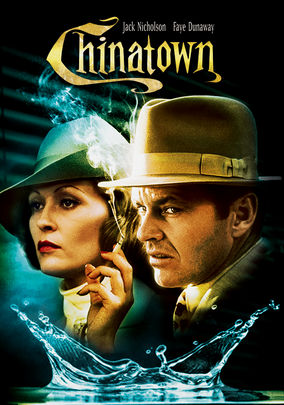
Chinatown-1974

Chinatown-1974

Director Roman Polanski

Starring Jack Nicholson, Faye Dunaway, John Huston

Top 250 Films #27

Scott’s Review #321

374030

Reviewed January 3, 2016

Grade: A

Chinatown (1974) is like a perfectly aged fine red wine- with each passing year or viewing, it becomes more and more spectacular.

A thinking man’s film, if you will, Chinatown is a complex puzzle, just waiting to unravel in a layered, complicated fashion. However, this is to its credit, as it is a fantastic, rich film noir, and as good as cinematic writing gets.

Set in the 1930s, the set pieces and art direction are flawless – as great a film in terms of look as it is in story.

Director Roman Polanski and star Jack Nicholson are primarily responsible for the film’s success.

The direction is a marvel, with cinematography, flow, and pacing that are astounding. A slow build, the film takes off at just the perfect point as the mystery deepens, building to a crescendo.

Nicholson plays Jake Gittes, a handsome Los Angeles private investigator hired by a woman claiming to be Evelyn Mulwray. Evelyn desires to have her husband followed, as she suspects him of having an affair with another woman.

Jake begins tailing the woman’s husband, only to uncover an intriguing mystery involving the Los Angeles water supply. Soon, the real Evelyn Mulwray (Faye Dunaway) turns up, and the film segues into a masterful web of complications and twists.

One will not see the ending coming.

Nicholson leads the film as only he can. With his charismatic, aww-shucks attitude, mixed with humor, he is eye candy for the camera as he takes the case and becomes more and more immersed in the action.

This film was a pivotal point for him as he began a slew of worthwhile and abundant performances in pictures.

Let us not forget Dunaway’s acting performance. Smoldering, sexy, classy, intelligent, and vulnerable, she perfectly plays almost every emotion.

Chinatown, Bonnie and Clyde (1967), and Mommie Dearest (1981) are her best works in a career that spanned decades of success.

Chinatown (1974) is an entity unto itself in film noir. It is incredibly well-written, nuanced, and flawless.

This film simply must be seen.

The final thirty minutes- in addition to the “great reveal” are also violent, shocking, and extraordinary. A blueprint of what great filmmaking truly is.

Oscar Nominations: 1 win-Best Picture, Best Director-Roman Polanski, Best Actor-Jack Nicholson, Best Actress-Faye Dunaway, Best Original Screenplay (won), Best Original Dramatic Score, Best Sound, Best Costume Design, Best Art Direction, Best Cinematography, Best Film Editing

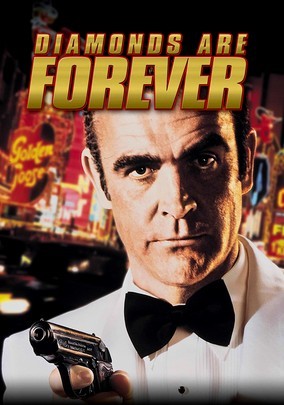
Diamonds Are Forever-1971

Diamonds Are Forever-1971

Director Guy Hamilton

Starring Sean Connery, Jill St. John

Top 250 Films #100

Scott’s Review #328

60000705

Reviewed January 6, 2016

Grade: A

Despite Diamonds Are Forever (1971) being one of the lower-rated James Bond films, this is actually one of my favorite films of all time, and many would disagree with me.

Some say Sean Connery phoned this performance in; others say there was little chemistry between him and Jill St. John, and the sets were tense, leading to a sub-par offering. But I think this is a great film.

I love the Las Vegas locale, the bright lights, flashy costumes, and a ritzy underbelly- and the Vegas car chase is incredible.

A bright, shiny Ford Mustang takes center stage throughout the sequence, and if one looks closely, one will realize that nearly all the cars are Ford- fun fact!

The title song by Shirley Bassey is great, sultry and stylish, only enhanced by the glitzy setting. One immediately imagines the film oozing with diamonds as it does.

The villains are fascinating, and Mr. Wint and Mr. Kidd were the first openly gay Bond villains, which, in 1971, was groundbreaking.

Yes, they are evil and slightly silly, but what a risky, surprising, and blatant scene to see the gentlemen holding hands.

St. John is a sophisticated and intelligent Bond girl, and the action in this film is plenty.

Diamonds Are Forever (1971) contains all the elements for an enjoyable Bond experience.

Oscar Nominations: Best Sound