Tag Archives: Top 40 Horror Films

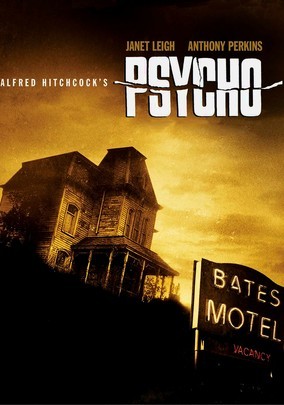
Psycho-1960

Psycho-1960

Director Alfred Hitchcock

Starring Janet Leigh, Anthony Perkins

Top 250 Films #5

Top 40 Horror Films #1

Scott’s Review #165
879522

Reviewed September 6, 2015

Grade: A

Psycho (1960) is the film to end all films, and not just within the horror genre. At the time of its release, it transcended the art of cinema to a new level and has influenced generations of films since, still holding up incredibly well today.

It is undoubtedly one of the greatest Alfred Hitchcock films and one of the greatest films ever made.

Hitchcock took considerable risks and dove from the thriller to the horror genre with Psycho.

The story revolves around a young woman named Marion Crane, superbly portrayed by Janet Leigh. Marion lives in Phoenix, Arizona, and sees her boyfriend (the dashing John Gavin) for frequent afternoon rendezvous at cheap motels when he is in town because they are both struggling financially.

She is presented with an opportunity, via her job, to steal $40,000 and flee the state to start a new life with her beau. She seizes the opportunity.

On the run, she stops at a run-down Bates motel where she meets owner Norman Bates, hauntingly played by Anthony Perkins.

Perkins and Leigh have fantastic chemistry together, and the audience picks up on it—is it romantic? Is there a mysteriousness to it? Something is odd about Norman. They bond over a quiet meal of sandwiches at the motel while discussing life and his ailing mother.

The famous shower scene and the shocking twist that follows are now almost taken for granted, as most people are already familiar with them. However, I can only imagine the shock viewers felt when they first saw these two delights.

To this day, both are still suspenseful.

Fortunately, when I saw this film for the first time, I didn’t know the ending, and I am glad I didn’t, because it took my breath away.

Killing off the leading actor at the start of the film, halfway through, was a novel idea and mind-blowing at the time of its release (1960).

This act left the audience’s mouths agape in disbelief, prompting them to ask, “What now?” “How can this be followed?” This act later influenced the original Scream (1996) film and surprised audiences again.

According to Hitchcock, no one could enter the film after it had started, and viewers were persuaded not to reveal the ending – oh, how I wish that occurred these days.

An aspect of the success and longevity of Psycho is the chemistry between Perkins and Leigh, who got along famously while shooting Psycho, and more importantly, the likability of Norman Bates. There is a rooting value for him, even though he is the villain.

When Marion’s car is only half-submerged in a lake containing her dead body, we root for it to sink entirely because of Norman. The concerned look on Norman’s face has a sense that affects the audio at this point in the story. Norman is troubled and wo, undead, and the audience does not have history.

Let’s not forget Janet Leigh. The audience sympathizes with her predicament. She is hopelessly in love with her man, steals money, is conflicted, and, at her core, is a friendly, decent, kind woman.

Halfway through the film, Marion’s sister, Lila, played by Vera Miles, is introduced as a detective, and the suspense and mystery intensify as they search for Marion and investigate the Bates Hotel and Norman Bates himself.

Miles then takes center stage as the lead in the film, which is intriguing.

The film then returns to horror at the terrific and terrifying conclusion, which will shock first-time viewers.

The musical score (especially the shrill strings) is incredibly effective and influenced other horror films to come (Friday the 13th immediately comes to mind).

Psycho is a film that can be enjoyed and studied over again.

Oscar Nominations: Best Director, Alfred Hitchcock, Best Supporting Actress-Janet Leigh, Best Art Direction, Black-and-White, Best Cinematography, Black-and-White
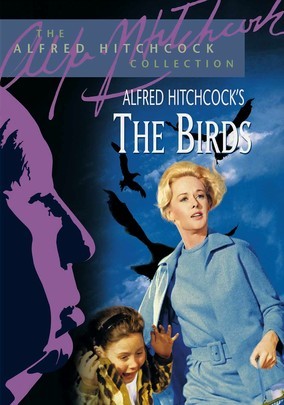
The Birds-1963

The Birds-1963

Director Alfred Hitchcock

Starring Tippi Hedren, Rod Taylor

Top 250 Films #6

Top 40 Horror Films #2    

Scott’s Review #173

308926

Reviewed September 22, 2014

Grade: A

The Birds is one of director Alfred Hitchcock’s finest works.

Made in 1963, following Psycho, it continues Hitchcock’s run of successes, both commercially and critically.

It is set in northern California (in San Francisco and Bodega Bay) and tells the story of unexplained bird attacks in a peaceful small bay town.

Tippi Hedren plays Melanie Daniels, a wealthy socialite from San Francisco who drives to Bodega Bay to pursue a love interest, Mitch Brenner.

Mitch, played by Rod Taylor, is a successful attorney who meets and shares a flirtation with Melanie the day before at a pet store in San Francisco. He regularly visits his mother (Jessica Tandy) and sister (Veronica Cartwright) in Bodega Bay.

Once Melanie arrives in town, birds begin to attack the locals living in the sleepy community periodically.

The Birds is a film that has held up incredibly well and is as exciting and horrifying today as it was in the past.

One intriguing aspect of the film is that it offers no rhyme or reason for the bird attacks, which keeps the viewer guessing when a gull swoops down and attacks innocent Melanie.

It is entirely mysterious and open to interpretation- are birds fed up with being caged?

Are the love birds that Melanie purchased the cause of the attacks? Do the birds hate humans? Why do they attack the children? Why do they peck the eyes of their victims out?

One could spend hours debating these questions.

A major creative success of the film is its decision to eliminate a musical score. The eerie silence and the loud sounds of the birds attacking create a haunting dynamic.

My favorite scene of The Birds features Melanie sitting on a wooden bench in the schoolyard, enjoying a cigarette. Behind her is a deserted jungle gym. She barely notices a tiny bird innocently flying past her and landing on the jungle gym.

She continues smoking her cigarette. The viewer sees what Melanie cannot- as slowly, hundreds of birds land on the jungle gym behind her.

Without music, the scene is deadly silent and dramatic, shifting from close-ups of Melanie to long shots of the birds gathering behind her.

Another interesting aspect of The Birds is the character relationships. Mitch’s mother, Lydia, is afraid of losing her son, so she initially despises Melanie. Mitch’s ex-girlfriend, schoolteacher Annie Hayworth, strikes up a close friendship with Melanie; one might expect them to be rivals.

A hysterical mother lashes out at Melanie, calling her evil and blaming her for the attacks.

During the long periods of calm, one wonders when the next attack will occur—and we know it will. We searched for clues to identify what triggers the attacks, but we found none.

This makes for brilliant and suspenseful filmmaking. They hardly come better than the masterpiece The Birds (1963).

Oscar Nominations: Best Special Effects

Rosemary’s Baby-1968

Rosemary’s Baby-1968

Director Roman Polanski

Starring Mia Farrow, John Cassavetes, Ruth Gordon

Top 250 Films #14

Top 40 Horror Films #4

Scott’s Review #9

60002403

Reviewed June 17, 2014

Grade: A

Rosemary’s Baby (1968) is not only a great film, it’s a masterpiece. Easily one of my favorites in the horror genre, it’s also towards the top of the list of my all-time favorite films.

The beauty of this film lies in its power of suggestion and subtleties. It lacks the blood, gore, or standard horror frights one might expect.

It doesn’t need them.

The audience senses something is amiss through clues provided throughout the film. The closed-off room in the young couple’s apartment, the sweet, but a bit odd, elderly neighbors, a strange suicide, a mysterious, horrid-smelling, good luck charm. Rosemary’s due date (June 6, 1966- “666”).

The strange, dreamlike conception scene is intense and surreal. Her husband- claiming Rosemary passed out from too much alcohol- begins to become a suspicious man following the incident, but we are confused by his involvement- what are the neighbors up to, we wonder? Are they sinister or simply innocent and meddlers?

In a sinister scene, Rosemary gnaws on bloody raw meat, catches her reflections in the glass, and is horrified by her behavior.

Mia Farrow is frightfully good as the waifish, pregnant, Rosemary, who loses, instead of gains weight.

The film also has a couple of real-life eerie occurrences: the building setting (The Dakota) is where John Lennon was shot and killed, and Director Roman Polanski’s wife, Sharon Tate, in a cameo, was murdered shortly after filming by Charles Manson.

Rosemary’s Baby is similar in theme to other devilish/demon films like The Exorcist (1973) and The Omen (1976).

This is a film that must be seen by everyone and only shines brighter with each subsequent viewing.

Oscar Nominations: 1 win-Best Supporting Actress-Ruth Gordon (won), Best Screenplay Based on Material from Another Medium

Dressed to Kill-1980

Dressed to Kill-1980

Director Brian De Palma

Starring Angie Dickinson, Nancy Allen, Michael Caine

Top 250 Films #16

Top 40 Horror Films #5

Scott’s Review #164

60020714

Reviewed September 2, 2014

Grade: A

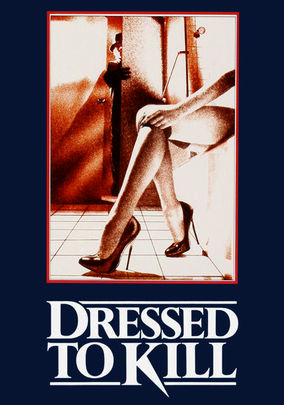
Dressed to Kill (1980) is Brian De Palma’s most significant work throughout his storied career.

Set in New York City, the film is essentially divided into two halves.

The first half centers around Angie Dickinson, who plays a bored housewife named Kate. She is unhappy in her marriage and seeks therapy from a psychiatrist played by Michael Caine, to whom she makes sexual advances.

She is unfaithful to her husband, yet is a kind, intelligent, cultured woman. She adores her son and loves her husband but is utterly unfulfilled with life.

Do we, the audience sympathize with her? Does she get what she deserves? Is she a victim? One powerful scene involves a wide-eyed little girl who cannot stop staring at Kate. Can she sense Kate’s shenanigans? Does she sense her conflict? Does Kate feel guilt?

Kate is a complex character and brilliantly played by Dickinson, who gives the character sexiness, softness, and appeal.

After a shocking event in a high-rise elevator rivaled only by the shower scene in Psycho (1960) in its surprise and terror, the remainder of the film belongs to Nancy Allen, who plays a prostitute named Liz, determined to solve a mystery to clear her name.

De Palma sets the dreamlike tone with a sizzling opening shower scene sure to make the prudish blush in its explicitness, which I found deliciously sexy.

A ten-minute museum sequence speaks volumes without dialogue as Kate has a cat-and-mouse flirtation with a stranger.

The brilliance of Dressed to Kill is its versatility and complexity and contains one surprise after another, from the elevator scene to the final reveal to the final stage itself.

It is part horror film part thriller and always stylish.

The film was not well regarded upon its release, but over the years has been respected due to its creativity and excellent mood. Many scenes are shot in slow motion adding an effect to them.

Dressed to Kill (1980) is simply brilliant on every level.

The Shining-1980

The Shining-1980

Director Stanley Kubrick

Starring Jack Nicholson, Shelley Duvall

Top 250 Films #21

Top 40 Horror Films #6

Scott’s Review #313

959008

Reviewed December 31, 2015

Grade: A

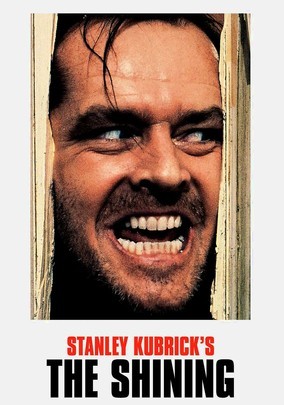
The Shining is one of the great horror masterpieces of all time.

Released in 1980, and atypical of the slasher craze that was rampant at that time, the film is a psychological ghost story with frightening elements, including a musical score, long camera shots, and a haunting, grandiose hotel set in a deserted locale.

Without the brilliant direction of Stanley Kubrick, The Shining would not be the masterpiece that it is, to say nothing of the talents of Nicholson and Duvall in the lead roles.

Based on the popular horror novel by Stephen King.

Nicholson plays Jack Torrance, an author and alcoholic, who takes his wife Wendy (Duvall) and son Danny to serve as caretakers at the vast Overlook hotel- for the winter in snowy Colorado.

The lavish hotel will be deserted for the season and Jack looks forward to months of peace that will enable him to complete his novel.

Unfortunately, the hotel is haunted by spirits of the past, and the added burden of the previous caretaker going mad and chopping his family to bits with an ax.

The real success of The Shining is that the hotel itself is a character and has nuances of its own. The hotel is deathly quiet as the Torrances take over for the season-long hallways are featured and the forbidden Room 237 takes on a life of its own.

Creepy images of two young girls and red blood gushing from the elevators take over. Young Danny can communicate with the chef without speaking to each other. Jack imagines a gorgeous nude woman in the bathtub only to discover she is a shriveled old hag.

The film’s cinematography coupled with the looming, morose, musical score perfectly go hand in hand and, in my opinion, are the reasons for the success of the film.

Throughout the film, there is a sense of dread and a forbidden presence that works beautifully.

The very first scene is an aerial shot of the Torrances driving along a mountainous road to be interviewed for the caretaker position. The vast land and mountains as we eventually see the Overlook immediately reveal to us the feeling of isolation, which is really what the film is about.

These exterior scenes are also gorgeous to marvel at.

The crisp, gloomy, winter scenes and the endless maze of animal shrubbery come into play during the film’s final act as Jack, now completely mad, chases Danny through the snowy paths that seemingly lead to nowhere.

The catchphrase, “Here’s Johnny!”, that is uttered from an ax-wielding Nicholson, is permanently ensconced in the relics of pop culture.

Nicholson and Duvall have such dynamic and palpable on-screen chemistry that makes the film work from a character perspective. There is something slightly off with each of the characters, readily apparent from the outset, but that has more to do with each actor being rather non-traditional in appearance.

I can imagine no other actors in these roles.

Author, Stephen King, who reportedly despised the film version of his novel, has since grown to respect the film and Kubrick’s direction, a great deal. The Shining is one of my favorite horror films in addition to being one of my favorite films of all time.

Frenzy-1972

Frenzy-1972

Director Alfred Hitchcock

Starring Jon Finch, Barry Foster

Top 250 Films #28

Top 40 Horror Films #7  

Scott’s Review #244

Frenzy_movieposter

Reviewed May 17, 2015

Grade: A

Frenzy (1972) is a latter-day Alfred Hitchcock film that returns the masterful director to his roots in London, England, Hitchcock’s country of origin, and where his early films were made.

As with numerous other Hitchcock stories, the protagonist is falsely accused of murder and struggles mightily to prove his innocence before time runs out and he meets his doom.

The film is distinctly British, featuring an entirely British cast, and includes a humorous side story about the primary investigator’s wife. This terrible cook prepares exotic yet unappetizing meals for her husband.

This comic relief perfectly balances the heavy drama encompassing the main murder story, as Frenzy is one of Hitchcock’s most violent and graphic.

Made in 1972, he was able to include much more explicit content. A neck-tie murderer, who also rapes his female victims, is on the loose in London.

In the opening sequence, we see a dead woman floating in the Thames River during broad daylight, nude, except for a necktie that she has been strangled with. A crowd of spectators races to see what all the fuss is.

We then meet the central character of the film, down-on-his-luck bartender Richard Blaney, who is fired from his job as a bartender by his hateful boss.

Blaney has a loyal girlfriend in Babs, a barmaid at the same local watering hole. Babs is sexy, yet plain. He also has a successful ex-wife, Brenda, who runs a dating company. Blaney regularly sponges money and dinners from Brenda. Also in the picture is successful fruit-market trader, Bob Rusk, who is a friend of Blaney’s.

All four of these central characters have much to do with the main plot.

As events begin to unfold, the film is not a whodunit as traditionally it could have been. Instead, the audience knows very quickly who the murderer is and their motivations, which is an interesting twist in itself.

Regardless of this knowledge, the film is quite compelling as a classic Hitchcock horror thriller.

It is interesting for Hitchcock fans to compare this film with many of his earlier works. Released in 1972, at a point in film history where aforementioned sensors were more lax, it is the first Hitchcock film to feature nudity.

It is also the film of Hitchcock’s that features the most brutal rape/murder scene of all, surpassing the shower scene from Psycho, in my opinion.

The victim’s ordeal is prolonged, as she begins praying, thinking she will only be raped, at first unaware that her attacker is also the neck-tie murderer and her life is running short. This leads to a sad, gruesome outcome for her.

One of the most interesting murder scenes takes place off-camera and is an ingenious idea by Hitchcock. The neck-tie murderer lures a victim to his apartment complex under the guise of being a friend of hers.

They walk upstairs to his unit and go inside, all the while the camera remains poised outside of the apartment so the viewer only imagines the horrors occurring inside.

The camera then slowly goes back down the stairs and out onto the street and looks up at the murderer’s window. The fact that the victim is one of the principal characters makes one’s imagination run wild as to what is transpiring inside the apartment and the viewer is filled with grief.

This is a brilliant choice by Hitchcock and so effective to the story.

Another great scene is the potato truck sequence.

As the neck-tie murderer has dumped his victim, like garbage, into a potato sack, he is panicked to realize that she has taken his pin from his jacket and presumably clenched it in her fist as a clue, despite her demise.

What will he do now?

The long scene features the murderer inside the potato truck attempting to unclench his pin from her hand and escape the moving truck without being caught.

It is my favorite scene in Frenzy.

Frenzy (1972) is a return to triumph for Hitchcock, after the complex Topaz (1969) and Torn Curtain (1966), underappreciated political thrillers made a few years before this film.

He returns to the horror genre like gangbusters throwing some good, sophisticated British humor into his recipe for good measure.

What a treat this film is.

Friday the 13th-1980

Friday the 13th-1980

Director Sean S. Cunningham

Starring Betsy Palmer, Adrienne King

Top 250 Films #36

Top 40 Horror Films #8

Scott’s Review #115

525111

Reviewed July 17, 2014

Grade: A

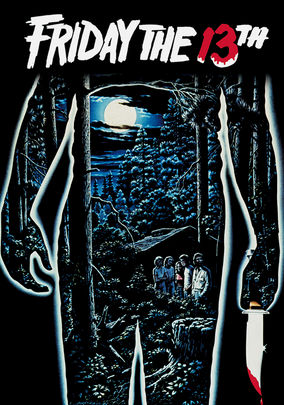
Friday the 13th (1980) is one of my favorite films (horror and otherwise) of all time, as I have such fond and scary memories of watching it at too young an age!

My highlight was watching this film alongside the star, Betsy Palmer, herself, in a movie theater in later years.

I can watch this film countless times and never tire of it. Is it high art? Hardly. Is it brilliant filmmaking? Not a chance. However, for whatever reason, this film holds a special place in my heart, and I love it.

The premise involves seven young adults, all squeaky clean and All-American looking, who flock to Camp Crystal Lake for a summer involving counseling, partying, and frolicking around the lake.

They engage in strip poker, smoke pot, and play jokes on each other, but share a good spirit.

Through flashbacks, we learn that two brutal camp counselor killings occurred years ago and the camp has been unsuccessful at reopening since that time due to strange events like bad water.

The residents of the town are convinced that there is a curse involving the lake and warn the teenagers to stay far away, specifically, one loony townsperson named Ralph, who frequently shows up proclaiming messages from god and other rants of doom.

Inevitably, the teens begin to be systematically hacked to bits one by one in creative fashion such as a slit throat, ax to the head, a dagger through the neck, and other good, old-fashioned horror kills.

The film has many standard horror elements- a dark, ominous storm, a mysterious hidden killer lurking in the shadows, giving first-time viewers a suspenseful whodunit.

Could the killer be crazy Ralph, one of the counselors? Or Steve Christie, the man opening the camp?

As each victim is killed one begins to narrow down the remaining suspects to the crimes and at least one red herring comes into play, which leads us to try to figure out the conclusion, which, critically speaking, is an enormous surprise.

The looming killer, whose feet and arms/hands are the only parts shown throughout is successfully ominous. As the killer angrily watches the counselors swim and goof around, one of them gets a sixth sense of being watched and is sure she sees someone in the trees, but quickly shrugs it off.

Another ominous scene involves one counselor setting up an archery game for the kids as another counselor jokingly shoots an arrow nearby.

They both laugh, but the foreshadowing of what is to come is fantastic.

Betsy Palmer and Adrienne King add so much to this film, which would not be nearly as good if not for them.

The conclusion involving a knockdown drag-out, mud fight is my favorite sequence, in addition to the final thirty-minute chase scene around the camp and its vicinity.

The final character hides in closets, storerooms, and bushes, and a cat-and-mouse game climaxes. Great stuff.

The big twist at the end almost rivals, and is very similar to, the shocking ending to the 1976 horror classic Carrie.

The sound effects are spectacular- the distant loons and the creepy sound effects add a ton to making Friday the 13th a classic fright-fest.

The line “kill her mommy, she can’t hide” is undoubtedly permanently etched in horror fan’s minds.

Friday the 13th (1980) has successfully held the test of time and is now a highly regarded classic within the horror genre.

A highly entertaining, mainstream, cut above the rest, and a fun must-see for all horror fans.

Black Christmas-1974

Black Christmas-1974

Director Bob Clark

Starring Olivia Hussey, Margot Kidder

Top 250 Films #39

Top 40 Horror Films #9

Scott’s Review #309

70057846

Reviewed December 29, 2015

Grade: A

Black Christmas (1974) is one of my all-time favorite horror films and, in my opinion, an underappreciated classic.  Somehow, it is just not the first, second, or third film mentioned when most discuss the influential horror films of years past.

My hubby and I make sure to watch it every holiday season.

It largely influenced Halloween (another of my passions), particularly from the killer’s point of view, camera shots, and the seasonal element.

It is pretty horrifying in several key scenes, in fact, and I am proud to list it as one of my favorite films.

Black Christmas is a must-see for fans of the horror genre.

The setting (a cold and snowy Christmas) is perfect, and the film is shot quite darkly. There are Christmas lights and carolers to create a significant winter holiday atmosphere. Most of the film takes place at night, and the location is primarily inside a vast, somewhat creepy, sorority house. The ambiance is well thought out.

Several sorority girls, led by boozy Barb (Margot Kidder) and sweet-natured Jess (Olivia Hussey), prepare to depart for the holiday season by having a small farewell Christmas party. Recently, the girls have been harassed by a prank caller spouting nonsensical gibberish daily.

As in true horror fashion, the girls are systematically offed one by one as events turn dire. Two subplots that ultimately merge with the central plot include Jess’s pregnancy with her suspicious boyfriend, Peter, and the search in the park for a missing young girl.

The best part of Black Christmas is that it is an honest, raw film, made on a small budget, that eschews gimmicks and contrivances.

It has authenticity.

A disturbing film for sure,  one victim being posed in a rocking chair continuously rocking back and forth next to the attic window, while said victim is bound in plastic wrap, holding a doll, mouth, and eyes wide open, is one of the most chilling in horror film history.

The nuances of the killer also scare and the brilliance of this is that his motivations are mysterious and unclear (in large part the success of Michael Meyers as well). We never fully see the killer except for his shape and eyes, and that is the brilliance of the film.

The one slight negative to the film is the decision to make the cops appear incompetent. The desk sergeant, in particular, is a complete dope- one wonders how he got his job- as a sexual joke by one of the girls goes over his head while the other detectives laugh like fools.

Why is this necessary? I suppose for comic relief, but isn’t that the purpose of Mrs. Mac, the overweight, boozy sorority mother?  Her constant treasure hunt for hidden booze (the toilet, inside a book) is comical and fun.

Her posing and posturing in front of the mirror (she is a very frumpy, average woman) are a delight and balance the heavy drama.

The conclusion of Black Christmas is vague and fantastic and works very well. Due, once again, to the police errors, the final victim’s fate is left unclear as we see her in a vulnerable state, unaware that the killer is looming nearby.

We only hear a ringing phone and wonder what happens next.

My admiration for Black Christmas (1974) only grows upon each viewing as I am once again compelled, to notice more and more ingenious nuances in the film.

Can’t wait until next Christmas to watch it again.

Peeping Tom-1960

Peeping Tom-1960

Director Michael Powell

Starring Nigel Davenport

Top 250 Films #47

Top 40 Horror Films #10

Scott’s Review #127

848669

Reviewed July 22, 2014

Grade: A

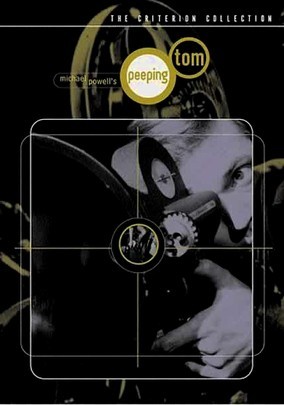
Peeping Tom is a brilliant 1960 horror film directed by Michael Powell.

It is a British film released the same year as Psycho. The two films share similarities in that they both feature more character-driven villains than many other contemporary horror films.

Both feature male killers with a sympathetic (to them) female.

Set in London, it tells the story of an assistant cameraman who kills his victims by using a camera with a spike on the end of it as he is videotaping the fear in their eyes, which he later plays back for his own psychological needs.

The killer has emotionally damaged himself, and the film explores this aspect in depth; his father tormented him as a child with weird, traumatic experiments used on the boy for research.

I love this aspect of the film compared with other films of the genre, where the killer typically has no sympathetic aspects and whose motivations are usually explored minimally.

The audience has sympathy for this killer, which, strangely, is absurd and shocking.

Ahead of its time, viewers were initially turned off by the film upon its release. Director Michael Powell’s (ironically playing the terrible father in videotape scenes) career was ruined.

Anna Massey (later to appear in the Hitchcock masterpiece Frenzy, 1972) plays the sweet-natured girl next door who develops a crush on the killer. Her blind and boozy mother is a fascinating character as she suspects and strangely bonds with the killer.

The film has an erotic and voyeuristic quality that has been unmatched in horror.

Peeping Tom (1960) is now widely regarded as a masterpiece, and I concur with that assessment. It is one of the most interesting and unique horror films ever made.

Suspiria-1977

Suspiria-1977

Director Dario Argento

Starring Jessica Harper, Joan Bennett, Alida Valli

Top 250 Films #53

Top 40 Horror Films #11

Scott’s Review #339

60037424

Reviewed January 9, 2016

Grade: A

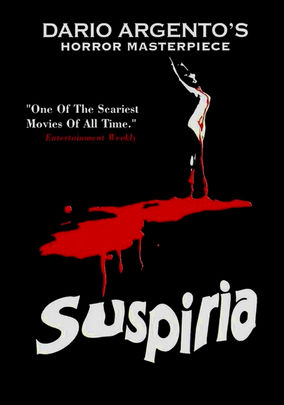
Suspiria is a horror masterpiece, made in 1977, by my favorite Italian horror director, Dario Argento.

A combination of complex storytelling, glossy colors, and a unique art direction makes this film a treasure and an influence in “the look” of a film attempting to achieve an interesting art direction choice.

The color red is highly prevalent throughout Suspiria, which is fitting given the film’s subject matter of witchcraft and demons. The musical score is brilliant and chilling.

This film is perfect and one of my favorites.

The film takes place in Germany, and the opening sequence is fantastic. We meet our heroine, Suzy Bannion (Jessica Harper), an American ballet student, as she arrives in blustery Munich to attend a prestigious ballet school.

The shot of the driving wind and rain as she exits the airport is a great example of the ultimate style of this film.

Suzy meets a creepy taxi driver who drives her to the school, where she witnesses a frantic student, Pat Hingle, fleeing the school. Suzy is then denied access to the school by a mysterious voice over the intercom.  The focus of the film then shifts briefly to Pat’s perspective as she meets a sinister fate when she stays with a friend.

One fantastic aspect of Suspiria is we know something is wrong with the ballet academy, we just do not know what or who it involves. With great creativity, Dario Argento builds a set that is modern, and sophisticated but laced with an underlying menace.

As we meet the supporting characters, Madame Blanc (Joan Bennett) and Miss Tanner (Alida Valli), we know something is not right with them either. Blanc is kindhearted; Tanner is a drill sergeant, but both seem to have something to hide and claim to know nothing of Pat’s terror.

There is also Daniel, the blind piano player, whose seeing-eye dog suddenly turns vicious.

The plot is complex and does not always make perfect sense, but the elements of Suspiria make it a masterpiece.  Pat’s death scene is laced with greatness as she dangles from a high glass ceiling dripping blood. Her hysterical friend is sliced to bits by the falling glass.

This is the best double-death scene in horror film history.

When creepy maggots invade the school leaving the girls feeling for safety, the film goes all out. A later scene involving Suzy’s best friend and fellow student, Sarah, attempting to flee the school via the basement, only to struggle in a pit of razor wire is splendid.

Much of Suspiria is dubbed in English mainly due to the actors either speaking German or Italian, but Jessica Harper and Joan Bennett have distinguishable voices, which lend texture and richness to the dialogue.

Suspiria (1977) is a grand horror film, not solely for its mysterious story, but for all the added components that Argento throws into the mix- strange characters, weird sets, and the heavy dose of blood-red- pretty fitting.

The Texas Chainsaw Massacre-1974

The Texas Chainsaw Massacre-1974

Director Tobe Hooper

Starring Marilyn Burns

Top 250 Films #55

Top 40 Horror Films #12

Top 10 Most Disturbing Films #5    

Scott’s Review #209                                                      

15815343

Reviewed December 31, 2014

Grade: A

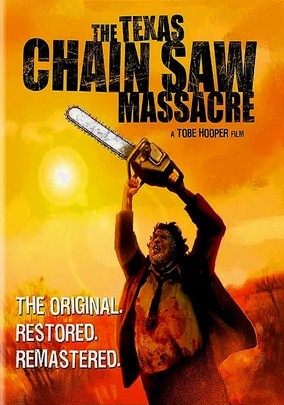
The Texas Chainsaw Massacre (1974) is one of the grittiest, rawest, and most frightening horror films I have ever seen, and it still holds up incredibly well in the present day.

Featuring a documentary-like look, it is horrifying due to its grainy, visual, and realistic feel. It is not psychological horror- it is in-your-face, brutal horror.

The perception of an incredibly hot, sticky, backwoods Texas summer is incredibly well done and only adds to the terror.

A group of five teenagers travels to the vast fields of Texas — aka the middle of nowhere —presumably on a road trip. On their drive, they pick up a strange hitchhiker who ends up stabbing one of the teens and cutting his arm.

Spooked by this odd occurrence, they stop for gas and directions, but veer off course and accidentally wind up at a slaughterhouse owned by cannibals.

The group of teens is led by Sally Hardesty, played by Marilyn Burns.

As the teens are chopped off grotesquely, similar to a slew of similar fashioned, but less interesting horror films to follow, Sally winds up the lone survivor of the group.

Burns plays the first “final girl”, a title made famous in horror films as the last female remaining alive- it was almost always a female- to take on the maniacal killer.

The Texas Chainsaw Massacre features one of the horror genre’s best villains- Leatherface.

The viewer knows little about him since he does not speak- is he mentally disabled? Is he an intelligent man? He is disguised behind a mask made of strewn-together human skin and wields a scary chainsaw.

We know nothing about him- only that he loves to kill.

The ambiguity is immeasurable.

Besides the way that the film is shot, another shocking element is the reality of the story. Could this happen to the viewer? The answer is yes of course it could. How many times have we been driving and gotten lost in surroundings unfamiliar to us?

There are no supernatural beings or CGI effects in this film- only a group of youngsters crossing paths with maniacs and this could happen in real life. This realization adds to the fright.

The famous- or infamous- dinner scene is revolutionary in disgust and distaste. The family attempts to serve Sally as dessert to the elderly patriarch and as he begins to suck blood from Sally’s finger, it will force the squeamish to turn away.

The Texas Chainsaw Massacre is a short film, running at only 84 minutes, but the breathtaking finale- Sally running through the endless woods followed by Leatherface, seems interminable. Will he catch her? How can she possibly escape?

The Texas Chainsaw Massacre (1974) is dirty, ugly, and intense. It is no-holds-barred brutality. It is one of the best horror films ever made.

The Exorcist-1973

The Exorcist-1973

Director William Friedkin

Starring Ellen Burstyn, Linda Blair

Top 250 Films #59

Top 40 Horror Films #13

Scott’s Review #326

14546619

Reviewed January 5, 2016

Grade: A

Making a lasting mark on cinematic history and impossible not to be familiar with through some form of pop culture, The Exorcist (1973) is a classic supernatural horror film that transcends the genre to become a Hollywood success story.

Along with Rosemary’s Baby (1968) and The Omen (1976), these three films have similarly haunting “religious” subject matters and deal with dark and sinister topics such as “god versus the devil” and “good versus evil”.

The Exorcist is a masterpiece on every level and is adapted from the 1971 hit novel of the same name.

The story centers on “demonic possession” and was quite simply a shocking subject when The Exorcist was released in 1973, scaring the wits out of those brave enough to see it (especially Christians) everywhere.

Some abhorred the subject matter and refused to have any part of the film; their loss.

Ellen Burstyn stars as Chris MacNeil, a noted actress who relocates to Georgetown to film a movie. In tow is her twelve-year-old daughter, Regan (Linda Blair).

As shooting on the film wraps, Regan begins acting very strangely —making noises, becoming belligerent, and urinating on the floor during a dinner party. Worried, Chris enlists the assistance of priests (Max von Sydow and Jason Miller).

Things progress from bad to worse as Regan spirals out of control, and Chris and the priests determine that an exorcism is the only resolution to the problem.

The Exorcist-mainly director William Freidkin sets up the film in a clever way by using various technical elements to build the tension.

For starters, the eerie musical score is highly successful at scaring the audience and the score is similar to that of Rosemary’s Baby. The film is also lit very well, so it appears dark with dim lighting- the cinematography and the windy rustling of leaves in the exterior sets are great.

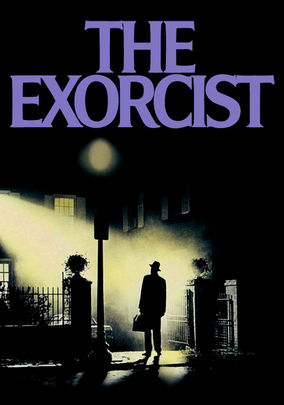
The cover art of the film should give an indication of the unique style used- black and white, a man with a hat and suitcase peers up at the second floor of a house where a glowing light is illuminating- the image is intriguing and haunting.

Enough cannot be said for Linda Blair’s performance as Regan, especially in the final act. During the “pea soup” and the “Jesus crucifix” scenes a different voice was used, but the facial expressions and the emotions that Blair uses are admirable.

As Regan is bed-ridden, angry, scared, and emotional, there is no limit to Blair’s range. Throughout a large part of the film, she is a sweet, young girl- innocent, so much so that her transformation is both shocking and disturbing to witness.

The final act of the film- the “exorcism” is riveting and a groundbreaking aspect of film history. The terrifying scene all taking place in one child’s tiny bedroom elicits fright and is nail-biting beyond belief.

The Exorcist (1973) is a very influential film that inspired filmmakers for decades to come and still resonates with audiences to this day.

Oscar Nominations: 2 wins-Best Picture, Best Director-William Friedkin, Best Actress-Ellen Burstyn, Best Supporting Actor-Jason Miller, Best Supporting Actress-Linda Blair, Best Screenplay Based on Material from Another Medium (won), Best Sound (won), Best Art Direction, Best Cinematography, Best Film Editing

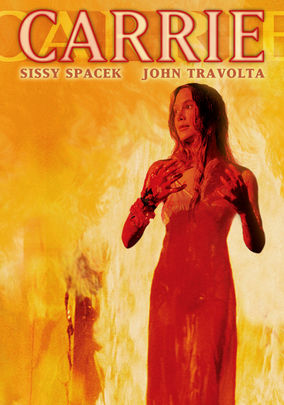
Carrie-1976

Carrie-1976

Director Brian De Palma

Starring Sissy Spacek, Piper Laurie

Top 250 Films #63

Top 40 Horror Films #14

Scott’s Review #325

352989

Reviewed January 5, 2016

Grade: A

Carrie is a 1976 horror film adapted from Stephen King’s novel of the same name.

Many King adaptations have failed, but Carrie (along with The Shining) is among the best.

Going beyond the scope of horror and receiving more than one major Oscar nomination (largely unheard of in horror), Carrie influenced films and filmmakers for decades beyond its release.

This is due mainly to the dream-like and breathtaking direction of mood master Brian De Palma.

By this time (2016), the film and the character of Carrie White were legendary.

Carrie (Sissy Spacek) is a lonely suburban teenager, ostracized by her classmates for being “weird”. Her mother (Piper Laurie) is a devout Christian who spreads the word of god amongst the neighbors.

Carrie has a special ability to move things, usually during anger- this is called telekinesis.

After a humiliating incident in the girl’s locker room when Carrie begins menstruating, one of the nicer girls in the class, Sue Snell (Amy Irving) feels sorry for Carrie and convinces her boyfriend, Tommy Ross, to take Carrie to the prom.

When others in the class take revenge upon Carrie with a sick joke, things take a horrific turn.

Betty Buckley as the empathetic gym teacher, Miss Collins, and John Travolta and Nancy Allen, as dastardly Billy and Chris, also star and are perfectly cast.

The direction in the film is second to none. De Palma adds interesting camera work throughout the film.

During a tender, lovely prom dance between Carrie and Tommy, the camera circles the pair repeatedly, giving a spellbinding, but not dizzying quality.

The use of slow-motion in the important “pig blood” scene is immeasurably effective.

The seemingly eternal time it takes for the blood spilling to occur, and the camera (in slow motion) goes from Sue to Miss Collins to Chris to the bucket of blood is fantastic.

The list of inspired and intense scenes goes on and on- from the climactic scene between Carrie and Mrs. White to the “jump out of your seat” final scene.

The acting is also worthy of high praise. Spacek and Laurie deservedly received Oscar nominations for their work. Spacek elicits so much rooting value into her role with a shred of psychosis bubbling just beneath the surface.

Carrie wants to fit in and have a happy life so the audience is immersed in her corner and celebrates her short-lived happiness with Tommy at the prom. Spacek is just perfectly cast.

Laurie on the other hand exudes crazy in every sense, but we do feel pangs of sympathy for her. We largely believe she cares for her daughter and wants to protect her from the dangerous world.

Carrie (1976) is a masterpiece that continues to hold up well and influence generations who can relate to school bullying,  taunting, and the desire to see the nasty popular kids get their just desserts.

More than a great horror film, it is a revered classic with a dreamy, moody vibe.

One of my all-time favorites.

Oscar Nominations: Best Actress-Sissy Spacek, Best Supporting Actress-Piper Laurie

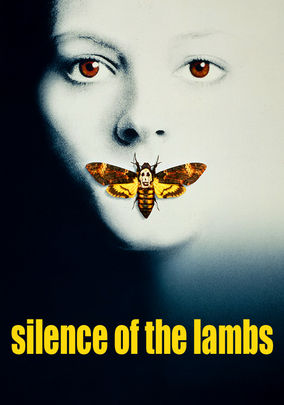
The Silence of the Lambs-1991

The Silence of the Lambs-1991

Director Jonathan Demme

Starring Anthony Hopkins, Jodie Foster

Top 250 Films #64

Top 40 Horror Films #15

Scott’s Review #320

14546747

Reviewed January 3, 2016

Grade: A

The Silence of the Lambs (1991) has the honorary achievement of being one of only three films to win the top five Oscar statuettes, having been awarded Best Picture, Best Director (Jonathan Demme), Best Adapted Screenplay, Best Actor (Anthony Hopkins), and Best Actress (Jodie Foster) at the 1991 Oscar ceremonies.

This is no small feat, especially considering the film was released in March (not an Oscar-happy month) and is a horror film. These elements speak volumes for the level of mastery that is The Silence of the Lambs and the film holds up incredibly well as the years go by.

The film was a sleeper hit at the time of release and gradually built momentum throughout the year, becoming a phenomenon and forever a classic.

The film is adapted from the novel of the same name- written by Thomas Harris and, despite being a horror film, contains little gore. The film stars Foster as Clarice Starling, an FBI trainee, sent by her superiors to interview the infamous Hannibal Lecter.

Hannibal, “The Cannibal”, is a highly intelligent former psychiatrist who has been banished to a maximum security insane asylum after having been found guilty of killing and eating his victims.

The FBI hopes that Hannibal will aid them in a current case involving “Buffalo Bill”, a serial killer who skins his female victims.

Hannibal and Clarice embark on an intense and strange relationship in which he gets under her skin and questions her unhappy childhood in exchange for information about “Buffalo Bill”.

This relationship leaves Clarice vulnerable, though the pair develop a strong connection. As Hannibal makes more and more demands in exchange for information, he eventually escapes from custody and a chilling and bizarre escape.

The psychological elements and the intense relationship between Hannibal and Clarice are of monumental importance and Hopkins and Foster share an amazing chemistry.

Hopkins gives a top-notch and downright creepy performance as the cannibalistic killer. His mannerisms are stiff and calculating, his tone of voice monotone, and he simply embodies his character, making him a legendary and recognizable presence in film history.

Two memorable lines that he utters are, “I do wish we could chat longer, but I am having an old friend for dinner.”, and “I ate his liver with some fava beans and a nice Chianti”.

The character of “Buffalo Bill” is as terrifying as Hannibal Lecter.

Portrayed by Ted Levine, the character is maniacal, sexually confused, and otherwise downtrodden. A tailor, he aspires to make a full “woman suit” costume out of his victim’s skin. His current hostage, a Senator’s daughter, is kept confined in an old well and terrorized by Bill’s antics.

His famous line, “It puts the lotion on or it gets the hose again” still terrifies me.

Highly influential, mimicked for years to come, and containing multiple lines and characters permanently etched in film history, The Silence of The Lambs (1991) is a classic not soon forgotten.

The film was followed by multiple sequels, none of which come close to the power and psychological complexities of the original.

Oscar Nominations: 5 wins-Best Picture (won), Best Director-Jonathan Demme (won), Best Actor-Anthony Hopkins (won), Best Actress-Jodie Foster (won), Best Screenplay Based on Material Previously Produced or Published (won), Best Sound, Best Film Editing

What Ever Happened to Baby Jane?-1962

What Ever Happened to Baby Jane? -1962

Director Robert Aldrich

Starring Bette Davis, Joan Crawford

Top 250 Films #68

Top 40 Horror Films #16

Scott’s Review #193

70048556

Reviewed November 14, 2014

Grade: A

Baby Jane kicked off a trend, prominent throughout the 1960s, of aging Hollywood actresses starring in horror films (interestingly, Bette Davis and Joan Crawford each did two—the others being Dead Ringer and Strait-Jacket), with varying degrees of success.

What Ever Happened to Baby Jane (1962), directed by Robert Aldrich, stars Davis and Crawford as, ironically enough, two aging Hollywood actresses, Jane and Blanche Hudson.

Jane (Davis), a child star in the 1920s nicknamed Baby Jane, with an adorable signature song, “I’ve Written a Letter to Daddy,” has long since faded from the spotlight but continues to dress in her Baby Jane costume, consisting of a little girl dress with hair in curls and ribbons.

Blanche, however, achieved success as an adult in the 1930s until a tragic accident left her wheelchair-bound and subsequently ruined her career. She then became a popular film star, much more popular than Jane.

Blanche and Jane now while away the years in a crumbling mansion in Los Angeles. Blanche is entirely dependent on her unbalanced sister for care. Jane is resentful of Blanche’s success and popularity and plans to relaunch her career in her once-famous alter ego.

The film has macabre comedic elements but never veers too far over the edge into camp or foolishness. It is also a very psychological film, as Jane mentally abuses Blanche and plays mind games with her to gain the upper hand.

Davis had a ball with this role, as her appearance alone is frightful – a grown woman of a certain age in blonde curls, pancake makeup, and a baby doll dress – she looks hideous!

What Ever Happened to Baby Jane reminds me quite a bit of Billy Wilder’s masterpiece Sunset Boulevard in several ways. For example, both feature successful stars of years past with delusions of returning to their former fame, both feature older women who are more than a bit unbalanced, and both films are set in sunny Los Angeles.

Two of the film’s supporting actors are well cast, adding significantly to the film, and deserve recognition. Victor Buono, later made famous for his role of King Tut in the popular late 1960s television series Batman, is highly effective as the opportunist sloth, Edwin Flagg, who aids Jane in her comeback attempt.

Maidie Norman as the Hudson sisters’ black housekeeper, Elvira, loyal to Blanche but never a fan of Jane’s, slowly becomes wise to Jane’s sinister plot and does a fantastic acting job when she stands up to the manipulative sister- for 1962, a black maid verbally assaulting a white woman employer was still somewhat taboo and kudos to the film for bravely going there is a highly effective scene.

The fact that Davis and Crawford famously despised each other in real life gives the audience an edge in scenes where the two women physically and verbally clash.

The film features wonderfully quotable dialogue. “We got rats in the cellar,” Jane utters matter-of-factly as she serves Blanche a cooked rat on a bed of lettuce for lunch one day, and cackles fiendishly when she hears Blanche scream in disgust.

One aspect of the film that has taken me three viewings to become aware of and that I love is the musical score throughout the film- it features multiple and creepy versions of Jane’s signature song, “I’ve Written a Letter to Daddy,” with varying tempos.

This film must use suspension of disbelief. Why does Blanche not pound and scream at her bedroom window to alert the neighbor of trouble instead of casually tossing a note out the window?

Blanche struggles to descend the steps by sliding down them and then cannot slide across the floor to escape the mansion, which is silly. The film is so gripping that I happily overlook these errors and instead enjoy the suspenseful film, which features two actresses, rivals both on and off-screen, that make this film a bit too realistic —a realism that makes for delightful film-watching.

Oscar Nominations: 1 win-Best Actress-Bette Davis, Best Supporting Actor-Victor Buono, Best Sound, Best Cinematography, Black-and-White, Best Costume Design, Black-and-White (won)

The Innocents-1961

The Innocents-1961

Director Jack Clayton

Starring Deborah Kerr

Top 250 Films #94

Top 40 Horror Films #17

Scott’s Review #639

Reviewed April 29, 2017

Grade: A

The Innocents is a 1961 British psychological horror film that tells a ghost story, based on the novella “The Turn of the Screw” by Henry James.

Although it is a horror film, it contains few traditional elements, such as contrived frights, jumps, and blood. Instead, the film succeeds by using lighting and magnificent cinematography by Freddie Francis.

And, of course, fantastic storytelling and direction from Jack Clayton.

Deborah Kerr gives an excellent turn as a beleaguered governess hired by a wealthy bachelor (Michael Redgrave) to tend to his young niece and nephew, Flora and Miles.

The setting is a lavish yet creepy mansion located outside London. As the Uncle goes away to India on business, Miss Giddens, with no previous experience, is left to tend to Flora and Miles, who both begin acting strangely.

To complicate matters, Miss Giddens sees sinister ghosts lurking around the property. The ghosts are former household servants who have passed away, of whom Miss Giddens has never met.

Miss Giddens is assisted only by the kindly housekeeper, Mrs. Grose, who tells her about the servants’ tragic deaths.

The Innocents, shot in black and white, uses sound to its advantage. This, combined with the interesting camera angles and focus shots—mainly of the ghosts Miss Giddens sees—makes the film unique and scary.

When she hears strange voices, she becomes convinced that Miles and Flora are playing tricks on her, engaging in games with her. The whispers’ sounds are haunting and do wonders for the effects, chilling the viewer as the film progresses.

Is Miss Giddens imagining the voices and visions, or is this an actual reality? Could the children be sinister and playing a vicious prank on her? Could Mrs. Grose be evil?

Nobody else within the household sees or hears anything amiss- or admits to it.

Kerr, a treasured actress, plays the part with emotional facial expressions and genuine fear, so much so that she wins the audience over as we side with and empathize with her character. Still, is she a woman on the verge of a mental breakdown? Does she have past mental problems?

Like her uncle, we know nothing of her past, only that she claims to be the daughter of a minister. How, then, does she have stylish, expensive clothes? Could she only be pretending to be a governess? Has she run away from her past?

The Turn of the Screw is a true ghost story, but The Innocents is a bit different —it relies, successfully, on being more of a character-driven story.

As Miss Giddens becomes convinced that the spirits of the servants have possessed both children, she makes it her mission to rescue them from these spirits. We have an ominous feeling that events will not end well, and they do not.

Several scenes will frighten the viewer, as Miss Giddens sees a haggard ghost (the female servant) quietly standing in the distance near a lake as Flora dances chirpily; the image of the faraway ghost figure is eerie and well-shot.

The film draws comparisons to the classic Hitchcock film Rebecca (1940). Each is set in a large mansion and features complex villains who are portrayed as deceased characters.

Also, the sanity of the main character is in question.

With a compelling story and the nuts and bolts surrounding the tale to add clever effects and a chilling conclusion, the film succeeds as an excellent and intelligent horror film.

With great acting all around, including fantastic performances by child actors, The Innocents (1961) scares the daylights out of any horror fan and uses exterior and interior scenes to make the film an all-around marvel.

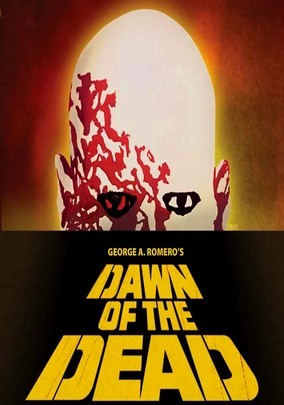
Dawn of the Dead-1978

Dawn of the Dead-1978

Director George A. Romero

Starring Ken Foree, Gaylen Ross

Top 250 Films #97

Top 40 Horror Films #18

Scott’s Review #289

423744

Reviewed November 26, 2015

Grade: B+

One of the better installments by the famed horror-comedy director, George A. Romero, though inferior to my favorite film of his, Night of the Living Dead (1968), Romero focuses slightly more on the comedy aspect with Dawn of the Dead (1978).

For horror fans, there is plenty of gore to satisfy bloodthirsty viewers.

This film is glossier and slicker than its predecessor was.

On a slightly larger budget than Night of the Living Dead, the events are in suburban Pennsylvania, at a local mall.

An unknown phenomenon has made non-buried humans change form into flesh-eating zombies that prey on other human beings.

A group of survivors hunker down in a suburban mall and begin a life of adequacy. They utilize the contents of the mall until events threaten their existence. They must form a militant operation to survive.

The four survivors are Stephen (David Emge) and Francine (Gaylen Ross), two staff members of a local television station, and Roger (Scott Reiniger) and Peter (Ken Foree), two SWAT team members whom they meet in the ensuing chaos.

The quartet steals a helicopter and travels a short distance to the mall.

Having viewed Dawn of the Dead many times, I am a fan of the film, but not an enormous fan, and it hovers below my Top Twenty Five Horror Films list (as of this review).

The main flaw is how it delves into the personal lives of Stephen and Francine midstream, a fact I find meaningless and stalls the plot.

Francine has realized that she is pregnant and I do not understand the point of slowing down the action for this purpose.

I am a huge fan of character development (even in the horror genre!), but this development does not work.

Still, the lengthy portion of the film of over two hours (highly unusual for horror), enamored me.

The scenes in the mall are fantastic and the action in the final act is thrilling.

Reminiscent of my youth and hours spent as a child, along with my mother and siblings, being paraded around the local mall, the look of the mall in Dawn of the Dead brings back a flood of memories.

From the fake green plants to the mannequins, the pool of water filled with coins, and the redundant, but lovely Muzak in the background.

Romero, as he did with Night of the Living Dead, provides a social element to the film.

The onset of materialism and consumerism captured the United States in the late 1970s and 1980s and Romero focuses on it. It’s taken me a couple of viewings to catch onto this point. The zombies stupidly walk around the mall in a numbing fashion mirroring how many people did during the day.

One character mentions that the zombies are drawn to the mall because it is familiar, much like people frequented the malls at that time frivolously spending away their time and money.

Some of the deaths, including one main character, are haunting. As the character suddenly “turns”, it is frightening to see them in this new light compared to how they once were.

And, comically, my favorite zombie character is the nurse. Wearing a uniform (white shoes, classic nurse cap, and white suit) she is creepy yet mesmerizing in her body and facial expressions as she lumbers around the mall.

It makes me smile each time I see her.

Dawn of the Dead (1978) is one of the better, more interesting zombie films. I just wish the relationship drama, mainly in the center, had been modified since it slows down the pace.

Still, a good, fun, late-night flick.

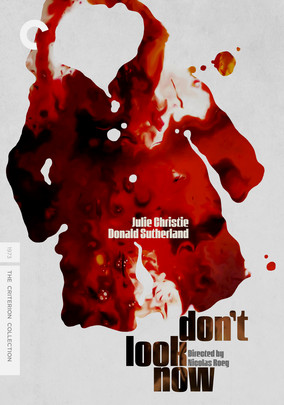
Don’t Look Now-1973

Don’t Look Now-1973

Director Nicolas Roeg

Starring Julie Christie, Donald Sutherland

Top 250 Films #103

Top 40 Horror Films #19

Scott’s Review #693

Reviewed October 22, 2017

Grade: A

Don’t Look Now is an exceptional 1973 supernatural horror film that is as thought-provoking as it is intelligently written and directed.

Combined with riveting acting by famous Hollywood stars of the day, the film is simply an anomaly and must be seen to be appreciated. It is also the type of film that can be watched again and again for better clarity and exhibits the age-old “it gets better with age” comparison.

The film is rich with story, atmosphere, and cerebral elements, as well as being highly influential to horror films that followed.

An affluent married couple, John and Laura Baxter (Donald Sutherland and Julie Christie), live happily together in their English country home, raising their two children, Johnny and Christine.

After a tragic drowning incident, resulting in the death of Christine, the devastated couple relocates to Venice, after John accepts a position restoring an ancient church. Soon, Laura meets a pair of elderly sisters, one of whom is blind and claims to be clairvoyant, warning her of imminent danger and that Christine is attempting to contact her from beyond.

Don’t Look Now is hardly your standard horror film, which is the main part of its appeal- psychological in nature, the film holds only one gruesome death- not including the death of Christina, which is a terrible accident- not malicious.

Rather, director Nicolas Roeg quietly builds the suspense to a startling final sequence by using a chilling musical score to elicit a reaction from the audience. We know not what will happen, only that something sinister is bound to.

Due to the successful chemistry between Sutherland and Christie, in 1973, both cream of the crop in terms of film success and marketability, the actors deserve much credit for making Don’t Look Now both believable and empathetic.

John and Laura, each give their character a likable nature and immeasurable chemistry, which makes the audience care for them.

Despite the supernatural elements in the film, at its core, the story is quite humanistic. John and Laura have tragically lost a child and we see them deal with the painful grief associated with this loss.

The famous sex scene between the pair is shocking given the time, but also tastefully done, as Roeg uses a fragmented filming style that mixes the nudity with the couple dressing for dinner.

Visually, Don’t Look Now is a pure treat. The viewer is catapulted to the cultural and wonderful world of watery Venice, where scene after scene features gondola rides, exterior treats of the city, and filming locations such as the famous Hotel Gabrielli Sandworth and the San Nicolo dei Mendicoli church, wisely chosen as shooting locations giving the film an effective realism.

The characters of the elderly sisters, Heather and Wendy, are wonderfully cast. Hilary Mason and Clelia Matania are fantastic and believable as the mysterious duo. Seemingly kindly and eager to help, I was never really sure what the character’s true motives were.

Was Laura paying them for their assistance?

The film never reveals this information, but Heather especially contains a sinister look that shrouds her motivations in uncertainty. Fabulous actress Mason shines in her important role.

As John begins to “see things”, the use of the color red becomes very important. Christine died wearing a red coat and John sees a child wearing a red coat walking around the city, but cannot make out her face.

When he sees Laura and the sisters at a funeral, we begin to question his sanity. But are the sisters up to something and attempting to trick him or is his mind playing tricks on him?

The terrific conclusion will only lead the viewer to more questions.

Don’t Look Now (1973) is a unique, classic horror film, with incredible thematic elements, an eerie psychological story, fine acting, and location sequences that will astound.

Mixing the occult with an unpredictable climax, the film is influenced by Alfred Hitchcock and succeeds in achieving a blood-curdling affair sure to be discussed upon the chilling conclusion.

The film is non-linear in storytelling, which only makes it more challenging to watch and appreciate.

The Sixth Sense-1999

The Sixth Sense-1999

Director M. Night Shyamalan

Starring Bruce Willis, Haley Joel Osment

Top 250 Films #106

Top 40 Horror Films #20

Scott’s Review #182

26797528

Reviewed October 8, 2014

Grade: A

The Sixth Sense is a psychological thriller/horror film directed by M. Night Shyamalan, made in 1999, about ghosts, that was an incredible box-office and critical success at its time of release and made the line, “I see dead people” universally imitated.

Bruce Willis stars as Dr. Malcolm Crowe, a successful and admired child psychologist, who lives a perfect life with his wife Anna in Philadelphia.

Enjoying a romantic night at home, Malcolm and Anna are interrupted by a deranged former patient- played by an unrecognizable Donnie Walhberg.

Malcolm is shot by the patient, who also shoots himself, and the story picks up a year later as Malcolm takes an interest in Cole, a troubled 9-year-old boy, played by Haley Joel Osment. Cole is a peculiar boy- an outcast taunted at school, who can see the dead.

He’s worried, over-worked mother, Lynn, is played by Toni Collette. Meanwhile, Malcolm and Anna appear to be going through marital problems and lack any meaningful communication with each other.

Anna begins to be pursued by a new beau much to Malcolm’s chagrin. Malcolm and Cole develop a special bond as Malcolm convinces Cole to speak to and help the ghosts that he sees rather than be terrified of them.

As the plot slowly unfolds, Cole helps a recently deceased girl named Kyra Collins, who is around his age. Kyra gives Cole a videotape that reveals she was murdered and proves who killed her.

The subsequent scene is my favorite- there is a haunting quality to it and the camera follows the events interestingly- slowly and sedately.

The setting is a service at Kyra’s house where family and friends are gathered to pay respects and support Kyra’s parents. Malcolm and Cole arrive and present Kyra’s father with the plain videotape.

The entire scene is powerful in its simplicity yet high emotional value. It is slow, but devastating in its climax and reveals. Small nuances are revealed- why is Kyra’s mother wearing bright red when the other guests are all wearing black? Will Kyra’s younger sister be the next victim?

Superlative filmmaking.

A scene involving Cole’s teacher is riveting- being able to sense aspects of people’s pasts Cole realizes his teacher had a stuttering problem as a child. When his teacher is condescending towards Cole, the young boy explodes with rage and begins a chant of “Stuttering Stanley” which reduces the teacher to childhood traumas.

Yet another powerful scene involves Cole and his mother sitting in a car caught in traffic- Cole admits the truth of his skill of seeing dead people to her and introduces an emotional story to her as proof.

This is a scene where Toni Collette shines brightly.

Well over a decade since The Sixth Sense was released, most people know the twist and subsequent surprise ending and it is such a joy to go back, see the manipulations in the story and individual scenes, add them all up, and revel in the clever way that Shyamalan puts them all together.

The Sixth Sense is not dated and is quite fresh, holding up tremendously, and I personally still get chills during the big reveal all these years later.

But more than this pleasure, the film is written beautifully. Somewhere between horror and psychological thriller, it successfully tells a ghost story with interesting characters and jumps-out-of-your-seat thrills that are not contrived and predictable in the traditional horror film way.

From an acting perspective, Bruce Willis is amazing and under-appreciated as Malcolm- he is calm, cool, and collected and his performance is quite understated as the inquisitive and pensive psychologist.

More praise should have been reaped on Willis.

Haley Joel Osment gives an astounding performance of a lifetime- he emits an image to the audience of being strange yet sympathetic and he relays his very frightening fear of the ghosts so well that the pain and conflict he endures is evident on his face.

Toni Collette is effective as the scared, concerned, haggard mother. Collette and Osment were rewarded with Academy award nominations- sadly Willis was not.

Shyamalan was subsequently ridiculed for his later films (The Village-2001, and Unbreakable-2001) – perhaps the manipulation and trickery from The Sixth Sense angered some people.

The Sixth Sense (1999) is a film that remains with you for days, weeks, even years and can be revisited and rediscovered for an intelligent, chilling good time.

Oscar Nominations: Best Picture, Best Director-M. Night Shyamalan, Best Supporting Actor-Haley Joel Osment, Best Supporting Actress-Toni Collette, Best Screenplay Written Directly for the Screen, Best Film Editing

The Omen-1976

The Omen-1976

Director Richard Donner

Starring Gregory Peck, Lee Remick

Top 250 Films #110

Top 40 Horror Films #21

Scott’s Review #331

60002150

Reviewed January 8, 2016

Grade: A

On the heels of similarly themed supernatural horror films, and all three classics in my view, The Omen (1976) follows suit with the religious-minded terrifying piece that resembles both The Exorcist (1973) and Rosemary’s Baby (1968).

All three films are cherished gems and favorite horror films of mine.

The Omen (the last to be released) is quite possibly the weaker entry having taken much from the other two films, and at the forefront is a child encompassed by devilish forces.

But to say “weaker” implies it is not good, which is not the case- The Omen is a masterpiece.

Set mostly in London, the film begins in Rome. Gregory Peck plays a powerful diplomat, Robert Thorn. Robert’s wife, Katherine (Lee Remick), has just given birth to a baby, who dies.

Unbeknownst to her, Robert and a priest have taken a newborn whose mother has just died, thereby fooling Katherine into thinking she has delivered a healthy baby boy. They name their child Damien.

Soon, Robert is named U.S. Ambassador of the United Kingdom- an astounding honor, but his and Katherine’s lives spin out of control when strange events begin to occur surrounding Damien, and they realize the child is not “right”.

I adore the many aspects of The Omen. The locale of sophisticated and royal London is perfect. The Thorns live in a grand, palatial estate just oozing with possible horror elements.

During a vast party for little Damien’s fifth birthday, the attendees are gathered on the perfectly manicured grounds of the Thorn home. It is a bright and cheery afternoon.

Suddenly, from the top floor bedroom window, Damien’s fresh-faced nanny publicly hangs herself from the window proudly shouting, “This is all for you, Damien”!

This scene is one of the most horrific and surprising scenes in the film.

When Damien’s new nanny shows up, she is off-putting and sinister. The inclusion of a pack of black dogs hovering around the estate is fiendish, and an innocent trip to the zoo results in the scared animals fleeing from Damien as if he is the antichrist, which of course, he is revealed to be.

Fantastic is the religious element of The Omen, a sure measure to frighten and freak out audiences brave enough to watch this film.

Who will not be on edge as a sweet-looking little kid is assumed to be the devil?  Religious elements in horror have been prevalent throughout the film ages.

Perhaps it is the Italian and British accents and settings that add layers of fear to the film.

What I love most about the film is its cynicism. The Omen is not a happy film by any means, nor does it result in a happy ending- Satan wins in the end.

Two memorable scenes are the pole through the heart of the priest scene and the gruesome decapitation of a photographer by a sheet of glass. In both scenes, Satan causes the deaths.

The finale of the film is incredibly compelling and downright shocking- the face-off of Robert and Damien in a church and the prevailing conclusion sets the stage for a sequel, which of course there was more than one.

The sinister smile at the end of the film is immeasurable in its evil nature.

The Omen (1976) is a film that I love to watch and revel in fright when the chills start to creep up my back.

What a fantastic film.

Oscar Nominations: 1 win-Best Original Score (won), Best Original Song-“Ave Satani”

Sisters-1973

Sisters-1973

Director Brian De Palma

Starring Margot Kidder, Jennifer Salt

Top 250 Films #119

Top 40 Horror Films #22

Scott’s Review #178

60002455

Reviewed September 29, 2014

Grade: B+

Directed by stylistic film genius Brian De Palma, Sisters (1973) is an early entry in the famed director’s repertoire and a direct homage to the classic films of Alfred Hitchcock.

The film stars Margot Kidder as a French-Canadian model named Danielle Breton, who shares a Staten Island, NY apartment with her demented twin sister Dominique. For many years Danielle and Dominique were conjoined twins and only recently surgically separated.

After a romantic date with a new acquaintance, Danielle begins to feel ill and Dominique murders the new boyfriend after he surprises, who he thinks is Danielle, with a birthday cake.

But is it Dominique or is it Danielle?

Meanwhile, a neighbor, Grace Collier played by Jennifer Salt, witnesses the murder from across the alley, and in a highly dramatic scene, involving the victim attempting to scrawl “help” on the window, Grace gets the police involved.

The authorities are skeptical and unsympathetic to Grace’s claims since she works as a newspaper reporter and is constantly challenging the police department in her articles.

Finally, when the police do search Danielle’s apartment, no dead body is found. This sets off the plot for the remainder of the film as Grace looks for the missing body on her own (in Nancy Drew’s style) with the help of a detective she hires, Joseph Larch, comically played by Charles Durning.

One point to mention about Sisters is that the film is a blueprint for De Palma films to come, but that does not mean it is not engaging on its own merits- it pales in comparison to other De Palma gems that followed, such as Carrie and Dressed to Kill.

It feels raw and slightly underdeveloped compared to those aforementioned films.

Danielle’s ex-husband and doctor, Eli, while creepy and sinister, is not fully explored, and his relation to events taking place is a bit vague throughout much of the film.

Techniques such as the split-screen showing simultaneous action oftentimes relating to each other are introduced in this film and are a marvel to watch as so much of the plot is revealed in these sequences- activity in Grace’s apartment contrasts with and interchanges perfectly with action in Danielle’s apartment- highly effective and suspenseful.

DePalma uses many Hitchcock influences, but in no way steals them- the idea of a set of conjoined twins with mental illness was taken from a real-life story of Soviet twins.

Viewers familiar with Psycho will smile during the murder scene as influences are apparent- Rear Window is certainly referenced as countless scenes of the camera looking into Danielle’s or Grace’s apartment or the camera looking out onto a street scene or someone with binoculars spying out of their apartment and into someone else’s apartment across the street- very visually oriented.

The Hitchcock similarities continue with the musical score- it is composed by Bernard Hermann, a frequent collaborator of Hitchcock films- think Vertigo.

After all of the psychological build-up throughout the first hour of the film, the final thirty minutes or so, taking place within the confines of a mental asylum, is confusing and unrealistic, as various flashbacks and dream sequences are used, even using one character taking the place of another in a dream- edgy and unique, but tough to follow and organize properly.

Grace is assumed to be a newly admitted mental patient seemed far-fetched. What exactly transpired between Danielle and Dominique present and/or in the past?

Even though events are explained, I found myself scratching my head a bit after the film.

For fans of Brian De Palma films, Sisters (1973) is a perfect movie experience to show the influence to come and not a bad film on its own either.

Halloween II-1981

Halloween II-1981

Director Rick Rosenthal

Starring Jamie Lee Curtis, Donald Pleasence

Top 250 Films #135

Top 40 Horror Films #23

Scott’s Review #505

569099

Reviewed October 31, 2016

Grade: A

The follow-up to the surprise 1978 cult classic, independently made Halloween- directed by legend John Carpenter,  Halloween II (1981) was made in 1981.

In real life, it is three years later, but the film, picks up immediately where the original left off in a chronological sense- the infamous night Michael Myers came home to brutalize the town where he killed his sister years earlier.

This is an excellent plot point that makes this film successful as it takes the viewer immediately back to that infamous night.

Halloween II is one of my favorite film sequels.

Despite not directing Halloween II, John Carpenter, along with Debra Hill, both wrote the script so that they are, thankfully, heavily involved in the production, giving it authenticity and familiarity.

So much so that Halloween and Halloween II can be watched back to back- like one long film.

Michael Myers’s path of destruction continues in the sleepy, suburban town of Haddonfield, Illinois. This point looms large in this fantastic sequel and we are treated to a direct transition from original to sequel.

The events switch from babysitter territory to the community hospital as new characters- mostly doctors, nurses, and ambulance people are introduced to the story, Laurie’s friends are sadly deceased.

Laurie Strode (Jamie Lee Curtis) and Doctor Loomis (Donald Pleasence) are the main stars of the film and by the climax take center stage.

As a recap- the determined Loomis shot Michael Myers several times as he tumbled off of a balcony to his presumed death. Spectacularly, the original Halloween brilliantly set the stage for a sequel, as Myers survives and disappears into the night-whereabouts unknown.

Now hours later, Laurie is transported to Haddonfield Hospital for treatment.  While there, the hospital staff do their best to protect her but are subsequently offed one by one by the crazed killer, who finds his way into the (conveniently!) deserted hospital.

The great quality of Halloween II is that it is gorier than its predecessor. More characters are sliced and diced in an unceremoniously brutal fashion.

One has her blood drained, another is stabbed in the eye with a syringe. Yet another is repeatedly dunked into scalding water. And then there is the traditional knife in the back.

In contrast to many other slasher films, the supporting cast of characters are quite likable and they are given little backstories of their own- a great touch. Bud- the wise-cracking ambulance driver is dating Nurse Karen. Jimmy, a handsome orderly, takes a shine to Laurie.

Mixed in with the heavy horror are nice comic moments, such as when Nurse Janet ineptly tries to assist the hospital security guard- the bumbling Mr. Garrett, with a walkie-talkie, or when Head Nurse Mrs. Alves scolds the staff for being tardy.

We grow to care for these characters, in their little night-shift family, so that their inevitable demises hit home.

The chilling music- so instrumental to the success of the original- is slightly modernized into more of a keyboard-style sound. This gives a slicker, more commercial appeal.

Not to take away from the brilliance of the original score, but it is nice to hear a change- giving a fresher, more contemporary sound, rather than simply copying the same music.

Admittedly, Halloween II (1981) is not quite on par with Halloween, but that is asking the impossible. Halloween is a masterpiece, but Halloween II holds its own and is more than adequate as a sequel having large shoes to fill.

Thanks to many of the same creators involved, it does not lose its edge or its relevance all these years later.

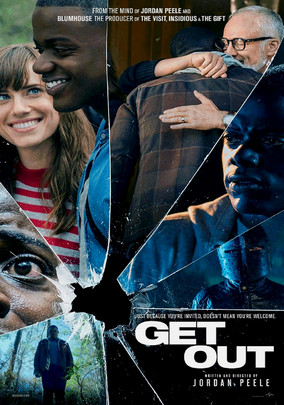
Get Out-2017

Get Out-2017

Director Jordan Peele

Starring Daniel Kaluuya, Allison Williams

Top 250 Films #158

Top 40 Horror Films #24

Scott’s Review #629

Reviewed March 28, 2017

Grade: A

Get Out (2017) is a unique modern-day horror film that combines classic horror elements (notably, great camera angles to elicit jumps) with a touch of slapstick humor, a rare blend in the horror genre.

In the case of Get Out, all of these tidbits come together in a marvelous experience. The subject matter is rather risqué (see below), a plus for me as I like films that push the envelope a bit.

Indeed, as with most horror films, liberties must be taken regarding plot points and continuity issues, but this film is impressive work.

Given that it is director Jordan Peele’s directorial debut, kudos.

Chris Washington (Daniel Kaluuya) is a young photographer who is handsome, educated, and enjoying life. He is black, and his girlfriend, Rose, is a pretty white girl from an affluent upbringing—it is implied that they are opposites on the social scale.

One weekend, they travel out of the city (presumably New York City) to visit Rose’s parents in the country. Her parents, Dean and Missy, own a sprawling estate with acres of land. Nervous to meet Rose’s parents and make a good first impression, Chris notices that Dean and Missy’s servants are all black and act peculiarly.

Soon, it is revealed that Chris’s mother died when he was a little boy, and when Missy hypnotizes Chris, things begin to go from strange to downright scary.

I adore how the film immediately feels ominous—there is simply something not “right” with the situation. Even before Chris and Rose arrive at her parents’ estate, something seems off.

They hit and kill a deer with their car, the policeman who aids them seems racist, and despite Rose seeming fresh-faced, she also seems not to be trusted.

There are so many ominous warnings not to approach her parents’ house that when they finally do arrive, the audience is compelled to watch for more, perhaps while biting fingernails nervously.

Jordan Peele’s decision to keep everything cheery and bright for most of the film only makes the audience wonder what secrets lurk in the grand estate—the setting where most of the action takes place.

When the pair finally arrives at her parents’ house, everything is out of whack. The film undoubtedly borrows from The Stepford Wives (1975) in some of the characters’ pleasant, almost robotic cheerfulness.

The big reveal and the objectification of all of the black characters —specifically black males —can indeed be cause for debate. The racial motives of the characters are also only skimmed over and never discussed or rationalized in detail.

The physical strength and resilience of black men are mentioned a few times, and Rose’s parents, a psychologist and a neurosurgeon, are significant points in the story. Still, the intentions are somewhat wishy-washy and hardly plausible.

Peele mixes a hilarious scene amid the doom and gloom in a wise move.

The comic relief of the film, Rod, Chris’s best friend and proud TSA agent, calls the police and describes in detail his fears of a sex slave operation, which results in the police having a good guffaw- at Rod’s expense. Rod serving as an instrumental part of the film’s conclusion is a fantastic decision, mixing dark humor with more grotesque horror moments.

This succeeds in setting Get Out well above the traditional genre.

The acting by all parties is believable and deserving of acclaim, but newcomer (to me) Kaluuya carries the film very well, even offering more than one heartfelt dramatic scene, mostly when remembering his mother.

Allison Williams (a dead ringer for a young Jennifer Connelly) is also a marvel, as the character changes direction mid-stream and essentially becomes a different character.

Fantastic are the throwback elements of The Stepford Wives, complete with a similar setting. The film does not reveal whether “in the country” is Connecticut or upstate New York.

The Stepford Wives was Connecticut.

Get Out (2017) is a fresh, novel approach to the standard elements of horror. It mixes comedy and aspects of race into a story brimming with suspense, good frights, and fascinating camera angles.

This film, a great success at the box office, doesn’t seem like the typical sequel, but I am intrigued by what more it could offer.

Oscar Nominations: 1 win- Best Picture, Best Director- Jordan Peele, Best Actor- Daniel Kaluuya, Best Original Screenplay (won)

Independent Spirit Award Nominations: 2 wins- Best Feature (won), Best Director- Jordan Peele (won), Best Male Lead- Daniel Kaluuya, Best Screenplay, Best Editing

Scream-1996

Scream-1996

Director Wes Craven

Starring Drew Barrymore, Neve Campbell, David Arquette

Top 250 Films #161

Top 40 Horror Films #25

Scott’s Review #710

Reviewed January 5, 2018

Grade: A-

Wes Craven’s 1996 film Scream is a piece that greatly assisted in bringing the horror genre back into relevance after a long drought throughout the late 1980s and early 1990s when horror films suffered from both over-saturation and cliche-riddled messes.

Thanks to Scream, creativity and plot twists and turns returned to the forefront of good horror films, and a clever film was birthed.

Fast-forward to 2018, the film does suffer a bit from a dated 1990s look but is still great fun to watch and a treat for all classic horror buffs as the references to classic greats are endless.

The film is sectioned off nicely and gets underway quickly  (in the best sequence of the film) as Casey Becker (Drew Barrymore)  receives a flirtatious phone call while making popcorn, from a man asking her to name her favorite horror film.

The friendly game quickly turns vicious as the caller threatens to kill her boyfriend should she answer a question incorrectly.

In a clever twist (think 1960s Psycho!) Casey and her boyfriend meet deadly fates and the opening credits begin to roll.

Given the huge star, Barrymore was in 1996, this twist was all the more shocking and attention-grabbing.

The remainder of the film centers around Sidney Prescott (Neve Campbell), a popular California high school student, as she is pursued by an attacker known only as “Ghostface”, who dons a creepy costume and terrorizes victims via phone calls.

The small town, led by police officer Dewey Riley (David Arquette) and bitchy newswoman Gale Weathers (Courtney Cox), is determined to unmask the killer and figure out his or her motivations.

Sidney’s boyfriend, Billy (Skeet Ulrich), and other friends are along for the ride as a possible connected sub-plot involving Sidney’s deceased mother is introduced.

A romance between Dewey and Gale is also broached.

Scream is an enormous treat for fans of the horror genre as numerous references (and film clips!) of classics such as 1978’s Halloween abound throughout the film.

Other references to Friday the 13th, Prom Night, and A Nightmare On Elm Street appear during the film.

Writer, Kevin Williamson, a horror enthusiast, must have had a ball writing the screenplay that would become Scream.

In 1996, the mega-success of the film successfully not only jump-started the entire genre but also introduced younger fans of Scream to classics that were perhaps their parent’s generation and got them interested in the films.

Classic horror films are not only referenced during the film but also explained, mostly by the supporting character of Jamie, the nerdy kid who works at the video store and adores horror films.

A sequence in which he explains several “rules” of the horror genre is superlative, creative, and just great fun. He tells the teenagers at a party that anyone who drinks, has sex, or says “I will be right back”, is doomed to suffer a violent fate.

This clever writing makes Scream enormous fun to watch.

The climax of Scream is quite surprising in itself and the “great reveal” of the murderer (s) is also intelligent writing and quite the surprise. Several red herrings are produced along the way, casting suspicion on other characters who may or may not be the killers.

A small gripe of the writing is the motivations of the murderers- when the explanation is given for their killing spree, the reasoning is a bit convoluted and hard to fathom, but this is horror, and suspension of disbelief is always a necessity.

Scream is best remembered for giving the horror genre a good, hard kick in the seat of the pants and shaking all of the elements up a bit while preserving the core ideals of a good slasher film (suspense, a whodunit, and good solid kills).

Scream (1996) was followed by several sequels, some achieving better successes than others. In 2018 the film may not be quite as fresh as it once was, but is still a solid watch and memorable for relaunching a genre.

The Stepford Wives-1975

The Stepford Wives-1975

Director Bryan Forbes

Starring Katharine Ross, Paula Prentiss

Top 250 Films #197

Top 40 Horror Films #26

Scott’s Review #1,395

Reviewed September 4, 2023

Grade: A

The Stepford Wives (1975) is a film that has deservedly achieved cult status over the years and its title became iconic in meaning.

Everyone knows what a ‘Stepford wife’ is and what it depicts. Usually, a tall, leggy, brainless rich white woman from Connecticut is a sufficient enough image.

The film is a personal treasure to me since I am a resident of said state. The fact that ‘Stepford’ sounds like ‘Stamford’ where I live is uncanny and ironic. The film was shot in various areas of Connecticut so it’s fun to see the towns, grocery stores, and houses in the mid-1970s.

It also resonates quite well with my husband who lived in Manhattan for many years and then transplanted to nearby Connecticut just like the main characters do.

Besides my fondness, it’s a damned good thriller. It paces nicely and takes its time getting to the stunning conclusion.

The film was written by William Goldman (All the Presidents Men-1976), who based his screenplay on Ira Levin’s 1972 novel of the same name. Levin also wrote Rosemary’s Baby which was turned into a 1968 film.

The Stepford Wives and Rosemary’s Baby would make an outstanding double feature.

Joanna Eberhart (Katharine Ross) moves to the quiet town of Stepford, Connecticut, with her husband Walter (Peter Masterson) and children. The town seems idyllic and maybe just a little too perfect for her tastes.

Along with best friend and fellow Stepford resident Bobby (Paula Prentiss), the women notice that the other housewives are not quite ‘normal’. They obsess over housework and are willingly subservient to their husbands.

Joanna and Bobby are determined to solve the mystery especially when they realize there used to be a large women’s liberation group in Stepford.

In a lesser film, the final product could dive headfirst into campy horror. A tepid remake made in 2004 and starring Nicole Kidman did. But the original version stays the course and provides thrills and psychological facets.

The audience knows pretty soon that the men have a secret club that women are not permitted to attend. Named the Men’s Association, a major clue surfaces when Walter invites the men over to his house and they secretly look Joanna up and down.

What we don’t know is the how. Joanna, Bobby, and another neighbor Charmaine Wimperis (brilliantly played by Tina Louise) are the only ‘normal’ wives. Realizing which one of them is the next intended victim is part of the fun.

The women’s portraits are drawn by one of the men and we learn that the previous women have ‘turned’ after going away on a romantic weekend with their husbands.

What’s inside the creepy mansion that holds the Men’s Association meetings? Will Joanna sneak inside? What will happen next?

Delicious sequences occur that reveal that housewives are robots. After a minor fender bender in the local shopping center parking lot, Carol (Nanette Newman) begins acting strangely at an outdoor cocktail party. She repeatedly frets and repeats the same line over and over again.

Her husband blames her odd behavior on alcohol but the audience knows better.

Unforgettable is the stellar grocery store finale when the women are dressed to the nines and robotically shuffle through the aisles. They absent-mindedly take items off the shelves and place them into their carts while acknowledging each other with a pleasant ‘Hello, Charmaine”, or “Hello, Carol”.

My favorite scene is close to the finale between Bobby and Joanna. Horrified at Bobby’s transition to an uptight, well-dressed housewife obsessed with a clean kitchen, Joanna impulsively plunges a butcher knife into Bobby’s midsection.

With no bloodshed proving Bobby is a robot, Bobby calmly scolds Joanna by saying over and over again, “Now why would you do a thing like that?”

The scene is creepy, startling, and powerful given the close relationship between the women.

These scenes and others make The Stepford Wives (1975) part of pop culture and a reason I can watch the film several times over.

Featuring a cast of good actors led by Ross who successfully provides Joanna with both likability and sensibility the film is never over the top or ridiculous.