Category Archives: Patrick Magee

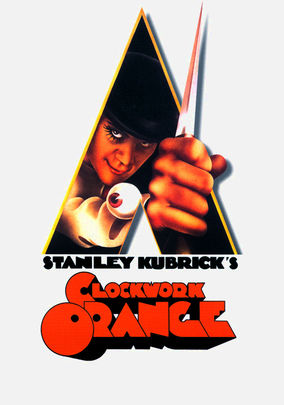
A Clockwork Orange-1971

A Clockwork Orange-1971

Director Stanley Kubrick

Starring Malcolm McDowell, Patrick Magee

Top 250 Films #11

Top 10 Most Disturbing Films #7

Scott’s Review #295
383466

Reviewed December 11, 2015

Grade: A

A Clockwork Orange (1971) is a groundbreaking Stanley Kubrick film, and my personal favorite in his collection, with his movies appearing on my Top 100 Favorite Films list.

Adapted from the 1962 Anthony Burgess novel, once thought unfilmable, it becomes a psychedelic, creative, and fascinating experience from start to finish.

Bizarre and thought-provoking, Kubrick tells the story of a London sociopath living in futuristic London, and the strange behavioral modifications performed on him after he is apprehended by the police, in an attempt to “reform” him and transition him into a valuable member of society.

The film explores profound social and psychological themes, posing thought-provoking questions about these weighty topics.

Interspersed with classical music and featuring excellent, colorful sets, A Clockwork Orange is a masterpiece in bizarre cinematic artistry.

Alex DeLarge loves classical music (specifically Beethoven), violence, and hanging out with friends. He constantly skips school, beats people up, and parties with his friends. His pet snake is his best friend, and his parents seem afraid of him.

Finally arrested after murdering an odd lady with dozens of cats, Alex is sent away to prison, where he volunteers for an experimental “Ludovico” technique, which Alex assumes is a “get out of jail free” card.

What follows is a freakish, uncomfortable experience for Alex.

The film contains startling and disturbing scenes throughout- when Alex and his team of “droogs” become inebriated from a concoction of milk laced with drugs and embark on an evening of self-proclaimed ultra-violence, they drive to the country where they break into wealthy author F. Alexander’s house and beat him, crippling him for life.

They rape his wife while forcing him to watch, all the while Alex happily sings “Singin’ in the Rain,” timing the beats of the song to acts of violence.

The brutality and creativity of this scene are mesmerizing and certainly unforgettable.

We, the audience, might despise a character like Alex; however, we feel sympathy for him as his “reformation” begins. A disturbing scene, which is forever embedded in my mind, involves the attachment of a contraption forcing Alex’s eyelids wide open.

At the same time, he watches violent scenes and is administered a drug to make him sick, thereby associating the violence with illness.

He becomes psychologically screwed up.

Alex (thanks to an excellent portrayal by Malcolm McDowell) is charismatic and humorous and, in some warped way, quite likable to the audience, despite his devious ways.

A Clockwork Orange continues to disturb me after multiple viewings – who can forget the sinister grin that Alex wears and the creepy eyelash with mascara that he sports?

The film sends an interesting message about human nature as Alex turns from predator to the hunted. We ask: “Are human beings naturally prone to violence?”

The direction of the film is breathtaking – the weird colors, the (as traditional with Stanley Kubrick) long-shot camera angles, and the intense musical crescendos.

The genre of classical music is a fantastic and ominous choice, almost adding a level of sophistication to Alex and the violence.

The weird supporting characters (Alex’s parents, the probation officer, and his parents’ roommate) and the suddenly fast-forwarded sex scenes were unheard of for their time.

Immensely creative and unconventional filmmaking, with a moral message and thought-provoking questions about humanity, A Clockwork Orange (1971) is a groundbreaking, fantastic, trippy experience.

A masterpiece from top to bottom.

Oscar Nominations: Best Picture, Best Director-Stanley Kubrick, Best Screenplay Based on Material from Another Medium, Best Film Editing
Barry Lyndon-1975

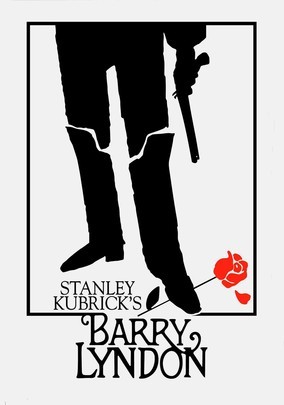
Barry Lyndon-1975

Director Stanley Kubrick

Starring Ryan O’Neal

Top 250 Films #44

Scott’s Review #211

284790

Reviewed January 4, 2015

Grade: A

Barry Lyndon (1975) is a sprawling, beautiful film by famed director Stanley Kubrick. The film is set in the 18th century.

Extremely slow-paced, yet mesmerizing, every shot looks like a portrait, and the inventive use of lighting via real candlelight in certain scenes makes this film a spectacle in its subdued beauty, to say nothing of the gorgeous sets and costumes.

The film is nothing short of a marvel to view.

The story centers around Ryan O’Neal, who plays an Irish man named Redmond Barry.

Redmond is a poor Irish man but is an opportunist. The film follows his life travels throughout Ireland, England, and Germany, as he becomes involved in duels, is robbed, impersonates an officer, is reduced to becoming a servant, gambles, marries a rich widow, and feuds with his stepson.

When he woos and marries the wealthy Countess of Lyndon, he settles in England to enjoy a life of wealth and sophistication. He changes his name to Barry Lyndon. His ten-year-old stepson, Lord Bullingdon, becomes a lifelong enemy as their hatred for each other escalates and is the focal point of Act II of the film.

The supporting cast is filled with unique characters and in particular, the three sinister characters (Lord Bullingdon, Mother Barry, and Reverend Runt) are delicious to watch especially when they square off against one another as is the case with Runt and Mother Barry.

Barry’s two love interests (Lady Lyndon and a German war widow) are entertaining to watch and Lady Lyndon’s costumes are exquisite. Furthermore, Chevalier de Balibar, a wealthy gambler who takes Barry under his wing is a delight.

As with many masterpieces, if not for the great casting, the film would not be as wonderful.

My three favorite scenes include the vicious confrontation between Mother Barry and Reverend Runt- an initially polite conversation between two selfish characters gradually spins into viciousness, the duel between Barry Lyndon and Lord Bullingdon- bitter rivals square off in an awkward yet dramatic duel, and when Barry passionately kisses his dying friend- an unexpected homoerotic scene.

Barry Lyndon delves into the issue of class and class distinction and clearly defines the haves and the have-nots and the struggles of the poor to obtain wealth by any means and for the wealthy to retain their good fortunes.

At a running time of over three hours, it may initially turn viewers off, but as time goes on the film will grip hold of the viewer and not let go.

Having now seen Barry Lyndon (1975) four times, each time I enjoy the film more and more as I become more absorbed by and immersed in the masterpiece.

It’s like a fine wine- it gets better with each taste.

Oscar Nominations: 4 wins-Best Picture, Best Director-Stanley Kubrick, Best Screenplay Adapted from Other Material, Best Scoring: Original Song Score and Adaptation or Scoring: Adaptation (won), Best Costume Design (won), Best Art Direction (won), Best Cinematography (won)

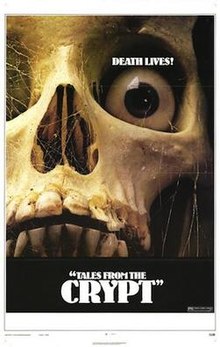
Tales from the Crypt-1972

Tales from the Crypt-1972

Director Freddie Francis

Starring Joan Collins, Ian Hendry, Robin Phillips

Scott’s Review #1,200

Reviewed November 25, 2021

Grade: A-

Tales from the Crypt (1972) is a delicious British anthology based on stories from the EC Comics series. Each of the five chapters is eerie storytelling that offers horror fans glimpses into the minds of depraved, devilish characters with sinister motives.

The sheer joy is witnessing their comeuppance.

This film is the predecessor to Vault of Horror (1973) and can be watched as a companion piece.

Below is a summary, review, and rating of each vignette.

Intro

Five strangers are suddenly compelled to join a tourist group to visit the old catacombs.

Separated from the main group, the strangers find themselves in a room with the mysterious Crypt Keeper (Ralph Richardson), who details how each of them may die.

…And All Through The House- A

Joanne Clayton (Joan Collins) brutally kills her husband Richard (Martin Boddey) on Christmas Eve to get her hands on their insurance money.

She prepares to hide his body but hears a radio announcement of a homicidal maniac (Oliver MacGreevy) on the loose.

She sees the killer (who is dressed in a Santa Claus costume) outside her house, but cannot call the police without exposing her crime.

Her daughter is upstairs in her bedroom, unaware.

This is my favorite chapter, and it’s nonstop action. Collins is terrific as the greedy Englishwoman put in peril. The audience will cheer for her to get her just desserts, especially after she callously disregards a lovely Christmas gift her husband bought for her.

Reflection of Death- B+

Carl Maitland (Ian Hendry) abandons his family to be with his secretary, Susan Blake (Angela Grant). After they drive off together, they are involved in a car accident. He wakes up, having been thrown clear of the burned car. He tries to hitchhike home, but everyone he meets screams with horror when they see him.

This vignette is slightly confusing in terms of the events’ timeline, but compelling as we wait to see what Carl’s face looks like and what has happened to Susan and his wife.

Poetic Justice- A

James Elliott (Robin Phillips) lives with his father Edward (David Markham) across from the home of elderly dustman Arthur Edward Grimsdyke (Peter Cushing), who owns several dogs and entertains children in his house.

James hates Arthur’s ramshackle lawn and embarks on a scheme to rid the neighborhood of the older man.

I love seeing Cushing play against type as a kindly grandfatherly character, and this chapter is the ultimate revenge fantasy, and quite satisfying to see what happens to James.

It’s also a perfect watch for Valentine’s Day, since the holiday is in play.

Wish You Were Here- A-

Businessman Ralph Jason (Richard Greene) is on the verge of financial collapse. His wife Enid (Barbara Murray) notices the inscription on a Chinese statue the couple owns.

They are granted three wishes. Enid decides to wish for a fortune and, surprisingly, the wish comes true, but with dire results.

This one wonderfully cascades a chain of events that leaves the characters in peril. The theme is once again about greed, specifically surrounding insurance money. The fast-paced nature is appealing, and the ancient Chinese wishes leave one character in eternal suffering.

Blind Alleys- A-

Major William Rogers (Nigel Patrick) becomes the new director of a home for blind people and exploits his position to live in luxury with his dog, Shane. At the same time, his drastic cuts to food and heating worsen the residents’ living conditions.

Led by George Carter (Patrick Magee), the residents revolt after a fellow resident dies of hypothermia. Rogers and Shane are locked in the basement, where Rogers must navigate through a maze of razor blades and a now ravenous wild dog who will hungrily eat his owner.

Though far-fetched, Blind Alleys is delicious fun and contains my most hated character. This is all the more satisfying as he ‘gets it’ in the end!

Finale

After completing the final tale, the Crypt Keeper reveals that he was not warning them of what would happen, but telling them what has already happened: they have all “died without repentance.

The conclusion does nothing more than put a satisfying cap on the viewer as each character once again pays for their shenanigans.