Category Archives: Ralph Richardson

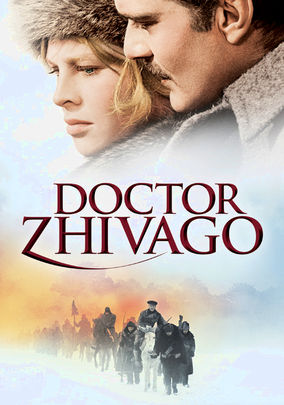
Doctor Zhivago-1965

Doctor Zhivago-1965

Director David Lean

Starring Julie Christie, Omar Sharif, Rod Steiger

Top 250 Films #31

Scott’s Review #42
449931

Reviewed June 18, 2014

Grade: A

Doctor Zhivago (1965) is a great film to watch on a cold night or throughout the crisp winter or holiday season.

The film is a classic masterpiece directed by the talented David Lean (Lawrence of Arabia, 1962, A Passage to India, 1986), whose perfectionism is evident in his epic films.

Nearly every scene could be a painting, so the cinematography alone is reason enough to become enchanted with art.

Of course, the story is also a goldmine as a sprawling decades-long love story unfolds amid the ravages of the bloody Bolshevik Revolution.

The film is set in the bitter cold of Russia (though all scenes were shot in Spain), and the harshness of the climate and the war combine with a doomed love story set against the backdrop of numerous battles and wartime conditions.

Nearly all sequences are set in winter, and the blustery, icy effects are set against numerous scenes of cozy, candlelit cabins or more extravagant, glowing surroundings.

Viewers must be surrounded by fire, flaming candles, or another form of warmth as a snowstorm or blizzard rages outside for a perfect viewing experience.

A large-screen television or a cinema is simply a must to watch this film, as it is epic on the grandest scale.

Omar Sharif and Julie Christie (a gorgeous star in her day) are cast perfectly as Uri and Lara, young forbidden lovers enthralled with one another but involved with significant others.

The film dissects their initial meeting and their story over the years, experiencing marriages, births, and deaths throughout the ravages of Russia in the early twentieth century.

Despite their affairs, neither is deemed unsympathetic—quite the contrary.

Audiences will fall in love with the pair and become enchanted as they watch their love-tortured adventures unfold.

Sharif and Christie are just magnificent and utterly believable as a couple.

The set pieces are magnificent and flawless in design and detail (my favorite is the Ice Palace).

The cinematography is breathtaking, and the content is remarkably close to the superior novel by Boris Pasternak, evoking a sense of “really being there” in the viewer.

Doctor Zhivago (1965) is a brilliant film, perfect for a snowy winter evening.

Oscar Nominations: 5 wins-Best Picture, Best Director-David Lean, Best Supporting Actor-Tom Courtenay, Best Screenplay Based on Material from Another Medium (won), Best Music Score-Substantially Original (won), Best Art Direction, Color (won), Best Cinematography, Color (won), Best Costume Design, Color (won), Best Film Editing
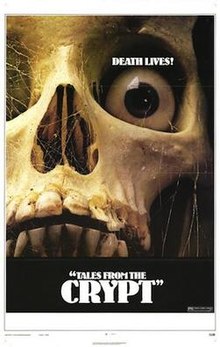
Tales from the Crypt-1972

Tales from the Crypt-1972

Director Freddie Francis

Starring Joan Collins, Ian Hendry, Robin Phillips

Scott’s Review #1,200

Reviewed November 25, 2021

Grade: A-

Tales from the Crypt (1972) is a delicious British anthology based on stories from the EC Comics series. Each of the five chapters is eerie storytelling that offers horror fans glimpses into the minds of depraved and devilish characters with sinister motivations.

The sheer joy is witnessing their comeuppance.

This film is the predecessor to Vault of Horror from 1973 and can easily be watched as a companion piece.

Below is a summary, review, and rating of each vignette.

Intro

Five strangers are suddenly compelled to go with a tourist group to view old catacombs.

Separated from the main group, the strangers find themselves in a room with the mysterious Crypt Keeper (Ralph Richardson), who details how each of them may die.

…And All Through The House- A

Joanne Clayton (Joan Collins) brutally kills her husband Richard (Martin Boddey) on Christmas Eve to get her hands on their insurance money.

She prepares to hide his body but hears a radio announcement of a homicidal maniac (Oliver MacGreevy) on the loose.

She sees the killer (who is dressed in a Santa Claus costume) outside her house, but cannot call the police without exposing her crime.

Her daughter is upstairs in her bedroom, unaware.

This is my favorite chapter and is non-stop action. Collins is terrific as the greedy English woman put in peril. The audience will cheer for her to get her just desserts especially after she callously disregards a lovely Christmas gift her husband bought for her.

Reflection of Death- B+

Carl Maitland (Ian Hendry) abandons his family to be with his secretary, Susan Blake (Angela Grant). After they drive off together, they are involved in a car accident. He wakes up, having been thrown clear of the burned car. He tries to hitchhike home, but everyone he meets screams with horror when they see him.

This vignette is slightly confusing as far as the timeline of the events but compelling as we wait to see what Carl’s face looks like and what has happened to Susan and his wife.

Poetic Justice- A

James Elliott (Robin Phillips) lives with his father Edward (David Markham) across from the home of elderly dustman Arthur Edward Grimsdyke (Peter Cushing), who owns several dogs and entertains children in his house.

James hates Arthur’s ramshackle lawn and embarks on a scheme to rid the neighborhood of the old man.

I love seeing Cushing play against type as a kindly grandfatherly character and this chapter is the ultimate revenge fantasy and quite satisfying to see what happens to James.

It’s also a perfect watch on Valentine’s Day since the holiday comes into play.

Wish You Were Here- A-

Businessman Ralph Jason (Richard Greene) is on the verge of financial collapse. His wife Enid (Barbara Murray) notices the inscription on a Chinese statue the couple owns.

They are granted three wishes. Enid decides to wish for a fortune and, surprisingly, the wish comes true, but with dire results.

This one wonderfully cascades a chain of events that leaves the characters in peril. The theme is once again about greed specifically surrounding insurance money. The fast-paced nature is appealing and the ancient Chinese wishes leave one character into eternal suffering.

Blind Alleys- A-

Major William Rogers (Nigel Patrick) becomes the new director of a home for the blind and exploits his position to live in luxury with his dog Shane, while his drastic financial cuts on food and heating lessen the residents’ living conditions.

Led by George Carter (Patrick Magee) the residents revolt after a fellow resident dies of hypothermia. Rogers and Shane are locked in the basement where Rogers must navigate through a maze of razor blades and a now ravenous wild dog who will hungrily eat his owner.

Though far-fetched, Blind Alleys is delicious fun and contains my most hated character. This is all the more satisfying as he ‘gets it’ in the end!

Finale

After completing the final tale, the Crypt Keeper reveals that he was not warning them of what would happen, but telling them what has already happened: they have all “died without repentance.

The conclusion does nothing more than put a satisfying cap for the viewer as each character once again pays for their shenanigans.

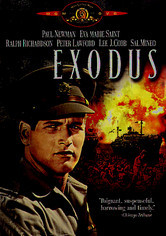
Exodus-1960

Exodus-1960

Director Otto Preminger

Starring Paul Newman, Eva Marie Saint

Scott’s Review #1,005

Reviewed March 30, 2020

Grade: A-

Creating a monumental epic about the modern state of Israel, director Otto Preminger’s vast project Exodus (1960) is a bold adaptation of the Leon Uris novel from 1958.

Starring stars of the day for added Hollywood spice and a romantic element, the result is a sprawling war drama with robust proportions and a hefty running time.

The film sometimes lags or even drags, but the message’s enormous importance and influence on stimulating Zionism should never be forgotten.

With the treacherous World War II barely in the rear-view mirror, Israeli resistance fighter, Ari Ben Canaan (Paul Newman), attempts to bring six hundred European Jewish Holocaust survivors from British-blockaded Cyprus into newly developed Palestine.

At the camp, he meets Kitty Fremont (Eva Marie Saint), an American volunteer nurse. The pair teams up with others to attempt to liberate the survivors.

The action eventually switches to Palestine, where other characters and motives come into play in a complex story. During this time, opposition to the partition of Palestine into Arab and Jewish states was heating up, leading to tension, bombs, and death among similar types of people.

Central to the main plot is a young love story involving spirited Dov Landau (Sal Mineo), a radical Zionist resistance group member, and Karen Hansen Clement (Jill Haworth), a young Danish-Jewish girl searching for the father from whom she was separated during the war.

Exodus has so much story going on and multiple plots to follow.

Besides the tense story, the main draw is the two love stories told amid the political turmoil.

Newman and Saint have marginal chemistry; he is an eye candy who electrifies the screen, and she seems too old for him and does not photograph well. Kitty, a widow, hedges on her romantic feelings for Ari, but they ultimately unite.

A gorgeous sequence occurs when the two share a delicious meal of fish and martinis amid a rooftop restaurant overlooking the dazzling landscape. She later dines with his parents and his mother, a classic Jewish mother who, in stereotypical fashion, cooks and fusses.

The fresh-faced pairing of Dov and Karen is reminiscent of Tony and Maria from West Side Story. Doomed from the start, the youngsters are opposites in many ways: hot-headed, sensible, and resilient. He is bronze and swarthy; she is blonde and blue-eyed.

I fell in love with the couple more than Ari and Kitty and rooted for their happily-ever-after moment, which sadly never occurred.

At nearly four hours, the film is best watched in segments, perhaps even four, to let the action marinate overnight. The sweeping cinematic photography and the lush exterior sequences aid the complex drama.

A drawback was not seeing the film on the big screen, which was almost a must in hindsight and limited by the DVD quality over Blu-Ray.

Nonetheless, the film is delicious in nearly every way. When tedium is about to occur, an event snaps the viewer back to immediate attention.

A notable fun fact is that Preminger boldly hired blacklisted screenwriter Dalton Trumbo, on the dreaded Hollywood blacklist for over a decade for communist leanings, to write the script.

Together with Spartacus (1960), made the same year, Exodus is credited with ending the practice of Blacklisting in the motion picture industry. The importance of what is written on the blank page is arguably surpassed by the man who wrote those pages.

Exodus (1960) nearly rivals the epic of all epics, Lawrence of Arabia (1962), in its cinematography of exotic and sacred landscapes in daring and forbidding lands.

Perhaps twenty minutes could be carved out when the action loses momentum. Still, with great direction, a top-tier cast, and a history lesson in the harshness of war and generations of conflict, the film resonates with the realism of the subject matter.

Oscar Nominations: 1 win-Best Supporting Actor-Sal Mineo, Best Music Score of a Dramatic or Comedy Picture (won), Best Cinematography, Color