Category Archives: Best Picture-Drama Golden Globe Winners

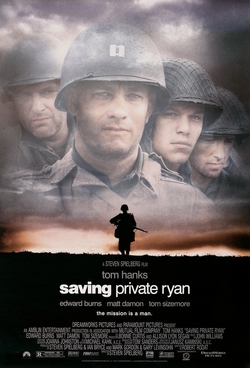
Saving Private Ryan-1998

Saving Private Ryan-1998

Director Steven Spielberg

Starring Tom Hanks

Scott’s Review #778
Reviewed June 26, 2018

Grade: A

Famed director Steven Spielberg does not always get the respect he deserves.

This is usually because, for better or worse, he has become synonymous with the “blockbuster” film, drawing comparisons to either lightweight fare or films of “lesser” artistic merit.

His 1980s works- Raiders of the Lost Ark (1981), E.T. the Extra-Terrestrial (1982), and Indiana Jones and the Temple of Doom (1984)- were enormous commercial successes, though I enjoyed all of the films.

During the 1990s, Spielberg continued to direct “popcorn flicks” such as Hook (1991) and Jurassic Park (1993) with large studio budgets but somewhat less critical acclaim.

Finally, he changed many opinions with 1993’s Schindler’s List and the war film to end all war films, Saving Private Ryan (1998), an epic, profound experience.

Both received numerous Oscar nominations and achieved box-office success.

The film is a tremendous treat, thanks to the riveting opening sequence alone (more on that later).

If that is not enough to impress, Saving Private Ryan is known for infusing a very graphic element into the war film, with no let-up from the brutality.

Spielberg does not water down this picture; instead shows the pain and angst of war.

The film is greatly strengthened by the casting of Hollywood superstar Tom Hanks, who leads an enormous cast of mostly young men.

Saving Private Ryan opens with a prologue: in the present, a veteran brings his family to visit an American cemetery in Normandy.

Flashbacks then take the audience back to the Omaha Beach debacle in 1944, where American troops faced deadly German artillery attacks in France.

After the horrific three-day D-Day, it is learned that three of the four Ryan sons have died in the events. Captain Miller (Hanks) is ordered to take a team to Normandy and bring the fourth Ryan son (Matt Damon) to safety.

Spielberg’s opening D-Day sequence is just astounding and propels the film to unforgettable status.

With a running time of twenty-four minutes, the riveting and horrific slaughter of American soldiers is intensely brought to the screen.

Audiences undoubtedly sat open-mouthed (I know I did!) as bullets riddled the beach and left soldiers killed or with limbs torn off. The camera work is brilliant, as the use of a shaky technique, almost a documentary style, is used for effect.

This sequence successfully promotes anti-war sentiment without glorifying combat. The scene will stay with its audience for years to come.

Saving Private Ryan can be compared to the decades-later Dunkirk (2017) in that each film took the war genre and turned it on its head.

The similarities start with the obvious: both films take place during World War II, in the same week, and in French beach settings, making them perfect companion pieces.

Both films feature a gray, rainy setting with many horrific moments of death and suffering. The war film is a common genre that has historically teetered on the brink of predictability and oversaturation.

Still, both films do something completely different and unexpected, yet mirror each other in style.

To counter-balance the violence in the opening sequence, a quiet scene is created and remains one of my favorites. The scene contains almost no dialogue throughout the seven-minute duration and is pivotal to the entire film.

As a typist realizes that three letters of death are to be delivered to the same family, a woman on a Midwestern farm quietly washes dishes. She is calmly horrified when she sees a government car approaching.

What else can this mean but that one of her sons is dead? The poor Mrs. Ryan will be told that she has lost not one, but three sons.

How utterly unimaginable, and the scene is incredibly touching!

The best part of Saving Private Ryan is that Spielberg combines a deeply sentimental vision with the terrible atrocities of war. He portrays not only the violent effects of battle on soldiers but also on surviving families.

This isn’t always done in war films, at least not to the level Spielberg chooses.

With a film as startling as Saving Private Ryan, Spielberg turned the war film genre inside out.

Breaking barriers with a no-holds-barred gusto, Spielberg influenced war films for years to come- Black Hawk Down and Enemy at the Gates (2001) are prime examples- and received acclaim from fellow directors for his interesting techniques.

Saving Private Ryan (1998) was an enormous box-office hit, proving that great films don’t have to be watered down to find an audience.

Oscar Nominations: 5 wins-Best Picture, Best Director-Steven Spielberg (won), Best Actor-Tom Hanks, Best Screenplay Written Directly for the Screen, Best Original Dramatic Score, Best Sound Effects Editing (won), Best Sound (won), Best Art Direction, Best Cinematography (won), Best Makeup, Best Film Editing (won)

Golden Globe Nominations: 2 wins-Best Picture-Drama (won), Best Director-Steven Spielberg (won), Best Actor-Drama-Tom Hanks, Best Screenplay, Best Original Score
Forrest Gump-1994

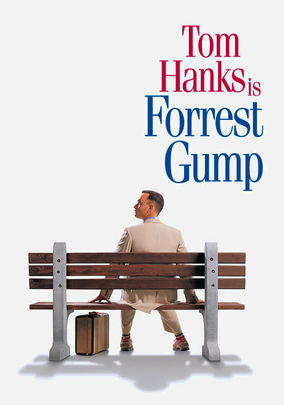
Forrest Gump-1994

Director Robert Zemeckis

Starring Tom Hanks

Scott’s Review #362

60000724

Reviewed January 9, 2016

Grade: A

Awarded a bevy of Academy Awards in 1994, Forrest Gump is a film that is ingrained in many people’s memories, as it was a monster hit in the mid-1990s.

Some complained that the film’s unrealistic nature was silly and the story too saccharine. Still, it is an innocent, sweet piece about a simple-minded man’s journey through life and the insurmountable success he achieves.

I adore the film largely from a sentimental standpoint and for the memories it conjures up when I watch it years later.

I find the film to be a comfort.

Zemeckis, a feel-good film director (Back to the Future, 1985, Who Framed Roger Rabbit?, 1988), carves a whimsical tale of a fellow, Forrest Gump (played brilliantly by Tom Hanks), a slow-witted but gentle soul from Alabama, and his decades-long journey through life.

His lifelong love is Jenny (played by Robin Wright), a troubled girl who relies on Forrest throughout their decades-long friendship.

Forrest is always in the right place at the right time and influences historical events in his innocent way.

Forrest Gump is unique for its clever editing, which weaves Forrest into real-life historical events, a big part of the film’s appeal.

In one instance, Forrest meets with Richard Nixon and reveals the Watergate scandal. He also met President John F. Kennedy after winning a football scholarship.

And who can ever forget the numerous lines made famous from the film- “Stupid is as stupid does” and “Life is like a box of chocolates. You never know what you are going to get.”, to name just two.

What I love most about the film is its heart, and the relationships Forrest shares with the central characters in his life are rich in depth. Forrest’s haggard but kind mother (Sally Field) loves her son, and they share a tender, emotional relationship.

When Forrest enlists in the Army during the Vietnam War, his grizzled commanding officer, Lt. Dan Taylor (an Oscar-nominated performance by Gary Sinise), surprisingly becomes one of Forrest’s closest friends.

The film takes a darker turn when we begin to see a more human side to Taylor after a horrible accident, which leaves him without legs. To counterbalance this tragedy, Forrest is comically wounded in the buttocks.

I am not sure whether I love or loathe Jenny as a character.

Wright does a great job of showing her vulnerability, and her terrible upbringing can excuse some of her actions and lead her to take advantage of Forrest, arguably for her own gain.

Still, she has Forrest’s heart, so she cannot be all that bad.

A favorite scene takes place in Washington, where Forrest speaks at an anti-war rally.

In the crowd, Jenny recognizes Forrest, and their reunion is sweet. Jenny, now a hippie and expelled from school, returns to Forrest’s life.

The fates of both Jenny and Mrs. Gump are scenes that will undoubtedly require tissues to get through, as they are tender and emotional as can be.

Zemeckis’s Forrest Gump (1994) has emotion, sweetness, and heart, and those are great qualities in a film.

It isn’t too sappy, overwrought, or manipulative; instead, it tells an honest story.

Oscar Nominations: 6 wins-Best Picture (won), Best Director-Robert Zemeckis (won), Best Actor-Tom Hanks (won), Best Supporting Actor-Gary Sinise, Best Screenplay Based on Material Previously Produced or Published (won), Best Original Score, Best Sound Effects Editing, Best Sound, Best Art Direction, Best Cinematography, Best Makeup, Best Film Editing (won), Best Visual Effects (won)

Golden Globe Nominations: 3 wins-Best Picture-Drama (won), Best Director-Robert Zemeckis (won), Best Actor-Drama-Tom Hanks (won), Best Supporting Actor-Gary Sinise, Best Supporting Actress-Robin Wright Penn, Best Screenplay, Best Original Score
The Greatest Show on Earth-1952

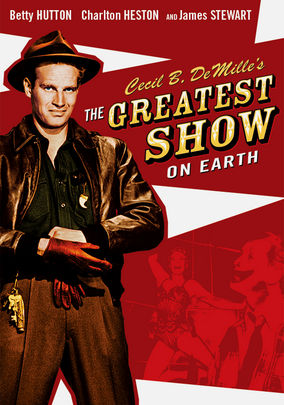
The Greatest Show on Earth-1952

Director Cecil B. DeMille

Starring Charlton Heston, Betty Hutton, James Stewart

Scott’s Review #204

60034703

Reviewed December 14, 2014

Grade: B+

Considered by some critics to be one of the worst Best Picture winners of all time, The Greatest Show on Earth (1952) is quite an impressive Hollywood spectacle.

It tells the story of the world’s largest railroad circus as it launches a tour across the United States, with plenty of drama throughout.

The film stars Charlton Heston, Betty Hutton, and James Stewart as the general manager, acrobat, and clown of the show, respectively.

The film used over 1,400 real Ringling Bros. and Barnum & Bailey employees and hundreds of animals in its production, giving it an authentic circus feel.

Unfortunately, the film also has a schmaltzy quality and lacks strong acting, which, surprisingly, does not bother me and, strangely enough, works in a way.

Various characters have affairs with each other or fall in and out of love rather quickly- it makes for good drama, anyway.

Of course, the main appeal is the extravagant show. While the drama sometimes takes center stage, the lavish production and actual circus events shine through.

My favorite character, and arguably the only interesting character with any depth, in The Greatest Show on Earth is Buttons the Clown, played by James Stewart.

Buttons wears his clown costume, complete with full makeup, at all times. He is kind and mysterious. We learn that he “mercy killed” his dying wife and has joined the circus for protection from the police.

A wonderful human being, he was once a Doctor and tends to anyone in the circus troupe who needs assistance. Later in the film, he plays a vital role after a tragic accident.

His heartbreaking, tender conversation with his elderly mother, whom he only sees in secret once a year for a few seconds as she tearfully and discreetly visits him in the audience, is painfully sad to watch and such a sweet scene.

The Greatest Show on Earth’s best scene by far, still impressing today, is the massive train wreck near the conclusion.

The special effects and direction in Cecil B. DeMille’s 1952 film are brilliant. The train perfectly derails one night—it collides with an oncoming train and derails, highly effective in its enormity.

The scene does not look silly.

The way all the drama comes together in this scene—Harry, the crooked midway concessionaire and vicious elephant trainer; Klaus, who is responsible for the accident; Button’s true identity being revealed; and a significant character in peril—makes it top-notch and a satisfying conclusion to the film.

The stories involving Brad, Holly, Sebastian, and Angel are soapy and melodramatic, making them the film’s weakest point.

As a viewer, I couldn’t care less which character lusted after which or who wound up in bed together, but the movie itself is a spectacle, which is my main enjoyment.

The brightness, the revelry, and the circus performances are all wonderful.

Oscar Nominations: 2 wins-Best Motion Picture (won), Best Director-Cecil B. DeMille, Best Story (won), Best Costume Design, Color, Best Film Editing

Golden Globe Nominations: 3 wins-Best Motion Picture-Drama (won), Best Director-Motion Picture-Cecil B. DeMille (won), Cinematography-Color (won)

Anne of the Thousand Days-1969

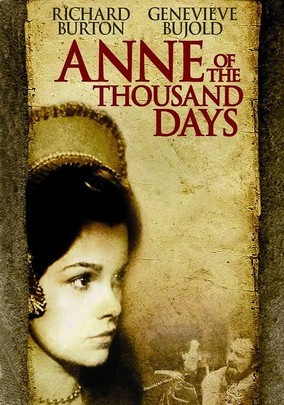
Anne of the Thousand Days-1969

Director Charles Jarrott

Starring Richard Burton, Geneviève Bujold

Scott’s Review #56

60010091

Reviewed June 22, 2014

Grade: A-

Anne of the Thousand Days (1969) is one of the better historical dramas I have seen.

One can become absorbed in the history of royalty and learn a lot. It has a clear Shakespearean quality to it (tragedy) and is compelling in many ways.

It tells the true story of the tumultuous relationship between Henry VIII of England and his second wife, Anne Boleyn, whose union produced one of the most famous queens, Elizabeth I.

Henry VIII’s first wife, Katherine, was discarded amid much controversy and political intrigue.

The drama is part of what makes this film so enjoyable, along with the historical element. It is dramatic, but not a soap opera, and the acting is superior.

The film also has gorgeous costumes and cinematography.

Unfortunately, the finale of the beheading left too much to the imagination, and a more graphic scene would have put it over the top.

The film is near excellent, though.

Oscar Nominations: 1 win-Best Picture, Best Actor-Richard Burton, Best Actress-Geneviève Bujold, Best Supporting Actor-Anthony Quayle, Best Screenplay Based on Material from Another Medium, Best Original Score for a Motion Picture (Not a Musical), Best Sound, Best Costume Design (won), Best Art Direction, Best Cinematography

Golden Globe Nominations: 4 wins-Best Picture-Drama (won), Best Director-Charles Jarrott (won), Best Actor-Drama-Richard Burton, Best Actress-Drama-Geneviève Bujold (won), Best Supporting Actor-Anthony Quayle, Best Screenplay (won), Best Original Score