Category Archives: Satire

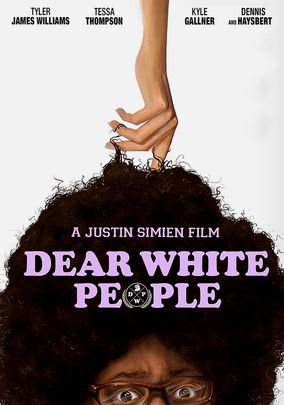
Dear White People-2014

Dear White People-2014

Director Justin Simien

Starring Tessa Thompson

Scott’s Review #274
70298948

Reviewed September 18, 2015

Grade: B+

Dear White People (2014) is a highly creative, independent satire that begs to be watched for its message about racism today, homophobia, and class distinctions.

Set at an Ivy League college and written tongue-in-cheek, but also with a direct message from newly discovered director Justin Simien, it is a meaningful gem that challenges audiences to think, be entertained, and occasionally chuckle at the wit and comical lines.

Set in the present day- assuming 2013 or 2014- and well beyond the Civil Rights era, the film features a hip, sharp look and a myriad of characters, all with differing perspectives, all Caucasian or black in racial identity.

All the characters attend the affluent, sophisticated Winchester University, a mostly white, conservative school with a small community of black students who curiously all seem to live in the same dorm house.

The Dean is a Black man (played by Dennis Haysbert).

Sam White (Tessa Thompson) is a rebellious female student of mixed race who runs a radio show entitled “Dear White People”, which challenges the current state of racism in America, specifically at Winchester University.

Supporting characters include Lionel Higgins, a gay, bookish student with an enormous afro, excluded from almost all the sub-groups. Lionel is intrigued by Sam’s radio show.

Other characters include Coco- an attractive black girl with typically “white” mannerisms and friends, who try to fit in with the white culture. Troy, a very handsome black student (who tries to act “white”), dates a white girl (who tries to act “black”).

Finally, the film features Kirk, a white student whose father is the school president, who values an old-style way of thinking.

Shockingly, Kirk hosts a blackface party, which sparks major controversy at the school and drives much of the film’s drama.

The main theme is race, but different characters have different viewpoints on it, and the film explores all of them, which makes it unique and interesting.

Sam, for example, is a true advocate for racial equality and constantly challenges white people’s motivations and actions, blatantly so.

Coco, on the other hand, is resistant to being stereotyped as a woman of color and, in one scene, is incorrectly assumed to be from the hood by a reality television producer she is auditioning for.

She is envious of white people and the advantages they have, even going so far as to have straight hair and blue contact lenses.

Then we have Lionel, who is both gay and black, and considered an outcast. He fits in with no group and, curiously, seems okay being his own person.

What is unique and compelling about Dear White People is that it brings up a controversial issue, mixes it with satire, humorously, but presents compelling arguments against stereotypes, also bringing those stereotypes center stage, which most films avoid like the plague.

One black character is frustrated that, in their mind, most black people are content watching dumb black comedies, thereby supporting a negative racial stereotype.

One interesting aspect regarding the score is the use of lily-white classic film music- such as Barry Lyndon (1975)- the most lily-white of lily-white films (British and Irish).

Famous film director Quentin Tarantino is called out as being a racist director.

What wonderful irony!

Dear White People (2014) is a witty, intelligent slice of inventive filmmaking worth seeing, if only for its controversial subject of inequality and racism, which is too often forgotten.

An indie treat for those inclined to think a little.

Independent Spirit Award Nominations: 1 win-Best First Screenplay (won), Best First Feature
Maps to the Stars-2014

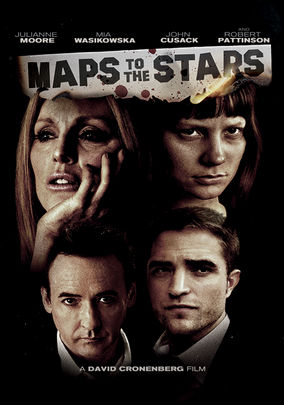
Maps to the Stars- 2014

Director David Cronenberg

Starring Julianne Moore, Mia Wasikowska

Scott’s Review #266

80013474

Reviewed August 14, 2015

Grade: A-

Maps to the Stars (2014) is a bizarre, unpleasant film that is as dark and perverse as it is provocative and fascinating to observe and ponder.

It feels more like an independent art film than a blockbuster Hollywood project, and it was made by an arguably mainstream director, David Cronenberg (Crash-1996, The Fly-1986).

I am surprised it could be made on a large-scale budget given its negative portrayal of actors and celebrity types, specifically troublesome starlets and child stars.

One must be wary of biting the hand that feeds.

Maps to the Stars is a film where almost all the central characters are unlikable- difficult, unstable, self-absorbed, or all of the above.

The subject matter is ugly but fascinating to me.

The wealthy and glamorous are interesting and, at times, the film is like a Greek tragedy containing Shakespearean elements- think Romeo and Juliet in an incestuous way times two.

You have to watch this film to see what I mean. Hint: it contains the ick factor.

The plot centers on a Hollywood family in which the son is a famous child star and the primary breadwinner. They are the Weiss family- all struggling to either find success or hang on to it, all the while each of them is neurotic.

The father, Dr. Samuel Weiss, played by John Cusack, is a TV psychologist, hired by Havannah Legrand (Julianne Moore), a highly self-centered, aging actress, struggling to land a coveted role-playing her mother.

Her mother was a young actress in her day, who tragically died in a fire. Havannah despises her due to claimed childhood abuse.

Cristina Weiss (Olivia Williams) is Samuel’s wife. This controlling, ambitious woman strives to get the most money out of her son Benjie, a Justin Bieber-type character with a troubled streak.

Rounding out the family is Agatha Weiss, a troubled teenager, sent away for years after giving her brother pills and setting her parents’ house on fire.

Though not directly related to the Weiss family, Havannah and the limo driver, Jerome Fontana (Robert Pattinson), become heavily involved as events unfold.

It reminded me of a myriad of other influential film directors in peculiar ways.

I noticed elements of David Lynch’s Mulholland Drive (1992), for instance, in a dark, clever mood and the obvious setting of Los Angeles- even the score is similar during parts of the film, as the moody, monotone sounds play in the background.

The Ice Storm (1997), American Beauty (1999), and Magnolia (1997) also sprang to mind for their dark, strange worlds (Magnolia) and their inclusion of the dysfunctional-family element (The Ice Storm and American Beauty).

Furthermore, to a lesser extent, I saw some Robert Altman ingrained in Maps to the Stars.

These aspects are a major reason I loved the film so much.

A prevalent theme throughout Maps to the Stars is one of burning- a victim of burning, a fire set, a character setting oneself on fire. Some characters see dead people. Havannah regularly sees her dead mother.

Benjie sees a young girl whom he visited in the hospital before she died; her last wish was to meet the big star.

She suffered from non-Hodgkin’s lymphoma, which he foolishly thought was AIDS. He sees her in visions and tries to strangle her, instead of strangling an innocent living person.

The film is a weird trip, and the viewer dreads an oncoming dark moment.

When Benjie carelessly plays with a gun that he assumes is unloaded, we know trouble will occur. He is showing off at an actor friend’s party along with equally obnoxious starlets while talking about poop, all selfish and wanting to party.

When Havannah belittles Agatha, her assistant, we see Agatha’s past anger come back into play as she slowly unravels with rage- Havannah is unaware of Agatha’s knowledge of her betrayal.

One small gripe is the continued use of gross toilet talk in multiple scenes, including a raunchy discussion of a fan buying a well-known actor’s waste for thousands of dollars.

What was Cronenberg’s motivation for this? This was a silly, tasteless, unnecessary element of an otherwise great film.

Maps of the Stars (2014) is dirty and ugly but is also a quirky treasure about bad people in Hollywood. Unpleasant characters whom I could not take my eyes off of.

A brilliant film that delves into Hollywood shallowness and madness and does it in a daring, twisted, wonderful sort of way.

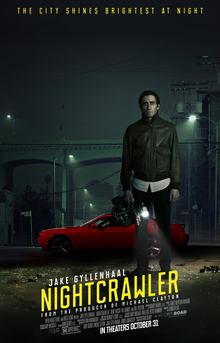
Nightcrawler-2014

Nightcrawler-2014

Director Dan Gilroy

Starring Jake Gyllenhaal

Scott’s Review #225

Reviewed March 1, 2015

Grade: B+

Nightcrawler (2014) is an intense crime thriller set in Los Angeles, featuring a wonderful performance by Jake Gyllenhaal as an unstable thief named Lou.

He cons and manipulates his way to success, videotaping accident scenes and selling them to news stations.

The film is the directorial debut of Dan Gilroy, who could become a household name.

Nightcrawler was deservedly awarded the Best Screenplay and the Best First Feature Independent Spirit awards.

The film is set mainly at night as Lou courses the city in search of accidents, crimes, and violence- the bloodier the better.

Later, Nina Romina, played by Rene Russo, tells him that violent crimes in affluent neighborhoods are best because they get the highest ratings.

Lou sells the footage to the highest bidder, and Nina becomes his main customer. Lou is eventually helped by Rick Carey, a desperate accomplice who needs money, played by Riz Ahmed.

Nightcrawler’s interesting elements are its moody setting and dim lighting. It reminds me of the 2004 film Collateral, starring Jamie Foxx and Tom Cruise, also set in Los Angeles.

Mostly set at night and heavily set on the streets of L.A., I found this mood excellent and a compelling aspect of the film.

It makes Nightcrawler look great.

Gyllenhaal deserves praise for his role as Lou and is largely responsible for the success. He was a co-producer.

As an actor, he is excellent and reminiscent of the frightening performance Robert De Niro gave in Taxi Driver (1976). With an angular face and eyes that never seem to blink, he is intense and driven on every level.

He is a sociopath.

When he quietly threatens Nina and Rick on separate occasions, one can tell he means business. Why Lou has become a thief desperate for money is never explained- does he have a family? Is he a convict?

He seems highly educated, but is he? How did he land in this predicament and resort to the life that he does?

As Lou becomes more manipulative and adjusts crime scenes to make them shocking, he seems to teeter over the edge of sanity.

In one scene, he sneaks into a victim’s home and videotapes photos of the victims from their refrigerator to promote an empathetic angle and therefore make more money from them.

This is a brilliant performance by Gyllenhaal.

Another fascinating performance I admired is Rene Russo’s, absent from films for what seems like years; Nightcrawler is a nice return for her.

Her character also has a little backstory.

We know she is a driven newswoman who struggles to maintain success at individual news stations and moves around a lot. Nina is a cutthroat news director who craves violent stories and is determined to keep her job.

She also becomes begrudgingly fascinated by Lou.

Does she like bad boys or does she admire his talent?

The third major character is Riz Ahmed’s Rick. Rick comes across as a sweet, yet gullible guy strapped for cash. Like Lou, we do not know why he is broke, but it is hinted that he may do or have done some male prostitution- he is desperate.

As the film goes along the character develops tough skin and realizes he is attracted to this new lifestyle and excitement, but will not be bullied by Lou.

On a social level, the film presents an interesting, albeit disturbing take on the relationship between the media and the viewers. What will news channels do for a good story? How bloodthirsty are news audiences? How often is a positive news story presented? It makes the audience reflect and ponder.

Nightcrawler is a dark thriller, which deservedly garnered an Oscar nomination for Best Screenplay and a slew of Independent Spirit Awards.

Intense, rich, and visually appealing, it is one of the success stories of 2014 cinema.

Oscar Nominations: Best Original Screenplay

Independent Spirit Award Nominations: 2 wins-Best Male Lead-Jake Gyllenhaal, Best Supporting Male-Riz Ahmed, Best Screenplay (won), Best First Feature (won), Best Editing
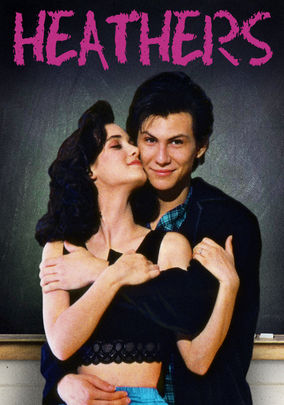
Heathers-1989

Heathers-1989

Director Michael Lehman

Starring Winona Ryder, Christian Slater

Scott’s Review #207

580335

Reviewed December 25, 2014

Grade: B

My gut tells me that Heathers was quite controversial and influential upon release in 1989 and has sustained a cult following that continues to this day, 2014.

Having seen the film only once in 2014, I found it good, but it now suffers from a slightly dated look and feel. Still, it is a brave and unique expression of creativity.

It is a film that sends the message that the popular kids are bad and that the meek shall inherit the earth.

The uncool kids will rise.

To summarize the plot, Heathers is told from the perspective of high school student Veronica Sawyer, played by a young Winona Ryder. She is a second-tier popular girl- she is lieutenant to the generals, if you will.

The school is run by three popular girls named Heather. As popular as they are, they are also despised and feared by the other students, but carry great influence.

They enjoy playing cruel jokes on other students and ridiculing anyone beneath them.

A rebellious male student, J.D., played by Christian Slater, befriends Veronica, and they hatch a plan to destroy the popular clique, including another pair of popular jocks.

Shannon Doherty plays the second-in-command, Heather.

The tone of Heather’s is surreal and dream-like. For example, in the opening scene, all three Heathers- along with Veronica- are on a perfectly manicured lawn in the suburbs playing croquet.

The hierarchy is established when Veronica is buried up to her neck and becomes the target of the croquet balls, making her, without question, the lowest of the four girls.

Whether or not this is a dream or real is unclear.

The film is well-written and edgy. It reminds me, at times, of The Ice Storm (1997) and American Beauty (1999), which Heathers preceded and are, in my opinion, superior.

Heathers is a teen angst film and quite dark at times- the various deaths are committed viciously (drain cleaner poisoning, concocting a setup for the jocks to appear to be having a love affair with each other, and then passionately shooting each other), but with sly wit and humor.

Veronica is, at heart, a good girl, albeit misguided and heavily influenced by J.D., but her intentions of having a fair, just school society are noble. The character is likable.

All the parents are hilariously portrayed as buffoons and have no idea of the darkness that exists in their kids’ lives- Veronica’s parents in particular.

Fearing that Veronica has committed or soon will attempt suicide, they fret that it is their fault stemming from childhood negligence; however, their concern has more to do with themselves than with Veronica’s well-being.

Small gripes about the film are the 1980s-style outfits and hairstyles, which, since they were made in the 1980s, are not a particular fault of the film, though it does contain a slightly dated feel while watching in the present.

Also, Christian Slater mimicking Jack Nicholson’s voice is odd- was this a decision by the film or by the actor himself? Either way, the imitation is both distracting and confusing. What is the point?

The ending of the film is a happy and satisfying conclusion- however, different from the dark tone of the rest of the movie- rumor has it that the studio had some influence in toning down the original ending.

1989 was not a stellar year for film, so Heathers deserves major props for thinking outside the box and doing something dark and creative.

Brave, inventive, and unique, Heathers is a cult classic worth a look.

Independent Spirit Award Nominees: 1 win-Best Female Lead-Winona Ryder, Best Screenplay, Best First Feature (won)

Birdman-2014

Birdman-2014

Director Alejandro G. Iñárritu

Starring Michael Keaton

Scott’s Review #190

80000643

Reviewed November 6, 2014

Grade: A

Birdman (2014) is a unique art film that, happily, has garnered major exposure and publicity because a movie like this risks receiving praise and notice only from the art-house crowd.

The film’s star, Michael Keaton, portrays Riggan Thomson, a former action-hero superstar from the 1990s, made famous for the “Birdman” character he created.

Having made sequels to the film, his career has since dried up, and he hopes to establish credibility and prove himself a real actor by writing, directing, and starring in his play.

The film is set in and around the Broadway theater in New York City.

As opening night approaches, he struggles to pull everything together and mount a successful production while dealing with an injured, terrible actor; a difficult actor; his insecurities; and a miserable theatre critic destined to ruin his big chance.

To make matters worse, his daughter Sam, played by Emma Stone, is a recovering drug addict who hangs around the theatre distracting actors with her charm and good looks.

Naomi Watts and Edward Norton play Leslie and Mike, other cast members in the production. Watts is sympathetic as the emotional actress with a heart of gold who finally realizes her dream of performing on Broadway.

Norton, outstanding as Mike, is blunt yet socially awkward and can only perform truthfully on stage.

Keaton is a marvel as he plays a dark, vulnerable man. He hates and wants to shed his ridiculous movie persona of yesteryear and secretly cringes when fans recognize him.

He uses a voice in his head when he played “Birdman” years earlier.

The film’s uniqueness lies in what seems like one long take, as the action rarely stops.

The film belongs to Keaton, who wonderfully relays vulnerability, pain, and fear within an outward persona of bravery and masculinity.

Throughout the film I wondered, is Riggan suicidal? What is real and what is imagined? Are certain scenes foreshadowing later events?

The film has much depth.

One marvels at how art imitates life: is Keaton portraying himself? He was the original Batman in the successful superhero franchise beginning in 1989, and his career tanked shortly after.

Birdman is a comeback film for him, and he is devastatingly good.

Norton’s character Mike impressed me. He is blunt, flawed, scared, and addicted to the stage.

Stone has one particularly brilliant scene where she lambasts her father and later, with regret, tells him the world has moved on without him and that he is irrelevant, like everyone else. It is a powerful scene.

In another, Riggan is locked outside the theater during the performance, clad only in his underwear. How on earth will he get back on stage and finish the show?

The quick jabs at current Hollywood superhero stars, especially Robert Downey Jr., are deliciously naughty.

It is impossible to predict what comes next, and the film feels very New York theater-style.

Keaton’s run-in with a theater critic in a cocktail bar is the best scene in the film, as the critic’s vicious critique of “You’re a celebrity, not an actor” resonates with both pain and tremendous anger for Riggan.

Riggan is a sensitive, struggling man, and Keaton shows his vulnerability beautifully in every scene.

Oscar Nominations: 4 wins-Best Picture (won), Best Director-Alejandro G. Iñárritu (won), Best Actor-Michael Keaton, Best Supporting Actor-Edward Norton, Best Supporting Actress-Emma Stone, Best Original Screenplay (won), Best Sound Editing, Best Sound Mixing, Best Cinematography (won)

Independent Spirit Award Nominations: 3 wins-Best Feature (won), Best Director-Alejandro G. Inarritu, Best Male Lead-Michael Keaton (won), Best Supporting Male-Edward Norton, Best Supporting Female-Emma Stone, Best Cinematography (won)

Annie Hall-1977

Annie Hall-1977

Director Woody Allen

Starring Woody Allen, Diane Keaton

Scott’s Review #48

261909

Reviewed June 19, 2014

Grade: A

Annie Hall (1978) is one of Woody Allen’s finest works, and that says something as his list of wonderful films goes on and on; Manhattan, Blue Jasmine, and Interiors are gems.

Annie Hall is a witty, intelligent, great comedy. It is sharply written, quirky, and neurotic all rolled into one.

Comedy is a tough genre. Romantic comedies are even tougher to get right.

My favorite part of the film is Woody Allen himself. Some might say he plays himself, but he is engagingly hysterical as the neurotic, skeptical, Jewish, cynical New York man named Alvy.

He meets and falls in love with equally neurotic Annie Hall, played by Diane Keaton.

They quarrel, love, and travel from New York to California and back.

The film has some very funny scenes (lobster, movie theater line, and the drive-through Manhattan), and the intelligent, crisp dialogue makes it a top-notch comedy.

Oscar Nominations: 4 wins-Best Picture (won), Best Director-Woody Allen (won), Best Actor-Woody Allen, Best Actress-Diane Keaton (won), Best Screenplay Written Directly for the Screen Based on Factual Material or Story Material Not Previously Published or Produced (won)

Golden Globe Nominations: 1 win-Best Picture-Comedy or Musical, Best Director-Woody Allen, Best Actor-Comedy or Musical-Woody Allen, Best Actress-Comedy or Musical-Diane Keaton (won), Best Screenplay

Animal Farm-1954

Animal Farm-1954

Director Joy Batchelor, John Halas

Voices Gordon Heath, Maurice Denhall

Scott’s Review #45

70015758

Reviewed June 18, 2014

Grade: B+

The animated film is based on the classic fable written by George Orwell.

This film is quite different from the typically wholesome Disney animated film of the time, and reportedly, many parents were shocked by the subject matter (didn’t they read the book??).

Animation-wise, this film does resemble a Disney film as the colors and animals are meticulously drawn and composed.

As anyone who has read the book knows, the tale is dark and satirical/political. Unfortunately, it is relatable today, as class systems, power, and greed are still quite prevalent in today’s society.

The ending is changed and is more hopeful than the book ending, presumably to appeal to a larger audience.

The written fable is far superior to the film, though the film is well done and effective and gets the message across.

Made in the 1950s, Animal Farm (1954) still holds up well and a look at the dark side of humanity.

Catch-22-1970

Catch-22-1970

Director Mike Nichols

Starring Alan Arkin, Bob Balaban, Martin Balsam

Scott’s Review #41

60020883

Reviewed June 18, 2014

Grade: B

Catch-22 (1970) is a satirical film similar in subject matter to Robert Altman’s M*A*S*H, released the same year, though admittedly, I have not seen that film yet.

It does remind me of Dr. Strangelove (1964) and Slaughterhouse-Five (1972) in their anti-war theme.

This film is well-made and certainly effectively portrays the outrageousness and lunacy of war.

Most of the characters are portrayed as crazy, albeit in a darkly humorous, over-the-top way.

Alan Arkin is wonderful as the protagonist trying to find a way out of the island of Italy, where he and his fellow pilots are stationed.

At times, the film feels disjointed and hard to follow, which I understand the novel is too (I have not read the entire book), but Catch-22’s (1970) message comes across loud and clear.

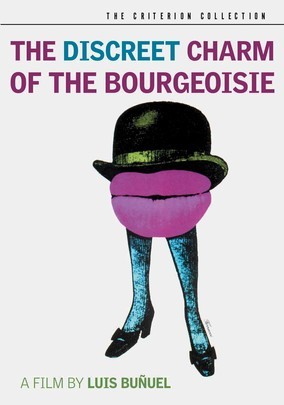
The Discreet Charm of the Bourgeoisie-1972

The Discreet Charm of the Bourgeoisie-1972

Director Luis Buñuel

Starring Fernando Rey, Paul Frankeur

Scott’s Review #13

60001469

Reviewed June 17, 2014

Grade: A-

The Discreet Charm of the Bourgeoisie (1972) is a wonderful French satire by Director Luis Buñuel.

The movie is very strange- three well-to-do couples meander from dinner party to dinner party and, due to circumstances beyond their control (an incorrect date, a mysterious corpse, and a military raid), never end up sitting down and enjoying a meal together.

Their wealth is a bit vague, though there is mention of drug smuggling.

It’s unclear who is matched with whom, since frolicking among them is commonplace. Several of them experience odd fantasy/dream sequences throughout and are often seen wandering down the road.

The entire film is tongue-in-cheek, poking fun at the wealthy class.

It’s offbeat but delightful.

Oscar Nominations: 1 win-Best Screenplay Based on Factual Material or Material Not Previously Produced or Published, Best Foreign Language Film (won)

Golden Globe Nominations: Best Foreign Film (Foreign Language)