Tag Archives: Darren McGavin

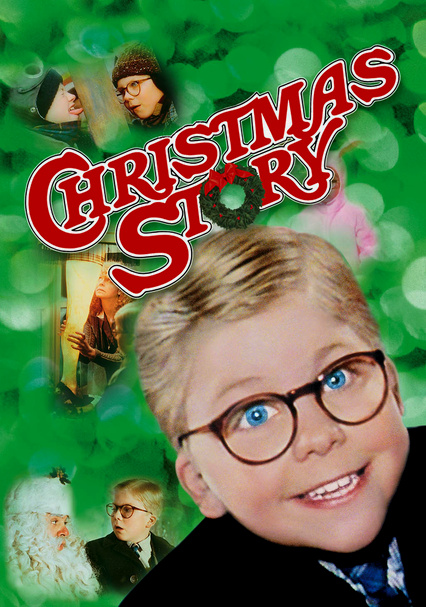
A Christmas Story-1983

A Christmas Story-1983

Director Bob Clark

Starring Peter Billingsley, Darren McGavin, Melinda Dillon

Top 250 Films #208

Scott’s Review #968
Reviewed December 16, 2019

Grade: B+

A festive holiday film sure to be watched during late December, A Christmas Story (1983) is a wholesome family treat with heart and a good slice of Americana.

A clever gimmick of an adult narrating his childhood holiday experience feels both fresh and nostalgic.

Some hairstyles, looks, and camera styles feel more like the 1980s than the 1940s, and the subject matter of a gun becomes questionable with the passing years, but the film enchants and warms the soul with famous cult-classic moments mixed in, making it memorable.

The central character is Ralphie Parker (played as a child by Peter Billingsley and voiced as an adult by Jean Shepard). Nine years old and clad in distinguished eyeglasses, he anticipates the approaching Christmas holiday with both excitement and trepidation.

He longs for his dream gift, a Red Ryder Carbine-Action 200-shot Range Model air rifle, which every adult he meets hazards “You’ll shoot your eye out.” Determined, he schemes to find a way to make his dreams come true and to get his parents to buy that gun, while avoiding the neighborhood bully.

The film has mass appeal in its casting, with each principal actor adding value, and the story feels warm. With the lesser talent, the results may have been over-the-top, forced, or too melodramatic.

Accolades are especially deserved by Billingsley, who carries the film with his sincerity and giant blue eyes.

He is a natural and fantastic actor, especially during the more emotional scenes. Ralphie’s mother, father, and teacher are wonderful in their respective roles, adding the right level of earnestness and pizzazz in the supporting cast.

A Christmas Story gets props for avoiding the silly romantic storyline common in “feel-good” films of a similar ilk. The plot is clearly defined, and the antics of Ralphie make the film fun, but not too sentimental or corny.

Cringe-worthy is the thought of a little neighborhood girl whom Ralphie might want to impress. The little boy’s somewhat infatuated state with his teacher is innocent and whimsical, not to be taken too seriously.

The incorporation of now-legendary props and story points adds texture and comfort to the viewing experience, especially the lamp shaped like a woman’s leg and a high-heeled shoe.

The garish prize Ralphie’s father wins after entering a contest becomes his pride and joy, making his wife and the neighbors cringe. Assuming the piece is a lavish work of art, mistaking the word “fragile” for a fancy Italian word makes the scene humorous.

The final scene, with the family reduced to eating Christmas dinner at a Chinese restaurant after their turkey is ruined, still elicits a smile.

As the years pass, the scene teeters on racism and has been changed during stage productions to avoid controversy. The Asian characters possess too many cliched stereotypes for my taste, but the intent is innocent and wraps the film nicely.

Peculiar and noticeable with each viewing is the glaring locale of Hammond, Indiana, even though the film is shot in and around Cleveland, Ohio.

The famous Higbee’s Department Store in downtown Cleveland is pivotal to the story and world-renowned, so the Indiana locale is perplexing and out of place.

Many may not realize the Cleveland surroundings, but eagle-eyed viewers will take notice. The exteriors look nothing like Indiana.

Known for having aired since 1997 on television stations TNT or TBS in a marathon titled “24 Hours of A Christmas Story”, the event has consisted of twelve consecutive airings of the film on both Christmas Eve and Christmas Day each year.

This has resulted in it being deemed one of the best Christmas movies ever made and in exposing new generations to the work.

I’m not convinced it is “the best”, but nothing feels cozier on a cold holiday night snuggled by the fire than this cult classic. 
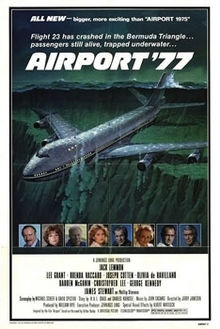
Airport ’77-1977

Airport ’77-1977

Director Jerry Jameson

Starring Jack Lemmon, Lee Grant, Brenda Vaccaro

Scott’s Review #1,072

Reviewed October 20, 2020

Grade: B+

The word that springs to mind after a viewing of the disaster flick Airport ’77 (1977) is “entertaining”. Whether this is positive or negative depends on the viewer and what they want out of a film.

As a huge fan of the disaster genre, I was one satisfied customer, though there is little to distinguish the film from other efforts. It is a more cohesive and professional-feeling effort than its predecessor, Airport ’75.

The fun is watching the cast, the grandiose list of who’s who of Hollywood heavyweights gracing the opening credits.

We wonder who will survive and who will not.

The star is the airplane. Shown in both interior and exterior shots, the luxurious, privately owned Boeing 747-100 is a standout in the picture.

Owned by wealthy philanthropist Philip Stevens (James Stewart), the plane is packed with VIPs and priceless art traveling to his Florida estate for a party.

The wealthy travelers are drugged, and the aircraft is subsequently hijacked before crashing into the ocean in the Bermuda Triangle and sinking 100 feet, prompting the survivors to undertake a desperate struggle to live.

The airplane set is a feast for the eyes. A double-deck plane (naturally!), the plush green carpets, and the spiral staircase, complete with a robust bar stocked with every type of liquor imaginable, are wonderful trimmings.

It allows the viewer to forget all about the typical in-flight treats like their seat being kicked, a screaming baby, or a fat man snoring, and escape to the pleasures of champagne, caviar, and slippers.

Seriously, the sets are tremendous and worthy of their accolades.

Jerry Jameson, primarily a television director, sticks to a formulaic approach that makes the film look like a long television series. Think Murder, She Wrote, Dallas, or Dynasty at 30,000 feet.

I say this because the melodrama is sky-high (no pun intended), and situations arise between flight crew and passengers to create more tension than the crash itself.

The juiciest drama exists between husband and wife, Martin (Christopher Lee) and Karen Wallace (Lee Grant). He flirts with women at the bar, drinks too much, and gets jealous. They squabble. You get the idea.

What a joy it is to see some of the stars on-screen together, specifically Stewart, Olivia de Havilland, and Joseph Cotten. Nicholas Cotten is a romantic match for de Havilland’s Emily Livingston, and they appear to be old friends.

Fans of classic cinema will undoubtedly associate him with Shadow of a Doubt (1943) and her with Gone with the Wind (1939), and to see the legendary stars side by side is darling, nearly worth the price of admission.

Stewart is perfectly cast as the rich and distinguished man eager to see the impending arrival of his estranged daughter and her son, hopeful of a happy reunion.

These delights are why I love this genre.

The actors teeter back and forth between phoning in their lines and enthusiastically having a ball with their respective roles. Sometimes it’s hard to tell which is which. I’ll bet the set was tension-free as everyone was earning a bundle of cash.

And why not? The budget is plentiful and overabundant.

The plot is generally ludicrous, as is to be expected. The thought that anyone, let alone nearly everyone, could survive a crash into the ocean and remain unscathed as it sinks to the depths of the water is beyond silly.

Suddenly, when all passengers conveniently emerge from their drug-induced stupor simultaneously, hysterics erupt, which is quite humorous. As the water slowly seeps into the plane, a frenzied effort to find a way out begins.

The last portion of the film, involving a rescue crew arriving to save the passengers, is a disappointment, lacking much in the way of captivation.

Airport ’77 (1977) has all the elements its target audience expects. If the well-known cast were instead unknowns, the crash peril and its following adventure would not be danger personified, and the dramatic and romantic tensions left out, the film would be a disappointment.

The film is like sinking your teeth into a fattening, highly caloric Whopper from your favorite Burger King. It’s a guilty pleasure you wouldn’t necessarily tell your health-conscious friends about, one you get so much enjoyment from.

But it’s fun, so why not indulge from time to time?

Oscar Nominations: Best Art Direction, Best Costume Design