Category Archives: Independent Comedy

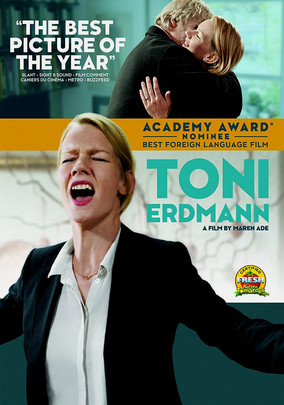
Toni Erdmann-2016

Toni Erdmann-2016

Director Maren Ade

Starring Peter Simonischek, Sandra Hüller

Scott’s Review #686

Reviewed October 1, 2017

Grade: A-

Reaped with a slew of award nominations in 2017, mainly in the Foreign Language film categories, Toni Erdmann is a unique film that I must champion, but for its imagination and humanistic perspective alone.

It can be watched in segments—almost a miniseries—at two hours and forty-two minutes. The film is set in Bucharest, Romania, so viewers are treated to several exterior scenes of the bustling city and fascinating European culture.

However, the film is German and Austrian-produced.

Winfried Conradi (Peter Simonischek) is a hippie-type man in his sixties. Divorced and working as a music teacher, his dog suddenly dies, resulting in his decision to reconnect with his corporate, power-hungry daughter, Ines (Sandra Hüller). She is forging her career in business consulting and is currently on assignment in Bucharest.

Winfried insinuates himself into Ines’s busy life as she wants little to do with him or the petty practical jokes he continues to play on her.

Gradually, involving a few hysterical antics and embarrassing situations, father and daughter reunite and forge the loving relationship they once shared.

Toni Erdmann is unusual because one will not know what to expect from it or what direction it will go as we get to know and love the characters. We know that Ines is a driven career woman, busy beyond belief, with no time for her father.

Yet, in all of the scenes that Ines and Winfried share, due to fantastic and believable acting by the two leads (Simonischek/Hüller), there is an underlying love and appreciation for each other that comes across.

This chemistry made me root for the father-daughter reunion and reconnection.

When Winfried dons his garish wig and horrid false teeth and names himself “Toni Erdmann,” a series of hilarious scenes ensue. Winfried is noticed at essential corporate functions and dinners, and he follows Ines, too. He also attends a ladies’ dinner with Ines and her friends and explains to the women that he is in Bucharest for a funeral that a friend is having for his pet turtle.

Simonischek fills his character with earnestness and dry wit, making these scenes hilarious.

My favorite scene that will indeed be talked about for years to come is the “naked party” scene.

Not only is the scene comical, but it is also fraught with meaning as it is a turning point for the character of Ines. Hosting a team-building party for her birthday, the party is set to begin, except Ines cannot get her dress on, and her shoes do not match.

Frustrated, with a guest already at the door, Ines strips naked and decides to turn the party into a naked team-building experience.

Some guests are disgusted and leave. Others reluctantly agree to strip nude. It is when Ines sheds her clothes and her stodgy, rigid persona and begins to appreciate and enjoy life again, thanks to her father.

Toni Erdmann is a unique and unpredictable film by a female director (Maren Ade) with an interesting and strong perspective on the female psyche. She carves a thoughtful tale about a damaged father and daughter with characters to root for and realism.

The film is a fun, laugh-out-loud romp that goes into dramatic territory, careful to remain playful and not be too overwrought.

I enjoyed it tremendously.

Oscar Nominations: Best Foreign Language Film

Independent Spirit Award Nominations: 1 win-Best International Film (won)

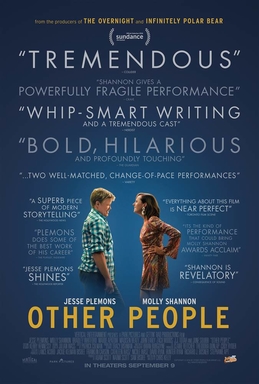
Other People-2016

Other People-2016

Director Chris Kelly

Starring Jesse Plemons, Molly Shannon

Scott’s Review #676

Reviewed August 24, 2017

Grade: B+

2016’s recipient of numerous Independent Film award nominations is equal parts a touching drama and equal parts witty comedy, providing a film experience that crosses more than one genre.

Is it a heavy drama, or is it a comedic achievement?

Without being sappy or overindulgent, Other People is a film that will elicit laughs and tears from viewers fortunate enough to see it. The subject is a tough one- a woman dying of cancer.

The title, in which one character states he always thought cancer was something that happened to “other people,” is poignant.

Jesse Plemons and Molly Shannon play son and mother. The film is both written and directed by Chris Kelly.

The very first scene is a confusing one and caught me off guard. We see the entire Mulcahey clan- father Norman (Bradley Whitford), three kids, David (Plemons), Alex, and Rebeccah, along with their dead mother Joanne (Shannon), all lying in the same bed, sobbing and clutching hands.

Joanne has just succumbed to her battle with cancer. This powerful opening scene, also the final scene, sets the tone as Kelly works his way back, beginning a year before the critical “death scene.”

Cancer is a challenging subject to cover in film, especially going the comedy/drama route.

The sensitive filmmaker must be careful not to trivialize the subject matter with too many comedic elements or heavy drama. Kelly successfully mixes humor and drama well, making it a cross-genre film.

He achieves this with capable talents like Plemons and Shannon. They share tremendous chemistry in every scene they appear in together.

Scenes that show David and Joanne crying in each other’s arms work well, as do others, such as when David takes a giddy Joanne to meet his comedy friends.

Most impressive is that the story in Other People is mainly autobiographical. Kelly, a gay man like the character of David, moved from New York City to Sacramento, California, to tend to his ailing mother, who had also died from cancer.

Actress Shannon reminded him so much of her that he had the fortune of casting the talented lady in his film- the part slated initially to go to Sissy Spacek instead.

Along with Joanne’s battle with cancer, a lovely story about David is included. A gay man, David has broken up with his boyfriend Paul, who previously lived together on the East Coast (though he still pretends to spare Joanne worry), and is returning to the West Coast.

Over the next year, we see Joanne and Norman slowly come to terms with David’s sexuality. The turbulent father/son relationship is explored during the film as Norman, initially hesitant to meet David’s boyfriend, Paul, pays for his airline ticket to attend Joanne’s funeral.

A slight miss with the film is the Norman/David dynamic.

Other than a few hints of Norman encouraging David’s struggling writing career and his obsession with David joining the gym and boxing, it is not clear what issue he takes with his son being gay or why he is uncomfortable with it. Besides the family being rather conservative, no other reason is given.

David’s sisters and grandparents do not seem to take issue with David’s sexuality, though it is not made sure if the grandparents are even aware of it. Is it a machismo thing with Norman?

This part of the story is unclear.

Still, Other People (2016) is a good, small indie film. It is rich with crisp, sharp writing and a tragic “year in the life of a cancer patient. ” The film also features good family drama and the relationships that abound when a family comes together and unites because of a health threat.

The film is nothing that has not been done before, but thanks to good direction, a thoughtful, nuanced approach, and one character’s sexuality mixed in, the film feels relatively fresh.

Independent Spirit Award Nominations: 1 win-Best Male Lead-Jesse Plemons, Best Supporting Female-Molly Shannon (won), Best First Screenplay, Best First Feature

BearCity-2010

BearCity-2010

Director Douglas Langway

Starring Joe Conti, Stephen Guarino

Scott’s Review #626

Reviewed March 19, 2017

Grade: B

BearCity is a small, independent, LGBT, coming-of-age film that tells of a young man living in New York City, and his exploration of a sub-culture within the LGBT community and the subsequent romance that follows.

The film is a comedy and has a “Sex in the City” or “Queer as Folk” approach to its storytelling- a group of close-knit friends and raunchy and gratuitous to be sure.

The budget is very small and some aspects are rather amateurish, but the film is enjoyable, especially for those exposed to the LGBT lifestyle.

The film is not heavy nor are any of the characters dealing with “coming out” issues, but rather it is a fun sex comedy romp.

Our central character, Tyler (Joe Conti), is a young man in his twenties, an aspiring actor, who moves to New York City to pursue his career, with a mind for casual dating.

His roommates encourage him to date Abercrombie and Fitch types, but Tyler comes to realize he prefers “bear” types- mature, hairy men.

On the sly, he begins to pursue this subculture and makes many friends. The apple of his eye, handsome Roger (Gerald McCullough) is a popular mature man, distinguished in the bear circle, and risks his reputation with “the bears” by falling in love with Tyler.

The two men spend the greater part of the film conquering their respective fears and finding their way into each other’s arms in a predictable ending.

BearCity is a fun farce and nothing very heavy and the feature of a strong circle of friends is a nice, positive portrayal- all of the friends connect well and stick by each other through thick and thin.

Comical sub-plots abound such as one couple (Brent and Fred) awkward parlay into the world of threesomes with unsuccessful results.

Another bear who is unemployed, and grossly obese, decides to undergo weight loss surgery much to the chagrin of his hunky boyfriend.

The main story though belongs to Tyler and Roger and their inevitable reunion can be seen miles away. The film throws various hurdles in their ways, such as a third-person briefly dating Roger, or Roger’s commitment issues, but the climax of the film will be no surprise to anyone.

Tyler and Roger make a nice couple as a whole, but perplexing is how the film makes Roger the undisputed leader of the bear group when he is a lean, muscular man- not a “bear” at all!

This is odd to me, but BearCity is so light-hearted that I suppose I can let this detail slide in favor of a good romance.

Critically, the film is nice but quite amateurish, and super low-budget. The acting, especially by some of the supporting characters (the pre-surgery guy’s boyfriend is the most glaring example), is not great.

I half-expected him to accidentally look at the camera.

Additionally, the film has a low-budget look and feel, which on one level is fine, but combined with the not-so-stellar acting, enhances the inexperience of the cast and crew. The film is tough to take too seriously- if this is even the intention of the filmmakers.

The film is a logistical treat for anyone privy to popular gay hangouts in New York City- specifically The Eagle and The Ramrod, both locales are featured prominently, and the use of many real-life people who hang out at those establishments are used throughout the production.

BearCity (2010) is not a bad experience and a film that is light and comical within the LGBT community seems rather fresh compared to the myriad of dramatic and heavy films that exist.

At the same time, the film teeters towards goofy too much with more than one silly, sex-crazed, stereotypical gay man, that it almost gives a bad impression, so the film has mixed results for me.

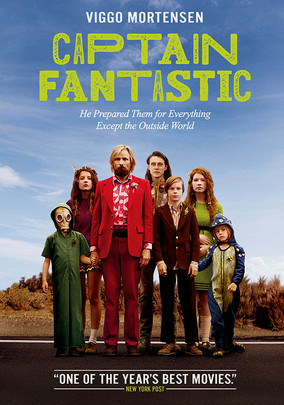
Captain Fantastic-2016

Captain Fantastic-2016

Director Matt Ross

Starring Viggo Mortensen

Scott’s Review #616

Reviewed February 10, 2017

Grade: B+

A thought-provoking story that raises a question of home-schooled, non-traditional book intelligence versus the lack of social norms and interactions and debates about which upbringings are more relevant, Captain Fantastic (2016) is a terrific film with a moral center.

The film, which stars Viggo Mortensen, is a family drama with a unique spin and edgy subject matter. Mortensen is not afraid to tackle complex and thoughtful roles.

Although it is perhaps not as gritty as it could have been and feels a bit safe, it still entertains and elicits thought, a critical aspect of film often lacking in modern cinema.

Director Matt Ross immediately treats us to aerial views of the green and mountainous Pacific Northwest, where a family of seven- one father and six children aged five to seventeen, silently prey on and kill a deer grazing in the forest. This is their dinner.

The family is unorthodox, to say the least.

Led by Ben Cash (Mortensen), he teaches the children how to fight, how to survive, and how to be ready for any situation. They are brilliant kids who can recite the Bill of Rights and the most complex literature.

Soon, it is revealed that their mother, Leslie, has committed suicide, and a battle ensues between her parents (Frank Langella and Ann Dowd), who is determined to bury her “properly” with a Christian funeral, and Ben and his children, who are determined to honor her last wishes for cremation.

Ben and the gang travel via their run-down school bus to New Mexico, meeting local townspeople as a battle of cultures occurs.

I commend Ross for creating a story that challenges the viewer to think, depending on the viewer’s religious or political views. There is a risk of people either loving or hating the film.

The film is skewed toward the left, as in the dinner and sleepover scenes with Ben’s sister. Her “Americanized” family is awkward, and the families have entirely different styles.

Ross makes it clear that Ben and his family are the intelligent ones, and his sister’s kids are pretty dumb, not even knowing what the Bill of Rights is and mindlessly playing violent video games.

The fact that they are a “typical American family” is sad and quite telling of wRoss’s perspective

Captain Fantastic wisely shows that either side is not perfect. His oldest son, Bodevan, blooming sexually, has an awkward encounter with a pretty girl, proposing marriage to her with her mother present because he knows no social norms.

A younger son is attracted to a “normal” life with his grandparents, who are a wealthy couple. The grandparents are not presented as bad people; instead, they want the best for their grandchildren and fear how their lives will turn out without better structure or what they perceive as a better upbringing.

Some of the kids blame Ben for their lack of social skills and being what they perceive as “freaks.”

The film does end safely as a happy medium is ultimately reached, but I never felt cheapened by this result. I found Captain Fantastic rich in intelligent writing and a challenging tale.

Many moments of “what would you do?” were brought to the forefront. Mortensen portrays Ben Cash flawlessly, mixing just the right vulnerability with the stubbornness of the character, and it is an excellent film for anyone fearing being intelligent is not cool because it is.

Oscar Nominations: Best Actor-Viggo Mortensen

Independent Spirit Award Nominations: Best Male Lead-Viggo Mortensen

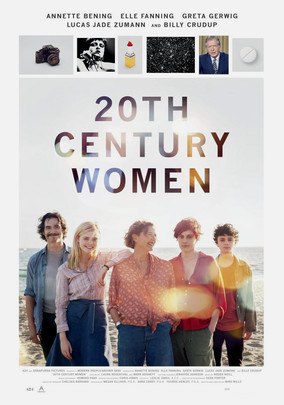
20th Century Women-2016

20th Century Women-2016

Director Mike Mills

Starring Annette Benning, Greta Gerwig, Elle Fanning

Scott’s Review #611

Reviewed January 22, 2017

Grade: A-

Annette Benning shines in her leading role in 20th Century Women (2016), a film directed by Mike Mills, a formidable independent filmmaker whose credits include 2010’s Beginners and 2005’s Thumbsucker.

In 20th Century Women, Mills serves as director and writer, so the film is his vision.

All five principal characters are quirky and well-written, though Benning’s is the most nuanced and fascinating.

The time is 1979, Santa Barbara. Despite the image of Santa Barbara as a wealthy, grand town dripping with the rich and powerful (perhaps due to the sweeping 1980s daytime soap opera of the same name), Mills does not present this film as such.

He presents Santa Barbara as a more artsy town, at least where his characters are concerned.

Benning plays Dorothea Fields, a fifty-five-year-old divorced mother of a fifteen-year-old boy, Jaimie. She is a free spirit who allows two runaways to live with her: Abbie (Greta Gerwig), a twenty-five-year-old aspiring photographer with fuchsia-colored hair recovering from cervical cancer, and William (Billy Crudup), a handyman.

They are joined by Jaimie’s good friend, Julie (Elle Fanning), a depressed neighbor.

The film nicely explores each character’s trials and tribulations and their interactions with each other in a highly quirky manner, and we fall in love with each of them.

Dorothea enlists Abbie and Julie’s help to have a positive influence after he nearly dies after a foolish teenage prank.

Mills successfully gives the period a slice-of-life feel, heavily referencing punk rock and the political climate in the film. Bands such as Talking Heads and Black Flag focus on Dorothea’s striving to learn what young people like, to remain youthful, and to stay in touch with her charges.

Dorothea is a chain smoker, and many scenes feature her pondering a situation while taking long drags. I love this aspect of the film as it showcases Benning’s cerebral performance. She is a thoughtful woman who wants her son to grow up sane and productive since his father is absent.

Sex and feminism are significant themes in the film. Abbie loans Jaimie two books by female feminist authors to help him better understand women.

When he begins to discuss orgasms and a strange conversation about sex and virginity ensues during a dinner party Dorothea is hosting, the graphic detail is a bit too much for Dorothea.

She is a conflicted character- open-minded and caring; when it comes to her son, she has a more conservative edge while trying to remain open to his new experiences as a teen.

20th Century Women is strictly a character-driven film with enormous strength. Each character is in a different place in their lives, and I adore how the film gives a conclusion to each of the characters’ lives in the years to come.

Indeed, the film follows the “happily ever after” formula, but this does not bother me. Instead, the film is so well composed that the characters’ lives enrapture me.

Admittedly, the film is slow-moving at times, but this is due to the richness of the dialogue—nothing is rushed.

Kudos to the cast. Gerwig and Fanning are incredibly excellent. Fanning’s Julie is a unique character- her mother is a psychiatrist who forces her to attend group sessions that she holds. Julie has a step-sister with cerebral palsy, so Julie frequently sleeps at Dorothea’s house as a way to escape her life.

Sexual active, Julie has a pregnancy scare during the story.

A coming of age type film set in an enjoyable time, 20th Century Women (2016) showcases the talents of a stellar cast led by Benning, takes its audience into a wonderful, character-themed world, and discusses the lives of its intriguing characters with a clear portrayal of life in the late 1970s.

Oscar Nominations: Best Original Screenplay

Independent Spirit Award Nominations: Best Female Lead-Annette Bening, Best Screenplay

A Serious Man-2009

A Serious Man-2009

Director Joel Coen, Ethan Coen

Starring Michael Stuhlbarg

Scott’s Review #582

Reviewed January 4, 2017

Grade: B

A Serious Man (2009) is a quirky, odd film that is a character study.

Directed by the Coen brothers who typically have an offbeat style to their films (No Country For Old Men-2007, and Fargo-1996 spring to mind), A Serious Man is no different, offering wonderful, richly written supporting characters.

The film, however, lacks the violence of other Coen Brothers films, instead, adding more humorous situations and an overall comical premise.

It tells the story of a Jewish Professor, Larry Gopnik (Michael Stuhlbarg), living in the 1960s, and has a string of bad luck. People close to Larry begin to drop dead all around him and he seems cursed with a string of bad luck.

The film centers around how he deals with crisis after crisis.

The first half of the film admittedly drags a bit, but the second part picks up nicely. The plot suddenly comes to a head rather quickly.

To stress, A Serious Man is a witty, dark comedy, so much of the dialogue is either tongue-in-cheek or dry.

The rabbis that Larry meets, combined with his son Danny and wife Judith are very funny and well-carved-out characters, many certain “types”.

The character of Larry also contained elements of the Larry David character on TV’s Curb Your Enthusiasm.

Also, for those cinema lovers who pay close attention to or have an appreciation for good set design, the film captures the 1960’s style (dress, furniture, cars), perfectly.

Oscar Nominations: Best Picture, Best Original Screenplay

Independent Spirit Award Nominations: 2 wins-Best Director-Joel and Ethan Coen, Best Cinematography (won), Robert Altman Award (won)

A Wedding-1978

A Wedding-1978

Director Robert Altman

Starring Desi Arnaz, Jr., Carol Burnett, Geraldine Chapman

Scott’s Review #539

Reviewed December 17, 2016

Grade: A

A Wedding (1978) is an obscure, brilliant gem penned and directed by Robert Altman, a film genius and one of my most adored directors.

I love most of his movies, and A Wedding is no exception. The creative way that Altman weaves intersecting storylines and dialogue, thereby creating a real-life tone, gives immense realism to his films.

In A Wedding, he takes a basic life event and turns it into a well-nuanced, fascinating, comical, yet dramatic story.

He is known for having enormous casts (in A Wedding, there are 48 principals!), but every character serves a purpose.

The viewer will feel like a fly on the wall at a real wedding.

Altman’s actors primarily improvise their dialogue, speaking at the same time, which lends a realistic edge. I adore this quality.

The film is a satire- people either love or loathe attending weddings, and Altman’s film caters to the latter. He creates a setting, from the ceremony to the reception, riddled with awkward moments and social gaffes.

In pure satirical soap-opera fashion, two wealthy families gather at a lavish estate for the ceremony to begin. Hilarity ensues when the corpse of the matriarch of one family lies in her bed, nobody realizing she is dead.

Other hi-jinks, such as the revelation of a nude, life-size portrait of the bride, the caterer falling ill, and a tornado wreaking havoc.

Slowly, the families reveal secrets as alcohol flows and the characters become entangled in perilous situations.

Altman does it again, creating a masterpiece based on real-life situations most can relate to.

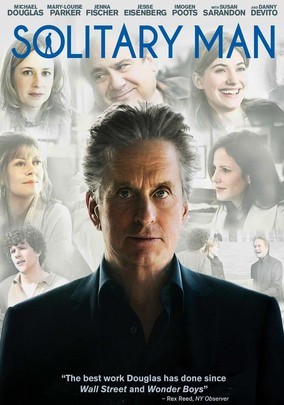
Solitary Man-2009

Solitary Man-2009

Director Brian Koppelman, David Levien

Starring Michael Douglas, Susan Sarandon

Scott’s Review #508

70117589

Reviewed November 3, 2016

Grade: B-

Solitary Man (2009) is an indie drama that has good points and bad.

Michael Douglas stars as a one-time successful, but womanizing, car dealership owner who hits rough times and loses everything.

Michael Douglas’s performance is very good and believable as a cad who hits a difficult stretch in his life. As an actor, Douglas still possesses his good looks and charm despite being an older leading man by this time- he plays 60 very well.

The film centers around him and wisely so- despite the film containing other notable actors. His character of Ben Kalman has swagger and is narcissistic, but yet lovable at the same time and this is unmistakably due to Douglas’s talents.

Annoyingly, the supporting characters played by Susan Sarandon, Danny Devito, and Jesse Eisenberg are quite one-note and not interesting, which is a shame in light of their immense talents.

The story is okay, but nothing fantastic.

I felt as though I had seen films like this many times before- the quirky edge and the attempted dark humor with laughs and some melodrama mixed in was forgettable.

However, as a character study, the movie succeeds.

Solitary Man (2009) is recommended for Michael Douglas’s performance only.

Bernie-2011

Bernie-2011

Director Richard Linklater

Starring Jack Black, Shirley MacLaine, Matthew McConaughey

Scott’s Review #472

70189906

Reviewed August 30, 2016

Grade: C-

Bernie (2011) is a film that, surprisingly, received critical acclaim, as well as Golden Globe and Independent Spirit Award nominations, but I was left quite disappointed with it.

Categorized as a dark comedy, it contains a morbid premise, which is not the issue, I just did not find it very good overall.

Despite being a true story of Bernie (Jack Black) marrying and murdering millionaire Marjorie Nugent (Shirley MacLaine) in Texas, the film is not compelling and is written too over the top.

Inexplicably, the townspeople refuse to believe Bernie’s obvious guilt.

To be fair, the film does contain a few funny and interesting moments and was based on factual events, but I didn’t feel connected to this movie as much as I expected and honestly found it a bit dull.

Jack Black is impressive as the title character but only because it is a departure from his usual slapstick film roles. I don’t get the accolades being heaped on him for his performance.

Shirley MacLaine and Matthew McConaughey are capable of the parts written for them, but one-note characters.

Meh.

Independent Spirit Award Nominations: Best Feature, Best Male Lead-Jack Black

Gayby-2012

Gayby-2012

Director Jonathan Lisecki

Starring Jenn Harris, Mathew Wilkas

Scott’s Review #441

70234883

Reviewed July 3, 2016

Grade: C+

Gayby (2012) is a sketch-type comedy about two best friends (a gay man and a straight woman) who decide to have a child together.

Both have reached a certain age and are unhappy to have not found the perfect mate. The story is not novel and feels more like a Saturday Night Live sketch than a film.

The film is also playing on the success of television comedies like NBC’s Will and Grace, the obvious dynamic of the central characters.

The two leads are quite appealing in a comic way, have wit (Jenn Harris is deliciously neurotic), and have great timing.

The subject matter is interesting, though as years go by and more LGBTQ+ topics are covered,  it is becoming rather dated and not novel anymore.

The negative is the frenetic, quick pacing of the film, ultimately making it rather off-putting and annoying, to say nothing of the irritating stereotypical, supporting characters.

They are written so over-the-top that it is tough to take the film as seriously as it should be taken.

Independent Spirit Award Nominations: Best First Screenplay

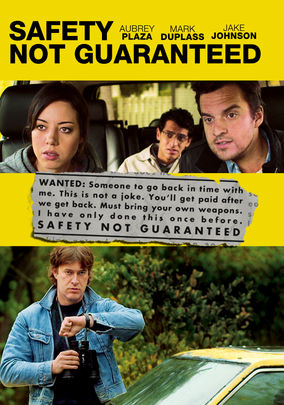
Safety Not Guaranteed-2012

Safety Not Guaranteed-2012

Director Colin Trevorrow

Starring Mark Duplass, Aubrey Plaza

Scott’s Review #440

70227946

Reviewed July 3, 2016

Grade: B-

Safety Not Guaranteed is similar in style to another 2012 independent film, Ruby Sparks, in that they pose the question of “Is this fantasy or reality”?

The film deals with the subject matter of time travel.

The story centers around a magazine journalist, who, along with two interns, follows a man convinced that he is building a time travel machine.

The story then develops into a romantic comedy of sorts and the audience is unsure if the guy is crazy or purely a genius.

It’s an interesting concept, intelligently written, and Aubrey Plaza and Mark Duplass are both quite likable in the lead roles.

The one flaw for me was, at times, the movie dove into slapstick territory with a silly secondary story of a stereotypically written Indian character attempting to lose his virginity.

Besides that, Safety Not Guaranteed (2012) has intriguing intentions.

Independent Spirit Award Nominations: 1 win-Best First Screenplay (won), Best First Feature

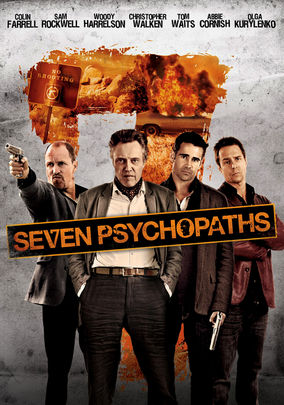
Seven Psychopaths-2012

Seven Psychopaths-2012

Director Martin McDonagh

Starring Colin Farrell, Sam Rockwell

Scott’s Review #422

70241756

Reviewed June 19, 2016

Grade: B-

Seven Psychopaths (2012) is a film that I truly wanted to like more than I did.

It started well with a Quentin Tarantino style that was appealing and the film does contain an interesting premise.

Colin Farrell plays the straight man in a cast of offbeat, quirky characters and is attempting to complete a screenplay entitled “Seven Psychopaths” based on these characters.

Sounds great, but halfway through the movie stopped delivering. I found myself slightly bored.

The film has a unique concept, to be sure, but fizzles during the second act, so much so that it stopped making much sense and lost my interest.

I did admire the creativity, though, and the chemistry among the cast is great, but the overall story in Seven Psychopaths (2012) disappointed me.

Independent Spirit Award Nominations: Best Supporting Male-Sam Rockwell, Best Screenplay

Robot & Frank-2012

Robot & Frank-2012

Director Jake Schreier

Starring Frank Langella, Susan Sarandon

Scott’s Review #414

70227654

Reviewed June 18, 2016

Grade: C

Robot & Frank (2012) is one of those films where I am left with a “meh” reaction after having viewed it.

It’s not that it’s a bad movie, but there’s nothing particularly special either- it is quite ordinary and rather forgettable after the credits have rolled.

The premise, on paper,  seems novel: a future with robots that grow attached to humans. Unfortunately, the movie did not live up to the idea.

I was hoping for an interesting 2001: A Space Odyssey (1968) type robot idea (HAL) but received nothing of the kind.

I’m a big fan of Frank Langella and I felt he was the main attraction in this movie.

On a side note, why is Susan Sarandon suddenly playing every meaningless supporting role these days? Another wasted role. She deserves better.

Several plot points had no follow-through and the ending, while not exactly predictable, was nothing spectacular.

Meh.

Independent Spirit Award Nominations: Best First Screenplay

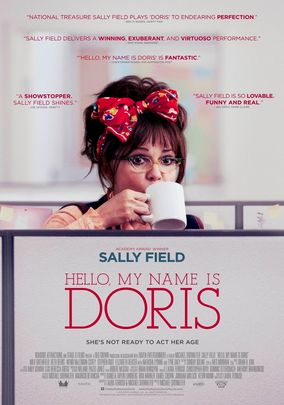
Hello, My Name Is Doris-2016

Hello, My Name Is Doris-2016

Director Michael Showalter

Starring Sally Field, Max Greenfield

Scott’s Review #390

80050896

Reviewed April 1, 2016

Grade: B

Sally Field shines in Hello, My Name Is Doris (2016), a sweet-natured indie romantic comedy that tells of a lonely Staten Island woman and her mostly fantasy-laden relationship with her colleague, a much younger, hunky man (Max Greenfield).

The film is somewhat predictable but sweet and honest and works well. It hardly reinvents the wheel, but it is a lovely character-oriented story about a woman’s reawakening from a dull life.

This is refreshing in a world of retreads and superhero flicks.

Doris Miller meanders through life at her crappy data entry job at an Advertising Agency in mid-town Manhattan. Having worked in the same role for decades, she is overlooked and more or less invisible to colleagues.

She is the “weird old lady” or the “wallflower” who goes unnoticed. Her personal life is a dud. She lives with her recently deceased mother, who is a hoarder and severely marginalized. She has no dating possibilities.

One day, on the elevator heading to the office, a kind young man named John Fremont innocently pays attention to her, and she becomes enamored with him.

Later, she is stunned to realize that John is the new Art Director at her job.

Her crush escalates as she and John become friends, and a series of misunderstandings ensue, with the added conflict of her friends thinking she is living in a fantasy world, worried she will wind up hurt.

Sally Field carries this film in every way. It is nice to see her in a lead role again, which, sadly, is a rarity these days for a seventy-year-old actress.

She convincingly plays quirky, shy, and awkward and has one melt-down scene that is a powerful testament to her continued acting ability.

The character of Doris slowly blossoms and becomes rich with zest. We discover she is much more than meets the eye, and these moments in the film are wonderful to experience, thanks to Field’s charisma.

My favorite scenes involve the lovely bond between Doris and the thirteen-year-old granddaughter of her best pal, Roz, played by Tyne Daly.

Despite the age difference, the granddaughter views her as a peer, giving daring dating advice to the inept Doris. This leads to a nice portion of the plot and some funny moments.

One unique aspect of Hello, My Name Is Doris is that it is not a film about a May-December romance between a man and a woman—at least, I did not see it that way. Instead, it is about a woman who finally decides to live regardless of age.

I felt her stifled and smothered by her brother and sister-in-law, who clearly did not understand that she hoarded “stuff” in her home to cope with her loneliness, and to be surrounded by things that gave her comfort helped her deal.

Granted, Doris clinging to one broken wooden ski from the Dark Ages was amusing in its cuteness.

Tyne Daly, who can recite the phone book, is worth a considerable note from an acting standpoint. I’d be happy to do that. She is one of those natural, confident, engaging, real actresses, and her scenes with Field glistened with raw talent and emotion.

Perhaps a female buddy movie with Field and Daly?

The remainder of the supporting characters are capable but not spectacular. They are somewhat clichéd and one-note.

For example, Doris’s colleagues view her as invisible with the classic office jokes, especially the female boss thrown into the film- possessing a hard-as-nails personality and coldness.

I have seen these characters time after time in comedy films.

Supporting actors from Orange is the New Black (2013-2019) and Mad Men (2007-2015) are featured as a couple of the colleagues.

Indie, fun, and with a freshness made in large part by Sally Field, Hello, My Name Is Doris (2016) is an innocent comedy with a romantic edge and some nice laughs.

It is far from a masterpiece but a good-natured escape, which is refreshing, especially for the middle-aged or senior crowd craving a non-stereotypical female character.

Independent Spirit Award Nominations: 1 win-Piaget Producers Award (won)

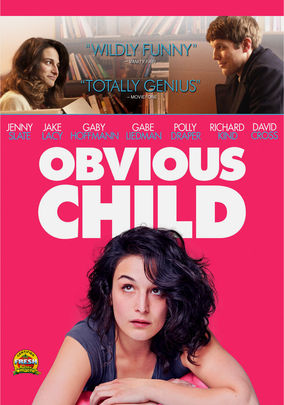
Obvious Child-2014

Obvious Child-2014

Director Gillian Robespierre

Starring Jenny Slate

Scott’s Review #387

70301275

Reviewed March 22, 2016

Grade: C+

Obvious Child is a 2014 independent comedy/drama nominated for a couple of independent spirit awards, that has mixed results.

It works on some levels but has an irritating underbelly and some unneeded components that ultimately give it a thumbs down.

The major success is star Jenny Slate, a real-life Brooklyn stand-up comic with immeasurable comic timing, who will hopefully become a rising star.

Slate starred in a 2009 short film of the same name before said film graduated to a full-length feature.

Slate stars as a twenty-eight-year-old Brooklyn-ite, who moonlights as a stand-up comic in a dingy bar while working in a desolate bookstore that is soon closing.

Conversely, her parents are successful- her mother is a famed professor. When she is unceremoniously dumped by her steady, she takes up with a handsome young man for a one-night stand filled with fun.

Predictably, she winds up pregnant and forges ahead with a plan to abort their child.

The abortion story is quite interesting since there is never a doubt about what will happen. Unlike films that make abortion the main focus of conflict, Obvious Child wisely does not- every character supports, and even encourages her to have the procedure, including her mother and best friend.

Having been written and directed by women, this is intentional and a way of empowering women, which is one of the high points. If one is on the fence about the topic of abortion or is a pro-life stance, this film may be very tough to watch as its slant is made crystal clear.

Slate is the other high point of the film.

She exudes confidence and comic range. Jewish and slightly awkward looking, she is not the leading-lady type and this arguably makes her wit and sarcastic language all the more comical. She is a natural in the comedy department and hope she will go far.

Two slight props for me worth mentioning are the wonderful mention of the classic film Gone with the Wind (1939) and the setting of Brooklyn. This was a great nod to film history and the setting gave Obvious Child an authentic New York City feel.

On the other hand, an utter annoyance about Obvious Child is the shameless and constant use of blatant and off-putting bathroom humor- not just once or twice, but numerous times.

How is this necessary to the plot? I can’t say, but surmise that it was deemed necessary by the filmmakers to show that females can give as good as males can.

Almost saying, “men can make poop jokes, why can’t women”? Why this is necessary for any film is beyond me and it gives Obvious Child a crass, ugly feel.

The film also has an unrealistic quality to it. Max is portrayed as prince charming. He can do no wrong, supports Donna in any decision she makes, is enamored by her sole being, and loves her unconditionally after only a one-night stand.

This would not happen in real life.

The fact that Donna is Jewish and quirky and Max is Christian and straight-laced is not explored. What conflicts would they undoubtedly face? Why were his parents not featured?

Highly uneven, with a great premise and an interesting slant on a still-controversial social issue, Obvious Child (2014) succeeds in the story department but fails in its uncalled-for use of potty humor to elicit cheap laughs.

Independent Spirit Award Nominations: Best Female Lead-Jenny Slate, Best First Feature

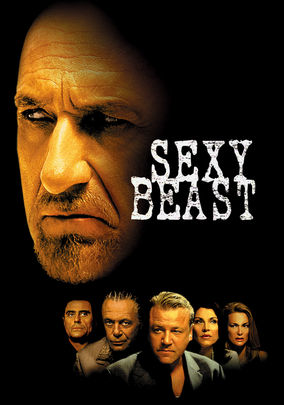
Sexy Beast-2001

Sexy Beast-2001

Director Jonathan Glazer

Starring Ray Winstone, Ben Kingsley

Scott’s Review #286

60020863

Reviewed November 13, 2015

Grade: B+

Sexy Beast is an interesting little indie gem that has garnered quite a cult following, deservedly so, since the year of its release, 2001, and I have recently viewed it for the first time.

In large part, the film belongs to Ben Kingsley, who gives a bravura and frightening performance as a crime lord attempting to convince a retired hitman, now sworn to the straight and narrow, to resurrect his career for one last heist.

The other principal characters are wonderful in their own right, as the film successfully mixes elements of Quentin Tarantino with Ocean’s Eleven- bank heist meets quirkiness, with smart and witty dialogue sprinkled in.

Gary Dove is happily retired and living a life of contentment with his ex-porn-star wife, Deedee, and his best friends, Aitch and Jackie.

Having all been involved in “the biz”, they are long since removed from their respective careers. They now enjoy evening parties of wine and martinis, and days relaxing by the pool in their Spanish villas.

One day, a former criminal associate, Don Logan (Kingsley), who is also a sociopath, arrives to disrupt their peaceful lives and to coordinate a bank heist in London, hoping to lure Gary back into the game.

As Gary and company nervously decline Don Logan’s offer to participate in his sinister plan, a wonderful and important scene unfolds early in the film.

The quartet sits around the dinner table at a swanky Spanish restaurant, anticipating a scrumptious meal.

Jackie reveals that Don has contacted her, and the scene’s tone immediately shifts to dread. All of them both fear and despise Logan.

They agonize over this sudden disruption to their lives, and we, the audience, fear Don Logan before he ever appears on-screen.

What fantastic storytelling.

Kingsley portrays a menacing character and brilliantly so. The character harbors frightening brutality beneath his normally calm demeanor, making the viewer shudder when he appears on-screen.

Lest we forget, Ian McShane also gives a nuanced performance as Teddy Bass, Logan’s right-hand man and wise businessman.

The cat-and-mouse scene towards the end, as Teddy and Gary have an important discussion in a car, is both chilling and integral to the film’s plot.

As Teddy slowly figured out certain events, I was left intensely anticipating his reactions.

The film introduces an intriguing sub-plot involving Don’s long-ago fling with Jackie and subsequent love for her, which adds layers to the plot and the dynamic and tension between Don and Gary.

Upon finishing the film, I loved the foreshadowing it contains. I found myself rewinding the events in my mind, pleasurably so.

From the pool to the young Hispanic kid to the thunderous boulder- all of these elements were crucial to the conclusion and fit like a puzzle.

A dark comedy of sorts, I chuckled after the film at the final reveal involving a double-heart insignia and a pool that gives the villain comeuppance and pleases the viewer.

Having alluded to viewing Sexy Beast (2001) over the years, I am glad that I finally found the time to witness a darkly comical gem that, admittedly, may take repeated viewings to absorb and therefore fully “get”, and I look forward to doing just that.

Oscar Nominations: Best Supporting Actor-Ben Kingsley

Independent Spirit Award Nominations: Best Foreign Film

Grandma-2015

Grandma-2015

Director Paul Weitz

Starring Lily Tomlin, Marcia Gay Harden

Scott’s Review #275

Grandma_Movie_Poster

Reviewed September 21, 2015

Grade: B+

Grandma (2015) is clearly and deservedly, a showcase for the talented and interesting legendary Hollywood actress Lily Tomlin.

Years (twenty-seven to be precise) since she has had a starring turn in a film, the role of Grandma is custom-made for Tomlin, with the character’s sarcasm, wit, and downright bluntness emerging to the forefront.

The film is labeled a comedy/drama, which it is. It’s themed around a heavy topic of abortion and runs the risk of offending pro-life individuals, as the film undoubtedly contains a pro-choice slant.

Ellie (Tomlin) is a poet and former college professor in her seventies living in California. She is a lesbian and is mourning the recent death of her long-time partner. She has recently been dating a lovely young woman named Olivia (played by Judy Greer), whom she unceremoniously, and cruelly dumps, referring to Olivia as little more than a footnote in her life.

Afterward, Ellie breaks down in tears of guilt while showering.

One day her granddaughter, Sage, (her daughter Judy being the product of a one-night stand), appears on her doorstep asking for money for an abortion. Having just paid off her debts and destroyed her credit cards, Ellie is therefore broke.

The duo embarks on a quest for cash, and race against time to make the appointment in time for the scheduled procedure.

The film belongs to Tomlin but is enhanced by excellent supporting turns, specifically by Marcia Gay Harden as daughter Judy, and veteran actor Sam Elliot, as Ellie’s former flame Karl, to cite examples.

Judy and Ellie have experienced a tumultuous relationship their entire lives while Karl harbors resentment for Ellie for long-ago aborting their child. Harden is thrilling as a borderline, one-dimensional bitch character.

She is driven, angry, and self-centered, and it is mentioned that she has gone through numerous administrative assistants in her high-level corporate role.

I have not seen Harden in a role quite like this before. As unsympathetic as the character is, one cannot help wondering if Ellie’s mothering skills may have made Judy turn out this way.

Karl on the other hand is sympathetic. He is still wounded from his ages-ago relationship with Ellie and may still hold a flame for her, as unlikely a romance between them would be.

The film is darker than expected and is not the syrupy, mainstream, family story one might expect from the fuzzy one-word title.

Still, Tomlin’s cantankerous, sarcasm kept me in stitches and perfectly balanced the tough subject matter displayed in Grandma.

The relationships between the main characters are complex and tough to watch as they argue, swear, and insult each other.

Love is mixed in but complexities arise due to the controversial subject matter. The history of and, in many cases, painful memories are dredged up between characters.

Impressively, Grandma is not a film that debates the hot-button issue of abortion as one might assume. Sage never really considers keeping her baby and will have the procedure done as quickly as possible.  Ellie and Judy never try to persuade Sage to keep the child nor does Sage seriously contemplate keeping the baby.

The only instance of a pro-life perspective is when two ridiculous characters- a young mother and her ten-year-old daughter- suggest Sage not kill her baby. When Ellie steps in the young girl punches her in the face. Is this intended as comic relief or to make these characters appear as buffoons?

These characters are laughable.

The father of Sage’s baby is unsympathetic and a very minor blip on the radar. My theory is that the film chooses to go this route intentionally to avoid a debate over the abortion issue.

A debate is not the point, but the relationships between the characters are.

The scenes involving Ellie becoming irritated and sarcastic are priceless, successfully utilizing Tomlin. As she hilariously goes from situation to situation in an attempt to earn the $600 for Sage she resorts to various means as diverse as selling books, giving a kiss, or collecting an old debt.

This is the main draw of the witty little film, Grandma (2015).

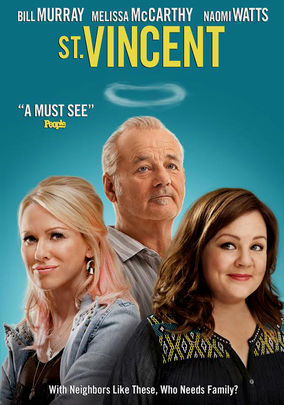
St. Vincent-2014

St. Vincent-2014

Director Theodore Melfi

Starring Bill Murray, Naomi Watts, Melissa McCarthy

Scott’s Review #246

70295665

Reviewed June 5, 2015

Grade: B-

St. Vincent (2014) succeeds only due to the charming, funny appeal of its star Bill Murray, who fronts this cute, mainstream comedy.

Set in blue-collar Brooklyn, New York, it tells the story of a curmudgeonly old man (the title character, Vincent), who befriends a lonely young boy named Oliver, new to the neighborhood.

Mixed in with the cast of characters are Oliver’s struggling mother Maggie (played by Melissa McCarthy) and Vincent’s pregnant, stripper girlfriend, Daka, played by Naomi Watts.

I found intrigue in how we get to know Vincent first and then watch him evolve from a grumpy, cutting old man to a begrudging babysitter of the neighbor boy while clashing with Maggie and fighting with Daka.

Murray returns to comic wit using his now-legendary flawless dry, sarcastic humor and perfect timing and displays much of that in St. Vincent. Throughout all of this Vincent remains brutally honest with his snarky remarks (mainly aimed at Maggie) yet heartwarming and I love this aspect of the film.

Thanks to Murray, Vincent is lovable, making the film, which with lesser talent, would be overly sentimental

As the film progresses we see Vincent’s struggles- his wife suffers from Alzheimer’s, and he is indebted to bookies (primarily Terence Howard- in a bit of a throwaway role).

The film staggers with some predictability issues and is formulaic and easy to predict a warm finale.

Of course, in true form, Vincent is a Vietnam vet who drinks and gambles and is angry at the world, but has a heart of gold so, despite being temperamental, the audience falls in love with him (patriotism helps).

The character contains every cliche in the book. A mean old man- who rises to new heights and becomes a nice grandfather figure to a bullied boy is what this film is going for.

The bullying of Oliver is also contrived- during one scene Oliver, after being picked on once again by the prominent bully, flies into a seething rage and breaks the bully’s nose.

The audience is supposed to buy that the waif-ish, shy kid triumphs over the bully. If only life were that simple. Inevitably, after both serve after-school detention, they bond over bathroom cleaning and become best friends.

Who did not see that coming?

In addition, most of the characters are one-note.

Naomi Watts is a sexy, and aging Russian (not sure I bought that accent) stripper with a soft spot- she comes across as uptight but is caring- another cliche.

Melissa McCarthy is a hard-working, soon-to-be divorcee, trying to raise her kid right- one-dimensional. Even Vincent is seemingly tough as nails, but of course, has a soft spot for the neighbor kid.

The casting of Watts, McCarthy, and Howard is okay, and I surmise the film was going for casting “name” actors, but these parts might have been played by unknowns and had the same effect.

The gem is Murray.

Murray effortlessly breathes life into a character who otherwise would have been as dull as dishwater. I found the writing the weakest point of the film.

A major incident brings the cast together united as one (yawn). The film closes with the family all happily eating dinner together. I do not see this as a spoiler as this ending can be seen a mile away.

Despite the flaws and sentimentality of the film, it is admittedly sweet, and humorous at times, and sends a nice message to the audience- be kind to one another and help each other get through life.

Without Bill Murray, this film would have been completely bland and unlikeable.

St. Vincent (2014) is a feel-good film that is perhaps too feel-good.

The One I Love-2014

The One I Love-2014

Director Charlie McDowell

Starring Mark Duplass, Elisabeth Moss

Scott’s Review #221

70299863

Reviewed February 18, 2015

Grade: C+

Reminiscent of a modern-day Twilight Zone episode, The One I Love (2014) tells the story of a young married couple (Ethan and Sophie), played by Mark Duplass and Elisabeth Moss, who seek the assistance of a therapist, played by Ted Danson.

The therapist realizes the couple is out of sync and recommends a weekend away. The therapist has an excellent reputation for rekindling faltering marriages and turning them into successful ones.

He sends them to a sunny, beachfront house with a guest house, pool, and various trails along the water. It is simply a paradise.

I admire the creativity of the screenplay.

The couple meets their ideal, perfect versions of each other while basking at the vacation house. Ethan’s alter-ego is suave, athletic, and sensitive to Sophie’s needs while Sophie’s is sexy, flirtatious, and invested in Ethan’s life.

The real versions are bored, lazy, and a bit disheveled.

The flaws they once saw in each other are replaced with the perfect spouses. It is fantasy-like. As one half of the couple slowly falls in love with the fantasy version, the other half begins to get jealous and the film dives into a tale of who winds up with whom.

But is it a fantasy? Are the perfect versions real people or something reminiscent of Invasion of the Body Snatchers?

It is tough to know the intentions of the film.

A weakness I felt the film has is it plods too much. At a brief ninety minutes, the film somehow has a sleepy, slow-moving undertone and could have easily been a short film or wrapped up within forty-five or fifty minutes.

I did not feel the chemistry between Duplass and Moss as strongly as I would have liked. Individually fine actors, the spark did not ignite for me.

I wish Ted Danson had a larger role. The focal point was the young couple, but the mysteriousness surrounding the paradise was never really explained and Danson’s character could have been the key to the story. Did he contrive the entire situation? Was it fantasy? His brief part left many plot holes unexplained.

The One I Love (2014) is a creative effort and an imaginative angle, but I wanted more clarity than I was served up.

The film is mysterious, yes, but also confusing and slightly dull and uneven.

Independent Spirit Award Nominations: Best First Screenplay

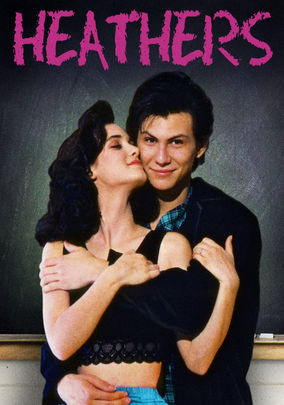
Heathers-1989

Heathers-1989

Director Michael Lehman

Starring Winona Ryder, Christian Slater

Scott’s Review #207

580335

Reviewed December 25, 2014

Grade: B

My gut tells me that Heathers was quite controversial and influential upon release in 1989 and has sustained a cult following that continues to this day, 2014.

Having seen the film only once in 2014, I found it good, but it now suffers from a slightly dated look and feel. Still, it is a brave and unique expression of creativity.

It is a film that sends the message that the popular kids are bad and that the meek shall inherit the earth.

The uncool kids will rise.

To summarize the plot, Heathers is told from the perspective of high school student Veronica Sawyer, played by a young Winona Ryder. She is a second-tier popular girl- she is lieutenant to the generals, if you will.

The school is run by three popular girls named Heather. As popular as they are, they are also despised and feared by the other students, but carry great influence.

They enjoy playing cruel jokes on other students and ridiculing anyone beneath them.

A rebellious male student, J.D., played by Christian Slater, befriends Veronica, and they hatch a plan to destroy the popular clique, including another pair of popular jocks.

Shannon Doherty plays the second-in-command, Heather.

The tone of Heather’s is surreal and dream-like. For example, in the opening scene, all three Heathers- along with Veronica- are on a perfectly manicured lawn in the suburbs playing croquet.

The hierarchy is established when Veronica is buried up to her neck and becomes the target of the croquet balls, making her, without question, the lowest of the four girls.

Whether or not this is a dream or real is unclear.

The film is well-written and edgy. It reminds me, at times, of The Ice Storm (1997) and American Beauty (1999), which Heathers preceded and are, in my opinion, superior.

Heathers is a teen angst film and quite dark at times- the various deaths are committed viciously (drain cleaner poisoning, concocting a setup for the jocks to appear to be having a love affair with each other, and then passionately shooting each other), but with sly wit and humor.

Veronica is, at heart, a good girl, albeit misguided and heavily influenced by J.D., but her intentions of having a fair, just school society are noble. The character is likable.

All the parents are hilariously portrayed as buffoons and have no idea of the darkness that exists in their kids’ lives- Veronica’s parents in particular.

Fearing that Veronica has committed or soon will attempt suicide, they fret that it is their fault stemming from childhood negligence; however, their concern has more to do with themselves than with Veronica’s well-being.

Small gripes about the film are the 1980s-style outfits and hairstyles, which, since they were made in the 1980s, are not a particular fault of the film, though it does contain a slightly dated feel while watching in the present.

Also, Christian Slater mimicking Jack Nicholson’s voice is odd- was this a decision by the film or by the actor himself? Either way, the imitation is both distracting and confusing. What is the point?

The ending of the film is a happy and satisfying conclusion- however, different from the dark tone of the rest of the movie- rumor has it that the studio had some influence in toning down the original ending.

1989 was not a stellar year for film, so Heathers deserves major props for thinking outside the box and doing something dark and creative.

Brave, inventive, and unique, Heathers is a cult classic worth a look.

Independent Spirit Award Nominees: 1 win-Best Female Lead-Winona Ryder, Best Screenplay, Best First Feature (won)

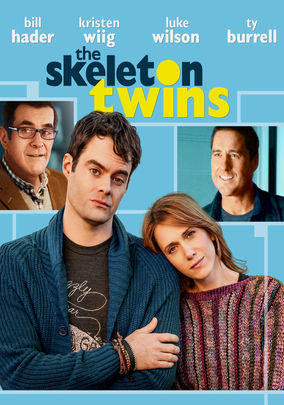
The Skeleton Twins-2014

The Skeleton Twins-2014

Director Craig Johnson

Starring Bill Hader, Kristen Wiig

Scott’s Review #179

70299272

Reviewed October 2, 2014

Grade: A-

The Skeleton Twins (2014) is a tremendous, character-driven, family drama that focuses on character development rather than standard plot devices.

The film stars Bill Hader and Kristen Wiig from Saturday Night Live, but do not be fooled based on the actors involved that The Skeleton Twins is a light comedy- it is not.

There are laugh-out-loud scenes throughout, but this is a serious story about depression, suicide, and anger, and at times, very dark.

Wiig plays Maggie, a woman in her thirties who seemingly has it all. Lance, her handsome, loyal husband, played by Luke Wilson, adores her. She has a stable job as a dental hygienist and lives a quiet, quaint life in upstate New York- seemingly enjoying a happy middle-class existence.

Hader plays Milo, Maggie’s estranged twin brother, who lives in Los Angeles and is a struggling actor with no agent, reduced to waiting tables in a lousy restaurant. Presumably, just out of a relationship, Milo attempts suicide by slitting his wrists.

Maggie flies to Los Angeles to visit Milo in the hospital and invites him to recuperate with Maggie and Lance in New York.

Having grown up as best friends, they reconnect once Milo moves in.

The Skeleton Twins is so jam-packed with interesting stories, both current and back story, that it becomes effortless to fall in love with Maggie and Milo.

When the twins were aged fourteen, their father committed suicide by jumping off a bridge, a father they were very connected to.

Their mother, played by Joanna Gleason, was a horrible mother growing up and, in present times, is a hippie involved in an interracial marriage. She awkwardly visits Maggie and Milo and attempts to heal them through meditation.

Other character history is revealed.

Milo, who is gay, was molested by his teacher when he was fifteen years old, a teacher he is still in love with, and is wonderfully played against type by Ty Burrell.

Maggie has carried on affairs with various men throughout her marriage to Lance and is secretly using birth control pills to avoid becoming pregnant. Lance happily thinks they are trying to conceive.

The characters of Milo and Maggie are incredibly layered and well-written. They are both damaged from a difficult childhood, suffer from depression, and now only have each other.

Scenes in The Skeleton Twins range from hysterical- a scene in a dentist’s office involving laughing gas rolling on the floor funny and a lip-synching scene to the hit “Nothing’s Gonna Stop Us Now”, are both wonderful.

Dramatic and shocking scenes where Milo and Maggie go at each other with gusto, dredging up childhood wounds, are brilliantly acted by Wiig and Hader.

The chemistry between Wiig and Hader is incredible and both actors are very successful at playing hysterical comedy versus dark drama, which impressed me.

Luke Wilson is great in support as the straight-laced, nice guy married to Maggie.

A slight criticism- the character of Milo is written as stereotypically gay- man-hungry and hardly a man’s man. He has trouble clearing brush because presumably, he is too girly to handle the task.

I wish more films would steer away from these stereotypes.

Ty Burrell’s character of Rich is so complex that I wish he would have been explored a bit more- being gay how can things work with his girlfriend while harboring many secrets? Is he still in love with Milo despite repeatedly pushing him away? I would have loved more depth to this complex character.

After the film, I felt the filmmakers did not go as dark as they could have, and audiences will know what I mean following the final scene.

There is no fairy tale ending ether.

Milo and Maggie are damaged goods who only have each other making for a dynamic character-rich film.

The Grand Budapest Hotel-2014

The Grand Budapest Hotel-2014

Director Wes Anderson

Starring Ralph Fiennes, F. Murray Abraham

Scott’s Review #143

70295915

Reviewed July 30, 2014

Grade: B+

The Grand Budapest Hotel (2014) is a witty and unique film by director Wes Anderson, who has also directed similarly quirky films,  notably Monsoon Kingdom (2012) and The Royal Tenenbaums (2001).

The famous story of the history of the Grand Budapest Hotel is recounted, over dinner, by the current owner Zero (played by F. Murray Abraham), and an inquisitive guest (Jude Law).

The film then goes back to the 1930s and shares the story of the actual history of the hotel.

The main story centers on the head concierge, Gustave, (Ralph Fiennes), and his antics involving older wealthy blonde women, a murder, stolen art, and a missing will.

Gustave is a ladies’ man, and bisexual, who spends time with the rich women who stay at the hotel.  Fiennes does an excellent job as the quick-witted, almost manic Gustave.

This sets off a series of interesting, mysterious events for the remainder of the film that turns into a whodunit yarn.

The visual aspects usurp the story. The art direction is amazing. The sets are constructed so perfectly and ingeniously that they almost look like animated sets or like a dollhouses.

The costumes and makeup are flawless.

The story tends to be tough to follow at times and is just not as strong as the other aspects of the film, although this is not to be interpreted as the story is not good- it is entertaining, but nothing more.

It’s just that the other aspects of the film are magnificent and the story is secondary. It’s an odd film, certainly, but unique and interesting.

Well-known Hollywood stars appear- Tilda Swinton, Edward Norton, Adrien Brody, Willem Defoe, and Harvey Keitel.

Oscar Nominations: 4 wins-Best Picture, Best Director-Wes Anderson, Best Original Screenplay, Best Original Score (won), Best Production Design (won), Best Cinematography, Best Makeup and Hairstyling (won), Best Costume Design (won), Best Film Editing

Quartet- 2012

Quartet-2012

Director Dustin Hoffman

Starring Maggie Smith, Tom Courtenay

Scott’s Review #122

70243583

Reviewed July 20, 2014

Grade: B+

Quartet (2012) is a fantastic little British film, directed by Dustin Hoffman, and starring the always wonderful Maggie Smith, whom one might argue could be watched in anything.

I certainly could.

Smith stars as a stubborn retired opera singer who begrudgingly settles in at Beecham House, a luxurious senior retirement home for former musicians in their final years.

There she reunites with colleagues from years past who attempt to reunite for a concert for the public to save the home from foreclosure.

The cast of senior citizens in Quartet is quite likable in one of the few smart films handling aging gracefully.

There is comedy and drama mixed in as the intelligent characters are treated as such in their final years with a hint of soap opera to the film as some of them were intimate with others in years past and the current hijinks are hysterical.

The subject of aging is treated with respect and dignity and not played for laughs, which is one aspect of the film that I adore.

A talent-filled cast of British theater actors, along with some real-life musicians make this film a treat.

It is terrific to see Pauline Collins (Upstairs/Downstairs) in a large role.

Jeff, Who Lives at Home-2011

Jeff, Who Lives at Home-2011

Director Jay Duplass, Mark Duplass

Starring Jason Segel, Susan Sarandon

Scott’s Review #107

70208253

Reviewed July 12, 2014

Grade: B

I confess to not being a huge fan of Jason Segel.

Jeff, Who Lives at Home (2011) tells the story of a slacker who lives with his mother and lives in the shadows of his successful brother, played by Ed Helms.

He regularly smokes pot and looks for meaning in random occurrences.

One day he begins an adventure when he believes he sees meaning in a phone call and it sets up a series of mishaps involving his brother and estranged wife, played by Judy Greer.

The secondary story involves the mother (Susan Sarandon), who leads a dull life working a mundane job. She suddenly develops a secret admirer at her job.

The film was much better than expected. As the movie unfolds it turns into a day in the life of a dysfunctional, yet loving family.

I expected a silly, dumb comedy given the star and the premise, but the film was much better than that. It is a nicely layered, touching movie with a message and some spirituality mixed in.

I loved the ending and was impressed by the heartfelt nature of this small little slice-of-life film.

Blue Jasmine-2013

Blue Jasmine-2013

Director Woody Allen

Starring Cate Blanchett, Sally Hawkins

Scott’s Review #92

70270362

Reviewed July 3, 2014

Grade: A

Blue Jasmine (2013) is the latest offering by Woody Allen and one of his best since the 1970s. I have heard from several people that they are not typical Woody Allen fans but loved this film and I ponder why that is.

My theory is that Cate Blanchett, who stars as neurotic Jasmine, is the heart and soul of this movie.

Allen’s films usually center on neurotic characters and this film is no different.

Set primarily in San Francisco, it tells how Jasmine has lost all of her money thanks to bad investments by her ex-husband (played in flashbacks by Alec Baldwin).

She is a socialite and used to the best life in excess and extravagance.

Now Jasmine is reduced to making a clean start of it by rooming with her blue-collar sister, played by Sally Hawkins, and trying to scrape by.

Jasmine struggles to find success and the means to survive.

The film is hysterical, heartbreaking, and even a downer at moments. Through the assistance of pills and martinis, Jasmine is snobbish and ego-centric, yet the audience falls in love with and roots for her.

She is high-class yet broke. She keeps up appearances, and her wit, usually at the expense of others, never falters.

Blanchett is responsible for the love of this character and, thankfully, won the Best Actress Oscar for her portrayal.

The dialogue is sharp, witty, and filled with laugh-out-loud moments. Thanks to much of it taking place in flashbacks, the audience sees Jasmine’s life as it once was, having everything and then some, then back to her current reality and back and forth. This is a wise decision to show both of her lives.

Blue Jasmine (2013) is one of Woody Allen’s best.

Oscar Nominations: 1 win-Best Actress-Cate Blanchett (won), Best Supporting Actress-Sally Hawkins, Best Original Screenplay

Independent Spirit Award Nominations: 1 win-Best Female Lead-Cate Blanchett (won), Best Supporting Female-Sally Hawkins, Best Screenplay