Tag Archives: Brendan Sexton III

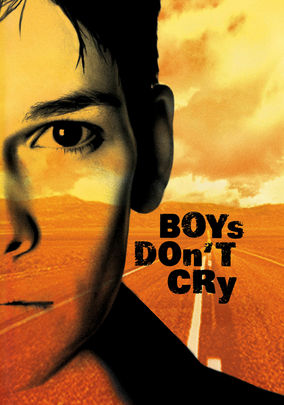
Boys Don’t Cry-1999

Boys Don’t Cry-1999

Director Kimberly Peirce

Starring Hilary Swank

Top 250 Films #177

Top 10 Most Disturbing Films #10

Scott’s Review #340
27422770

Reviewed January 9, 2016

Grade: A

Boys Don’t Cry (1999) is a fitting tribute to real-life figure Brandon Teena, a transgender man from Nebraska, who adopts a male identity and attempts to find love with Lana, played by Chloe Sevigny.

Hilary Swank plays Brandon.

Sadly, Brandon was brutally raped and murdered at the hands of some local men- a fact that the film does not gloss over.

Boys Don’t Cry is a heartbreaking and tragic film that will disturb some with its shocking and violent content- sadly, it is a true story.

Swank deservedly walked away with the Best Actress Oscar statuette.

Set in working-class Nebraska and in the heartland, Brandon has the cards stacked against him from the start. Not exactly the most open-minded of areas, the film also sets a working-class environment for Brandon, as most of his friends are poor factory or bar workers.

Born as Teena Brandon, a female, Brandon (Swank) is a drifter and in trouble with the law for various unpaid tickets.

He befriends ex-convicts John and Tom and becomes part of their crowd, falling in love with Lana- they are all unaware of Brandon being a female.

When Brandon’s secret is revealed, Lana is accepting, and the pair decide to run away together, but Tom and John decide to murder Brandon.

Swank’s portrayal of Brandon is brilliant and believable, and very few actresses could successfully pull this off. Swank has angular, androgynous features to begin with, but her drastic physical transformation is jaw-dropping.

With close-cropped hair and a male swagger, Swank immerses herself in the role so thoroughly that, as I watched the film, I completely forgot that Brandon was not physically male.

Her physical transformation is not the sole reason for the fantastic performance, though- Swank is emotionally there in the role, and in a heartbreaking scene, after being beaten and raped, is treated poorly by a sheriff handling the accusations- just when Brandon could use an understanding ear.

What a cold world it can be for someone different from most others, as Boys Don’t Cry reveals in a brutal, honest fashion.

Anyone who knows the true story of Brandon Teena knows he led a painful, tragic life, but was also filled with life and love- mainly for Lana.

Worth mentioning is Sevigny’s performance as Lana, in love with the person that was Brandon, not so much the gender. Sevigny portrays Lana as supportive, confused, and loving.

Director Kimberly Peirce became obsessed with the real-life case and does a fantastic job of tackling it in a true, compelling way.

To say nothing of the writing and the acting, Peirce also successfully uses a hand-held camera during Brandon’s strip scene and a surreal, muted light to portray the gloomy Midwest and the cold, hard lives that most of the characters lived.

Impressively, Peirce accomplished all of this on a shoestring budget and took a wealth of inspiration from independent film legend John Cassavetes, who proved that gorgeous films can be made for very little money.

Many scenes take place in bars as Lana, a devoted karaoke singer, croons one tune after another, the highlight being Restless Heart’s 1988 country hit, “The Bluest Eyes In Texas”, which Lana sings in Brandon’s presence.

The use of somber songs gives the film a tragic soundtrack.

Famed film critic Roger Ebert described Boys Don’t Cry as “Romeo and Juliet set in a Nebraska trailer park.”

Boys Don’t Cry (1999) is an enormous victory in film for the LGBT community and, along with Brokeback Mountain (2006), is a perfect double-feature, as both are similar films, only one featuring males, the other featuring females.

Both are tragic, bleak, and all too real.

Oscar Nominations: 1 win-Best Actress-Hilary Swank (won), Best Supporting Actress-Chloe Sevigny

Independent Spirit Award Nominations: 2 wins-Best First Feature (Over $500,000), Best Female Lead-Hilary Swank (won), Best Supporting Female-Chloe Sevigny (won), Best First Screenplay, Producers Award
Three Billboards Outside Ebbing, Missouri-2017

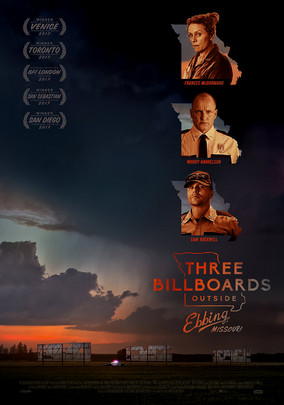
Three Billboards Outside Ebbing, Missouri-2017

Director Martin McDonagh

Starring Frances McDormand, Woody Harrelson, Sam Rockwell

Scott’s Review #703

Reviewed December 4, 2017

Grade: A

Frances McDormand takes control of Three Billboards Outside Ebbing, Missouri, and never lets go. In the Martin McDonagh-directed 2017 vehicle, she rivetingly portrays an angry Midwestern woman seeking justice.

The up-and-coming director has also created such films as  2008’s In Bruges and 2012’s Seven Psychopaths.

Similar to these films, Three Billboards Outside Ebbing, Missouri, is peppered with dark comedic moments and vile, bitter characters. The film is a measured success because it is not your standard Hollywood production and is quite left-of-center.

The action begins as we meet McDormand’s Mildred Hayes, sitting alone in her beat-up station wagon, brooding by the side of the road, gazing at three tattered billboards.

She is both pissed off and thoughtful as she formulates a plan to purchase a year’s worth of billboards, questioning the local police’s ineptitude in finding her daughter’s rapist and killer.

Woody Harrelson portrays the Ebbing police chief, Sheriff Bill Willoughby, and Sam Rockwell plays the racist and dim-whited officer Jason Dixon, both displeased with Mildred’s activities.

Other casting decisions in small yet essential roles are Lucas Hedges as Mildred’s adolescent and depressed son, Robbie, and John Hawke as her ex-husband, Charlie, who is dating an eighteen-year-old ditz.

Peter Dinklage is well-cast as James, a local car salesman who is an earnest dwarf with a crush on Mildred.

Supporting roles are prevalent throughout the film, and small-town locales like Jason’s mother and Red, the owner of the advertising agency who rents the billboards to Mildred, shape the experience.

The casting in Three Billboards Outside of Ebbing, Missouri, is a strong point of the film.

The town of Ebbing is portrayed as dreary, blue-collar, and racist, which is just perfect for setting the tone of the film.

I suspect residents of the Midwest or the southern United States of America may have some issues with character representations. Jason is written as both racist and not too smart, and he encompasses numerous characters in the film.

Enough cannot be said for Rockwell’s performance, transforming from a hated character during the film’s first two-thirds to suddenly almost becoming the hero towards the end.

Props are also deserved by Harrelson’s Chief Willoughby- bordering on hick and racist, he also has a heart and cares about Mildred’s predicament- when a shocking event occurs, he becomes an even richer character.

It is worth pointing out and impressive to me as a viewer that the three prominent black characters—Willoughby’s replacement, Abercrombie, Mildred’s best friend and co-worker, Denise, and a kindly billboard painter—are each written as intelligent and sensitive, a fact I found to perfectly balance the other less sympathetic characters.

In this way, a nasty film becomes more satisfying.

Three Billboards Outside of Ebbing, Missouri, though, belongs to McDormand. She is successful at portraying a myriad of different emotions. From her sly eye-winking as she crafts a good verbal assault on whoever crosses her path, to an emotional breakdown scene towards the end of the film, McDormand embodies the character with depth.

In a gorgeous scene, she has a sweet conversation with a peaceful deer grazing nearby, and for a second, she imagines it could be her dead daughter reincarnated. The scene richly counterbalances other violent and brutal scenes.

McDormand manages to look downright homely in some scenes and beautiful in others.

A film will indeed divide viewers. Some will champion the film’s crisp writing and witty dialogue. Still, others will undoubtedly be turned off by some of the character’s foul language and nasty nature.

I found Three Billboards Outside Ebbing, Missouri (2017), sarcastic, gritty, and well-told. It is a versatile affair rich with layers and brimming with enjoyment.

Oscar Nominations: 2 wins-Best Picture, Best Actress-Frances McDormand (won), Best Supporting Actor-Sam Rockwell (won), Woody Harrelson, Best Original Screenplay, Best Original Score, Best Film Editing

Independent Spirit Award Nominations: 2 wins-Best Female Lead-Frances McDormand (won), Best Supporting Make-Sam Rockwell (won), Best Screenplay

Seven Psychopaths-2012

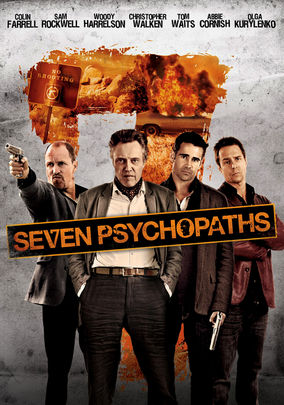
Seven Psychopaths-2012

Director Martin McDonagh

Starring Colin Farrell, Sam Rockwell

Scott’s Review #422

70241756

Reviewed June 19, 2016

Grade: B-

Seven Psychopaths (2012) is a film that I truly wanted to like more than I did.

It started well with a Quentin Tarantino style that was appealing and the film does contain an interesting premise.

Colin Farrell plays the straight man in a cast of offbeat, quirky characters and is attempting to complete a screenplay entitled “Seven Psychopaths” based on these characters.

Sounds great, but halfway through the movie stopped delivering. I found myself slightly bored.

The film has a unique concept, to be sure, but fizzles during the second act, so much so that it stopped making much sense and lost my interest.

I did admire the creativity, though, and the chemistry among the cast is great, but the overall story in Seven Psychopaths (2012) disappointed me.

Independent Spirit Award Nominations: Best Supporting Male-Sam Rockwell, Best Screenplay