Tag Archives: Ellen Foley

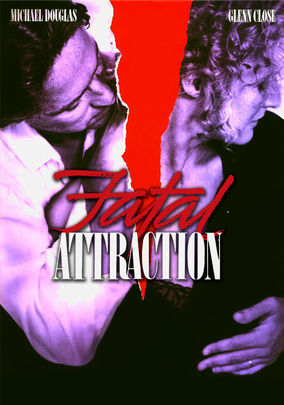
Fatal Attraction-1987

Fatal Attraction-1987

Director Adrian Lyne

Starring Michael Douglas, Glenn Close

Top 250 Films #128

Scott’s Review #329
60010341

Reviewed January 8, 2016

Grade: A

Fatal Attraction is a film that was a monster smash hit at its time of release (1987) and has all the makings of a trashy, forgettable, slick Hollywood film from a disastrous period in Hollywood.

Guess what? It is a fantastic, gripping thriller that still holds up well after all of these years.

Say what you will about Anne Archer, who is very good, but this film truly belongs to Michael Douglas and Glenn Close, who made it the believable thriller that Fatal Attraction is.

The subject matter is adultery, which made it the water-cooler topic of its day.

The plot is quite simple- Douglas plays Dan Gallagher, a successful New York City attorney, happily married to Beth (Archer), and raising a cute young daughter, Ellen.

When Beth and Ellen are away looking at new houses one rainy weekend, Dan embarks on a torrid affair with the sexy, successful businesswoman Alex (Close), not realizing that she is an unbalanced, needy woman who is not about to let Dan out of her life.

I adore this film in large part because it’s a film that can be debated.

Many seem to blame either (mostly) Dan or Alex. Still, the question of monogamy can always be a topic of conversation after viewing this film, so in that regard, it is multi-faceted, rather than solely a well-acted Hollywood potboiler.

Was it okay for Dan to cheat? Does Beth overreact, or does she forgive too easily? Do we sympathize with Alex? Is she a victim?

The film is unique in that many folks were rooting for Dan and Alex, despite her being the other woman.

So many memorable lines or scenes contribute to this film- who can forget the infamous “boiling pet rabbit” scene or the wonderful line that Alex utters to Dan, “I will not be ignored, Dan”.

They are so ingrained in pop culture that thinking of these aspects of Fatal Attraction brings a smile.

The real selling point, though, is the natural and honest chemistry that Douglas and Close share. Their scenes, especially the romantic weekend they spend together, flow so smoothly that they have real rooting interest, and I instantly bought them as a couple.

Without this undeniable chemistry, Fatal Attraction would be a standard romantic thriller- and not much else. And the smoldering sexuality during their love scenes is erotic and intense.

Surely not suffering from the dreaded “1980s look”, Fatal Attraction is a gem that holds up very well and is a slick thrill-ride, easily watched and enjoyed time and again.

Dozens upon dozens of carbon copy films cropped up in the years to follow, but none were ever as fantastic as Fatal Attraction (1987).

Oscar Nominations: Best Picture, Best Director-Adrian Lyne, Best Actress-Glenn Close, Best Supporting Actress-Anne Archer, Best Screenplay Based on Material from Another Medium
Hair-1979

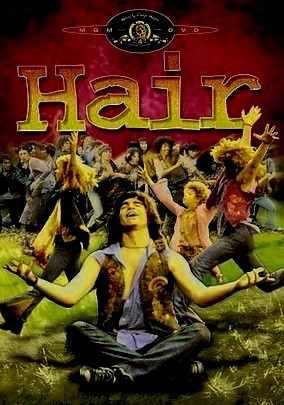
Hair-1979

Director Miloš Forman

Starring John Savage, Treat Williams, Beverly D’Angelo

Top 250 Films #200

Scott’s Review #664

Reviewed July 14, 2017

Grade: B+

Hair is a 1979 musical film that, in addition to catchy singing and dance numbers, explores a serious theme: the Vietnam War.

This film is not your typical Metro-Goldwyn-Mayer-style musical from the 1950s. Rather, the entire experience is a unique, with an underlying dark tone, and is presumably a message film with a liberal slant.

Made in 1979, set in the late 1960s, Hair centers primarily on two young men and a bevy of hippie friends, with most of the action in New York City.

Despite the time, the film does not always succeed in the authenticity category- many of the costumes and hairstyles scream the late 1970’s.

The film also has the late 1970s “look”, on the cusp of the 1980s, with poofy hair associated with the times.

This forces the viewer to escape into a world largely of make-believe.

Claude (John Savage) is a naïve young man from folksy Oklahoma, having lived a sheltered, religious life, proper and away from big-city living.

He is drafted and sent to the Big Apple, where he will await his assignment.

Charismatic Berger (Treat Williams) and company befriend Claude after he gives them spare change, soon becoming the best of friends. Claude falls in love with socialite Sheila Franklin (Beverly D’Angelo), who is in town from neighboring Westchester County, NY, and a love story ensues.

When Claude, Berger, and company interrupt a lavish dinner party hosted by Sheila’s parents, a hilarious yet informative scene develops.

While Sheila is secretly gleeful at the arrival of her new friends, her parents are none too pleased, resulting in a standoff between Berger and Sheila’s family.

Partly comical, this scene also reveals the stark class distinctions among many of the characters.

The rest of the film centers on the friend’s antics involving drug use, relationship trials and tribulations, and culminates in a cross-country drive to see Claude before he is shipped to Vietnam desperately.

Multiple scenes involve songs concerning the turbulent race issues of the times- my personal favorites are the opening number, “Aquarius”, and the scandalous, “Black Boys” and “White Boys”, performed by Nell Carter.

Never one to be disappointed with a film set in Manhattan, Hair is a film basking in fantasy, and the entire production seems to be one big dream as the carefully crafted musical numbers are interspersed with the more dramatic elements.

Still, much of the film consists of the group prancing around Manhattan, with wonderful areas such as Washington Square Park featured, as well as several changes of season, giving the film a slice-of-life feel.

My favorite performance is that of Treat Williams as Berger. Part showman, part jokester, and part earnest, he fills the role with dynamic energy that comes full circle in the last act when he drastically changes his appearance for the sake of a friend.

The film’s ending is melancholy and an inevitable reminder of the coldness and finality of war in human life.

The encompassing song is “Let the Sunshine In”, a powerful and worthy conclusion to the film as the gang visits Arlington National Cemetery, to join an anti-war peace rally and say goodbye to a friend.

The film version of Hair (1979) may be drastically changed from the stage musical version,  a version I shamefully have yet to see. Still, on its own merits, the film is a poignant, powerful, and wholly entertaining musical adventure.

Tootsie-1982

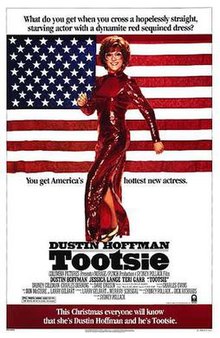
Tootsie-1982

Director Sydney Pollack

Starring Dustin Hoffman

Scott’s Review #1,449

Reviewed November 2, 2024

Grade: A

Dustin Hoffman is perfectly cast in the romantic comedy Tootsie (1982), a blockbuster hit from 1982 with much going on within its cinematic walls and a progressive-leaning slant.

Sydney Pollack directs and also has a supporting role in the film.

In addition to Hoffman, Jessica Lange, Teri Garr, Dabney Coleman, and Charles Durning give all-star performances.

Tootsie is genuinely funny and a treat for anyone who has ever auditioned or been interested in acting or theater. The popular soap opera, or daytime drama, genre features directors, producers, and actors who intertwine.

Romance, drag, wacky setups, insecurities, and social commentary on gender inequality are analyzed, making Tootsie more relevant than most romantic comedies and an unforgettable experience.

Hoffman plays New York actor Michael Dorsey (Dustin Hoffman), a talented yet opinionated perfectionist unable to find work. His flustered agent (Pollack) sends him on a soap opera audition that goes poorly.

Michael decides to reinvent himself as actress Dorothy Michaels and wins the part. What was supposed to be a short-lived role turns into a long-term contract, but when Michael falls for his castmate Julie (Jessica Lange), complications develop.

Hoffman flawlessly merges with Dorothy, a feminist,  to make her a character the audience loves and champions. This is a risky assignment and could easily make the character a goof or cause them not to be taken seriously.

Not only does Hoffman look convincing in a dress, wig, heels, and a feminine southern accent, but he also makes us forget he’s a man.

The hilarity of other characters not knowing Dorothy is Michael is there when a romantic quadrangle develops. Neurotic Sandy Lester (Garr) is in love with Michael, while he is in love with Julie, who thinks Michael is Dorothy. Finally, Julie’s father, Les (Durning), falls for Dorothy.

The New York setting works wonderfully as struggling actors, greedy agents, and temperamental directors co-exist on tense sets, over dinners, and at many schmoozy parties. This presents the grit of New York show business in the 1980s, when the city was crime-infested and dangerous.

The hustle and bustle perfectly showcases the time.

Pollack and screenwriters, Larry Gelbart and Murray Schisgal, add satire to the soap opera, or as mentioned in the film, the politically correct, daytime drama world.

The horny and inept longtime cast member, John Van Horn (George Gaynes), needs a teleprompter while the sexy ingenue April (Geena Davis) prances around in underwear. Hurried script rewrites and pages of dialogue to memorize make the cast frazzled and rushed.

Tootsie takes an important, though lighthearted, approach to sexism, and at least it’s recognized. Dorothy scolds her boss and director, Ron (Coleman), for calling her demeaning nicknames like ‘Tootsie’ and for treating Julie, whom he’s casually dating, poorly.

Michael begins to realize that he doesn’t treat Sandy well either, so he learns from his experience of being judged as a woman on beauty rather than anything else.

It forces the audience to realize this, too. Tootsie was released in the early 1980s when women’s liberation was strong, and more women were in the workplace, so the message was timely.

The producer of the fictional soap opera is female, which enhances the gender message brought across.

Still, the comedy takes center stage, and the film isn’t a message movie. The funny moments feel fresh as the characters work their magic. Julie first assumes Dorothy is a lesbian when they nearly kiss, and Sandy thinks Michael is having an affair with Dorothy, which means he is having an affair with himself.

The antics go on and on, resembling the classic Some Like It Hot (1959), especially the tender moments between Les and Dorothy.

Tootsie (1982) holds up well decades after its release. Smart dialogue, witty sequences, and strong characters make it a timeless treasure to revisit often.

Oscar Nominations: 1 win-Best Picture, Best Director-Sydney Pollack, Best Actor-Dustin Hoffman, Best Supporting Actress-Jessica Lange (won), Teri Garr, Best Screenplay-Written Directly for the Screen, Best Cinematography, Best Film Editing, Best Original Song-“It Might Be You”, Best Sound