Category Archives: Independent Drama

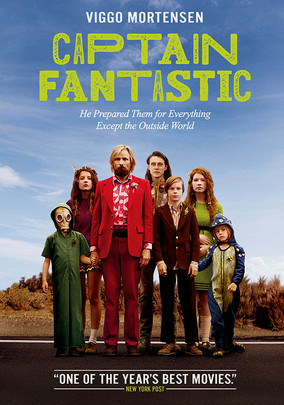
Captain Fantastic-2016

Captain Fantastic-2016

Director Matt Ross

Starring Viggo Mortensen

Scott’s Review #616

Reviewed February 10, 2017

Grade: B+

A thought-provoking story that raises a question of home-schooled, non-traditional book intelligence versus the lack of social norms and interactions and debates about which upbringings are more relevant, Captain Fantastic (2016) is a terrific film with a moral center.

The film, which stars Viggo Mortensen, is a family drama with a unique spin and edgy subject matter. Mortensen is not afraid to tackle complex and thoughtful roles.

Although it is perhaps not as gritty as it could have been and feels a bit safe, it still entertains and elicits thought, a critical aspect of film often lacking in modern cinema.

Director Matt Ross immediately treats us to aerial views of the green and mountainous Pacific Northwest, where a family of seven- one father and six children aged five to seventeen, silently prey on and kill a deer grazing in the forest. This is their dinner.

The family is unorthodox, to say the least.

Led by Ben Cash (Mortensen), he teaches the children how to fight, how to survive, and how to be ready for any situation. They are brilliant kids who can recite the Bill of Rights and the most complex literature.

Soon, it is revealed that their mother, Leslie, has committed suicide, and a battle ensues between her parents (Frank Langella and Ann Dowd), who is determined to bury her “properly” with a Christian funeral, and Ben and his children, who are determined to honor her last wishes for cremation.

Ben and the gang travel via their run-down school bus to New Mexico, meeting local townspeople as a battle of cultures occurs.

I commend Ross for creating a story that challenges the viewer to think, depending on the viewer’s religious or political views. There is a risk of people either loving or hating the film.

The film is skewed toward the left, as in the dinner and sleepover scenes with Ben’s sister. Her “Americanized” family is awkward, and the families have entirely different styles.

Ross makes it clear that Ben and his family are the intelligent ones, and his sister’s kids are pretty dumb, not even knowing what the Bill of Rights is and mindlessly playing violent video games.

The fact that they are a “typical American family” is sad and quite telling of wRoss’s perspective

Captain Fantastic wisely shows that either side is not perfect. His oldest son, Bodevan, blooming sexually, has an awkward encounter with a pretty girl, proposing marriage to her with her mother present because he knows no social norms.

A younger son is attracted to a “normal” life with his grandparents, who are a wealthy couple. The grandparents are not presented as bad people; instead, they want the best for their grandchildren and fear how their lives will turn out without better structure or what they perceive as a better upbringing.

Some of the kids blame Ben for their lack of social skills and being what they perceive as “freaks.”

The film does end safely as a happy medium is ultimately reached, but I never felt cheapened by this result. I found Captain Fantastic rich in intelligent writing and a challenging tale.

Many moments of “what would you do?” were brought to the forefront. Mortensen portrays Ben Cash flawlessly, mixing just the right vulnerability with the stubbornness of the character, and it is an excellent film for anyone fearing being intelligent is not cool because it is.

Oscar Nominations: Best Actor-Viggo Mortensen

Independent Spirit Award Nominations: Best Male Lead-Viggo Mortensen

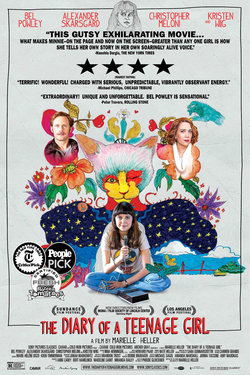
The Diary of a Teenage Girl-2015

The Diary of a Teenage Girl-2015

Director Marielle Heller

Starring Bel Powley, Alexander Skarsgard, Kristen Wiig

Scott’s Review #614

Reviewed February 2, 2017

Grade: A-

I was not sure what I expected from the Independent Spirit award-winning film, Diary of a Teenage Girl (2015).

I surmised that I would be treated to a light-hearted, yet well-written coming-of-age story, but the film is much darker than I would have thought, and this is a plus.

The film is edgy.

There is so much depth to the central characters and an incredibly complex performance by newcomer, Bel Powley in the title role.

Stars Kristen Wiig and Alexander Skarsgard also give tremendous performances.

The film is based on the graphic novel The Diary of a Teenage Girl: An Account in Words and Pictures by Phoebe Gloeckner.

Set in 1976 in San Francisco, a time filled with hippies, drugs, music, and life, fifteen-year-old Minnie, an aspiring comic book writer, is as insecure as any typical fifteen-year-old is.

With wide eyes and stringy hair, she is cute, but rather quirky looking, not the prettiest girl in her class, and records her deepest thoughts into a cassette recorder. Minnie is intelligent and worldly, accepting of alternative lifestyles and drugs.

She is wise well beyond her years.

Minnie’s mother Charlotte (Wiig), lives a bohemian lifestyle, constantly partying and losing jobs, and is divorced from Minnie’s and sister Gretel’s affluent, but mostly absent father, Pascal (Christopher Meloni).

The girls refer to him as “Pascal” instead of “Dad”, which he hates. Determined to lose her virginity, Minnie is man crazy and develops a sweet relationship with her mother’s boyfriend, Monroe (Skarsgard).

Things begin slowly but develop into a full-blown sexual relationship. A controversial piece to the story is that Monroe is thirty-five years old- Minnie is only fifteen. Both Monroe’s and Minnie’s feelings are challenged due to circumstances and Minnie’s emotions spiral out of control.

The subject matter of The Diary of a Teenage Girl will undoubtedly be off-putting for many folks as the actions are technically statutory rape.

The film never goes in that direction.

Rather, director Marielle Heller crafts a tender story of young love, and when there is too much drama comic relief is added.

Monroe is never the aggressor and Minnie is. She is a young girl who knows what she wants.

Since the director is female there is no hint of Minnie being taken advantage of or regretting her affair- the film is not about this.

Rather, it is about a young girl with blooming sexuality and emotions finding herself in the world. I admire this left-of-center approach to the story immensely.

Other aspects of the film may be too much for some. Minnie and her best friend pretend to be prostitutes and orally service two young men in the men’s room on a lark.

Later, Charlotte uses filthy language to describe Monroe’s and Minnie’s relationship.

The film is not safe, but daring and honest. I admire its courage.

Enough cannot be said for the three principal actors in Diary of a Teenage Girl. Bel Powley is a find!

Nominated for an Independent Spirit award, this amazing young actress should have been recognized by the Academy Awards, but she no doubt has many years and films ahead of her.

She is a “regular girl” type and reminds me of actress Lena Dunham in her looks and her rich delivery.

Kristen Wiig is fantastic and is evolving into a great dramatic actress. As Charlotte, Wiig is wonderfully insecure and an offbeat mother. She does not discipline, but rather befriends her daughters, showering them with hugs and kisses and giving vulnerable neediness to the character.

Wiig, dynamite in the comedy/drama The Skeleton Twins (2014), has embraced small, but important indie films, and kudos to her for this.

Lastly, Skarsgard, mainly known as HBO’s villainous Eric on True Blood, is as inspiring as Monroe.

Providing his character with sympathy and humanity (tough when having an affair with a teenage girl who also happens to be your girlfriend’s daughter), Skarsgard evokes so much emotion into the role that you almost root for Monroe and Minnie before remembering that she is too emotionally fragile.

Skarsgard is brilliant in Monroe’s breakdown scene. I hope audiences see him in more of these complex roles as he is far more than a hunky actor.

Diary of a Teenage Girl (2015) intersperses graphic novel/animated elements into the story told from the perspective of Minnie and the character narrates parts of the film.

This authentic story is not only for teenagers but for smart thinkers and anyone who has ever been over their heads in the emotions of love.

Independent Spirit Award Nominations: 1 win-Best Female Lead-Bel Powley, Best First Screenplay, Best First Feature (won)

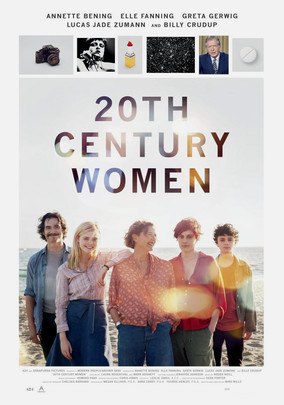
20th Century Women-2016

20th Century Women-2016

Director Mike Mills

Starring Annette Benning, Greta Gerwig, Elle Fanning

Scott’s Review #611

Reviewed January 22, 2017

Grade: A-

Annette Benning shines in her leading role in 20th Century Women (2016), a film directed by Mike Mills, a formidable independent filmmaker whose credits include 2010’s Beginners and 2005’s Thumbsucker.

In 20th Century Women, Mills serves as director and writer, so the film is his vision.

All five principal characters are quirky and well-written, though Benning’s is the most nuanced and fascinating.

The time is 1979, Santa Barbara. Despite the image of Santa Barbara as a wealthy, grand town dripping with the rich and powerful (perhaps due to the sweeping 1980s daytime soap opera of the same name), Mills does not present this film as such.

He presents Santa Barbara as a more artsy town, at least where his characters are concerned.

Benning plays Dorothea Fields, a fifty-five-year-old divorced mother of a fifteen-year-old boy, Jaimie. She is a free spirit who allows two runaways to live with her: Abbie (Greta Gerwig), a twenty-five-year-old aspiring photographer with fuchsia-colored hair recovering from cervical cancer, and William (Billy Crudup), a handyman.

They are joined by Jaimie’s good friend, Julie (Elle Fanning), a depressed neighbor.

The film nicely explores each character’s trials and tribulations and their interactions with each other in a highly quirky manner, and we fall in love with each of them.

Dorothea enlists Abbie and Julie’s help to have a positive influence after he nearly dies after a foolish teenage prank.

Mills successfully gives the period a slice-of-life feel, heavily referencing punk rock and the political climate in the film. Bands such as Talking Heads and Black Flag focus on Dorothea’s striving to learn what young people like, to remain youthful, and to stay in touch with her charges.

Dorothea is a chain smoker, and many scenes feature her pondering a situation while taking long drags. I love this aspect of the film as it showcases Benning’s cerebral performance. She is a thoughtful woman who wants her son to grow up sane and productive since his father is absent.

Sex and feminism are significant themes in the film. Abbie loans Jaimie two books by female feminist authors to help him better understand women.

When he begins to discuss orgasms and a strange conversation about sex and virginity ensues during a dinner party Dorothea is hosting, the graphic detail is a bit too much for Dorothea.

She is a conflicted character- open-minded and caring; when it comes to her son, she has a more conservative edge while trying to remain open to his new experiences as a teen.

20th Century Women is strictly a character-driven film with enormous strength. Each character is in a different place in their lives, and I adore how the film gives a conclusion to each of the characters’ lives in the years to come.

Indeed, the film follows the “happily ever after” formula, but this does not bother me. Instead, the film is so well composed that the characters’ lives enrapture me.

Admittedly, the film is slow-moving at times, but this is due to the richness of the dialogue—nothing is rushed.

Kudos to the cast. Gerwig and Fanning are incredibly excellent. Fanning’s Julie is a unique character- her mother is a psychiatrist who forces her to attend group sessions that she holds. Julie has a step-sister with cerebral palsy, so Julie frequently sleeps at Dorothea’s house as a way to escape her life.

Sexual active, Julie has a pregnancy scare during the story.

A coming of age type film set in an enjoyable time, 20th Century Women (2016) showcases the talents of a stellar cast led by Benning, takes its audience into a wonderful, character-themed world, and discusses the lives of its intriguing characters with a clear portrayal of life in the late 1970s.

Oscar Nominations: Best Original Screenplay

Independent Spirit Award Nominations: Best Female Lead-Annette Bening, Best Screenplay

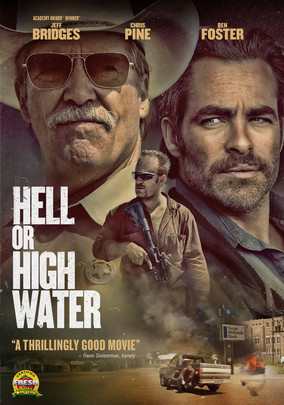
Hell or High Water-2016

Hell or High Water-2016

Director David Mackenzie

Starring Jeff Bridges, Chris Pine, Ben Foster

Scott’s Review #609

Reviewed January 16, 2017

Grade: B+

Hell or High Water (2016), a splendid tale of bank robbers chased by law enforcement officers in rural western Texas, is reminiscent of the Coen Brothers’ No Country for Old Men (2007) or a classic Sam Peckinpah film from the 1970s.

The film provides a good story with a morality tale, so the viewer is unsure who to root for—the good gr tad guys. This gives the film substance compared to the typical action-guy film, which is done to death.

Odd, quirky, minor characters are interspersed throughout the film, which adds comedy and a unique feel.

David Mackenzie directed the film, but up until now, it has been unknown to me.

Chris Pine and Ben Foster play Toby and Tanner, two brothers who embark on small-town bank robberies to save their recently deceased mother’s ranch.

Tanner (Foster) is the more seasoned criminal, having spent time in jail and being more volatile than his brother. Toby (Pine) is a family man with two kids and is more intelligent and sensible than his brother.

Two Texas Rangers, Marcus Hamilton (Bridges), a grizzled man weeks away from retirement, and his partner, Alberto Parker (Gil Birmingham), pursue them.

What I enjoyed most about this film is the authenticity of the setting.

The film was shot in New Mexico but meant to be in West Texas. This is believable, and the cinematography is gorgeous. The vastness of the land and the sticky desert heat are filmed very well.

Small-town Texas is portrayed as tiny characters introduced as townspeople, giving much credo to the film.

My favorites are the diner waitress-smitten with the handsome Toby (and her $200 tip), and t-bone waitress- grizzled and rude after forty-four years in the same place. Their sassy and abrasive behavior works and adds much to the film.

Dale Dickey is a treat in any film, and her turn as a bank employee is a joy.

How nice to see Chris Pine in a challenging role. His character is conflicted morally. Not wanting to hurt anyone, he struggles with the robberies and wants to do right by his kids and mother.

He is a decent man caught in uncertain circumstances, and Pine does an excellent job of portraying him, proving that the actor is becoming more than just a pretty face.

Bridges plays anger quite well, and it is nice to see the actor succeeding career-wise in his golden years. His Texas Ranger character is determined to uphold the law. Still, below the surface, he is more than a bit worried about his upcoming retirement, closing a chapter in his life that is undoubtedly important to him.

His relationship with his partner is jovial and buddy-like, but is there an underlying physical attraction between the men?

The film does not go there, but perhaps on a subconscious level, it is hinted at.

A fantastic scene laced with tension occurs near the film’s end when two of the main characters are killed. It is a stand-off of sorts atop a desert mountain ridge. One of the characters loses it, which results in a shoot-out and a shocking loss of life.

The scene is excellent in that it is a good, old-fashioned shoot ’em up done well.

Hell or High Water (2016) is a gritty action film with excellent elements, nice characterization, and clean fun. It’s a throwback to a long-time crime western without the standard stock characters.

This film is more layered than the traditional and intelligently written, achieving something unique.

Oscar Nominations: Best Picture, Best Supporting Actor-Jeff Bridges, Best Original Screenplay, Best Film Editing

Independent Spirit Award Nominations: 1 win-Best Supporting Male-Ben Foster (won), Best Screenplay, Best Editing

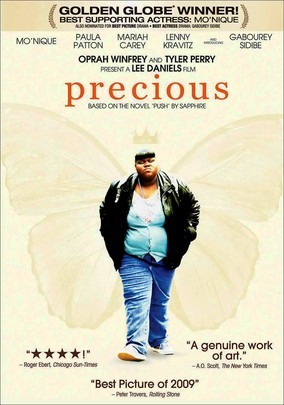
Precious: Based on the Novel Push by Sapphire-2009

Precious: Based on the Novel Push by Sapphire-2009

Director Lee Daniels

Starring Gabourey Sidibe

Scott’s Review #581

Reviewed January 2, 2017

Grade: A

Precious is an amazing film and one of the best to come out in 2009. Due to the hype, I had high expectations entering the theater, and I was not disappointed.

The film is an in-your-face slug-fest with some of the rawest acting performed in recent years.

The marvelous aspect is that the film takes the viewer into a world that is probably not one’s own experience and makes them empathize with the characters.

The film is very disturbing at times, raw, gritty, and violent, but also has some light, humorous moments and is an important film to see.

There is a heartwarming charm that offsets the violence perfectly.

The story itself and the direction are basic, but the wonderful acting is what sets this film on a high pedestal.

Gabourey Sidibe, a relatively unknown and novice actress, gives an astounding turn as an unloved, overweight, pregnant teen mom.

Both of her parents abuse her in separate ways and seem to have a life of pain ahead of her.

Paula Patton, who has been in several fluff films, impresses as a teacher who takes a shine to Precious, and Mariah Carey is unrecognizable as a plain-looking social worker who is also a sympathetic character.

However, actress and comedienne Mo’Nique plays an unfeeling, brutal, violent mother to the hilt and holds nothing back. Her Best Supporting Actress Oscar win was deserving.

Everyone should see this fantastic slice-of-life film.

Oscar Nominations: 2 wins-Best Picture, Best Director-Lee Daniels, Best Actress-Gabourey Sidibe, Best Supporting Actress-Mo’Nique (won), Best Adapted Screenplay (won), Best Film Editing

Independent Spirit Award Nominations: 5 wins-Best Feature (won), Best Director-Lee Daniels (won), Best Female Lead-Gabourey Sidibe (won), Best Supporting Female-Mo’Nique (won), Best First Screenplay (won)

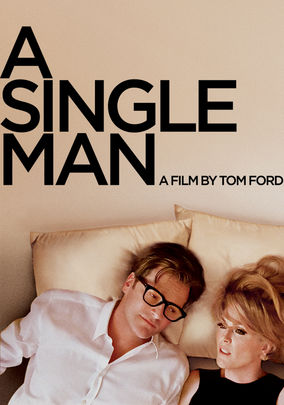
A Single Man-2009

A Single Man-2009

Director Tom Ford

Starring Colin Firth

Scott’s Review #577

Reviewed January 1, 2017

Grade: B+

A Single Man (2009) is a dark film fraught with meaning and honesty-it is a very good movie.

It is a melancholy film and a bit surreal, but worth seeing.

The acting, especially from star Colin Firth, is first-rate.

The subject matter involves being gay in the 1950s and 1960s and the ramifications of living a forbidden and secretive life.

The intelligent film is based on the novel of the same name, written by Christopher Isherwood.

The film is written as a sad tale of a day in the life of a gay man living in the 1960s.

Firth portrays George Falconer, a British college professor living in liberal-minded Los Angeles. When his much younger lover (presumably a student) dies, George plans to commit suicide.

Moore plays his best friend and confidante, Charley, who is dealing with her own demons.

Through flashbacks, we learn about George and his lover Jim’s secret life together and the challenges that ensued. George also had a strange relationship with a male prostitute.

We learn the path of life George leads following Jim’s tragic death; we also see them happy at one time.

A Single Man (2009) is a bit of a downer, containing a definite dream-like feel and is heavy on the flashbacks, but this is intriguing to the picture and not a complaint.

A very good, but not an uplifting film.

Oscar Nominations: Best Actor-Colin Firth

Independent Spirit Award Nominations: Best Male Lead-Colin Firth, Best First Screenplay, Best First Feature

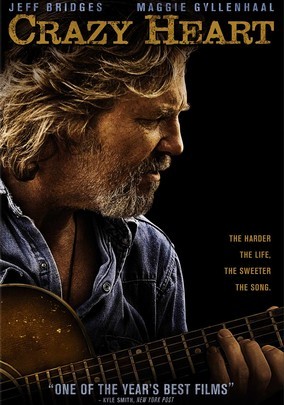
Crazy Heart-2009

Crazy Heart-2009

Director Scott Cooper

Starring Jeff Bridges

Scott’s Review #571

Reviewed December 29, 2016

Grade: A-

Crazy Heart (2009) is a film that is perfectly crafted for Jeff Bridges’ talents as an actor, and the role seems written specifically for him.

To that end, it is a showcase for the actor, and as proof, he was awarded the Best Actor Oscar.

He plays surly, grizzled, and rode hard to the hilt. His chemistry with co-star Maggie Gyllenhaal is fantastic, despite her character being much younger than his.

The first directorial effort by Scott Cooper, who does an outstanding job.

Gyllenhaal plays a reporter, Jean Craddock, who becomes attached and fascinated by Bad Blake (Bridges), a former country-western star turned alcoholic and now a washed-up older man.

He has mentored an upstart played by Colin Farrell, who has since usurped Bad Blake in popularity, leading Blake to depression and alcohol to relieve his pain.

He still performs, but in dirty hotels or bowling alleys, for peanuts.

Bridge’s character reminds me so much of Mickey Rourke’s character “Randy the Ram” in The Wrestler, from 2008, so anyone who enjoyed the latter will enjoy the former.

One might watch the two exceptional films in tandem, and in both, a younger female character meshes well with the stories.

The story portrayed in Crazy Heart is gritty and depressing, yet also heartwarming and sentimental. We root for Blake and Jean to succeed as they battle Blake’s many demons.

Crazy Heart (2009) is very well-acted and genuine.

The film is nice as it is a character-driven film instead of a story-dictated one.

Oscar Nominations: 2 wins-Best Actor-Jeff Bridges (won), Best Supporting Actress-Maggie Gyllenhaal, Best Original Song-“The Weary Kind” (won)

Independent Spirit Award Nominations: 2 wins-Best Male Lead-Jeff Bridges (won), Best First Screenplay, Best First Feature (won)

The Kids Are All Right-2010

The Kids Are All Right-2010

Director Lisa Cholodenko

Starring Annette Bening, Julianne Moore

Scott’s Review #560

Reviewed December 24, 2016

Grade: A

The Kids Are All Right is a fantastic film!

In my opinion, the film is one of the best of the year 2010 and was rewarded with a deserving Best Picture nomination.

Annette Bening and Mark Ruffalo were also honored with acting nominations. Bening gives the best performance in the film.

Continuing the trend of more exposure to LGBT issues, The Kids Are All Right tells of a same-sex-centered family dealing with real issues.

Though not dark, the film is not light or played strictly for laughs. It is a family drama that shows how same-sex family units face problems like everyone else, and how they deal with them, never forgetting how much they love each other.

The writing is intelligent, deeply layered, and rich. The acting is superb, and the characters are complex.

The best scene is one where the entire family is eating dinner- suddenly the camera focuses on one person and goes into slow motion; the other voices become muffled and distant, and painful emotion is portrayed on one of the characters’ faces as a revelation comes to the surface.

Brilliant.

Even the seemingly unimportant dialogue throughout the film is smart, as it shows the bond of the family that cannot ultimately be broken.

The Kids Are All Right (2010) is a worthwhile and compelling film.

Oscar Nominations: Best Picture, Best Actress-Annette Bening, Best Supporting Actor-Mark Ruffalo, Best Original Screenplay

Independent Spirit Award Nominations: 1 win-Best Feature, Best Director-Lisa Cholodenko, Best Female Lead-Annette Bening, Best Supporting Male-Mark Ruffalo, Best Screenplay (won)

Get Low-2009

Get Low-2009

Director Aaron Schneider

Starring Robert Duvall

Scott’s Review #557

Reviewed December 22, 2016

Grade: B+

Get Low (2009) is an understated, gentle, sweet story set in Tennessee during the late 1930s.

The film is greatly enhanced by the stellar cast consisting of Robert Duvall, Sissy Spacek, and Bill Murray.

I dislike the title of the film as, to me, it feels dull.

Despite the very slow pace and the understated feel, the film is successful as one will become engaged with the characters’ lives.

It tells the story of an older man named Felix Bush (DuVall), who decides to plan his living funeral for the small town to attend.

Felix is a hermit who lives deep in the woods of Tennessee. He is despised, yet largely unknown by the townspeople, who only have past stories they have heard about him to formulate their opinions.

He hides a long-ago, dark secret, which predictably is eventually revealed.

DuVall is the standout in this movie, but Sissy Spacek and Bill Murray are also very good, unsurprising based on their string of acting credits.

Enjoyable are the exterior scenes of rural Tennessee, giving an authentic look into the lives of small-town folks of that period.

I could have gone for a quicker pace, although I love slow-moving stories, as long as a pay-off is to be received.

The reveal served satisfactorily, but I could have gone for some juicier scandals and revelations.

Get Low (2009) is a simple yet moving story about life, regret, secrets, and religion.

Independent Spirit Award Nominations: 1 win-Best Supporting Male-Bill Murray, Best First Feature (won)

Lovely, Still-2008

Lovely, Still-2008

Director Nik Fackler

Starring Ellen Burstyn, Martin Landau

Scott’s Review #543

Reviewed December 11, 2016

Grade: B+

Oh, how I wish this movie had gotten more attention!

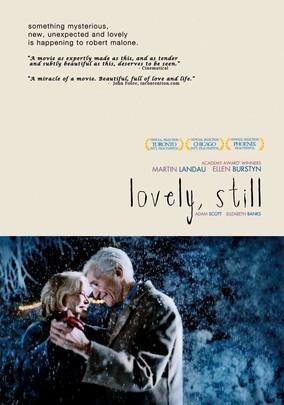
Lovely, Still (2008) is a small, independent venture that is Christmas-themed and set in Omaha, Nebraska.

It stars Martin Landau and Ellen Burstyn as an older couple who fall in love.

Landau is Robert, a lonely older man interested in dating again, who meets and falls in love with Mary, the mother of his next-door neighbor.

Before you start thinking Lifetime television movie, the last thirty minutes of the film will shock and fascinate you.

A guttural reveal takes this film to a completely different place during the climax, making it a heart-wrenching and powerful experience.

Landau and Burstyn are wonderful actors who mesmerize scenes together. They have a sweet innocence and are in glee, like teenagers experiencing first love.

My only criticism is that the first half of Lovely, Still is a bit slow, but this can be forgotten as the film kicks into high gear.

Also, some wonderful camera shots from novice director Nik Fackler.

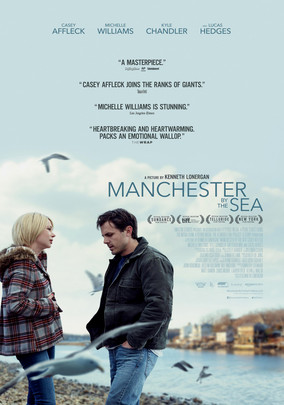
Manchester by the Sea-2016

Manchester by the Sea-2016

Director Kenneth Lonergan

Starring Casey Affleck, Michelle Williams

Scott’s Review #542

Reviewed December 11, 2016

Grade: A

Manchester by the Sea (2016) is a beautiful film.

Told from a slow build-up to a crescendo and a big reveal mid-stream about one of the character’s pasts, it takes time, which is why it is so compelling.

The audience slowly becomes familiar with the characters, making them rich with nuances. They care about them and their predicaments, just as good, solid storytelling should.

The film is a slice of life, dark drama, but I did not find it to be a downer in the least bit—instead, a film with rich writing and great characters. A good movie makes you care for the characters like real people.

Casey Affleck is excellent as the lead character, Lee Chandler. In the film, he plays a janitor who lives a mundane life in Quincy, Massachusetts, tending to apartment buildings. He calmly deals with indifferent, angry, or odd tenants.

Affleck portrays this man with reserve and occasional outbursts of rage. His anger is confusing, but as the story unfolds, we begin to understand what this man has been through and the reasoning behind his anger, even though he is a good person.

Lee receives a call one day with news that his brother, Joe, has died.

Kyle Chandler plays Joe through many flashbacks throughout the film. Upon Joe’s death, Lee returns to Manchester (where he formerly resided) and is told he will be the guardian of his sixteen-year-old nephew, Patrick (Lucas Hedges).

In the mix are the characters of Joe and Lee’s ex-wives- Elise and Randi (Michelle Williams), playing small yet pivotal roles.

The film is dark, and many characters either suffer from emotional trauma, neurosis, or some other maladies, either physical or emotional.

The slice-of-life analogy comes into play. Everyone can relate to these characters in some way, and most people have lived in towns like this and/or have suffered crappy turns of events in life.

When Lee returns to Mansfield, he is a familiar face with a hint of mystery and history. Mansfield is a small town; everyone knows each other’s business, and the characters are hardened, blue-collar, and rugged individuals.

In addition to Affleck’s compelling performance, Williams must be mentioned. She gives a tremendous, heart-wrenching performance as a good woman in pain, trying to carry on and do the right things, forging some adequate existence, as is Lee.

Anyone who has gone through pain (which is everybody) can relate to these characters.

The supporting cast, including even the tiny characters, is perfectly cast and has hearty Boston-type accents that I loved. From Joe’s wife to Patrick’s girlfriend’s mother to various other walk-on characters, each has a vulnerability mixed with toughness.

It is as if life has been challenging, and they are wary of trust, yet they help each other and stick together.

The characters are a major positive to Manchester by the Sea.

Many reflective moments abound within the film, and we are often given scenes of Lee driving down the highway deep in thought. Or long shots of the vast Atlantic Ocean, where fishing is a large part of the character’s lives.

Fishing boats and waves are monumental in the film.

These are not throwaway scenes but interesting, compelling moments rich with meaning.

During the best sequence of the film, when a startling event occurs, the scenes are mixed with classical and operatic music, giving the scenes and the shocking revelations power and meat.

It is heavy stuff but also beautiful, with a compelling musical score.

Not to be drowned by the heavy drama, Manchester has some quirky, dry humor moments. When Joe is initially told about his heart condition, he and his father unintentionally call his female Asian doctor by the wrong name.

When family friends host a party following Awaken, they awkwardly misunderstand each other when they attempt to fix Lee a plate of food. Finally, nobody can find the deceased Joe’s belongings at the hospital. These awkward moments add some comic relief to the film.

I adore well-crafted, emotional, compelling family dramas. Too often, they are cliche-ridden and highly predictable.

Manchester by the Sea (2016) has brilliant writing, top-notch acting, and intricately layered characters.

This film has it all.

Oscar Nominations: 2 wins-Best Picture, Best Director-Kenneth Lonergan, Best Actor-Casey Affleck (won), Best Supporting Actor-Lucas Hedges, Best Supporting Actress-Michelle Williams, Best Original Screenplay (won)

Independent Spirit Award Nominations: 1 win-Best Feature, Best Male Lead-Casey Affleck (won), Best Supporting Male-Lucas Hedges, Best Screenplay, Best Editing

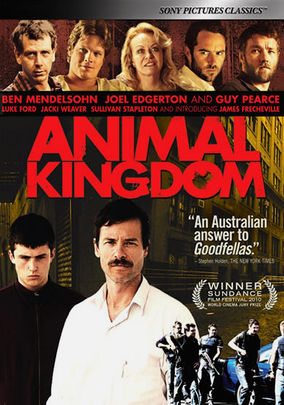
Animal Kingdom-2010

Animal Kingdom-2010

Director David Michod

Starring James Frecheville, Ben Mendelsohn

Scott’s Review #519

70129388

Reviewed November 15, 2016

Grade: A-

Animal Kingdom (2010) is an excellent Australian crime drama movie that is in the same vein as Goodfellas (1990), The Godfather (1972), or a myriad of other mafia/mob-type films- only Aussie style, which in itself piques interest.

The film has an indie feel, is raw and not slickly produced, and isn’t over-dramatized with explosions, CGI effects, or other bells and whistles, making it character-driven.

It’s a well-made drama about a seventeen-year-old boy named Joshua, whom his extended family of criminals takes in.

Starting as an innocent, he slowly becomes entangled in the family’s web of corruption. This mirrors Al Pacino’s Michael Corleone in The Godfather.

The plot becomes even more compelling with the arrival of a good-hearted detective (Guy Pearce) who tries to steer Joshua on the straight and narrow.

The acting is top-notch (Jacki Weaver, in particular, is amazing as the diabolical leader of the family), shocking events happen out of the blue, and the operatic music mixed with dramatic moments is well done.

Animal Kingdom (2010) is a diamond in the rough.

Oscar Nominations: Best Supporting Actress-Jacki Weaver

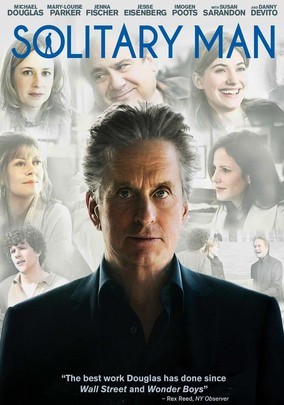
Solitary Man-2009

Solitary Man-2009

Director Brian Koppelman, David Levien

Starring Michael Douglas

Scott’s Review #508

70117589

Reviewed November 3, 2016

Grade: B-

Solitary Man (2009) is an indie drama that has good points and bad.

Michael Douglas stars as a one-time successful, but womanizing, car dealership owner who hits rough times and loses everything.

Michael Douglas’s performance is very good and believable as a cad who hits a difficult stretch in his life.

As an actor, Douglas still possesses his good looks and charm despite being an older leading man by this time; he plays 60 very well.

The film centers around him, and wisely so, despite containing other notable actors. His character of Ben Kalman has swagger and is narcissistic, but yet lovable at the same time and this is unmistakably due to Douglas’s talents.

Annoyingly, the supporting characters played by Susan Sarandon, Danny Devito, and Jesse Eisenberg are quite one-note and not interesting, which is a shame in light of their immense talents.

The story is okay, but nothing fantastic.

I felt as though I had seen films like this many times before- the quirky edge and the attempted dark humor with laughs and some melodrama mixed in was forgettable.

However, as a character study, the movie succeeds.

Solitary Man (2009) is recommended for Michael Douglas’s performance only.

Night Catches Us-2010

Night Catches Us-2010

Director Tanya Hamilton

Starring Kerry Washington, Anthony Mackie

Scott’s Review #503

70129370

Reviewed October 29, 2016

Grade: B+

Night Catches Us (2010), as a film, has some strong qualities and is captivating and interesting to watch.

It is largely set in 1970s Philadelphia and explores the racial tensions of the time.

Kerry Washington and Anthony Mackie star and do a great job with the material.

The film tells the story of a former 1960s Black Panther (Mackie) who returns home after a decade to start his life over, or so he hopes.

Night Catches Us is a combination of love stories and political/social commentary and is an important film to watch.

The leads, along with Wendell Pierce, are great, and the real-life 1960s Black Panther rally footage is interesting to see from a historical perspective.

My only criticism is that I wanted a bit more.

Certain events seem plot-driven and forced- slightly clichéd in the romance department- but overall I enjoyed the film very much, especially for Mackie and Washington’s performances.

Great acting and a socially relevant story.

Independent Spirit Award Nominations: Best First Feature

Songs My Brother Taught Me-2015

Songs My Brother Taught Me-2015

Director Chloé Zhao

Starring John Reddy, Jashaun St. John

Scott’s Review #494

80038286

Reviewed October 14, 2016

Grade: B+

Songs My Brother Taught Me (2015) is quite an understated film experience, but despite the slow pace, I found the film of great interest.

The Native American population is largely ignored in cinema (and perhaps other avenues) so what a treat it was to see a film, albeit a small, quiet film, being made to represent this group of people.

Forest Whitaker produces the film.

Undoubtedly the funding was responsible for allowing it to be made at all.

Living on an Indian reservation in remote South Dakota, the story focuses on Lakota Sioux brother and sister Johnny and Jashaun- aged sixteen and eleven, respectively.

When their father dies in a house fire, they are forced to ponder their future within the Indian reservation, and also their desires to escape their lives and move to Los Angeles with Johnny’s girlfriend- also an inhabitant of the land.

The film is largely a slice of life on a reservation and the trials and tribulations of the members who live there. Johnny’s mother is a kindhearted yet boozy young woman with another son in prison.

Jashaun’s mentor, a tattooed man who is creative and attends alcoholics anonymous meetings, only to be caught drunk by Jashaun. A rivalry between Johnny and some rival boys develops.

Finally, Johnny aspires to purchase a truck from an older gentleman. The film is laced with different facets of real-life situations- trivial to some, but an entrance into a culture most know so little about.

I found the film quite interesting and compelling in a very subdued way. A marvel is the frequent long views of the prairie land- sweeping winds and gorgeous scenery for miles. Many shots of Johnny and Jashaun are featured- simply gazing into the crisp air in deep thought.

We see the conflict put upon both youngsters. Johnny, quite handsome and the object of affection by more than one young lady, yearns for a more exciting life. His girlfriend will be attending college in California. Pretty and smart- she is sure to move on to success, but Johnny plans to go with her.

Her brother inquires how Johnny will live with no job and no money- all valid points. Will Johnny age and remain on the reservation for the rest of his life or escape to a different world?

Jashaun, quite young, is filled with quiet energy and curiosity. She is educated and wise beyond her years. What will become of her without a father and surrounded by some unsavory types that her family knows?

Not an offering for those intent on seeing more action than thoughtfulness, but for the patient viewer, it is a fascinating introspective treat.

Songs My Brother Taught Me (2015) taught me a lesson in good storytelling.

Independent Spirit Award Nominations: Best First Feature, Best Cinematography, Acura Someone to Watch Award

Trash-1970

Trash-1970

Director Paul Morrissey

Starring Joe Dallesandro, Holly Woodlawn

Scott’s Review #490

70003097

Reviewed October 7, 2016

Grade: B+

Trash (1970) is a very unique movie. It needs to be experienced firsthand to be believed.

Produced by icon Andy Warhol, it is both creative and raw, and certainly not for those seeking a basic film that can easily be digested and contained in a box.

Rather, the gritty and controversial aspects percolate into something edgy and creative. In essence, it is a day in the life of a junkie.

An indie drama with documentary aspects, made in 1970 and set in the Lower East Side of Manhattan, Trash tells the story of a young heroin junkie named Joe (Joe Dallesandro) along with his sidekick Holly, who wander throughout the city picking through trash in desperate need of their next heroin fix.

The film is hardcore, and that is what I admired most about it. Not always compelling and certainly not always story-like, it is an experience.

Trash would likely not be made today, but, alas, in the 1960s and 1970s, films like this could be made.

Sigh.

Its rawness, explicit nudity (and I mean full-frontal folks), and blatant IV drug injections are not for the perky or conformists.

It reminds me quite a bit of a John Waters cult exploitation film, but interestingly, it preceded John Waters.

Trash (1970) is very well made, and I’d like to see it again sometime.

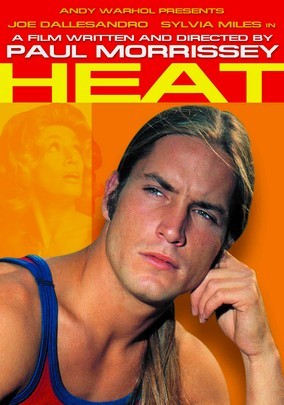
Heat-1972

Heat-1972

Director Paul Morrissey

Starring Joe Dallesandro, Sylvia Miles

Scott’s Review #479

579887

Reviewed September 11, 2016

Grade: A-

Heat (1972) is a Paul Morrissey/Andy Warhol collaboration in the 1970s sexploitation film genre.

The film is a spoof of the 1950 classic Sunset Boulevard and stars 1970s cult star Joe Dallesandro.

He plays a hunky, struggling actor and former child star who begins a relationship with a has-been actress (Sylvia Miles) and her lesbian daughter as they cohabit in a seedy Los Angeles hotel run by a plump landlady (Pat Ast).

He pays the landlady a reduced rent in exchange for sex.

Heat (1972) stars two of my favorite cult film actresses (Miles and Ast).

It is a fun, over-the-top, independent-style sex romp and a pleasing experience for those in the mood for something left of center.

Glass Chin-2015

Glass Chin-2015

Director Noah Buschel

Starring Corey Stoll, Marin Ireland

Scott’s Review #470

70309677

Reviewed August 28, 2016

Grade: B-

Glass Chin, an independent drama film from 2015 contains some positive and negative qualities.

The film has two rather intriguing central characters, a working-class appeal, and some fun moments of Quentin Tarantino-style influence. The villains are unappealing and downright annoying so these elements detract from the main story.

Still, a solid effort.

The premise is straightforward and comfortable. Corey Stoll plays Bud Gordon, a former New York boxer with a level of one-time success.

He now lives in a small apartment in New Jersey with his girlfriend Ellen (Marin Ireland). Yearning to get back into the game, he aligns with crooked businessman, JJ Cook, played by Billy Crudup.

Along for the ride is JJ’s odd henchman, Robert.

Framed for murder so that he is now “owned” by JJ, Bud must struggle to escape the mess he has gotten himself into.

The interesting parts of Glass Chin belong to Stoll and Ireland as they make Bud and Gordon likable and genuine. They are a great team, once successful and now struggling to pay the rent.

They encompass blue-collar appeal.

They are nice people, happy to dine at cheap diners, and clip coupons, but want a comfortable life. When Ellen tries caviar for the first time at a fancy hotel, she dislikes it. She is a happy working-class girl, comfortable in her skin. Bud misses the boxing lifestyle, not for the glamour, but for a purpose.

Having owned a failed restaurant, he is now forced to take a job with a shady character to make ends meet.

I would have preferred to focus only on Bud and Ellen and their life struggles, perhaps with more emphasis on their aspirations, his feelings of failure, and more story involving his training as a young boxer, Kid Sunshine.

But sadly these aspects are secondary to the emergence of villains JJ and Robert.

I am not sure why the filmmakers decided to make both JJ and Robert so weird, and I assume they were going for a Quentin Tarantino influence, but this did not work and led the film to lose some continuity.

Both characters, especially Robert, meander with monologues of nonsense dialogue and downright crazy talk that is rather over the top.

It adds nothing to the story.

They are high-class thugs- the point comes across. The female characters, besides Ellen, are Tarantino-influenced in their left-of-center actions (the wedding dress outfit, the statuesque model who beds Bud), but we know almost nothing about them.

As a side note, I love the constant outdoor locales of New York City and New Jersey, which add authenticity to the film. When Bud drives around in his beat-up 1980s Country Squire station wagon in the snowy New York weather, it adds atmosphere.

More of Bud and Ellen would have been preferred and less of JJ and Robert would have helped Glass Chin be a better film.

Still, there is some appeal, but overall Glass Chin (2015) is quite uneven.

Independent Spirit Award Nominations: Best Supporting Female-Marin Ireland

James White-2015

James White-2015

Director Josh Mond

Starring Christopher Abbott, Cynthia Nixon

Scott’s Review #465

80039413

Reviewed August 15, 2016

Grade: A

I am always struck with a warm feeling, and my faith in the film is reaffirmed when I can watch an interesting independent film (or mainstream studio film for that matter) that has the guts to tell a dark character-driven story and tell it very well of sympathetic characters written exceptionally well.

2015’s James White is an appreciative offering about life and death and how the main characters deal with the roadblocks of life and the effects of death.

This film is quite dark, however.

A fantastic young actor, Christopher Abbott, plays the title character of James White.

We meet James in a loud nightclub, wearing headphones, with soft music, mixing interestingly with the pounding beats of the club music.

The audience immediately can tell that James is wound up, aggressive, and troubled. His estranged father has just died and while he is not too upset by his father’s death, he cares deeply for his mother, Gail, and is worried about her.

No sooner than a service, hosted by the father’s new wife, is held, we learn that Gail is suffering from stage four cancer and will not live much longer.

The film is about how James deals with his problems, from his mother’s illness to finding a job, a rocky relationship with a teen girl, and his reflections on his life, all while filled with rage.

The film takes place over three months, culminating in the dead of winter, an obvious irony.

Abbott and Nixon give astounding performances as son and mother, the apple of each other’s eye, and how they each deal with Gail’s inevitable, impending death.

James is bottled up with anger throughout the film and frequently needs to escape before losing it.

In one amazing scene though, he does lose it during a drunken hotel bender with pals Nick and Jayne. The sheer emotion and desperation that Christopher Abbott gives during this scene are inspirational for any aspiring actor to emulate.

One wonders if director Josh Mond allowed his actors to improvise most scenes as the compelling, raw feeling of scenes is evident.

Nixon, since her fame in television’s Sex And The City, has chosen daring and complex roles and this is to her credit.

As Gail, we see her desperate, emotional, filled with rage, and at times delusional, as she wonders what will become of her son after she is gone and how her world has spiraled out of control.

We also see Nixon successfully play motherly as she coaches her son through his anger and pleads with him to take care of her. It is a powerful performance.

Two slight knocks to the film- James’s best friend Nick is gay (and black), but despite their different sexual orientations, they are the closest of friends. While this aspect reaps heaps of praise for being incorporated into the film, we know very little about Nick, his family, or his inner feelings.

James’s new girlfriend Jayne is also a mystery. She is significantly younger, and is dutiful, but what are her motivations?

Yet, given the very short run time of the film (one hour and twenty-seven minutes), I can see why the filmmakers chose to focus on the mother/son relationship.

A slight criticism.

A film such as James White (2015) is purely character-driven and must be enormously rewarding for actors to play these two raw characters.

Painful, for anyone dealing with a loved one suffering from cancer to watch, but a fantastic journey into the world of wonderful acting and dynamic screenwriting.

Independent Spirit Award Nominations: Best Male Lead-Christopher Abbott, Best Supporting Female-Cynthia Nixon, Best First Feature

Arbitrage-2012

Arbitrage-2012

Director Nicholas Jarecki

Starring Richard Gere, Susan Sarandon

Scott’s Review #437

70227644

Reviewed July 1, 2016

Grade: B+

Arbitrage (2012) is an exciting, interesting, little indie thriller starring Richard Gere as a successful, but troubled, CEO, whose life begins to unravel around him through a series of circumstances.

He is a billionaire but at risk of losing everything due to shady dealings and fraudulent activity.

The film is the type that keeps the audience guessing and is never predictable. The plot slowly unravels into something of a pot-boiler. It is tense.

Richard Gere is the standout as he gives a wonderful, believable performance. Once known as little more than a hunky Hollywood star, Gere has blossomed in recent years, taking on more compelling and complex roles.

Arbitrage (2012) contains some Hitchcock elements throughout in its complexities, though Gere’s character is an anti-hero whereas Hitchcock’s were frequently good guys in bad circumstances.

The car crash scene is brilliantly done.

I wish this movie had received more attention than it has as it is a fun, thrill ride.

Compliance-2012

Compliance-2012

Director Craig Zobel

Starring Dreama Walker, Ann Dowd

Scott’s Review #435

70229062

Reviewed June 30, 2016

Grade: A

Compliance (2012) is a ninety-minute riveting experience that will leave you thinking, talking, and feeling for days or weeks after viewing it.

The film is that intense.

The fact that it is based on true events is even more startling. It is, at times, quite disturbing and unsettling to watch, and if one likes their movies happy and wrapped in a bow, this will not be for you, but for film fans who truly want an emotional experience check it out.

At times I wanted to scream at the characters, look away from the screen, and shake my head in disbelief.

A truly riveting experience.

Major props to actress Ann Dowd, who does a bang-up job as the restaurant manager, and main character. What an amazing talent this actress is.

My range of emotions toward this character (sympathy, confusion, anger, disbelief) blew me away.

Compliance (2012) is one of the best modern films of late.

Independent Spirit Award Nominations: Best Supporting Female-Ann Dowd

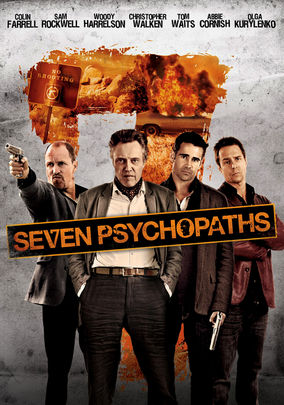
Seven Psychopaths-2012

Seven Psychopaths-2012

Director Martin McDonagh

Starring Colin Farrell, Sam Rockwell

Scott’s Review #422

70241756

Reviewed June 19, 2016

Grade: B-

Seven Psychopaths (2012) is a film that I truly wanted to like more than I did.

It started well with a Quentin Tarantino style that was appealing and the film does contain an interesting premise.

Colin Farrell plays the straight man in a cast of offbeat, quirky characters and is attempting to complete a screenplay entitled “Seven Psychopaths” based on these characters.

Sounds great, but halfway through the movie stopped delivering. I found myself slightly bored.

The film has a unique concept, to be sure, but fizzles during the second act, so much so that it stopped making much sense and lost my interest.

I did admire the creativity, though, and the chemistry among the cast is great, but the overall story in Seven Psychopaths (2012) disappointed me.

Independent Spirit Award Nominations: Best Supporting Male-Sam Rockwell, Best Screenplay

Celeste and Jesse Forever-2012

Celeste and Jesse Forever-2012

Director Lee Toland Krieger

Starring Rashida Jones, Andy Samberg

Scott’s Review #421

70227647

Reviewed June 19, 2016

Grade: D

Celeste and Jesse Forever (2012) was a major dud for me.

I am not a fan of romantic comedies, but since the film received a nomination for an Independent Spirit Award for Best First Screenplay, I decided to watch it.

Why this film was nominated for that award I cannot understand. Perhaps someone knows someone who knows someone?

There is nothing impressive about the writing whatsoever. It’s a tried and true romantic comedy formula: couple together, the couple splits, the couple reunites, throw in some misunderstandings for good measure and that is pretty much the film.

The central characters and supporting characters are either dull, annoying, or both.

To be fair, there is nothing loathsome about the movie, but rather, it’s your standard-by-the-numbers romantic comedy that warrants no award nominations.

Bland.

Independent Spirit Award Nominations: Best First Screenplay

The Kid with a Bike-2011

The Kid With A Bike-2011

Directors Jean-Pierre Dardenne, Luc Dardenne

Starring Thomas Doret

Scott’s Review #416

70189306

Reviewed June 18, 2016

Grade: B

The Kid with a Bike is a small French film from 2011 that has received acclaim and recognition worldwide.

The film tells the story of a troublesome young boy abandoned by his struggling father and the various dramas that unfold.

I found the film somewhat disappointing, as I expected a bit more than I got.

Throughout the very short one hour and twenty-seven-minute run-time, the young boy broods and defies either authority or his caregivers, or fights with various people he encounters as he attempts to find his father.

The boy bonds with a local hairdresser who takes him in and is interesting, but her motivations are never made clear beyond being kind.

Why would she take in a strange kid? We don’t learn much about this character, and that is a shame.

One element toward the end of the film was shocking and well done, but overall I expected something a bit deeper from this movie, given all the praise surrounding it.

Independent Spirit Award Nominations: Best International Film

The Perks of Being a Wallflower-2012

The Perks Of Being A Wallflower-2012

Director Stephen Chbosky

Starring Logan Lerman, Emma Watson   

Scott’s Review #415

70243461

Reviewed June 18, 2016

Grade: A-

The Perks of Being a Wallflower (2012) is a coming-of-age gem of a film.

It reminds me of a strange combination of The Ice Storm (1997), Donnie Darko (1999), and American Beauty (1999), but a bit more straightforward and less weird than those films.

Perhaps with a bit of The Breakfast Club (1985) thrown in for a lighter touch.

This movie felt very real to me and not like the typical high school schmaltz usually crowding the cinemas these days. It’s dark at times but also humorous and well-written.

Each teen in the group of friends has demons to face and complex, intricately written characters. All are insecure in some form and many teen issues are addressed, in a mature, sensitive way.

It’s nice to see Emma Watson breaking away from her Harry Potter image.

The Perks of Being a Wallflower (2012) is a character-driven treat worth seeing.

Independent Spirit Award Nominations: 1 win-Best First Feature (won)