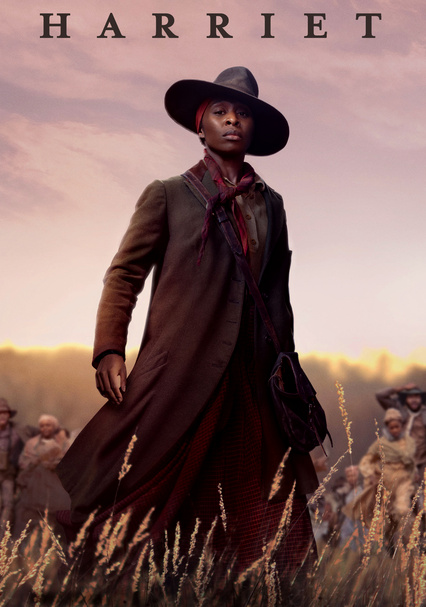
Harriet-2019
Director Kasi Lemmons
Starring Cynthia Erivo, Leslie Odom Jr.
Scott’s Review #1,031
Reviewed June 10, 2020
Grade: B
The story of real-life American freedom fighter Harriet Tubman, a woman who risked her life multiple times to rescue enslaved people from the pre-Civil War South of the United States, is a story of monumental importance to get right.
An escaped enslaved person herself, Harriet was more than an Abolitionist; she was a political activist and hero to all whose lives she touched. She was a figure that all women and men should aspire to emulate with her message of freedom and civility.
The cinematic telling of Harriet’s story, titled Harriet (2019), is a mild success, mostly deserving of praise for being told at all.
At well over one hundred and fifty years post-civil war, racism still runs rampant across the United States, so the release of the film is essential.
A gutsy performance by Cynthia Erivo, a British singer-turned-actor, is the high point. Still, unfortunately, the rest of the offering is lackluster, frighteningly modern in look and feel, with clear heroes and villains, and nobody with muddied motivations to be found anywhere.
We first meet young Harriet (Erivo), then named “Minty” Ross, in 1840s Maryland, then a slave state. She is to be married to her intended, John Tubman (Zackary Momoh), already a free man.
Minty’s father, also free, asks her owner to release her as his grandfather had promised before his demise.
Refusing, his son, Gideon (Joe Alwyn), decides to sell Minty as punishment. Savvy, Minty flees for the northern states and settles in Philadelphia, a newly free woman with her life ahead of her.
She risks capture and death to return to Maryland, in disguise, to rescue her family from the horrors of slavery.
Her plight was so essential and so heroic that I wanted to love this film.
It is okay, but it does not do justice to the real-life Harriet, nor does it succeed as a cinematic offering. The weakest point is the modern look that the film and the actors possess, and I think this was done intentionally.
Every single actor, black and white, looks like a present-day actor dressed in mid-nineteenth-century garb, and it does not work. My hunch is that filmmakers wanted to add relevance to the current racial issues, and I am all for that, but the film suffers as a result.
I am all for feminism in cinema, but Harriet can be accurately accused of stomping that point into the ground.
During some of the numerous action sequences when Harriet becomes a flawless sharpshooter, she nearly rivals a Marvel superhero instead of a simple woman championing a cause. And why is Harriet psychic?
This is a silly addition that feels plot-driven. Director Kasi Lemmons, known for films like Eve’s Bayou (1997) and Black Nativity (2013), knows her way around a picture, but Harriet will not be known as her finest achievement.
There are some positives to mention. Erivo, not known for her acting as much as her singing ability, rises to the occasion. Viola Davis nearly ended up being cast, who would have been brilliant, but Erivo nonetheless impresses.
She is both pretty and plain, which humanizes Harriet and makes her relatable to many.
Erivo strikes a balance between toughness and sympathy, allowing the audience to champion her cause without it feeling forced. Early in the year, thought to be a lock for the Best Actress Oscar, the film lost ground critically, and Erivo limped to an Oscar nod, and she was lucky to get that.
She lost.
The cinematography is credible, which is another positive aspect of the film. The green, lush landscapes are distinctly southern and peaceful, featuring roaring rapids, bridges, and spacious forests that make for atmospheric backdrops serving as settings for many sequences.
Casting Janelle Monae as the gorgeous (and free) Marie Buchanan is okay and adds a Color Purple (1985) comparison, reminiscent of Celie and Shug Avery.
Ironically, the acting among the black actors is superior to that of the most over-the-top or cartoon-like white actors.
Best described as a formulaic Hollywood film with a good message, Harriet (2019) could be a launching pad for Erivo, a new name in Hollywood films.
She tackles a challenging role and is the standout performer in the production. The sleekness and modernism make the resulting experience less than the grittiness that a film like Harriet needs.
Much better biographies of legendary figures exist, a shame since Harriet Tubman is one of the most prominent to have their story told on the big screen.
Oscar Nominations: Best Actress- Cynthia Erivo, Best Original Song-“Stand Up”