Tag Archives: Josh O’Connor

Emma-2020

Emma-2020

Director Autumn de Wilde

Starring Anya Taylor-Joy, Johnny Flynn

Scott’s Review #1,128

Reviewed March 31, 2021

Grade: B

I haven’t read the classic Jane Austen novel written in 1815, nor have I seen the 1996 film version starring Gwyneth Paltrow. Neither of these is a prerequisite to enjoying the 2020 version of Emma starring Anya Taylor-Joy in the lead role of Emma Woodhouse.

The film, while set in the early nineteenth century, feels incredibly contemporary and seemingly makes little attempt at a classic style save for the hair, makeup, and costumes.

These items are splendid, and the highlight makes the film stylish and bright.

Beautiful, bright, and rich, Emma (Taylor-Joy) enjoys her matchmaking skills that sometimes lead to awkward or failed matches and romantic missteps. She claims not to be interested in her romance or potential suitors, though that changes with time.

She struggles with the challenges of growing up, despite being pampered and often interfering in others’ affairs. Emma is also mischievous and not always kind, though deep down she is a good person and has regret when she hurts someone’s feelings with her antics.

In a good, coming-of-age way, she finally realizes that love for her and a proper match of her own has been there all along and staring her in the face.

The film begins with Emma’s governess, Miss Taylor (Gemma Whelan), marrying and becoming Mrs. Weston.

She and Emma are best friends, and Emma is saddened, so she settles on Harriet Smith (Mia Goth), a younger girl whom Emma supposes is the unclaimed child of a gentleman; Harriet’s parents are unknown, but her education has been provided for.

They become bonded, and Emma’s influence is immeasurable.

Taylor-Joy does an excellent job in the title role and carefully makes Emma naughty and sometimes unlikable before carefully reeling her in with an act of kindness. She has no malice in mind but is often bored and looking for excitement.

I found myself rooting for her to find romance with Mr. Knightley (Johnny Flynn), which she does, but not without a hurdle or two on the way.

Other characters come and go with flirtations and romantic possibilities explored.

Speaking of Flynn, the actor is rumored to play rock icon David Bowie in a future theatrical feature. A real musician, Flynn, should be the perfect casting for that critical part.

He is the only character to show some flesh, his bare bum, in Emma, and one wonders if female director Autumn de Wilde did this purposefully. After all, traditionally in cinema, it’s been the female who is more commonly nude. Turnabout is fair play.

While Taylor-Joy is good, she is nearly upstaged by the delightful Goth, who is fabulous as the insecure and impressionable Harriet. With humor and innocence, she makes her character quite likable. I’d like to see more from this young actress.

Bill Nighy is perfectly cast as the comical father of Emma, while Miranda Hart as Miss Bates steamrolls over every scene she is in.

Some inconsistencies exist, especially where Miss Bates is concerned. A quick mention that Miss Bates and her family had once been rich and are now struggling is not explored, where it reportedly was in the novel.

Dividing the film into seasonal sections (Autumn, Winter, Spring, and Summer) is a good decision and makes it more like a novel. The winter snow and Christmas festivities, along with a summer picnic, do wonders to add fresh atmospheric tidbits.

The many scenes of delicious spreads of food and drink laid out for hungry eyes to see offer a robust and colorful glimpse of the culture.

The vibrancy, the food, and the clothing, as mentioned above, all brimming with richness based on the seasons, are the main draw. The castles and large houses featured surely small-town English style, brimming with vastness and atmosphere.

Emma (2020) is a fun film, but its story isn’t the strongest aspect. Predictably, all characters wind up with whom they should wind up with, and there is a happily ever after sensibility.

Adolescents can easily sit in comfort with their parents and enjoy the lightweight affair. Nobody will be offended, and all will be satisfied. It’s a solid romantic period piece.

Oscar Nominations: Best Costume Design, Best Makeup & Hairstyling

God’s Own Country-2017

God’s Own Country-2017

Director Francis Lee

Starring Josh O’Connor, Alec Secareanu

Scott’s Review #773

Reviewed June 13, 2018

Grade: B+

God’s Own Country (2017) is a British, romantic, LGBT-themed drama directed by Francis Lee, making his directorial film debut.

The setting is farming land in the Yorkshire (northern England) territory, making the film quite lovely to watch, and the pace is slow. Lee does not rush the story’s pace either, so it mirrors the slow life that farmers must endure.

The film is somewhat autobiographical of Lee’s own life.

The connection and chemistry between the two leads are palpable, and the love story is endearing. It is awe-inspiring to see two cultures come together and merge as one.

The film is a nice watch and an above-average story, making it worthy of LGBT audiences worldwide. Those who believe in true love and find their soulmate will be deeply satisfied.

Twenty-something Johnny (Josh O’Connor) lives a dull existence on his father’s farm in remote Yorkshire, England. His grandmother (Gemma Jones) also lives there, and due to his father’s recent stroke, the farm’s success is in question. Johnny is depressed, drinking regularly, and engaging in sexual encounters with men.

Romanian migrant worker Gheorghe (Alec Secareanu) is hired to help, and the two young men eventually fall in love. After some ups and downs in their relationship, they decide to live on the farm together and presumably live happily ever after.

God’s Own Country is a rich story of romance, and the only real obstacles that Johnny and Gheorghe face are internal struggles.

In a unique fashion for LGBT films, neither of the men are necessarily unhappy with their sexual identities, nor do they face hurdles by other characters because of their sexuality. Gheorghe faces harassment because he is Romanian and deemed an “outsider”.

Besides Johnny’s grandmother and perhaps his father, no characters seem aware that the men are a couple.

The cinematography is gorgeous and a perfect backdrop for the love story. The farm is lush with spacious green rolling hills for miles and miles.

The family raises lamb and cattle, and more than one scene features a beautiful birth and the nuzzling of the parent to the newborn baby. Sadly, one birth is also a breach, which is tough to watch.

The themes of life and birth perhaps mirror the feelings and emotions that Gheorghe and Johnny experience- new love.

Throughout God’s Own Country, I frequently drew comparisons to arguably the most mainstream and revolutionary film in LGBT history- that of 2005’s Brokeback Mountain.

Both films feature similar elements of animals, farming, and the outdoors. Additionally, commonalities like loneliness and loss are heavily featured. Finally, the rough-and-tumble, machismo-fueled wrestling scenes that result in rough sex between the men are used in both Brokeback Mountain and God’s Own Country.

Both films could be companion pieces.

The film does not delve too much into the back story of the main characters; at least, I did not catch many mentions. Admittedly, viewing the movie on DVD with no closed captioning or subtitle capability made capturing all of the dialogue difficult.

Especially with English and cockney accents, this was made doubly challenging. Regardless, both men are lonely, even despondent, but why? What happened to Johnny’s mother? Where are Gheorghe’s parents or his family?

Upstart Francis Lee carves a quiet, thoughtful, yet compelling story of unexpected love that develops between two lonely men in a remote area of the United Kingdom.

God’s Own Country (2017) paints a nearly perfect experience, slow, yes, but featuring exceptional acting from both leads and the two supporting turns.

The film is recommended for those seeking a poignant and fulfilling love story.

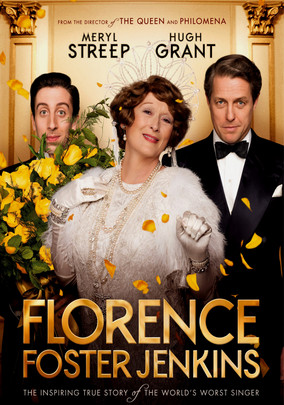
Florence Foster Jenkins-2016

Florence Foster Jenkins-2016

Director Stephen Frears

Starring Meryl Streep, Hugh Grant

Scott’s Review #613

Reviewed January 30, 2017

Grade: B

Director Stephen Frears loves to direct films starring vehicles for mature actresses. Judi Dench, Helen Mirren, and Meryl Streep have benefited vastly from his direction (all received Oscar nominations).

In Florence Foster Jenkins (2016), Frears crafts a warm-hearted tale about a famous real-life opera singer, the title character of whom is played by Meryl Streep.

The film is likable but not up to par with other Frears’ gems, specifically Philomena (2013) or The Queen (2006).

Given the subject matter, the film is too safe for my tastes and should have been darker.

Florence Foster Jenkins was a New York City socialite and heiress who flourished in 1944. She founded the Verdi Club and did a great deal of good for music, specifically opera, which she adored.

Her husband, Bayfield, played by Hugh Grant, nicknames her “Bunny.” He reveres her, but not physically—he resides elsewhere with a girlfriend.

This is due to Bunny being afflicted with long-term syphilis, causing her to be medicated and rendering her bald and unable to engage in sexual relations.

Bunny is a wretched, flat singer; despite her passion for singing, everyone convinces her how wonderful she is because she is so well-regarded in her social circle. Many people are paid off in exchange for their support.

Due to Bunny’s medication, it is assumed that she cannot hear properly, leaving her unaware of how badly she sings. Bunny is now determined to sing at Carnegie Hall, and Bayfield must scramble to make sure no critics are anywhere in sight for the big show, saving his wife from humiliation.

Any film starring Meryl Streep is assured to be fantastic from an acting standpoint, and, per usual, she does not disappoint. Streep envelopes the role of Bunny, giving her charm and a vulnerability that only Streep can do.

Although the character knows what she wants and is stubborn, she is also kind, and we see passion oozing from her pores.

Streep is the highlight and the draw of the film.

Hugh Grant deserves kudos, and I liked the chemistry between the two actors. Although seeking physical relations with another woman may make him appear a cad, Grant also gives Bayfield sensitivity and genuine care for his wife.

They have “an arrangement,” but he hides his girlfriend when Bunny shows up unexpectedly, not wanting Bunny to be embarrassed.

Grant’s and Streep’s scenes together are tender and believable.

Like Bunny’s pianist, McMoon, Simon Helberg also positively influences the film. Hired to accompany Bunny’s singing, he is initially appalled and bemused but finally understands Bunny, coming to love and respect her for who she is.

The character is clearly gay (the film never comes out and says this), but gay themes are common in Frears films, and it is a non-issue among the principal characters, excellent, but perhaps unrealistic for that time.

A flaw of the film is the lack of any purely great moments. I suppose the climax at Carnegie Hall should have been it, but I did not wholly buy the entire film.

Even the crowd’s laughter and mocking of Bunny seem to be done in a soft, light way.

Nonetheless, Florence Foster Jenkins (2016) is a decent offering, and Streep is the ultimate selling point.

The costumes are also great.

Oscar Nominations: Best Actress-Meryl Streep, Best Costume Design