Tag Archives: Top 250 Films

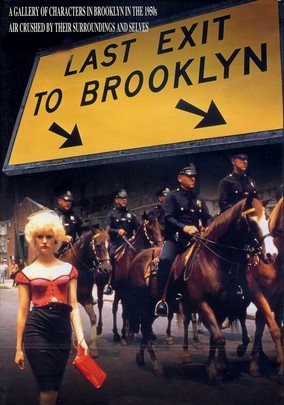
Last Exit to Brooklyn-1989

Last Exit to Brooklyn-1989

Director Uli Edel

Starring Stephen Lang, Jennifer Jason Leigh

Top 250 Films #176

Scott’s Review #152

70141619

Reviewed August 13, 2014

Grade: A-

Last Exit to Brooklyn is a slice-of-life type film that takes place in the early 1950s and is set in lower-class Brooklyn, NY.

It tells the story of a group of struggling neighborhood people- sex workers, union members, drag queens, etc. whose lives intersect. Also in the neighborhood is a military base where soldiers come and go on their way to war-torn Korea.

The central characters, though there are several with small yet interesting stories, are Harry, played by Stephen Lang, a sexually conflicted union worker with a wife and newborn child.

He is in love with a selfish drag queen, and Marilyn Monroe lookalike, Tralala, played superbly by Jennifer Jason Leigh, a prostitute whose best days are behind her, and who will do anything for attention.

The sets and cinematography in the film are very well done- the feeling of despair and hopelessness are accomplished by the dowdy streets, homes, and bars that the cast frequents.

Some of the characters are sympathetic- the aforementioned plus Tralala’s love interest, the Diner boy madly in love with Tralala, and the virginal seeming (but not really), Donna, portrayed by a young Rikki Lake. Other characters are abhorrent in their violence and hatred.

Last Exit to Brooklyn is quite a dark film and sometimes tough to watch but captures a dreary time and atmosphere. The Brooklyn set is excellent in its dreariness.

Jennifer Jason Leigh is the standout as the tough-talking, boozy prostitute who is losing her luster and the final scene of the film is truly a heartbreaker.

The topics of union, strike, bisexuality, gangs, and drag queens are covered and unique characters and conflict/loneliness are presented.

This film is an overlooked gem from 1989.

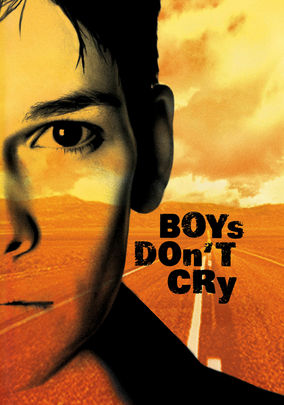
Boys Don’t Cry-1999

Boys Don’t Cry-1999

Director Kimberly Peirce

Starring Hilary Swank, Chloe Sevigny

Top 250 Films #177

Top 10 Most Disturbing Films #10

Scott’s Review #340

27422770

Reviewed January 9, 2016

Grade: A

Boys Don’t Cry (1999) is a fitting tribute to real-life figure Brandon Teena, a transgender man from Nebraska, who adopts a male identity and attempts to find love with Lana, played by Chloe Sevigny. Brandon is played by Hilary Swank.

Sadly, Brandon was brutally raped and murdered at the hands of some local men- a fact that the film does not gloss over.

Boys Don’t Cry is a heartbreaking and tragic film that will disturb some with its shocking and violent content- sadly it is a true story.

Swank deservedly walked away with the Best Actress Oscar statuette.

Set in working-class Nebraska and in the heartland, Brandon has the cards stacked against him from the start. Not exactly the most open-minded of areas, the film also sets a working-class environment for Brandon as most of his friends are poor factory or bar workers.

Born as Teena Brandon and female, Brandon (Swank) is a drifter and in trouble with the law for various unpaid tickets. He befriends ex-convicts John and Tom and becomes part of their crowd, falling in love with Lana- they are all unaware of Brandon being a female.

When Brandon’s secret is revealed, Lana is accepting and the pair decide to run away together, but Tom and John decide to murder Brandon.

Swank’s portrayal of Brandon is brilliant and believable and very few actresses could successfully pull this off. Swank has angular, androgynous features to begin with, but her drastic physical transformation is jaw-dropping.

Having closed-cropped hair and a male swagger, Swank immerses herself in the role, so much so, that as I watched the film I completely forgot that Brandon was not physically male.

Her physical transformation is not the sole reason for the fantastic performance though- Swank is emotionally there in the role and in a heartbreaking scene, after being beaten and raped, is treated poorly by a sheriff handling the accusations- just when Brandon could use an understanding ear.

What a cold world it can be for someone different from most others as Boys Don’t Cry reveals in a brutal, honest fashion.

Anyone who knows the true story of Brandon Teena knows he led a painful, tragic life, but was also filled with life and love- mainly for Lana.

Worth mentioning is Sevigny’s performance as Lana- in love with the person that was Brandon, not so much the gender. Sevigny portrays Lana as supportive, confused, and loving.

Director, Kimberly Peirce, became obsessed with the real-life case and does a fantastic job at tackling the film in a true, compelling way. To say nothing of the writing and the acting, Peirce also successfully uses a hand-held camera during Brandon’s strip scene and a surreal, muted light to portray the gloomy mid-west and the cold, hard lives that most of the characters lived.

Impressively, Peirce accomplished all of this on a shoe-string budget and took a wealth of inspiration from independent film legend John Cassavetes, who proved that gorgeous films can be made for very little money.

Many scenes take place in bars as Lana, a devoted karaoke singer, croons one tune after another, the highlight being Restless Heart’s 1988 country hit, “The Bluest Eyes In Texas”, which Lana sings in Brandon’s presence.

The use of somber songs gives the film a tragic soundtrack.

Famed film critic, Roger Ebert, described Boys Don’t Cry as “Romeo and Juliet set in a Nebraska trailer park”.

Boys Don’t Cry (1999) is an enormous victory in film for the LGBT community and, along with Brokeback Mountain (2006), is a perfect double-feature, as both are similar films, only one featuring males, the other females.

Both are tragic, bleak and all too real.

Oscar Nominations: 1 win-Best Actress-Hilary Swank (won), Best Supporting Actress-Chloe Sevigny

Independent Spirit Award Nominations: 2 wins-Best First Feature (Over $500,000), Best Female Lead-Hilary Swank (won), Best Supporting Female-Chloe Sevigny (won), Best First Screenplay, Producers Award

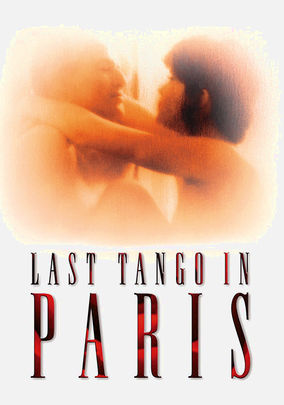
Last Tango in Paris-1972

Last Tango in Paris-1972

Director Bernardo Bertolucci

Starring Marlon Brando, Maria Schneider

Top 250 Films #178

Top 10 Most Disturbing Films #8

Scott’s Review #202

687496

Reviewed December 5, 2014

Grade: A-

Last Tango in Paris is a very dark 1972 erotica art film directed by Bernardo Bertolucci (The Conformist-1970), starring Marlon Brando as a disturbed, angry American man named Paul, whose wife has committed suicide.

He is left to survive on his own in Paris lost and without her where he runs a decrepit apartment complex.

Lonely and bitter, he meets a much younger Parisian woman (Maria Schneider), equally disturbed for different reasons, and they forge a relationship that is sometimes brutal, and degrading, but also contains mutual affection and need.

They are addicted to each other.

This film may very well be my favorite performance by Marlon Brando. He plays a hateful, unpleasant character, yet something is appealing about him and the viewer sympathizes with his grief.

That is to Brando’s credit, of course. A lesser actor would not be as effective.

He is damaged, treats everyone like shit, but there is also a vulnerability to him that is mesmerizing to watch. Brando was such a great, method actor that he simply morphs into the characters he plays. Paul is certainly the most raw and emotional performance of his career.

Actress Maria Schneider is also tremendous in the film. Equally disturbed, her character Jeanne experienced a vastly different upbringing- that of wealth and pampering.

She has a fiancé who loves her dearly, yet she is drawn to the power and abuse of Paul- the fact that he is an older man is sexy to her.

I kept thinking, “What is wrong with this woman?” She seemingly has everything, yet she yearns for excitement. Is Paul a fling for her? Does she care about him or is she using him? Is he using her? Could they be using each other?

The film raises many psychological questions. Jeanne is clearly in emotional turmoil. Both Jeanne and Paul are.

Last Tango in Paris is a difficult film to watch- several scenes are unpleasant, even brutal, but it is a character study of two damaged individuals.

When Paul anally penetrates Jeanne on the floor of his apartment, forcing her to recite gibberish, it is almost too much to bear. Paul wants to know nothing about Jeanne. He does not want to know her name, her past, nothing- complete anonymity. He lives for the present and their sex is animalistic, filled with lust and need.

But these examples are a testament to the power of Last Tango in Paris. It is not boring.

The finale leaves you wondering what will happen to Jeanne. Will she commit suicide? Will she return to her fiancé and life of luxury, her affair with Paul over? Was the affair only a fling for her or does she love Paul?

The film is a dark, tragic, romantic story. It is brutal, raw, and honest and is not to be missed.

Oscar Nominations: Best Director-Bernardo Bertolucci, Best Actor-Marlon Brando

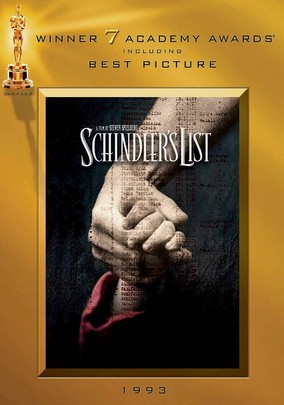
Schindler’s List-1993

Schindler’s List-1993

Director Steven Spielberg

Starring Liam Neeson, Ben Kingsley, Ralph Fiennes

Top 250 Films #179

Scott’s Review #775

Reviewed June 19, 2018

Grade: A

Schindler’s List (1993) is a film that is arguably Steven Spielberg’s finest directorial work and Liam Neeson’s finest acting performance.

The film is as disturbing as it is awe-inspiring as many emotions will undoubtedly envelop any viewer- most of them dark and dire.

Spielberg’s most personal story centers on the devastating Holocaust of World War II that will grip and tear audiences to pieces.

The work deservedly secured the Oscar award for Best Picture and Best Director as well as numerous other accolades.

Oskar Schindler (Neeson) is a powerful German businessman who arrives in Krakow, Poland during the antics of World War II, presumably to make his fortune. Handsome and respected, he is charismatic and feared by the German army, who have forced most of the Polish Jews into the overcrowded ghettos where they await their fates.

Schindler himself is a Nazi, but becomes more humanistic than most and ultimately against the Holocaust killings. He establishes a factory and hires a Jewish accountant (Ben Kingsley) to assist.

As he is tremendously affected by the inhumanity he sees throughout the city, he makes arrangements to hire and thus save the lives of over a thousand Polish refugees.

He does so by allowing them to safely work and be productive in his factory. The story is reportedly true and was a rare instance of humanity in a cold and ugly chapter in world history.

To be clear, Schindler does not start as a hero and is admittedly rather an unlikely one. The man is a businessman, greedy, and undoubtedly flawed. He plans to use the Jews because they are cheap labor and can be used to his advantage.

Because of the very long running time of the film (over three hours), Spielberg slowly depicts Schindler’s complex character growth and eventual determination to save these poor people from the Auschwitz gas chambers.

Spielberg shoots Schindler’s List entirely in black and white with tremendous results. The camera work adds such ambiance and style to the 1990s film- so much so that throughout the film I felt as if I were watching a documentary from the 1940s.

The film is epic and choreographed with precision and timeliness- some of the best camera work in cinema history as far as successfully creating the perfect solemn and dreary mood.

Supporting turns by Ben Kingsley and Ralph Fiennes must be noted. In vastly different types of roles, both shine.

As the understandably nervous, Jewish accountant for Schindler’s factory, Itzhak Stern is most notable for creating the famous “list”. This contains the names of those who would be transferred to the factory and thus have their lives spared.

Kingsley, a brilliant actor, fills the character with empathy and heart.

Conversely, Fiennes plays a dastardly character in that of Amon Goth, a commander at the concentration camp. Evil and known for taking glee from killings, he is the man instrumental in deciding to exterminate all of the people in the ghetto.

A pivotal character, Goth is important because he is the man who makes Schindler realize how sickening and inhumane the treatment is.

Fiennes carves the character with so much hate that he is believable in the part.

One of the most beautiful scenes is aptly named “the girl in red” and is highly symbolic and worthy of analysis. Oskar watches as prisoners are escorted, presumably to their executions. He notices a three-year-old girl walking by herself- she is clad in a bright red coat.

The coat is Spielberg’s only use of color throughout the entire film.

The scene is incredibly important as the girl stands out, proving that all the Nazi commanders are accepting of her death. In tragic form, Oskar later sees her dead body draped in her red coat.

The scene is sad and powerfully distressing.

Schindler’s List (1993) is an outstanding film that elicits such raw emotion from anyone who views the masterpiece. By no means an easy watch and most assuredly “a heavy”, the film depicts the true struggles and catastrophic events occurring not all too long ago.

A film for the ages that simply must be seen by all to appreciate the terror and inhumanity that occurs throughout the world.

Oscar Nominations: 7 wins-Best Picture (won), Best Director-Steven Spielberg (won), Best Actor-Liam Neeson, Best Supporting Actor-Ralph Fiennes, Best Adapted Screenplay (won), Best Original Score (won), Best Sound, Best Art Direction (won), Best Makeup, Best Costume Design, Best Cinematography (won), Best Film Editing (won)

Les Bonnes Femmes-1960

Les Bonnes Femmes-1960

Director Claude Chabrol

Starring Bernadette Lafont

Top 250 Films #180

Scott’s Review #303

60000531

Reviewed December 19, 2015

Grade: A

Les Bonnes Femmes (1960) is a French film by Claude Chabrol, an excellent director whom I was shamefully unfamiliar with, save for the recently viewed Les Biches, made in 1968.

He has been labeled the French equivalent of Alfred Hitchcock, which is an accurate statement.

Les Bonnes Femmes is a brilliant film that came about during the experimental New Wave films of the 1960s and cannot be forgotten upon viewing it.

It has resonated with me, and I cannot stop thinking and analyzing it.

The film centers on four shopgirls living in Paris, all of whom happen to be young and beautiful and mysteriously look similar to one other.  Their names are Jane, Jacqueline, Ginette, and Rita.

They are rather bored with their lives and meander aimlessly through life and the doldrums of their job by looking forward to social occasions, which mainly include men.

The girls party (some more than others), date, go to the zoo, swim, and enjoy typical young lady festivities.

So far, the film might sound like a typical, lighthearted, nice story- think a French Sex and the City. It is, by and large, this way on the surface, but throughout the film, there is a calm sense of dread- like something bad might be lurking in the shadows of coming around the bend.

One day, while the girls are at the zoo, a mysterious individual begins following them, though the viewer has no idea why or who it is.

The film contains more than a sense of dread. Instead, a sense of chilling violence is in the air. A brooding, cold, ugly feeling transpires due to superior direction and overall mood.

Paris, one of the world’s most gorgeous cities, appears bleak, dark, and gloomy throughout the film. The black-and-white cinematography undoubtedly adds to this, as greyness envelopes every shot.

Throughout  Les Bonnes Femmes, there is plenty of foreshadowing as situations arise that give a sense of danger or that something terrible is imminent.

Early in the film, two girls are walking along the street when they are approached by two men in a car wanting to party with them. They accept, and the viewer wonders what a bad decision they may have made. The men wine and dine the women, who are looking for love.

One of the girls is quite a bit more reserved than the other and ends up spending the night with the men. Later, the shop owner tells a story about how she once acquired a serial killer’s bloody handkerchief after he was guillotined and has kept it for years.

Creepy? Yes.

The tigers snarling at the girls when they visit the zoo is laced with symbolism as is a, at first, fun game at the pool, as the men dunk the girl’s heads underwater until things escalate towards danger.

Jacqueline, the sweetest of the girls, meets a motorcycle man and spends time together. They are happy. The irony is that during these later scenes, in which an act of brutality occurs (one character is murdered), the tone is suddenly sunny, warm, and bright. A lovely afternoon in the woods quickly turns evil.

This was a shocking scene, as I was caught off guard. The ending of the film can be discussed in vast detail.

During the murder, it almost seems like the victim is welcoming death. Could this be? Additionally, is one of the shop girls his next intended victim, or is a new girl the killer’s next target?

In the final shot, we see him dancing with a girl, but it is unclear (at least to me) if it is one of the shopgirls.

Chabrol is not a happily-ever-after director. His films are known to be stormy, with dread looming. However,t they are also laced with style, sophistication, and a dark appeal.

I cannot wait to sink my teeth into more of his works.

The Player-1992

The Player-1992

Director Robert Altman

Starring Tim Robbins, Peter Gallagher

Top 250 Films #181

Scott’s Review #601

Reviewed January 11, 2017

Grade: A

The Player (1992) ranks up there with other Robert Altman classics such as Gosford Park (2001), Nashville (1975), and Short Cuts (1993).

The film is an excellent piece of Hollywood satire and centers around a jaded movie executive, played by Tim Robbins, who does an incredible job with his role.

Robbins plays Griffin Mill, a man with no scruples. Feeling usurped by a younger executive, played by Peter Gallagher, as well as receiving death threats, he goes on the hunt for the person he feels responsible for, which leads to murder.

The audience is unsure whether to love or hate Mill, thanks to Robbin’s performance. He is snarky, but also vulnerable and a tad sympathetic.

The film contains a slew of real Hollywood celebrities (Cher, Malcolm McDowell, Bruce Willis) playing themselves and is largely improvised (as many of Altman’s films are).

Whoopi Goldberg and Lyle Lovett star as odd police detectives.

The plot is nothing that hasn’t been done before, but it’s the realness and the direction that make this movie a must-see, especially for Robert Altman fans.

The Player (1992) is a hidden gem.

Oscar Nominations: Best Director-Robert Altman, Best Screenplay Based on Material Previously Produced or Published, Best Film Editing

Independent Spirit Award Nominations: 1 win-Best Feature (won)

Sunday Bloody Sunday-1971

Sunday Bloody Sunday-1971

Director John Schlesinger

Starring Glenda Jackson, Peter Finch, Murray Head

Top 250 Films #182

Scott’s Review #1,062

Reviewed September 15, 2020

Grade: A

Whether it’s the late 1960s style with British sophistication or the ahead-of-its-time subject matter, John Schlesinger’s Sunday Bloody Sunday (1971) is a brazen and mature piece of filmmaking.

With fantastic acting mostly on the part of Glenda Jackson and Peter Finch, the film is subdued enough to contain the drama while letting the underlying plot marinate and flourish rather than being forced or overdone.

That’s not to say Sunday Bloody Sunday is an easy watch. The main characters stew and simmer rather than explode as the audience comes to grips with their feelings, emotions, and motivations as painful as they can be.

Schlesinger offers the complexities of the characters as we get inside their heads during multiple scenes as cameras carefully pan in on their facial expressions. The intention is to read their minds or think we know what they are thinking.

The three characters featured are Alex (Glenda Jackson), a divorced and restless recruitment worker, a young, free-spirited artist, Bob (Murray Head), and a gay, Jewish, doctor named Daniel (Peter Finch).

Bob openly dates both Alex and Daniel, who are aware of the existence of the other and even have common friends. Instead of scheming against the other in hopes of poisoning their character with Bob, they deal with acceptance and a host of other emotions.

A triangle ensues, though not one with a clear couple to root for, nor is it clear who we want to root for. Sunday Bloody Sunday is not that trite or simplistic and this is the beauty of the film.

Each character can be analyzed for individual motivations, peculiarities, and desires that sometimes overlap. The added perk of one character being straight, one character being bisexual, and one character being gay only adds flavor and lustful desire. Sunday Bloody Sunday is a character study if ever there was one.

Screenwriter, Penelope Gilliatt, writes a piece so bristling with the unpredictability that the characters and situations are deep and troubling. My favorite character is Daniel, the most adjusted of the three, but a character who would typically be written as the most maladjusted.

Schlesinger had directed the brilliant Midnight Cowboy (1969) two mere years earlier, a film that depicted gay characters as troubled and self-hating. Gilliatt crafts Daniel as confident, successful, and masculine, avoiding all stereotypes.

I immediately had thoughts of Ken Russell’s masterpiece, Women in Love, made only one year earlier in 1970, and starring Jackson. Featuring four characters rather than only three, both films are British and feature the complexities of sexual orientation, jealousy, and loneliness.

Women in Love is a slightly better film, but only by a small margin, probably because there is one additional character to consider. Both explore then barely touched territory when it was still taboo to explore homosexuality in film.

Adorable is a scene at a Bar Mitzvah given to Daniel’s nephew. As the merriment commences several women are bound to be interested in Daniel, what with him being a successful doctor. He doesn’t have any interest naturally but politely makes small talk with one woman.

The scene is so natural and at ease that it is wonderful and reaffirming to see a gay character treated with such dignity and richness, his problems not being a result of being gay but of being a human being.

Daniel and Alex compete for Bob’s affection but in a polite way. Instead of hating each other, they hate the situation. Bob is not the nicest guy in the world so the question can be raised as to why they both feel the way they do about him.

But this hardly matters when the heart wants what it wants.

The most interesting and realistic scenes occur when each couple lies in bed together or makes small talk over a meal. This offers a glimpse of what day-to-day treasures they each could enjoy.

Those in the mood for a film rife with emotion and psychologically complex feelings wrapped inside a good drama will find Sunday Bloody Sunday (1971) a pure treat. Trimmings like glimpses of the gorgeous city of London lend themselves to added nuances.

Each time this film is viewed it could easily be watched from the perspective of either Alex, Bob, or Daniel.

Oscar Nominations: Best Director-John Schlesinger, Best Actor-Peter Finch, Best Actress-Glenda Jackson, Best Original Screenplay

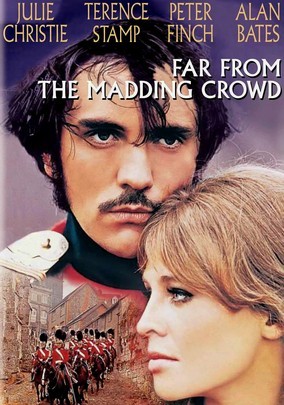
Far from the Madding Crowd-1967

Far from the Madding Crowd-1967

Director John Schlesinger

Starring Julie Christie, Terence Stamp, Alan Bates

Top 250 Films #183

Scott’s Review #315

70111488

Reviewed January 1, 2016

Grade: A-

A sweeping, gorgeous epic made in 1967, Far from the Madding Crowd is pure soap opera (this is not a negative), done very well, featuring a woman with three male suitors and many similarities to another brilliant epic, Gone with the Wind (1939).

The cinematography, score, and writing are excellent, and at close to three hours, it is a lengthy experience.

The film is based on the popular novel written by Thomas Hardy.

The setting is lovely, rural England, the landscape green and lush- mostly farmland, where Bathsheba resides, having recently inherited her Uncle’s enormous estate and is, frankly, overwhelmed with the heavy responsibility required to run it successfully.

Three men appear in one form or another to lend a hand, and each falls madly in love with her- she had her choice of any of them. Throughout the film, each is given a chance to win her heart, and each faces trials and tribulations.

The wealthy neighbor, William Boldwood, is older and insecure. Frank Troy is a bad boy who is a cavalry sergeant, and Gabriel, a former farmer, has lost all of his sheep.

Having only seen this film twice (so far), I notice more and more the similarities to Gone with the Wind. Both are set around the same period (the 1860s), and both films feature powerful, independent, gorgeous female characters with multiple male suitors.

Unlike Gone with the Wind, though, Bathsheba is not self-centered, but wholesome and honest.

Julie Christie was undoubtedly the “it” girl during the time the film was made, having recently starred in Darling (1965) and Doctor Zhivago (1965), among others, and Far from the Madding Crowd is a perfect film for her, focusing on her beauty and earnestness.

She is exceptionally cast.

What I enjoy most about the film is that we do not know which of the men Bathsheba will wind up with…if any of them. Gabriel (Alan Bates) is my personal favorite, but at the beginning of the film, she rebuffs his marriage proposal.

In a heartbreaking scene, one of his dogs goes mad and leads his entire flock of sheep to their death. He is then forced to work as her shepherd, a job beneath him. He is the most likable of the three men, and it is fun to root for their ultimate union. But is he prone to bad luck?

Frank Troy is dashing- a clear lady’s man, yet I did not root for him. A character, whom I found to have strange motivations, impregnated and almost married a young lady named Fanny, only to turn her away based on a misunderstanding, then ultimately changed his mind about Bathsheba.

In one scene, he manipulates the citizens into getting drunk on brandy, which leads to a crisis. He is charismatic and used to getting his way.

Finally, Boldwood is wealthy, sophisticated, and appealing to Bathsheba in a certain way (primary stability). Still, there is also something I find “off” about the character throughout the film- unstable, maybe, needy? I did not find his character likable either.

The overlap and the relationships between the men are also interesting aspects of Far from the Madding Crowd. Will they become friends? Would they kill each other for Bathsheba’s affection?

Many emotions run through all four characters, which makes the film rich in character development.

Grand, sweeping, and beautiful are words that describe Far from the Madding Crowd, a film I enjoy exploring and evaluating with each viewing.

Oscar Nominations: Best Original Music Score

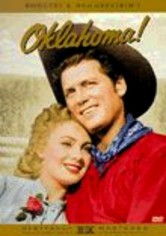
Oklahoma!-1955

Oklahoma! -1955

Director Fred Zinneman

Starring Gordon MacRae, Shirley Jones, Rod Steiger

Top 250 Films #184

Scott’s Review #51

820796

Reviewed June 20, 2014

Grade: A-

Oklahoma! (1955) is one of a slew of memorable Rodgers and Hammerstein musicals to emerge from the 1950s and 1960s Hollywood and to be based on a popular stage version.

The film has an old-west, homespun, comfortable appeal. It is best enjoyed during the summer months.

While Oklahoma! seems a bit too hokey and is not my favorite musical compared to other more sophisticated stalwarts such as My Fair Lady (1964), An American in Paris (1951), or The Sound of Music (1965), it emits a flavor and tasteful appeal of the West.

The plot focuses on a love triangle between a good old boy, Curly, a good girl, Laurey Williams, and brooding Jud, though the real rooting couple is Curly and Laurey.

The trio is supported by many townspeople who gossip about them and help Curly and Laurey admit their true feelings and unite as a couple.

Of course, Jud is the villain, and conflicts come into play throughout the production.

A lesser couple, Will Parker and Ado Annie, also enter each other’s arms amid traditional small-town events such as a lively summer fair.

Stars Gordon MacRae (Curly) and Shirley Jones (Laurey) are very handsome and likable in the lead roles, making for a nice pairing.

Gloria Grahame is as appealing and comical as Ado Annie, especially in her rousing turn bellowing out, “I Can’t Say No,” Charlotte Greenwood is the moral voice of reason as Aunt Eller.

What works best in the film are the settings of Oklahoma, as the viewer experiences such a feel for life in the heartland long ago (though the exteriors were shot in Arizona).

It’s pure fantasy enjoyment with a magical Wizard of Oz feel, though no cyclone or munchkins are anywhere in sight. The film version closely follows the original stage version.

The musical numbers are pretty catchy (“Oh What a Beautiful Morning,” “I Can’t Say No,” and “Oklahoma” are my favorites). The controversial mid-number “Dream Ballet” is provocative, artistically enjoyable, and jarringly different from the rest of the traditional tale.

This jaw-dropping number mirrors a similar spectacle in An American in Paris.

Perhaps Oklahoma! is not entirely on par with other musicals of its day but darned close.

Oscar Nominations: 2 wins-Best Scoring of a Musical Picture (won), Best Sound Recording (won), Best Cinematography, Color, Best Film Editing

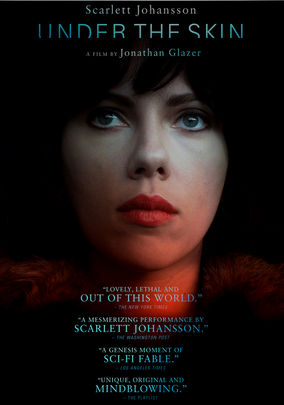
Under the Skin-2013

Under the Skin-2013

Director Jonathan Glazer

Starring Scarlett Johansson

Top 250 Films #185

Scott’s Review #219

70293812

Reviewed January 31, 2015

Grade: A

Under the Skin (2013) is a tough film to review- in a word it is mysterious.

The consensus is that people either love the film or hate it- it is one of those types of films. I love it and it appears on many 2013 top ten film lists.

The visual creativity alone astounds me.

To summarize, Scarlett Johansson plays the female alien presumably sent to Earth to meet young men and lure them, using her feminine wiles, into a pool of dark liquid where they are entrapped and subsequently peeled, their skin used for an unknown reason.

The oddity of the story is as appealing as it is confusing, but somehow fascinating beyond belief.

The film is set in Glasgow, Scotland, during present times. The film has a cold, dark tone to it and the city itself seems bleak.

Johansson, in an unnamed role, takes the clothes of a dead human woman and begins traversing the streets of Glasgow, picking up the men as they walk home or go to the grocery store.

She carefully selects men who will not be missed- men who are loners or family-less.

As the film goes along Johansson becomes more sympathetic. She yearns to become a human and to do what humans do- she goes to a diner and attempts to eat a delicious slice of cake and vomits the contents.

She has a strange man on a motorcycle following her, making sure she completes her assigned tasks. Some of these conclusions are surmised as the lack of dialogue in the film adds to the mystique.

A particularly frightening scene, and my favorite in the film, involves the female alien meeting a swimmer on the beach, who is on holiday in Scotland.

Her flirtation with him as she attempts to accost him is thwarted by a family in peril. A father, mother, and infant son are enjoying a day on the secluded beach.

Suddenly, their dog begins to drown as the waves become too intense. The mother struggles in a panic to swim to the dog and rescue it- the father then does the same.

What happens next is very sad and the female alien and the motorcycle man both leave the screaming infant to die without so much as a second glance.

This poses a few questions- are they, aliens, without emotions for human suffering? Do they not care? Do they revel in the misery? Do they simply not realize what is going on? The viewer will ponder these questions and others long after the film ends.

Later, the audience is confused further as the female alien meets a severely deformed man, and they bond as she drives him to, presumably, his death. She loves his hands and is fascinated by his tenderness towards her. As they talk she shows signs of caring for a human being as they begin a sweet friendship.

Why does she bond with this disfigured man instead of the more handsome men she meets? Does she relate to him due to her growing feelings of being a misfit and desiring to be human?

Visually the film is creative. Spellbinding is the sequence involving the men being submerged in the black fluid as they slowly disappear leaving only the skin. Their transformation is slow, methodical, and imaginative and one relishes what is going on.

The score is reminiscent of Rosemary’s Baby (1968) in its eeriness and visually the film must have been influenced by Stanley Kubrick’s 2001: A Space Odyssey (1968).

Under the Skin (2013) is a fantastic journey through a weird, perplexing, sometimes confusing world, but leaves me thinking and glued to the activity onscreen.

It is an art film that breaks barriers and provokes interest and intrigue not catering to mainstream expectations. It is what art films are meant to do- challenge.

More films should take risks like these.

Independent Spirit Award Nominations: Best International Film

Scrooge-1970

Scrooge-1970

Director Ronald Neame

Starring Albert Finney, Alec Guinness

Top 250 Films #186

Scott’s Review #561

Reviewed December 25, 2016

Grade: A

A classic perfect for watching around the holidays, perhaps accompanied by a roaring fire and a bit of brandy, Scrooge (1970) is a magical, musical experience; the entire family should adore it.

The film is a retelling of Charles Dickens’ 1843 story, A Christmas Carol.

Set in London with spectacular London-style art direction, it is perfect in its depiction of life around the holidays in the historic city, circa the nineteenth century.

To be clear, this is the musical version of the popular tale, not to be confused with the 1935 or the 1951 versions of the story.

The film is not as dark or scary as those films are. Instead, the 1970 Scrooge would be a fantastic companion piece to the 1968 classic Oliver!, both based on Dickens stories and both mixing fantastic musical scores with dramatic elements.

Albert Finney takes center stage in flawless form as the old, cantankerous, miser Ebenezer Scrooge. He plays the character as both an older man and, through flashbacks, a young man (Finney was merely 34 years old at the time of filming).

Guinness, indeed a high-caliber actor, is effective as the ghost of Jacob Marley- Scrooge’s former business partner. Scrooge is a moneylender, mainly to the working class, and is unforgiving in his collection of debts.

Filled with hatred for all things good, especially the Christmas holiday, Scrooge refuses to attend a family Christmas dinner hosted by his nephew, Fred, or to give to any charities. He begrudgingly gives his minion and bookkeeper, Bob Cratchit, Christmas Day off.

Finally left alone on Christmas Eve night, Scrooge is visited by the spirit of Jacob Marley, who tells Scrooge that three ghosts will visit him during the night.

In a chilling scene, Marley takes Scrooge on a journey through the sky, where he is greeted by spirits doomed to traverse the Earth, as Jacob is, with shackles acquired from their life as living beings.

Since they are greedy and wicked, they are doomed in the afterlife, just as Scrooge will be if he does not change his ways.

In an excellent subplot, we get to know the Cratchits, led by their father, Bob, a poor but earnest man. The family has little, but makes the most of what they do have, and appreciates the glorious holiday. They prepare a meager Christmas bird and savor being together as a family.

Their youngest, Tiny Tim, is lame, and he lusts over a lavish train set in the local toy shop. Cratchit epitomizes goodness and richness of character, contrasting with Ebenezer Scrooge.

As Scrooge is visited by the ghosts of Christmas past, present, and Christmas yet to come, he slowly realizes he needs to change his ways before it is too late. The audience is treated to stories of Scrooge’s youth, as we understand what has made him the miserly older man that he is today.

The clear highlight of this film is its musical numbers that will leave even the most tone-deaf humming along in glee. Throughout each sequence, we are treated to various numbers.

My favorite is “Thank You Very Much”, as it first appears during the Ghost of Christmas Yet To Come sequence.

By this time, feeling more sympathetic and appreciative, Scrooge merrily dances and sings along with the townspeople, unaware of the fact that they are celebrating his death and are dancing on his coffin to celebrate the fact that their debts are now free and clear.

This catchy tune is a reprise at the end of the film.

Other cheery numbers are “Father Christmas” and “I Like Life”, which perfectly categorize the film as a merry, holiday one, despite its occasional dark tone. This is necessary to avoid making Scrooge too bleak.

I also adore the vivid set designs as the gorgeous city of London is perfectly recreated to show the festive Christmas holiday. The film is not high-budget, but it makes the most of it by using small yet lavish sets.

Scrooge is a perfect holiday film, with fantastic tunes and a meaningful story that comes across on screen as a celebration of life, never edging toward contrived or oversaturated.

A wonderful holiday feast.

Oscar Nominations: Best Original Song Score, Best Original Song for the Picture-“Thank You Very Much”, Best Costume Design, Best Art Direction

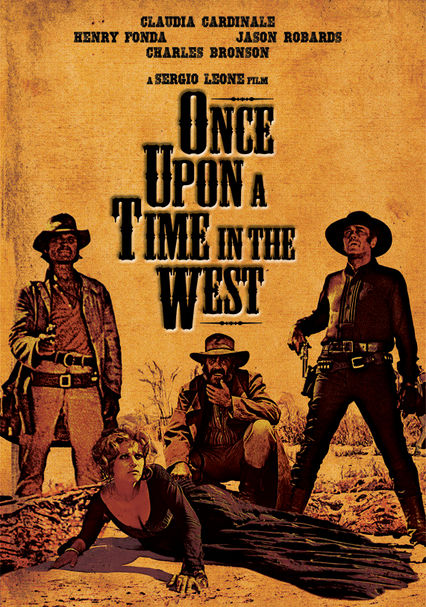
Once Upon a Time in the West-1968

Once Upon a Time in the West-1968

Director Sergio Leone

Starring Henry Fonda, Charles Bronson, Claudia Cardinale

Top 250 Films #187

Scott’s Review #886

Reviewed April 17, 2019

Grade: A

At one time dismissed as either frivolous or cartoon-like, the derogatory genre classification “spaghetti western” was originally played for laughs or featured a comical slant, often with bad lip-syncing.

Many of these films have aged tremendously well, though, and are now more widely appreciated and have become a part of the cinematic canon.

Once Upon a Time in the West (1968) is a lesson in camp art that marinates like a fine steak, drizzling with texture and a good atmosphere across a sprawling two-hour-and-forty-six-minute landscape.

In a great sequence, the film begins with a mysterious harmonica-playing gunman (Charles Bronson), dubbed “Harmonica” for reasons eventually revealed, shooting three men sent to kill him.

Meanwhile, to get his hands on prized railroad land in Sweetwater, disabled railroad baron Morton (Gabriele Ferzetti) hires killers, led by blue-eyed baddie Frank (Henry Fonda), who murders property owner Brett McBain (Frank Wolff) and his family.

The film immediately exudes intensity, with a severe revenge theme.

The story develops further, with romance mixed in a Western style, as McBain’s newly arrived bride, Jill (Claudia Cardinale), inherits the land instead.

Jill is a former prostitute who catches the eye of most of the men she encounters. Both outlaws, Cheyenne (Jason Robards) and Harmonica, take it upon themselves to look after Jill and thwart Frank’s plans to seize her land.

With standard Western flair, they are both attracted to Jill and yearn for her affection while also feeling protective of her.

Not professing to be enamored with the Western genre- the stereotypical Cowboys and Indians and token damsel in distress have their limitations- Once Upon a Time in the West is a feast for the eyes and the ears with cinematography on par with Lawrence of Arabia (1963) and a killer musical score.

While the story may have a traditional backbone, the nuances are astounding. The sweeping mountains of the western United States are heavily featured, and the tension-infused music sets up every thrilling scene with gusto and foreboding.

Hot on the heels of another similarly themed masterpiece, The Good, The Bad, and The Ugly (1966), Leone delivers the goods at every turn, most notably setting up each scene with sizzling elements that emit a clear sense of danger.

The audience knows trouble is about to transpire, but not exactly when the shit will hit the fan. The family death scene is paced astoundingly well as the family merrily goes about preparing a delicious summer meal, unaware that destruction is around the corner.

Sure, the cast is a mix of American and Italian actors with varying degrees of accents, not exactly mirroring the Wild West.

Yes, Jill wears heavy mascara and a hairstyle straight out of the 1960s, and one character has brightly dyed red hair, but these intricacies give the film character rather than turn the production into a disheveled mess.

Forever known for heroic or everyman roles, Fonda plays against type, cast as the central, sadistic villain, and the result is superlative.

Leone’s ability to cast a legendary star in production with little expectations is quite a feat, and Fonda seems to revel in role-playing him dangerously and straight.

With his piercing blue eyes and a gaze sure to make children run away in terror, his brutal villainy is fully realized only at the film’s conclusion.

Dozens of iconic comparisons to Quentin Tarantino’s modern directing style can be drawn. The director undoubtedly watched and studied this film repeatedly, as numerous qualities mirror his movies.

Viewers will delight in drawing these comparisons, including a harmonica reference, a revenge story, and the climactic reveal at the end of the film via flashback, which pulls all the pieces together.

Once Upon a Time in the West (1968) is a quality film that has finally gotten its due. Tremendous and compelling storytelling is combined with flavorful qualities and a dusty atmosphere.

The film is the sum of all its parts, and while at first underappreciated, it has finally risen to the ranks of a high-quality masterpiece.

Influencing many great directors, including Martin Scorsese, George Lucas, and Tarantino, is quite a testament to its staying power.

Juliet Of The Spirits-1965

Juliet Of The Spirits-1965

Director Federico Fellini

Starring Giulietta Masina, Sandra Milo

Top 250 Films #188

Scott’s Review #725
Reviewed February 15, 2018

Grade: A

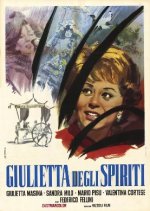
A true Fellini film in every sense and perhaps his most personal film, 1965’s Juliet of the Spirits, is a colorful and masterful experience with fluid art direction and stunning sets and costumes.

As with most of his films, the story and its intricacies are odd and do not always make perfect sense, but the film is meant to be absorbed and felt and exhibits more of a central plot than some of his other works.

Juliet of the Spirits is undoubtedly a must-see for fans of Fellini or any novice who wants an introduction to the great director.

In a compelling tidbit of background information, lead actress Giulietta Masina, wife and muse of director Fellini and sometimes deemed the female Charlie Chaplin, plays a true-to-life character.

In real life, the woman suffered from a philandering husband- Fellini himself!

For this reason alone, the film is fascinating as a true-to-life story, leading the audience to empathize with Giulietta and her life of doldrums and turmoil.

Giulietta Boldrini (Masina) is an affluent woman living in Italy with her successful and dashing husband, Giorgio (Mario Pisu). Despite wealth, two housekeepers, and free time to do whatever she pleases, she is dissatisfied with her life and surroundings.

This occurs mainly after she hears her husband mutter another woman’s name in his sleep. Concerned and intrigued, Giulietta hires investigators to unravel the mystery, which spawns an adventure for her.

Instead of being a cookie-cutter film with a basic plot explained above, in proper Fellini form, the character of Giulietta embarks on a journey into the dreamlike and odd experience, tapping into her repressed desires and innermost thoughts while being exposed to her larger-than-life and sexy neighbor, Suzy (Sandra Milo).

The oversexed Suzy enlightens Giulietta to the joys of her mansion, treehouse, dazzling, weird friends, and bubbling sensuality.

Juliet of the Spirits is a joy to watch and quite a bit more linear than other complex masterpieces, such as the 1960s La Dolce Vita or 1969’s Fellini Satyricon.

The plot is spelled out presently- Giulietta is depressed and anxious for something new and exciting. Her journey into this new life, marked by her wrestling with demons and resistance, makes this film so much fun.

Styles and colors are brilliant and lavishly loud. Take the gaudy and glamorous nest that Suzy calls home. Her palace is both tawdry and sophisticated, with a built-in underground swimming pool where she bathes after lovemaking and velvety red walls and furniture.

Fellini uses gorgeous reds, greens, and blues throughout the film to create dazzle and spectacles with larger-than-life characters.

To further focus on Suzy for a minute, the blonde bombshell frequently visits her very own treehouse, complete with a swing. She flirts with handsome young men who gaze up at the scantily dressed beauty as she tosses her high-heeled shoe down to them in a suggestive manner.

When they come up to the top of the treehouse by way of a mechanical basket, presumably for sex, this is too much for the overwhelmed Giulietta, who returns to the safety of her own home.

But she is excited and scared.

The film belongs to Masina, and we cannot help but wonder if Fellini created Juliet of the Spirits for the actress because of his reported years of cheating. Regardless, Masina plays a confident woman on the outside- insecure on the inside, flawlessly.

With her expressive eyes and a nice smile, Masina enthusiastically embraces the role, making her a perfect fit for a Fellini film.

Juliet of the Spirits mixes several film genres, including fantasy, drama, and light comedy, and contains interesting supporting characters.

Suzy’s seemingly clairvoyant mother is a great side character. Upon meeting Giulietta, she immediately sees that the woman is troubled. Giulietta’s father, whom we meet when she is a little girl appearing in a religious play, is boisterous and spirited.

I was fortunate enough to stay at the Grand Hotel in Rome, a lavish yet strange establishment where Fellini spent many nights as a guest. While watching Juliet of the Spirits, I fantasized that he drew inspiration for this film from the hotel.

The grand red textures, which appear in both the hotel and the Fellini film, could have created a truly inspiring facility.

Stalwart, creative, and masterful director Fellini once again crafts a stylish film that warrants thoughtful consideration after a solid viewing.

Too much analysis, however, will ruin the enchanting experience. Juliet of the Spirits (1965) is best enjoyed as a treat that will mesmerize you in glamorous fashion.

Oscar Nominations: Best Art Direction, Color, Best Costume Design, Color
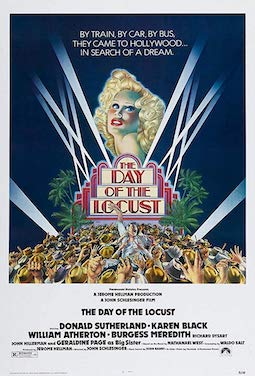
The Day of the Locust-1975

The Day of the Locust-1975

Director John Schlesinger

Starring William Atherton, Karen Black, Donald Sutherland

Top 250 Films #189

Scott’s Review #1,460

Reviewed January 16, 2025

Grade: A

I love films set in Los Angeles, especially those dealing with Hollywood and/or the dark underbelly of the City of Angels. With its lights and allure, there is a murky side laden with drama, jealousy, and loneliness.

John Schlesinger’s dark period piece The Day of the Locust (1975) examines the bleak lives of several aspiring people in 1930s Hollywood, just before World War II.

The prominent themes are alienation and desperation, whose aspirations of success do not come true, emphasizing the sad saying, ‘The road to Hollywood is paved with broken dreams.’

It’s a brilliant adaptation by screenwriter Waldo Salt, based on Nathanael West’s 1939 novel of the same title. The film horrifically depicts the Hollywood film industry in all its artificial glitz and glamour.

In 1930s Los Angeles, sunny Hollywood shined like a beacon to helpless people across the city who were looking for fame, fortune, or a quick buck.

In one apartment block, blond bombshell Faye Greener (Black) aspires to be an actress, artist Tod Hackett (Atherton) seeks legitimacy, and a frightening child actor named Adore (Jackie Earle Haley) performs a grotesque homage to Mae West.

Introverted accountant Homer Simpson (Donald Sutherland) watches as society collapses under greed and ambition.

From a romantic standpoint, Homer and Tod vie for Faye’s affection in a tragic triangle fraught with jealousy and competition.

Schlesinger knows his way around dark, influential, intelligent films. He created stalwarts such as Midnight Cowboy (1969) and Sunday Bloody Sunday (1975), both unconventional and controversial, the former being the only film ever to win Best Picture and garnering an X rating.

The Day of the Locust is no different.

There is scarcely a likable character in the cast, but I ascertain that Tod is the most stable and trustworthy in the rogues gallery.

He appears grounded and the voice of reason, though he mocks Homer later on at a party, so he’s not exactly Prince Charming. He arrives to work as an art department production illustrator at a major film studio and rents an apartment in the same community as the other characters.

Gently, he places a lovely flower in a crack in the wall.

Tod is smitten with Faye, a callous vixen who beds not one, not two, not three, but four men and makes no bones about it. Not exactly a feminist, she is more concerned with rising to move star status at any cost.

We meet Faye as she works as an extra in a lavish production. She smacks gum and then snaps into character as a royal sophisticate, revealing a tacky and tawdry presence to the audience.

Later, during the grand finale, she tries to glimpse the big stars arriving in limos at a premiere event at Grauman’s Chinese Theatre, one in a crowd of thousands.

She’s a lost soul, filled with self-deluded importance, desperately wanting the spotlight in whatever form she can.

Her father is played by Burgess Meredith, who nearly steals the show as an elderly, washed-up ex-vaudevillian.

Despite the outstanding performances, the production design and cinematography are flawless and seamlessly portray what life was like in Hollywood in the early days.

My favorite sequences are in the movie sets filled with pizazz, glamour, and intricacies.

The most significant scene, though, occurs at the star-studded event, a premiere of The Buccaneer, when all hell breaks loose, and a tragic death occurs, leading to subsequent bloodshed and further death and destruction.

It’s a spectacle, supposed to be the movie event of the year, with champagne and the ultimate celebration of film, but the stark nature of one’s rage overtakes the beautiful moment.

During this pivotal scene, we see the darkness of humanity counterbalanced against the glitz and glamour of movie stars.

Schlesinger masterfully takes us through this journey of human depravity with flawless ease.

The Day of the Locust (1975) is a brilliant film.

Oscar Nominations: Best Supporting Actor-Burgess Meredith, Best Cinematography

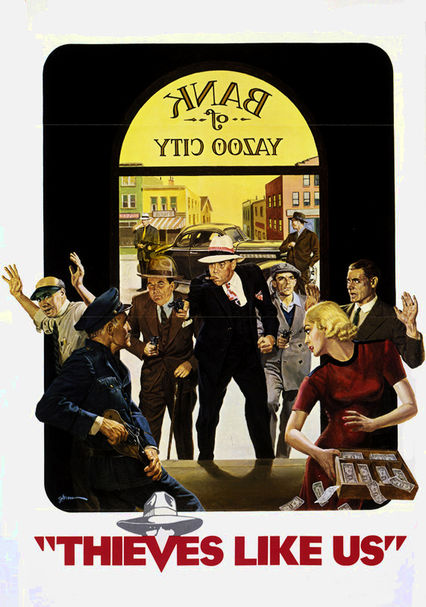
Thieves Like Us-1974

Thieves Like Us-1974

Director Robert Altman

Starring Keith Carradine, Shelley Duvall

Top 250 Films #190

Scott’s Review #1,071

Reviewed October 16, 2020

Grade: A

The first time I saw Thieves Like Us (1974) I was not blown away. I have forgotten what my original gripe was, but my lackluster star rating on Netflix years ago is confirmation of such.

All is now forgiven and like a fine wine, this film gets better and better with each viewing.

It’s a gangster film, but a heart-wrenching story containing one of the sweetest romances in cinema history.

Based on the novel of the same name by Edward Anderson, director Robert Altman, famous for allowing his actors to ad-lib their lines to their heart’s content and peppering his films with overlapping, “real-life” dialogue, limits this technique this time around.

His stars, Keith Carradine and Shelley Duvall, regular fixtures in his films, are the main attraction, but supporting players like Louise Fletcher, Bert Remsen, and John Schuck give tremendous performances.

Set in the 1930s United States, Deep South Mississippi, the time-period and location are key elements to the success of the film.

Having never set foot in this geographical area, I nonetheless found myself escaping there and ruminating about what it would have been like to live there in the Great Depression era.

The many outdoor sequences with trees, forests, country roads, and home-cooked meals provide a luminous atmosphere and texture.

Small-town living never felt so good and cozy.

Wisely, Altman steers clear of any racial overtones or dialogue within the film. The film is not about that.

There appear many black characters mostly in the background, townspeople scenes, or as prisoners which add flavor. But they are represented as living among other folks without any aggression or stereotypes. They simply are and it feels like the South.

Altman crafts an experience of understated, good storytelling, proving a quality film can be quiet and proud, not needing explosive bells and whistles to prove showy. The dialogue crackles on its own and is smart.

The plot is compelling. Bowie (Carradine) is an escaped convict who embarks on a crime spree with fellow former prisoners Chicamaw (John Schuck) and T-Dub (Bert Remsen). While in hiding between bank robberies, Bowie meets a young woman named Keechie (Duvall), and the two quickly fall in love.

A life of crime doesn’t sit well with Keechie, however, so she and Bowie try to settle down, but the law is determined to bring him to justice.

The fun is in watching romance blossom between Bowie and Keechie. Despite Bowie being a criminal, his character contains sweetness and purity that match like a glove with the whimsical truth and simplicity of Keechie.

Throughout the length of the film, I compared the characters to the legendary icons, Bonnie and Clyde, from the self-titled cinema masterpiece.

They are similar but different. The pair sit quietly on the front porch talking about life and the future, optimistically planning their lives together unaware of what fate has in store for them. Their innocence and their goofy humor made me fall in love with them.

The relationship between the three men is apt. They have each other’s backs and are loyal to a fault. The men are convicts and cause death and injury, but there is a humanity that Altman gives to each character.

We do not think of them as derelicts.

When Bowie poses as a sheriff to break Chickamaw from prison, we root for the escape and not for the warden. Bowie kills the warden, shocking Chickamaw. Even with dispute comes caring between the men.

It does take patience to get into this film, probably I did not give the film its due on my first watch. Once the film ended I was left with a feeling of having experienced something of value and an artistic cinematic visionary story.

The homespun characters eating a feast of meat and southern biscuits and discussing the day’s events are rich and atmospheric.

Carradine and Duvall would reunite a year later in another Altman masterpiece, Nashville (1975) playing vastly different characters, both unlikable, so a recommendation is to watch both films back to back to appreciate the dizzying morphed characterization.

Thieves Like Us (1974) is no mere opening act for Nashville but of a different ilk.

The film is a treasure.

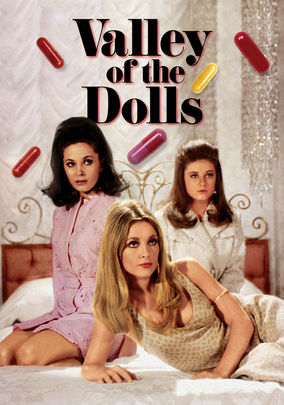
Valley of the Dolls-1967

Valley of the Dolls-1967

Director Mark Robson

Starring Barbara Parkins, Patty Duke, Sharon Tate

Top 250 Films #191

Scott’s Review #657

Reviewed July 3, 2017

Grade: A-

Based on the best-selling novel written by Jacqueline Susann a year earlier, the film version of Valley of the Dolls (1967) has become a cult classic in the years following release- it has earned the dubious description of “it’s so bad it’s good”.

The film dives headfirst into the soapy, dramatic world of Hollywood and Broadway, and the trials and tribulations three young women encounter as they try to “make it” in the backstabbing business.

The film teeters on camp, but it is a favorite of mine, as I love the theme of aspiring stars in La La Land. The set design and groovy styles of the late 1960s are also noteworthy.

Bored with her life in sleepy New England, Anne Welles decides to move to the bright lights of Manhattan, seeking fame, fortune, and excitement.

After she lands a secretarial job for an entertainment lawyer, who handles temperamental Broadway star Helen Lawson (Susan Hayward), Anne meets and befriends two other struggling young actresses.

Neely O’Hara (Patty Duke) is a vivacious, gifted singer, and Jennifer North (Sharon Tate) is a gorgeous blonde with limited talent but looks to die for.

The three women wrestle with the ups and downs of show business as they each achieve various levels of success and failure.

The film centers on both the love and the losses of each woman, and at times it’s rather soap-opera-like, especially the bitchy feud between Neely and Helen, but it’s a fun, entertaining experience.

Various men come in and out of the trio’s lives. The “dolls” referenced in the title are a nickname for pills that the girls readily pop, and alcohol is also used in the film.

One interesting aspect of the film I like is that the three women are very different from one another.

Anne is the most sensible of the three and arguably the most intelligent. Neely is wild, reckless, and constantly battles drugs and alcohol, yet she is both the most successful and the most talented. Jennifer is gorgeous but lacks the talent or the vigor to succeed in Hollywood.

Two of the three women do not have happy endings in their stories.

Some are admittedly a bit uneven, especially the performance of Duke as Neely. She plays the role wildly over the top, especially during her shrieking, drug-saddled tirades, but rather than find the performance irritating (some indeed might), I find the role loud, bombastic, yet sympathetic.

We root for Neely because she has talent despite her shortcomings, and she is a likable character to me, as I want her to find happiness.

Also playing up the camp is Hayward, as she fills Helen with fire, spite, and gusto, doing everything to make the audience view her as a queen bitch. Helen was scheduled to be played by the illustrious star Judy Garland (she would have been perfect!), but was reportedly fired for showing up for work drunk.

An enjoyable aspect of Valley of the Dolls is the humor, though sadly, the laughs are not always intentional. The finale involves a catfight between Neely and Helen in the classy ladies’ room of a famed theater.

With sheer delight, Neely yanks off Helen’s bright orange wig to reveal her natural head of hair. In campy fashion, Helen’s real hair is excellent- more shocking would have been if she were bald or had thinning hair, but her hair is bleached blonde and full.

In melodramatic fashion, Helen waltzes out of the theater sans wig.

Valley of the Dolls is a late-night treat that can be enjoyed and not taken overly seriously- the film differs vastly from the actual novel, and even the time (the 1960s versus the 1940s through the 1960s) is changed.

The film was followed by a much campier and satirical film, Beyond the Valley of the Dolls, made in 1970 and directed by Russ Meyer.

Oscar Nominations: Best Original Song Score or Adaptation Score

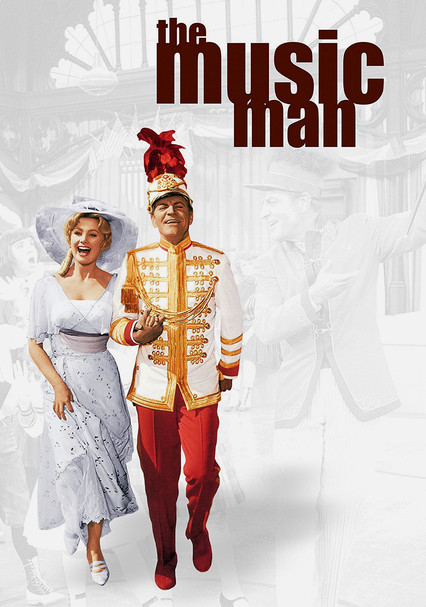
The Music Man-1962

The Music Man-1962

Director Morton DaCosta

Starring Robert Preston, Shirley Jones

Top 250 Films #192

Scott’s Review #929

Reviewed August 9, 2019

Grade: A

The big-screen offering of The Music Man (1962) is based on the 1957 Broadway musical of the same name, written by Meredith Wilson, and one of the most upbeat Hollywood renditions of stage productions.

Featuring talented stars like Robert Preston and Shirley Jones, the former appearing in the stage version, the film was one of the biggest hits of the year to be watched and re-watched whenever the mood strikes for sing-along tunes and a cheery story told from a purely Americana viewpoint.

In the summer of 1912, deceitful traveling salesman Harold Hill (Preston) arrives in River City, Iowa, intent on swindling the town folks out of their money. Masquerading as a traveling music instructor, he plans to trick parents into enrolling their kids in a marching band and selling the instruments.

He uses scare tactics to incorporate fear into the gullible parents and romantically sets his sights on the local librarian, Marian (Jones). Marian, distrustful of men, slowly falls in love with Harold, and his plot is eventually discovered, resulting in a witch hunt.

Of the plethora of musical releases bombarding Hollywood throughout the 1950s and 1960s, The Music Man arguably possesses the catchiest tunes and spirit.

It is impossible not to hum along to or tap one’s foot to the songs, which stick in the viewer’s heads for days after watching the addictive production.

My favorites are “Seventy-Six Trombones”, “Gary, Indiana”, and “Pick-a-little, Talk-a-little” as each has distinctive melodies, rhymes, and rapid-fire dialogue.

The soundtrack always pleasures the gloomiest days and speaks volumes about the legs the musical contains.

Besides the tunes, The Music Man’s best aspect is its romantic storyline. Preston and Jones’s chemistry is complete, and they are perfectly cast.

The studio wanted “a big name,” so Preston nearly didn’t make the cut, which would have been a shame. By infusing life and humor into a character who could be perceived as dastardly, he tips the likability scale and makes the character the hero.

Jones is a treasured singer and is just as good as Preston, playing the mousy and serious Marian. Her “slice of the Midwest” innocence and blonde hair portray her as corn-bred, but the actress makes the character work for her. Together, the duo is sensational.

The best sequence in which the pair appears is the remarkable “Marian the Librarian,” a sneaky and naughty number—the most adult rendition. Their mutual attraction becomes evident, and the film brings the audience to its knees at this moment.

The musical is purely a slice of Americana, which may limit its popularity across oceans, but it works and feels authentic. This is no surprise, given that composer Willson hails from the Midwest.

With an uplifting message and a nostalgic ode to a country once filled with promise and innocence, the film is arguably even more critical in today’s divisive environment.

The piece wisely does not celebrate small-town cliches but instead offers a wholesomeness. The townsfolk sing and dance together and celebrate life as a neighborly bunch; this nuance is refreshing.

The supporting cast adds flavor and comedy to the production. A very young child actor, soon-to-be-famous director Ron Howard, offers a heartfelt performance of “Gary, Indiana.”

Character actors Paul Ford and Hermione Gingold offer delightful hysterics as Mayor Shinn and his wife, Eulalie.

Oklahoma (1955) and Picnic (1955) are thematically similar, at least from geographical and time-period perspectives, but distant relatives in mood and drama. All three could be watched in one marathon weekend.

The Music Man (1962) provides the most warmth and, at its conclusion, will fill even the most stone-faced individuals with beaming smiles.

The film version is a perfect example of a stage musical successfully brought to the silver screen with energy and gorgeous singing and dancing.

Oscar Nominations: 1 win-Best Picture, Best Scoring of Music-Adaptation or Treatment (won), Best Sound, Best Art Direction, Color, Best Costume Design, Color, Best Film Editing

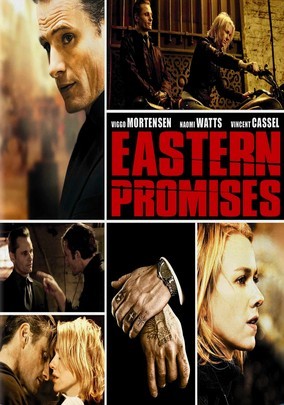
Eastern Promises-2007

Eastern Promises-2007

Director David Cronenberg

Starring Viggo Mortensen, Naomi Watts

Top 250 Films #193

Scott’s Review #205

70059994

Reviewed December 15, 2014

Grade: B+

Eastern Promises is a 2007 Russian mafia thriller directed by David Cronenberg (The Fly, A History of Violence) that stars Viggo Mortensen, Naomi Watts, and Vincent Cassel.

The film is an uneven experience, seemingly meshing two stories together- one fascinating, one unnecessary.

Watts plays a British-Russian midwife named Anna, who works at a London hospital. She attempts to find the family of Tatiana, a fourteen-year-old girl who dies during childbirth leaving a diary written in Russian along with her newborn.

Anna struggles to unravel the mystery surrounding the girl which ends up involving the mafia.

Mortensen plays Nikolai, the mysterious chauffeur to crime lord Semyon, and Cassel plays Kirill, the disturbed, alcoholic son of Semyon.

The plot segues into a story of a somewhat relationship between Nikolai and Anna that is not quite romantic and also a much more intriguing relationship between Nikolai and Kirill as a brotherhood of sorts develops between them.

This relationship is complex- Kirill wants Nikolai to prove he is a straight male by having sex with one of several female prisoners he and his father keep as part of a sex trafficking group.

During this scene, and a few others, the two men seem close, almost too close, given the sexual nature of what is happening during the scene, so this relationship is left vague, but intriguing nonetheless.

The latter story holds more interest to me, whereas the former seems contrived and rather uninteresting. Was the intention of the film to imply a romantic interest between Anna and Nikolai?

I found zero chemistry between the two and wondered if the audience was supposed to root for them as a couple or not.

The four principal characters in Eastern Promises are interesting to unravel. I found the characters of Nikolai and Kirill complex and interesting.

Not so much with the character of Anna. Why did I not find her so compelling? Besides a skimmed over the mention of how she lost a baby what vested interest did she have in mixing with the Russian mafia and putting her mother and uncle in harm’s way?

Sure, anyone would want to find an orphaned baby’s family, but why not just call the police? This seems like a large plot hole. Conversely, Nikolai is a fascinating, layered character played wonderfully by Mortensen.

What are his true motivations? Is he a good guy or a bad guy? His attempts at being accepted by Semyon and the family to join the mob family make him seem dangerous- but his kindness towards one of the Ukrainian prostitutes is sweet.

Kirill is a despicable character, but what is his sexuality? Does that make him get so drunk and angry? How does one explain his conflict over the baby shifting his character too sympathetic?

Ultimately, Nikolai and Kirill are complicated- Anna and Semyon are more one-note.

I would have preferred the story solely revolve around the mafia family and the Godfather-type scenes, specifically the two throat-slashing scenes violently done, and perhaps leave out Watts’s character and story altogether.

A gritty scene that takes place in a steam room pits Nikolai against two rival mafia men. The scene is long and intense. Mortensen performs the scene completely naked, which adds to the rawness and the brutality of the fight.

It is one of the most masculine scenes I can remember watching.

At times compelling, but riddled with plot holes and requiring some suspension of disbelief, Eastern Promises (2007) is an entertaining Russian mafia film that remains a decent watch.

Oscar Nominations: Best Actor-Viggo Mortensen

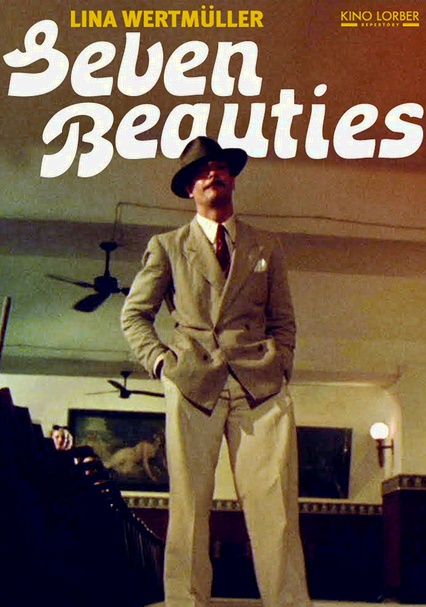
Seven Beauties-1975

Seven Beauties-1975

Director Lina Wertmüller

Starring Giancarlo Giannini, Shirley Stoler, Fernando Rey

Top 250 Films #194

Scott’s Review #1,364

Reviewed June 3, 2023

Grade: A

Italian Director Lina Wertmüller was the first female ever nominated for the coveted Best Director Oscar. She did not win the award but the nomination is a bold victory for women artists in 1975 and a testament to her visionary approach to filmmaking.

With Seven Beauties (1975) she tackles the painful subject of concentration camps during World War II with artistic merit and a powerful message of survival by her lead character, Pasqualino, brilliantly played by Giancarlo Giannini.

Through Pasqualino’s backstory, Wertmüller provides comic relief and a sizzling Italian style. This counterbalances the terrifying German elements with cultural and sometimes humorous sequences set in Italy. Pasqualino’s family hijinks are explored.

Back in 1930s Italy, Pasqualino is a struggling low-level Sicilian thug who accidentally kills a man who disgraced his unattractive and vulnerable sister Concettina (Elena Fiore). He escapes imprisonment by joining the military but goes AWOL when things get too severe.

Eventually, Pasqualino is captured and sent to a concentration camp where he vows to do anything to survive. He attempts to seduce an evil and obese female German camp commander (Shirley Stoler) but this comes at a deadly price.

I’ll argue that Stoler should have received a Best Supporting Actress Oscar nomination. Her callous nature only deepens as her character is peeled back and Pasqualino’s hope that she has a glimmer of kindness in her is dashed. She is one of the best screen villains of all time.

Seven Beauties is an art film with gorgeous visuals especially potent in the concentration camp and surrounding forest. The greyness of the camp is perfectly opposite the pizazz of Italy.

As Pasqualino and comrade Francesco wander around the looming German forest the camera points upwards to the sky in a blurry and dizzying form.

At the start of the film, black and white footage of World War II encompasses the screen, and slivers of the tyrants Mussolini and Hitler are displayed.

If not for the macabre dark humor we see in Italy, Seven Beauties might be too much of a downer. Pasqualino’s seven sisters are unattractive and one is living the life of a struggling stripper and prostitute. He also manages to cleverly chop a body to bits and stuff the body parts into suitcases.

Back in Germany, the scenes between Pasqualino and the female commander are frightening. He is forced to provide sexual pleasures in exchange for his survival but when she callously orders him to select six mates to be executed her viciousness is apparent.

Giannini is a fabulous actor and heartbreakingly reveals Pasqualino’s vulnerabilities as the film plows forward. His good-natured innocence is lost forever and the man he winds up as is darker.

But the caveat is that the character is never purely good but rather layered in complexities. Always, Giannini emotes deep expressionism through his powerful green eyes.

Similarities between Seven Beauties and Fellini’s Amarcord (1973) or Fellini’s Roma (1972) are evident. Had I not known Wertmüller directed the film I would have thought Fellini had. This is more so because of the Italy sequences featuring a bevy of zany, homely characters which adds flavor and humor.

Fernando Rey, well-known for playing the villain in The French Connection (1971) appears as a doomed prisoner who ends up in a large tub of shit rather than suffer a forced execution.

The executions are sob-inducing as lines and lines of prisoners being callously shot and killed are tough to watch. But, the core of the film is about the viciousness of humanity and this must never be forgotten.

Wertmüller delivers a masterpiece that I’ve now seen only twice. I plan to watch this film again and again for the content to sink in more.

The comic elements of Seven Beauties (1975) never diminish or lighten the horror of the Nazi’s actions since they are not done in parallel. The back and forth between periods only add value and balance to a powerful subject matter.

Oscar Nominations: Best Foreign Language Film, Best Director-Lina Wertmüller, Best Actor-Giancarlo Giannini, Best Screenplay-Written Directly for the Screen

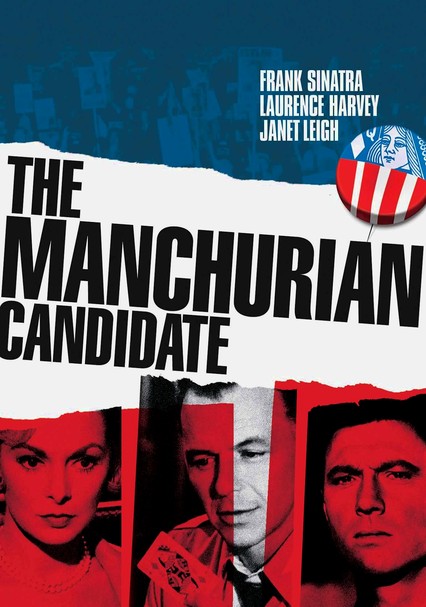
The Manchurian Candidate-1962

The Manchurian Candidate-1962

Director John Frankenheimer

Starring Frank Sinatra, Laurence Harvey

Top 250 Films #195

Scott’s Review #852

Reviewed January 3, 2019

Grade: A

The Manchurian Candidate (1962) is an enthralling film that perfectly captures the political landscape of the time and continues to be relevant in present-day politics. Taut mysterious and filled with great twists and turns, the film flows nicely and climaxes with a shocking crescendo.

With compelling performances by all and a brilliant musical score, the film fires on all cylinders and can be watched and enjoyed repeatedly.

Events began in 1952 during the bloody Korean War. A United States platoon consisting of several men is accosted by the Soviets and sent to communist China for experimentation.

Three days later, the men return as if nothing happened, and Sergeant Raymond Shaw (Laurence Harvey) is proclaimed a hero and awarded the Medal of Honor for saving the men’s lives. When the war ended, the men returned to the United States to resume their everyday lives.

Years later, Captain Bennett Marco (Frank Sinatra) suffers from recurring nightmares in which Shaw murders two missing soldiers in front of a panel in a bizarre brainwashing demonstration. When another soldier in the platoon has the same nightmares, Army Intelligence begins an investigation.

Further complicating the plot is Raymond’s ambitious mother, Eleanor Iselin (Angela Lansbury), and her attempt to use any means necessary to guide her husband, Senator Iselin (James Gregory), to further power.

The Manchurian Candidate is a film that requires attention to appreciate and understand.

The plot is highly complex, but that is a testament to the film’s composition and hardly a complaint. The viewer must stay on course to appreciate the intricate details.

Director John Frankenheimer is fantastic at adding unique dramatic effects and imaginative film-making. A prime example is the brainwashing sequence, as dialogue is interspersed between what the soldiers think is happening (a peaceful grandmotherly horticulture demonstration) and reality (a dastardly experiment involving murder and programming).

Despite Sinatra being billed as the lead in the film, the most treasured props go to Lansbury as Eleanor and Harvey as Shaw. Raymond is the most developed character, and he has several sides. He is primarily a loner who appears cold and harsh due to his being programmed to assassinate.

A sequence involving the love of his life, Jocelyn (Leslie Parrish), and a romantic summer they share is beautiful and innocent, contrasting with the dismal and manufactured “new Raymond.”

Lansbury has never been cast in a more challenging role. Eleanor is determined to stop at nothing to ensure her husband will reach the presidency and connives and cheats her way to the top. Still, the part is written as such to avoid making her a complete one-note character despite her ways.

In an eerie scene close to the finale, she vows payback for what has been done to Raymond and then plants an incestuous kiss on his lips. An odd and disturbing moment, the scene also justifies in her mind the lengths she has gone to get what she wants.

The musical score is lovely and contradicts the dour backstabbing and espionage throughout. Romantic and sweet melodies abound, and classic hymns like The Twelve Days of Christmas and The Star-Spangled Banner are included in the film.

As a result, The Manchurian Candidate’s score feels multi-faceted, patriotic, and artistic with enchanting results.

The Manchurian Candidate (1962) is a stellar film with a perfect blend of thrills, deceit, politics, and creative filmmaking to make it a bold classic. The final sequence is jaw-dropping in its finality and brutality.

Remade in 2004 with a great cast yet a poor script, avoid that one at all costs and enjoy the power and lasting effects of the original.

Oscar Nominations: Best Supporting Actress-Angela Lansbury, Best Film Editing

The Silent Partner-1978

The Silent Partner-1978

Director Daryl Duke

Starring Elliott Gould, Christopher Plummer

Top 250 Films #196

Scott’s Review #1,120

Reviewed March 10, 2021

Grade: A-

The Silent Partner (1978) is an exceptionally thrilling film that is relatively unknown to most moviegoers but is well-regarded by cinema lovers, especially fans of 1970s relics.

Watching the film in tandem with Brian DePalma’s clever and steamy Dressed to Kill (1980) one will immediately notice some similarities and will be able to draw comparisons.

Might have DePalma even patterned his film after The Silent Partner?

Even the finest of directors borrow snippets of greatness from other directors. That’s the way it works.

It’s a shame so few realize that the film even exists.

Starring Elliott Gould and Christopher Plummer, admittedly the late 1970s was not the best-known time for Plummer but saw Gould in his heyday.

The film also is peppered with notable sequences reminiscent of Frances Ford Coppola’s 1974 masterpiece, The Conversation.

I can best describe the film as a Canadian heist film but this might imply that it’s cookie-cutter or generic in some way. It’s not. It’s not even a “guy film”- it’s way more cerebral than that.

There is a style and momentum in The Silent Partner that is individual with unique and unexpected trimmings along the way. The cat-and-mouse dynamic adds trickery and a murky nature that makes the film work.

Daryl Duke, unfamiliar to me and primarily known for television work, is at the helm as director, crafting from a screenplay written by Curtis Hanson.

Hanson adapted his work from a Danish novel and should be familiar to movie fans for his participation in the thriller The Hand That Rocks the Cradle (1992) and the neo-crime thriller L.A. Confidential (1997).

Miles Cullen (Elliott Gould) plods along during the holidays at his bank teller job at the local mall. It’s Christmastime and Miles is down because he attempted to ask out his co-worker Julie Carver (Susannah York), who is more interested in dating their married boss- for now!

After discovering a secret plot by the mall Santa Claus (Christopher Plummer)to rob the bank at which he works, Miles cunningly hides a large portion of the cash in his safe deposit box.

After the robbery, it is discovered that Santa is a deranged master criminal named Harry Reikle.  He discovers that he’s been duped by Miles and puts horrific pressure on Cullen to hand over the money.

I adore the added romantic angle that blossoms amid the cat-and-mouse antics between Miles and Harry. No sooner than Julie softens toward Miles a mysterious and gorgeous woman enters the scene claiming to know Miles’s father.

Elaine (Celine Lomez) is flirtatious and immediately wants to bed Miles but what is she up to?

From a character perspective, Miles and Harry are great studies. Related to the aforementioned films, Miles exhibits qualities similar to Harry Call in the brilliant The Conversation. Suspicious, paranoid, and intelligent, he is the perfect counterpart to Harry.

Michael Caine played a transvestite in Dressed to Kill and Harry’s mascara, long nails, and fishnet top made me feel he possessed those qualities though the film never confirms this.

Psychologically speaking, Harry is disturbed based on his treatment and the perceived hatred he expresses towards women. He picks up and beats a young prostitute unconscious.

Is there a gay vibe? Most certainly especially when Harry looks longingly at Miles during more than one scene as he watches Miles in his apartment and proclaims, “You know we are partners, right?”

Plummer is great and I can’t recall seeing any role of his being so villainous and he plays it superbly. A far cry from the musical patriarch in The Sound of Music (1965).

The Silent Partner contains one of the most gruesome murder scenes I’ve witnessed in cinema. It involves decapitation and a fish tank and is so shocking and unexpected that viewers may audibly gasp during the scene.

Nearly rivaling this is the great finale and a justified death on the mall escalator. It is fun to revisit the time when malls were flocked to, especially during the Christmas holidays.

The Santas, decorations, big crowds, and music made The Silent Partner walk down memory lane.

A great and sadly lost gem, The Silent Partner (1978) is a film for movie lovers to check out, embrace, and fall in love with. A perfect watch would be around the Christmas holidays.

Hopefully, with due word of mouth, this film will be rediscovered.

The Stepford Wives-1975

The Stepford Wives-1975

Director Bryan Forbes

Starring Katharine Ross, Paula Prentiss

Top 250 Films #197

Top 40 Horror Films #26

Scott’s Review #1,395

Reviewed September 4, 2023

Grade: A

The Stepford Wives (1975) is a film that has deservedly achieved cult status over the years and its title became iconic in meaning.

Everyone knows what a ‘Stepford wife’ is and what it depicts. Usually, a tall, leggy, brainless rich white woman from Connecticut is a sufficient enough image.

The film is a personal treasure to me since I am a resident of said state. The fact that ‘Stepford’ sounds like ‘Stamford’ where I live is uncanny and ironic. The film was shot in various areas of Connecticut so it’s fun to see the towns, grocery stores, and houses in the mid-1970s.

It also resonates quite well with my husband who lived in Manhattan for many years and then transplanted to nearby Connecticut just like the main characters do.

Besides my fondness, it’s a damned good thriller. It paces nicely and takes its time getting to the stunning conclusion.

The film was written by William Goldman (All the Presidents Men-1976), who based his screenplay on Ira Levin’s 1972 novel of the same name. Levin also wrote Rosemary’s Baby which was turned into a 1968 film.

The Stepford Wives and Rosemary’s Baby would make an outstanding double feature.

Joanna Eberhart (Katharine Ross) moves to the quiet town of Stepford, Connecticut, with her husband Walter (Peter Masterson) and children. The town seems idyllic and maybe just a little too perfect for her tastes.

Along with best friend and fellow Stepford resident Bobby (Paula Prentiss), the women notice that the other housewives are not quite ‘normal’. They obsess over housework and are willingly subservient to their husbands.

Joanna and Bobby are determined to solve the mystery especially when they realize there used to be a large women’s liberation group in Stepford.

In a lesser film, the final product could dive headfirst into campy horror. A tepid remake made in 2004 and starring Nicole Kidman did. But the original version stays the course and provides thrills and psychological facets.

The audience knows pretty soon that the men have a secret club that women are not permitted to attend. Named the Men’s Association, a major clue surfaces when Walter invites the men over to his house and they secretly look Joanna up and down.

What we don’t know is the how. Joanna, Bobby, and another neighbor Charmaine Wimperis (brilliantly played by Tina Louise) are the only ‘normal’ wives. Realizing which one of them is the next intended victim is part of the fun.

The women’s portraits are drawn by one of the men and we learn that the previous women have ‘turned’ after going away on a romantic weekend with their husbands.

What’s inside the creepy mansion that holds the Men’s Association meetings? Will Joanna sneak inside? What will happen next?

Delicious sequences occur that reveal that housewives are robots. After a minor fender bender in the local shopping center parking lot, Carol (Nanette Newman) begins acting strangely at an outdoor cocktail party. She repeatedly frets and repeats the same line over and over again.

Her husband blames her odd behavior on alcohol but the audience knows better.

Unforgettable is the stellar grocery store finale when the women are dressed to the nines and robotically shuffle through the aisles. They absent-mindedly take items off the shelves and place them into their carts while acknowledging each other with a pleasant ‘Hello, Charmaine”, or “Hello, Carol”.

My favorite scene is close to the finale between Bobby and Joanna. Horrified at Bobby’s transition to an uptight, well-dressed housewife obsessed with a clean kitchen, Joanna impulsively plunges a butcher knife into Bobby’s midsection.

With no bloodshed proving Bobby is a robot, Bobby calmly scolds Joanna by saying over and over again, “Now why would you do a thing like that?”

The scene is creepy, startling, and powerful given the close relationship between the women.

These scenes and others make The Stepford Wives (1975) part of pop culture and a reason I can watch the film several times over.

Featuring a cast of good actors led by Ross who successfully provides Joanna with both likability and sensibility the film is never over the top or ridiculous.

Diabolique-1955

Diabolique-1955

Director Henri-Georges Clouzot

Starring Simone Signoret, Vera Clouzot, Paul Meuisse

Top 250 Films #198

Top 40 Horror Films #27

Scott’s Review #878

Reviewed March 16, 2019

Grade: A

Diabolique (1955) is a masterful French thriller as compelling as frightening. It will have an insurmountable influence on future generations.

Shamefully remade and Americanized in 1996, starring Sharon Stone, a waste of time if you ask me, the original is the one to discover.

The film perfectly blends psychological intrigue, never-ending suspense, and even a good mix of horror that Hitchcock would find impressive (more about him later). Its pacing and frequent twists and turns make it brilliant.

Directed by Henri-Georges Clouzot, Les Diaboliques is set in a crumbling boarding school in Paris. Sadistic headmaster Michel Delassalle (Paul Meuisse) runs a tight ship but works for his Venezuelan wife, Christina (Vera Clouzot), who owns the school.

Michel is immersed in a torrid affair with schoolteacher Nicole Horner (Simone Signoret) and regularly abuses both women as well as his students. The two women embark on a plot to kill Michel, but when they succeed in their plan, Michel’s body goes missing.

The women panic.

In a few fun trivia tidbits, director Clouzot optioned the screenplay rights right after finishing Wages of Fear (1953), preventing Hitchcock from making the film. This movie helped inspire Hitchcock’s Psycho (1960).

Robert Bloch himself, the author of the novel version of Psycho, has stated in an interview that his all-time favorite horror film is Diabolique. If the film displays nuances incorporated in Psycho, this is undoubtedly the reason.

Clouzot also directs his wife, Vera, in the prominent role of Christina.

Hitchcock could have made the brilliance since the entire experience has his stamp and influence even though his best works lay ahead of him in 1955.

Still, from the Gothic mood to the “can’t believe your eyes” twisted, blood-curdling ending, the director immediately comes to mind every time I watch the film. The “shock” ending only exceeds expectations with a fantastic delivery.

The film takes an unusual stance on the dynamic between the two women, Christina and Nicole. Rather than take a traditional route and make the women rivals for the man’s affections, Clouzot makes the pair co-conspirators.

This only deepens their relationship as events unfold and take a darker and more dire turn.

They rely on each other as teammates rather than despise each other over their love for another man. Intelligently, they spend their energy ensuring the insipid man gets his just comeuppance for his dirty deeds.

Nicole leads Christina in the direction she needs to go.

The black-and-white cinematography is highly influential on the mood. With each unexpected twist or scene of peril, the lighting radiates suspense. The camera juxtaposes the frequent glowing of the white against the dark black, exuding a frightening, ghost-like presentation.

The entire setting of the school is laden with dark corners that provide good elements of foreboding and sinister moments to come.

As the women become more and more unnerved by the limitless possibilities that the missing body presents, many questions are asked but are impossible to answer. “Where is the body?”, “Could Michel be alive?” “If he is alive, is he hell-bent on revenge?” The viewer will also ask these questions throughout most of the final half.

When an unknown person begins to call the women, the questions multiply.

Clouzet uses frequent shots of objects to enhance the tension even further. There are close-ups of a dripping bathtub, a typewriter with a man’s hat and gloves, a woman’s feet as she removes her shoes, and a woman running in terror through the school.

These facets only enhance the overall experience as the suspense and the terror begin to mount.

Diabolique (1955) is considered one of the greatest thrillers of all time, and I concur with this assessment. A French version of Psycho (1960) that combines an acclaimed director’s ingenious subtle ideas into a giant web of delicious filmmaking.

The surprise ending is never seen coming, even if the viewer thinks they have the plot figured out. This point alone is reason enough for the film to realize its greatness.

The Wicker Man-1973

The Wicker Man-1973

Director Robin Hardy

Starring Edward Woodward, Christopher Lee

Top 250 Films #199

Top 40 Horror Films #28

Scott’s Review #245

60021185

Reviewed May 31, 2015

Grade: B+

The Wicker Man is a cult horror film from 1973 that is considered one of the finest by horror critics.

While the film does not enamor me quite as much as some other favorites in the horror genre (Halloween, Rosemary’s Baby, The Shining, Dressed to Kill, and Suspiria) immediately spring to mind while thinking of 1970s-style horror gems, I cannot help but admire The Wicker Man’s creativity and religious overtones.

Despite not awarding the film a solid “A” rating, I look forward to viewing this film again and, perhaps over time, as some films do, it will see an adjustment in scoring.

Set on an island in the Scottish Hebrides, named Summerisle, a devout Christian (Edward Woodward) named Sergeant Howie travels to the island in search of a missing young girl named Rowan Morrison, thought to have disappeared under mysterious circumstances.

The inhabitants are vague, aloof, or hostile towards the policeman. He immediately is disturbed to notice the group worships Celtic gods and notices other strange acts of worship and sexual behavior (a naked dance), which he resists and disapproves of.

He is tempted by a gorgeous seductress, Willow, played by Britt Ekland- most notably known as a Bond girl in The Man with the Golden Gun, and butts heads with the island leader, Lord Summerisle, played by horror legend Christopher Lee.

As he attempts to locate the missing girl, he uncovers some very dark goings-on around the island as the annual Mayday harvest celebration is about to occur. He deduces that Rowan is slated to be the sacrifice at the celebration and he races to find her before it is too late.

But is there more to the island than meets the eye?

The Wicker Man is not mainstream fare and that is what I admire most about it, as well as its British flare. It strives to challenge the norm in horror and question who is right and who is wrong and who the audience should champion.

Religion and the occult have been portrayed in horror films for eons, but rarely given a normal face. Typically, the villains are scary, horrid, or even cartoonish, clearly defined as bad.

Despite all of the townspeople being in on the sacrifice, they are seemingly ordinary appearing. They raise their kids, farm, run stores, and teach the kids in a classroom setting.

On the surface, they appear wholesome and that is part of what makes The Wicker Man so scary. Rosemary’s Baby did the same thing.

Typically, any sort of satanic overtones or human/animal sacrifices, frighten audiences, especially if the culprits could be their neighbors, friends, or even loved ones. The realness is unnerving.

Differing, controversial, religious beliefs are a prevalent theme throughout The Wicker Man as are elements of good vs. evil.

The film is not predictable. It delves into questions of morals and beliefs- for example, Howie is a virgin- saving himself for marriage and trying to be a good, decent person.

He is the moral center of the film and, in his belief, everyone on the island is either perverted, crazy or a sinner.

By this logic, Howie looks down on others who are dissimilar to him and comes across as preachy. I do not get the impression that the film wants the audience to love Howie- or hate him.

The balance between the old gods (Christianity) and new gods (Celtic paganism) makes the film interesting.

The shocking conclusion involving an enormous, life-sized burning wicker man is terrifying beyond belief and by far the best part of the film, as the hero must come to terms with his fate.

The final thirty minutes are quite spectacular from the final twist through the ending.

My lack of an exceptional grade for The Wicker Man stems from it being a tad too slow-moving. Perhaps a few additional jumps or frights along the way would have been beneficial, but, on the other hand, it is not a scary film, nor does it try to be.

It is, however, quite intelligent and, I suspect will increase my enjoyment with each subsequent viewing.

A fine addition to the relics of classic horror, The Wicker Man (1973) is a creative, mysterious, and left-of-the-center film.

Hair-1979

Hair-1979

Director Milos Forman

Starring Treat Williams, John Savage, Beverly D’Angelo

Top 250 Films #200

Scott’s Review #664

Reviewed July 14, 2017

Grade: B+

Hair is a 1979 musical film that, in addition to catchy singing and dance numbers, possesses quite a serious theme- that of the Vietnam War.

This film is not your traditional Metro-Goldwyn-Mayer style musical prevalent in the 1950s. Rather, the entire experience is a unique one with an underlying dark tone and is presumably a message film with a liberal slant.

Made in 1979, set in the late 1960s, Hair centers primarily around two young men, along with a bevy of hippie friends, while most of the action is set in New York City.

Despite the time, the film does not always succeed in the authenticity category- many of the costumes and hairstyles scream the late 1970’s. The film also has the late 1970s “look”, on the cusp of the 1980s with poofy hair associated with the times.

This forces the viewer to escape into a world largely of make-believe.

Claude (John Savage) is a naïve young man from folksy Oklahoma, having lived a sheltered and religious life,  proper and away from big city living.  He is drafted and sent to the Big Apple, where he will wait for the assignment.

Charismatic Berger (Treat Williams) and company befriend Claude after he gives them spare change, soon becoming the best of friends. Claude falls in love with socialite Sheila Franklin (Beverly D’Angelo) in town from neighboring Westchester County, NY and a love story ensues.

When Claude, Berger, and company interrupt a lavish dinner party hosted by Sheila’s parents, a hilarious yet informative scene develops.  While  Sheila secretly is gleeful at the arrival of her new friends, Sheila’s parents are none too pleased, which results in a standoff between Berger and  Sheila’s family.

Partly comical, this scene also displays the severe class distinctions between many of the characters.

The rest of the film centers on the friend’s antics involving drug use, and relationship trials and tribulations, and culminates in a cross-country drive to desperately see Claude before he is shipped to Vietnam.

Multiple scenes involve songs concerning the turbulent race issues of the times- my personal favorites are the opening number, “Aquarius” and the scandalous, “Black Boys” and “White Boys”, performed by Nell Carter.

Never one to be disappointed with a film set in Manhattan, Hair is a film basking in fantasy and the entire production seems to be one big dream as the carefully crafted musical numbers interspersed with the more dramatic elements.

Still, much of the film consists of the group prancing around Manhattan, and wonderful areas such as Washington Square Park are featured as well as several changes of seasons, giving the film a slice-of-life feel.

My favorite performance is that of Treat Williams as Berger. Part showman, part jokester, and part earnest, he fills the role with dynamic energy that comes full circle in the last act when he drastically changes his appearance for the sake of a friend.

The ending of the film is melancholy and an inevitable reminder of the coldness and finality of war about human life.

The encompassing song is “Let the Sunshine In”, a powerful and worthy conclusion to the film as the gang visits Arlington National Cemetery, to join an anti-war peace rally and say goodbye to a friend.

The film version of Hair (1979) may be drastically changed from the stage musical version,  a version I shamefully have yet to see, but on its own merits, the film is a poignant, powerful, and wholly entertaining musical adventure.