Category Archives: Laurence Naismith

Diamonds Are Forever-1971

Diamonds Are Forever-1971

Director Guy Hamilton

Starring Sean Connery, Jill St. John

Top 250 Films #100

Scott’s Review #328

60000705

Reviewed January 6, 2016

Grade: A

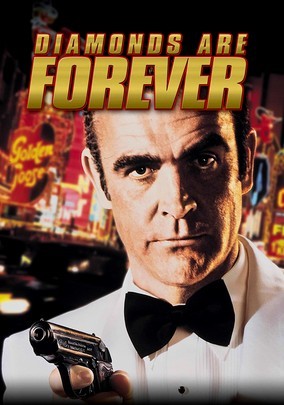
Despite Diamonds Are Forever (1971) being one of the lower-rated James Bond films, this is actually one of my favorite films of all time, and many would disagree with me.

Some say Sean Connery phoned this performance in; others say there was little chemistry between him and Jill St. John, and the sets were tense, leading to a sub-par offering. But I think this is a great film.

I love the Las Vegas locale, the bright lights, flashy costumes, and a ritzy underbelly- and the Vegas car chase is incredible.

A bright, shiny Ford Mustang takes center stage throughout the sequence, and if one looks closely, one will realize that nearly all the cars are Ford- fun fact!

The title song by Shirley Bassey is great, sultry and stylish, only enhanced by the glitzy setting. One immediately imagines the film oozing with diamonds as it does.

The villains are fascinating, and Mr. Wint and Mr. Kidd were the first openly gay Bond villains, which, in 1971, was groundbreaking.

Yes, they are evil and slightly silly, but what a risky, surprising, and blatant scene to see the gentlemen holding hands.

St. John is a sophisticated and intelligent Bond girl, and the action in this film is plenty.

Diamonds Are Forever (1971) contains all the elements for an enjoyable Bond experience.

Oscar Nominations: Best Sound

Scrooge-1970

Scrooge-1970

Director Ronald Neame

Starring Albert Finney, Alec Guinness

Top 250 Films #186

Scott’s Review #561
Reviewed December 25, 2016

Grade: A

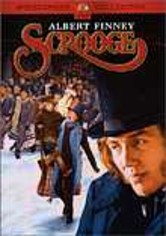
A classic perfect for watching around the holidays, perhaps accompanied by a roaring fire and a bit of brandy, Scrooge (1970) is a magical, musical experience; the entire family should adore it.

The film is a retelling of Charles Dickens’ 1843 story, A Christmas Carol.

Set in London with spectacular London-style art direction, it is perfect in its depiction of life around the holidays in the historic city, circa the nineteenth century.

To be clear, this is the musical version of the popular tale, not to be confused with the 1935 or the 1951 versions of the story.

The film is not as dark or scary as those films are. Instead, the 1970 Scrooge would be a fantastic companion piece to the 1968 classic Oliver!, both based on Dickens stories and both mixing fantastic musical scores with dramatic elements.

Albert Finney takes center stage in flawless form as the old, cantankerous, miser Ebenezer Scrooge. He plays the character as both an older man and, through flashbacks, a young man (Finney was merely 34 years old at the time of filming).

Guinness, indeed a high-caliber actor, is effective as the ghost of Jacob Marley- Scrooge’s former business partner. Scrooge is a moneylender, mainly to the working class, and is unforgiving in his collection of debts.

Filled with hatred for all things good, especially the Christmas holiday, Scrooge refuses to attend a family Christmas dinner hosted by his nephew, Fred, or to give to any charities. He begrudgingly gives his minion and bookkeeper, Bob Cratchit, Christmas Day off.

Finally left alone on Christmas Eve night, Scrooge is visited by the spirit of Jacob Marley, who tells Scrooge that three ghosts will visit him during the night.

In a chilling scene, Marley takes Scrooge on a journey through the sky, where he is greeted by spirits doomed to traverse the Earth, as Jacob is, with shackles acquired from their life as living beings.

Since they are greedy and wicked, they are doomed in the afterlife, just as Scrooge will be if he does not change his ways.

In an excellent subplot, we get to know the Cratchits, led by their father, Bob, a poor but earnest man. The family has little, but makes the most of what they do have, and appreciates the glorious holiday. They prepare a meager Christmas bird and savor being together as a family.

Their youngest, Tiny Tim, is lame, and he lusts over a lavish train set in the local toy shop. Cratchit epitomizes goodness and richness of character, contrasting with Ebenezer Scrooge.

As Scrooge is visited by the ghosts of Christmas past, present, and Christmas yet to come, he slowly realizes he needs to change his ways before it is too late. The audience is treated to stories of Scrooge’s youth, as we understand what has made him the miserly older man that he is today.

The clear highlight of this film is its musical numbers that will leave even the most tone-deaf humming along in glee. Throughout each sequence, we are treated to various numbers.

My favorite is “Thank You Very Much”, as it first appears during the Ghost of Christmas Yet To Come sequence.

By this time, feeling more sympathetic and appreciative, Scrooge merrily dances and sings along with the townspeople, unaware of the fact that they are celebrating his death and are dancing on his coffin to celebrate the fact that their debts are now free and clear.

This catchy tune is a reprise at the end of the film.

Other cheery numbers are “Father Christmas” and “I Like Life”, which perfectly categorize the film as a merry, holiday one, despite its occasional dark tone. This is necessary to avoid making Scrooge too bleak.

I also adore the vivid set designs as the gorgeous city of London is perfectly recreated to show the festive Christmas holiday. The film is not high-budget, but it makes the most of it by using small yet lavish sets.

Scrooge is a perfect holiday film, with fantastic tunes and a meaningful story that comes across on screen as a celebration of life, never edging toward contrived or oversaturated.

A wonderful holiday feast.

Oscar Nominations: Best Original Song Score, Best Original Song for the Picture-“Thank You Very Much”, Best Costume Design, Best Art Direction
Camelot-1967

Camelot-1967

Director Joshua Logan

Starring Richard Harris, Vanessa Redgrave, Franco Nero

Scott’s Review #1,370

Reviewed June 21, 2023

Grade: A-

Camelot (1967) is an adaptation of the well-known Broadway spectacle that explores the creation of the Knights of the Round Table. It’s the Middle Ages, and King Arthur is the main character.

Unfortunately, the original stars of the stage, Richard Burton and Julie Andrews, declined to participate. Still, their replacements, Richard Burton and Vanessa Redgrave, are more than adequate in their prominent roles.

At an epic length of nearly three hours, not every moment is the edge of your seat, and some lagging exists, but the film does justice to the stage production, only with a big budget to add extravagance.

The setting and experience are pure magic, not only because of the far-removed time. The Shakespearean elements are strong as royalty and entitlement mesh with scheming, jealousy, and dangerous romance.

This makes for some juicy soap opera drama.

After the arranged marriage of Arthur (Harris) and Guinevere (Redgrave), the king gathers the noble knights of the realm to his Round Table. The dashing Lancelot (Franco Nero) joins but soon falls in love with Guinevere.

When Arthur’s illegitimate and conniving son, Mordred (David Hemmings), reappears in the kingdom and exposes the secret lovers, Arthur finds himself, by his own rules, trapped into taking action against his wife and closest friend.

There are some dull moments to face at epic length, especially in the first half. I tuned out once or twice, but then I was whisked back to the dramatic events.

The great moments are genuinely outstanding, with enough punch to pack a emotional wallop.

During a sequence when Lancelot is challenged to a game of jousting with some knights, events turn deadly, and one knight, Sir Dinadan, is critically injured. Horrified, Lancelot pleads for Sir Dinadan to live, and as he lays hands on him, Dinadan miraculously recovers.

The scene is fraught with emotion as a decisive moment occurs between the men. It’s also pivotal to the storyline because it links Lancelot with Guenevere and sets off a romantic chain of events.

Guenevere is so overwhelmed and humbled that her feelings for Lancelot begin to change. Despite his vows of celibacy, Lancelot falls in love with Guenevere.

More than one song is lovely in Camelot, and as the production went on, I yearned for more musical numbers.

My favorite is the coy  “The Lusty Month of May,” which appears when Guinevere and the women frolic and gather flowers to celebrate the coming of spring. Later, Lancelot and Guenevere sing of their forbidden love and how wrong life has all gone in ‘I Loved You Once In Silence.’

In the eyes of the law, the lovers are to be punished so they are aware they are not long for this world.

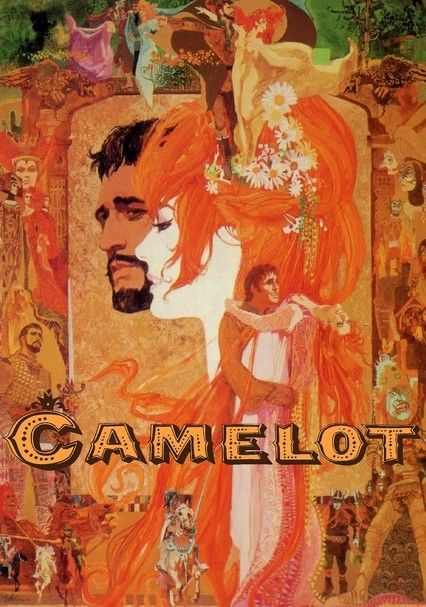
Visually, Camelot is a spectacle rich in style and pizazz. Whimsical colors and a ton of vibrant and fragrant flowers appear regularly amid fields of greens and forests of trees.

The castles and battlefields also support Gothic structures and masculine power, which perfectly balance the exquisiteness of the other aspects.

This more than makes up for any drudgery the story might have. It’s nice to sit back and be fulfilled by the cinematic beauty, especially considering the romance at the heart of the picture.

So when the story drags, one can enjoy the visuals and escape for a moment.

Also impressive is the story of friendship and how a woman’s affection for a man can tear apart two male friends.

Camelot (1967) is a behemoth epic that requires patience. Some parts flat-out drag. But the daring, compelling triangle among the three leads usually turns the experience into an above-average thrill ride.

Oscar Nominations: 4 wins-Best Art Direction (won), Best Cinematography, Best Costume Design (won), Best Costume Design (won), Best Original Song Score or Adaptation Score (won), Best Sound