Category Archives: Shirley Stoler

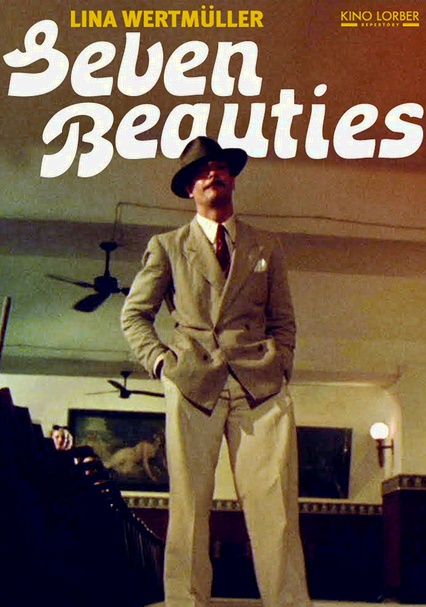
Seven Beauties-1975

Seven Beauties-1975

Director Lina Wertmüller

Starring Giancarlo Giannini, Shirley Stoler, Fernando Rey

Top 250 Films #194

Scott’s Review #1,364
Reviewed June 3, 2023

Grade: A

Italian Director Lina Wertmüller was the first female ever nominated for the coveted Best Director Oscar. She did not win the award, but the nomination is a bold victory for women artists in 1975 and a testament to her visionary approach to filmmaking.

With Seven Beauties (1975), she tackles the painful subject of concentration camps during World War II with artistic merit and a powerful message of survival by her lead character, Pasqualino, brilliantly played by Giancarlo Giannini.

Through Pasqualino’s backstory, Wertmüller provides comic relief and a sizzling Italian style. This counterbalances the terrifying German elements with cultural and sometimes humorous sequences set in Italy. Pasqualino’s family hijinks are explored.

Back in the 1930s, Italy, Pasqualino is a struggling low-level Sicilian thug who accidentally kills a man who disgraced his unattractive and vulnerable sister, Concettina (Elena Fiore). He escapes imprisonment by joining the military, but goes AWOL when things get too severe.

Eventually, Pasqualino is captured and sent to a concentration camp, where he vows to do anything to survive. He attempts to seduce an evil and obese female German camp commander (Shirley Stoler), but this comes at a deadly price.

I’ll argue that Stoler should have received a Best Supporting Actress Oscar nomination. Her callous nature only deepens as her character is peeled back, and Pasqualino’s hope that she has a glimmer of kindness in her is dashed. She is one of the best screen villains of all time.

Seven Beauties is an art film with gorgeous visuals, especially potent in the concentration camp and the surrounding forest. The greyness of the camp is the perfect opposite of the pizazz of Italy.

As Pasqualino and comrade Francesco wander through the looming German forest, the camera looks up at the sky in a blurry, dizzying way.

At the start of the film, black and white footage of World War II encompasses the screen, and slivers of the tyrants Mussolini and Hitler are displayed.

If not for the macabre dark humor we see in Italy, Seven Beauties might be too much of a downer. Pasqualino’s seven sisters are unattractive, and one is living the life of a struggling stripper and prostitute. He also manages to cleverly chop a body to bits and stuff the body parts into suitcases.

Back in Germany, the scenes between Pasqualino and the female commander are frightening. He is forced to provide sexual pleasures in exchange for his survival, but when she callously orders him to select six mates to be executed, her viciousness is apparent.

Giannini is a fabulous actor and heartbreakingly reveals Pasqualino’s vulnerabilities as the film plows forward. His good-natured innocence is lost forever, and the man he becomes is darker.

But the caveat is that the character is never purely good; rather, they are layered with complexities. Always, Giannini emotes deep expressionism through his powerful green eyes.

Similarities between Seven Beauties and Fellini’s Amarcord (1973) or Fellini’s Roma (1972) are evident.

Had I not known Wertmüller directed the film I would have thought Fellini had. This is more so because of the Italian sequences featuring a bevy of zany, homely characters, which adds flavor and humor.

Fernando Rey, well-known for playing the villain in The French Connection (1971), appears as a doomed prisoner who ends up in a large tub of shit rather than suffer a forced execution.

The executions are sob-inducing as lines and lines of prisoners being callously shot and killed are tough to watch. But the film’s core is the viciousness of humanity, and this must never be forgotten.

Wertmüller delivers a masterpiece that I’ve now seen only twice. I plan to watch this film again and again for the content to sink in more.

The comic elements of Seven Beauties (1975) never diminish or lighten the horror of the Nazi’s actions since they are not done in parallel. The back-and-forth between periods only adds value and balance to a powerful subject.

Oscar Nominations: Best Foreign Language Film, Best Director-Lina Wertmüller, Best Actor-Giancarlo Giannini, Best Screenplay-Written Directly for the Screen
Klute-1971

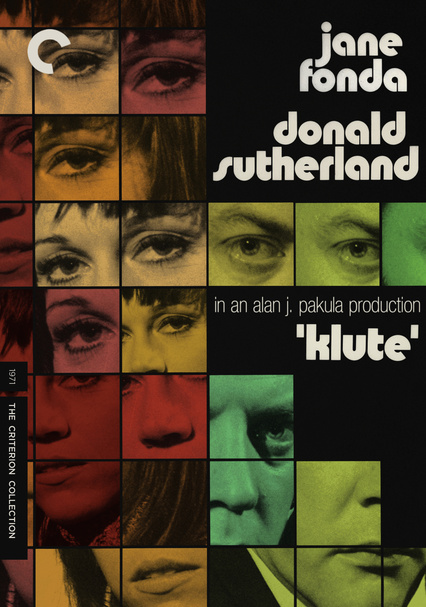
Klute-1971

Director Alan J. Pakula

Starring Jane Fonda, Donald Sutherland

Top 250 Films #234

Scott’s Review #1,351

Reviewed March 12, 2023

Grade: A-

I’ll gladly watch any film Jane Fonda appears in, especially early treats like They Shoot Horses, Don’t They (1969), Coming Home (1978), and On Golden Pond (1981), but Klute (1971) trumps them all.

Fonda plays a prostitute, one with intelligence, manipulation skills, and deep introspective thought. Teamed with Donald Sutherland, who is quite extraordinary, the duo sink their teeth into a taut psychological thriller chasing a serial killer.

The inventive part is that the film is hardly a whodunit, yet it uses long sequences of calm dialogue and few editing breaks, making it stand out with great style and substance.

Bree Daniel (Fonda) is a New York City call girl who becomes absorbed in an investigation into the disappearance of a business executive. Detective John Klute (Sutherland) is hired to follow Bree and eventually begins a romance with her.

Klute is not the only one on Bree’s trail. A killer is on the loose, having killed two prostitutes with whom Bree is friendly. They must figure out the deadly puzzle before it’s too late.

Fonda plays Bree wonderfully. Gorgeous and well-dressed, Bree is aching to leave the business and launch an acting or modeling career, but she keeps striking out on both fronts. Fonda assures the audience that Bree is brilliant and uses her smarts to get the best of the men she beds.

Throughout several scenes in which she chats with her shrink, we learn a great deal about Bree and the workings of her mind. While she cringes at a dull life of being married and darning socks, she also craves stability and self-worth.

She aptly embraces her lifestyle, but on her terms. When briefly jaded by a pimp played by Roy Scheider, I cringed because Bree is better than that.

I only wanted to learn a bit more about Bree’s childhood and how she wound up as a call girl, but at the same time, the mystique works well. The ambiguity only makes Bree more complex.

Pre-conceived notions or sub-par writing might have had the character dubbed the overdone ‘hooker with the heart of gold’ title, but there are no cliches to be found.

Written by Andy and Dave Lewis and directed by Alan J. Pakula, they construct a complex film with equal focus on the intriguing serial-killer pursuit and the workings of its lead female character.

Surprisingly, the men achieve both goals. In later years, the screenplay might have been written by a female, but it’s impressive how boldly they write Bree.

The character of Klute is also well-written. Similarly shrouded in mystery, we know that the investigator is the strong, silent type and falls for Bree hook, line, and sinker. Has he been married? Does he have kids? Why the fascination with Bree?

He only mirrors the audience as we become equally smitten with her. The fact that he knows the killer is icing on the cake, adding rich texture to the storytelling.

The other facets of Klute are strong from a technical and location perspective.

The interior sequences, mostly of Bree’s apartment building, are superior, with dull lighting and an eerie musical score to set the proper mood. Downsizing from Park Avenue, Bree has a decent Manhattan apartment, but with dated appliances and unflattering lighting.

The exterior New York City location shots are fun to look at and help a native tri-state area resident identify various neighborhoods.

Early 1970s New York City was not a pretty sight, and the Wall Street area and garment district, where the riveting action culminates, are terrific.

Delightful is the scene involving Jean Stapleton as a no-nonsense secretary. Forever remembered as Edith Bunker on the television series All in the Family, it’s great fun seeing her in Klute and remembering that she appeared in films before her television success.

Klute (1971) is a taut, superior thriller that sometimes is a bit too complex, but it scores a winning run with its marriage of a character study and intelligent writing.

Thanks to Fonda and Sutherland, and a screenplay that bravely goes left of center when it easily could have gone straightforward, Klute is a memorable piece of cinema.

Oscar Nominations: 1 win-Best Actress-Jane Fonda (won), Best Original Screenplay