Category Archives: Kenneth McMillan

The Stepford Wives-1975

The Stepford Wives-1975

Director Bryan Forbes

Starring Katharine Ross, Paula Prentiss, Peter Masterson

Top 250 Films #197

Top 40 Horror Films #26

Scott’s Review #1,395
Reviewed September 4, 2023

Grade: A

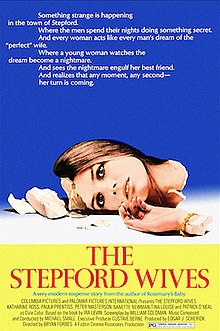
The Stepford Wives (1975) is a film that has deservedly achieved cult status over the years and its title became iconic in meaning.

Everyone knows what a ‘Stepford wife’ is and what it depicts. Usually, a tall, leggy, brainless rich white woman from Connecticut is a sufficient enough image.

The film is a personal treasure to me since I am a resident of said state. The fact that ‘Stepford’ sounds like ‘Stamford’ where I live is uncanny and ironic. The film was shot in various areas of Connecticut so it’s fun to see the towns, grocery stores, and houses in the mid-1970s.

It also resonates quite well with my husband who lived in Manhattan for many years and then transplanted to nearby Connecticut just like the main characters do.

Besides my fondness, it’s a damned good thriller. It paces nicely and takes its time getting to the stunning conclusion.

The film was written by William Goldman (All the Presidents Men-1976), who based his screenplay on Ira Levin’s 1972 novel of the same name. Levin also wrote Rosemary’s Baby which was turned into a 1968 film.

The Stepford Wives and Rosemary’s Baby would make an outstanding double feature.

Joanna Eberhart (Katharine Ross) moves to the quiet town of Stepford, Connecticut, with her husband Walter (Peter Masterson) and children. The town seems idyllic and maybe just a little too perfect for her tastes.

Along with best friend and fellow Stepford resident Bobby (Paula Prentiss), the women notice that the other housewives are not quite ‘normal’. They obsess over housework and are willingly subservient to their husbands.

Joanna and Bobby are determined to solve the mystery especially when they realize there used to be a large women’s liberation group in Stepford.

In a lesser film, the final product could dive headfirst into campy horror. A tepid remake made in 2004 and starring Nicole Kidman did. But the original version stays the course and provides thrills and psychological facets.

The audience knows pretty soon that the men have a secret club that women are not permitted to attend. Named the Men’s Association, a major clue surfaces when Walter invites the men over to his house and they secretly look Joanna up and down.

What we don’t know is the how. Joanna, Bobby, and another neighbor Charmaine Wimperis (brilliantly played by Tina Louise) are the only ‘normal’ wives. Realizing which one of them is the next intended victim is part of the fun.

The women’s portraits are drawn by one of the men and we learn that the previous women have ‘turned’ after going away on a romantic weekend with their husbands.

What’s inside the creepy mansion that holds the Men’s Association meetings? Will Joanna sneak inside? What will happen next?

Delicious sequences occur that reveal that housewives are robots. After a minor fender bender in the local shopping center parking lot, Carol (Nanette Newman) begins acting strangely at an outdoor cocktail party. She repeatedly frets and repeats the same line over and over again.

Her husband blames her odd behavior on alcohol but the audience knows better.

Unforgettable is the stellar grocery store finale when the women are dressed to the nines and robotically shuffle through the aisles. They absent-mindedly take items off the shelves and place them into their carts while acknowledging each other with a pleasant ‘Hello, Charmaine”, or “Hello, Carol”.

My favorite scene is close to the finale between Bobby and Joanna. Horrified at Bobby’s transition to an uptight, well-dressed housewife obsessed with a clean kitchen, Joanna impulsively plunges a butcher knife into Bobby’s midsection.

With no bloodshed proving Bobby is a robot, Bobby calmly scolds Joanna by saying over and over again, “Now why would you do a thing like that?”

The scene is creepy, startling, and powerful given the close relationship between the women.

These scenes and others make The Stepford Wives (1975) part of pop culture and a reason I can watch the film several times over.

Featuring a cast of good actors led by Ross who successfully provides Joanna with both likability and sensibility the film is never over the top or ridiculous.
Dog Day Afternoon-1975

Dog Day Afternoon-1975

Director Sidney Lumet

Starring Al Pacino, John Cazale, Chris Sarandon

Top 250 Films #203

Scott’s Review #185

450423

Reviewed October 13, 2014

Grade: A-

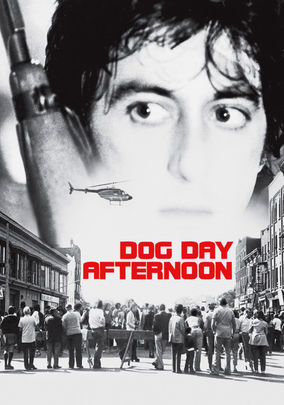
Director Sidney Lumet successfully sets the smoldering hot summer afternoon in New York City for his 1975 film Dog Day Afternoon.

Al Pacino plays Sonny, an unemployed, desperate man who, while married with two kids, has a gay lover, Leon (brilliantly played by Chris Sarandon), whom he is attempting to help finance a sex change operation.

Based on a true story, Sonny, along with his dimwitted friend Sal- played by John Cazale- decides to rob First Brooklyn Savings Bank.

Predictably, their plans go awry when Sonny burns a ledger during the robbery attempt, and a pedestrian sees the smoke and alerts the police.

As the police become aware of the attempted heist, a standoff ensues between Sonny and the cops, led by Detective Moretti (Charles Durning), and the robbery receives media coverage.

Most of the action is set inside the stifling hot bank and directly outside on the street, and gradually the supporting characters come into play- the hostages, Sonny’s mother, wife, and lover all make contact with Sonny in some way or another, and his motivations become clearer to the audience.

Dog Day Afternoon is an anti-establishment movie, in this case anti-police, questioning the government and the financial establishment (Lumet also directed Network, challenging the establishment).

This is evident when, after a standoff with police, the crowd sides with Sonny as he chants “Attica!” Attica!, which is a direct reference to a recent prison riot.

Sonny speaks for the working class- the poor, struggling, underpaid workers who cannot afford to feed or adequately take care of their families.

The heat and humidity compare perfectly to the pressure felt by most middle-class people that still resonates today and leaves the viewer contemplating their life.

Sonny relates to the bank tellers who do not earn much. Besides, Sonny is sympathetic to the audience in another way. Leon, recently hospitalized at Bellevue Hospital, is emotionally dependent on Sonny. He would be lost without him.

They share a lengthy and heartfelt phone conversation that is the heart of the film- gay romance had not been explored this way by 1975 in cinema, and the romance was neither shoved down the audience’s throat nor was it looked past entirely.

Their relationship is tender and deep, yet still somewhat ambiguous.

Would they stay together? What would become of Sonny’s wife and two children? Would he leave them for Leon in a world that was not ready to accept two homosexual men together? Is that the reason for Leon’s desire for a sex change operation?

Chris Sarandon, in too small a part, is wonderful as the gay lover, struggling with a sexual identity crisis. Al Pacino gives, per usual, a brilliant portrayal as he takes on a complex character who is far from one-dimensional.

Perhaps not a masterpiece, Dog Day Afternoon is a very good film, but neither is it strictly a gay-themed movie nor an action/thriller- it’s more complex than that.

Ironically, Sonny is portrayed as the hero of the film, as it is not a standard good police versus bad bank robber type of film- quite the contrary. It is much, much more than that.

Oscar Nominations: 1 win-Best Picture, Best Director-Sidney Lumet, Best Actor-Al Pacino, Best Supporting Actor-Chris Sarandon, Best Original Screenplay (won), Best Film Editing

Ragtime-1981

Ragtime-1981

Director Miloš Forman

Starring Howard Rollins, Brad Dourif, Mary Steenburgen

Scott’s Review #1,183

Reviewed October 1, 2021

Grade: A-

Miloš Forman, best known for directing 1975’s One Flew Over the Cuckoo’s Nest and 1984’s Amadeus, crafts a relevant period drama with a moving racial storyline.

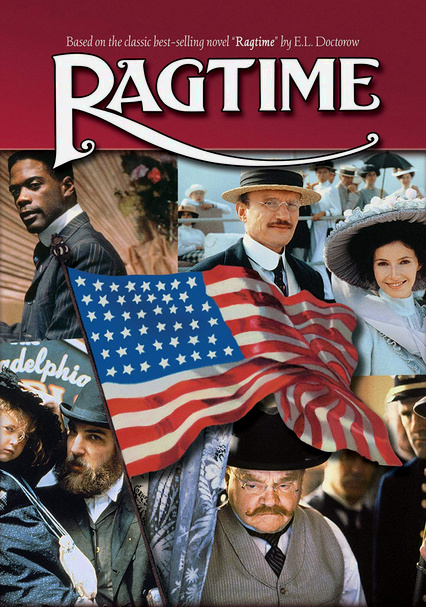
Set in turn-of-the-twentieth-century New York, Ragtime (1981) mixes an important message with gorgeous costumes and a sprinkling of romantic intrigue.

The film was honored with an astounding eight Academy Award nominations but came away empty-handed.

The cast is enormous, and I love that aspect of the film. At two hours and thirty-five minutes, the experience nearly felt too short, since there were plenty of stories left to tell, especially in the subplots.

Some resolutions are not clearly explained, but of course, the central story ends tragically.

A fun fact is that Robert Altman was initially signed on to direct the film, but was replaced by Forman. My mind conjures up endless juicy moments that Altman likely would have added. As good as Forman is, Altman would have been even better.

There are also a few real-life people sprinkled in among the fictitious characters, which may cause some confusion, especially with the large cast. Newsreels of Theodore Roosevelt, Houdini, and architect Stanford White are featured.

A flurry of juicy tales based on E.L. Doctorow’s eponymous novel dissects life in pre-World War I New York City. The haves and have-nots see their lives intersect in many different ways.

A lavish party in Atlantic City is a fabulous highlight of Ragtime.

One day, a rich white family living in New Rochelle, New York, finds a black baby in their yard and takes in the mother (Debbie Allen) as a maid. A black pianist, Coalhouse Walker Jr. (Howard Rollins), returns for his woman and child after finding success in a Harlem jazz band.

A group of small-minded firefighters, irritated to see a successful black man own a Model-T Ford, deface it, and Walker demands retribution. This sets the main chain of events in the film as a war rages between Walker and his friends and the white firefighters.

There are more stories presented in a lesser form than I would have loved, like the interesting friendship between the black Walker and the white younger brother, played by Brad Dourif.

In a strange scene, millionaire industrialist Harry Kendall Thaw (Robert Joy) makes a scene when White unveils a nude statue atop Madison Square Garden, modeled after former chorus girl Evelyn Nesbit (Elizabeth McGovern), Thaw’s wife.

Convinced that White has corrupted Evelyn, Thaw publicly shoots him dead.

From an acting perspective, the film belongs to Howard E. Rollins. I immediately treasured the character he plays and rooted for him to win. Intelligent yet put upon, he goes through several incarnations of the character and twice as many emotions. He was by far the richest character of all as far as substance.

Other characters intrigued, but dissecting them would be impossible since there were so many. McGovern, Mandy Patinkin, and Mary Steenburgen are my favorite characters.

The only slight drawback is that the film has a glossy look, and the gritty scenes are not powerful enough. As intense a moment as the finale is, for example, I wanted something dirtier. When Walker’s fate was sealed, I wanted to be more frightened, not feel like I was being fed high drama.

Ragtime (1981) successfully and nearly flawlessly combines artistic style with an enormous social message. It looks polished and representative of the early 1900s, and it challenges audiences to take a look at how different cultures co-existed in another time.

Oscar Nominations: Best Actor in a Supporting Role-Howard Rollins, Best Actress in a Supporting Role-Elizabeth McGovern, Best Writing, Screenplay Based on Material From Another Medium, Best Art Direction-Set Direction, Best Cinematography, Best Costume Design, Best Music-Original Score, Best Music-Original Song-“One More Hour”