Category Archives: Burgess Meredith

The Day of the Locust-1975

The Day of the Locust-1975

Director John Schlesinger

Starring William Atherton, Karen Black, Donald Sutherland

Top 250 Films #189

Scott’s Review #1,460
Reviewed January 16, 2025

Grade: A

I love films set in Los Angeles, especially those dealing with Hollywood and/or the dark underbelly of the City of Angels. With its lights and allure, there is a murky side laden with drama, jealousy, and loneliness.

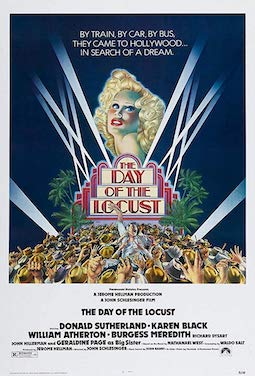
John Schlesinger’s dark period piece The Day of the Locust (1975) examines the bleak lives of several aspiring people in 1930s Hollywood, just before World War II.

The prominent themes are alienation and desperation, whose aspirations of success do not come true, emphasizing the sad saying, ‘The road to Hollywood is paved with broken dreams.’

It’s a brilliant adaptation by screenwriter Waldo Salt, based on Nathanael West’s 1939 novel of the same title. The film horrifically depicts the Hollywood film industry in all its artificial glitz and glamour.

In 1930s Los Angeles, sunny Hollywood shined like a beacon to helpless people across the city who were looking for fame, fortune, or a quick buck.

In one apartment block, blond bombshell Faye Greener (Black) aspires to be an actress, artist Tod Hackett (Atherton) seeks legitimacy, and a frightening child actor named Adore (Jackie Earle Haley) performs a grotesque homage to Mae West.

Introverted accountant Homer Simpson (Donald Sutherland) watches as society collapses under greed and ambition.

From a romantic standpoint, Homer and Tod vie for Faye’s affection in a tragic triangle fraught with jealousy and competition.

Schlesinger knows his way around dark, influential, intelligent films. He created stalwarts such as Midnight Cowboy (1969) and Sunday Bloody Sunday (1975), both unconventional and controversial, the former being the only film ever to win Best Picture and garnering an X rating.

The Day of the Locust is no different.

There is scarcely a likable character in the cast, but I ascertain that Tod is the most stable and trustworthy in the rogues gallery.

He appears grounded and the voice of reason, though he mocks Homer later on at a party, so he’s not exactly Prince Charming. He arrives to work as an art department production illustrator at a major film studio and rents an apartment in the same community as the other characters.

Gently, he places a lovely flower in a crack in the wall.

Tod is smitten with Faye, a callous vixen who beds not one, not two, not three, but four men and makes no bones about it. Not exactly a feminist, she is more concerned with rising to move star status at any cost.

We meet Faye as she works as an extra in a lavish production. She smacks gum and then snaps into character as a royal sophisticate, revealing a tacky and tawdry presence to the audience.

Later, during the grand finale, she tries to glimpse the big stars arriving in limos at a premiere event at Grauman’s Chinese Theatre, one in a crowd of thousands.

She’s a lost soul, filled with self-deluded importance, desperately wanting the spotlight in whatever form she can.

Her father is played by Burgess Meredith, who nearly steals the show as an elderly, washed-up ex-vaudevillian.

Despite the outstanding performances, the production design and cinematography are flawless and seamlessly portray what life was like in Hollywood in the early days.

My favorite sequences are in the movie sets filled with pizazz, glamour, and intricacies.

The most significant scene, though, occurs at the star-studded event, a premiere of The Buccaneer, when all hell breaks loose, and a tragic death occurs, leading to subsequent bloodshed and further death and destruction.

It’s a spectacle, supposed to be the movie event of the year, with champagne and the ultimate celebration of film, but the stark nature of one’s rage overtakes the beautiful moment.

During this pivotal scene, we see the darkness of humanity counterbalanced against the glitz and glamour of movie stars.

Schlesinger masterfully takes us through this journey of human depravity with flawless ease.

The Day of the Locust (1975) is a brilliant film.

Oscar Nominations: Best Supporting Actor-Burgess Meredith, Best Cinematography
Rocky II-1979

Rocky II-1979

Director Sylvester Stallone

Starring Sylvester Stallone, Talia Shire, Carl Weathers

Scott’s Review #1,317

Reviewed November 24, 2022

Grade: B+

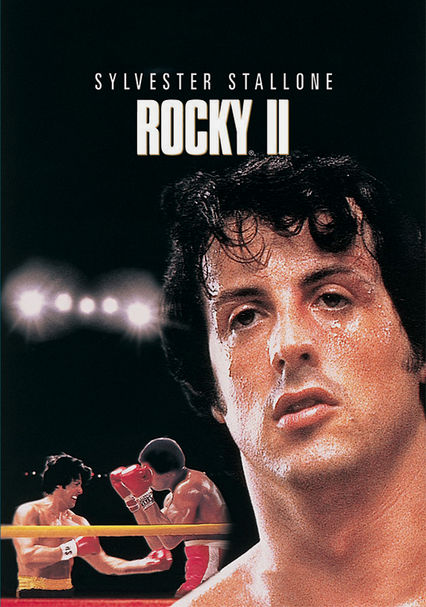
Rocky II (1979) is a terrific sequel and entertaining sports film. It doesn’t recreate the wheel or challenge cinematic artistic freedom or expression or anything like that. But, it knows what it wants to achieve and gets there in fine fashion.

It’s a straight-ahead vehicle that capitalizes on the enormous critical and commercial success of Rocky (1976) and enthralls with a winning final climax- in the squared boxing circle naturally.

The film is a crowd-pleaser through and through and the powers that even let boorish actor Stallone, notoriously difficult, take the director’s reigns (yikes!).

The actor even writes the screenplay for the film.

Events begin immediately following the first Rocky film which is a wise decision. Cocky world champion Apollo Creed (Carl Weathers) has defeated working-class Philadelphia boxer Rocky Balboa (Stallone) in the closest of battles with both men requiring medical attention.

Despite vowing not to engage in a rematch, Rocky’s Cinderella story has caught the national sports media’s attention, and he now has the opportunity to capitalize on his sudden fame. Creed arrogantly prods his newfound nemesis into getting back into the ring.

Plagued with financial problems and a pregnant wife Rocky is goaded out of retirement and back into the ring for the fight of his life.

Supporting players Talia Shire (Adrian), Burgess Meredith (Mickey), and Burt Young (Paulie) return to the fold which provides excellent continuity and familiarity, another key to Rocky II’s success.

Additionally, Shire, Meredith, and Young are such top-quality actors that they enhance Stallone’s performance.

Rocky is unquestionably the best role of Stallone’s long career. Never known for great acting chops, he won the lottery with this iconic role and did quite well with him on the second time out.

The character is impossible not to root for and the Italian Stallion’s charisma shines across the big screen. Who doesn’t like an underdog especially when all he cares about is the timid Adrian (another underdog)?

His ‘Yo, Adrian, I did it!’ is legendary.

I’ll never cease being enamored with Shire’s portrayal of Adrian as compared to her other iconic role of Connie Corleone in The Godfather films. Adrian and Connie are like night and day which is a big part of the fun of viewing them both.

Of course, the setup of Rocky II is contrived and the storyline dictated. We know the final thirty minutes or so will showcase the bloody rematch between Rocky and Creed and we the audience salivate thirstily as the fight approaches.

There exists some trivial plot about Adrian giving birth to their son (named Rocky Jr. obviously) and slipping into a coma only to be resurrected by determination and giving her blessing for Rocky to fight but we all know what’s coming.

Like clockwork, the final fight arrives! As the men slug it out through fifteen brutal, sweaty rounds, the editing is fantastic. The sequence feels like a retread because it sort of is but it still provides an enthralling and bombastic finale.

Fans will not be disappointed.

Sure, Rocky II suffers from a saccharine romance and a predictable ending but it’s also a feast for the eyes and the ultimate sports match-up.

Compared to Rocky (1976) the film is a letdown despite carefully keeping the Philadelphia underdog, blue-collar elements that made the original such a hit.

Subsequent sequels would parlay into nationalistic, patriotic nonsense using the Cold War as a prop but Rocky II (1979) remains all-American and robust in spirit and climax.

Torture Garden-1968

Torture Garden-1968

Director Freddie Francis

Starring Burgess Meredith, Jack Palance, Peter Cushing

Scott’s Review #1,027

Reviewed May 28, 2020

Grade: B

A horror offering made up of multiple vignettes is a treat, offering numerous stories, especially with some late-1960s British sophistication peppered in.

Torture Garden (1968) contains four stories- Enoch, Terror over Hollywood, Mr. Steinway, and The Man Who Collected Poe, each with some intrigue. The structure may be most comparable to The Twilight Zone television series, but in a British way.

The Terror over Hollywood is my personal favorite.

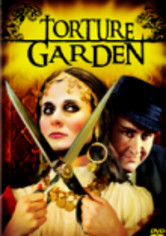
Burgess Meredith (yes, that Burgess Meredith of the Batman television series) stars as Doctor Diabolo, a sinister con artist who runs an attraction at a fairground sideshow.

Having shown them a handful of tepid haunted-house-style gimmicks to whet their appetites, he promises a frightening experience if they pay extra.

Of course, they are immediately taken, and when they follow him behind a curtain, one by one, they view their fates through a transfixed female deity, Atropos (Clytie Jessop).

The stories commence through a hallucinogenic method.

Below is a summary and review of each vignette.

In Enoch, Colin Williams (Michael Bryant), a greedy playboy with money troubles, takes advantage of his elderly uncle (Maurice Denham) by causing his death and falling under the spell of a man-eating cat.

Colin is determined to find his uncle’s riches, leading him to desperation. The plot is far-fetched, but the black cat with glowing green eyes is memorable, as are the beheadings of a homeless man, a nurse, and finally, the Playboy himself.

When the cat finally puts another person under the spell, the conclusion is satisfying.

Terror over Hollywood travels across the pond to the United States, where it introduces a tale of jealousy, schemes, and intrigue in La La Land.

The vignette most resembles Invasion of the Body Snatchers in theme and is quite compelling.

Carla Hayes (Beverly Adams) is a beautiful, aspiring actress intent on clawing her way to the top by any necessary means. After she ruins her roommate’s dress and steals her date, she embarks on a strange journey that leads her to a role in a film, but there is a price to pay.

Adams is a stellar star who brings life and energy to the story.

Providing the most bizarre of all the vignettes, Mr. Steinway involves a possessed grand piano by the name of Euterpe, who becomes jealous of its owner, Leo’s (John Standing) new lover, Dorothy (Barbara Ewing), and goes on the attack seeking revenge.

The story is about Dorothy, a sideshow patron, so the events are told from her perspective.

The story contains plenty of loopholes, but it’s fascinating to see the enormous, gorgeous piano come to life as a character and push Dorothy out the window, sending her plummeting to her death.

Finally, in The Man Who Collected Poe, a Poe collector (Jack Palance) murders another collector (Peter Cushing) over collectibles he refuses to show him, only to find that the keepsake is the real Edgar Allan Poe (Hedger Wallace).

Seeing both the esteemed real-life figure and horror legend Cushing makes this chapter enjoyable, even though it is the least compelling of the bunch. Knowing that Torture Garden was meant initially to star Cushing and Christopher Lee detracts from the film just a bit.

One can only imagine the possibilities.

In the epilogue, which proves to be a clever twist, the mysterious fifth patron (Michael Ripper) scares the others into fleeing for their lives before revealing that he is a conspirator of Doctor Diabolos.

The group is proven to be merely gullible rubes, left with the belief that a murder has occurred and their fates will come true.

The film presents black magic and the occult in a fun, not a frightening, way. This is both a positive and a negative since witchcraft never felt so family-friendly.

Torture Garden (1968) is neither the best nor the worst horror anthology ever created. The plots are uneven but entertaining and never dull.

The creative additions of a killer piano, a killer cat, and famed storyteller Edgar Allen Poe are worth the price of admission, as is the centerpiece villain played by the great actor Burgess Meredith, who helps keep the plot moving along.