Tag Archives: Independent Drama

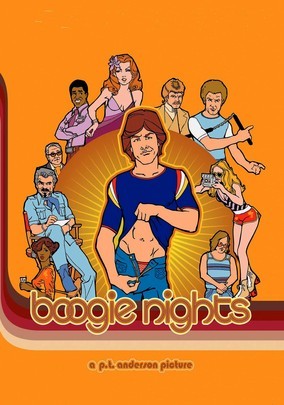
Boogie Nights-1997

Boogie Nights-1997

Director Paul Thomas Anderson

Starring Mark Wahlberg, Burt Reynolds

Top 250 Films #8

Scott’s Review #312

1180077

Reviewed December 31, 2015

Grade: A

Boogie Nights (1997) is a fantastic film about the pornography industry (The Golden Age of Porn) of the 1970s and 1980s, and does an excellent job of portraying the characters as human beings with feelings and emotions, rather than as nymphomaniacs or perverts.

They bond with one another as a family- a group of misfits striving to survive. This, and many other reasons, are why Boogie Nights is one of my all-time favorite films.

Written, produced, and directed by Paul Thomas Anderson (Magnolia, 1999; There Will Be Blood, 2007; Inherent Vice, 2014), he is a master at exploring the underbelly of society and flawed, desperate characters.

Boogie Nights is no different.

The dysfunctional family is the common theme of the film. Most of his characters are not happy people, but they are survivors who desperately seek a piece of happiness.

Many in his cast of Boogie Nights also appear in Magnolia. Mark Wahlberg (Eddie/Dirk Diggler), Burt Reynolds (Jack Horner), Julianne Moore (Maggie), Don Cheadle (Buck), William H. Macy (Little Bill), John C. Reilly (Reed Rothchild), Heather Graham (Rollergirl), Philip Seymour Hoffman (Scotty), Malora Walters (Jessie), and Alfred Molina (Rahad Jackson), round out the large cast.

The film is set in Los Angeles and spans the period from 1977 to 1984. Although only seven years pass, much happens to most of the characters during this time, and we experience their trials and tribulations.

The unique thing about Boogie Nights is that I care about every character, thanks to excellent writing and fantastic acting. They succeeded in obtaining my empathy for them. Boogie Nights is a highly character-driven film, which is an enormous part of its brilliance.

The cast is an ensemble one, but the main character is Eddie Adams, a high school dropout, who we meet working as a dishwasher at a nightclub. He has an abusive mother who kicks him out of the house, leading him to audition for and move in with Jack Horner.

Jack is a patriarchal figure who shares a house with Maggie, the matriarch of the household, and Roller Girl, a fellow high school dropout who is always seen wearing roller skates. Eddie’s talent is his large “manhood”.

We watch Eddie, at first shy and polite, rise to superstardom in the porn industry, becoming rich and living a lavish, drug-fueled lifestyle, where his ego gets the best of him. He, like many of the characters, hit rough times as the early 1980s shift to videotape was the death of many 1970s porn actors’ careers.

The musical soundtrack plays a crucial role in the success of Boogie Nights. Many scenes contain songs that were hits of the time or prior, including “Sister Christian”, “Jessie’s Girl”, “God Only Knows”, “Got to Give it Up”, “Ain’t No Stoppin’ Us Now”, and countless others- so much so that the soundtrack is almost a character of the film.

We look forward to hearing what song might be featured next.

At one point later in the film, circa 1983, as things begin to spiral out of control for many of the characters, the musical score turns ominous, with low bass music, a nighttime setting, and the lighting becomes darker. Several stories begin to intersect on a late L.A. night on the streets.

Jack, filming a scene in a limousine starring Rollergirl and a young college jock they pick up off the streets, Dirk, forced to prostitute himself for $10 to a young man in a pickup truck, and Buck, who innocently stops to buy doughnuts for his very pregnant wife Jessie.

Each of these stories ends in brutal violence, and the tone is crucial to the success of the scenes. This lengthy scene bears a resemblance to a Quentin Tarantino scene in its macabre tone.

Particular favorite scenes include the heartbreaking scene when Maggie loses custody of her son, the New Year’s Eve party at Jack’s house, and the ill-fated drug sale at Rahad Jackson’s.

Each is heartbreaking, powerful, fraught with tension, or otherwise empathetic to the characters, which makes them each quite powerful in different ways.

Induced in the drug sale scene is some black comedy- Rahad’s presumed Chinese houseboy has a fetish for firecrackers, which startle Dirk, Reed, and Todd, as the fear of possible gunshots fills the air. Maggie’s sob scene elicits viewer emotion as we cry with her, and the New Year’s Eve turn of events involving Scotty and Little Bill is tragic.

Boogie Nights (1997) is one of my favorite films because it contains brilliant writing, characters who are fleshed out, damaged, and human, a killer soundtrack, and a dark, mysterious industry (porn) that is both misunderstood and categorized.

Thanks to director Anderson, we see the people within this lifestyle as real individuals, with their own issues, but also with full hearts and kindness.

Oscar Nominations: Best Supporting Actor-Burt Reynolds, Best Supporting Actress-Julianne Moore, Best Screenplay Written Directly for the Screen

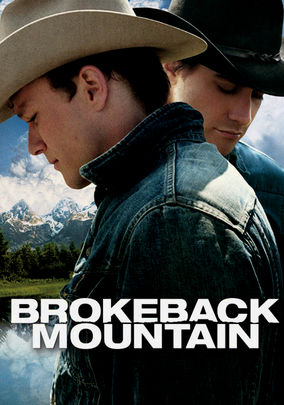
Brokeback Mountain-2005

Brokeback Mountain-2005

Director Ang Lee

Starring Heath Ledger, Jake Gyllenhaal

Top 250 Films #25

Scott’s Review #338

70023965

Reviewed January 9, 2016

Grade: A

Brokeback Mountain (2005) is a groundbreaking film and one of the most significant releases of the 2000s. Never before had an LGBT film received as much exposure and widespread viewership as this one did.

Robbed of the 2005 Best Picture Academy Award (the great, but not as great, Crash won), Brokeback Mountain received other tremendous accolades and word-of-mouth buzz that helped it achieve great success.

A treasure that must always be remembered and appreciated.

Perfectly cast, Heath Ledger and Jake Gyllenhaal play two cowboys who fall madly in love with each other. The film spans a period from 1963 to the early 1980s. Through the years, we see their unbreakable bond tested by outside factors- namely, being gay is forbidden at this time and location, Wyoming and Texas.

Jack Swift (Gyllenhaal) and Ennis Del Mar (Ledger) meet one summer in 1963 when they are both hired by grizzled Joe Aguirre (Randy Quaid) to herd sheep on Brokeback Mountain in remote Wyoming.

They immediately form a friendship that turns physical on one drunken night. From this point, the men are inseparable and share a insurmountable passion.

Due to the times, there is no possible way they can openly share life, so they arrange for periodic “fishing trips”, away from their wives and children so that they can spend time together in secret.

The chemistry is evident between Ledger and Gyllenhaal, which is extremely important to the success of the film.

The audience needs to truly buy their bond and director Ang Lee is successful at eliciting wonderful performances from each actor. This is especially crucial during the first forty-five minutes of the film as all the scenes are only the two actors together.

The famous “tent” scene, in which Jack’s and Ennis’s passion first erupts is perfectly choreographed- it is as much animalistic as it is passionate and this sets the tone for the rest of the film.

Eventually, other characters are introduced and Ennis and Jack live lives largely separate from each other. Michelle Williams plays Alma, a kind-hearted country girl, married to Ennis. She accidentally stumbles on Jack and Ennis’s secret and keeps this hidden throughout the years.

Williams is fantastic in the role- sweet, yet saddled with the pain of knowing her husband is in love with another man causes her to mistrust and eventually destroys their marriage.

Jack forges a life in Texas and marries well-to-do Lureen (Anne Hathaway), but the marriage is a sham, Lureen’s father hates Jack, and Jack cannot forget Ennis. Jack is the aggressor, the one more confident with his sexuality, and one would surmise, would be the one more likely to be “out” if circumstances were different.

He looks for other men, even going to Mexico to find some companionship.

The ending of the film is tragic and heartbreaking and we witness Ennis being a good father to his now grown-up kids. A wonderful scene is written between Ledger and Kate Mara, who plays his daughter. She asks the lonely Ennis to attend her wedding and the scene is sweet and tender.

Another scene involving Ennis meeting Jack’s parents is monumental- as important as what is said in this wonderful scene is what is left unsaid.

Brokeback Mountain (2005) is an honest, graceful, and brave film, that thanks to the talents and direction of Ang Lee, was able to be made.

The exceptional cast led by Ledger and Gyllenhaal is dynamic and enables the film to come together as one masterpiece, that will surely never be forgotten.

Oscar Nominations: 3 wins-Best Picture, Best Director-Ang Lee (won), Best Actor-Heath Ledger, Best Supporting Actor-Jake Gyllenhaal, Best Supporting Actress-Michelle Williams, Best Adapted Screenplay (won), Best Original Score (won), Best Cinematography

Independent Spirit Award Nominations: 2 wins-Best Feature (won), Best Director-Ang Lee (won), Best Male Lead-Heath Ledger, Best Supporting Female-Michelle Williams

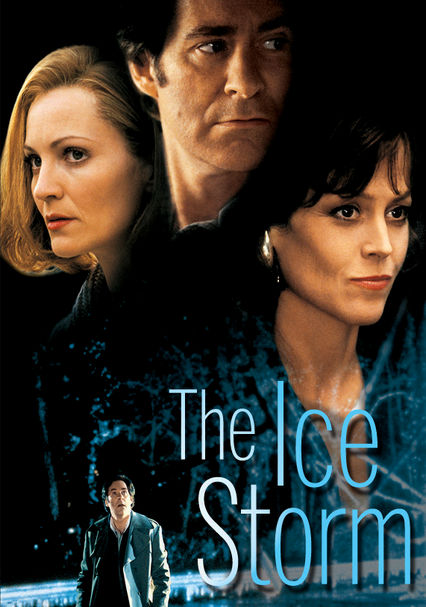
The Ice Storm-1997

The Ice Storm-1997

Director Ang Lee

Starring Kevin Kline, Joan Allen, Sigourney Weaver

Top 250 Films #60

Scott’s Review #850

Reviewed January 1, 2019

Grade: A

The Ice Storm (1997) is a brilliant film directed by Ang Lee of Crouching Tiger, Hidden Dragon (2000), and Brokeback Mountain (2005) fame.

The film is based on a 1994 novel of the same name, written by Rick Moody.

The brilliance lies in the rich way the characters are written with coldness, repression, and loneliness being central themes. The film is astonishingly genuine and fresh with an authenticity rarely felt so wholly in adult family dramas.

The period is 1973 and the events take place in New Canaan, Connecticut, a wealthy suburban town.

Two dysfunctional families, the Hoods and the Carvers co-exist during the Thanksgiving weekend as each deals with repression and escapism amid alcohol and sexual experimentation.

Both the adults and the children’s lives are prominently featured in the story. Ben and Elena Hood (Kevin Kline and Joan Allen) and Jim and Janey Carver (Jamey Sheridan and Sigourney Weaver) head the families.

While Ben and Janey carry on a secret affair, Elena lives an unfulfilled existence, craving more from life but not knowing how to get more and reduced to consulting self-help books for support.

Wendy Hood (Christina Ricci) enjoys sexual escapades with multiple boys while Paul Hood (Tobey Maguire), home from boarding school, takes the train into New York City to see a rich classmate Libbets Casey (Katie Holmes).

The most wonderful aspect of the film is that the story is a slice of life but with clever nuances. Since the families are rich why should the viewer feel sympathy for any of the characters let alone root for them?

Ben and Janey lounge in bed after sex, he is chatty about nonsense, and she is bored and depressed. During a holiday neighborhood gathering a kinky “key party” develops, where participants swap spouses for the night, resulting in titillation and excitement.

The bold and controversial writing is exactly why The Ice Storm scores so many points. The characters are cold and frozen, unlikable and selfish, but might that be the point? All seem unhappy and tired of their dull, small-town existence and craving what little excitement they can muster.

Written similarly to American Beauty (1999) the films could be watched in tandem for evenings of Gothic and macabre story-telling.

My favorite character is Elena as she has the most sensibility. She is lonely and ignored by her husband dutifully going about her day with little emotion. She feels temporarily excited when she develops a romantic crush on a neighbor only to quickly realize the most she can ever hope for with this man is a fling.

Her character is fleshed out as she yearns for more than she has. The other characters are largely selfish and pampered.

The film’s conclusion, however, is monumental as it changes the perceptions of some characters and softens them. A tragic death brings characters together in a powerful way.

Again, the writing in The Ice Storm is the most interesting and compelling appeal. The acting among the entire cast is professional, heartfelt, and brazen, but the written dialogue and interesting situations make this film rise above others of a similar genre.

Lee’s direction is brilliant as the blustery winter atmosphere is central to the story- in more ways than we might originally think. The frozen power lines and slick windy country roads elicit a cozy feeling nestled between harboring family secrets and scandals.

The bitter yet beautiful ambiance is a soothing and compelling aspect of the entire film and Lee portrays these elements with precision.

Of the independent drama genre, The Ice Storm has a low budget and big-name stars. The film could easily be performed as a play, but the cinematic elements and fantastic writing make it a memorable and storied piece of film-making.

Ang Lee frequently incorporates astounding character development in his works and The Ice Storm (1997) has all the qualities to be considered a masterpiece.

Fargo-1996

Fargo-1996

Director Joel Coen and Ethan Coen

Starring Frances McDormand, William H. Macy

Top 250 Films #66

Scott’s Review #366

493387

Reviewed January 9, 2016

Grade: A

Fargo (1996) is a treasure as far as I’m concerned, and the role that deservedly propelled Frances McDormand to the forefront of the film audience’s minds, not to mention a gold statue for Best Actress.

The film epitomizes dark humor and zany freshness during a time in cinema when originality was emerging and independent films were growing in popularity.

Fargo led the pack.

The film suffers from some derision by locals in and around the upper Midwest U.S.A. for its depiction of accents —perhaps overdone, but hysterical all the same.

Set against the snowy and icy locales, the film effectively conveys a harsh and small-town atmosphere.

The introduction of a crime, initially done innocently, escalates out of control.

Fargo is a part caper, part thriller, and part adventure, and is a layered, cool film.

The fact that the time is 1987 is excellent. The cars, the Oldsmobile dealership, all work particularly.

McDormand plays a local Police Chief- Marge Gunderson, very pregnant, who stumbles upon the crime and slowly unravels the mystery.

All the while, the character keeps her cool, cracks jokes, and emits witty one-liner after another, presenting a slightly dim-witted image, but brilliantly deducing the aspects of the crime.

William H. Macy, in 1996 largely unknown, is perfectly cast as a car salesman, Jerry Lundegaard. Nervous, and shaky, yet with down-home respectability, he hatches a plot to have his wife kidnapped, the ransom to be paid by her wealthy father, enabling Jerry to pay off an enormous embezzling debt, and splitting the money with the kidnappers.

Predictably, things go awry and spiral out of control.

I love how the film crosses genres and is tough to label- is it a crime drama, a thriller, or a comedy? A bit of each which is the brilliance of it.

Fargo (1996) is an odd, little piece of art, and is remembered as one of the best films of the 1990s, making a star out of Frances McDormand.

Oscar Nominations: 2 wins-Best Picture, Best Director-Joel Coen, Best Actress-Frances McDormand (won), Best Supporting Actor-William H. Macy, Best Screenplay Written Directly for the Screen (won), Best Cinematography, Best Film Editing

Independent Spirit Award Nominations: 6 wins-Best Feature (won), Best Director-Joel Coen (won), Best Male Lead-William H. Macy (won), Best Female Lead-Frances McDormand (won), Best Screenplay (won), Best Cinematography (won)

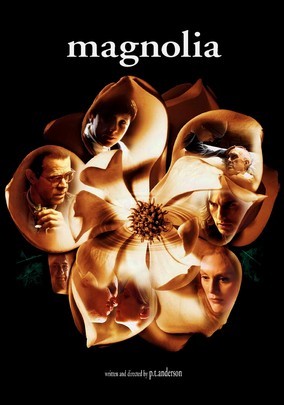
Magnolia-1999

Magnolia-1999

Director Paul Thomas Anderson

Starring Tom Cruise, Julianne Moore, John C. Reilly

Top 250 Films #67

Scott’s Review #777

Reviewed June 21, 2018

Grade: A

Paul Thomas Anderson is one of my favorite modern directors. In my opinion, his best film is Boogie Nights (1997), but he has also created other dark offerings, such as Phantom Thread (2017) and Inherent Vice (2014).

Arguably, his most distinctive effort might be Magnolia (1999), a cerebral film that explores themes of forgiveness and the meaning of life.

An ambitious effort, featuring a stellar ensemble cast, makes the film a fantastic experience.

Set in the San Fernando Valley (a mountainous area of Los Angeles), the film resembles David Lynch’s Mulholland Drive (2001) in area and oddness, along with unusual dialogue and offbeat characters.

A narrator explains three situations of extreme coincidence and surmises that chance may not be the only responsible party. Anderson then carves an intricate tale involving numerous characters, intersecting lives, and a riveting final climax during one rainy California day (an oddity in itself!).

The plot begins when we meet Jim Kurring (John C. Reilly), a police officer who is called to investigate a disturbance.

After finding a woman’s body in an apartment closet, events turn bizarre as a children’s game show host (Philip Baker Hall), his estranged daughter (Melora Walters), the show’s former producer, Earl (Jason Robards), who is dying from cancer, his drug-addicted wife Linda (Julianne Moore), Earl’s male caretaker (Philip Seymour Hoffman), a former game show champion (William H. Macy), and finally, an intense motivational speaker (Tom Cruise).

Quite a bevy of talented actors!

As the plot moves along mysteriously, the connections of each of the characters are not only revealed, but their peculiar motivations start to take shape.

For example, Linda, who married Earl for his money, seems to have an epiphany and demands her lawyer change Earl’s will. Later, a character may have a connection to Earl and Linda, but is it all as it seems?

In the case of Magnolia, the film is so wonderfully strange that it leaves the audience guessing throughout most of its running time.

Bizarre scenes are commonplace throughout the film. My favorite one is a marvelously creative scene. Suddenly, frogs begin to fall out of nowhere from the Los Angeles sky with numerous consequences for the characters.

The incident causes a ripple effect, of sorts, as many of the character’s fates are determined. Though one may not be able to make heads or tails of this scene or take complete logic from it, it’s enthralling all the same.

Magnolia has an overall quirky tone- sometimes upbeat-sometimes melancholy- that I adore. Films that are tough to figure out and that add an interesting musical score are so rich with flavor.

Aimee Mann is responsible for composing many of the songs on the musical soundtrack, so much so that she received a title credit on the soundtrack itself. Mann infuses richness into her music that is moody and diverse with ambient essentials.

Many actors make frequent appearances in Paul Thomas Anderson’s films. Magnolia alone seems almost like a Boogie Nights reunion with Moore, Walters, Macy, Baker Hall, and Philip Seymour-Hoffman to name just a handful.

The amazing aspect is that all of the aforementioned actors play vastly different, and arguably even more complex roles than they did in Boogie Nights.

Similar to Quentin Tarantino’s actors appearing in many of his films, what a creative treat this must be for them.

There is no doubt that Magnolia (1999) is a complex, dream-like, film. Open to interpretation and reflection, I find it to be a film that feels brilliant and that I would like to revisit and dive into even more and more with further viewings, for hopefully a better understanding and an even deeper appreciation.

Oscar Nominations: Best Supporting Actor-Tom Cruise, Best Screenplay Written Directly for the Screen, Best Original Song-“Save Me”

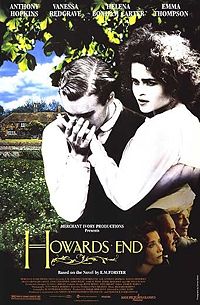
Howards End-1992

Howards End-1992

Director James Ivory

Starring Anthony Hopkins, Emma Thompson, Helena Bonham Carter

Top 250 Films #79

Scott’s Review #702

Reviewed December 1, 2017

Grade: A-

Howards End is my favorite film adaptation of E.M. Forster’s novel, which was also adapted into a film during the 1980s (1985’s A Room with a View and 1987’s Maurice are the other two notable works).

The novels were written during the early 1900s and set during the same period, focusing on class relations in 20th-century England.

The film is lovely and picturesque, telling an interesting story about romance and drama between the haves and have-nots during this period.

The film was a success and received heaps of Academy Award nominations in 1993.

Margaret Schlegel (Emma Thompson), an upper-middle-class intellectual, part of London’s bourgeoisie, befriends wealthy and sophisticated, yet shockingly conservative Ruth Wilcox (Vanessa Redgrave).

The two women strike up a powerful friendship, which results in her beloved country home being left to Margaret when an ailing Mrs. Wilcox dies.

To complicate matters, Margaret falls in love with a businessman (and husband of Ruth), Henry (Anthony Hopkins), while Margaret’s sister Helen, briefly becomes engaged to Paul Wilcox, Henry’s son.

The two families’ lives further intersect when they wind up as neighbors in London and the true owner of the beloved “Howards End” is questioned.

Added to the mix are several other characters of various social backgrounds, having connections to the families.

The writing in Howard’s End is rich and emotional as each character is perfectly fleshed out this includes the supporting as well as the lead characters.

Thompson and Hopkins, both sensational actors, have tremendous chemistry together, and unsurprising was Thompson’s win for Best Actress during this competitive year. She carries the film seamlessly with her upper-middle-class ideals- not conservatively rich, but far from working-class- she epitomizes poise grace, and empathy for those less fortunate than she.

Hopkins, on the other hand, is calculating and confident, yet charismatic and sexy as an old-school, controlling businessman.

Somehow, these two characters complement each other exceptionally well despite their varied backgrounds

The role of Helen may very well be Helena Bonham Carter’s finest. Not being an enormous fan of the actress-overrated and too brooding in my opinion enjoys portraying an interesting character in Helen.

Lovelorn and earnest, yet somewhat oblivious, she develops a delicious romance with the young clerk, Leonard Bast, my favorite character in the film. Living with Jacky, a woman of dubious origins, he is the ultimate nice guy and sadly winds up down on his luck after heeding terrible business advice.

Bast, thanks in large part to actor Samuel West, who instills an innocent, good guy quality in his character, deserves major props.

The cinematography featured in Howards End is beautiful with extravagant outdoor scenes- the lavish gardens of Howards End- just ravishing and wonderful.

Kudos too to the art direction, set design, and costume department for making the film look so enchanting.

There is something so appealing about the look of this film and director, James Ivory, undoubtedly deserves praise for pulling it all together into a suave picture. Whether the scene calls for sun or rain, tranquil or bustling, every scene looks great.

If I were to knock any points from this fine film it would be at two hours and twenty-two minutes, Howards End does drag ever so slightly, and many scenes involve the characters merely having chats with each other, without much action.

But this criticism is small potatoes when compared to the exceptional writing and well-nuanced character development displayed throughout the piece.

Admittedly, and perhaps shamefully, I have not read any of the Forster novels, but Howards End appears to be the film that is most successfully adapted, gleaming with textured finesse, grace, and style.

With the film’s finest actors along for the experience, and intricate, fine story-telling, Howards End (1992) is a film well worth watching.

Oscar Nominations: 3 wins-Best Picture, Best Director-James Ivory, Best Actress-Emma Thompson (won), Best Supporting Actress-Vanessa Redgrave, Best Screenplay Based on Material Previously Produced or Published (won), Best Original Score, Best Art Direction (won), Best Cinematography, Best Costume Design

Independent Spirit Award Nominations: Best International Film

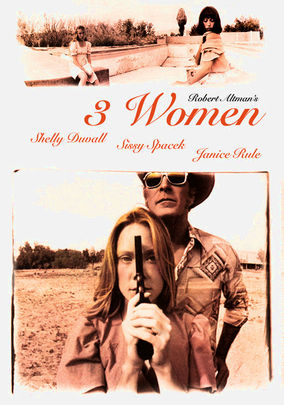
3 Women-1977

3 Women-1977

Director Robert Altman

Starring Shelley Duvall, Sissy Spacek

Top 250 Films #91

Scott’s Review #578

Reviewed January 1, 2017

Grade: A

Robert Altman is one of my all-time favorite directors and what a pleasure it is to uncover additional gems that he has directed over the years.

I have seen 3 Women (1977) before but some films (the true greats) are like fine wines and get better and better over time, in addition to being appreciated more and more with each passing viewing.

3 Women is a prime example of this. The level of psychology and the changing personalities of the characters make it a unique and brilliant experience.

3 Women is a psychological feast and the study of three complex characters, hence the title.

How fantastic how Altman claimed to have dreamed the entire film, complete with Duvall and Spacek in the roles, and then attempted to recreate the dream on film- he has done a masterful job.

The film is dream-like with an interpretive element that will leave the viewer pondering not only the relationships between the three women but who exactly each woman is- consciously and sub-consciously. Lots of questions will abound as the film concludes.

The main relationship is between the characters portrayed by Duvall and Spacek.

Duvall plays Millie Lamoreaux, a chatty and confident woman, who works at a California health spa for elderly clientele. She is statuesque and gorgeous, but surprisingly not well-liked by her colleagues, two of whom are mysterious identical twins.

New employee Pinky Rose is a shy and vulnerable mousy type, who takes an immediate liking to Millie, becoming somewhat obsessed with her. The pair eventually move in together and begin to engage in a mysterious and sometimes volatile friendship dripping in jealousy and lust.

Eventually, they switch personalities, only adding to the mystique of the film. They reside in the Purple Sage Apartments, run by Edgar and Willie Hart.

Willie is the third woman referenced in the title and is a pregnant painter, creating unsettling murals marveled at by Pinky.

It has been argued that 3 Women was an influence on the David Lynch masterpiece, Mulholland Drive (1992), and the more I ponder this the more that I agree with it.

The dream-like, surrealistic qualities are prevalent in both films.

Peculiar, strong-willed women are the central characters in both films and psychology and amnesia are the main themes. The southern California setting is identical as are the interpretive elements, and the fantastically odd characters- both lead and supporting.

When Pinky’s elderly parents are introduced, this is uncanny to a pair of grandparents featured in Mulholland Drive. Both are superior films so the comparisons are a joy to think about and ponder the complexities.

Ingmar Bergman’s 1966 psychological film Persona is most certainly a large influence on 3 Women. That film dared to explore merging personalities among women.

The final scene of 3 Women is intense and thought-provoking. The lives of the women carry on following a tragic event, but each takes on a certain persona and role within the family unit that they have forged.

Among other qualities, I view 3 Women as a feminist film, despite being directed by a male. Altman was famous for allowing his actor’s free reign in dialogue and development and this most certainly had to be the case with 3 Women.

One of Altman’s masterpieces.

Altman is a genius in nearly every film that he creates, but 3 Women is probably his most cerebral, and the film that can be talked about and analyzed more than the others.

What a pure treat for a complex film lover to explore. 3 Women (1977) is not for mainstream audiences nor is it meant to be.

Requiem for a Dream-2000

Requiem for a Dream-2000

Director Darren Aronofsky

Starring Ellen Burstyn, Jared Leto

Top 250 Films #95

Top 10 Most Disturbing Films #3    

Scott’s Review #172

60001134

Reviewed September 21, 2014

Grade: A

Requiem for a Dream (2000) is a disturbing film and, at times, tough to watch. Still, it is also a brilliant masterpiece, visually as well as from a storytelling perspective, that I appreciate more and more with each painful (in a good way!) viewing experience.

The film is easily one of the most disturbing films I have ever seen.

The subject matter is drug trafficking/addiction that affects more than one character in the cast- a myriad of different films have tackled this subject- think Traffic, released around the same time as Requiem for a Dream, for a comparison.

At the risk of directly comparing Requiem for a Dream to Traffic, which is unfair, I will say that as gritty as Traffic is, Requiem for a Dream makes it look like a kid’s film.

Director Darren Aronofsky’s direction is superb.

The story revolves around a young man (Harry) from Brooklyn, played by Jared Leto, his girlfriend Marion, played by Jennifer Connelly, Harry’s mother Sara, played by Ellen Burstyn, and Harry’s best friend Tyrone, played by Marlon Wayans.

Each individual falls into a trap of drug addiction in their way, but all are written sympathetically so that the audience cares about them and feels their sorrows intensely.

Harry and Tyrone are involved in drug selling but aspire to be successful and both love their mothers and their significant others- in Harry’s case that is Marion.

Marion (Connelly) falls in over her head and is forced to turn tricks to feed her heroin habit. She is an intelligent young woman from an affluent family, which makes her downward spiral into prostitution all the more shocking.

The standout among the central characters is Sara Goldfarb, who is a lonely widowed woman obsessed with a television game show. She develops delusions of grandeur of becoming a contestant and is tragically determined to lose weight to fit into her favorite red dress.

She becomes dependent on diet pills and begins hallucinating that her refrigerator is attacking her.

Aronofsky perfectly mixes in fantasy sequences showcasing Burstyn’s real attractiveness contrasted with the desperation of Sara. Sara is a sad character and Burstyn is mesmerizing in the role.

How she lost the Oscar to Julia Roberts in 2000 is and always will be one of the biggest Oscar travesties in my opinion.

The special part of this film is the visual and cerebral aspects. The film is dreamlike in its texture and extreme, fast-paced close-ups of the diet pills or heroin being consumed.

The viewer feels the highs and lows that the characters feel and there is immediately a sense that all of the characters are doomed and hopeless.

Besides, this film has one of the most effective and haunting scores I have ever experienced, right up there with John Carpenter’s Halloween.

The slow-motion sequences combined with frenetic images make this quite cerebral to watch. I cannot watch this film very often as it is too disturbing and upsetting, but I sure am glad it was made at all.

Oscar Nominations: Best Actress-Ellen Burstyn

Independent Spirit Award Nominations: 2 wins-Best Feature, Best Director-Darren Aronofsky, Best Female Lead-Ellen Burstyn (won), Best Supporting Female-Jennifer Connelly, Best Cinematography (won)

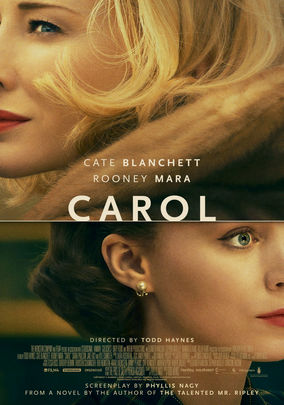
Carol-2015

Carol-2015

Director Todd Haynes

Starring Cate Blanchett, Rooney Mara

Top 250 Films #117

Scott’s Review #308

80058700

Reviewed December 27, 2015

Grade: A

My comparison would be that this film is the female version of Brokeback Mountain (2005).

Carol is a story of hidden romance and secret lives in the early 1950s when it was difficult to lead an alternative lifestyle openly (or even in hiding!).

The film is a marvel in its honest storytelling, exquisite class, and gracefulness with excellent cinematography and a nice, heartwarming tale.

Carol is directed by Todd Haynes, a director known for films about doomed romances faced with societal challenges. Carol is a wonderful piece of work.

The film contains two equal female lead roles- Carol Aird (Cate Blanchett) is a gorgeous, sophisticated socialite.  She exudes confidence and style in everything that she does.

Always perfectly dressed, well made up, manicured fingernails, her mannerisms relay confidence, and control. She is married to a wealthy businessman, Harge (Kyle Chandler), who is madly in love with her, yet they are divorcing because of her “problem”.

The fact that Carol is a lesbian is known to Harge and they share somewhat of an understanding, and a five-year-old daughter. The divorce they are going through is difficult.

Therese Belevit (Rooney Mara), is the polar opposite of Carol.  Young, and naĂŻve, she is a part-time shopgirl, fascinated by photography. She dates men and goes to parties, living out a typical young girl’s life.

When Carol and Therese meet at the store where Therese works, they are immediately enamored with one another and a friendship develops. Both seem caught off guard and the chemistry between the two actresses sizzles.

The focus is the budding romance between Carol and Therese, and the societal differences that they face, not to mention the age difference between the two women. I found the chemistry quite evident thanks to Blanchett and Mara.

Worlds apart, the two women somehow find their way to each other and form a bond. Their relationship is tender, gentle, and carefully laid out for the audience. They are neither animalistic nor barbaric in a sexual way, but rather sweet.

When Therese takes a spontaneous car trip from New York to Chicago, leaving her boyfriend, Richard, conflict develops. He wants them to run off to Paris but Therese wants to be with Carol. He breaks up with Therese and accuses her of having a crush on Carol.

Therese and Carol’s romance is finally consummated in a mid-western hotel. It is New Year’s Eve and Todd Haynes chooses to shoot this scene in a romantic, spontaneous way. They are celebrating the holiday, but both are blue and vulnerable. It makes perfect sense that they would turn to one another.

The film delves into many different emotions that Carol and Therese face- love, glee, anger, rage, confusion, rejection, and loneliness. These adjectives and the tone of the film are why it succeeds.

From an acting perspective, both Blanchett and Mara are great, but I am more partial to Blanchett’s performance. She embodies this character. From when she orders a martini dry with one olive, to how she brazenly approaches Therese, she is a woman in control. But faced with family issues she becomes vulnerable and we see her as human.

Besides the interesting story of a love faced with many challenges, the look of the film is grand. The sets, hairstyles, clothes, and makeup are graceful and rich. To summarize- everyone looks great and it portrays a perfect picture of the 1950s.

A progressive Hollywood tale, Carol showcases glamour, and great acting, and sends a powerful message of acceptance and struggle during a difficult time to be “different”, to fulfill one’s life.

Oscar Nominations: Best Actress-Cate Blanchett, Best Supporting Actress-Rooney Mara, Best Adapted Screenplay, Best Original Score, Best Cinematography, Best Costume Design

Independent Spirit Award Nominations: 1 win-Best Feature, Best Director-Todd Haynes, Best Female Lead-Cate Blanchett, Rooney Mara, Best Screenplay, Best Cinematography (won)

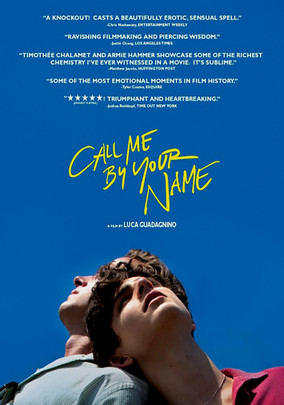
Call Me By Your Name-2017

Call Me By Your Name-2017

Director Luca Guadagnino

Starring Timothée Chalamet, Armie Hammer

Top 250 Films #118

Scott’s Review #708

Reviewed December 27, 2017

Grade: A

Call Me by Your Name (2017) is a gorgeous film. It is simply beautiful in storytelling, cinematography, and acting.

A humanistic film that crafts a lovely tale of young love, friendship, and emotions, which is breathtaking to experience.

In fact, in the LGBT category, I would venture to proclaim that this film is groundbreaking. It leaves behind any tried-and-true homophobic elements and instead tells a good story that is fresh, sincere, and simply flawless.

The period is the summer of 1983, and the landscape is the beautiful Italian Riviera.

Seventeen-year-old Italian-American Elio (Timothée Chalamet) dreams of spending the summer away, living with his affluent parents in a small village. His world is rich with culture and learning—his father (Michael Stuhlbarg) is a professor, and his mother is a translator.

A brilliant student, Elio wiles away the days reading, playing music, and flirting with his girlfriend, Marzia.

When a handsome twenty-four-year-old American student, Oliver (Armie Hammer), arrives for a six-week stay to assist Elio’s father on a project, desire and first love blossom between the young men as they struggle with their burgeoning relationship.

Directed by Luca Guadagnino, who has also directed the lovely 2009 film, I Am Love, is a man known for stories of desire in small Italian villages.

Call Me By Your Name is the third in a trilogy, I Am Love and 2015’s A Bigger Splash being the others.

The setting is crucial to the story, as both the summer heat and the world of the intellectual scholars are nestled into a grand shell of culture. The philosophical nature of the story is palpable—the film exudes intelligence and sophistication.

By 2017, the LGBT genre had become populated with films in the romantic, drama, and comedy sub-genres, but many use the standard homophobic slant to elicit drama and conflict.

Not to diminish the importance of homophobic discussions to teach viewers, Call Me By Your Name stands alone in that homophobia is not an issue in this story.

Given the time of 1983, this may be surprising—at the very cusp of the AIDS epidemic, this topic is also not discussed; rather, the subject matter is simply a love story between two males and the coming-of-age story that their love expresses.

The film is quite moving; Elio and Oliver are characters filled with texture and raw emotion. Oliver is confident, charismatic, and a great catch for any lucky young lady in the village.

Hammer fills the role with poise and humanity.

Chalamet, a beautiful young man, gives the complex role his all, as so much can be conveyed not by dialogue, but by expressions on the actor’s face.

As Oliver slow dances with a local girl, the wounded look that Chalamet reveals, his eyes welling up with tears, is heartbreaking. Seventeen is a tough age for most young men, but when coming to terms with one’s sexuality, it can be excruciating.

The final scene is poignant, as it features a five-minute-long sequence of gazing into Chalamet’s eyes, during which many emotions are expressed.

Enough credit cannot be given to Stuhlbarg as Elio’s father, as he gave one of the best speeches ever performed in film history. The actor gives a subtle and poignant performance as the sympathetic and knowing father.

His speech, marked by understanding and warmth, is riveting and inspirational—to be cherished. Mr. Perlman is a role model to fathers everywhere and the ideal parent for any gay son.

One scene that could stir controversy is the sure-to-be-controversial “peach scene”. Involving an innocent peach used during a sex act, the scene is erotic and borders on “icky”, but is also vital to foster the connection between Oliver and Elio.

Another potential risk to the film is that Oliver is twenty-four, while Elio is seventeen, making Elio underage. However, the film never portrays Oliver as more of an aggressor, and the relationship remains tender and consensual.

Call Me By Your Name (2017) is not just a great LGBT film but a film for the ages.  Beautifully crafted with gorgeous landscapes and nuanced, powerful acting, the sequences are subtle and carefully paced.

The film is simply a treasure.

Oscar Nominations: 1 win-Best Picture, Best Actor-TimothĂ©e Chalamet, Best Adapted Screenplay (won), Best Original Song-“Mystery of Love”

Independent Spirit Award Nominations: 2 wins-Best Feature, Best Director-Luca Guadagnino, Best Male Lead-Timothée Chalamet (won), Best Supporting Male-Armie Hammer, Best Cinematography (won), Best Editing

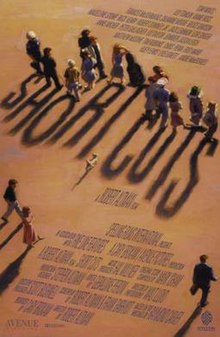
Short Cuts-1993

Short Cuts-1993

Director Robert Altman

Starring Tim Robbins, Julianne Moore, Lily Tomlin

Top 250 Films #123

Scott’s Review #1,400

Reviewed September 20, 2023

Grade: A

I am such a fan of acclaimed director Robert Altman because he typically features an enormous cast with richly composed characters all serving a story purpose. Frequently, with much character development and investment.

Short Cuts (1993) is a latter-day Altman offering set in Los Angeles, California, the City of Angels that is nearly as good as my all-time favorite of his, Nashville made in 1975.

Similarities burst to the screen with twenty-two principal characters to Nashville’s twenty-four. Their lives frequently intersect and the fun is peeling back the layers of their lives and discovering who is connected to whom.

Comparisons to 1992’s The Player (also Altman) and 1999’s Magnolia, directed by Paul Thomas Anderson can also be made for obvious Los Angeles setting reasons.

But, Magnolia is much weirder than Short Cuts.

The irony is that most characters are anything but angels as they suffer from insecurities, deaths, infidelity, and various shenanigans as they attempt to get through California life amid an earthquake and a fleet of helicopters spraying for medflies.

Altman based the film on the nine short stories and a poem by Raymond Carver.

Some of the tales include a waitress Doreen (Lily) who is married to an alcoholic limo driver (Tom Waits) who accidentally runs into a boy with her car. Soon after walking away, the child lapses into a coma. While at the hospital, the boy’s grandfather (Jack Lemmon) tells his son, Howard (Bruce Davison), about his past affairs.

Meanwhile, a baker (Lyle Lovett) starts harassing the family when they fail to pick up the boy’s birthday cake.

Dr. Ralph Wyman (Matthew Modine) and his wife, Marian (Moore), meet Stuart Kane (Fred Ward), an unemployed salesman, and Claire Kane (Anne Archer), a party clown, at a cello concert.

They impulsively decide to have a Sunday dinner date. seemingly having nothing in common.

Meanwhile, Marian’s sister, Sherri (Madeleine Stowe), is married to a cheating cop named Gene (Tim Robbins), who is having an affair with Betty Weathers (Frances McDormand), while Betty is divorcing one of the helicopter pilots, Stormy (Peter Gallagher).

There are other stories and connections to round out the fabulous cast.

The juicy and dramatic storylines play out like a terrific story arc on Days of Our Lives or As the World Turns with some needed comedic elements to balance things out.

Anyone who knows Altman will salivate with the name recognition among the cast most notably Tomlin and Robbins. Actors frequently chomped at the bit to appear knowing that he was an actor’s director.

This means he allowed his cast open range to create dialogue appropriate for their characters.

There’s no better example than when Jack Lemmon tells a story in the film. His improv and free dialogue are a dream to watch and a lesson in good and natural acting.

Despite the enormous cast everyone has something of quality to do. Nobody is languishing on the back burner with throwaway scenes or unimportant activities. All characters connect to others in some way.

Fans who fancy Los Angeles both in film and in real life with its bursting sunshine and cheery perception will revel in the down and dirty sub texture of Short Cuts.

The fun is getting there.

Some characters are wealthy but most struggle with day-to-day routine so the film contains a harsh realism. They try to find some shreds of happiness wherever they can get them.

Like real life which is part of the mastery of Short Cuts. The audience can relate to the characters because we all know people like them which makes the film a beautiful and treasured experience.

Or some may even be like us. The writing is brilliant and the characters are true to form.

One day I’ll create a list of my Top Ten Robert Altman films and I bet Short Cuts (1993) lands in the Top Five.

Oscar Nominations: Best Director-Robert Altman

Independent Spirit Award Nominations: 3 wins-Best Feature (won), Best Director-Robert Altman (won), Best Screenplay (won), Best Supporting Actress-Julianne Moore

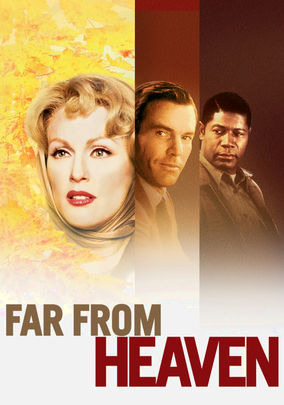
Far From Heaven-2002

Far From Heaven-2002

Director Todd Haynes

Starring Julianne Moore, Dennis Haysbert

Top 250 Films #127

Scott’s Review #332

60025011

Reviewed January 8, 2016

Grade: A

Far From Heaven (2002) is a gorgeous film, set in 1950’s upper-class and sophisticated Connecticut, that tackles not one, but two, separate social issues, in a wonderful story-telling fashion.

An interracial couple fraught with discrimination, and a homosexual husband hiding his secret lifestyle encompass this amazing film by acclaimed director Todd Haynes.

In years to follow, Haynes would also direct such masterpieces similar to the period (and story) of Carol (2015).

For starters, the cinematography and art direction are simply breathtaking- the beautiful and colorful small town in Connecticut, on the surface, prim and proper, is oozing with secrets and scandal just waiting to bubble to the surface.

An aerial view of the town allows the viewer to see this perfectly carved town in a sweeping motion.

Far From Heaven contains many similarities to All That Heaven Allows, made in 1955, and also focuses on a great scandal in a small, seemingly idyllic New England town.

Cathy Whitaker (Julianne Moore) seems to have everything perfectly styled and kept at home in affluent Connecticut, a successful husband named Frank (Dennis Quaid), who is an advertising executive, beauty, and a neighborhood filled with friends.

One night when Frank is working late, Cathy surprises him with dinner at the office, only to be surprised herself by catching Frank passionately kissing another man. In an awkward scene, Frank admits to Cathy that he needs conversion therapy, but instead turns to alcohol and continues to secretly see men.

Devastated, Cathy befriends her gardener, Raymond Deagan (Haysburt), a handsome black man, and slowly begins a relationship with him. Needless to say, this causes gossip and scandal amongst the townspeople.

Far From Heaven is fantastic story-telling, weaving, in essence, two main social stories together.

Frank questions his sexuality, afraid to admit he is gay and risking his reputation and career. Undoubtedly, he is a tormented individual and we see him slowly come to terms with his sexuality.

Haynes, fantastic at crafting a worthy story, carves a similar tale in 2015’s Carol, only she is a woman confident about her sexuality, but hiding it from society. Since the time in both films is the 1950s, the sexual revolution has not occurred, let alone anything gay-related.

The center story though belongs to Cathy and Julianne Moore portrays her to perfection. I would argue that Cathy is Moore’s best role- along with Amber Waves from Boogie Nights.

Hurt and betrayed by her husband, she suddenly is filled with new and dangerous emotions- falling in love with a black man in a not very open-minded time.

Moore and Haysbert have fantastic chemistry from their very first scene together.

I love how Haynes showcases the perfection of the town- the lawns are perfectly mowed, the flower beds flawless, and everyone appears cheerful and colorful. But when something in their little town becomes amiss (in this case Cathy going against the grain) the fangs come out and the animals bear their teeth.

A wonderful scene showcases Cathy and Raymond’s slow dancing in a solely black bar. They sway as one and Cathy is accepted by the black patrons. Raymond (and his daughter) are not treated the same way by the white folks of the town once they catch wind of the shenanigans going on between the interracial couple.

Far From Heaven (2002) is a beautiful film- from the way it looks and is shot, to the powerful acting performances all around. Moore may be the star and the central character of the film, but Quaid and Haysbert certainly deserve their due.

They each give layered performances as wounded and tortured men- and the conclusion of the film- perceived as open-ended- is also not a happily ever after climax.

Oscar Nominations: Best Actress-Julianne Moore, Best Original Screenplay, Best Original Score, Best Cinematography

Independent Spirit Award Nominations: 5 wins-Best Feature (won), Best Director-Todd Haynes (won), Best Female Lead-Julianne Moore (won), Best Supporting Male-Dennis Quaid (won), Best Cinematography (won)

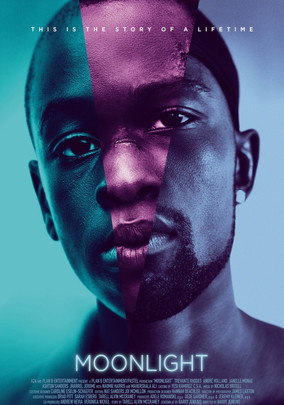
Moonlight-2016

Moonlight-2016

Director Barry Jenkins

Starring Trevante Rhodes, Andre Holland

Top 250 Films #167

Scott’s Review #512

80121348

Reviewed November 6, 2016

Grade: A

Moonlight (2016) is an excellent film rich in character and grit. It tells the story of one man’s life, from childhood to teenage years to adulthood, sharing the bonds he forms and the demons he wrestles with.

The acting is fantastic, and the story is poignant and truthful.

The film is not preachy but instead tells a story, leaving the audience to sit and observe, quietly formulating their opinions.

Moonlight is a mixture of beauty and heartbreak and is told very well.

The film is divided into three chronological chapters that describe the central character’s life.

Chiron is a shy, docile young boy of six or seven living in the drug-filled world of Miami, Florida, in the 1980s. He is bullied for being “different,” though he does not know why he is shunned. Chiron is introverted and distrustful.

A kind-hearted drug dealer named Juan (Mahersala Ali) takes a shine to Chiron, whose own mother becomes more and more absent and emotionally abusive to her son.

Naomie Harris plays Paula, mother to Chiron and herself a drug addict. Juan and his girlfriend Theresa (Janelle Monae) become surrogate parents to Chiron and share their home with him as needed.

Chapter two focuses on Chiron as a teenager, still bullied and coming to terms with his sexuality and feelings of insecurity. By this time, his mother has spiraled out of control, and his life is a sad one.

He is filled with emotions such as rage, despair, and confusion. An experience with his best friend, Kevin, changes the direction of his life. Kevin is his saving grace and a decent person amidst his troubled life.

In chapter three, we are re-introduced to Chiron as an adult, having wholly reinvented himself and become a changed man, but is he changed for better or worse? People from his past resurface at this time, and Chiron must face various demons and emotions and come to terms with himself and the others surrounding him.

Does his story have a sad or a happy ending? This is the question we are left wondering.

The aspect that impressed me the most is the storytelling and the ground broken with this film.

From an LGBTQ+ perspective, by this time (2016), we have experienced numerous offerings on the subject. Still, the fact that Moonlight is not only a character study but a love story between two black men has not yet been done to this degree in cinema, or arguably at all, especially in mainstream fare.

Happily, Moonlight is receiving critical praise. The fact that Chiron lives in a macho, male-driven society makes his self-acceptance all the more challenging for him.

The direction in Moonlight is impressive, and director Barry Jenkins deserves much praise.

Quiet scenes of Chiron as a boy asking Juan and Theresa why the bullies call him a specific name are heartbreaking. Another scene muted and in slow motion, reveals an abusive Paula calling Chiron a degrading name, leaving him confused and hurt.

The tender scenes between Chiron and Kevin are sweet and passionate and are told on a humanistic level.

Moonlight delves into such territory as loneliness and self-identity. It is an interesting film for anyone who has struggled with these issues or is empathetic to those who have.

Moonlight (2016) breaks stereotypes and molds a subtle and low-key film that speaks volumes.

Oscar Nominations: 3 wins-Best Picture (won), Best Director-Barry Jenkins, Best Supporting Actor-Mahershala Ali (won), Best Supporting Actress-Naomie Harris, Best Adapted Screenplay (won), Best Original Score, Best Cinematography, Best Film Editing

Independent Spirit Award Nominations: 6 wins-Best Feature (won), Best Director-Barry Jenkins (won), Best Screenplay (won), Best Cinematography (won), Best Editing (won), Robert Altman Award (won)

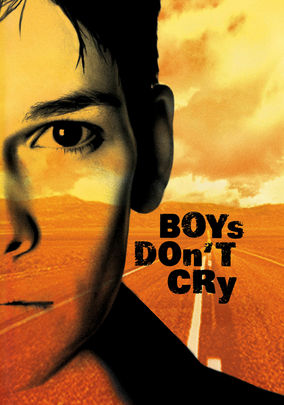
Boys Don’t Cry-1999

Boys Don’t Cry-1999

Director Kimberly Peirce

Starring Hilary Swank, Chloe Sevigny

Top 250 Films #177

Top 10 Most Disturbing Films #10

Scott’s Review #340

27422770

Reviewed January 9, 2016

Grade: A

Boys Don’t Cry (1999) is a fitting tribute to real-life figure Brandon Teena, a transgender man from Nebraska, who adopts a male identity and attempts to find love with Lana, played by Chloe Sevigny. Brandon is played by Hilary Swank.

Sadly, Brandon was brutally raped and murdered at the hands of some local men- a fact that the film does not gloss over.

Boys Don’t Cry is a heartbreaking and tragic film that will disturb some with its shocking and violent content- sadly it is a true story.

Swank deservedly walked away with the Best Actress Oscar statuette.

Set in working-class Nebraska and in the heartland, Brandon has the cards stacked against him from the start. Not exactly the most open-minded of areas, the film also sets a working-class environment for Brandon as most of his friends are poor factory or bar workers.

Born as Teena Brandon and female, Brandon (Swank) is a drifter and in trouble with the law for various unpaid tickets. He befriends ex-convicts John and Tom and becomes part of their crowd, falling in love with Lana- they are all unaware of Brandon being a female.

When Brandon’s secret is revealed, Lana is accepting and the pair decide to run away together, but Tom and John decide to murder Brandon.

Swank’s portrayal of Brandon is brilliant and believable and very few actresses could successfully pull this off. Swank has angular, androgynous features to begin with, but her drastic physical transformation is jaw-dropping.

Having closed-cropped hair and a male swagger, Swank immerses herself in the role, so much so, that as I watched the film I completely forgot that Brandon was not physically male.

Her physical transformation is not the sole reason for the fantastic performance though- Swank is emotionally there in the role and in a heartbreaking scene, after being beaten and raped, is treated poorly by a sheriff handling the accusations- just when Brandon could use an understanding ear.

What a cold world it can be for someone different from most others as Boys Don’t Cry reveals in a brutal, honest fashion.

Anyone who knows the true story of Brandon Teena knows he led a painful, tragic life, but was also filled with life and love- mainly for Lana.

Worth mentioning is Sevigny’s performance as Lana- in love with the person that was Brandon, not so much the gender. Sevigny portrays Lana as supportive, confused, and loving.

Director, Kimberly Peirce, became obsessed with the real-life case and does a fantastic job at tackling the film in a true, compelling way. To say nothing of the writing and the acting, Peirce also successfully uses a hand-held camera during Brandon’s strip scene and a surreal, muted light to portray the gloomy mid-west and the cold, hard lives that most of the characters lived.

Impressively, Peirce accomplished all of this on a shoe-string budget and took a wealth of inspiration from independent film legend John Cassavetes, who proved that gorgeous films can be made for very little money.

Many scenes take place in bars as Lana, a devoted karaoke singer, croons one tune after another, the highlight being Restless Heart’s 1988 country hit, “The Bluest Eyes In Texas”, which Lana sings in Brandon’s presence.

The use of somber songs gives the film a tragic soundtrack.

Famed film critic, Roger Ebert, described Boys Don’t Cry as “Romeo and Juliet set in a Nebraska trailer park”.

Boys Don’t Cry (1999) is an enormous victory in film for the LGBT community and, along with Brokeback Mountain (2006), is a perfect double-feature, as both are similar films, only one featuring males, the other females.

Both are tragic, bleak and all too real.

Oscar Nominations: 1 win-Best Actress-Hilary Swank (won), Best Supporting Actress-Chloe Sevigny

Independent Spirit Award Nominations: 2 wins-Best First Feature (Over $500,000), Best Female Lead-Hilary Swank (won), Best Supporting Female-Chloe Sevigny (won), Best First Screenplay, Producers Award

The Player-1992

The Player-1992

Director Robert Altman

Starring Tim Robbins, Peter Gallagher

Top 250 Films #181

Scott’s Review #601

Reviewed January 11, 2017

Grade: A

The Player (1992) ranks up there with other Robert Altman classics such as Gosford Park (2001), Nashville (1975), and Short Cuts (1993).

The film is an excellent piece of Hollywood satire and centers around a jaded movie executive, played by Tim Robbins, who does an incredible job with his role.

Robbins plays Griffin Mill, a man with no scruples. Feeling usurped by a younger executive, played by Peter Gallagher, as well as receiving death threats, he goes on the hunt for the person he feels responsible for, which leads to murder.

The audience is unsure whether to love or hate Mill, thanks to Robbin’s performance. He is snarky, but also vulnerable and a tad sympathetic.

The film contains a slew of real Hollywood celebrities (Cher, Malcolm McDowell, Bruce Willis) playing themselves and is largely improvised (as many of Altman’s films are).

Whoopi Goldberg and Lyle Lovett star as odd police detectives.

The plot is nothing that hasn’t been done before, but it’s the realness and the direction that make this movie a must-see, especially for Robert Altman fans.

The Player (1992) is a hidden gem.

Oscar Nominations: Best Director-Robert Altman, Best Screenplay Based on Material Previously Produced or Published, Best Film Editing

Independent Spirit Award Nominations: 1 win-Best Feature (won)

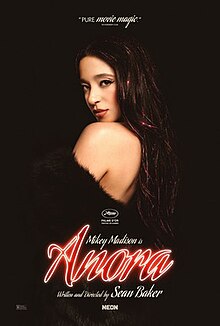
Anora-2024

Anora-2024

Director Sean Baker

Starring Mikey Madison, Mark Eidelstein, Yura Borisov

Top 250 Films #243

Scott’s Review #1,450

Reviewed November 3, 2024

Grade: A

Anora (2024) is one of the boldest films I’ve seen in some time and is my favorite Sean Baker film so far. Tangerine (2015) and The Florida Project (2017) are also great works.

Those planning to see the film should do homework and learn what Baker films are about. He frequently directs independent feature films about the lives of marginalized people, especially immigrants and sex workers.

Baker’s films are dirty, dark, and outrageous.

Because Anora has received awards buzz and is classified as a romantic comedy, the audience at my showing seemed slightly overwhelmed by its raw nature. While there are comedic moments, they are shrouded in darkness, and I don’t think my audience quite knew how to respond.

Some cover art captured the main couple, played by Mickey Madison and Mark Eidelstein, happily dancing and depicted them with the caption ‘a modern day Cinderella story’. This is misleading to the gritty nature of the story.

Madison plays Ani (Anora), an exotic dancer and part-time sex worker at a swanky Manhattan strip club. She lives in a Russian section of Brooklyn. Her life takes an unexpected turn when she meets and impulsively marries Vanya (Mark Eidelstein), the childlike son of a Russian billionaire.

When Vanya’s godfather and parents catch wind of the union, they send their henchmen to annul the marriage, setting off a wild chase through the streets of New York. Vanya flees the scene, and the others must find him.

Madison is brilliant. Known for a small role as Susan Atkins in Quentin Tarantino’s Once Upon a Time in Hollywood (2019) and a role in one version of Scream (2022), the young actress comes on as gangbusters.

Her character is tricky. We only know she lives with her older sister, and their mother lives in Florida with her boyfriend. Presumably, her father is absent, and she has had to find work to support herself. She is brassy, savvy, and intelligent. Most importantly, the audience roots for her.

Madison has an aura surrounding her, and she believably plays loving and hysterical with ease. Ani wants love but is also intelligent enough to know love doesn’t come easy and has a price. Madison channels each emotion with seeming ease.

Baker has become a favorite director of mine. He also writes, produces, and edits most of his projects. Although his films are not easy to watch, that’s what I like about them.

His films take marginalized or dismissed groups and provide representation.

Another standout is Russian actor Yura Borisov. Since Ani is the only character worth rooting for, Borisov’s character, Igor, slowly becomes a fan favorite. Assumed to be a henchman, he begins to care for Ani and strive to do the right thing amid chaos.

Borisov provides Igor with warmth and kindness in a world of chaos. I yearned to know more about the character. How did he get to be where he is? Did he need to escape Russia any way he could?

It’s hard to like the other characters, and I wouldn’t say I enjoyed quite a few, especially the wealthier ones. I yearned to leap across the aisles and smack Vanya, his mother, and one stripper who is Ani’s rival.

This caused me to react viscerally to the film and think about my emotions after it ended. Anyone who appreciates good cinema knows that the longer you think about it, the better it is.

Towards the end, Baker incorporates satisfying moments of Ani standing up for herself, especially against Vanya and his mother. This only reaffirmed the passion of her character. Even in despair, Ani remains tough and refuses to be mistreated by anyone.

My favorite sequence is at the end, during a January snowstorm in Brooklyn. A tender moment occurs between Ani and Igor where the writing, cinematography, and camera angles are beautiful.

Anora (2024) is recommended for fans of Baker’s work. He successfully and carefully weaves an emotional and raw tale of adventure, romance, desperation, and the haves versus the have-nots.

Oscar Nominations: 5 wins-Best Picture (won), Best Director-Sean Baker (won), Best Actress-Mikey Madison (won), Best Supporting Actor-Yura Borisov, Best Original Screenplay (won), Best Film Editing (won)

Independent Spirit Award Nominations: 3 wins-Best Feature-(won), Best Director-Sean Baker-(won), Best Lead Performance-Mikey Madison-(won), Best Supporting Performance-Yura Borisov, Karren Karagulian

Sing Sing-2024

Sing Sing-2024

Director Greg Kwedar

Starring Colman Domingo, Clarence Macrin

Scott’s Review #1,477

Reviewed April 22, 2025

Grade: B+

Based on the real-life Rehabilitation Through the Arts program at Sing Sing Maximum Security Prison in suburban New York, the film Sing Sing (2024) centers on a group of incarcerated men involved in creating theatrical stage shows through the program.

Inspiring, it successfully paints a positive picture of prison life instead of the tried-and-true prison dramas released over the years. The grit and violence are kept to a minimum, with rich character nuances added in their place.

If theater and prison sound like an unlikely pairing, the film works surprisingly well and provides a few emotional moments while just barely avoiding being labeled as wimpy.

Divine G, played by Colman Domingo, is imprisoned at Sing Sing for a crime he didn’t commit. He finds purpose by acting in a theatre group alongside other incarcerated men, including a wary newcomer named Clarence Maclin (self-portrayed).

While Domingo is the standout from an acting lens, the most impressive aspect of the film is the use of not only non-actors but an unforgettable ensemble cast of formerly incarcerated actors.

This provides authenticity and realism to a film that also feels watered down and safe.

Sure, it’s based on real-life events, and the results are uplifting, with teachable moments of resilience showcased, but it’s not exactly edgy material either.

Divine G is a character with humanity and kindness, and this is the message director Greg Kwedar wants to instill in the audience. He doesn’t go for knife fights, drug cartels, or anything overly conflicting other than the theater moments.

In only one scene, when Divine Eye threatens another prisoner with payback if the owed money is not paid, it feels thrown in as a way to remind the audience that the characters are tough guys.

Otherwise, the theater is the main attraction. And this is fine with me.

Nuggets of Shakespearean knowledge are shared with the prisoners and subsequently with the audience.  The theater fellows debate Hamlet and the idiosyncrasies of owning a scene, and compelling the audience to believe in what a character is saying are featured.

Domingo is excellent in the role, receiving his second Best Actor nomination but coming up empty-handed. The delicate nature of the film may have a lot to do with this, and I yearned for more grit from this fine actor.

He is getting roles that Denzel Washington would have gotten ten or fifteen years ago.

His best scene comes when he breaks down in anger at his false imprisonment. Angry yet contained, he powerfully reveals how a wrongly accused man can reach his breaking point.

In satisfying form, the film closes with real-life footage from the RTA program at Sing Sing, featuring the real actors who portrayed themselves in the film, performing in past productions when they were still inmates at the facility.

A lovely reunion between rivals Divine G and Diving Eye wraps up Sing Sing (2024) like a perfect little bow.

Refreshingly different from many prison films, I still wanted more muscle from this otherwise pleasant film.

Oscar Nominations: Best Actor- Colman Domingo, Best Adapted Screenplay, Best Original Song-“Like a Bird”

Independent Spirit Award Nominations: Best Feature, Best Lead Performance- Colman Domingo, Best Supporting Performance- Clarence Maclin

Anything-2017

Anything-2017

Director Timothy McNeil

Starring John Carroll Lynch, Matt Bomer

Scott’s Review #1,472

Reviewed March 17, 2025

Grade: B

Anything (2017) is a sweet LGBTQ+ independent film written and directed by Timothy McNeil. It is based on a play that he performed in Los Angeles.

While it is nice to see longtime character actor John Carroll Lynch (Fargo, 1996, and Zodiac, 2007) in a starring role and Matt Bomer looking fabulous in drag, the film suffers from contrivances and treads lightly.

The stagey setups, cliched situations, and popcorn dialogue feel forced, and the ambiguous conclusion is unfulfilling.

However, McNeil and the cast deserve kudos for showcasing a story never told before and fraught with possibilities with a powerful ‘love is love’ message.

Deeply depressed after his wife’s death, Early Landry (Lynch) survives a suicide attempt and moves from a small town in Mississippi to flashy Los Angeles to live with his loving yet controlling sister, Laurette (Maura Tierney).

While there, he develops a complicated and tender relationship with a transgender sex worker named Freda (Matt Bomer). They bond over their shared loneliness and past traumas, sparking a friendship and gradually more.

Early immediately captured me. A hulking man, his kindness and gentleness ooze from him when he takes a run-down apartment in a shady section of L.A. Surrounded by drug addicts and questionable neighbors, he makes friends simply because he is lovely.

Because Lynch frequently plays villains, this was a nice change of pace to witness, and I suspect the actor also enjoyed it.

McNeil kindly writes the character as non-judgmental and savvy despite his Mississippi origins. Oftentimes, in cinema, a Deep South character is written as racist, stupid, or both.

Instead, Early is accepting of different lifestyles. Lynch effortlessly carries the film because he gives the character authenticity and sensitivity.

I wanted to be friends with him.

On the other hand, Freda’s character took most of the film to win me over. Her unpredictable, defensive, and cutting remarks imperfectly represent typical drag queen caricature behavior.

It also took me until the conclusion not to think of McNeil’s reason for casting Bomer as a vehicle to see the pretty actor in drag. Bomer is a great actor in anything he appears in and does his job effectively.

But when Freda callously insults Early when they first meet by nicknaming him ‘Havisham,’ a character from Charles Dicken’s novel Great Expectations, she seems cutting for the sake of being insulting.

I also wanted to know more about Freda. How did she wind up in Los Angeles as a streetwalker? What was her upbringing like? We can guess it wasn’t great, but not much is said.

My reaction improved to championing Freda after a fantastic, ill-fated dinner party scene. Early invites Laurette, her husband, and their son to his apartment for dinner to meet Freda. When Laurette quickly realizes Freda is transgender, she guzzles white wine and lets loose on Freda, fearing she is manipulating her brother.

Despite the story’s groundbreaking nature, the feeling is predictable. Of course, Laurette will object to the romance as much as Freda’s friends call her a dreamer for wanting a ‘9 to 5 life’.

Straight and narrow, Early shakes Freda’s drug dependency in only one night while enduring her venom, vomiting, and unbelievably quick recovery, almost in the snap of his fingers.

I wanted a more definitive conclusion and had questions left in my back pocket that were never answered. Will the couple move in together? What will Freda do for a living? Does Laurette even know Freda is a prostitute?

Unfortunately, Early and Freda never have a sex scene, so the sexual complexities of their assumed relationship feel swept under the rug.

Though sweet-natured and carefully plotted, Anything (2017) has so much more potential story to tell that the results feel lacking.

The Brutalist-2024

The Brutalist-2024

Director Brady Corbet

Starring Adrien Brody, Guy Pearce, Felicity Jones

Scott’s Review #1,468

Reviewed March 1, 2025

Grade: A

The three-hour and thirty-five-minute film The Brutalist (2024) captivated me from the first sequence.

Adrien Brody’s character LászlĂł TĂłth, emerges from what is revealed as a ship. He emigrated to the United States after being sent to the Buchenwald concentration camp and forcibly separated from his wife, ErzsĂ©bet, and orphaned niece, ZsĂłfia.

As his ship enters New York Harbor, he sees the Statue of Liberty.

The sequence follows LászlĂł in the dark, and the audience is confused and unaware of what’s happening. His wife reads a Hungarian letter amid the scene explaining the events.

This is a top notch first scene.

The film is very long, so if you can’t watch it in a movie theater, we recommend watching it in miniseries style and digesting the segments slowly.

While The Brutalist initially feels like a studio blockbuster extravaganza, it’s shockingly an independent film made for relatively little money.

It’s brilliant but slow and methodic with rich moments of raw emotion, and graceful humanity. Parts are edgy and artistically creative with a quiet bombast.

Events occur between 1947 and 1958; the conclusion is set in 1980.

Having escaped post-war Europe, visionary architect László is well-respected and admired in his home country. He finds his way to Pennsylvania, where the wealthy and prominent industrialist Harrison Lee Van Buren (Guy Pearce) recognizes his talent for building.

The central theme of The Brutalist is LászlĂł’s struggles to achieve the American Dream. While a wealthy client changes his life, it comes at a price. Do we trust Harrison?

An early scene showcases Harrison’s bad temper, and we know this will come into play again, but it does at the expense of LászlĂł.

There are so many wonderful facets to The Brutalist; some slowly build and reach a dramatic crescendo, and others continue to bubble under the surface, ripe for discussion after the film has ended.

Though sometimes conventional with a heartwarming story of an immigrant’s struggle to succeed in 1950s USA, it is anything but a mainstream film when looked at closely.

Is there an attraction between Harrison and László? Harrison has no wife and seems uninterested in women. László visits a prostitute and cannot perform; he dances with a gorgeous woman and cannot be seduced. He cannot have sex with his wife.

A male/male rape scene is both gorgeously shot and filled with animalistic brutality. It’s the most unconventional rape scene I’ve ever seen in cinema.

László is also addicted to heroin and has bouts of rage. Is his relationship with Erzsébet more a friendship than a romance?

Brady Corbet’s direction is flawless, led by astounding cinematography of rural Pennsylvania. An early shot of a speeding bus with the opening credits shifting sideways brims with fresh style and creativity.

The sophisticated costumes and makeup perfectly fit the era, which is even more reason to give it kudos on such a small budget.

The acting by Brody, Pearce, and Jones is terrific.

We finally meet Erzsébet (Jones) halfway through the film when she makes her way to America. Crippled, due to osteoporosis, she is a brave and confident woman, finding career work as a writer for a newspaper.

Jones enfuses confidence into a role where she could be the victim. In a late scene, she tears down the house in a powerful performance, interrupting a family dinner.

Pearce electrifies in the best role of his career. His sexuality might explain his Jekyll and Hyde personality and bouts of rage. After all, this was the 1940s and 1950s. The actor plays ambiguity so well that knowing what Harrison feels is challenging.

Finally, Brody is brilliant. In a role arguably similar to his character in The Pianist (2002), he is a clever man forced as an immigrant to play the lousy cards he is dealt. With raw emotion, Brody makes every scene real and powerful.

Is he better off in Hungary or Israel?

Corbet, who also co-wrote the screenplay, delves into the experience of an immigrant. He showcases discrimination, preconceived notions, and the hopes and dreams of one man with the cards stacked against him.

The Brutalist (2024) is a beautiful film with much to say. It has soul and grit and perfectly pays tribute to an experience in the 1950s while sadly feeling relevant to the discrimination still facing immigrants in present times.

Oscar Nominations: 3 wins-Best Picture, Best Director-Brady Corbet, Best Actor-Adrien Brody (won), Best Supporting Actor-Guy Pearce, Best Supporting Actress-Felicity Jones, Best Original Screenplay, Best Original Score (won), Best Production Design, Best Cinematography (won), Best Film Editing

Independent Spirit Award Nominations: Best Director-Brady Corbet

I Saw the TV Glow-2024

I Saw the TV Glow-2024

Director Jane Schoenbrun

Starring Justice Smith, Jack Haven

Scott’s Review #1,467

Reviewed February 17, 2025

Grade: A-

I Saw the TV Glow (2024) is a bizarre independent psychological drama/horror film co-produced by Emma Stone and her husband.

It was produced by their Fruit Tree production company and distributed by A24, a brilliant independent film distributor, immediately giving the film credibility and a broad audience.

Writer/director Jane Schoenbrun perfectly depicts teenage angst via a visually cerebral and creative avenue. They sprinkle pink lettering and a colorful, moody aesthetic that is impressive.

The film is more than mysterious; it is hypnotic, with a dark mood evoking the dark underbelly of life in the suburbs.

Delving deeper after my initial viewing, I realized the film is an allegory for being transgender, which I did not know. Having that knowledge makes perfect sense because the characters feel trapped in their skin and fear being buried alive.

Transgender people often feel like the “egg crack,” a term for the moment in a trans person’s life when they realize their identity does not correspond to their assigned gender.

The film depicts bleak life in the suburbs and transitions between 1996 and 2026 when the main character is a teenager and finally a middle-aged man.

Owen (Justice Smith) is trying to make it through life in the suburbs when his older classmate, Maddy (Jack Haven), introduces him to a mysterious late-night TV show, a vision of a supernatural world beneath their own.

Both are loners and immediately bond over the young adult television show The Pink Opaque, which follows teenagers Isabel and Tara as they use their psychic connection to fight supervillain Mr. Melancholy, who has the power to warp time and reality.

Enthralled, Owen’s view of reality begins to crack.

I Saw the TV Glow is an unusual experience, especially during the 2006 chapter when Maddy returns to town after years away. When she explains that she paid a man to bury her alive, mirroring the finale of The Pink Opaque, the sequence is frightening, macabre, and hard to follow.

I wondered if she was speaking literally or figuratively.

But Maddy is trapped inside her own body, in her case, the wrong gender, and yearns to break out of her coffin. She encourages Owen to do the same, though it’s not clear if he identifies as female, is gay, or is just trapped in suburbia in a dead-end job.

In 2026, we realize that Owen has remained in the small town, mainly at the same job cleaning a movie theater, with his mother and stepfather long dead.

Sadly, he is still trapped inside his own body, aching to come to the surface. He screams out that he is dying and needs help, but nobody ever seems to notice.

He mentions a family, but they are never seen. Are they imagined? Is he living the life of a gay man or a straight man? Owen is mixed race, so what other issues does he face?

I wanted more concrete answers.

Even though the story is focused on a transgender lifestyle, Schoenbrun is never blatant about it.

Growing up in the lonely suburbs, I can relate to the feeling of suffocation at being unable to get out. Many are trapped for decades with the sameness day after day. Young people face this dilemma constantly, so I Saw the TV GLow is an essential film for most.

Debatable is whether I Saw the TV Glow was not overtly marketed as a trans film or even an LGBTQ+ film purposely. At a time in United States history when the trans community is under attack, they need all the support they can get.

The myriad of awards notice and star power (Emma Stone) supporting this film is reaffirming and another reason I love A24 so much.

But I Saw the TV Glow (2024) is a film with many interpretations and meanings.

Independent Spirit Award Nominations: Best Feature, Best Director, Jane Schoenbrun, Best Screenplay, Best Lead Performance-Justice Smith, Best Supporting Performance-Jack Haven

The Last Showgirl-2024

The Last Showgirl-2024

Director Gia Coppola

Starring Pamela Anderson, Jamie Lee Curtis, Dave Bautista

Scott’s Review #1,459

Reviewed January 12, 2025

Grade: A

The Last Showgirl (2024) is a powerfully acted and beautifully written story about an aging Las Vegas showgirl who struggles to find relevance and retain her identity after her show closes.

Pamela Anderson’s career-highlighting performance leads the film, featuring stellar acting from Jamie Lee Curtis, Dave Bautista, Billie Lourd, and Kiernan Shipka in supporting roles.

The story showcases a disenfranchised and easily dismissed group of Vegas performers like Boogie Nights (1997) did for the adult film industry and The Wrestler (2008) for the professional wrestling community.

Gia Coppola, granddaughter of legendary director Frances Ford Coppola (The Godfather and The Godfather Part II, 1972-1974), has talent in her blood as she creates the proper mood and the setup to showcase outstanding performances and the underbelly of the Vegas glitz and glamor.

Coppola uses handheld cameras and mostly close-up shots, which could distract some but allow for the rawness and blatancy of seeing Anderson, mainly sans makeup.

The film is a poignant story of resilience that anyone troubled by the aging process regarding their career and livelihood can easily relate to.

Pamela Anderson is a revelation as Shelley, a showgirl who must plan for her future when her show abruptly closes after a thirty-year run. She is proud to be in Le Razzle Dazzle, a classic French-style revue at a casino on the Las Vegas Strip, and views the show as glamorous art rather than a nudie show.

Her co-stars in the show include several younger women, including Mary-Anne (Brenda Song) and Jodie (Kiernan Shipka), who view Shelly as a mother figure.

Shelly’s older best friend, Annette (Jamie Lee Curtis), is boozy and has a gambling addiction, yet maintains a close relationship with Shelly. Years ago, she was ousted from the show and now works as a cocktail waitress.

Anderson, for years known as a sexpot, blonde bombshell femme fatale type who dates rockstars and keeps in the headlines, gives a stunning acting performance.

I was floored.

With her baby voice and kindness, the character of Shelly allows Anderson to give a refreshingly raw and dramatic performance. Usually there for everyone else, she faces an uncertain future, leaving her exposed and vulnerable.

A side story involves Shelly’s estranged daughter, Hannah, played by Billie Lourd. Shelly’s attempt to reconnect with her is interesting but not as effective as the loss of her show and her struggle with identity.

Anderson’s best scene occurs at the beginning and end of the film when she is forced to audition for a modern and sexy stage show. Shelly is confident and insecure as she struts around the stage to a 1980s Pat Benatar song, clumsily revealing her time capsule world with her song choice.

Ridiculed and brutally given honest advice by the director, she nonetheless champions herself, boldly describing herself as ‘fifty-seven years old and beautiful.’

One can’t help but see Anderson stripping off her defenses and applying makeup for herself and her character, Shelly.

Curtis gets better and better with age and now accepts supporting roles with grit and mustard rather than genre roles that define her. Annette wears dated blue makeup and a hairstyle she has undoubtedly had since the 1980s but cannot be held back; she is proud of who she is.

Former professional wrestler Bautista is amazing as Eddie, the revue producer.  Having succeeded at wrestling, he has now brilliantly forged into acting with stellar results. He gives a heartwarming performance.

The Last Showgirl (2024) left me mesmerized, teary, and pondering life and the reality of getting older. It does what great films are supposed to do and left me thinking long after the credits rolled.

Thanks to several awards season nominations for Anderson and Curtis, the small film receives proper exposure and word-of-mouth credibility, encouraging many cinema fans to see it.

A Real Pain-2024

A Real Pain-2024

Director Jesse Eisenberg

Starring Jesse Eisenberg, Kieran Culkin, Jennifer Grey

Scott’s Review #1,452

Reviewed November 25, 2024

Grade: A-

A Real Pain (2024) is a well-written film about life’s emotions, experiences, joys, and pains. It wonderfully mixes comedy with drama, not one genre or the other but a pot of delicious flavors forming a potent concoction.

Jesse Eisenberg produces, writes, directs, and acts in his creation, making it his own. Kieran Culkin is a revelation as a troubled young man plagued by depression and ravaged by passion.

Emma Stone co-produces.

David (Eisenberg) and Benji (Culkin) play New York Jewish cousins with seemingly minor in common who reunite for a tour through Poland to honor their beloved grandmother.

David, a reserved and pragmatic father and husband, contrasts sharply with Benji, a free-spirited and eccentric drifter. Their personalities clash as Benji criticizes David for losing his former passion and spontaneity, while David struggles with Benji’s unfiltered outbursts and lack of direction.

In Poland, the pair meets up with a Holocaust tour group that each shares a link to the Holocaust history.

Emotional honesty among the group members and tour guide occurs during their week-long trip as brutal truths and past tensions surface.

A Real Pain is a character study with flawless writing. Eisenberg delivers an effort reminiscent of a Woody Allen film with punchy moments, neurotic characters, and cheeky humor.

Benji and David, more like brothers than cousins, admire and resent each other. Benji wishes he had what David does- a stable job, a wife and child, and peace of mind. David resents the way Benji lights up a room with his passion, quickly becoming center stage while David is forced to lurk in his shadow.

Together, the film belongs to Eisenberg and Culkin as their dazzling chemistry emulates from the screen.

From the first scene, we sense David’s frustration. He rushes to the chaotic airport, hurriedly leaving voicemails for Benji. But the carefree Benji has been at the airport for hours and dismisses David at every measure.

David is a nice guy who selflessly gives Benji the window seat and first dibs on the shower. But he secretly feels bullied by Benji’s selfishness.

David realizes that people always fall for Benji and give him a pass, which frustrates him. He essentially mocks and calls the tour group assholes but somehow is deemed ‘real’ or ‘honest.’

Benji is tough to like, but Culkin’s wounded blue eyes allow the audience to realize he is hurting and suffering from deep pain.

My only knock is why the tour guide, who is mocked and criticized by Benji, ultimately thanks him for his brutal honesty and more or less snubs David.

Compared to the otherwise honest writing, this scene feels forced and unrealistic.

Eisenberg flawlessly delivers a performance that showcases his range of emotions. Sufferingly patient, he explodes during a dinner scene, letting his emotions spill onto the table.

Eisenberg and Culkin’s great acting is showcased, especially during the scenes where they let their emotions rip. Their best scene together is atop a hotel, where they smoke pot and old wounds furiously come to the surface.

Besides the acting, Eisenberg, the screenwriter, immerses the audience in the importance of Holocaust history.

It’s not for the faint of heart. Powerful scenes of the tour group walking through  Majdanek concentration camp are hard to watch, with the knowledge that thousands were exterminated.

Led by a scene-stealing turn from Culkin and a bevy of creative talents by Eisenberg, A Real Pain (2024) is a powerfully funny, emotionally resonant dramedy that finds him playing to his strengths on either side of the camera.

Oscar Nominations: 1 win-Best Supporting Actor-Kieran Culkin (won), Best Original Screenplay

Independent Spirit Award Nominations: 2 wins-Best Supporting Performance-Kieran Culkin (won), Best Screenplay (won)

All of Us Strangers-2023

All of Us Strangers-2023

Director Andrew Haigh

Starring Andrew Scott, Paul Mescal, Claire Foy

Scott’s Review #1,439

Reviewed September 22, 2024

Grade: A

A moody, dark-lit experience, All of Us Strangers (2023) is a dreamy affair in all the best ways. It’s a bit of a ghost story combined with a love story and can be challenging to explain. 

Especially noteworthy are some elements like the lighting and mood which serve as enhancers. The lavish setting of London, England, and its surroundings are presented as lonely and depressing.

Loneliness is an encompassing description of the film summing up the character-driven story set mostly in an enormous yet almost vacant luxury high-rise apartment.

The vacant building is an effective backdrop to the main character’s experience.

We get inside his head and travel down a tunnel of self-reflection and acceptance just as he does. It’s unclear what is imagined or real, raising the stakes and catapulting the viewer into a world of questions.

The best pleasure comes after finishing the film and wondering how all the pieces come together or even if they do. I wasn’t sure what happened in the conclusion but the overall experience left me thinking. 

The British film follows a lonely screenwriter named Adam who works as a television writer. He develops an intimate relationship with his mysterious male neighbor while revisiting memories from the past involving his parents.

Andrew Haig directs the film and Andrew Scott plays the screenwriter from which the story is his vehicle. Paul Mescal plays his neighbor and love interest.

Haigh is best known for efforts like 45 Years (2015) and Lean on Pete (2017). Both are quiet films and character-driven. All of us Strangers is the best of the trio, though.

The film also has some teary moments of sweetness mostly shown through an LGBTQ+ lens but the film is not only for members or allies of the community but for anyone with a heart or craving something cerebral.

Viewers who have lost parents far too soon before feelings are expressed and only cherished memories remain will find All of Us Strangers to resonate mightily.

Specific to the LGBTQ+ community, what gay man wouldn’t want to travel thirty years into the future and have deep conversations with his parents about his lifestyle? Having missed those prominent years because of death. 

In the story, Adam’s parents died in a car accident when he was a child. Since he never ‘came out’ to them he travels to their house outside of London and imagines conversations with them separately and together. 

The best scenes are between Andrew Scott and Claire Foy who plays Adam’s mother. They are lengthy and poignant and brilliant acting by both are showcased. 

In an ideal fantasy, his mother would leap into Adam’s arms and champion his lifestyle becoming his most ardent supporter. Haig writes the scenes better than that as real-life situations might play out with conflict and misunderstandings.

The mother wants to understand and support but has hesitancies and ideas about a lifestyle different than Adam’s. The scenes become tense and complex not because of shouting but because of a deep struggle for understanding.

Not to be outdone by Foy’s performance in the unique relationship between father and son deliciously played by Jamie Bell. 

Adam has resented his father’s emotional distance for years never forgetting how he needed his father’s support as a child and never got it.

In a powerful scene, Adam and his father embrace. The embrace is one that Adam needed as a child.

The film is for everyone because why wouldn’t anyone want to visit their dead parents years later? Even if still alive there are things between parent and child never said or expressed. 

So many scenes are emotional, poignant, and meaningful in All of Us Strangers. 

The finale is trippy and made me recall David Lynch’s Mulholland Drive (1992) where what is real may not be and who we think a character’s life is all about may not be so.

Though wrapped in fantasy, All of Us Strangers (2023) is focused on grief through a deep emotional lens and uses superior acting to tell its story.

Independent Spirit Award Nominations: Best Film, Best Director-Andrew Haigh, Best Lead Performance-Andrew Scott

American Fiction-2023

American Fiction-2023

Director Cord Jefferson

Starring Jeffrey Wright, Issa Rae, Sterling K. Brown

Scott’s Review #1,421

Reviewed February 11, 2024

Grade: A

American Fiction (2023) is an intelligently written expose of black culture and a poignant family drama mixed as one. Cord Jefferson makes his feature directorial debut with the satirical comedy-drama which he also wrote.

The film explores how perceptions of black people, mostly by white people but even amongst themselves, are categorized into neat little boxes.

Usually, the negative stereotypes are assumptions of bad grammar, poverty, and hardships in ghetto situations.

While some may be sympathetic these beliefs are either conscious or subconscious and they are propelled by the media. In the case of the film, through literary works.

Are white people intimidated by intelligent black people, the film questions. How do the intelligent black people feel about themselves?

American Fiction is a witty, smart, funny, and poignant film that will make you laugh as often as it makes you think about the perspectives offered.

Jefferson brilliantly offers up both an education and powerfully drawn black characters. In the middle is a sentimental family storyline that had me enraptured by almost all the characters.

The writer/director bases his film on the 2001 novel Erasure by Percival Everett. Thelonious “Monk” Ellison (Jeffrey Wright) is a highly intelligent African-American upper-class writer and professor living in Los Angeles.

He is a frustrated novelist-professor who doesn’t make much money or sales from his serious works.

Needing money after moving back to Massachusets on a leave of absence, he decides to write an outlandish satire of stereotypical “black” books, only for it to succeed by mistakenly thought of as serious literature and published to both high sales and critical praise.

He struggles with keeping his alter ego a secret while questioning the lack of intelligence with people assumed to be the liberal elite and the general public.

Wright is great and leads the charge of a dynamic cast. He makes his characters believable and their motivations clear while still showing Monk’s conflict. Monk has lived a privileged life with education, social status, and success.

His experience as a black man is different than other black men and he is smart enough to know this while still wrestling with his feelings.

Wright is dynamic at showing many emotions.

To make the film even better, the supporting characters are delightful with their own stories, making me fall in love with them. Special call-outs are for Sterling K. Brown and Erika Alexander who plays Monk’s brother and girlfriend, respectively.

Brown as Cliff is a successful surgeon but lives a conflicted life as a newly ‘out’ middle-aged gay man. He dabbles in drugs and promiscuous behavior but all he wants is approval by his family.

Alexander is a successful public defender and neighbor of the Ellison’s going through a divorce. She relates to Monk while challenging him on his bullshit and is a richly carved character.

Also, Leslie Uggams Monk’s mother suffering from Alzheimer’s disease, Ellison’s housekeeper Lorraine (Myra Lucretia Taylor), and Issa Rae as Sintara Golden are weaved into the canvas seamlessly and with purpose.

The film’s ending left me scratching my head and caught me off guard. While clever, it made me wonder if what I had just seen was reality or fantasy. Providing three different endings as adapted film options it’s tough to know which if any actually happened but maybe that’s the point.

I left the movie theater having laughed out loud, thought, and been entertained.

American Fiction (2023) made me feel like I had seen something relevant that would help me understand people better and give me insight into what other people feel.

Oscar Nominations: 1 win-Best Picture, Best Actor-Jeffrey Wright, Best Supporting Actor-Sterling K. Brown, Best Adapted Screenplay (won), Best Original Score

Independent Spirit Awards Nominations: 2 wins-Best Film, Best Lead Performance-Jeffrey Wright (won), Best Supporting Performance-Erika Alexander Sterling K. Brown, Best Screenplay (won)

Women Talking-2022

Women Talking-2022

Director Sarah Polley

Starring Rooney Mara, Claire Foy, Jessie Buckley

Scott’s Review #1,341

Reviewed February 7, 2023

Grade: B+

Women Talking (2022) is a quiet film faithful to its title because it is about a group of women, well, talking. But, instead of idle gossip, these women have something powerful to say. They debate and discuss their fates throughout the film’s one hour and forty-four-minute running time.

It is written and directed by Sarah Polley, a former actress, and adapted from the recent 2018 novel of the same name written by Miriam Toews.

Shockingly, the film is inspired by actual events that took place in the ultraconservative Manitoba colony in Bolivia.

For years, the women of a rural colony have been drugged and raped nightly by demons punishing them for their sins. They have, until recently, acquiesced.

But when the women discover that these “demons” are the men of their community, they boldly decide to take a vote to determine what action to take.

The year is 2010, but the woman’s dress makes it seem like it’s the 1800s. I wasn’t sure of the year going in, save for a 1960s pop tune bursting from the speakers of a pushup truck, so the viewer can easily be misled or unclear.

A male rapist is caught and imprisoned, which leads the men to conveniently be out of town while the women have two days to make a decision. They will either stay and do nothing, stay and fight, or leave.

One male remains with the females; the kind teacher, August, played by Ben Whishaw. There also exists a transgender man who has been raped by men and no longer speaks to adults.

While the film is a slow one, it has something intelligent and interesting to offer. Despite the women being repressed and abused a feminist overtone is readily apparent which uplifts the dire tone.

Hollywood heavyweights like Frances McDormand and Brad Pitt executive-produced and produced, respectively, so Women Talking has big-time backing, deservedly so.

Comparisons to a female version of the classic play, Twelve Angry Men, cannot be overlooked by the astute viewer. The women are divided and not in agreement or harmony…..at first. The lone juror would be most similar to Ona (Rooney Mara), a sensible woman who reasons and weighs the pros and cons.

McDormand also appears in a small role as the grizzled and beaten-down ‘Scarface’ Janz, who has accepted her lot in life.

Mara, Claire Foy, and Jessie Buckley are the standouts; the latter two characters are fueled with anger at the revelations and mistrust of the men.

Liberties must be taken.

It’s mentioned that the women are not taught to read or write, but the characters are wise, cagey, and well-spoken. The ambiguity of what’s to become of the women slightly let me down. A decision has been reached, but what’s next?

Polley has directed a gem and garnered considerable notice for her project, and the kudos can’t come loudly enough. I thought it wise that, besides August, the male characters are either not seen or seen only from a long distance. Some are blurred entirely.

This adds to the mystique and grotesqueness of their actions.

An accurate ensemble picture that could easily be shaped into a stage play, Women Talking (2022), led by Polley and backers, produces a compelling narrative.

The point is well-intentioned and well-received that repression and victimization are alive and well.

Oscar Nominations: 1 win-Best Picture, Best Adapted Screenplay (won)

Independent Spirit Award Nominations: 1 win-Best Feature, Best Director-Sarah Polley, Best Screenplay, Robert Altman Award (won)