Tag Archives: Vivian Pickles

Harold and Maude-1971

Harold and Maude-1971

Director Hal Ashby

Starring Bud Cort, Ruth Gordon

Top 250 Films #70

Scott’s Review #208
60000591

Reviewed December 30, 2014

Grade: A

Harold and Maude (1971) is the bravest and most left-of-center film that I have ever had the pleasure of viewing. A subject matter so taboo that it had never before been explored in cinema and, to my knowledge, has not since.

The film challenges so many mainstream views of aging, sex, and relationships.

Ruth Gordon and Bud Cort give performances of a lifetime.

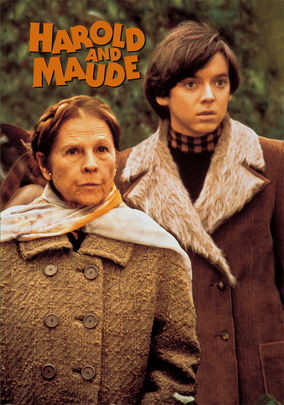
The film tells the story of an unhappy, wealthy teenager named Harold (Cort) whose mother- hilariously played by Vivian Pickles- is a cold socialite attempting to reform Harold from his rebellious adolescent behavior.

Harold frequently plays suicide pranks on her and the numerous females she tries to set him up with, reducing them to tearful exits from the family mansion in frightened hysterics.

Obsessed with attending funerals for fun, one day, Harold meets Maude (Gordon), an older woman, at a funeral, and it turns out that both share the same fascination, but for vastly different reasons, as the story shows.

They embark on a tender romance despite their age difference of over sixty years.

In many ways, Maude is the real adolescent of the film, which I love. It is a role reversal of sorts. On the cusp of age eighty, she has a pure zest for life, living each minute as if it were her last, unconcerned with the consequences of her actions- she is a true free spirit.

She gleefully steals cars parked on the street, and her erratic driving is comically brilliant.

Harold becomes the more responsible one despite being the tender age of only nineteen. He cares for Maude, and her shocking revelation towards the end of the film floors Harold.

It will also shock the audience.

Harold and Maude deal with death, but the film is not a downer. It is hilarious at times, brilliantly written, and Maude, a Nazi prison camp survivor, does not fear death- she has seen her share of it and almost embraces it.

Harold is just beginning his life, and the contrast of the characters and their growing bond is what works best in this film.

The aforementioned Vivian Pickles knocks it out of the park with her portrayal of Harold’s mother- her comic wit and timing are excellent- she callously hosts a dinner party. She boasts to the guests about her travels to France while Harold sits ignored, bored, and depressed, staring at his mother in disbelief.

He wants nothing to do with her or her trivial lifestyle. She makes an unimportant phone call while Harold dangles from the ceiling in a faux suicide attempt- clearly a cry for attention from his mother.

This is a total black comedy.

The implied intimacy between Harold and Maude was too much for many viewers in 1971. I find it sweet and quite tastefully done. They fall in love, and it feels wonderful for both of them.

I would be remiss not to mention the fantastic, lively soundtrack by Cat Stevens.

Edgy, laugh-out-loud, unusual, and witty are words to describe Harold and Maude (1971)- one of the most intelligent comedies in film history.

Sunday Bloody Sunday-1971

Sunday Bloody Sunday-1971

Director John Schlesinger

Starring Glenda Jackson, Peter Finch, Murray Head

Top 250 Films #182

Scott’s Review #1,062

Reviewed September 15, 2020

Grade: A

Whether it’s the late 1960s style with British sophistication or the ahead-of-its-time subject matter, John Schlesinger’s Sunday Bloody Sunday (1971) is a brazen and mature piece of filmmaking.

With fantastic acting mostly from Glenda Jackson and Peter Finch, the film is subdued enough to contain the drama while letting the underlying plot marinate and flourish rather than being forced or overdone.

That’s not to say Sunday Bloody Sunday is an easy watch. The main characters stew and simmer rather than explode as the audience comes to grips with their feelings, emotions, and motivations, as painful as they can be.

Schlesinger offers the complexities of the characters as we get inside their heads across multiple scenes, with cameras carefully panning in on their facial expressions. The intention is to read their minds or think we know what they are thinking.

The three characters featured are Alex (Glenda Jackson), a divorced, restless recruitment worker; a young, free-spirited artist, Bob (Murray Head); and a gay, Jewish doctor, Daniel (Peter Finch).

Bob openly dates both Alex and Daniel, who are aware of each other and even have common friends. Instead of scheming against the other in hopes of poisoning their character with Bob, they deal with acceptance and a host of different emotions.

A triangle ensues, though not one with a clear couple to root for, nor is it clear who we want to root for. Sunday Bloody Sunday is not that trite or simplistic, and this is the beauty of the film.

Each character can be analyzed for individual motivations, peculiarities, and desires that sometimes overlap. The added perk of one character being straight, one character being bisexual, and one character being gay only adds flavor and lustful desire.

Sunday Bloody Sunday is a character study if ever there was one.

Screenwriter Penelope Gilliatt writes a piece so bristling with unpredictability that the characters and situations are deep and troubling. My favorite character is Daniel, the most adjusted of the three, but a character who would typically be written as the most maladjusted.

Schlesinger had directed the brilliant Midnight Cowboy (1969) two mere years earlier, a film that depicted gay characters as troubled and self-hating. Gilliatt crafts Daniel as confident, booming, and masculine, avoiding all stereotypes.

I immediately had thoughts of Ken Russell’s masterpiece, Women in Love, made only one year earlier in 1970, and starring Jackson. Both films, featuring four characters rather than only three, are British and explore the complexities of sexual orientation, jealousy, and loneliness.

Women in Love is a slightly better film, but only by a small margin, probably because it adds one additional character. Both explore and barely touch territory when it was still taboo to explore homosexuality in film.

Adorable is a scene at a Bar Mitzvah given to Daniel’s nephew. As the merriment commences, several women are bound to be interested in Daniel, what with him being a successful doctor. He doesn’t have any interest in it naturally, but he politely makes small talk with one woman.

The scene is so natural and at ease that it is terrific and reaffirming to see a gay character treated with such dignity and richness, his problems not being a result of being gay but of being a human being.

Daniel and Alex compete for Bob’s affection, but in a polite way. Instead of hating each other, they hate the situation. Bob is not the nicest guy in the world, so the question arises as to why they both feel the way they do about him.

But this hardly matters when the heart wants what it wants.

The most interesting and realistic scenes occur when each couple lies in bed together or when they make small talk over a meal. This offers a glimpse of the day-to-day treasures they could each enjoy.

Those in the mood for a film rife with emotion and psychologically complex feelings, wrapped in a good drama, will find Sunday Bloody Sunday (1971) a pure treat. Trimmings like glimpses of the gorgeous city of London lend added nuance.

Each time this film is viewed, it could easily be watched from the perspective of either Alex, Bob, or Daniel.

Oscar Nominations: Best Director-John Schlesinger, Best Actor-Peter Finch, Best Actress-Glenda Jackson, Best Original Screenplay

O Lucky Man!-1973

O Lucky Man! -1973

Director Lindsay Anderson

Starring Malcolm McDowell, Ralph Richardson, Helen Mirren

Scott’s Review #1,174

Reviewed September 1, 2021

Grade: A-

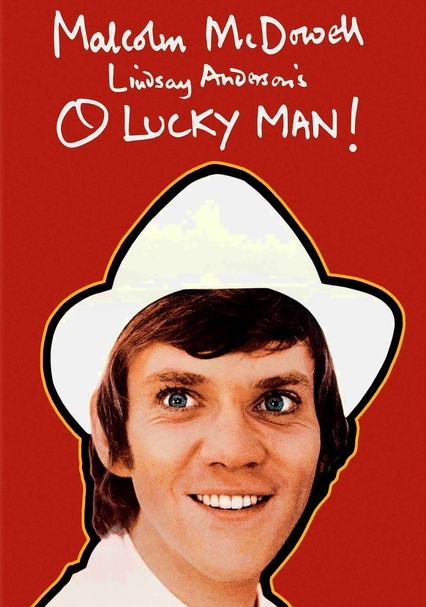
O Lucky Man! (1973) is a satirical black comedy that mixes musical numbers with a message about capitalism from the driven protagonist. Like a great fine wine, the film has aged well and is still relevant decades later.

The film is a slow build, but by the end of its nearly three-hour running time, I was enamored and hummed the title song repeatedly.

I’m still humming it as I write this review.

It is suggested that O Lucky Man! be watched in two or three segments for full appreciation. One sitting would be incredibly tough, since some of the events require reflection and thought.

An ambitious young British man, Mick Travis (Malcolm McDowell), is determined to be successful at all costs. Debuting as a coffee salesman, Mick is quickly promoted within his company. Events take a series of bizarre turns when a military agency abducts Mick.

Later, he becomes smitten with the gorgeous Patricia (Helen Mirren) and winds up working for her father, sinister executive Sir James Burgess (Ralph Richardson). As Mick’s tale continues, his experiences get progressively stranger.

The clever aspect is that just when you think Mick’s life is dour and drab, he rebounds more successful than ever. Hence the title of the film. So, there is an element of adventure and romance amid the capitalist plot.

Lindsay Anderson, who directed O Lucky Man!, re-casts McDowell again in the same role he first played as a disaffected public schoolboy in his first film performance in If… (1968).

I did not realize this when I watched O Lucky Man!, and I think this knowledge would have made me catch on to the events and subtext even more.

Now, I need to rewatch If…

I did, however, ruminate constantly on McDowell’s other iconic role in A Clockwork Orange (1971) as Alex. The characters are quite similar, save that Alex is a juvenile delinquent rather than a rising corporate guy like Mick.

This is in large part due to McDowell’s looks and acting style. His trademark sneer and bright blue eyes make him mesmerizing in both roles.

I even spotted an actor who played one of the infamous droogs!

A plus for the film is that several actors appear in multiple roles, some of whom are difficult to distinguish. Part of the fun is trying to figure out who’s who.

There isn’t a whole lot of chemistry between McDowell and Mirren, but it’s interesting to see the shifting characteristics of the characters.

And Patricia is fascinating. When she asks why people work so hard for things instead of just taking them, we realize she places no value on things because she’s never had to work for them. She’s a rich daddy’s girl.

There are reasons not to like her, but I still did. When she winds up in a homeless lot, it’s shocking. And I also loved the character of Mick and his epic journey. He is imprisoned and then reformed in a humanistic way, just like Alex was in A Clockwork Orange.

But the best part of O Lucky Man! is the music. Anderson takes periodic breaks from the drama to treat his audience to a musical number, performed by Alan Price.

It’s comforting to sit back and enjoy the unforgettable tunes that pepper the film. One could argue that the songs almost usurp the main action, but I found them to be great companions to the other.

As if there was any doubt, the soundtrack was widely lauded and was a huge financial success.

A surreal effort, sometimes happy or tragic but always insightful and oftentimes delightful, McDowell, Price, and Anderson are at the top of their respective games.

O Lucky Man! (1973) is a terrific watch, brimming with good juices if one has the patience to let events marinate.