Tag Archives: Maria Schneider

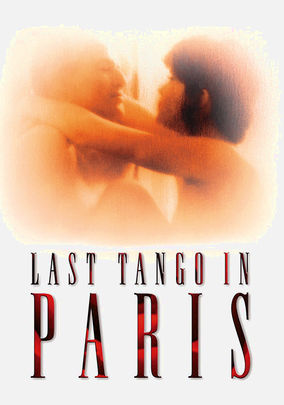
Last Tango in Paris-1972

Last Tango in Paris-1972

Director Bernardo Bertolucci

Starring Marlon Brando, Maria Schneider

Top 250 Films #178

Top 10 Most Disturbing Films #8

Scott’s Review #202
687496

Reviewed December 5, 2014

Grade: A-

Last Tango in Paris is a very dark 1972 erotic art film directed by Bernardo Bertolucci (The Conformist, 1970), starring Marlon Brando as a disturbed, angry American man named Paul, whose wife has committed suicide.

He is left to survive on his own in Paris, lost and without her, where he runs a decrepit apartment complex.

Lonely and bitter, he meets a much younger Parisian woman (Maria Schneider), equally disturbed for different reasons, and they forge a relationship that is sometimes brutal and degrading but also contains mutual affection and need.

They are addicted to each other.

This film may very well be my favorite performance by Marlon Brando. He plays a hateful, unpleasant character, yet something about him is appealing, and the viewer sympathizes with his grief.

That is to Brando’s credit, of course. A lesser actor would not be as effective.

He is damaged, treats everyone like shit, but there is also a vulnerability to him that is mesmerizing to watch. Brando was such a great method actor that he morphed into the characters he played. Paul is certainly having the most raw and emotional performance of his career.

Actress Maria Schneider is also tremendous in the film. Equally disturbed, her character Jeanne experienced a vastly different upbringing- that of wealth and pampering.

She has a fiancé who loves her dearly, yet she is drawn to the power and abuse of Paul- the fact that he is an older man is sexy to her.

I kept thinking, “What is wrong with this woman?” She seemingly has everything, yet she yearns for excitement. Is Paul a fling for her? Does she care about him, or is she using him? Is he using her? Could they be using each other?

The film raises many psychological questions. Jeanne is clearly in emotional turmoil. Both Jeanne and Paul are.

Last Tango in Paris is a difficult film to watch- several scenes are unpleasant, even brutal, but it is a character study of two damaged individuals.

When Paul anally penetrates Jeanne on the floor of his apartment, forcing her to recite gibberish, it is almost too much to bear. Paul wants to know nothing about Jeanne. He does not want to know her name, her past, nothing- complete anonymity. He lives for the present, and their sex is animalistic, filled with lust and need.

But these examples are a testament to the power of Last Tango in Paris. It is not boring.

The finale leaves you wondering what will happen to Jeanne. Will she commit suicide? Will she return to her fiancé and life of luxury, her affair with Paul over? Was the affair only a fling for her, or does she love Paul?

The film is a dark, tragic, romantic story. It is brutal, raw, and honest, and is not to be missed.

Oscar Nominations: Best Director-Bernardo Bertolucci, Best Actor- Marlon Brando

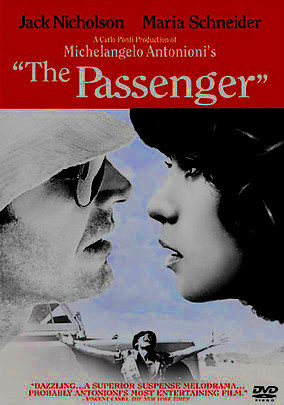
The Passenger-1975

The Passenger-1975

Director Michelangelo Antonioni

Starring Jack Nicholson, Maria Schneider

Scott’s Review #259

70042799

Reviewed July 19, 2015

Grade: A

A true art film in every sense of the word, The Passenger (1975) is a thinking man’s film, not for those content to munch on popcorn and escape the day’s stressors.

It’s custom-made for a film fan willing to ponder its meaning, revel in its slow pace, and appreciate it as an art form.

The Passenger is tough to “get” for most of its over-two-hour running time, but its complexities are also its most beautiful qualities.

To say that the film will leave the viewer with questions is quite an understatement, but it is pleasing to analyze and draw conclusions about its meaning.

Michelangelo Antonioni directed this film and is well known for Blowup (1966) and Zabriskie Point (1970), neither of which I have seen as of this writing.

Jack Nicholson stars as a journalist named David Locke, who is on location in Africa (specifically the Sahara Desert in Chad).

David’s assignment is to produce a documentary film. While there, he mysteriously assumes the identity of a businessman named Robertson, who he finds dead in his hotel room.

This task is easy because David and Robertson look very much alike. As events unfold, it becomes clear that Robertson is involved in arms dealing and smuggling related to the ongoing civil unrest in the country.

Flashbacks reveal David’s former life, including his friendship with the businessman and his relationship with his wife, Rachel, and these scenes are interwoven with the current action until the narrative becomes more linear.

The film is complex, to say the least. The initial scene, in which David spontaneously decides to switch identities, is excellent. We wonder what David’s motivations are, and what is the appeal of his taking over another man’s life? Who is the man? Why is David so unhappy in his own life?

The film succeeds immeasurably because the plot is not simply told to the audience, as in so many other mainstream films. Events seem genuine and not forced for plot purposes.

In the current time, wherever in London, Rachel sadly mourns the assumed “death” of her husband David, though we learn that Rachel has secrets of her own she has been hiding and suffers from tremendous guilt.

To further complicate matters for everyone, she is attempting to find the businessman, since she has learned that he was the last person to see her husband alive. Also mixed into the story is a mysterious young woman whom David meets when the story moves to Barcelona, Spain.

What makes The Passenger so compelling to me is its intricacies- story as well as camera styles. The seven-minute-long shot towards the end is brilliant filmmaking, and the climax is quietly intense.

The camera focuses on a hotel room, then switches to the parking lot, and returns to the hotel room. I was transfixed by the character of David, struggling to empathize with him while all the while enjoying an intelligent character study interwoven with a story of political intrigue.

I do not claim to understand everything about The Passenger and will surely need more viewings to make sense of it all, but the film fascinates me.

In a time of mediocre films, how refreshing to stumble upon a forgotten relic from 1975 and have a renewed appreciation for film as an art form.