Category Archives: David Warshofsky

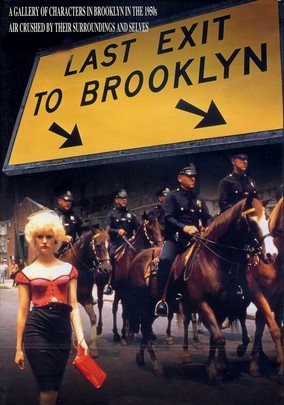
Last Exit to Brooklyn-1989

Last Exit to Brooklyn-1989

Director Uli Edel

Starring Stephen Lang, Jennifer Jason Leigh

Top 250 Films #176

Scott’s Review #152

70141619

Reviewed August 13, 2014

Grade: A-

Last Exit to Brooklyn is a slice-of-life type film that takes place in the early 1950s and is set in lower-class Brooklyn, NY.

It tells the story of a group of struggling neighborhood people- sex workers, union members, drag queens, etc. whose lives intersect. Also in the neighborhood is a military base where soldiers come and go on their way to war-torn Korea.

The central characters, though there are several with small yet interesting stories, are Harry, played by Stephen Lang, a sexually conflicted union worker with a wife and newborn child.

He is in love with a selfish drag queen, and Marilyn Monroe lookalike, Tralala, played superbly by Jennifer Jason Leigh, a prostitute whose best days are behind her, and who will do anything for attention.

The sets and cinematography in the film are very well done- the feeling of despair and hopelessness are accomplished by the dowdy streets, homes, and bars that the cast frequents.

Some of the characters are sympathetic- the aforementioned plus Tralala’s love interest, the Diner boy madly in love with Tralala, and the virginal seeming (but not really), Donna, portrayed by a young Rikki Lake. Other characters are abhorrent in their violence and hatred.

Last Exit to Brooklyn is quite a dark film and sometimes tough to watch but captures a dreary time and atmosphere. The Brooklyn set is excellent in its dreariness.

Jennifer Jason Leigh is the standout as the tough-talking, boozy prostitute who is losing her luster and the final scene of the film is truly a heartbreaker.

The topics of union, strike, bisexuality, gangs, and drag queens are covered and unique characters and conflict/loneliness are presented.

This film is an overlooked gem from 1989.

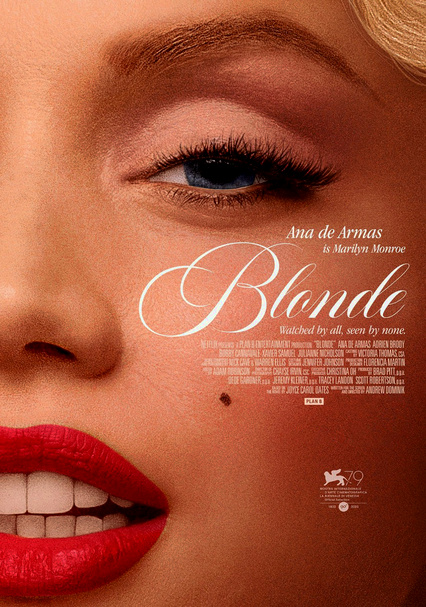
Blonde-2022

Blonde-2022

Director Andrew Dominik

Starring Ana de Armas, Adrien Brody, Bobby Cannavale

Scott’s Review #1,305

Reviewed October 7, 2022

Grade: A

Blonde (2022) is not the kind of film that I expected.

When I became aware that a new film vehicle showcasing the legendary film icon Marilyn Monroe was in the works, I assumed it would be a biographical-style effort. After all, this is hardly the first time the star’s life has been explored.

Throw in bits about her struggles, her love life, her famous screen roles, and her rise to fame, and there you’d have it.

My only real thought was who would be playing her?

Films about Marilyn have been made before, including the most recent effort I can recall, My Week With Marilyn (2011), starring Michelle Williams, a superior film but hardly groundbreaking or well remembered ten years later.

Released via the Netflix streaming service, director Andrew Dominik kicks the shit out of any preconceived notions about glamorous, happy, and prosperous Marilyn.

He creates a story focused on the dark side of the star: her failures, her insecurities, her forced abortions, and her humiliations. The result is a film that is both tragic and profound, and it should be well remembered.

Blonde delves into facts and some of the more profound thoughts of the legend herself, creating a muddy and dreamlike quality that makes the viewer apprehensive about what’s going on.

Since it’s based on Joyce Carol Oates’ 2000 fictional memoir, which is her interpretation of events, it makes truth and imagination all the muddier.

It’s not happy days watching Blonde, which left me wondering if Marilyn had a happy day in her life. From her abortions to sexual harassment, drug addiction, and physical abuse by her husband, she excitedly scampers off to a date with President Kennedy, only to be forced to give him oral sex.

Ana de Armas, known for Knives Out (2019) and No Time to Die (2021), is brilliant as Marilyn. Her mannerisms, speech patterns, and facial expressions reveal a genuine, layered portrayal rather than a carbon copy imitation of her.

Blonde boldly reimagines the life of one of Hollywood’s most enduring icons in two hours and forty-seven minutes of storytelling. It is advisable not to watch the film in one sitting, but instead spread it over three nights to let the story unfold.

Events begin with her volatile childhood as Norma Jeane, marked by an abusive mother and an absent father, and her rise to stardom and romantic entanglements. Blonde blurs the lines of fact and fiction to explore the widening split between her public and private selves.

In a way, Marilyn suffered from a split personality, longing to be Norma Jeane and despising Marilyn.

Enhancing the ambiguity, Dominik elects to use cinematography that is sometimes blurry as if in a sleepy haze, and sprinkles color with the primarily black and white filming. He even films one abortion scene from the perspective of Marilyn’s vagina.

These creative details lead me to classify Blonde as an art film and a highly interpretive one.

While not a crowd-pleaser, Blonde is not all doom and gloom either.

Tidbits about her most famous films, Gentlemen Prefer Blondes (1953) and Some Like It Hot (1959) are featured, showcasing one or two neat camera tricks, so it appears that de Armas is acting opposite Tony Curtis.

I worry that poor reviews for Blonde may hinder de Armas’s chances of receiving an Academy Award nomination. Positive reviews usually help secure Oscar recognition.

Thankfully, despite many critics and viewers having issues with the film, de Armas has received worldwide acclaim.

Bobby Cannavale and Adrien Brody are excellent as Marilyn’s husbands, controlling Joe DiMaggio and insecure artist Arthur Miller. Both actors combine effective acting with distinguished portrayals, allowing the audience to appreciate the appeal of both men.

Other interesting subplots involve Monroe’s ‘throuple’ romance with bisexual actors Cass and Eddy, and a haunting exposure of the abuse suffered by Marilyn at the hands of her mother, Gladys, wonderfully played by Julianne Nicholson.

There is little doubt that Blonde (2022) is an unconventional film that may not appeal to everyone. However, it’s the down-and-dirty texture and tour-de-force portrayal of Monroe that won me over.

It chilled me to the bone in the best possible way.

Oscar Nominations: Best Actress-Ana de Armas
Beatriz at Dinner-2017

Beatriz at Dinner-2017

Director Miguel Arteta

Starring Salma Hayek, John Lithgow, Connie Britton

Scott’s Review #844

Reviewed December 18, 2018

Grade: B+

Thanks to a well-written screenplay and a thought-provoking idea, Beatriz at Dinner (2017) spins an interesting concept about politics and class systems discussed over dinner.

Salma Hayek and John Lithgow give tremendous performances as characters with opposing viewpoints, helping the film succeed, though a flawed ending and cookie-cutter supporting characters detract from the overall enjoyment.

Set in southern California, presumably around Los Angeles, Beatriz (Hayek) is a holistic health practitioner. Moonlighting as a massage therapist, she becomes stranded at the wealthy home of one of her clients, Kathy (Connie Britton), whom she views as a friend.

Kathy invites Beatriz to stay for dinner, where she encounters real-estate mogul Doug Strutt (Lithgow). The two gradually develop a feud based on their differing politics and viewpoints.

The setup and flow of Beatriz at Dinner are commendable and pace the film nicely. The film is sort of a day in Beatriz’s life. It begins as the character awakens to her pet dogs and goat noisily beginning their day and culminates late at night when the dinner party concludes, and the last glass of wine is consumed.

This way, the film has a nice packaged feel that keeps the story confined and structured.

Being an independent film, the budget is small, and most scenes are shot in a spacious modern house overlooking the Pacific Ocean, which works well. Gorgeous and vast, many rooms are used as conversations among the characters occur, many overlapping each other.

Beatriz at Dinner could have been a play, which helps with the good flow.

Hayek and Lithgow are the main draws as their initial guarded pleasantries progress to venom and violence, albeit primarily imagined.

Initially thinking that Beatriz is the household help, Doug is inquisitive about her entry into the United States and makes numerous insulting gestures, mispronouncing her Mexican hometown and mocking her profession.

Beatriz calmly endures his racism and begins discussions about how his business harms animals and people as emotions escalate. The actors play off each other wonderfully and share chemistry.

With each glass of wine, Beatriz becomes brazen and shares how people in her village lost their land to real estate development. She shares a humanistic viewpoint, while Doug sees life as to be lived while you can.

Despite their dislike for each other’s lifestyles, the film shows Beatriz and Doug at least listening to each other and attempting to understand the other’s opinions, which is more than can be said for the supporting players’ motivations or lack thereof.

Besides Kathy, while sympathetic to Beatriz’s calm demeanor and life-rich philosophies, she also realizes that Doug is her family’s meal ticket.

The other party attendees are written as polite yet uninteresting twits with nothing to talk about except a reality star’s nude photos, dinner, or a handful of other nothing topics.

Chloë Sevigny, Jay Duplass, Amy Landecker, and David Warshofsky have little to do other than stand around and react to the meatier written material that Hayek and Lithgow get to play.

Beatriz at Dinner had me in its corner until the film took a jarring turn during the final act. As Beatriz leaves the party and sets about on her way home, she hastily decides to grab a letter opener and bludgeon Doug to death as the dinner guests hysterically realize what is happening.

Instead of leaving things be, the film chooses to make this only Beatriz’s fantasy and then have her go to the ocean and walk into the waves. Does this mean she commits suicide, or is this another fantasy? This final sequence is unclear and unsatisfying.

I am not sure why Beatriz at Dinner is considered a comedy. Perhaps a mild dark comedy, I argue that the film is a straight-ahead drama and lacks the witty humor that made dinner party-themed films such as Who’s Afraid of Virginia Woolf? (1966) and The Boys in the Band (1970) masterpieces.

Beatriz at Dinner (2017) is a valiant attempt at offering social commentary at a time when discussions like these are needed in films, and the project largely succeeds.

Hayek’s impassioned yet subdued performance deservedly earned her a Female Lead Independent Film nomination. The film’s rich writing garnered a Best Screenplay nomination, too, but a big whiff at the end lowers the overall experience a notch.

Independent Spirit Award Nominations: Best Female Lead-Salma Hayek, Best Screenplay

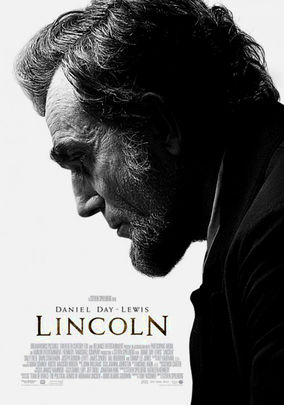
Lincoln-2012

Lincoln-2012

Director Steven Spielberg

Starring Daniel Day-Lewis, Sally Field, Tommy Lee Jones

Scott’s Review #476

70251896

Reviewed September 10, 2016

Grade: A

Lincoln is a 2012 film, which received a slew of Academy Award nominations. There appear to be differing opinions about the film itself, however.

Lincoln has audiences divided over whether it’s a brilliant film or a snore-fest.

My opinion leans decisively toward the former.

I recognize that (especially the first half) the film is slow-moving, but I found it engrossing and well-made.

Even the subtle aspects (costumes, art direction, lighting) are masterfully done.

I found Daniel Day Lewis’s (Abraham Lincoln) lengthy stories intriguing, not dull and found it to be a wonderful history lesson.

Steven Spielberg does what he does best- he creates a Hollywood film done well. He also has done controversial, shocking, or experimental, but the mainstream fare is his forte.

This film is not for everyone, but if you can find the patience it will be an enlightening experience. If nothing else, a thing or two may be learned.

Oscar Nominations: 2 wins-Best Picture, Best Director-Steven Spielberg, Best Actor-Daniel Day-Lewis (won), Best Supporting Actor-Tommy Lee Jones, Best Supporting Actress-Sally Field, Best Adapted Screenplay, Best Original Score, Best Sound Mixing, Best Production Design (won), Best Cinematography, Best Costume Design, Best Film Editing

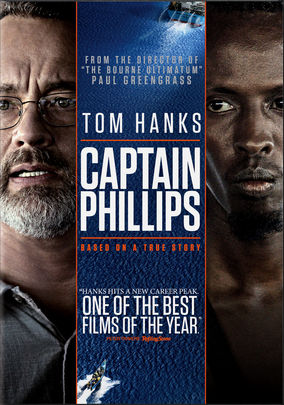
Captain Phillips-2013

Captain Phillips-2013

Director Paul Greengrass

Starring Tom Hanks, Barkhad Abdi

Scott’s Review #28

70243460

Reviewed June 17, 2014

Grade: B

Captain Phillips (2013) is an intense, gripping, action, thriller film nominated for the Best Picture Oscar.

As much as I enjoyed the film, I do not think a nomination for the top honor is warranted.

I have seen this type of film many times before and the underlining tone of “USA- good, other countries- bad”, whether intentional or unintentional, distracted me.

Another distraction was that all the protagonists are white whereas all the antagonists are African.

This is based on a true story but seems to be glorified.

The target audience must have been older, white, conservative men, who would revel in this type of film.

Tom Hanks is great and his performance during the final fifteen minutes of the movie should have cemented him an Oscar nod instead of the film

The main villain, played by a complete unknown, Barkhad Abdi, was excellent, especially considering the actor had no acting experience.

What a big break!

Overall, an interesting, exciting experience, but short of the Oscar glory.

Oscar Nominations: Best Picture, Best Supporting Actor-Barkhad Abdi, Best Adapted Screenplay, Best Sound Editing, Best Sound Mixing, Best Film Editing