Category Archives: Fernando Rey

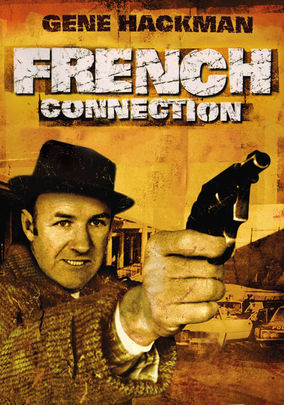
The French Connection-1971

The French Connection-1971

Director William Friedkin

Starring Gene Hackman, Fernando Rey, Roy Scheider

Top 250 Films #71

Scott’s Review #342
60011660

Reviewed January 9, 2016

Grade: A

The French Connection was the first R-rated film to win the Academy Award for Best Picture in 1971.

This praise, similar to The Silence of the Lambs being the first horror film to win Best Picture in 1991, is well worth noting and quite honorary.

The film succeeds, both for other critics and me, due to its unique camerawork style, shot in a documentary manner, and the use of quick edits.

It is much more intricate in every way than the traditional crime thriller.

Gene Hackman stars as the feisty detective, Jimmy “Popeye” Doyle, who, along with his partner, Buddy “Cloudy” Russo (Scheider), is determined to crack the case of a massive heroin smuggling syndicate from France.

The narcotics are flowing into New York City, and the duo is determined to get to the bottom of the drug ring, figuring out who the mastermind is and defeating their foe.

The primary culprit is a suave French drug lord named Alain Charnier, brilliantly played by Fernando Rey.

Throughout the film, the action is nonstop, traversing Manhattan and Brooklyn by subway and car as Popeye becomes increasingly obsessed with the case.

Director William Friedkin, who also directed the legendary 1973 film, The Exorcist, deserves a heap of praise for creating a movie of this caliber. All can enjoy the French Connection, and it is well beyond the limitations of a “guy film”- it is much more than that.

The editing and frenetic pacing work wonders for the film, all the while not ruining the experience or overshadowing the good plot. Quite simply, the film is a chase across New York City.

Friedkin distinguishes the boroughs by making Manhattan seem sophisticated and stylish, while Brooklyn comes across as dirty, grizzled, and drug-laden.

The settings are perfect.

The best scene in the film is the well-known car chase throughout New York City. Popeye is determined not to lose his man, the man riding in a subway on an elevated platform. Popeye steals a car and proceeds to chase the subway, narrowly missing pedestrians, including a woman with a baby carriage, as he recklessly weaves in and out of traffic at a high speed to keep pace with the train.

This is a phenomenal scene as the excitement and tension continue to build.

The film’s conclusion and final scene are cynical and leave the audience perplexed and unsure of what has transpired.

The French Connection is open to reasonable discussion and even interpretation, a novel aspect of the action film.

Providing a tremendous glimpse into 1970s Manhattan and Brooklyn, The French Connection is an exciting film that oozes with thrills, car chases, and a good story.

The film is unique in style and still holds up incredibly well- one of my favorites in the action genre.

Oscar Nominations: 5 wins-Best Picture (won), Best Director-Richard Friedkin (won), Best Actor-Gene Hackman (won), Best Supporting Actor-Roy Scheider, Best Screenplay Based on Material from Another Medium (won), Best Sound, Best Cinematography, Best Film Editing (won)
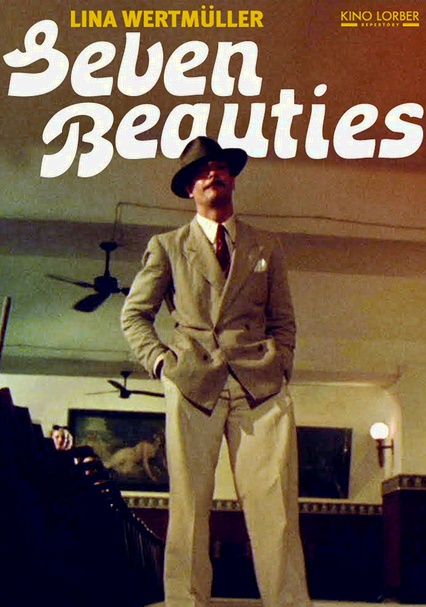
Seven Beauties-1975

Seven Beauties-1975

Director Lina Wertmüller

Starring Giancarlo Giannini, Shirley Stoler, Fernando Rey

Top 250 Films #194

Scott’s Review #1,364

Reviewed June 3, 2023

Grade: A

Italian Director Lina Wertmüller was the first female ever nominated for the coveted Best Director Oscar. She did not win the award but the nomination is a bold victory for women artists in 1975 and a testament to her visionary approach to filmmaking.

With Seven Beauties (1975) she tackles the painful subject of concentration camps during World War II with artistic merit and a powerful message of survival by her lead character, Pasqualino, brilliantly played by Giancarlo Giannini.

Through Pasqualino’s backstory, Wertmüller provides comic relief and a sizzling Italian style. This counterbalances the terrifying German elements with cultural and sometimes humorous sequences set in Italy. Pasqualino’s family hijinks are explored.

Back in 1930s Italy, Pasqualino is a struggling low-level Sicilian thug who accidentally kills a man who disgraced his unattractive and vulnerable sister Concettina (Elena Fiore). He escapes imprisonment by joining the military but goes AWOL when things get too severe.

Eventually, Pasqualino is captured and sent to a concentration camp where he vows to do anything to survive. He attempts to seduce an evil and obese female German camp commander (Shirley Stoler) but this comes at a deadly price.

I’ll argue that Stoler should have received a Best Supporting Actress Oscar nomination. Her callous nature only deepens as her character is peeled back and Pasqualino’s hope that she has a glimmer of kindness in her is dashed. She is one of the best screen villains of all time.

Seven Beauties is an art film with gorgeous visuals especially potent in the concentration camp and surrounding forest. The greyness of the camp is perfectly opposite the pizazz of Italy.

As Pasqualino and comrade Francesco wander around the looming German forest the camera points upwards to the sky in a blurry and dizzying form.

At the start of the film, black and white footage of World War II encompasses the screen, and slivers of the tyrants Mussolini and Hitler are displayed.

If not for the macabre dark humor we see in Italy, Seven Beauties might be too much of a downer. Pasqualino’s seven sisters are unattractive and one is living the life of a struggling stripper and prostitute. He also manages to cleverly chop a body to bits and stuff the body parts into suitcases.

Back in Germany, the scenes between Pasqualino and the female commander are frightening. He is forced to provide sexual pleasures in exchange for his survival but when she callously orders him to select six mates to be executed her viciousness is apparent.

Giannini is a fabulous actor and heartbreakingly reveals Pasqualino’s vulnerabilities as the film plows forward. His good-natured innocence is lost forever and the man he winds up as is darker.

But the caveat is that the character is never purely good but rather layered in complexities. Always, Giannini emotes deep expressionism through his powerful green eyes.

Similarities between Seven Beauties and Fellini’s Amarcord (1973) or Fellini’s Roma (1972) are evident. Had I not known Wertmüller directed the film I would have thought Fellini had. This is more so because of the Italy sequences featuring a bevy of zany, homely characters which adds flavor and humor.

Fernando Rey, well-known for playing the villain in The French Connection (1971) appears as a doomed prisoner who ends up in a large tub of shit rather than suffer a forced execution.

The executions are sob-inducing as lines and lines of prisoners being callously shot and killed are tough to watch. But, the core of the film is about the viciousness of humanity and this must never be forgotten.

Wertmüller delivers a masterpiece that I’ve now seen only twice. I plan to watch this film again and again for the content to sink in more.

The comic elements of Seven Beauties (1975) never diminish or lighten the horror of the Nazi’s actions since they are not done in parallel. The back and forth between periods only add value and balance to a powerful subject matter.

Oscar Nominations: Best Foreign Language Film, Best Director-Lina Wertmüller, Best Actor-Giancarlo Giannini, Best Screenplay-Written Directly for the Screen

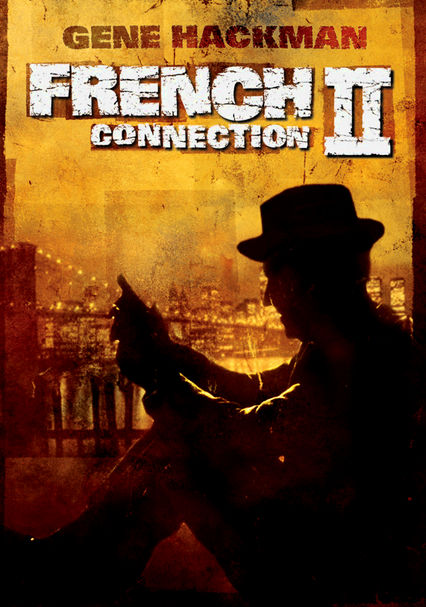
The French Connection II-1975

The French Connection II-1975

Director John Frankenheimer

Starring Gene Hackman, Fernando Rey

Scott’s Review #1,148

Reviewed June 2, 2021

Grade: B

The French Connection, the winner of the coveted Best Picture Academy Award for pictures released in 1971, is a brilliant film, holding up well as a cream-of-the-crop cop film.

An action film winning an Oscar is as rare as a horror film winning it. It’s rare.

The decision to make a sequel is debatable but The French Connection II (1975) forges as a decent action crime thriller but hardly on par with the original.

Is anyone surprised?

Sequels rarely usurp their predecessors especially when The French Connection is such a superior genre film. In a way, Part II didn’t have much of a chance measured up against Part I.

Films like The Godfather only come around once in a lifetime.

Unfortunately, William Friedkin did not return to the fold to direct, replaced by John Frankenheimer, best known for the nail-biting The Manchurian Candidate (1962).

Thankfully, Gene Hackman did return. He helps the film from an acting perspective and gives his all in a tough role. His partner, played by Roy Scheider does not appear and is not mentioned.

Picking up a couple of years after the first one ended, Detective “Popeye” Doyle (Hackman) is still hot on the heels of cagey and sophisticated drug trafficker Charnier (Fernando Rey).

Doyle hops a flight to lovely Marseilles, France. Away from his familiar New York City territory, he struggles to assimilate himself in a strange city and conquer the drug ring to bring Charnier down.

Doyle is accosted and spends time as a dreary heroin addict in rough confines before being tossed away and forced to recover cold turkey style. He becomes even more determined to bring the bad guys to justice- dead or alive.

As a stand-alone action film, The French Connection II is not a bad experience. It is certainly better than the still-to-come 1980s doldrums like the Die Hard and Lethal Weapon cop/buddy films that marginalized the genre into cookie-cutter popcorn films.

The gripping New York City is replaced by the equalling compelling French landscape. Gorgeous locales like the French Riviera and the Meditteranean Sea are featured but Marseilles is not Paris. There exists a seediness and dirtiness that helps the film a bit.

Hackman acts his ass off, especially as a drug addict. I shudder to think of a weaker actor trying to pull off this acting extravaganza. From scenes featuring his withdrawals to his drug cravings is exciting to watch and showcase Hackman’s wonderful acting chops.

But the intent is to produce a good action film after all and that effort is mediocre. The French Connection II is simply not as compelling as The French Connection and despite some decent chase scenes and a cool finale where Doyle gets his satisfaction, there is little else but by-the-numbers activity.

To be fair, the final fifteen minutes is the best part of the film.

Remember the frightening car chasing a subway sequence? Or the delicious cat-and-mouse subway sequence between Doyle and Charnier?

Brilliant scenes like this do not exist.

A few clichés are bothersome. Predictably, Doyle stands out like a sore thumb in France and his hot-headedness emerges quickly, offending or pissing off the French authorities. He is not the most likable character and I frequently found myself rooting for the bad guys!

I don’t think I was supposed to.

Other implausibilities occur like the boneheaded decision to send Doyle to Marseilles, to begin with. Was he the only detective, including the French authorities, capable of catching Charnier?

What was the point of the old-lady heroin addict stealing Doyle’s watch?

A shadow of The French Connection, The dull titled The French Connection II (1975) is a weaker effort but still respectable as compared to other genre films.

This is mostly because of the French landscape and the return of Gene Hackman.

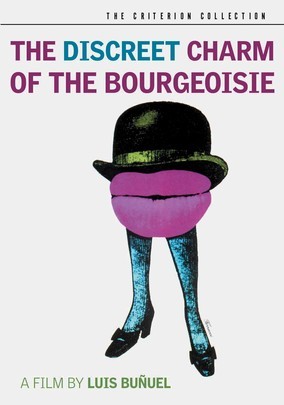
The Discreet Charm of the Bourgeoisie-1972

The Discreet Charm of the Bourgeoisie-1972

Director Luis Buñuel

Starring Fernando Rey, Paul Frankeur

Scott’s Review #13

60001469

Reviewed June 17, 2014

Grade: A-

The Discreet Charm of the Bourgeoisie (1972) is a wonderful French satire by Director Luis Buñuel.

The movie is very strange- three well-to-do couples meander from dinner party to dinner party and, due to circumstances beyond their control (an incorrect date, a mysterious corpse, and a military raid), never end up sitting down and enjoying a meal together.

How the individuals are wealthy is a bit vague, though there is mention of drug smuggling.

It’s unclear who is matched up with whom since frolicking amongst them is commonplace. Several of them experience odd fantasy/dream sequences throughout and are often seen wandering down the road.

The entire film is tongue-in-cheek, poking fun at the wealthy class.

It’s offbeat but delightful.

Oscar Nominations: 1 win-Best Screenplay Based on Factual Material or Material Not Previously Produced or Published, Best Foreign Language Film (won)