Category Archives: Susan Luckey

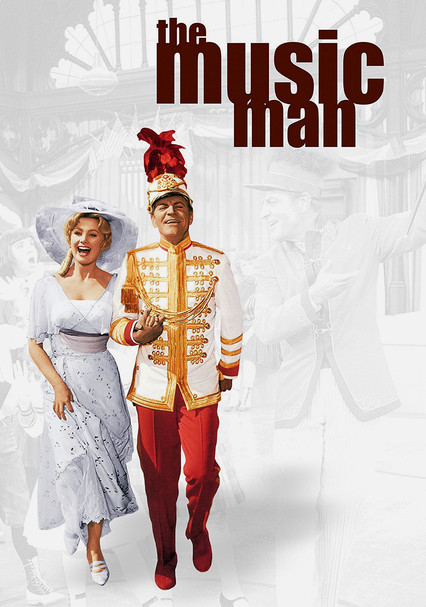
The Music Man-1962

The Music Man-1962

Director Morton DaCosta

Starring Robert Preston, Shirley Jones

Top 250 Films #192

Scott’s Review #929
Reviewed August 9, 2019

Grade: A

The big-screen offering of The Music Man (1962) is based on the 1957 Broadway musical of the same name, written by Meredith Wilson, and one of the most upbeat Hollywood renditions of stage productions.

Featuring talented stars like Robert Preston and Shirley Jones, the former appearing in the stage version, the film was one of the biggest hits of the year to be watched and re-watched whenever the mood strikes for sing-along tunes and a cheery story told from a purely Americana viewpoint.

In the summer of 1912, deceitful traveling salesman Harold Hill (Preston) arrives in River City, Iowa, intent on swindling the town folks out of their money. Masquerading as a traveling music instructor, he plans to trick parents into enrolling their kids in a marching band and selling the instruments.

He uses scare tactics to incorporate fear into the gullible parents and romantically sets his sights on the local librarian, Marian (Jones). Marian, distrustful of men, slowly falls in love with Harold, and his plot is eventually discovered, resulting in a witch hunt.

Of the plethora of musical releases bombarding Hollywood throughout the 1950s and 1960s, The Music Man arguably possesses the catchiest tunes and spirit.

It is impossible not to hum along to or tap one’s foot to the songs, which stick in the viewer’s heads for days after watching the addictive production.

My favorites are “Seventy-Six Trombones”, “Gary, Indiana”, and “Pick-a-little, Talk-a-little” as each has distinctive melodies, rhymes, and rapid-fire dialogue.

The soundtrack always pleasures the gloomiest days and speaks volumes about the legs the musical contains.

Besides the tunes, The Music Man’s best aspect is its romantic storyline. Preston and Jones’s chemistry is complete, and they are perfectly cast.

The studio wanted “a big name,” so Preston nearly didn’t make the cut, which would have been a shame. By infusing life and humor into a character who could be perceived as dastardly, he tips the likability scale and makes the character the hero.

Jones is a treasured singer and is just as good as Preston, playing the mousy and serious Marian. Her “slice of the Midwest” innocence and blonde hair portray her as corn-bred, but the actress makes the character work for her. Together, the duo is sensational.

The best sequence in which the pair appears is the remarkable “Marian the Librarian,” a sneaky and naughty number—the most adult rendition. Their mutual attraction becomes evident, and the film brings the audience to its knees at this moment.

The musical is purely a slice of Americana, which may limit its popularity across oceans, but it works and feels authentic. This is no surprise, given that composer Willson hails from the Midwest.

With an uplifting message and a nostalgic ode to a country once filled with promise and innocence, the film is arguably even more critical in today’s divisive environment.

The piece wisely does not celebrate small-town cliches but instead offers a wholesomeness. The townsfolk sing and dance together and celebrate life as a neighborly bunch; this nuance is refreshing.

The supporting cast adds flavor and comedy to the production. A very young child actor, soon-to-be-famous director Ron Howard, offers a heartfelt performance of “Gary, Indiana.”

Character actors Paul Ford and Hermione Gingold offer delightful hysterics as Mayor Shinn and his wife, Eulalie.

Oklahoma (1955) and Picnic (1955) are thematically similar, at least from geographical and time-period perspectives, but distant relatives in mood and drama. All three could be watched in one marathon weekend.

The Music Man (1962) provides the most warmth and, at its conclusion, will fill even the most stone-faced individuals with beaming smiles.

The film version is a perfect example of a stage musical successfully brought to the silver screen with energy and gorgeous singing and dancing.

Oscar Nominations: 1 win-Best Picture, Best Scoring of Music-Adaptation or Treatment (won), Best Sound, Best Art Direction, Color, Best Costume Design, Color, Best Film Editing

Carousel-1956

Carousel-1956

Director Henry King

Starring Gordon MacRae, Shirley Jones

Scott’s Review #1,486

Reviewed July 27, 2025

Grade: A-

Following the success of Oklahoma! in 1955, Carousel (1956) is similarly based on the lauded Rodgers and Hammerstein stage musical. It is firmly nestled among the myriad musical productions that emerged in the 1940s, 1950s, and into the 1960s in cinema.

Darker in tone, the musical drama bears a strong resemblance to Oklahoma! It swaps the Midwest United States for Northeastern Maine. Clambakes and wattery harbors lend authenticity to the film.

Easily paired with Oklahoma! as a double feature, it even features the same stars—Gordon MacRae and Shirley Jones, who return to star in Carousel. As an aside, the filmmakers originally cast Frank Sinatra, who dropped out, so MacRae was a second choice.

As with the original stage production, the film features some of Rodgers and Hammerstein’s most famous songs, particularly ‘Carousel Waltz’ and the emotional ‘You’ll Never Walk Alone’.

It also features arguably the most serious storyline of all their musicals, incorporating domestic abuse into the fray.

The story follows the romance of Billy Bigelow (MacRae), a charming carousel barker, and Julie Jordan (Shirley Jones), a pretty blue-collar worker from a nearby mill in Boothbay Harbor, Maine.

When the attractive young couple abruptly and reactively gets married, they also both find themselves unemployed and broke, which puts a strain on their relationship.

When Billy finds out that Julie is pregnant, he resorts to extreme measures to get money, a decision that leads to tragedy.

Cleverly, the film is non-linear, as the first scene features Billy in what appears to be Purgatory (or the back door of Heaven), where he is told that he can return to Earth for one day to make amends.

We know that Billy has died after a tragic event, but we do not know the details.

To its credit, Carousel is not a cheery, bombastic musical fraught with over-the-top phoniness or too much glee. The characters are darker, which makes it feel unique to me.

Proof of this is evident in a comparison of MacRae’s and Jones’s characters in Oklahoma! to Carousel. While Laurey (Jones) is a respectable, virginal good girl, Julie plays with fire, assuredly spending time alone with Billy after being warned of the consequences.

Curly McLain (MacRae) is a good-natured cowboy who admires the beautiful morning while riding to see his wholesome crush, Laurey, whereas Billy is a rough-talking, macho brute.

Supporting characters like Carrie (Barbara Ruick), Jigger (Cameron Mitchell), and Cousin Nettie (Claramae Turner) are fantastic additions, especially Turner, as she brings down the house with ‘You’ll Never Walk Alone’.

Still, I yearned for a bit more substance to their characters. What makes them tick? Are they fulfilled?

A final highlight is the amazing fantasy musical song and dance number that appears towards the finale. As Billy’s teenage daughter, Louise (Susan Luckey), dances amongst her classmates, she is mocked for her father’s reputation and shortcomings.

She writhes around them in a deliciously choreographed sequence that builds tension and kickstarts the action.

Unlike Curly, I found Billy difficult to like, though the character is softened considerably by the end of the film. He’s honestly a dick through most of the story, hitting Julie, and plotting ways to find fortune at the expense of others.

To make matters worse, he also slaps his own daughter’s hand when he comes down from Purgatory to see her. Are we expected to like him?

Despite the two aforementioned powerful musical numbers, the other songs don’t carry through as much or are nearly as memorable.

For much of the running time, until the great build with Louise’s musical number, there is a slowness to the events. Whereas Oklahoma! has it all, something is missing from Carousel, and the pacing isn’t as fine-tuned.

Nonetheless, I adore the summery New England setting with the authentic location sequences and attention to detail. The darkness and edgy religious-themed trimmings combined with two homerun hitting musical numbers are enough to make me a fan of Carousel (1956).