Category Archives: Tom Skerritt

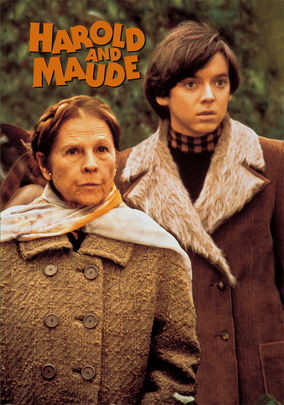
Harold and Maude-1971

Harold and Maude-1971

Director Hal Ashby

Starring Bud Cort, Ruth Gordon

Top 250 Films #70

Scott’s Review #208
60000591

Reviewed December 30, 2014

Grade: A

Harold and Maude (1971) is the bravest and most left-of-center film that I have ever had the pleasure of viewing. A subject matter so taboo that it had never before been explored in cinema and, to my knowledge, has not since.

The film challenges so many mainstream views of aging, sex, and relationships.

Ruth Gordon and Bud Cort give performances of a lifetime.

The film tells the story of an unhappy, wealthy teenager named Harold (Cort) whose mother- hilariously played by Vivian Pickles- is a cold socialite attempting to reform Harold from his rebellious adolescent behavior.

Harold frequently plays suicide pranks on her and the numerous females she tries to set him up with, reducing them to tearful exits from the family mansion in frightened hysterics.

Obsessed with attending funerals for fun, one day, Harold meets Maude (Gordon), an older woman, at a funeral, and it turns out that both share the same fascination, but for vastly different reasons, as the story shows.

They embark on a tender romance despite their age difference of over sixty years.

In many ways, Maude is the real adolescent of the film, which I love. It is a role reversal of sorts. On the cusp of age eighty, she has a pure zest for life, living each minute as if it were her last, unconcerned with the consequences of her actions- she is a true free spirit.

She gleefully steals cars parked on the street, and her erratic driving is comically brilliant.

Harold becomes the more responsible one despite being the tender age of only nineteen. He cares for Maude, and her shocking revelation towards the end of the film floors Harold.

It will also shock the audience.

Harold and Maude deal with death, but the film is not a downer. It is hilarious at times, brilliantly written, and Maude, a Nazi prison camp survivor, does not fear death- she has seen her share of it and almost embraces it.

Harold is just beginning his life, and the contrast of the characters and their growing bond is what works best in this film.

The aforementioned Vivian Pickles knocks it out of the park with her portrayal of Harold’s mother- her comic wit and timing are excellent- she callously hosts a dinner party. She boasts to the guests about her travels to France while Harold sits ignored, bored, and depressed, staring at his mother in disbelief.

He wants nothing to do with her or her trivial lifestyle. She makes an unimportant phone call while Harold dangles from the ceiling in a faux suicide attempt- clearly a cry for attention from his mother.

This is a total black comedy.

The implied intimacy between Harold and Maude was too much for many viewers in 1971. I find it sweet and quite tastefully done. They fall in love, and it feels wonderful for both of them.

I would be remiss not to mention the fantastic, lively soundtrack by Cat Stevens.

Edgy, laugh-out-loud, unusual, and witty are words to describe Harold and Maude (1971)- one of the most intelligent comedies in film history.
Thieves Like Us-1974

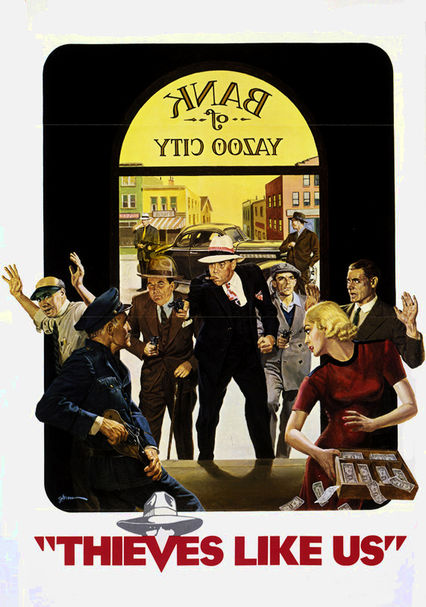
Thieves Like Us-1974

Director Robert Altman

Starring Keith Carradine, Shelley Duvall

Top 250 Films #190

Scott’s Review #1,071

Reviewed October 16, 2020

Grade: A

The first time I saw Thieves Like Us (1974), I was not blown away. I have forgotten what my original gripe was, but my lackluster star rating on Netflix years ago is confirmation of such.

All is now forgiven, and like a fine wine, this film gets better and better with each viewing.

It’s a gangster film, but a heart-wrenching story containing one of the sweetest romances in cinema history.

Based on the novel of the same name by Edward Anderson, director Robert Altman, famous for allowing his actors to ad-lib their lines to their heart’s content and peppering his films with overlapping, “real-life” dialogue, limits this technique this time around.

His stars, Keith Carradine and Shelley Duvall, regular fixtures in his films, are the main attraction, but supporting players like Louise Fletcher, Bert Remsen, and John Schuck give tremendous performances.

Set in the 1930s in the Deep South of Mississippi, the time period and location are key elements of the film’s success.

Having never set foot in this geographical area, I nonetheless found myself escaping there and ruminating on what it would have been like to live there during the Great Depression.

The many outdoor sequences with trees, forests, country roads, and home-cooked meals provide a luminous atmosphere and texture.

Small-town living has never felt so good and cozy.

Wisely, Altman steers clear of any racial overtones or dialogue within the film. The film is not about that.

There appear to be many black characters, mostly in the background, townspeople scenes, or as prisoners, which adds flavor. But they are represented as living among other folks without any aggression or stereotypes.

They are, and it feels like the South.

Altman crafts an experience of understated, good storytelling, proving a quality film can be quiet and proud, not needing explosive bells and whistles to prove showy. The dialogue crackles on its own and is smart.

The plot is compelling. Bowie (Carradine) is an escaped convict who embarks on a crime spree with fellow former prisoners Chicamaw (John Schuck) and T-Dub (Bert Remsen). While in hiding between bank robberies, Bowie meets a young woman named Keechie (Duvall), and the two quickly fall in love.

A life of crime doesn’t sit well with Keechie, however, so she and Bowie try to settle down, but the law is determined to bring him to justice.

The fun is in watching romance blossom between Bowie and Keechie. Despite Bowie being a criminal, his character contains sweetness and purity that match like a glove with the whimsical truth and simplicity of Keechie.

Throughout the film, I compared the characters to the legendary icons Bonnie and Clyde from the self-titled cinema masterpiece.

They are similar but different. The pair sits quietly on the front porch, talking about life and the future, optimistically planning their lives together, unaware of what fate has in store for them. Their innocence and their goofy humor made me fall in love with them.

The relationship between the three men is apt. They have each other’s backs and are loyal to a fault. The men are convicts and cause death and injury, but there is a humanity that Altman gives to each character.

We do not think of them as derelicts.

When Bowie poses as a sheriff to break Chickamaw out of prison, we root for the escape rather than for the warden. Bowie kills the warden, shocking Chickamaw. Even with disputes, there is care between the men.

It does take patience to get into this film; I probably did not give the film its due on my first watch. Once the film ended, I was left with a feeling of having experienced something of value and a visionary, cinematic story.

The homespun characters, eating a feast of meat and southern biscuits and discussing the day’s events, are richly and atmospherically rendered.

Carradine and Duvall would reunite a year later in another Altman masterpiece, Nashville (1975), playing vastly different, both unlikable, characters. Hence, a recommendation is to watch both films back-to-back to appreciate the dizzying, morphed characterization.

Thieves Like Us (1974) is no mere opening act for Nashville but of a different ilk.

The film is a treasure.

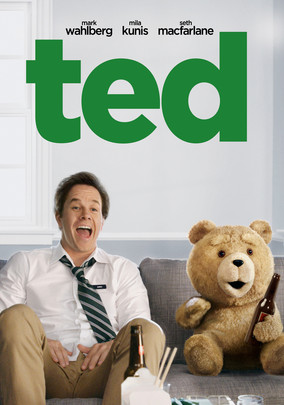
Ted-2012

Ted-2012

Director Seth MacFarlane

Starring Mark Wahlberg, Mila Kunis

Scott’s Review #428

70218756

Reviewed June 21, 2016

Grade: D-

So many times I will watch a comedy deemed “the funniest movie of the year”, or some other touting, and be disappointed in it.

This is the case with Ted (2012).

To be fair to the creators, I did enjoy the 1980s references, and the teddy bear has a charming, gruff, witty, crude personality that was funny at times, but that’s it for the positives.

The main storyline (a loyal male slacker with a successful girlfriend) has been done to death and this was one of the most predictable, sappy movie endings I’ve ever seen so I don’t get why people think it is so great.

Think happily ever after, as if the result was ever in question.

Ted was filled with stereotypical characters, specifically Asian stereotypes, and a myriad of dumb situations.

The actors could handle stronger material.

Raunchy comedies need not have a surprise ending, but the sappy love story was too lame to take at times. At least the film should have taken some risks and given an edge to it.

And the lord helps us if there is an inevitable sequel to Ted (2012).

Oscar Nominations: Best Original Song-“Everybody Needs a Best Friend”