Tag Archives: Giovanna Galletti

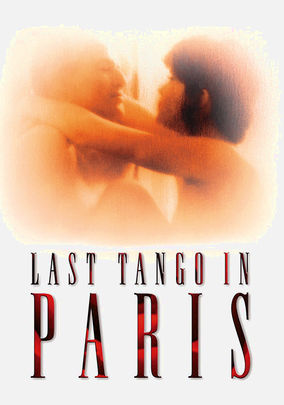
Last Tango in Paris-1972

Last Tango in Paris-1972

Director Bernardo Bertolucci

Starring Marlon Brando, Maria Schneider

Top 250 Films #178

Top 10 Most Disturbing Films #8

Scott’s Review #202
687496

Reviewed December 5, 2014

Grade: A-

Last Tango in Paris is a very dark 1972 erotic art film directed by Bernardo Bertolucci (The Conformist, 1970), starring Marlon Brando as a disturbed, angry American man named Paul, whose wife has committed suicide.

He is left to survive on his own in Paris, lost and without her, where he runs a decrepit apartment complex.

Lonely and bitter, he meets a much younger Parisian woman (Maria Schneider), equally disturbed for different reasons, and they forge a relationship that is sometimes brutal and degrading but also contains mutual affection and need.

They are addicted to each other.

This film may very well be my favorite performance by Marlon Brando. He plays a hateful, unpleasant character, yet something about him is appealing, and the viewer sympathizes with his grief.

That is to Brando’s credit, of course. A lesser actor would not be as effective.

He is damaged, treats everyone like shit, but there is also a vulnerability to him that is mesmerizing to watch. Brando was such a great method actor that he morphed into the characters he played. Paul is certainly having the most raw and emotional performance of his career.

Actress Maria Schneider is also tremendous in the film. Equally disturbed, her character Jeanne experienced a vastly different upbringing- that of wealth and pampering.

She has a fiancé who loves her dearly, yet she is drawn to the power and abuse of Paul- the fact that he is an older man is sexy to her.

I kept thinking, “What is wrong with this woman?” She seemingly has everything, yet she yearns for excitement. Is Paul a fling for her? Does she care about him, or is she using him? Is he using her? Could they be using each other?

The film raises many psychological questions. Jeanne is clearly in emotional turmoil. Both Jeanne and Paul are.

Last Tango in Paris is a difficult film to watch- several scenes are unpleasant, even brutal, but it is a character study of two damaged individuals.

When Paul anally penetrates Jeanne on the floor of his apartment, forcing her to recite gibberish, it is almost too much to bear. Paul wants to know nothing about Jeanne. He does not want to know her name, her past, nothing- complete anonymity. He lives for the present, and their sex is animalistic, filled with lust and need.

But these examples are a testament to the power of Last Tango in Paris. It is not boring.

The finale leaves you wondering what will happen to Jeanne. Will she commit suicide? Will she return to her fiancé and life of luxury, her affair with Paul over? Was the affair only a fling for her, or does she love Paul?

The film is a dark, tragic, romantic story. It is brutal, raw, and honest, and is not to be missed.

Oscar Nominations: Best Director-Bernardo Bertolucci, Best Actor- Marlon Brando

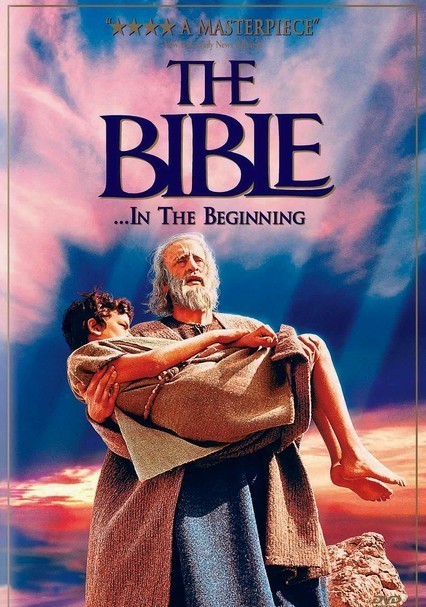
The Bible: In the Beginning-1966

The Bible: In the Beginning-1966

Director John Huston

Starring George C. Scott, Ava Gardner, Richard Harris

Scott’s Review #1,139

Reviewed May 5, 2021

Grade: A-

An epic of grand proportions that nearly rivals the magic cinematography of Lawrence of Arabia (1963), The Bible: In The Beginning (1966) embraces its definition of majestic, magnificent, and sweeping.

The story follows the chronological telling of The Bible book, beginning with Adam & Eve.

It is important to remember that one need not be Catholic, Christian, or of any religious persuasion to enjoy the film’s rapturous beauty.

The pious and non-believers alike can enjoy the experience. There is a hint of the unbelievable and suspension of disbelief in some of the stories gracing director John Huston’s “Good Book.”

He also narrates some of the stories and appears as Noah.

Nobody is mocked for their beliefs, and the film is a straight-ahead interpretation of the first twenty-two chapters of the Book of Genesis, covering the stories from Creation and Adam and Eve to Isaac’s binding.

Abraham (George C. Scott) and Sarah (Ava Gardner) are heavily featured.

The film focuses on five main sections: Creation, Garden of Eden, Cain and Abel, Noah’s Ark, and Abraham’s story. Some other stories are given less screen time and attention but are featured.

Speaking of Adam and Eve (Michael Parks and Ulla Bergyrd), they kick off the action with the fateful decision to pick and taste the luscious fruits dangling before their eyes as the Serpent fiendishly looks on. God punishes Adam and Eve for their temptations, setting off a common theme throughout the film and, indeed, the excellent book: resisting pleasures of the flesh and being penalized for caving into desires.

Aod is happy when people are unfulfilled and joyless. Sadly, some have taken this too seriously.

We could debate religion until the cows come home, and many have, but I became aware of a hint of ridicule or at least intense questioning on the part of Huston.

He creates scenes that most would deem ridiculous if not written in the words of the Bible. Again, Huston is careful not to mock anyone, shrouding any antics in good, stylized 1960s film, but a woman being turned into a pillar of salt for looking at the sky could be found amusing.

Admittedly, some chapters are better than others.

The trials and tribulations of Abraham and Sarah get off to a slow start when Abraham and company traverse miles and miles of the lonely desert so much that I was left wondering if they were on the road to nowhere.

Finally, the action takes off as Sarah realizes she is barren, which makes her maid conceive a child with Abraham. I never knew this saga had so much in common with the Hulu hit The Handmaid’s Tale, but the similarities are eerie and uncanny.

Noah and his Ark is also an excellent sequence and brings more humor than necessary, but I guess this is to counterbalance more severe stories. Noah adores animals, especially cats and lions, and treats them beautifully, choosing to save and live harmoniously with the creatures. They love him. The flooding scenes related to this chapter are exquisite and adventurous.

The film depicts God as a bit of a son of a bitch as he calls Abraham to lead his only son to a high mountain and sacrifice him. This tests Abraham’s will and is thoughtful.

If many of the actors look Italian, it’s because they do. Pupella Maggio, famous for her role in Fellini’s Amarcord (1973), plays Noah’s wife.

Much of the film was shot in and around the Italian city of Rome.

Huston not only narrates some of the sections but appears as Noah himself!

The Bible: In the Beginning (1966) is exquisite and pleasing cinematically. Many fans of religious cinema will prefer the more conventional The Ten Commandments (1956) to this one. While slow at times, by the conclusion, the film has aged like a fine wine and had me enthralled and appreciative of its achievements.

Oscar Nominations: Best Original Music Score