Tag Archives: Freddie Jones

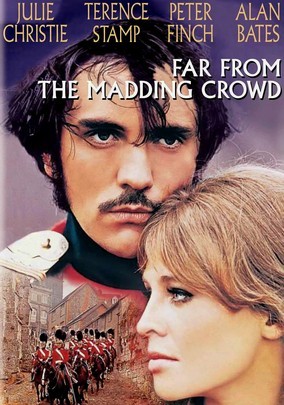
Far from the Madding Crowd-1967

Far from the Madding Crowd-1967

Director John Schlesinger

Starring Julie Christie, Terence Stamp, Alan Bates

Top 250 Films #183

Scott’s Review #315
70111488

Reviewed January 1, 2016

Grade: A-

A sweeping, gorgeous epic made in 1967, Far from the Madding Crowd is pure soap opera (this is not a negative), done very well, featuring a woman with three male suitors and many similarities to another brilliant epic, Gone with the Wind (1939).

The cinematography, score, and writing are excellent, and at close to three hours, it is a lengthy experience.

The film is based on the popular novel written by Thomas Hardy.

The setting is lovely, rural England, the landscape green and lush- mostly farmland, where Bathsheba resides, having recently inherited her Uncle’s enormous estate and is, frankly, overwhelmed with the heavy responsibility required to run it successfully.

Three men appear in one form or another to lend a hand, and each falls madly in love with her- she had her choice of any of them. Throughout the film, each is given a chance to win her heart, and each faces trials and tribulations.

The wealthy neighbor, William Boldwood, is older and insecure. Frank Troy is a bad boy who is a cavalry sergeant, and Gabriel, a former farmer, has lost all of his sheep.

Having only seen this film twice (so far), I notice more and more the similarities to Gone with the Wind. Both are set around the same period (the 1860s), and both films feature powerful, independent, gorgeous female characters with multiple male suitors.

Unlike Gone with the Wind, though, Bathsheba is not self-centered, but wholesome and honest.

Julie Christie was undoubtedly the “it” girl during the time the film was made, having recently starred in Darling (1965) and Doctor Zhivago (1965), among others, and Far from the Madding Crowd is a perfect film for her, focusing on her beauty and earnestness.

She is exceptionally cast.

What I enjoy most about the film is that we do not know which of the men Bathsheba will wind up with…if any of them. Gabriel (Alan Bates) is my personal favorite, but at the beginning of the film, she rebuffs his marriage proposal.

In a heartbreaking scene, one of his dogs goes mad and leads his entire flock of sheep to their death. He is then forced to work as her shepherd, a job beneath him. He is the most likable of the three men, and it is fun to root for their ultimate union. But is he prone to bad luck?

Frank Troy is dashing- a clear lady’s man, yet I did not root for him. A character, whom I found to have strange motivations, impregnated and almost married a young lady named Fanny, only to turn her away based on a misunderstanding, then ultimately changed his mind about Bathsheba.

In one scene, he manipulates the citizens into getting drunk on brandy, which leads to a crisis. He is charismatic and used to getting his way.

Finally, Boldwood is wealthy, sophisticated, and appealing to Bathsheba in a certain way (primary stability). Still, there is also something I find “off” about the character throughout the film- unstable, maybe, needy? I did not find his character likable either.

The overlap and the relationships between the men are also interesting aspects of Far from the Madding Crowd. Will they become friends? Would they kill each other for Bathsheba’s affection?

Many emotions run through all four characters, which makes the film rich in character development.

Grand, sweeping, and beautiful are words that describe Far from the Madding Crowd, a film I enjoy exploring and evaluating with each viewing.

Oscar Nominations: Best Original Music Score

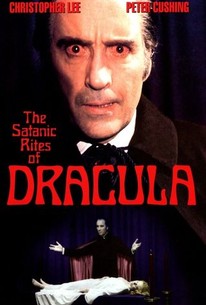
The Satanic Rites of Dracula-1973

The Satanic Rites of Dracula-1973

Director Alan Gibson

Starring Christopher Lee, Peter Cushing, Joanna Lumley

Scott’s Review #1,405

Reviewed October 16, 2023

Grade: B+

The Satanic Rites of Dracula (1973) is the eighth film in the Hammer Horror Dracula series, and the seventh and final one to feature Christopher Lee in the starring role. It also unites legendary horror actor Peter Cushing with Lee for the third time.

So, the territory and storyline are hardly uncharted, and a film like this is for a targeted audience.

For those unclear, Hammer Horror films are a series of low-budget British films produced by the London-based company, featuring gothic and fantasy themes.

Their heyday was from the mid-1950s until the 1970s.

The Satanic Rites of Dracula comes at the end of the horror genre reign of terror, but is enjoyable nonetheless. It’s redundant in a way because I’ve seen so many of them by now that there’s little intrigue anymore.

It’s no longer a surprise what’s going to happen in the film.

I love these films mostly because of their low budget and the creative, sophisticated sets and art design. But the main selling point is the Lee/Cushing pairing.

After a Secret Service agent barely escapes an English country estate where satanic rituals are being held and later dies, Van Helsing (Cushing) is asked to investigate.

He seeks the seven-hundred-year-old count (Lee), who is dead and living in London with his vampire bride and a breed of other undead women dressed in red robes.

Van Helsing’s granddaughter, Jessica, played by Joanna Lumley, is introduced, as is another Secret Service agent, Murray (Michael Coles).

The team naturally winds up at the English estate, where they discover shenanigans led by a female Chinese vampire (Barbara Yu Ling). They grapple with fire and brimstone as they determinedly attempt to take down Dracula once and for all (yeah, right!).

The film is silly but in the best of ways. I enjoyed the very beginning and ending most of all. When the Secret Service agent runs down the vast estate driveway in the darkness, the mysterious motorcycle-riding men add intrigue, and the plot is hatched.

As fans know, the finale will result in a fiery showdown between good and evil, and the benevolent Van Helsing drives a stake through the heart of the villainous Dracula.

This technique is used a few times during The Satanic Rites of Dracula, and comically, a stake and hammer always seem to be at the ready.

But the fun is good, besting evil after all, and delightful is seeing a vampire’s fangs come into view as the unsuspecting victim gasps in shock or shrieks in terror.

By 1973, Cushing and Lee could probably deliver their dialogue in their sleep, and the motivation doesn’t seem to be there. Lee barely appears until the final act.

The introduction of Lumley, well-known to Absolutely Fabulous fans, is wise and breathes new life into the familiar characters. She brings a Nancy Drew-type appeal, especially as she sneaks into the estate’s basement to investigate peculiar noises.

A hoot for Hammer Horror fans or fans of British horror, but it’s not one of the best in the series. Enjoyable mostly for additional tidbits like howling wind, creepy noises, and lavish drapes, furniture, and various set pieces.

The Satanic Rites of Dracula (1973) is a nice watch in October around Halloween.

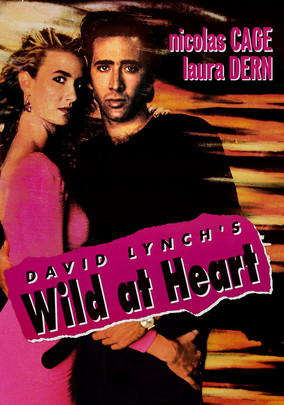
Wild at Heart-1990

Wild at Heart-1990

Director David Lynch

Starring Nicolas Cage, Laura Dern

Scott’s Review #1,230

Reviewed February 19, 2022

Grade: B+

David Lynch has created some weird films. Blue Velvet (1986) and Mulholland Drive (1992) are masterpieces that skew the odd and peculiar facets of human behavior. But Wild at Heart (1990) takes the cake as the strangest in the lot.

Fascinatingly unhinged, yet hard to understand, it’s got the Lynch handprint from start to finish, but only a warm-up act as stacked against those other films.

Somehow the film is classified as a comedy. It’s got to be one of the darkest of dark comedies. Anyone who is not a Lynch fan will not appreciate or get this film- I am a Lynch fan and I’m not sure I even got it. I do appreciate it though.

It’s also the best role of Diane Ladd’s career in which she plays a fiendish, witchy mama. The graceful actress belts a home run in her storied performance.

A situation occurs during the opening sequence that sets the tone for the rest of the film. Sailor Ripley (Nicolas Cage) serves prison time for a self-defense killing and reunites with his girlfriend Lula Fortune (Laura Dern) when he is released.

Lula’s mother, Marietta (Diane Ladd), is desperate to keep them apart and hires a hitman to kill Sailor. But those are only the start of his troubles when he and Bobby Peru, played by Willem Dafoe, an old buddy who’s also out to get Sailor, try to rob a store.

When Sailor lands in jail again, he may be destined never to reunite with Lula ever again.

Wild at Heart is a love story about Sailor and Lula and the many obstacles they must overcome to live happily ever after.

Cage and Dern are terrific though I fantasized while watching how nice it would have been to see Kyle MacLachlan in the role of Sailor. A Blue Velvet reunion would have been splendid since his chemistry with Dern in that film was top-notch. Nonetheless, I enjoyed watching Cage and Dern as the romantic leads.

The many references to The Wizard of Oz are delightful like when an image of Marietta flying through the air on a haggard broomstick appears just like the Wicked Witch of the West. When Lula desperately clicks her red heels three times to no avail we strangely wonder where the home she wants to return to is.

The film is one of those that is hard to take seriously or focus on the plot too much. This is evidenced by the inclusion of Twin Peaks (1990-1991; 2017) alumni Sheryl Lee, Sherilyn Fenn, and Grace Zabriskie. They play The Good Witch, Girl in Accident, and Juana Durango, respectively.

Each character is indescribable in their strangeness.

The nuttiness continues with bizarre turns from Crispin Glover and Harry Dean Stanton.

Interesting is how Wild at Heart was released the same year as Twin Peaks was. The inclusion of a seedy bar named One-Eyed Jacks which appears in both productions is about all that is comparable with each other. The main events in Wild at Heart are in Texas and Washington for Twin Peaks.

Forgetting the storylines, the best part about Wild at Heart is the cinematography. Enough dark and dusty highway sequences emerge using glowing and moody lighting and foreboding cracks and crevices in other visceral scenes. Cigarette smoking has never looked as sexy or dangerous as it does in this film.

Despite there being admirable and perfectly Lynch-y elements to Wild at Heart (1990) the film is just too far overboard for me to fall in love with.

I’ll pull out my copies of Blue Velvet and Mulholland Drive any day before Wild at Heart.

Oscar Nominations: Best Supporting Actress-Diane Ladd

Independent Spirit Award Nominations: 1 win-Best Supporting Male-Willem Dafoe, Best Cinematography (won)