Category Archives: Richard Bright

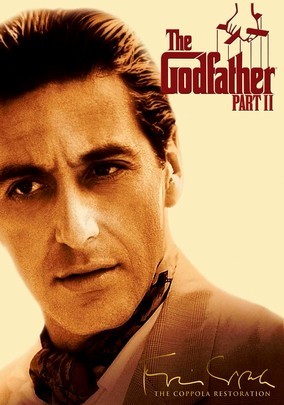
The Godfather: Part II-1974

The Godfather: Part II-1974

Director Frances Ford Coppola

Starring Al Pacino, Robert DeNiro

Top 250 Films #2

Scott’s Review #197
60011663

Reviewed: November 25, 2014

Grade: A

Frances Ford Coppola’s sequel (and, technically, a prequel) to the highly regarded and successful The Godfather (1972) is one of the rare sequels to equal, if not surpass, the original in greatness, creativity, and structure.

The Godfather Part II (1974) feels more profound, more complex, and ultimately richer than The Godfather- and that film itself is a masterpiece. Part II is much darker in tone. Francis Ford Coppola had complete freedom to write and direct as he saw fit, with no studio interference.

The results are immeasurable in creating a film masterpiece.

The film is sectioned into two parts, which is an exciting and practical decision.

The story alternates between the early twentieth century, following Don Corleone’s life, now played by Robert DeNiro, as his story is explained- left without a family and on the run from a crime lord, Don escapes to the United States as a young boy and struggles to survive in the Little Italy neighborhood of New York City.

He obtains a modest job as a grocery stockboy and finally celebrates his eventual rise to power in the mafia.

The other part of the film is set in 1958, as Michael Corleone faces a crumbling empire, with both rivals and the FBI investigating him and holding Senate committee hearings in Washington, D.C., and a failing marriage to Kay (Diane Keaton).

Betrayal is a common theme of the film, as Michael’s wife, brother, and mobster allies are revealed to be cagey enemies. Michael becomes increasingly uncertain and mistrustful of almost everyone around him. Is Kay a friend or foe? Is Fredo plotting against him? He even begins lashing out at Tom Hagen on occasion.

What makes The Godfather Part II so brilliant, and in my opinion richer than The Godfather, is that it is tougher to watch- and that is to its credit. Now, instead of being a warm, respected member of a powerful family, Michael is questioned, analyzed, and betrayed.

New, interesting characters are introduced, including Hyman Roth, played by Lee Strasberg, a former ally of Don’s, and Frankie Pentangeli, played by Michael V. Gazzo. These characters are intriguing, and their allegiances remain unknown throughout most of the film: are they loyal to the Corleones or deadly enemies?

The character of Michael evolves from conflicted to all-out revenge-minded, including seeking revenge against members of his own family. Michael is now a dark, angry character- gone is the nice, decorated war hero with his whole life ahead of him.

He is much older and has changed.

Similar to the original Godfather, the opening scene is a large celebration- this time, Anthony Corleone’s first communion celebration.

Additionally, the film’s finale features the deaths of several significant characters, one after another.

Unique to this film are the multiple-location scenes, featuring New York, Nevada, Italy, Florida, and Cuba, which make for an enjoyable segue throughout and a more substantial budget.

The blow-up confrontation between Michael and Kay reaches a devastating, shocking climax. When Michael punches Kay in a sudden rage, the audience feels punched as well.

The incredible scene at the end of the film, with the entire family gathered around for Don’s fiftieth birthday in 1942, is a special treat for viewers; familiar faces make cameo appearances.

I love these aspects of the film.

The rich history of Don is the most significant aspect of The Godfather Part II, known as “Godfather” and patriarch of the family. His life as a boy and a young father is explained, showing how he became one of the most powerful men in the crime world.

I love how he remains a decent man and helps people experiencing poverty and the victims of the ruthless Don Fanucci, his predecessor. He loves his wife and children, but also loves his neighbors and helps them, believing in the principle of fairness.

Ultimately, the characters of Don and Michael are worlds apart.

The Godfather Part II (1974) is one of the most complex and well-written films in movie history- studied in film school, discussed, imitated, and championed.

It remains vital and should be viewed and analyzed repeatedly.

Oscar Nominations: 5 wins-Best Picture (won), Best Director-Francis Ford Coppola, Best Actor-Al Pacino, Best Supporting Actor-Robert De Niro (won), Michael V. Gazzo, Lee Strasberg, Best Supporting Actress-Talia Shire, Best Screenplay Adapted from Other Material (won), Best Original Dramatic Score (won), Best Costume Design, Best Art Direction (won)
The Godfather-1972

The Godfather-1972

Director Frances Ford Coppola

Starring Marlon Brando, Al Pacino, James Caan

Top 250 Films #4

Scott’s Review #196

60011152

Reviewed November 24, 2014

Grade: A

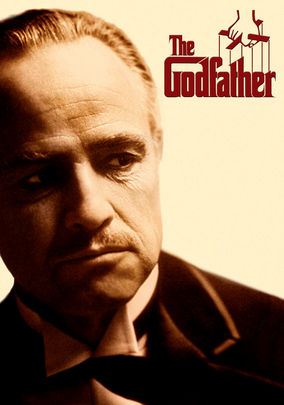
The Godfather (1972) is one of the most identifiable and brilliant film masterpieces of all time. It is so ingrained in pop culture and film history that it was a blueprint for 1970s cinema, and its legend deserves to live on.

The film has not aged poorly nor been soured by over-exposure. It is as much a marvel today as it must have been when it was initially released in theaters.

The film revolves around the Corleone family- a mob family living in New York. They are high-powered, wealthy, and influential with politicians and law enforcement alike. They are the cream of organized crime families.

The patriarch of the family is known as “The Godfather”; his real name is Don Corleone, played by Marlon Brando.

The eldest son, hot-headed Sonny, is played by James Caan. Middle son Fredo, played by John Cazale, is dim-witted and immature, serving as the family’s weak link.

Finally, the youngest son is the central character in the film. Michael, played by a very youthful Al Pacino, has just returned home from World War II, a decorated and Ivy League-educated hero.

Throughout the film, Michael wrestles with steering the Corleone family business toward the straight and narrow or continuing the death, bloodshed, and corruption that currently plague the family.

Rounding out the Corleone family is Tom Hagen, an Irish surrogate son of sorts, who serves as the family attorney. Connie, the temperamental and emotional sister, and Mama Corleone, the passive wife of Don, complete the prominent family.

The supporting characters are numerous, ranging from family friends and relatives to corrupt mobsters and those introduced while Michael lives in Italy.

The brilliance of The Godfather lies in the richness of its numerous characters, as well as its structure and pacing.

Even minor characters are vital to the film, and every scene is essential and effortlessly paced, so that they neither seem rushed nor dragged out; the film is immeasurably character-driven.

My favorite character is Michael Corleone, as he is the most troubled and complex of all. Pacino plays him to the hilt as, initially, a nice guy trying to do the right thing, going against the grain, and non-traditional- he proposes to a WASP woman who has no Italian heritage.

When events unfold in a particular way, Michael suddenly becomes the family’s leader, despite being the youngest son, and the character’s complexities deepen from this point.

Specifically, the revenge-killing sequence is brilliant, keeping the viewer on the edge of their seat through a car ride, a meal at a restaurant, and a men’s room scene, until all hell finally breaks loose, all the while Michael is conflicted, unsure, and intense.

Has he veered too far from being a nice guy? Can he salvage the family business without being ruthless? Michael faces a battle of good vs. evil.

The scenes are brilliantly structured- the grand opening scene alone is beautiful as the audience is introduced to the entire family- cheerfully dancing and frolicking during a bright and sunny outdoor wedding (Connie’s) at the Corleone estate, while inside a dark interior study, a man begs Don Corleone to help avenge his raped and beaten daughter by having her attackers killed.

Several scenes in The Godfather are my personal favorites —the aforementioned restaurant scene, where Michael is faced with a dilemma involving a corrupt policeman and a high-powered figure. One can feel the tension in this extended scene.

The scene in a Hollywood mansion where poor, innocent, horse Khartoum meets his fate in the most gruesome way imaginable.

Later, Michael’s beautiful Italian wife, Apollonia, has an explosive send-off.

Towards the end of the film, there is an improvised scene set in a tomato garden, with an elderly Don Corleone playing with his young grandson.

Finally, the brutal scene at the toll booth involving Corleone’s son, Sonny, is mesmerizing, murderous, and flawlessly executed.

The lack of any strong female characters and how women are treated (either beaten or passively following their husbands) is bothersome.

Unfortunately, this was still the case circa the 1940s.

One could argue that Kay Adams, played by Diane Keaton, is the strongest female character because she questions the Corleone family’s motives and tries to keep Michael honest and trustworthy. She has little in common with the other female characters.

Lines such as “I’m gonna make him an offer he can’t refuse” and “Don’t forget the cannolis” are unforgettable and quote-worthy.

The film’s finale is breathtaking—a combination of bloody killings and a peaceful scene in which Michael accepts the honor of becoming his nephew’s godfather. As he pledges his devotion to God and denounces Satan, the murders he orchestrated are simultaneously being executed.

The character, while complex, suddenly becomes a hypocrite.

Some view Michael as strictly a hero whose choices should not be questioned or analyzed; others see him as a complex, tortured, and flawed character rather than a hero.

One must watch The Godfather and The Godfather Part II (1974) as companion pieces, as Part I is slightly more straightforward and easier to follow than the more complex and layered sequel.

The Godfather (1972) is storytelling and filmmaking at its absolute best and continues to influence films to this day.

Oscar Nominations: 3 wins-Best Picture (won), Best Director-Francis Ford Coppola, Best Actor- Marlon Brando (won), Best Supporting Actor- James Caan, Robert Duvall, Al Pacino, Best Screenplay Based on Material from Another Medium (won), Best Costume Design, Best Sound, Best Film Editing

The Getaway-1972

The Getaway-1972

Director Sam Peckinpah

Starring Steve McQueen, Ali MacGraw

Top 250 Films #58

Scott’s Review #439

539604

Reviewed July 3, 2016

Grade: A-

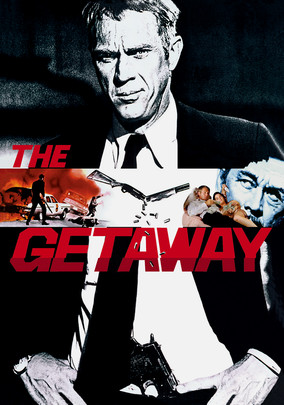
The Getaway (1972) is a classic action film directed by Sam Peckinpah, known for films such as Straw Dogs and The Wild Bunch.

His films are known as “guy films” and are a rather violent experience.  The Getaway is no exception, though it is not immensely brutal either. Still, there is more than one macabre scene and one dastardly villain.

For fans of Peckinpah, The Getaway is a must-see.

The film features Steve McQueen and Ali MacGraw, who are perfectly cast as lovers Doc and Carol McCoy. Inescapable was their chemistry, and art mirrored life: the two were embroiled in a torrid love affair during the shooting, and later they married.

We meet Doc in a Texas prison, where his parole has just been denied. Doc and Carol decide to make a deal with corrupt businessman Jack Benyon to ensure Doc’s release. One stipulation is for Doc to participate in a bank heist with two of Jack’s men (Rudy and Frank).

The heist goes off, but things go awry, and Doc and Carol head for El Paso with a large sum of money, being pursued by Rudy and a double-cross attempt by Jack.

Rudy kidnaps veterinarian Harold and his young wife Fran (Sally Struthers) to aid him with his injuries, taking them along as he pursues Doc and Carol.

Amid the already complicated plot, a con man attempts to steal Doc and Carol’s money.

Doc and Carol are clearly the heroes of the film and are meant to be rooted for, and the characters work very well together. Yes, they are criminals, but they are portrayed as lovely and as not hurting anyone who does not deserve it. Doc does spare Rudy’s life at one point, and I think this only reinforces Doc’s appeal as an antihero.

The love story is also a significant aspect of the filmmaking, making Doc and Carol likable. A few sweet, tender scenes of their romance are mixed in, adding a nice balance to the otherwise testosterone-fueled events.

The Getaway features spectacular editing, particularly at the beginning of the film, where we watch Doc in prison, going through his day-to-day rituals, which are seamlessly interwoven with other stories in the movie.

The musical score matches perfectly with the editing, adding a provocative element of intrigue. These components add the necessary elements to a film like this- edge-of-your-seat!

I love the Texas setting.

Characters are constantly traveling to get somewhere- either by train, by car, or on foot- so we see much of the Texas countryside, almost giving The Getaway a Western flavor.

It is certainly a hot, humid environment, though McQueen always wears a sophisticated suit, and MacGraw looks stylish and put together.

And from a prop perspective, I never tire of seeing those early 1970s sedans driving at high speeds.

Unfortunately, as with most of Peckinpah’s films, women are not portrayed in a positive light, though Carol is one of the strongest of his female characters. Yet, in one tough scene, she is smacked around by Doc after he realizes she slept with Jack to ensure his release from prison.

The most confusing and weak character is Fran. In a strange bit of writing, she inexplicably falls madly in love with her kidnapper, Rudy, even as he abuses and humiliates her, while her husband is around. This is odd and tough to watch, and not the best part of The Getaway.

Her character is not developed well, and it is head-shaking that she feels any passion for Rudy.

The heart of the film belongs to Doc and Carol as they are on the lam for much of the time, and this is a successful part of The Getaway- hence the title. Will they get caught? Will they escape?

The characters remind me of Bonnie and Clyde, so we wonder if Doc and Carol will meet the same fate, but of course, we like them, so we do not want that.

The Getaway is a fast-paced, down-home, red-blooded sort of action film. It is stylized, gritty, and sometimes violent. The chicken wing scene between Rudy, Fran, and Harold starts light and then turns ugly, adding to the film’s unpredictable nature.

A supreme offering by Peckinpah.

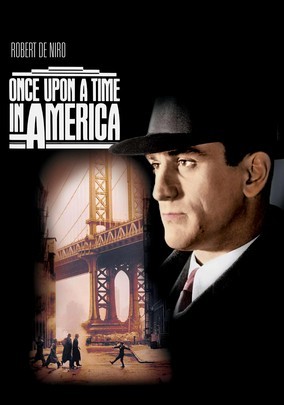
Once Upon a Time in America-1984

Once Upon a Time in America-1984

Director Sergio Leone

Starring Robert De Niro, James Woods

Top 250 Films #85

Scott’s Review #218

60028306

Reviewed January 19, 2015

Grade: A

An epic film, the extended directors cut at more than four hours in length, 1984’s Once Upon a Time in America is a film directed by Sergio Leone, who also directed the 1968 masterpiece Once Upon a Time in the West and numerous other westerns starring Clint Eastwood.

This particular film is in a different vein and not to be confused as any sort of sequel or related to the aforementioned film- this time Leone explores the crime drama genre rather than the western and does so in remarkable fashion.

The film tells the story of a group of Jewish friends who became involved in organized crime during the 1920s in New York City.

The main story is told via flashbacks as the central character, Noodles, played by Robert De Niro, returns to Brooklyn thirty years later to reunite with his former mobster friends.

In this way, the film is sectioned- the group of youngsters and kids and the same characters as adults.

Once Upon a Time in America has been met with much controversy since it was made. At the time of its release, the film was butchered as over an hour of footage was cut by the studio heads making the film largely uneven.

Fortunately, the restored version, at over three hours in length, is available for viewing. Furthermorethe director cut clocks in at well over four hours, and is the best version to watch. Due to so many cuts, other versions appear shoddy and out of order making the viewing experience difficult.

Once Upon a Time in America is largely underappreciated except for the die-hard cinema lovers most patient with the film, and deserves mention as an excellent crime epic drama.

The film contains many similarities to The Godfather and The Godfather Part II and the role De Niro plays is not too different from Vito Corleone in Part II.

However, the greatest contrast is that Once Upon a Time in America is more visually artistic than The Godfather films.

The film centers mainly on Noodle’s perspective as he enjoys youth in the Lower East Side of Manhattan where he meets his group of lifelong friends.

The focal point is his friendship with Max, the adult character played by James Woods, and his undying love for Deborah, played by Elizabeth McGovern as an adult.

As kids, they are worry-free, but gradually fall in with a group of older mobsters, first doing their dirty work, followed by venturing out on their own.

The themes of the film are loyalty, childhood friendship, betrayal, and greed as all of the characters change (or die) in the time that the film takes place.

When a mysterious letter forces Noodles to resurface in Brooklyn, we begin to understand the back story and the history between the friends as layers are slowly peeled back.

The film drags slightly in the middle section, but the first part and last parts are very well-made and absorbing.

Leone has a way of pacing the film that works- it is methodical, and nuanced, with wonderful set pieces and each period explored- 1920s, 1930s, and 1960s seem equally as authentic as the next one does.

I especially enjoyed the 1920s art direction- it revealed such a state of genuineness and felt like truly there in that period.

The relationship between Noodles and Deborah is an interesting one worth mentioning. Falling in love as youngsters (when Deborah was played by a very young Jennifer Connelly) they had an innocent, puppy-love relationship.

As adults, due to a violent, disgraceful act, their tender relationship is subsequently ruined and one might argue one of the characters turns quite unsympathetic.

Once Upon a Time in America (1984) is a sprawling epic film sure to be enjoyed by intelligent fans of the crime epic drama genre and specifically Sergio Leone fans- an underappreciated gem.

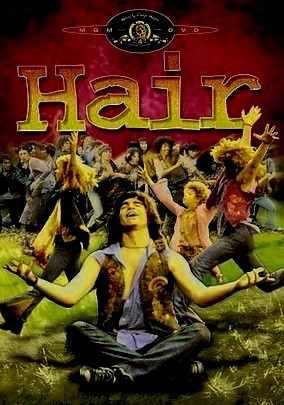
Hair-1979

Hair-1979

Director Milos Forman

Starring Treat Williams, John Savage, Beverly D’Angelo

Top 250 Films #200

Scott’s Review #664

Reviewed July 14, 2017

Grade: B+

Hair is a 1979 musical film that, in addition to catchy singing and dance numbers, possesses quite a serious theme- that of the Vietnam War.

This film is not your traditional Metro-Goldwyn-Mayer style musical prevalent in the 1950s. Rather, the entire experience is a unique one with an underlying dark tone and is presumably a message film with a liberal slant.

Made in 1979, set in the late 1960s, Hair centers primarily around two young men, along with a bevy of hippie friends, while most of the action is set in New York City.

Despite the time, the film does not always succeed in the authenticity category- many of the costumes and hairstyles scream the late 1970’s. The film also has the late 1970s “look”, on the cusp of the 1980s with poofy hair associated with the times.

This forces the viewer to escape into a world largely of make-believe.

Claude (John Savage) is a naïve young man from folksy Oklahoma, having lived a sheltered and religious life,  proper and away from big city living.  He is drafted and sent to the Big Apple, where he will wait for the assignment.

Charismatic Berger (Treat Williams) and company befriend Claude after he gives them spare change, soon becoming the best of friends. Claude falls in love with socialite Sheila Franklin (Beverly D’Angelo) in town from neighboring Westchester County, NY and a love story ensues.

When Claude, Berger, and company interrupt a lavish dinner party hosted by Sheila’s parents, a hilarious yet informative scene develops.  While  Sheila secretly is gleeful at the arrival of her new friends, Sheila’s parents are none too pleased, which results in a standoff between Berger and  Sheila’s family.

Partly comical, this scene also displays the severe class distinctions between many of the characters.

The rest of the film centers on the friend’s antics involving drug use, and relationship trials and tribulations, and culminates in a cross-country drive to desperately see Claude before he is shipped to Vietnam.

Multiple scenes involve songs concerning the turbulent race issues of the times- my personal favorites are the opening number, “Aquarius” and the scandalous, “Black Boys” and “White Boys”, performed by Nell Carter.

Never one to be disappointed with a film set in Manhattan, Hair is a film basking in fantasy and the entire production seems to be one big dream as the carefully crafted musical numbers interspersed with the more dramatic elements.

Still, much of the film consists of the group prancing around Manhattan, and wonderful areas such as Washington Square Park are featured as well as several changes of seasons, giving the film a slice-of-life feel.

My favorite performance is that of Treat Williams as Berger. Part showman, part jokester, and part earnest, he fills the role with dynamic energy that comes full circle in the last act when he drastically changes his appearance for the sake of a friend.

The ending of the film is melancholy and an inevitable reminder of the coldness and finality of war about human life.

The encompassing song is “Let the Sunshine In”, a powerful and worthy conclusion to the film as the gang visits Arlington National Cemetery, to join an anti-war peace rally and say goodbye to a friend.

The film version of Hair (1979) may be drastically changed from the stage musical version,  a version I shamefully have yet to see, but on its own merits, the film is a poignant, powerful, and wholly entertaining musical adventure.

Looking for Mr. Goodbar-1977

Looking for Mr. Goodbar-1977

Director Richard Brooks

Starring Diane Keaton, Tuesday Weld, Richard Gere

Scott’s Review #1,485

Reviewed July 25, 2025

Grade: A-

Diane Keaton won the Academy Award for Best Actress in 1977 for Annie Hall, an excellent film by Woody Allen, but as has happened in Oscar history, she won for the wrong role.

She delivers her best acting performance of her distinguished career in Looking for Mr. Goodbar (1977), a raw crime drama in which she plays Theresa, a liberated and carefree young schoolteacher living in a metropolitan area.

The film, directed by Richard Brooks (Cat on a Hot Tin Roof, 1967, and In Cold Blood, 1968), is based on Judith Rossner’s 1975 best-selling novel. The setting is inexplicably changed from New York City to San Francisco, but it feels exactly like the troubled urban metropolis during its late 1970s crime-ridden period.

I nearly felt as if Theresa’s dingy, windowless apartment was a character in itself.

The musical soundtrack is a significant win, featuring disco anthems from the time, such as ‘Don’t Leave Me This Way’ by Thelma Houston and ‘Love Hangover’ by Diana Ross.

Film lovers familiar with Taxi Driver (1976) and Cruising (1980) (both set in New York City) will notice similarities and draw parallels.

Theresa (Diane Keaton) teaches deaf children during the day and cruises singles bars and discos at night. Despite being raised a devout catholic ‘good girl’, she favors quick nights of passion with random suitors, ignoring the advances of well-meaning but nerdy social worker James (William Atherton).

She pursues the likes of Tony (Richard Gere), whose threatening knife and swagger excite her. As the film progresses, Theresa becomes increasingly entangled in perilous encounters, putting her life in danger.

Despite a jarring shift in story direction towards the end of the film and the geographical change, I found more than enough to merit a superior rating, especially Keaton’s performance.

Keaton flawlessly carries the film as an unapologetic, progressive character. She lives life, enjoys life, and sees nothing wrong with her chosen lifestyle. Keaton is fearless, delivering a likable character we probably shouldn’t like.

She can be cutting, self-centered, and moody, but takes sheer delight in teaching deaf kids who have problems at home, almost fostering them as her own.

Richard Kiley and Priscilla Pointer play Theresa’s parents in rather one-note performances. They are devout Irish Catholics, but too much time is spent showcasing their traditional values.

Theresa’s sister, Katherine, played by Tuesday Weld, is more like Theresa but more needy, and clinging to any man she meets. The sisters are close, even living in the same building, and constantly have each other’s backs.

Looking for Mr. Goodbar perfectly depicts life in an inner city in the mid-1970s: booze, sex, parties, and drugs.

Rinse and repeat.

The male characters that Theresa interacts with are of different types. Her first fling is with her married professor, whom she fantasizes about living with. When this doesn’t work out, she has urges for more dangerous experiences.

Tony (Gere) is sexy, unreliable, and dangerous, and Theresa is titillated. It’s with him when she teeters over the brink.

The film transitions from a sexual thriller into a deadly final sequence, leaving my mouth hanging open with surprise. The ending will leave audiences on the edge of their seats and may not please those seeking a happily-ever-after story.

Is the audience supposed to learn a lesson? Does Theresa get what she deserves? How dare she live her life as she sees fit? These are questions easily worthy of further discussion.

The introduction of Gary (Tom Berenger), a tortured gay man Theresa meets in a bar, comes so late in the film that there is barely time to get to know the character. But, he doesn’t put the LGBTQ+ community in such a positive light.

Still, the gay men who yearn to be straight cannot be dismissed since this was commonplace when the story was created.

With a spot-on atmosphere filled with juicy late 1970s coolness and danger, and a brilliant starring turn by Diane Keaton, Looking for Mr. Goodbar (1977) has more than enough to warrant a watch and a follow-up chat.

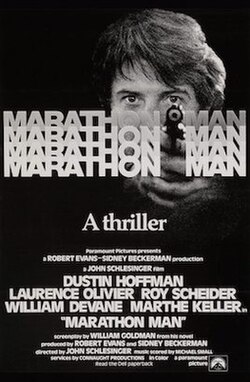
Marathon Man-1976

Marathon Man-1976

Director John Schlesinger

Starring Dustin Hoffman, Laurence Olivier, Roy Scheider

Scott’s Review #1,359

Reviewed April 29, 2023

Grade: A-

Writer, William Goldman, was involved in two politically charged, taut thrillers released in 1976 that can easily be watched back to back. Fast-paced and rapidly edited, thrilling action-packed offerings are on the menu.

The Academy Award-winning All the Presidents Men (1976) and Marathon Man (1976) are highly recommended since both are in the same vein. They are part of why I love 1970s cinema so much freedom and rich character development combined with a sole vision are admirable traits.

John Schlesinger, famous for Midnight Cowboy (1969) and other films, directs.

Both films are written by Goldman and each stars actor Dustin Hoffman so the similarities are endless. And yet, each has its own identity.

In Marathon Man, Thomas “Babe” Levy (Hoffman) is a Columbia graduate student and long-distance runner, residing in New York City. His older brother, Doc (Roy Scheider), is a government agent chasing down a Nazi war criminal named Szell (Laurence Olivier).

Babe does not know Doc’s career until a tragic event finds him involved in a plot of stolen gems and sadistic madmen. Even his girlfriend, Elsa (Marthe Keller), becomes a suspect as everything Babe believes to be true is suddenly turned upside down.

At over two hours there is not a slow moment in the film.

We meet Babe as he runs throughout New York City so that the audience learns his obsession with running could correlate to his need to escape from something.

This proves to be true when we learn the brother’s father committed suicide after being investigated during the Joseph McCarthy era when civilians were suspected and accused of being communists.

So, the backstory made me sympathize with Babe and Doc and fleshed them as characters. Hoffman and Scheider are superb and show the different nuances between the personalities of the brothers. Doc is sophisticated and Babe is common, though highly intelligent.

The musical score, created by Michael Small must be mentioned. Oftentimes in film, the score serves as more or less ‘background music’ and can go unnoticed. This is not the case in Marathon Man and several times I noticed the music-enhancing sequences, especially when peril was involved.

I was pleased when I learned that the iconic Laurence Olivier plays the villain, Szell, in the film. He is believable as a vicious German Nazi who specializes in a unique brand of dental work. First blonde and then bald, the physical nature of the role is showcased. He also calmly performs torturous tactics using dental tools.

Marathon Man is made up of a series of scenes that will either enthrall, make the audience squirm, or in some cases both.

Speaking of dental work, any viewer who has a phobia or dislike of going to the dentist may want to fast forward past the sequence when Babe is forced to endure some stylized poking and prodding. Szell and his henchmen are convinced that Babe knows more than he is letting on and are determined to make him reveal all.

Early on, a terrifying scene centering on road rage in Manhattan is as good as it gets and reveals the gist of the plot. Nazis, anti-semitism, and a fiery gasoline truck encompass a speedy and argumentive car chase scene.

The sequence is heart-racing, nail-biting, and revealing.

Others flesh out the film like a quiet lunch at a lovely French restaurant. Doc takes Babe and Elsa out where they dine on lavish courses of creamy, sophisticated cuisine and wine. The richness of the food and culture enhances the earlier scenes set in Paris.

The final thirty minutes of Marathon Man are the best part. A series of shootouts in the suburban rural farmland and foot chases in downtown Manhattan culminate in a showdown between Babe and Szell near a water tank in Central Park.

A strong appeal for viewers is experiencing scene after scene in New York City as many exteriors were shot there.

The plot of Marathon Man (1976) is sometimes too complicated and all events do not add up satisfyingly. The who’s who and realism is a tough sell but it hardly matters. The film entertains and is a high-energy thrill ride and that is more than enough for me.

Oscar Nominations: Best Supporting Actor-Laurence Olivier

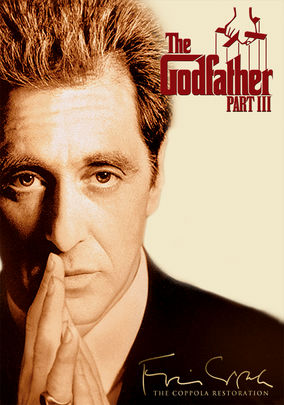
The Godfather: Part III-1990

The Godfather: Part III-1990

Director Francis Ford Coppola

Starring Al Pacino, Diane Keaton, Andy Garcia

Scott’s Review #533

60011153

Reviewed December 3, 2016

Grade: B+

The Godfather: Part III, released in 1990, has traditionally been met with unwavering criticisms for not being as great as the two preceding epics.

Sofia Coppola, who plays Mary- daughter of Michael Corleone, in particular, has bared the brunt of the attacks.

No, The Godfather: Part III is not on the level of the others, but is pretty damned good based on its own merits and is a capable mob epic to conclude the franchise satisfyingly.

The central theme is Michael’s continued desire to leave the mafia and religion, and the Catholic Church are central themes of the film.

Some backstory to the making of the film; Coppola had a non-expiring offer to create a third installment to the saga ever since 1974 when Part II was released.

Having had a financial crisis, 1990 was the time Coppola agreed to do the follow-up.

The ever-crucial role of Mary (now a coming-of-age young lady) was to be played by Julia Roberts, who dropped out. Winona Ryder was then cast and bailed at the very last minute.

Out of necessity, Coppola’s daughter Sofia was cast and had little time to prepare or much acting experience (she would later become an acclaimed director, which better suited her talents).

In a similar fashion to the other epics, a big event launches the film, as Michael (Pacino) is named Commander of the Order of Saint Sebastian in a lavish ceremony at St. Patrick’s Old Cathedral.

It is revealed that Michael is approaching age sixty and semi-retired, leaving his business dealings mainly to Joey Zasa in New York, who has ravaged what the Corleone family had once built.

Many characters- Kay, Mary, Tony, and Connie, are re-introduced, and new characters such as Vincent Mancini (Andy Garcia) and Don Altobello (Eli Wallach) are introduced, in a flurry of new storylines.

It is like a big, grand, soap opera, with wonderful, rich, writing.

I was immediately impressed by the neat cinematography- the camera captures wind-swept leaves and an artistic introduction to the film, as well as either mentioned or appearing in cameo roles, small characters from the first two films- a great touch in continuity and history.

Coppola does a fantastic job of providing little updates on these characters during a party. For example, we learn that Vincent is the deceased, illegitimate son of Sonny, his mother being Lucy Mancini, who appears in a scene. (Clever viewers will remember Sonny and Lucy’s torrent affair in the bathroom during The Godfather-it is suggested that this produced Vincent).

It is mentioned that Tom Hagen (Robert Duvall) has died, though his wife and son appear, and Coppola treats us to a myriad of flashbacks (Apollonia, a young Michael, and Kaye).

These nuances make The Godfather: Part III filled with cool little aspects that fill the loyal viewer with warmth.

The main story- Michael takes Vincent under his wing- and strives to steer the family clear of criminal ties- is interesting, if not spectacular. Connie rises from a battered mafia wife, raising kids, to a major player in the family, just as women progressed from the 1940s to the 1980s when the story takes place.

She even feeds her godfather a poisoned cannoli!

Michael, Vincent, and Connie involve themselves with the Catholic Church, bailing them out (the real-life Papal banking scandal is linked to the story) and making a deal with them for major shares of a real estate company, Immobiliare.

In-fighting between the major crime mob bosses leads to several bloody massacres throughout the film, on the streets, in Atlantic City, and finally, in the Sicilian Opera house.

The pairing of cousins and lovers, Vincent and Mary, never really works, nor does Bridget Fonda’s one-two-scene appearance as Grace Hamilton, a brief dalliance for Vincent. Also, the exclusion of the character of loyal family attorney Tom is a glaring omission.

So the film does contain a few negatives.

In a nutshell, The Godfather: Part III (1990) is a very good, epic, crime drama even without the Godfather name. To measure up to the glory of Parts I and II are impossible.

With the bonus of having the rich Corleone family history and the intricate relationships between the characters, this makes for a treat for fans.

There has not been a Part IV, nor should there ever need to be as the conclusion of the film is a satisfying wrap-up to the saga.

Oscar Nominations: Best Picture, Best Director-Francis Ford Coppola, Best Supporting Actor-Andy Garcia, Best Original Song-“Promise Me You’ll Remember”, Best Art Direction, Best Cinematography, Best Film Editing

Bring Me the Head of Alfredo Garcia-1974

Bring Me the Head of Alfredo Garcia-1974

Director Sam Peckinpah

Starring Warren Oates

Scott’s Review #222

70020328

Reviewed February 20, 2015

Grade: B+

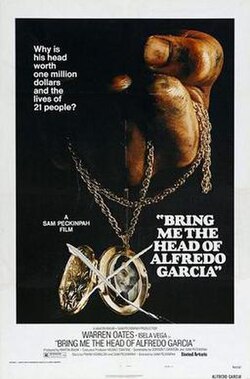
Bring Me the Head of Alfredo Garcia is a Mexican, cult-action film from 1974, directed by Sam Peckinpah, that influenced famed modern movie director Quentin Tarantino in multiple ways.

The film itself is violent, bloody, and traditionally Peckinpah in tone and look, similar to his other films (Straw Dogs from 1971 and The Wild Bunch from 1967).

The premise of the film is intriguing- a powerful man known simply as “The Boss”, turns furious and places a bounty on the head of the man who impregnated his daughter, whom he, by the way, tortures to garner this information out of.

He offers the enormous sum of 1 million dollars to the person who can “bring him the head of Alfredo Garcia”.

From this point, the action centers mostly on Bennie, a retired military officer who is intrigued by the bounty up for grabs.

Bennie, along with his prostitute girlfriend, Elita, traverses the lands of Mexico in search of Alfredo Garcia, whether he already be dead or still alive, which is a mysterious and fun element of the film.

I have a tough time taking the film too seriously as much as I enjoyed it- it seems an action farce and, without giving too much away, the scenes involving the carrying of a severed head, arguably the lead character, are as much comical as ghastly.

The illustrious lighting is a major focal point, especially during the outdoor scenes and specifically the nighttime desert scenes when Elita is almost raped by two bikers. The moonlight radiates onscreen.

The character of Elita is a fascinating one for me. On the one hand, she is an aging prostitute madly in love with Bennie and intrigued by a life with him living off their spoils. However, she almost enjoys the sexual experience with one of the bikers, played wonderfully by Kris Kristofferson, despite being roughed up by him.

The scene, while certainly violent, is in a way, almost tender as the biker and Elita realize their attraction for one another. It’s a surreal scene and has almost a sense of clarity for both characters. Are they in lust?

Peckinpah women are traditionally not treated well, but Elita borders on the exception.

The Tarantino influence is undeniable- the mixture of humor amid violence- a severed head being treated as a comical prop, is immeasurable in its comparison to later Tarantino films such as the Kill Bill chapters.

Daring and pure genius, the film contains a dark tone but does not take itself too seriously by going for any sort of melodrama or being overwrought.

It is only a film and has fun with that fact. It tries to be nothing more and embraces being bizarre.

Tarantino films are like Peckinpah films just made 20-30 years apart.

Bring Me the Head of Alfredo Garcia has evolved into a cult classic after having flopped commercially and critically in 1974.

How wonderful when a gem is rediscovered and laden with influence, in this case as much stylistically as otherwise.