Category Archives: 2018 Films

Crazy Rich Asians-2018

Crazy Rich Asians-2018

Director Jon M. Hu

Starring Constance Wu, Henry Golding

Scott’s Review #860

Reviewed January 26, 2019

Grade: B+

Crazy Rich Asians (2018), the romantic comedy smash of 2018, is a fun romp that is memorable because it centers on the Asian population, which is shamefully underrepresented in mainstream American cinema.

For this point alone, the film is recommended and worthy of praise, but otherwise, it is a standard genre film with gimmicks, stock characters galore, and a predictable conclusion.

The numerous cultural tidbits included must be mentioned, which raise the film above mediocrity.

Rachel Chu (Constance Wu) and Nick Young (Henry Golding) are a happily dating New York City couple; she is a New York University college professor, and he is an entrepreneur.

They fly to Singapore to attend Nick’s best friend’s wedding, which results in antics and anguish. Rachel realizes that Nick comes from an extremely wealthy family and is Chinese royalty, owning a multitude of lavish hotels and real estate.

Most of Nick’s family, especially his traditional mother Eleanor (Michelle Yeoh), disapproves of the pairing, viewing Rachel as a typical American who prioritizes passion over family.

Nick is a sought-after commodity among the single women of Singapore, and Rachel is forced to endure harassment and mockery at every turn. Her allies are Nick’s kind sister Astrid (Gemma Chan), Rachel’s outrageous college pal Peik Lin (Awkwafina), and her equally garish family.

The plot thickens when Nick’s scheming mother does a background check on Rachel and discovers a family secret.

Crazy Rich Asians is a formulaic romantic comedy with the standard situations and characters expected of a genre film. The rivalry between the good girl and her boyfriend’s domineering mother, the comic relief of the gay sidekicks as Peik Lin and another friend of Rachel’s, provides.

The caricatures of Peik Lin’s wild family, her unattractive brother fond of taking secret photos of Rachel, and Eleanor’s snooty, judgmental circle of female friends are all well cast yet one-dimensional.

It is perplexing why the filmmakers decided to make Nick only half Chinese rather than authentically Asian. Sadly, this may have been a reassurance that the film would be more marketable to mass audiences.

The film is presented as an Asian film, but it is an American film.

The storyline justification is that Nick’s father (surprisingly never seen) is British and that he and Eleanor met in college, only she being Chinese. Nick and Astrid’s English accents gnawed at me throughout the film.

Despite the myriad of cliches and manipulations, Crazy Rich Asians has a nice flow and offers a fun two hours. The film is flavorful with bright colors and visual spectacles of stylish and sophisticated Singapore and its modern and sleek nuances.

I adored the locales featuring the skyline and a rich overview of the robust and relevant city/country.

Fantastic is how the filmmakers add spices of traditional Chinese culture throughout the film’s telling, quickly becoming more of an ode to the good history. Nick’s grandmother, Su-Yi (Lisa Lu), takes pride in her excellent and artistic flowers, and Rachel is introduced to the art of dumpling making.

Crazy Rich Asians introduces a history lesson for those unfamiliar with ancient Chinese customs.

Flavorful inclusions of Mandarin Chinese language versions of American pop hits are also lovely additions, so the film has some tidbits to revel in other than the story.

Most songs reference money, such as “Money Honey” by Lady Gaga and “Rich Girl” by Hall & Oates.

The pacing of the film is nice. There is never a dull or dragging moment, and a nice balance of comedy and drama. Humorous is when Peik Lin provides Rachel with a costume makeover, ensuring she looks dynamic for the grand wedding, as she convinces her to fight Eleanor with fire.

Drama ensues when someone casts a dead fish on Rachel’s bed, and Eleanor spits that Rachel will never be enough for her son.

The film’s conclusion is predictable, resulting in a marriage proposal aboard a jet heading from Singapore to New York City. With a movie like Crazy Rich Asians, it is guaranteed that the couple lives happily ever after, riding off into the sunset in great defiance of Nick’s roots.

Due to the film’s success, a sequel is a solid bet, though I am also not betting the follow-up will be any good. Are romantic comedy sequels ever decent?

Filled with cliches, but satisfying most mainstream film-goers, Crazy Rich Asians (2018) creates a film with enough shards of Asian culture to at least get the Asian population on the map with a Hollywood production.

Although the film has a polished look and some stereotypes, it breaks no new ground other than good inclusion, and that is a start.
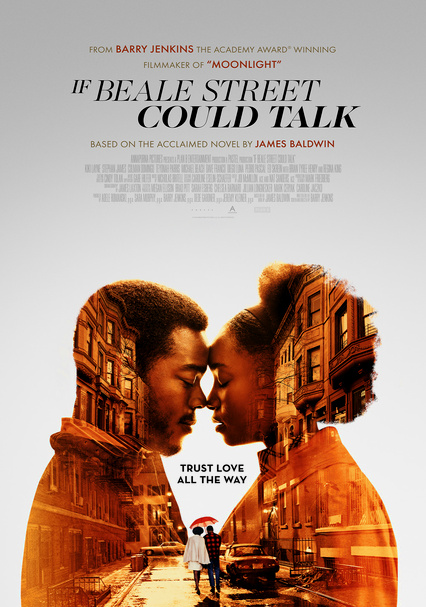
If Beale Street Could Talk-2018

If Beale Street Could Talk- 2018

Director Barry Jenkins 

Starring Kiki Layne, Stephan James

Scott’s Review #854

Reviewed January 8, 2019

Grade: A

2018 proved to be a year where filmmakers of color prided themselves in telling stories of diversity, inclusion, social injustice, and the never-ending challenges of minorities.

One of the year’s best films is If Beale Street Could Talk (2018), a lovely piece of storytelling by director Barry Jenkins. His other major work, Moonlight (2016), is a similarly poignant and melancholy experience.

The film is based on a novel by James Baldwin.

The title is explained in the first dialogue of the film. Beale Street exists in New Orleans, but thousands of streets exist in other cities. It is a metaphor for discrimination and unnecessary struggles that black folks continue to endure.

Right away, the audience knows that an important story is to be told.

The wonderful part of If Beale Street Could Talk is the combined elements that lead to brilliance.

Tish Rivers (Kiki Layne) and Fonny Hunt (Stephan James) have known each other since childhood. Growing up in a Harlem neighborhood, their families are interconnected and community-centered.

Events begin in 1973 when Tish realizes she is pregnant. Ordinarily, a happy occasion, this situation presents a major challenge because Fonny is imprisoned for a crime he did not commit.

A woman has accused him of rape and a corrupt policeman has positively identified Fonny as the rapist despite this being a logistical impossibility. Tish is determined to prove his innocence before the baby arrives with the assistance of her family.

The story is non-linear. Jenkins begins the film in the present day with Tish breaking the news of her pregnancy to him and then notifying her family.

As the film progresses, more of Fonny and Tish’s love story is explored. The couple falls in love, has romantic dinners, and nervously makes love for the first time. In this way, the film becomes a tender story of young love.

The social injustice and family drama are carefully mixed amid the central romance.

The film impresses with warm touches, ingenious cinematography, and a musical score that left me resounding with pleasure at the intricate and intimate details. The frequent use of jazz music over dinner or as the Rivers family sips celebratory wine adds sophistication to many scenes.

The film’s texture is muted and warm, giving it a subdued look that is genuine to the quiet and timeless nature of the production.

A plume of cigarette smoke can be seen in nearly every scene, as most of the characters smoke. Since the period is the 1970s, the authenticity is there, and a glamorous image is portrayed.

Smoking enhances the sophistication of the characters and adds to the tremendous cinematography.

Several scenes of simple dialogue crackle with authenticity and passion. In one of the best scenes, Fonny’s friend Daniel, a recent parolee, stays for dinner, and the friends talk while consuming beer and cigarettes.

The lengthy scene is poignant and tremendous with meaning. Daniel recounts his experience in prison and how black men are victims of the whims of white men and the terror involved in that. The scene is powerful in its thoughtfulness and a foreshadowing of Fonny’s impending trauma.

The supporting characters are stellar and add to the bravura acting troupe.

Regina King as Sharon Rivers gives an excellent performance when she bravely travels to Puerto Rico and confronts Fonny’s accuser, hoping to get her to modify her story. The scene is laden with emotion and honest dialogue.

The other notable actors are Colman Domingo and Teyonah Parris, who play Tish’s father and sister, respectively. Both do wonders in fleshing out the Rivers family as strong and kind people.

Jenkins is careful to add benevolent white characters to offset the other dastardly white characters. An example is the kindly old woman who comes to the rescue of Fonny and Tish and berates the cop.

The Jewish landlord who agrees to rent a flat to the pair is portrayed as decent and helpful, and finally, the young lawyer who takes Fonny’s case is earnest and understanding.

If Beale Street Could Talk (2018) continues talented director Barry Jenkins’s plunge into the depths of being one of the modern greats. With a beautifully visual and narrative film, he creates an experience sure to win more fans.

The ending is moving yet unsatisfying, as there are so many more miles to go in the race for prison justice. Adapting an important story of race and repression based on skin color is a powerful and detailed affair.

I cannot wait to see what Jenkins comes up with next.

Oscar Nominations: 1 win- Best Supporting Actress- Regina King (won), Best Adapted Screenplay, Best Original Score

Independent Spirit Award Nominations: 3 wins- Best Feature (won), Best Director- Barry Jenkins (won), Best Supporting Female- Regina King (won)

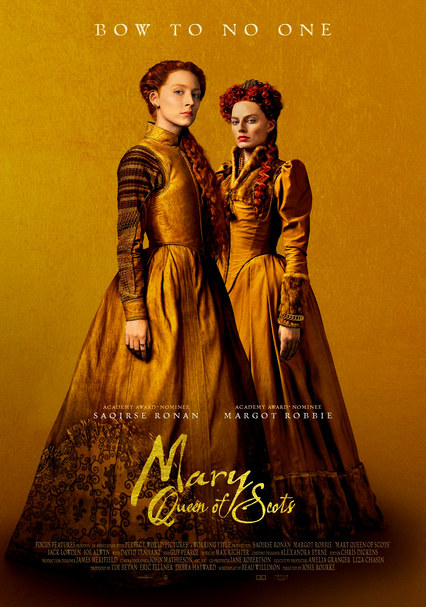
Mary Queen of Scots-2018

Mary Queen of Scots- 2018

Director Josie Rourke

Starring Saoirse Ronan, Margot Robbie

Scott’s Review #851

Reviewed January 2, 2019

Grade: B+

A period piece with all the trimmings for brilliance (on paper anyway), Mary Queen of Scots (2018) is a very good film, but its pacing misses the mark, preventing it from being a truly great film.

Fantastic acting and wonderful photography are the high points of an otherwise uneven experience, even if most of the components are intact.

This is not so much a total knock as a light critique, as the film is ultimately quite good and just missing the big oomph to take it over the top.

Saoirse Ronan stars as Mary Stuart, the likable Queen of France, who has returned to her native Scotland to reclaim the throne after her husband dies. Only eighteen years of age, she initially refuses pressure to remarry, but conflict ultimately ensues with Queen Elizabeth I (Margot Robbie), who rules neighboring England and Ireland.

The women admire each other from afar but develop a rivalry in power and love. To complicate matters, religious conflict, scandals, and deceit are also present in the story.

The feminist theme is inspiring and makes the film better than merely a soap opera of two rival females sparring over men.

In the mid-sixteenth century, women in control were hardly commonplace and relatively resented by the men forced to serve the “whims of women,” as one male character puts it.

Constantly showcased are males’ attempts at wooing the women in hopes of gaining power and ultimately the throne.

Still, director Josie Rourke (a woman) keeps the power firmly among the women, showing they can be as tough as they are sympathetic.

Furthermore, Mary Queen of Scots continues its progressive agenda with a startling LGBT subplot, which largely enriches Mary’s image.

One young androgynous male friend, presumably a bodyguard, frolics with Mary and other maids and confesses that he feels more like a sister than a brother to her. She accepts him wholeheartedly with an added message of “being your true nature.”

Later, the character suffers a terrible fate that devastates Mary. Regardless of the accuracy, this is a nice addition with an inspiring message.

The acting, particularly among leads Ronan and Robbie, is fantastic. Both young “it” women in Hollywood, the roles of Mary and Elizabeth, showcase their acting talents and chops for handling period piece roles.

Ronan, with flawless pale skin and authentic red locks, is beyond believable as Mary, who exudes strength yet kindness in the role she tackles. She can be stubborn but also fun and light, and Ronan has no trouble making the role her own.

Hot on the heels of playing the trailer trash character of Tonya Harding in I, Tonya (2017), Robbie hits it out of the park and does a one-eighty with the role of Elizabeth. Insecure and barren, afflicted with a skin disorder and a balding head of hair, the actress infuses the character with sensitivity and composure.

Robbie portrays her insecurity and yearning for unconditional love as she wears bawdy wigs and pancake makeup to hide her affliction.

Rourke’s mistake is not including more scenes of Ronan and Robbie together, save for one treasured scene at the end of the film. This is a wasted opportunity, as the treasured actresses could have played off each other’s talents in innumerable ways.

A knock-down, drag-out fight scene would have been a treasure to view.

The male characters do not leave much impact other than perhaps Lord Darnley (Jack Lowden), Mary’s bisexual second husband. As he betrays her on her wedding night with another man, Mary sees little use for him besides producing a child.

The handsome blonde actor adds some pizzazz, but is ultimately unlikable, as are the other similarly written men. Mary’s half-brother and Elizabeth’s advisor (Guy Pearce) are fine but ultimately underdeveloped.

Mary Queen of Scots (2018) is an effort to be commended for its female-driven and pro-LGBT stances. Perhaps unrealistic given the period and questions of historical accuracy looming over the entire film, problems with the production do exist.

The film ebbs and flows with some high moments and some looming blandness, but overall, it is to be respected and thereby recommended.

Oscar Nominations: Best Makeup and Hairstyling, Best Costume Design

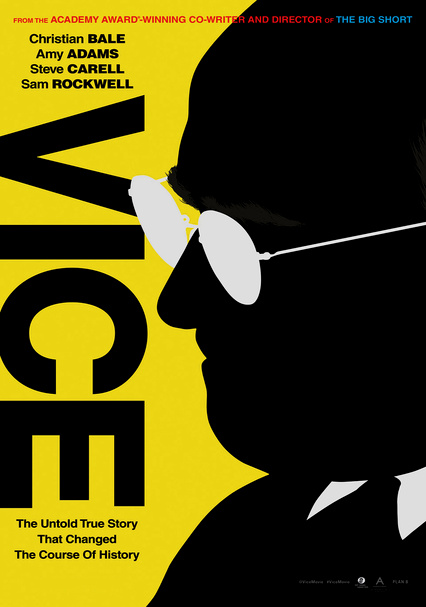
Vice-2018

Vice-2018

Director Adam McKay

Starring Christian Bale, Amy Adams, Steve Carell

Scott’s Review #849

Reviewed December 31, 2018

Grade: A

Following 2015’s The Big Short, Adam McKay once again creates an intelligently written, thought-provoking political film based on facts and historical accounts.

With Vice (2018) he focuses on former Vice President Dick Cheney and his rise through the political ranks to second in command.

Brilliant and wise in every way, the film is fair-minded in its approach. Predictably, in this era of “fake news,” it will be embraced by liberals but shunned by conservatives.

In the first seconds of Vice, a disclaimer appears stating that Cheney was a private man with secrets, but the filmmakers did their best to relay accurate information. The salty language in this clip will likely elicit chuckles, but McKay stays the course with his statement.

Immediately, the film flashes to the September 11 attacks with Cheney sitting in crisis mode, about to make an important decision.

Vice then retreats to 1963 Wyoming as a drunken college-aged Dick Cheney (Christian Bale) is pulled over for erratic driving after a barroom brawl. He is nearly dumped by his girlfriend and future wife Lynne Cheney (Amy Adams), who threatens to find another man if Dick does not straighten out.

He manages an internship and an admiration for Donald Rumsfeld (Steve Carell), a staunch Republican and White House Chief of Staff, and begins his political climb.

In clever form, the film is narrated by a character named Kurt (Jesse Plemons), who we do not know is connected to Cheney until the end of the film. This adds an added measure of intrigue to the overall film, as we know a secret will be revealed.

Vice is also unique in direction, with constant back-and-forth timeline scenes and quirky humor throughout. Are the Cheneys portrayed as ridiculous? No, but sardonic humor is directed at them as their ambitions and power-hungry motivations are completely exposed.

The film does a great job of taking the viewer through the political state of Cheney’s administration, roughly the early 1970s until 2008, when Obama took office. The Clinton years are completely skipped, but that is more to do with Cheney being in the private sector rather than an intentional slight.

The Nixon years and the George W. Bush years are given hefty screen time and the latter is portrayed as nearly a buffoon as Rockwell portrays him as a boozy, dumb frat boy.

Bale is startlingly good as Cheney and deservedly steals the show. In addition to the forty-pound weight gain, the actor endured the facial and hair treatments (props to the makeup department!) and became the man.

His body movements, smile, and speech patterns are daringly good. With a sneer and a calculating grin, we see the wheels spinning in Cheney’s head numerous times, and Bale is incredible at portraying these thoughts to the audience.

The film contains many well-known actors in vital supporting roles worth noting. The depictions of the following are examples of excellent casting with spot-on representations: Tyler Perry as Colin Powell, LisaGay Hamilton as Condoleezza Rice, Sam Rockwell as George W. Bush, Alison Pill as Mary Cheney, and Lily Rabe as Liz Cheney.

All portrayals are excellent to watch, especially for viewers who remember the real-life people involved.

Some will undoubtedly complain that the film has a “liberal slant” and portrays Cheney as power-hungry and self-serving. While this is a valid point, and McKay makes left-leaning choices, the director bravely carves the film into an experience that goes both ways.

More than a few scenes (including the final scene) justify Cheney’s actions, in his mind anyway. Claiming to do what is suitable for the people and be a true American, his actions and yearning for power can be understood to some degree, or perhaps by some people.

Vice (2018) is controversial and undoubtedly divisive, which is unsurprising given the current state of American politics. It tells an inspiring and rich story of an elusive politician’s life and policies, daring to be forgotten, that still resonate across the United States.

The more I ponder this film’s importance, the greater it becomes, but stay past the credits for arguably the best moment in the movie and of monumental importance in 2018.

Oscar Nominations: 1 win-Best Picture, Best Director- Adam McKay, Best Actor- Christian Bale, Best Supporting Actor- Sam Rockwell, Best Supporting Actress- Amy Adams, Best Original Screenplay, Best Makeup and Hairstyling (won), Best Film Editing

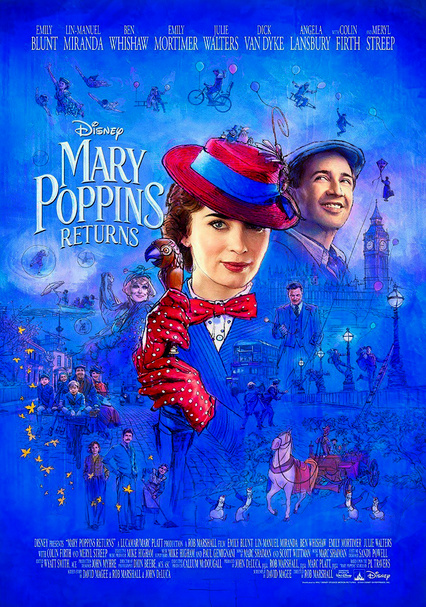
Mary Poppins Returns-2018

Mary Poppins Returns-2018

Director Rob Marshall

Starring Emily Blunt, Lin-Manuel Miranda

Scott’s Review #848

Reviewed December 29, 2018

Grade: A-

Mary Poppins Returns is a charming mixture of reboots and sequels to the immeasurably glorious original, Mary Poppins (1964).

Although it is impossible to live up to the magic of that film, the 2018 version comes quite close with a delightful turn by Emily Blunt, numerous Hollywood stalwarts in small roles, and gleeful musical numbers sure to leave audiences humming upon their exit from theaters.

Events begin to percolate twenty-five years after the original story, and the setting is 1935 London amid the Great Depression. His recently deceased wife, Michael Banks (Ben Wishaw), lives in the house he grew up in with his three children and housekeeper (Julie Walters) in tow.

His sister Jane lives and works nearby as a labor organizer.

Faced with the dreary reality that the historic Banks house may be foreclosed, Mary Poppins (Blunt) arrives elegantly on her umbrella to restore order and save the day.

Though her character does not overtake the film, Emily Blunt is dynamic in the title role. Her prim and proper good British charm and sensibilities crackle with wit and poise. It is tough to imagine anyone but Blunt in the role, as she puts her stamp on it so well.

With a smirk and a quick, matter-of-fact tone, the character is no-nonsense and utterly kind. The casting of Blunt is spot-on as she becomes Mary Poppins.

The London setting is adorable and fraught with good culture and sophisticated manners. Including the storied Big Ben is meaningful to the tale in a significant way and a teachable moment for children unfamiliar with London.

Furthermore, including a negative period in history—the Great Depression—is immeasurably positive.

The supporting characters are rapturous and a treat for elders familiar with the original Mary Poppins film. Meryl Streep plays Topsy, Mary Poppins’s eccentric eastern European cousin to the hilt, but never teeters over the top.

Colin Firth adds snarky charm as the villainous bank president, and Angela Lansbury gives grandmotherly zest as The Balloon Lady, an ode to the original novel.

Finally, Dick Van Dyke is a delight as the heroic Mr. Dawes Jr. who comes to the rescue at the last hour.

The real winners, though, are the enchanting musical numbers. With the lovely London landscape in full view, Mary Poppins Returns gets off to a spectacular groove with “(Underneath The) Lovely London Sky”.

Performed by the charming Lin-Manuel Miranda in the role of Jack the Lamplighter, Mary Poppins’ sidekick, the star has what it takes to keep up with Blunt. This is evident as the duo mesmerizes and entertains with a colorful number, “A Cover is Not the Book”, alongside an animated music hall.

Finally, fans will revel in the naughty and clever “Turning Turtle”, performed by Streep.

The costumes and lighting are both big hits. As Jack lights and defuses the street lights, we see the luminous dawn and sunsets, which give the film a nice touch.

During the film’s conclusion and subsequent race against the stroke of midnight, moonlight is featured, giving the film a warm glow.

The period piece costumes are lush, but not garish, adding flavor and capturing the period perfectly.

Although it lacks the oomph of the original Mary Poppins (but really, who expected that?), Mary Poppins Returns (2018) is nonetheless enchanting and inspiring in every way that a remake or sequel should be.

Given the mixing of humans and animations, the film is polite, polished, and filled with authentic zest: a fine creation and splendid entertainment.

Oscar Nominations: Best Original Score, Best Original Song-“The Place Where Lost Things Go”, Best Production Design, Best Costume Design

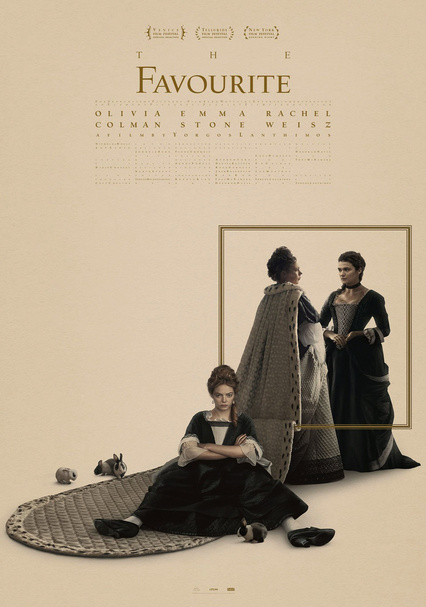
The Favourite-2018

The Favourite-2018

Director Yorgos Lanthimos

Starring Olivia Colman, Emma Stone, Rachel Weisz

Scott’s Review #843 

Reviewed December 17, 2018

Grade: A

The Favourite (2018) is a deliciously wicked comedy about greed, jealousy, and rage during early eighteenth-century England.

The primary rivalry consists of two feuding cousins, each jockeying for position and “favor” with the Queen, both resorting to dire methods to achieve these goals.

With splendid acting and grand designs, director Yorgos Lanthimos adds to his growing collection of odd and compelling works with the dark comedy offering.

The film takes place during the British and French War of 1708, as a physically and mentally ill Queen Anne (Olivia Colman) rules the country through her confidante and secret lover, Sarah, Duchess of Marlborough (Rachel Weisz).

Though deals and modifications must be made with the ruling Parliament, Anne has the final say in all decisions, including doubling the state tax to pay for the war.

When Abigail (Emma Stone), a distant cousin of the Duchess, and former royalty herself, arrives seeking work as a servant, she quickly plots her way to the bedside of the Queen at all costs.

Lanthimos, known for such bizarre treats like Dogtooth (2009), The Lobster (2015), and The Killing of a Sacred Deer (2017), is not afraid to get down and dirty and wrestle with the macabre subject matter.

The Favourite is the director’s most mainstream affair yet and is quickly becoming one of my favorite modern-day films. As he now charts into royal territory, the possibilities are endless in a world of politics and scheming.

Some morose highlights include an abused bunny, naked tomato throwing, and pheasant shooting.

The film is not kind to animals.

Despite being mainstream for Lanthimos, The Favourite is a bizarre and brazen experience. The film’s numerous award nominations are remarkable, given that not all audiences will enjoy it.

Despite being categorized as a comedy (see more below), the film is not an easy watch, and none of the characters are likable. Abigail is initially sympathetic and quite humorous, but her true colors and motivations are exposed as the plot develops.

Conversely, Anne and Sarah are initially despicable, but garner support as the story evolves.

The comic elements are the best, and clever lines come at a deliciously rapid pace. The best dialogue is the sparring between Sarah and Abigail, as the women realize they are bitter enemies and each attempts to one-up the other in a chess game for Anne’s attention.

Anne, known for fits of emotion, stuffing her face with cake and vomiting, and berating the servants, offers her comic wit. The language is salty, bordering on vulgar, but that makes the experience so stellar and morosely enjoyable.

The musical score adds muscle, and the diabolical string arrangements give The Favourite a gruesome, morbid atmosphere.

The feeling of dread is prevalent and downright haunting at times, as the audience knows that some shenanigans will soon occur, but they do not know when or how.

This quality enhances the overall product and gives ambiance to a superior piece.

Finally, the acting in The Favourite is brilliant and worth the price of admission. This is unsurprising with heavyweights like Colman, Stone, and Weisz, but the gravy is in the individual moments.

The chemistry the women share is what works best, as every scene sparkles with exceptional delivery and a sly sense of humor. When the three women appear together, these are the best scenes.

Deserving of all the accolades lauded upon it, The Favourite is an experience that contains all elements of a fine film, though one that is quite an unconventional work.

With glistening art direction, authentic set pieces, and costumes that would make Scarlett O’Hara drool with envy, The Favourite (2018) takes all of its parts and spins a crafty tale that encompasses the entire film.

Oscar Nominations: 1 win-Best Picture, Best Director- Yorgos Lanthimos, Best Actress- Olivia Colman (won), Best Supporting Actress- Emma Stone, Rachel Weisz, Best Original Screenplay, Best Production Design, Best Cinematography, Best Costume Design, Best Film Editing

Independent Spirit Award Nominations: Best International Film

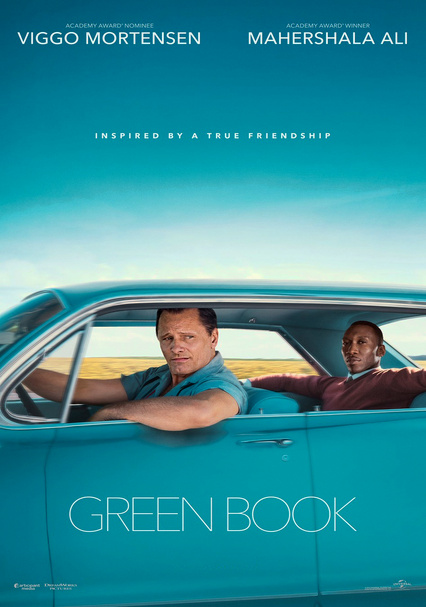
Green Book-2018

Green Book-2018

Director Peter Farrelly

Starring Viggo Mortensen, Mahershala Ali

Scott’s Review #839

Reviewed December 10, 2018

Grade: A

To be candid, it was not originally on my radar to see Green Book (2018) despite the high regard and the bevy of award nominations reaped upon the film.

From the trailers, and admittedly my assumptions, the production looked somewhat like a Driving Miss Daisy (1989) role reversal with the standard over-saturation and glossy view of racism.

I confess to being wrong in my initial assessment. Green Book is a wonderful film with a multitude of worthy efforts. It successfully crosses the drama and comedy barriers and delivers an astounding message of compassion and benevolence.

Viggo Mortensen and Mahershala Ali exhibit tremendous flair and fine chemistry as an Italian blue-collar driver and an astute African-American classical pianist.

The men travel together in the Deep South circa 1962 on a concert tour requested by the renowned musician despite the dangers of southern racism and prejudice.

Mortensen’s Tony Lip is a struggling New York City bouncer who needs any gig for two months while the club he works for is closed for renovations. Ali plays a sophisticated musician who needs a driver with a measure of toughness, and Tony comes highly recommended.

The two men initially are strangers but form a close-knit bond and a deep understanding of each other as they become better acquainted during their journey.

The first half of the film focuses on Tony.

As viewers, we experience his Italian lifestyle. He possesses a strong family unit and a dedicated wife, Dolores (Linda Cardellini). He loves to eat and won a hot dog eating contest for $50 to pay the rent. He thinks nothing of beating an unsavory character to a bloody pulp if they are out of line and have more than one link to the mafia.

Still, he is a decent man, with a salt-of-the-earth mentality, and loves his family.

“Doc” Don Shirley (Ali) is the opposite of Tony. Raised as a highly gifted musical prodigy, he surrounds himself with high culture, is well-versed in many languages, and is of affluent means. Nonetheless, he is a wounded soul and drinks himself into oblivion each night, frequently deep in thought, pondering life and its problems.

Despite being black, he knows nothing about black culture.

Don is highly uncomfortable in his skin, while Tony is happy with who he is, a significant point that the film hits home on as the men have conflict. Don feels Tony can do much better to educate himself, while Tony sees nothing wrong with being who he is. The men forge a middle ground as they come to respect each other.

Ferrelli does a fantastic job in showing Tony as Don’s protector as he is accosted by rednecks or is caught with another man at the YMCA.

In turn, Don helps Tony write warm love letters to Dolores.

Green Book is a film about friendship and how different backgrounds can result in closeness and respect.

The film is humanistic in its approach to an overall message and is the feel-good film of 2018 without the slightest thread of sappiness or contrived situations. It is best about two real-life men who remained friends until their deaths.

Director Peter Farrelly, known chiefly for silly films such as Dumb and Dumber (1994), finds breakthrough success with Green Book.

The film is mainstream material, but of a sort that can be appreciated for the good it exudes. Don exhibits racism on more than one occasion- Birmingham and Mississippi specifically- but also experiences kindness from other folks.

Worth noting is that Don experiences discrimination and abuse not only from whites but also from blacks. Farrelly avoids the usual stereotypes or elicits humor from them as in the scene where Tony teaches Don to enjoy fried chicken, a foreign food to Don.

A key point of the film occurs early on when Dolores graciously invites two black workers to repair, thinking nothing of treating the men to a refreshing lemonade.

Seeing the empty glasses in the sink, Tony throws them in the trash, not wanting to drink from the same glasses. Is Tony, along with his family, racist or uncomfortable with blacks? Regardless of the answer, they think very differently after the film, which is monumental.

The final sequence of Green Book is teary, heartfelt, and provides a feeling of incredible warmth.

In the tumultuous times of current American history, Green Book (2018) is sentimental and inspirational in a day when racism once again reared its ugly head, thanks to the chaotic political environment.

The film is a lesson in how far we have come as a society, but also in how things have not changed so much and how much further we need to go to create equality for all.

Farrelly creates a timely and wonderful film that everyone can appreciate.

Oscar Nominations: 3 wins- Best Picture (won), Best Actor- Viggo Mortensen, Best Supporting Actor- Mahershala Ali (won), Best Original Screenplay (won), Best Film Editing

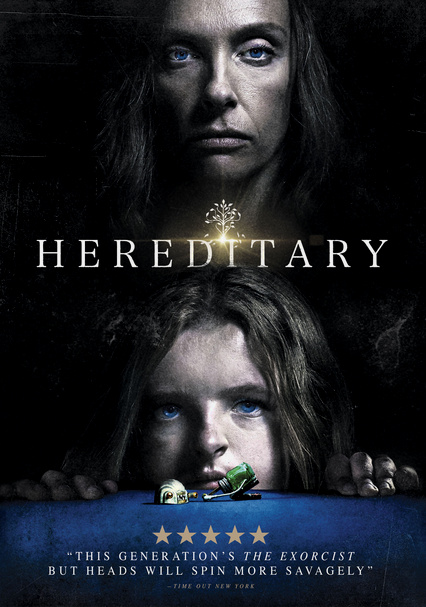
Hereditary-2018

Hereditary-2018

Director Ari Aster

Starring Toni Collette, Alex Wolff

Scott’s Review #837

Reviewed December 6, 2018

Grade: B+

Hereditary (2018) is a horror film that provides quite an unsettling feeling long after the credits have rolled, which is always a positive in my book.

Moreover, the film contains more than a handful of effectively chilling moments and a breathtakingly good performance by its star Toni Collette, who delivers the goods in spades.

The film is the debut project by writer and director Ari Aster, who certainly has a bright future ahead of him.

We meet the Graham family- artist Annie (Collette) and husband Steve, along with sixteen-year-old Peter (Alex Wolff) and thirteen-year-old Charlie, as they mourn the death of Annie’s mother.

As Annie sees an apparition of her mother in her workshop, the mother’s grave is desecrated, prompting her to attend a support group to deal with her problems. When Charlie then tragically dies in a gruesome accident, Annie begins to teeter over the edge, putting her remaining loved ones at risk.

Aster’s story is tremendously hard to follow, leaving many perplexities and unanswered questions about the plot.

Was fellow support group attendee Joan (Ann Dowd) a sinister cultist along with Annie’s mother, or merely a kindly friend trying to help? Did Annie kill her family, or were their deaths fated, a result of an unstoppable force, hence the “hereditary” title?

A post-film synopsis will need to be read by many viewers (myself included) for clarity.

Frightful sequences resonated with me for days following my viewing of Hereditary, so much so that a second viewing may be required.

The decapitation of Charlie is one of the creepiest scenes I have ever witnessed, as well as tidbits such as Annie furiously pounding her head on the attic door, clearly not herself.

Not to be outdone, Steve bursting into flames, and Annie slowly beheading herself with piano wire while coven members look on, may lead to nightmares for days.

Shot in a style that makes the film feel claustrophobic and contained, the camera crew must use props to create a dollhouse aesthetic. Artist Annie’s clay dollhouse, mirroring the families, enhances this point.

The viewer sees a mock version of the real family, and when Annie decides to create a replica of Charlie’s headless body to express herself, the results are dire.

The best part of Hereditary, though, is Colette’s performance.

Flawless as the haggard mother in The Sixth Sense (1999), her role as Annie takes the actress to even greater heights. The woman slowly teeters to the brink of insanity as she awakens one morning to find the headless corpse of her daughter lying in the back seat of her car.

Aster wisely has her discovery and reactions appear off-camera, giving the sequence a high element of anticipatory horror. From this point, we know that Annie will steamroll further into insanity as she realizes her son caused the death of her daughter.

Horror films involving witchcraft or other demonic supernatural elements do not always work for me as I find realistic situations more effective, but Hereditary is atmospheric and compelling.

The film possesses this element throughout its entire run, so we know bad things will happen; we just do not know when.

To further explain, many scenes involve close-ups of characters seemingly deep in thought or shrouded in mystery. Evidence of this is when Peter sits in a classroom hearing Charlie’s habit of clicking teeth. When a trance-like Peter returns to reality, he is confused and slams his head against his desk, breaking his nose.

Aster might have been wise to write a more concrete screenplay instead of leaving the audience unable to add up the parts.

Interpretation is a fine thing, but in the case of Hereditary, the sum may have been greater than the parts. This means that a more satisfying, though not less frightening, ending would be encouraged for his following picture.

Hereditary (2018) is a demonic horror film with a perplexing plot about a family’s hereditary curse and ultimate doom.

Thanks to brilliant acting and some of the most disturbing scenes ever witnessed, the film is a breath of fresh air in the over-saturated horror genre and a welcome debut from an upstart director.

Independent Spirit Award Nominations: Best Female Lead- Toni Collette, Best First Feature

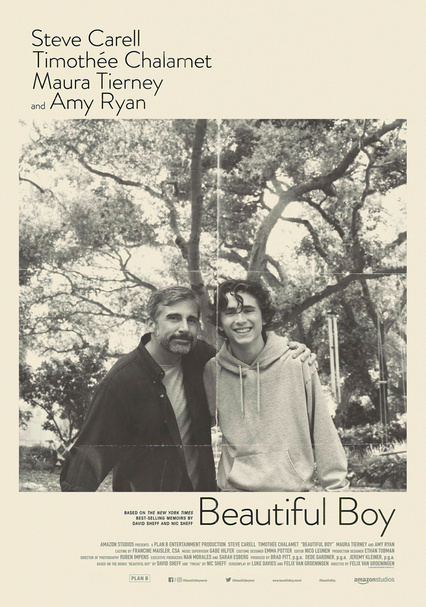
Beautiful Boy-2018

Beautiful Boy-2018

Director Felix Van Groeningen

Starring Steve Carell, Timothée Chalamet

Scott’s Review #835

Reviewed November 23, 2018

Grade: A-

Beautiful Boy (2018) tells a humanistic and vital story about the ravages of drug addiction and how the issue affects not only the person with an addiction but the entire family unit. Nestled within the powerful writing is a lovely father/son relationship and the duo’s trials and tribulations over the years.

The film feels pure and honest, with rich storytelling and many good acting performances.

Beginning in the present, David Sheff (Steve Carell) realizes that his son Nic (Timothée Chalamet) has been missing for two days. When Nic finally arrives at the Sheff household, he is strung out and sick.

David suspects Nic has been abusing drugs, and all parties agree that Nic needs professional help and a stint in a rehab facility. However, nobody realizes the depths of Nic’s addiction.

When Nic checks out early and goes on a bender, the film begins to segue back and forth between periods of Nic’s recovery and his many relapses. It also presents scenes of David and Nic’s relationship during their childhood years.

The best parts are the conversations and moments between father and son, and their enduring love. David’s second wife, Karen (Maura Tierney), and Nic’s mother, Vicki (Amy Ryan), are also in the mix.

The screenplay is based on memoirs written by David and Nic Sheff. The chronicles of their journey include triumph and heartbreak over many years as recovery and relapse become frequent parts of their lives, threatening to tear them apart or result in Nic’s ultimate death.

The road to recovery is not an easy path.

Carell and Chalamet wonderfully portray the primary characters, David and Nic. The fact that the actors do not resemble each other is quickly forgotten as their dynamic is emotional and palpable, and they share easy chemistry.

Carell is a strong actor, capable of infusing his character with strength and calm while slowly falling apart at the seams.

He loves his son and wants him to recover, but he finally accepts that he needs to let him go. This moving realization is Carell’s best scene.

Chalamet, boyish and innocent-looking, is perfectly cast. With kind blue eyes and a mop of raven hair, the actor could easily pass for twelve years old. This only enhances the tragedy of youth ravaged by drug abuse.

These qualities are mirrored by those of his girlfriend Lauren (Kaitlyn Dever). She also possesses a fresh-faced, clean look, which strengthens the message.

Ryan’s and Tierney’s performances in what could easily be throwaway “wife roles” must be mentioned.

For a while, I thought Tierney was in a marginal role until she finally had a wonderful scene in which her frustration reached a boiling point. Fuming with rage, she attempts a car chase with Nic, only to finally crumble into tears, realizing how the mess has changed her as a person.

Ryan also sinks her teeth into a teary role, almost blaming herself for Nic’s problems.

The film wisely presents statistics to hit home further, mainly the low percentage recovery rate of most crystal meth users. A single-digit success rate on this note is frightening; the user requires more and more substance to feel anything close to the first high they experienced.

A pivotal scene occurs at the film’s end as David and Karen attend a support group. As they tearfully listen to a woman’s story of the recent death of her addict sister, we are left to wonder if Nic has also died.

Kudos to a powerful cameo performance by actress Lisa Gay Hamilton.

The sunny California setting benefits the film and starkly contrasts the darkness of New York City, where Nic attends school. With multiple exterior shots of San Francisco and Los Angeles, the metropolitan scope is vast and cruel for drug users.

Easily accessible to anyone with the motivation to obtain drugs, the streets of San Francisco are portrayed as hard and drug-infused, mainly when David drives around desperately looking for Nic.

Featuring a story told before but rarely from the family perspective, Beautiful Boy (2018) does what it sets out to do and does it splendidly.

Careful not to soften the challenges and sufferings of the person with an addiction, the devastation they bring to their loved ones is also showcased. The sound and emotional father/son relationship may be the film’s best part.

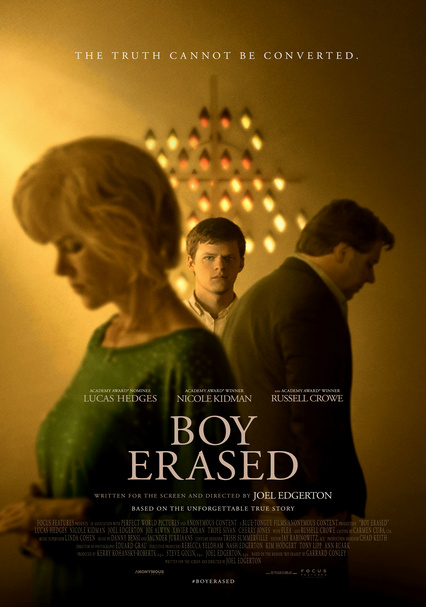
Boy Erased-2018

Boy Erased-2018

Director Joel Edgerton

Starring Lucas Hedges, Nicole Kidman, Russell Crowe

Scott’s Review #834

Reviewed November 22, 2018

Grade: A

Before I ventured to the movie theater to view Boy Erased (2018), I heard from more than a few folks who decided not to see the film due to the complicated subject matter.

While parts of the film are challenging and the true story stifling, the overall message is poignant and hopeful. The central character is one to be championed.

In other words, while the subject is serious, director Joel Edgerton (who also co-stars) is careful not to make the overall experience dour or wholly downtrodden.

The setting is rural Arkansas, based on Garrard Conley’s 2016 memoir of the same name and taking place as frighteningly recently as 2004.

Our main character is a handsome, popular young man, renamed Jared (Lucas Hedges) for the film.  Interspersed with numerous flashbacks, then back to present times, we see Jared as a high school kid and blossoming as a first-year college student, interested in writing.

He is expected to follow the word of god since his father, Marshall (Russell Crowe), is a respected preacher at their local church, and his mother, Nancy (Nicole Kidman), is a housewife.

Jared’s college experiences are both good and bad. He befriends fellow runner Henry, who ultimately rapes him, and embarks on an enlightening friendship with Xavier, who challenges Jared’s belief in god.

These scenes are preceded by the point of the film, in which Jared admits his thoughts about men to his parents and is sent to a Love In Action gay conversion therapy program. His experiences there are chronicled.

Many scenes involve the treatment the school provides the students (or instead makes the students endure), and Jared’s realization that he is gay and cannot change.

He ultimately questions and challenges the school. The chief therapist, Victor Sykes (Edgerton), teaches that God will not love anyone who is homosexual. In a bit of rich irony, the film reveals that Victor finally denounced his teachings and married a man.

Fellow students’ lives are featured, one suffers a terrible fate as he cannot come to terms with his sexuality, nor can he change.

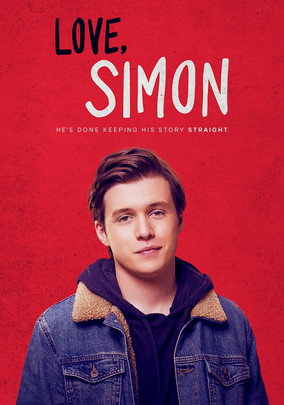
A comparison to the popular film Love, Simon (2018) is fun to draw.

Both were released during the same year, and both feature a young, popular coming-of-age character who struggles with the repercussions of revealing their sexual preference.

Boy Erased is the heavier of the two, as Love, Simon has many comic elements, but it is worth noting that both are mainstream films garnering large audiences- a win for the LGBT community.

The acting in Boy Erased is flawless and perfectly cast all around.

With Hedges, Kidman, and Crowe in the mix, we know the performances will be outstanding, and all three characters possess their share of empathy.

Jared is the most important character to be concerned about, and Marshall and Nancy are support players. However, the film does not portray either as bad people, which is interesting. They are nurturing towards Jared and want him to be happy.

While Nancy is more instrumental in rescuing Jared, Marshall also comes around in the end, as his son’s sexuality is tougher for him to accept.

The main song used in the film is appropriately named “Revelation” by Troye Sivan. The singer also appears in the film as Gary, a student made to be “cleansed” of his sexuality.  The tune is sentimental, smoky, and acoustic, perfect for the southern setting.

Heartfelt and fraught with meaning, it encompasses Jared’s struggles and strong will to question the school’s motivations, powering through the school’s toxic approach.

As with many recent biographical films telling stories of real-life people, Boy Erased features a young Jared in homemade video clips as the movie begins. This immediately triggers a rooting value for the character as we see the child, cute, happy, and full of life, without a care.

Additionally, the conclusion shows the real adult Jared, Marshall, and Nancy.

Boy Erased (2018) is an important film firmly nestled in a crucial time period for the LGBT community. As LGBT awareness is now commonplace in cinema, this film does not necessarily share a gay character’s “coming out” story but rather depicts a brilliant story of how perilous and repressive being gay can still be for some people.

Jared is the main character who will undoubtedly be a hero to many young people wrestling with their identity.

Isle of Dogs-2018

Isle of Dogs-2018

Director Wes Anderson

Voices: Bryan Cranston, Edward Norton

Scott’s Review #831

Reviewed November 15, 2018

Grade: B+

Anybody familiar with a Wes Anderson production knows what they are in store for, and Isle of Dogs (2018) is par for the course.

With zany narratives and fantastic art direction, the film has a familiar stamp. Most resembling his other notable stop-motion film, Fantastic Mr. Fox (2009), Isle of Dogs offers what is to be expected- an intelligent and odd project by a visionary creative mind.

Anderson provides the film with a timely, corrupt government-type message that strongly resonates in 2018. In this way, Isle of Dogs, while animated, is so much more than a cookie-cutter story or a wholesome film for kids.

The director shows bravery in focusing on the corruption prevalent in today’s world and the fight for justice by ordinary people living under authoritarian control.

Set in dystopian Japan, a recent outbreak of canine flu causes corrupt Mayor Kobayashi to banish all dogs from society to the vast wasteland of Trash Island, where they will live out their days with other ostracized canines.

A brave twelve-year-old boy named Atari, who happens to be the mayor’s nephew, steals a plane and crash-lands on the island to rescue his beloved dog, Spots.

With help from a pack of dogs led by a former stray named Chief, the group sets out to find Spots and ultimately expose the government conspiracy. Obstacles abound as the mayor has sent a robot dog to return Atari and make mincemeat of any dog in its path.

Meanwhile, a professor, Tracy Walker, is on the cusp of discovering a serum as an outspoken American exchange student investigating the conspiracy.

Isle of Dogs is incredibly original and offers bravura visuals. From the lush and bright Japanese culture to the tired and haggard look of many dogs living on the island, the film is a treat for the eyes. The shimmering richness of the city is elegant and feels alive and powerful.

What I admire most about the film is its creativity and the blast of left-of-center storytelling, which blows away most animated offerings of today.

Many contain a robust helping of “cute”, which can turn off a mature viewer. With a target audience of the tween age, what is in it for adults? To sit there with a youngster and pretend to be jovial?

Isle of Dogs is not a crowd-pleaser; it is better than that. Anderson crafts a serious and timely message that begs to be absorbed by the careful viewer.

Assuredly, Anderson cannot escape providing a subtle allegory on an evil leader stirring the pot against the most helpless in our society. This point is timely and well thought out, especially in the tumultuous United States.
Could this be why an American character (Tracy) was added?

As dynamic as Anderson’s creativity is, the story in Isle of Dogs does not always embrace the viewer, and the jarring dialogue is tough to follow.

Standard in his films, the pacing is strange, the conversations between characters are odd, and the film lacks a truly welcoming or warm quality.

Therefore, the film is not an easy watch. And the dogs all speaking English rather than Japanese, with American accents, must be overlooked.

Critics and detractors of Wes Anderson need not see Isle of Dogs (2018) as they will be in store for typical Anderson fare. In addition, those seeking a standard mainstream animated feature will be disappointed.

Those with a more open-minded approach to cinema will revel in the film’s stunning look and the powerful message bubbling under the surface.

Oscar Nominations: Best Animated Feature Film, Best Original Score

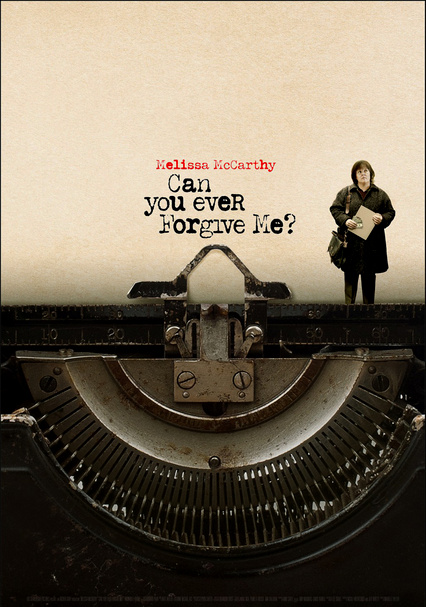
Can You Ever Forgive Me?-2018

Can You Ever Forgive Me? -2018

Director Marielle Heller

Starring Melissa McCarthy, Richard E. Grant

Scott’s Review #829

Reviewed November 13, 2018

Grade: A

Can You Ever Forgive Me? (2018) is a biographical drama that successfully provides its audience with sly writing and fruitful chemistry among the lead actors.

A rare dramatic turn for star Melissa McCarthy, she proves that she has the chops as she immerses herself in a role that showcases her acting talent when she is provided a good script. Grizzled, angry, and sometimes depressed, she infuses a character we should hate with gusts of humor and sarcasm, so much so that we fall in love with her.

That is a testament to an outstanding performance.

The film begins in the 1990s in Manhattan, where we meet a once successful but now down-on-her-luck author, Lee Israel (McCarthy). Famous for works now deemed dated, she is angry, boozy, and brazen, certainly not afraid to tell someone off for not holding the door for her or prank-calling a vicious bookstore owner.

We quickly learn that Lee is three months behind on her rent and cannot afford to take her sick, elderly cat to the vet. She fights with her publisher, Marjorie (Jane Curtin), who refuses to advance her $10,000.

As she sits in a bar contemplating her future, she reconnects with an acquaintance, Jack Hock (Richard E. Grant), a flamboyant gay man who once caused a stir at a party for urinating on rich women’s furs.

Lee and Jack are in stitches over the past incident and immediately form a deep bond, though Jack’s unreliability and dishonesty challenge Lee’s patience.

When Lee concocts a scheme to forge letters supposedly written by famous deceased literary people, Jack quickly becomes her accomplice as the two begin to profit.

The film belongs to McCarthy in a challenging role. By all accounts, we should dislike Lee—she attends Marjorie’s parties for the free booze and steals a new jacket from the coat check on her way out.

She distances herself from relationship commitments and alienates most people. But despite these flaws, we adore her and root for her.

When she embarks on a cautious date with quiet bookstore owner Anna (Dolly Wells), she gets through her meal with trepidation, unsure whether to open herself up to another potential suitor.

In McCarthy’s best and most emotionally raw scene, we see her raw collapse in tears when she finds her beloved cat under the couch, dead.

Viewing the feline as her only true friend, she is devastated beyond belief, and McCarthy will pull at the heartstrings in this poignant scene.

Grant is equally as impressive as McCarthy in the central support role. An aging party-boy in a city that can embrace the young and discard the old, he still dazzles with his dashing smile, but his best years are behind him as he still lives a young man’s life.

He flirts with a handsome waiter and still has the charm and humor that have aided him through the past few decades. However, he is also ravaged by decades of abuse, and his luster has become tarnished.

A health secret revealed at the film’s end adds further layers to the character’s complexity and richness.

Beyond the great acting performances, the screenplay, written by Nicole Holofcener and Jeff Whitty, crackles with rich dialogue and fantastic aplomb.

The writers write with confidence and smarts and provide the goods in spades. The proof is in the proverbial pudding as Lee cackles with glee as she types her latest Dorothy Parker forgery in the words of the deceased satirist, writing what she imagines the famous author would write.

These added intelligence touches and quick-witted dialogue make the film fantastic to view.

Can You Ever Forgive Me? (2018) is a fabulous undertaking made spectacular by two actors with bold chemistry. Combined with intelligent writing, a grand yet gritty New York City setting, and an authenticity unrivaled, the film succeeds on all levels.

Heart, drama, compelling situations, and dark, sardonic humor make this a dynamic film.

Oscar Nominations: Best Actress- Melissa McCarthy, Best Supporting Actor- Richard E. Grant, Best Adapted Screenplay

Independent Spirit Award Nominations: 2 wins- Best Supporting Male- Richard E. Grant (won), Best Screenplay (won)

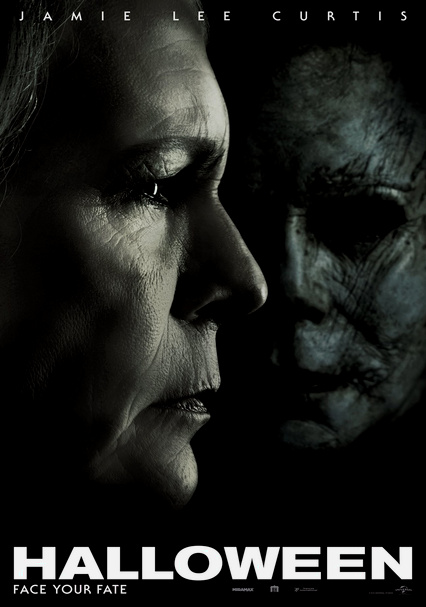
Halloween-2018

Halloween-2018

Director David Gordon Green

Starring Jamie Lee Curtis, Judy Greer

Scott’s Review #823

Reviewed October 23, 2018

Grade: B+

Let’s be honest—nobody will ever be able to top or recreate the iconic 1978 masterpiece Halloween, so any real attempt is a moot point.

Throughout the subsequent decades, many sequels or remakes have emerged, largely disappointing or turning the franchise into a joke.

With the latest incarnation of Halloween (2018), director David Gordon Green gets it right by creating a follow-up to the original, skipping all the other films. Scoring Jamie Lee Curtis as Laurie is a significant win and seemingly dozens of neat references to the original gem.

Set forty years to the day (Halloween Eve and Halloween, naturally!), the audience is first given a summary of killer Michael Meyer’s (Nick Castle) time spent in Smith Grove Sanitarium once captured following the 1978 Haddonfield killing spree.

Two journalists visit Myers in captivity and attempt to make him speak after forty years of silence by mentioning Laurie Strode and showing him his notorious Halloween mask.

Conveniently, he will be transferred to a maximum-security prison the following day. We know that Meyers will escape.

Meanwhile, Laurie has been living with post-traumatic stress disorder since her attack and lives in a constant state of paranoia.

With two failed marriages and a daughter, Karen (Judy Greer), who is traumatized by her mother’s anxiety, Laurie’s life has not been easy. As an aside, I love how Laurie dons the same hairstyle she had at age seventeen.

While she awaits Michael’s inevitable return, Laurie’s secluded house is peppered with traps and guns, allowing her to be at the ready at any moment. Despite her problems, Laurie is close to her granddaughter, Allyson (Andi Matichak).

When the inevitable happens and Michael escapes by presumably causing a bus accident off-screen, the action truly begins. The coincidence of this happening on Halloween night is to be expected and embraced.

Audiences who see the film are certainly not new to the genre. The target audience is the crowd who either grew up with the original or generations who followed and were introduced to it.

Therefore, the film is wise not to try to reinvent the wheel, giving fans what they expect. The opening graphics (the eerie orange writing and the glowing jack-o-lantern) are intact, as is the “introducing” credit for its heroin—in this case, Matichak.

There are several certainties about a horror film like Halloween. We know there will be “kills,” and we know there will be an inevitable showdown between Laurie and Michael Myers to conclude the film.

The fun is in the trip we take to get there. Who will be slashed and how? A butcher knife? Other Halloween delights?

Since there are arguably three female leads and three generations of Strodes, will the film make one of them feel Michael’s deadly wrath?

Halloween works; a significant reason is the countless nods to its past. Many scenes pay homage to attention-paying fans, creating riches and nostalgic memories.

Allyson’s boyfriend’s father’s name is Lonnie—undoubtedly the kid Dr. Loomis scared away from the Meyers’ house forty years ago. Then there is a neighbor woman wearing curlers and slicing a sandwich with a butcher knife, whom Michael steals the knife from an ode to Halloween II (1981).

Finally, as Allyson sits in the back of her class and glances out the window, she sees not Michael, but Laurie standing across the street, staring at her.

These gems are in large part thanks to clever writing and study.

There are a couple of negatives to mention. I am not crazy about Judy Greer’s casting as Jamie Lee Curtis’s daughter. The actresses look nothing alike, and Curtis does not seem old enough to be Greer’s mother.

Furthermore, attempts to add some comic relief moments—two bumbling police officers talking about brownies, Allyson’s goofy father, and the salty tongue of the kid one of the babysitters sits for—do not work.

How great would it have been to include P.J. Soles, Nancy Loomis, or Kyle Richards in cameos? Since Curtis and Castle returned, I wanted more familiar faces.

In wise form, Gordon Green leaves the window open for a potential sequel, so stay for the end credits. My wish would be for this to parlay to the aftereffects of the killings on the same night, which Halloween II (1981) did so successfully.

The possibilities are endless if the box office returns are strong enough and Curtis is on board for another installment.

Fahrenheit 11/9-2018

Fahrenheit 11/9-2018

Director Michael Moore

Starring Michael Moore

Scott’s Review #817

Reviewed October 5, 2018

Grade: B+

Controversial filmmaker Michael Moore, who has been at the helm of other topical and lively works, does it again with a politically charged documentary, Fahrenheit 11/9 (2018).

Known for other substantial offerings like Roger and Me (1989), Bowling for Columbine (2002), and Fahrenheit 9/11 (2004), the left-wing activist continues his aggressive and thought-provoking ways with an excellent effort.

After the gloomy and divisive 2016 United States Presidential election, it seems inevitable for Moore to create another politically infused documentary.

This critical point in history is the primary focus of his work. Moore asks and analyzes two crucial questions: How did we get here, and how do we get out? In pure Michael Moore controversy, he adds a couple of expletives for good measure.

The documentary itself begins with the surprising, and (to most), now dire buildup to the 2016 election with clips of Hillary Clinton’s assured victory and election night festivities interspersed with the expected loss of Donald Trump.

The Republican Party was not crazy about Trump as a candidate, and the unexpected victory due to the electoral college rule left the United States shocked, appalled, and in a state of peril.

Moore does not simply create a documentary about the election, though. Instead, he crosses into territory including the creation of a dictator (Trump) and how this man’s rise to the presidency mirrors Adolf Hitler’s rise to power in 1930s Germany.

Hitler used a sense of fear and populism among the German people to his advantage and successfully created an “us versus them” mentality.

Trump is doing the same with sour and hateful propaganda.

As many of Moore’s other documentaries do, Fahrenheit 11/9 feels very personal to Moore. It spends a lot of time exploring the poisoned water situation in Flint, Michigan (Moore’s hometown), and the ensuing cover-up by the Governor of Michigan, Rick Snyder.

The largely working-class city (already decimated by numerous GM layoffs) faced a public health emergency due to lead contamination.

So that the subject matter is not completely dour and depressing (though admittedly, I was depressed watching most of the documentary for personal reasons), Moore gleefully adds some humor.

As a camera shot of the director lumbering towards the Snyder headquarters to confront him about the poisoned Flint water and the governor’s reported cover-up, a Snyder employee refuses to drink the water Moore insists is directly from Flint and therefore must be safe.

Moore later waters the lawn of the Governor’s home with a giant fire hose when Snyder refuses to be interviewed.

As liberal-minded as Moore is, he is not afraid to call out members of his party- the Democrats. He shames President Obama for once appearing in Flint, which was viewed as a “saving grace” for the city folks, only to pretend to drink a glass of Flint water while insisting it was safe to drink.

Moore surmises that this stunt turned off the people of Flint, who stayed home on election day, causing Clinton to lose the state of Michigan.

Moore has perhaps never made a more relevant or emotional documentary than he has with Fahrenheit 11/9 (2018). In a tumultuous time in the United States’ history, his documentary is quite opportune to implore people to care about what is happening.

With the 2018 mid-term elections looming, the country is again at the forefront of a pivotal moment in history. Moore’s timing is flawless.

The Nun-2018

The Nun-2018

Director Corin Hardy

Starring Taissa Farmiga, Demian Bichir 

Scott’s Review #812

Reviewed September 19, 2018

Grade: B-

A film such as The Nun (2018) is best described as a genre horror film strong on atmosphere, scares, and effects but weak on story, dialogue, or satisfyingly integrating much of the other films.

To stress, the set pieces and foreboding convent where most events occur are tremendously thought out, adding to the stylistic filming; however, the story stinks, making the overall result barely above mediocre.

This story point, which is said to be connected to The Conjuring (2013) and Annabelle (2014), is all but laughable.

Theoretically, The Nun is a prequel, but since the film is set in 1952, the only connection is a super-quick scene in later years. Ed and Lorraine Warren use a character in The Nun as a case study for their audiences.

Admittedly, I have not seen The Conjuring 2 (2016), but from what I can surmise, what remains of The Nun is a stand-alone film. Was the demonic nun in The Conjuring 2? This may make more sense.

The creepy setting in Romania is a superb choice, given its association with Transylvania and Dracula. The film begins with the suicide of a Roman Catholic nun in a gloomy and largely abandoned Monastery.

Having been visited by an unseen force who kills another nun, a vicious demon appearing in the form of a nun looks on menacingly. Father Burke (Demian Bichir) from the Vatican arrives with Sister Irene (Taissa Farmiga) to investigate, where they meet flirtatious local, Frenchie (Jonas Bloquet).

The atmosphere used throughout almost the entirety of the film is spot on and highly effective.

Most of the scenes are set at nighttime (naturally!) and in or around the vicinity of the spooky, gothic monastery. To double, a gorgeous castle in Romania was used. From the dark and narrow hallways to the crucifixes and obvious religious decor, the props and set design shine through.

The best scenes occur within the grounds of the statuesque building, where dozens of graves can be seen. When bells from the graves begin to ring on their own and spirits can be seen lurking, the audience is in for a good scare.

Even the scenes in daylight hours are fraught with creepy tension. When Frenchy comes upon the nun, dead for days, she dangles from the monastery, eyes gouged and covered with feasting crows, as her blood drips onto the front porch.

The camera close-up of the shot is highly effective, as are others involving the typical jolts and creaky floors that have become a cliche in horror films, but somehow feel fresh and invigorating in The Nun.

And the demonic nun, a grimacing Marilyn Manson-type ghoulish figure, is downright scary.

Unfortunately, along with praise must come some criticisms. The story and the logic do not make much sense, and I stopped trying to figure out the plot points halfway through.

Why the Father and Sister are chosen to go alone to investigate is implausible. A silly, brief mention of a Duke in the old days, evoking a curse in the monastery that was “conjured” up during World War II and must be contained again, is hardly a compelling story.

The plot-driven device (and frankly done to death at this point) attempt to forge a romantic connection between Irene and Frenchy never works. How many times in film have we seen a handsome, young man trying to woo a pretty nun away from her calling?

Filmmakers may have added this for humor, and (hopefully) the characters’ intentional or unintentional religious exclamations of “Oh My God!” or “Mother of God!” are laugh-out-loud silly. With a film like The Nun (2018), riveting writing is not on the wish list- great atmosphere and effects are.

The film delivers excellent content and makes for an enjoyable experience with good thrills and scares. Thankfully, for the horror genre, the film is rated a solid “R” and not watered down for PG-13 audiences.

Just be prepared for some hokey writing.

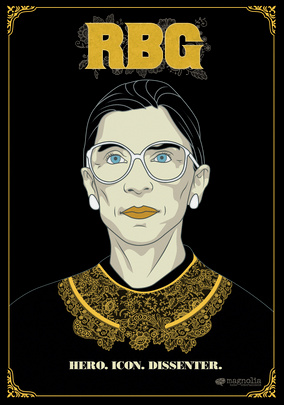
RBG-2018

RBG-2018

Director Betsy West, Julie Cohen

Starring Ruth Bader Ginsburg

Scott’s Review #810

Reviewed September 10, 2018

Grade: B+

In the aftermath of the tumultuous 2016 United States Presidential election that still resonates in 2018, making a documentary about one of the most senior members of the U.S. Supreme Court is perfect timing.

This production features eighty-four-year-old Ruth Bader Ginsburg. It discusses the inspirational woman’s early life, rise to the top, and views on the current Trump administration, offering a fleshed-out chronicle of the inspirational figurehead.

Directed and produced by feminists Betsy West and Julie Cohen, this was an enormously wise move. In my opinion, much of the focus is on Ginsburg’s trailblazing reputation and her achievements with gender-discrimination law.

More than once, it is pointed out that Ginsburg, with her tiny stature, pulled-back hair, and thick glasses, was not to be taken seriously in a world of men. Despite her serious demeanor, she nevertheless proved herself against many odds.

The documentary wisely emphasizes Ruth Bader Ginsburg’s current state. It discusses her childhood, parents, family, and friends in detail, but the heart of the film is positioned in the present.

This can only be assumed because of the volatile and relevant current political state and the importance of the Supreme Court in its current state of conservative leanings.

Ginsburg is now the furthest left-leaning judge- a point the documentary stresses not without some urgency.

The documentary begins with “RBG,” as she has adoringly come to be known, working out with her trainer. At age eighty-four, this is remarkable and encompasses her hard work ethic, inside and outside the courtroom.

The film stresses her endurance and dedication to the job. One family member comments how Ginsburg will frequently work until four in the morning, stay up all night, and then sleep for sixteen hours to play “catch-up.”

RBG—the film—shares sweet moments alongside the legal courtroom facts so that it is not oversaturated by legal jargon and terms.

A nice touch is the focus on Ginsburg’s husband, a lively, boisterous, and comical man who perfectly balances his wife’s mannerisms and characteristics. According to many sources in the documentary, they are a perfect match—this portrays a more romantic (and needed) element to the overall story.

Ginsburg was granted the highest honor during President Clinton’s term, a pivotal time in United States history when the Supreme Court took a more left-of-center turn.

In 2018, the Court swung harshly in the other direction, making Ginsburg a tremendously instrumental figure. In the documentary, the courageous lady astutely points out that she “will do the job as long as she can do the job.”

RBG (2018) is an incredibly important documentary in a highly tumultuous time. Not only are women’s rights, specifically Roe v. Wade, in serious trouble, but the country is also in danger of taking a stark turn to the right and thereby going backward.

Leave it to a dear eighty-four-year-old woman with courage for miles to lead the charge for freedom and the progressive movement. The years ahead will tell us how this turns out, but the documentary excels at relaying its vital importance.

Oscar Nominations: Best Documentary-Feature, Best Original Song-“I’ll Fight”

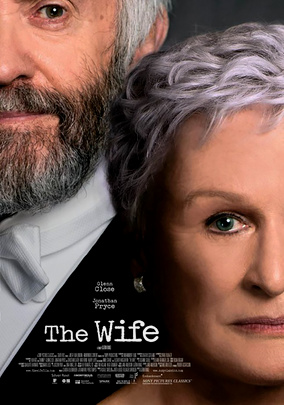
The Wife-2018

The Wife-2018

Director Bjorn Runge

Starring Glenn Close, Jonathan Pryce

Scott’s Review #809

Reviewed September 8, 2018

Grade: A

Swedish director Bjorn Runge crafts a nearly flawless film in The Wife (2018), which elicits a perfect performance from its star, Glenn Close.

The film may be a standard drama, but the performances are the star attraction here. Along with Close, Jonathan Pryce, along with many of the supporting players, deserves his share of kudos.

But the film unquestionably belongs to Close as she plays an overlooked wife with subtle intelligence and enough simmering fury and resentment to astound and compel audiences.

Professor Joe Castleman (Pryce) and his wife, Joan (Close), live charmingly in upscale Connecticut. Joe is an acclaimed author and has just been notified that he will soon be awarded the Nobel Prize in Literature.

As Joe and Joan excitedly jump up and down on the bed in celebration, there is something not altogether joyous about Joan.

Parties are thrown, and Joe and Joan, along with their son David (Max Irons), an aspiring author himself, fly to Stockholm, Sweden, for the coveted ceremony. Joe is flocked with attention while Joan is cast on the sidelines—secrets eventually bubbling to the surface through a nosy reporter, Nathaniel Bone (Christian Slater), who digs into Joe and Joan’s past.

The prime setting of Stockholm is a great plus, adding a cultural and cold vibe to the story. The snowy and blustery Scandinavian locale, with some characters of European descent, brings richness to the film.

The scenes of characters sipping brandy or other warming spirits while a bristling fireplace erupts in the background add good texture.

Close is one of the finest actresses of our time and portrays Joan with refined restraint at every turn. Yes, we know that something is bothering Joan, but we do not know what that is. Close is one of those talents whose face tells so much while she can utter so little, and for a good one-third of the film, this is all we have.

What is wrong with her? Why does she act happy for her husband and do her tasks seamlessly, but harbor rage bubbling beneath the surface?

Slowly, with the help of numerous flashback scenes, we learn how Joe and Joan met- he a young professor in the early 1960s, and she a naive student with delusions of grandeur of becoming a female novelist. She quickly learns how difficult this will be to achieve as she babysits Joe’s young kids, slowly falling in love with the married man.

From flashbacks, we learn more about Joe and Joan’s emotions, aspirations, and limitations. We also learn that Joe has always had a wandering eye for other women—after all, wasn’t Joan “the other woman”?

Back in the present day, a restless Joan needs a day to herself in the bustling city before she explodes at Joe. Before she can head out, she is talked into a drink by Nathaniel, who cagily reveals much of what he knows to Joan.

The scenes between Close and Slater crackle with passion. Is he flirting with her or attempting to get her to buckle under from compliments and booze? Close is purely in control of Joan’s emotions here, but so much is written on the actress’s face.

It is mesmerizing to watch her calm demeanor border on cold and calculated in her responses to Nathaniel’s questions.

Joe and Joan’s son David play key roles in all of this. As with Joan, David harbors resentments towards his father, but his rage is more blatant. He yearns for his father’s approval of a newly written story and is angry with every comment his father makes.

Is he simply experiencing jealousy over his father’s talents?

When David learns a secret, events get good, culminating in a fantastic blowup scene between the three characters in a hotel room, at simply the worst possible time.

Pryce must be given props for playing Joe with much complexity. Partially sympathetic and partially unforgivable, he elicited a mixed reaction from me. Not one to mistreat Joan, he sings her praises from one toast to another.

A cad, he is also a narcissist, yet he does adore and think the world of Joan, so they share a complex love.

The Wife (2018) is an excellent film that appreciates the talents of its cast.

Stalwarts such as Pryce, Slater, and newcomer Max Irons flesh out the supporting roles, which only enhances Queen Bee Close’s bravura performance.

I have always thought there would never be any way Close could rival her breathtaking portrayal of dastardly Alex in Fatal Attraction (1987), but she sure comes close in The Wife.

Oscar Nominations: Best Actress-Glenn Close

Independent Spirit Award Nominations: 1 win- Best Female Lead-Glenn Close (won)

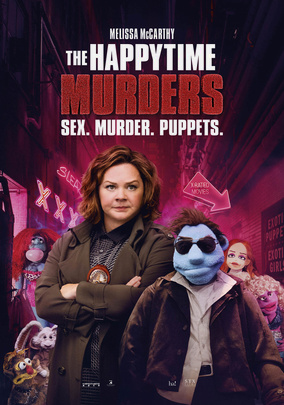
The Happytime Murders-2018

The Happytime Murders-2018

Director Brian Henson

Starring Melissa McCarthy, Maya Rudolph

Scott’s Review #808

Reviewed September 6, 2018

Grade: B-

Some consider it the worst film of 2018, but I had no positive expectations as I walked into an empty movie theater.

In truth, The Happytime Murders is not that bad. It is more in tune with a fun, adult-humored late-night affair. The greatest assets are Melissa McCarthy’s comic talents and the neat whodunit that is the central part of the story.

The human actors acting opposite puppets are bizarre and take some getting used to, but the nice editing (not easy to do!) is to be commended.

Set in modern times, in the underbelly of Los Angeles, puppets live alongside humans and are not treated well. They are constantly bullied and taken for granted.

Sarcastic and angry puppet Phil Phillips (a nod to the American Idol winner?) works as a private investigator. An incident many years ago caused him to be booted from the LAPD police force forever.

When Phil is hired by a sexy blonde female puppet, Sandra, to find out who has been sending her blackmail letters, he stumbles upon a rash of puppet murders.

The killer is knocking off members of an 1980s television show, presumably for profit. Phil’s brother and grizzled ex-partner, Connie Edwards (McCarthy) become central to the story.

The first dynamic that works well in The Happytime Murders is the “chemistry” between Connie and Phil. The connection and good rapport are surprising, considering the human/puppet factor.

One might find it surprising that the two characters play well off each other, but their adult sparring and frequent vulgar language name-calling are oodles of fun to watch. McCarthy is always fantastic with comic timing, so her fans will not be disappointed.

As they shout vulgar “pleasantries” to each other, one cannot help but smirk.

Maya Rudolph plays an interesting role as Phil’s secretary. Named Bubbles, she is sexy, sultry, and coquettish—an unusual role for Rudolph, but she pulls it off in spades.

Otherwise, Elizabeth Banks, cast in the small role of Jenny, Phil’s blonde ex-girlfriend, is entertaining. Despite being a puppet, Phil is quite the lady’s man, and Sandra (a nymphomaniac) is his main conquest.

In one lewd scene, Phil beds her right in his office, spewing strands of white goo meant to be semen, and Sandra exposes her purple pubic hair.

The film is clearly for adults only, and hopefully, unwitting parents do not mistake the puppet characters for a kids’ movie. The film contains many scenes bordering on X-rated territory, yet the inclusion of puppets undoubtedly gives off a humorous, not-to-be-taken-too-seriously element.

The Handsome Joel McHale, as a Special Agent on the case along with a Lieutenant, Connie’s superior, makes it clear the characters are along for the comic ride, and the film never takes itself too seriously.

I admittedly had low expectations, so I was surprised to find myself enjoying the puppet characters and the rapport between them most of all. Phil, charismatic in a Dick Tracy sort of way, balances the other “over-the-top” puppets, including a drug lord, two puppet prostitutes, and a puppet bunny addicted to porn.

The creations are lively and unique.

Let’s not get carried away, though- The Happytime Murders is not the genius that Who Framed Roger Rabbit? (1988) is, but its crass nature is of some appeal.

I adored the Los Angeles setting as the sunny locale perfectly counterbalanced the murderous antics of a hooded killer. The big reveal I did not see coming added to my surprise.

To summarize, The Happytime Murders is not a work of art or anything spectacular.

Presumably, it will be forgotten, especially since McCarthy is appearing in another “more serious” film in 2018, Can You Ever Forgive Me?, which has enormous Oscar potential. Therefore, the focus will assuredly be on that film.

However, a work like The Happytime Murders (2018) does have its place as perhaps a fun late-night offering.

Black Panther-2018

Black Panther-2018

Director Ryan Coogler

Starring Chadwick Boseman, Michael B. Jordan

Scott’s Review #805

Reviewed August 23, 2018

Grade: B+

For the record, I am not a huge superhero fan nor an obsessive follower of the popular Marvel comic series. I see a handful of superhero films but hardly any of this particular genre, usually those (if any) receiving year-end recognition.

Having heard many positives regarding Black Panther (2018), I was looking forward to something creative and left of center from the typical genre film.

While the film has some standard superhero elements, the fact that most of the characters are ethnic is an enormous plus and worth the price of admission alone.

Admittedly, Black Panther plays out like a superhero film is “supposed” to play out: fight scenes, machismo, action, and villains, with the standard good versus evil storyline thrown in.

This is all good and will undoubtedly please the traditional Marvel comic book fan. However, the nuances that the screenwriters and director, Ryan Coogler, sneak into the film set it above a mediocre rating.

The fact that nearly all of the principal characters are black is tremendous, and the female black characters are portrayed as strong.

Furthermore, the visual treats of Africa and Korea, and multi-cultural clothing and colors are noteworthy. While I wish the actual story had steered further away from the tried-and-true, I was left happy with the other qualities.

The film begins with a quick story of how one African nation, Wakanda, came to be and proudly brought into existence the first “Black Panther” with superpowers obtained from a special plant.

As the action moves to Oakland, California, circa 1992, we learn that the King of Wakanda is visiting his brother, who works undercover.

Following the King’s death, his son T’Challa (Chadwick Boseman) takes over the throne but is soon challenged by his cousin, N’Jadaka (Michael B. Jordan), who deems himself the rightful heir.

Another subplot involves a black-market arms leader named Ulysses Klaue, who leads T’Challa, along with Nakia (Lupita Nyong’o) and Okoye (Danai Gurira), to South Korea and back to Wakanda.

Black Panther feels ambitious, like seeing something worth seeing, something inventive and cool. The film is stylized, and Coogler’s direction is spectacular, with bright, colorful visual treats, especially as he features lavish African locales.

Admittedly, in a mainstream comic book film laden with CGI effects, it is tough to know what is real or not, but as a viewer, these aspects were a treat and pleasing to the eyes.

The plot of the film itself feels admittedly mediocre, tough to follow, and a “been there, done that” evaluation. By the same token, the story seems predictable, and is it any wonder that T’Challa will reclaim the throne as King of Wakanda?

It does not matter too much after the inevitable clashes with warrior-type men who want the throne and/or feel that they are the rightful heir to it.

This is not to say the film is not good—it is, but the plot is not the highlight of Black Panther; it feels fairly standard.

The male-female roles are a fascinating study and progressive-minded. Granted, the male characters (T’Challa, N’Jadaka, and M’Baku) are all testosterone-laden and fierce with machismo.

However, despite being manly men, they also contain some sensitivity, and the characters have a unique family element.

On the other hand, the female characters are powerful and empowering- a dynamic approach for a superhero film sure to be seen by millions. One female character is even an Army General! So the portrayal of women as strong warriors rather than merely secondary or arm candy is impressive.

The comic book or superhero genre is notoriously filled with gender stereotypes and specific, often generic aspects. It is nice to see this work break down some of these barriers.

Between the recent Wonder Woman (2017) and Black Panther (2018), women and the black community have been represented positively.

Here’s to hoping that the LGBT community may be next.

Oscar Nominations: 3 wins- Best Picture, Best Original Score (won), Best Original Song-“All the Stars”, Best Sound Editing, Best Sound Mixing, Best Production Design (won), Best Costume Design (won)

BlacKkKlansman-2018

BlacKkKlansman-2018

Director Spike Lee

Starring John David Washington, Adam Driver

Scott’s Review #802

Reviewed August 14, 2018

Grade: A

Spike Lee’s latest offering, BlacKkKlansman (2018), is a brilliant effort and oh so timely given the tumultuous political climate in the United States in 2018.

Despite the film being set in the early 1970s, the racial issues and tensions that Lee examines are sadly still an enormous problem today. Lee infuses some humor and even romance into the drama, so the film is not too preachy or heavy.

A grand and relevant effort that all should watch.

As the film commences, we are treated to a clip from the 1939 classic Gone With the Wind, and BlacKkKlansman concludes with prominent clips of racial tensions circa 2017.

The timeline is crucial and influential, as the film clearly demonstrates that racism is still alive and well.

Lee, a known liberal, clearly puts a left spin on his work. BlacKkKlansman will likely not be seen by conservative filmgoers, which is sad, as valuable lessons can be learned by viewing this piece.

The story is based on a true story memoir written by Ron Stallworth, the first black police officer to be hired by the Colorado Springs police department. He successfully infiltrates the local chapter of the Ku Klux Klan with startling results.

The film begins with a speech by a doctor (Alec Baldwin) offering a “scientific explanation” of white superiority in 1957. Fast-forward to the early 1970s, where the rest of the film occurs.

Ron is initially hired by the police force as part of a progressive initiative for diversity, but he quickly moves into a detective role. He manages to pose as a KKK member via telephone while another detective, Flip Zimmerman (Adam Driver), goes to meetings in person.

Lee’s focus is clearly on the overall content and message of the film, and therefore, little character development is achieved. I admittedly did yearn to know the “hows ” and ” whys” of many of the characters, but the film is not really about the characters individually, and I am okay with this.

Why did Ron desire so much to become a police officer? What was his childhood like? How did Patrice become President of the black student union? What was her childhood like? What upbringings did some of the KKK members have?

Indeed, not enough time would have been allowed to answer these questions—minor gripe.

Lead actor John David Washington, son of Denzel Washington, was unknown to me before watching this film. He is tremendous in his role, as is Driver in his supporting role of Zimmerman, but again, these are not character-driven roles.

Washington has tremendous chemistry with his love interest, played by Laura Harrier. Ron and Patrice discuss politics and dance the night away, but she is an activist and a cop, making their chances of a happily ever after tough to imagine. Their romance is atypical of most films as it is based on intelligence and not silly, melodramatic aspects.

On the acting front, Topher Grace as the racist David Duke is tremendous. With a kindly demeanor mixed with a bubbling under the hatred of blacks and Jewish people, Lee makes sure he is the foil.

A delicious scene towards the end of the film, when Duke gets his comeuppance of sorts, is well done and received a thunderous roar from the theater audience.

Lee is careful to ensure the bad guys get their just due and are all portrayed as complete fools. With a false sense of nationalism, many hate minorities simply because they feel they are taking over their beloved country.

Not to harp on this, but BlacKkKlansman will attract those who already agree with Lee’s beliefs and politics. If only those who disagree would give the film a chance. Unlikely.

The final five minutes of BlacKkKlansman arguably are the most pivotal experience of the entire film, but they have nothing to do with the actual story portrayed in the rest of the production.

Lee concludes the 1970s portion of the film satisfyingly, then fast forwards to the horrific events that took place in Charlottesville, Virginia, in 2017 when protesters clashed with a racist group, resulting in an innocent woman’s death.

The controversial remarks of President Trump, refusing to cast blame on the racist group, are shown. Sitting in a crowded movie theater, these clips had the most significant reaction from the audience, with some flipping Trump the finger, while others sobbed in anguish and disbelief that we have achieved so little as a nation.

Rarely has a more pertinent or meaningful film been made for the current political climate in the United States. BlacKkKlansman (2018) brilliantly ties racism spanning one hundred and fifty years together and shows how it still exists.

Amid this message, however, lies a great drama containing humor and importance.

Oscar Nominations: 1 win-Best Picture, Best Director-Spike Lee, Best Supporting Actor-Adam Driver, Best Adapted Screenplay (won), Best Original Score, Best Film Editing

Mamma Mia! Here We Go Again-2018

Mamma Mia! Here We Go Again- 2018

Director Ol Parker

Starring Lily James, Amanda Seyfried

Scott’s Review #797

Reviewed July 31, 2018

Grade: B+

My expectations for Mamma Mia! Here We Go Again (2018) was not lofty, nor was I anticipating drivel. I expected (and was in the mood for) a summer popcorn musical flick with fun and dancing, and little in the way of analysis or requiring too much thought.

I can proudly say that this film fulfilled my expectations —it delivers its intent, and sometimes, that is exactly what the doctor ordered.

The film is enthusiastic and lively, with the musical numbers serving as the standouts.

In an immediate plot twist, it is revealed that the main character, Donna (Meryl Streep), died a year earlier, and her daughter Sophie (Amanda Seyfried) is planning a lavish reopening of her hotel on the beaches of Greece.

The film serves as both a sequel and a prequel, as events also go back to 1979 when a young Donna (Lily James) graduates from college and embarks on a journey to “find herself”.

She travels extensively and meets her three beaus (anyone who saw the 2008 original will be familiar with this plot), and the film is excellent at pleasingly connecting the events of both films.

Mamma Mia! Here We Go Again is hardly high art and not intended to be. Truthfully, it is a bit sub-par to the original, as some of the musical numbers are “secondary” ABBA songs. The biggest hits were used in the 2008 film.

The overall plot feels a bit forced and not exactly compelling, especially since we know the eventual result of Donna’s relationships. The story seems geared towards a bombastic finish.

But the sheer fact that the song and dances are interspersed throughout the film makes it enjoyable enough.

The film plays more like someone’s fantasy than a real-life sequence, and liberties must certainly be taken.  Everything always seems to go Donna’s way, and events merely fall into place- if only real life were that way!

The introduction of Donna’s mother (Sophie’s grandmother)—explained to be a rich and famous singer residing in Las Vegas—is a way to add the legendary Cher to the story. Disappointingly, the star does not appear until the end of the film, more like a cameo appearance.

This leads me to the film’s best parts, which occur during the final thirty minutes. As Sophie’s grand hotel reopening party comes to fruition (a devastating storm thrown into the story is purely for dramatic effect), all details fall into place in magical form.

Hundreds of party guests show up, Donna’s beaus reunite, and the aforementioned absentee grandmother (Ruby) makes a grand entrance via helicopter (in stiletto heels naturally).

In this way, the grand finale is superior to the rest of the film.

Cher, still looking gorgeous at age seventy-two, is the pure highlight of the film, and it kicks into high gear when she appears. Considering all of the hype and press surrounding a film reunion between Cher and Meryl Streep- they starred together in 1983’s Silkwood- it should be no real surprise that Streep’s deceased Donna appears.

The two best scenes come at the end of Mamma Mia! Here We Go Again! As much as the lavish Cher demands the grand finale in terms of glamour and song, Streep’s touching duet with Sophie will bring tears to the viewer’s eyes and capture the emotional element of the film.

As Streep and Seyfried churn out a gorgeous rendition of “My Love, My Life,” the actresses’ mother-daughter relationship is lovely and will fondly remind audiences of the chemistry in the 2008 film.

Regarding Cher, the revelation that Ruby is a long-lost lover of the hotel manager, Fernando (Andy Garcia), is sweet and romantic. Despite limited screen time, the duo shares fantastic on-screen chemistry, so much so that I yearned to know the back story of their relationship.

Do we only know that they were madly in love in 1959? Why did it not work out?  Regardless, Cher’s version of the song “Fernando” is both appropriate and enchanting.

Mamma Mia! Here We Go Again (2018) is a summer film sure to please audiences eager for a fluffy musical.

With bright and cheerful Greek island locales, lavish oceans, and bombastic feel-good pop sensibilities, this film was marketed well and shares enough connection with 2008’s Mamma Mia! to enrapture and please audiences who enjoyed the first version.

Love, Simon-2018

Love, Simon-2018

Director Greg Berlanti

Starring Nick Robinson

Scott’s Review #789

Reviewed July 17, 2018

Grade: B+

Love, Simon (2018) is a friendly, mainstream, LGBT film focused on a likable central character. Given the myriad dark films within this genre, the film is refreshing, usually ensconced in the independent genre.

Finally, a wholesome, family-oriented “coming out” story is upon us, and the film succeeds in spades. Perhaps a shade too “happily ever after” with a couple of stereotypes among the supporting characters, Love. Simon is a film to be heralded and certainly recommended.

Popular high school senior Simon (Nick Robinson) has a close circle of friends, hip parents, and an affluent existence in the suburban USA. Seemingly “having it all,” he is nonetheless filled with angst and harbors a deep secret—he is gay.

Closeted, he finds solace with a similarly closeted male student through the school website.

Determined to find out who his classmate is, he embarks on a way to discover his secret crush’s identity while being blackmailed by another schoolmate.

Young newcomer Nick Robinson is an absolute gem and carries the movie successfully. This is in stark contrast to another 2018 release starring a newcomer who failed (A Wrinkle in Time). Alas, Robinson has charm, charisma, wholesome looks, and an earnest persona, which are perfect traits for a coming-of-age film such as Love, Simon.

The audience will instantly root for the teen to find happiness and come to terms with the dreaded coming out to family and friends, which any gay person can relate to.

An enormous positive to the film is that Simon is okay with being gay- it’s the telling of other people that bothers him. He daydreams about starting fresh next year as an out and proud college freshman.

He worries that coming out will ruin his final year of high school and change his relationships with his circle of friends. But he is never ashamed or self-harming in his preference for men.

Lesser, but still significant, high points to the film are the rich diversity among the supporting players.

Several of Simon’s friends are black, and his parents are liberal, open-minded, and well-rounded. Of course, they will be accepting of their son’s chosen lifestyle.

Love, Simon also features diversity among the teachers. The theater teacher is not only black but also a champion for LGBT fairness. These qualities are always a breath of fresh air in film, especially when the target audience undoubtedly is younger.

The filmmakers succeed at breaking a key barrier with Love, Simon. As often is the case, LGBT-themed films target the LGBT audience, which makes sense.

In the case of Love, Simon, the film is an experience that the entire family can watch together, regardless of anyone’s sexual preferences. This detail is critical, as LGBT matters should be considered daily.

At the risk of pigeon-holing, the fact that Simon is masculine and popular and not the slightest bit effeminate or girly is undoubtedly a key to the film’s success.

On that note, the film does add an extremely effeminate and outgoing supporting character named Ethan. I am not sure this character is necessary other than to contrast with Simon.

Perhaps to drive the point home, Simon is a cool, macho guy, and Ethan is not. In one scene, it is assumed that Simon and Ethan are boyfriends, and Simon seems mildly disgusted by this. I’m not sure this subplot works or serves the film’s overall message very well.

Love, Simon contains frequently seen supporting character types that bring us seasoned filmgoers back to the days of the 1980s teen coming-of-age films like Pretty in Pink (1986) and Sixteen Candles (1984).

Several subplots involving characters having crushes on other characters, while another character likes them, are added to the mix for fun and a little drama.

The conclusion is sweet as the initial mystery of “who is the other gay student?” is finally revealed amid a lovely scene of Simon waiting on a Ferris wheel for his online admirer to arrive.

In a purely inclusive moment, the entire school surrounds the newly united couple and beams with pride as the duo tenderly kisses. Mass audience members are exposed to a heartfelt moment and an enormous lesson in dignity and spirit.

Director Greg Berlanti creates a lovely Hollywood film that is rich with diversity, a powerful story, and an inclusive element.

Sure, the film is not heavy and either skims over or misses discussions of powerful emotions that many gay youngsters face, but it is nonetheless a brave and necessary story in its own right.

Love, Simon (2018) is classy, tender, and quite a pleasant experience.

A Wrinkle in Time-2018

A Wrinkle in Time- 2018

Director Ava DuVernay

Starring Storm Reid, Oprah Winfrey, Reese Witherspoon

Scott’s Review #788

Reviewed July 16, 2018

Grade: C

A Wrinkle in Time (2018) is a film I had high hopes for, given the enormous marketing push, first-rate cast, and especially the acclaimed female director involved with the project, Ava DuVernay (Selma, 13th).

Additionally, having admired the 1962 novel, I expected a rich, earthy, and mysterious experience. Sadly, whether it be a “too many cooks in the kitchen” situation given the star power involved, or some other factors leading to a disconnect, this film disappointed me.

It’s not terrible, but it suffers from miscasting, too much CGI, and a story that is not very compelling.

Thirteen-year-old Meg (Storm Reid) is having a tough time in school. Smack dab in the “awkward phase,” she is picked on by schoolmates because her father (Chris Pine) has disappeared, presumably having ditched the family.

In reality, he is a scientist transported to another world after solving the question of humanity’s existence.

After Meg and her family are visited by a strange woman named Mrs. Whatsit (Reese Witherspoon), Meg, her little brother Charles Wallace, and Meg’s crush, Calvin, time-travel to find a way to save her father.

Fans who have read the fantastic novel written by Madeleine L’Engle will most certainly be disappointed since many details of the film are vastly different from the written page.

DuVernay attempts to take the film out of the 1960s and into 2018 (I have no issue with that), but the film feels so slick and modern with the visual elements and heavy use of CGI that the story suffers enormously.

The film is gorgeous, especially in the sweeping outdoor scenes, but in this case, too many bells and whistles spoil A Wrinkle in Time.

The three strange women characters, Mrs. Whatsit, Mrs. Who (Mindy Kaling), and Mrs. Which (Oprah Winfrey), are completely butchered. In the novel, each is portrayed as peculiar, mysterious, and similar to witches: frumpy, awkward, yet lovable.

In the film, however, they are colorful, glamorous, and empowered, but lack uniqueness or intrigue.

I am all for female empowerment, but the characters just felt wrong.

Kaling is fine in the most minor role, but in the case of Witherspoon and Winfrey, it appears to be a case of “we have big stars, let’s find roles for them.” A tough sell with Mrs. Which is to think of Oprah as anyone other than….well, Oprah!

Witherspoon’s attempts to be goofy and the comic relief of the film do not work.

The casting of newcomer Storm Reid is lackluster. I have no issue with the character of Meg being changed to bi-racial, I feel that’s a plus in the modern age. However, the actress is not the greatest, appearing both sullen and wooden in various scenes.

Nor does she have any chemistry with her love interest, Calvin.

This is a shame since the theme of young love would have been a nice addition to the film and was a coming-of-age element in the novel.

At the risk of being overly critical, A Wrinkle in Time is not a total disaster either. The progressive and heroic message of the overall film is quite inspiring if kids watch the film (and since it is Disney-produced and heavily advertised, I can see no reason why they wouldn’t), they will be exposed to a nice message of good conquering evil.

On a side note, the villain is safe and hardly conjures up much fright, so parents need not worry about the film being too scary.

With heaps of buzz and anticipation regarding A Wrinkle in Time (2018), the film seemed poised to become a blockbuster hit and a great spring flick. Instead, critics and audiences alike have largely derided it.

With creative genius, star power, and a considerable budget, something ran amok as the final product is fair to middling.

Let’s hope director Ava DuVernay gets her groove back with her next project- I expected more.

A Quiet Place-2018

A Quiet Place-2018

Director John Krasinski

Starring Emily Blunt, John Krasinski

Scott’s Review #751

Reviewed May 1, 2018

Grade: B+

A clever modern horror film, A Quiet Place (2018) offers a unique premise and novel use of sound to elicit a compelling, edge-of-your-seat story.

The film is a good offering with a science fiction slant and a “quiet” sensibility. It has ample jumps and frights that fit the story rather than being added unnecessarily.

Actor turned director, John Krasinski, shines in this film, to say nothing of the raw talents of Emily Blunt and the two child actors involved.

Only the four principles exist in the story, which is a benefit.

In the year 2020, most of the human population was decimated by vicious creatures called “Death Angels”, who have hypersensitive hearing- they cannot see but pounce on their prey at every sound made. Thus, the survivors must either whisper or communicate nonverbally.

An intelligent couple, Lee (Krasinski) and Evelyn Abbott (Blunt), an engineer and a doctor, have managed to survive with their two children, Regan and Marcus, their youngest son, Beau, having been killed after his toy rocket accidentally goes off.

The family lives on a farm in upstate New York, creating intricate ways to ward off the creatures but constantly fearing impending doom.

As Evelyn is now pregnant and due to give birth any day, in addition to Regan’s deafness, Lee attempts to create a mock ear to enable her to hear. One evening, he takes Marcus to hunt while Regan visits Beau’s grave. When Evelyn enters labor, she steps on a sharp nail, dropping a picture that alerts a nearby creature.

The remainder of the film (only ninety minutes) is spent with Evelyn alone in peril as the rest of the family tries to save her with some eventual dire results, both before and after the baby is born.

A Quiet Place immediately stands out as a unique film, especially for horror. It uses sign language and subtitles to show the characters communicating with each other and the audience. This tactic successfully absorbs the viewer into Abbott’s world and the hurdles they face.

This unconventional approach gives the film more depth than a standard horror film would usually have and is tremendously effective.

Blunt and Krasinski are such marvels, as they are protective and clever parents, that I immediately fell in love with both characters and bought them as a palpable couple. This is no stretch considering the two stars are dating in real life, but their chemistry works well in the film and makes a believable team.

Both Lee and Evelyn will do whatever it takes to protect their brood. After a lovely day of foraging for supplies in an abandoned grocery store, we feel heartbreak when the savage creature annihilates their youngest.

Lee, with Krasinski looking perfectly hunky in his beard and muscles, falls into the hero/Dad role nicely. At the same time, Blunt gives an emotional bravado performance worthy of almost an Oscar nomination if this were a different genre.

Not to be usurped by more seasoned actors, both child actors are wonderfully cast and hold their own.

Millicent Simmonds, an unknown, flawlessly portrays Regan as the young actress who is herself deaf, which translates well onto the large screen. And Noah Jupe plays sensitive yet brave to the hilt. Both assuredly have bright acting futures ahead of them.

The “creature” is a strong element of the film, but also suffers from missteps. Be careful not to be too amateurish-looking or heavy on the CGI effects; the fastness and ferocious nature are effective.

However, no apparent motivation is ever given, and no explanation of how they came to exist is mentioned. Perhaps a sequel will provide more depth. Regardless, I wanted to know more about the creature’s backstory. And how did Abbott’s hold out so long when no others did?

A Quiet Place succeeds as a frightful film with depth and intelligence. Although Paramount Pictures released the film, it may have worked better as an independent film (it could have been edgier) with more grit and less polish from the creature.

Nonetheless, Krasinski is off to a great start as a director and leading man with an impressive horror effort containing nice scares and slight gore.

Oscar Nominations: Best Film Editing

Lean on Pete-2018

Lean on Pete-2018

Director Andrew Haigh

Starring Charlie Plummer, Steve Buscemi

Scott’s Review #747

Reviewed April 24, 2018

Grade: B+

Lean on Pete (2018) is a heartbreaking and emotional slice-of-life film written and directed by British director Andrew Haigh.

The film centers on the relationship between a boy and a horse, so the heartstrings will be tugged a lot as the viewer is taken on a journey as the protagonist struggles through both pain and triumph.

While slow-moving and matter-of-fact, the film celebrates excellent writing and good story chapters, perfectly nestled into the independent drama genre.

Based upon the novel of the same name—reportedly a much darker experience—actor Charlie Plummer portrays Charley Thompson, a fifteen-year-old boy living outside of Portland, Oregon, with his troubled father.

His mother has taken off for parts unknown.

As his already complicated life turns upside down after a violent attack, Charley becomes increasingly attracted to the world of local horse racing and becomes involved with a shady horse trainer, Del Montgomery (Steve Buscemi).

There, he befriends and falls in love with an aging horse named Lean on Pete, who sadly is destined for the slaughterhouse in Mexico.

The film is about Charley’s journey and determination to survive while facing seemingly insurmountable odds and obstacles. The intriguing aspect of Lean on Pete is watching what Charley experiences and hoping against hope that he will come out unscathed and undamaged.

The youngster aspires to reach his estranged aunt, whom he knows only to have been living in Wyoming as a waitress. How on earth will he be able to find her? If he does reach her, will she welcome him with open arms, as he hopes, or will he suffer more defeat?

Several key aspects struck me as I watched this film. Charley embarks on his travels to find his beloved aunt, with Lean on Pete in tow, and encounters many individuals who either aid or hinder his intentions.

However, the common theme of waitresses continues to be portrayed—for starters, his aunt is referenced as working as a waitress at a bar. When Del gives Charley some fatherly advice, he implores him that the best women have always worked as waitresses.

On the road, he is treated kindly by two different waitresses—one of whom gives him free dessert, the other gives him a major break. I am not sure why Haigh chose to add this to the film, but it is a nice touch and effectively gives the story a warm, blue-collar sensibility.

Another intelligent decision Haigh makes is to keep the focus on Plummer and Charley’s facial expressions and reactions during pivotal scenes- for example, a scene where Charley is painting a house for extra money is essential.

As he hears a jovial father and son playing outside, Haigh shoots Charley’s reactions to this poignant scene rather than deciding to show the father and son. Hearing their pleasure is enough to elicit a look of pain on Charley’s face, rather than a blatant scene of said father and son shoved down the viewer’s throat.

Enough praise cannot be given to young talent Plummer, who gives a layered performance that will surely make him a star in future years.

The actor possesses an earnest, trustworthy sensibility, making him a likely hero in any film he appears in. Furthermore, he quietly gives Charley depth with various emotions, including disappointment, fear, and anger at his predicament.

The supporting cast members give well-acted performances that add to the overall meat of the story. As grizzled, yet responsible Del, Buscemi sinks his teeth into a role that allows his sarcastic humor and wit to take center stage, and he is perfect.

Chloë Sevigny, like Bonnie, a female jockey who befriends Charley, yet also gives it to him straight with lessons on life’s hard knocks, offers a satisfactory performance.

Lean on Pete (2018) is a quiet film that elicits an emotional response from its intended audience by giving firm texture to the story and fantastic cinematography of the western United States landscape.

Viewing a likable young adult in constant turmoil seems to be a complex subject, but instead, it is rather beautiful and inspiring, as captured by Haigh’s piece, instead of a complete downer as it might have been.

The film is a tale of a journey and struggle that accomplishes what it sets out to achieve.