Category Archives: Alfred Molina

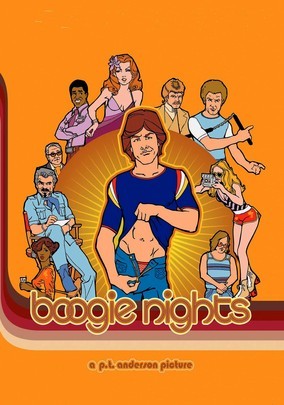
Boogie Nights-1997

Boogie Nights-1997

Director Paul Thomas Anderson

Starring Mark Wahlberg, Burt Reynolds

Top 250 Films #8

Scott’s Review #312
1180077

Reviewed December 31, 2015

Grade: A

Boogie Nights (1997) is a fantastic film about the pornography industry (The Golden Age of Porn) of the 1970s and 1980s, and does an excellent job of portraying the characters as human beings with feelings and emotions, rather than as nymphomaniacs or perverts.

They bond with one another as a family- a group of misfits striving to survive. This, and many other reasons, are why Boogie Nights is one of my all-time favorite films.

Written, produced, and directed by Paul Thomas Anderson (Magnolia, 1999; There Will Be Blood, 2007; Inherent Vice, 2014), he is a master at exploring the underbelly of society and flawed, desperate characters.

Boogie Nights is no different.

The dysfunctional family is the common theme of the film. Most of his characters are not happy people, but they are survivors who desperately seek a piece of happiness.

Many in his cast of Boogie Nights also appear in Magnolia. Mark Wahlberg (Eddie/Dirk Diggler), Burt Reynolds (Jack Horner), Julianne Moore (Maggie), Don Cheadle (Buck), William H. Macy (Little Bill), John C. Reilly (Reed Rothchild), Heather Graham (Rollergirl), Philip Seymour Hoffman (Scotty), Malora Walters (Jessie), and Alfred Molina (Rahad Jackson), round out the large cast.

The film is set in Los Angeles and spans the period from 1977 to 1984. Although only seven years pass, much happens to most of the characters during this time, and we experience their trials and tribulations.

The unique thing about Boogie Nights is that I care about every character, thanks to excellent writing and fantastic acting. They succeeded in obtaining my empathy for them. Boogie Nights is a highly character-driven film, which is an enormous part of its brilliance.

The cast is an ensemble one, but the main character is Eddie Adams, a high school dropout, who we meet working as a dishwasher at a nightclub. He has an abusive mother who kicks him out of the house, leading him to audition for and move in with Jack Horner.

Jack is a patriarchal figure who shares a house with Maggie, the matriarch of the household, and Roller Girl, a fellow high school dropout who is always seen wearing roller skates. Eddie’s talent is his large “manhood”.

We watch Eddie, at first shy and polite, rise to superstardom in the porn industry, becoming rich and living a lavish, drug-fueled lifestyle, where his ego gets the best of him. He, like many of the characters, hit rough times as the early 1980s shift to videotape was the death of many 1970s porn actors’ careers.

The musical soundtrack plays a crucial role in the success of Boogie Nights. Many scenes contain songs that were hits of the time or prior, including “Sister Christian”, “Jessie’s Girl”, “God Only Knows”, “Got to Give it Up”, “Ain’t No Stoppin’ Us Now”, and countless others- so much so that the soundtrack is almost a character of the film.

We look forward to hearing what song might be featured next.

At one point later in the film, circa 1983, as things begin to spiral out of control for many of the characters, the musical score turns ominous, with low bass music, a nighttime setting, and the lighting becomes darker. Several stories begin to intersect on a late L.A. night on the streets.

Jack, filming a scene in a limousine starring Rollergirl and a young college jock they pick up off the streets, Dirk, forced to prostitute himself for $10 to a young man in a pickup truck, and Buck, who innocently stops to buy doughnuts for his very pregnant wife Jessie.

Each of these stories ends in brutal violence, and the tone is crucial to the success of the scenes. This lengthy scene bears a resemblance to a Quentin Tarantino scene in its macabre tone.

Particular favorite scenes include the heartbreaking scene when Maggie loses custody of her son, the New Year’s Eve party at Jack’s house, and the ill-fated drug sale at Rahad Jackson’s.

Each is heartbreaking, powerful, fraught with tension, or otherwise empathetic to the characters, which makes them each quite powerful in different ways.

Induced in the drug sale scene is some black comedy- Rahad’s presumed Chinese houseboy has a fetish for firecrackers, which startle Dirk, Reed, and Todd, as the fear of possible gunshots fills the air. Maggie’s sob scene elicits viewer emotion as we cry with her, and the New Year’s Eve turn of events involving Scotty and Little Bill is tragic.

Boogie Nights (1997) is one of my favorite films because it contains brilliant writing, characters who are fleshed out, damaged, and human, a killer soundtrack, and a dark, mysterious industry (porn) that is both misunderstood and categorized.

Thanks to director Anderson, we see the people within this lifestyle as real individuals, with their own issues, but also with full hearts and kindness.

Oscar Nominations: Best Supporting Actor-Burt Reynolds, Best Supporting Actress-Julianne Moore, Best Screenplay Written Directly for the Screen
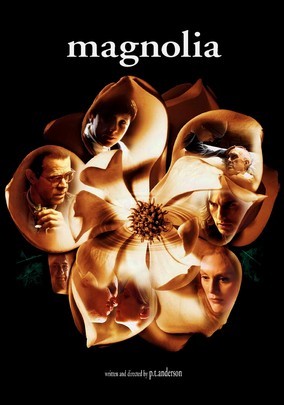
Magnolia-1999

Magnolia-1999

Director Paul Thomas Anderson

Starring Tom Cruise, Julianne Moore, John C. Reilly

Top 250 Films #67

Scott’s Review #777

Reviewed June 21, 2018

Grade: A

Paul Thomas Anderson is one of my favorite modern directors. In my opinion, his best film is Boogie Nights (1997), but he has also created other dark offerings, such as Phantom Thread (2017) and Inherent Vice (2014).

Arguably, his most distinctive effort might be Magnolia (1999), a cerebral film that explores themes of forgiveness and the meaning of life.

An ambitious effort, featuring a stellar ensemble cast, makes the film a fantastic experience.

Set in the San Fernando Valley (a mountainous area of Los Angeles), the film resembles David Lynch’s Mulholland Drive (2001) in area and oddness, along with unusual dialogue and offbeat characters.

A narrator explains three situations of extreme coincidence and surmises that chance may not be the only responsible party. Anderson then carves an intricate tale involving numerous characters, intersecting lives, and a riveting final climax during one rainy California day (an oddity in itself!).

The plot begins when we meet Jim Kurring (John C. Reilly), a police officer who is called to investigate a disturbance.

After finding a woman’s body in an apartment closet, events turn bizarre as a children’s game show host (Philip Baker Hall), his estranged daughter (Melora Walters), the show’s former producer, Earl (Jason Robards), who is dying from cancer, his drug-addicted wife Linda (Julianne Moore), Earl’s male caretaker (Philip Seymour Hoffman), a former game show champion (William H. Macy), and finally, an intense motivational speaker (Tom Cruise).

Quite a bevy of talented actors!

As the plot moves along mysteriously, the connections of each of the characters are not only revealed, but their peculiar motivations start to take shape.

For example, Linda, who married Earl for his money, seems to have an epiphany and demands her lawyer change Earl’s will. Later, a character may have a connection to Earl and Linda, but is it all as it seems?

In the case of Magnolia, the film is so wonderfully strange that it leaves the audience guessing throughout most of its running time.

Bizarre scenes are commonplace throughout the film. My favorite one is a marvelously creative scene. Suddenly, frogs begin to fall out of nowhere from the Los Angeles sky with numerous consequences for the characters.

The incident causes a ripple effect, of sorts, as many of the character’s fates are determined. Though one may not be able to make heads or tails of this scene or take complete logic from it, it’s enthralling all the same.

Magnolia has an overall quirky tone- sometimes upbeat-sometimes melancholy- that I adore. Films that are tough to figure out and that add an interesting musical score are so rich with flavor.

Aimee Mann is responsible for composing many of the songs on the musical soundtrack, so much so that she received a title credit on the soundtrack itself. Mann infuses richness into her music that is moody and diverse with ambient essentials.

Many actors make frequent appearances in Paul Thomas Anderson’s films. Magnolia alone seems almost like a Boogie Nights reunion with Moore, Walters, Macy, Baker Hall, and Philip Seymour-Hoffman to name just a handful.

The amazing aspect is that all of the aforementioned actors play vastly different, and arguably even more complex roles than they did in Boogie Nights.

Similar to Quentin Tarantino’s actors appearing in many of his films, what a creative treat this must be for them.

There is no doubt that Magnolia (1999) is a complex, dream-like, film. Open to interpretation and reflection, I find it to be a film that feels brilliant and that I would like to revisit and dive into even more and more with further viewings, for hopefully a better understanding and an even deeper appreciation.

Oscar Nominations: Best Supporting Actor-Tom Cruise, Best Screenplay Written Directly for the Screen, Best Original Song-“Save Me”

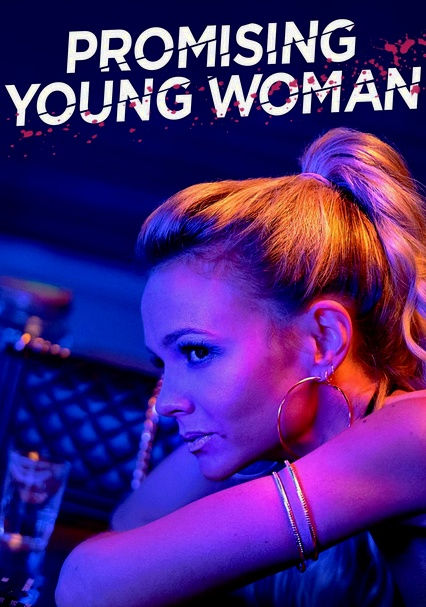
Promising Young Woman-2020

Promising Young Woman-2020

Director Emerald Fennell

Starring Carey Mulligan, Bo Burnham

Scott’s Review #1,132

Reviewed April 13, 2021

Grade: A

Emerald Fennell, making her film directorial debut, kicks her viewers in the ass with significant help from star Carey Mulligan, with Promising Young Woman (2020).

The actress gives the best performance of her career.

The film is a sexy and haunting experience, mixing black comedy and witty dialogue with an important and timely subject matter- the abuse and victimization of young women by men.

Both men and women can be held responsible, as Fennell makes abundantly clear. Predators often have a share of people who choose to “look the other way” and thereby enable.

This is a constant theme throughout the film involving many characters who are called out for their passivity.

Fennell makes this point during two of the film’s most compelling scenes, calling out a high-powered dean and attorney for their betrayals. The scenes are so powerful that I wanted the characters to suffer as much as the revenge seeker does.

There is also a wackiness in the pacing and dialogue that reminds me quite a bit of the 1999 masterpiece, American Beauty.

The film is depravity, bizarreness, and brilliance all rolled into one. I felt this film in my bones.

Almost every scene is a treat in the mysterious and unexpected, and the film features peculiar characters and creative musical score renditions, and includes a scene and music from the underappreciated masterpiece The Night of the Hunter (1955). Fennell knows her classic cinema.

Mulligan stars as a woman named Cassie who seeks to avenge the death of her best friend, who was a victim of rape when they were in medical school, and their young lives had potential, and such possibility lay ahead of them.

Cleverly, we never see her friend, named Nina Fisher, but she is of vital importance and nearly a central character herself despite her absence.

Everyone said Cassie was a “promising young woman” until a mysterious event abruptly derailed her future. But now, at thirty and still living at home, her parents suggest, via a giant suitcase for her birthday, that it may be time for her to move on.

Cassie is tough to figure out since she’s wickedly clever, sometimes wisecracking, and tantalizingly cunning, and she’s living a secret double life by night. She goes to nightclubs looking drop-dead gorgeous and lures men to her rescue, pretending to be inebriated.

What happens when they go back to their pad is shocking, dark, and justified. The men will never see this coming.

Before the presumption is that Cassie is nothing more than a bad-ass, her intentions are not only admirable, but she has a heart and desires love. Promising Young Woman is a dark character study.

Besides the powerful story, Promising Young Woman is riddled with interesting cinematic techniques. Cassie’s parents lounge in their afternoon, watching The Night of the Hunter, a dark fairy tale for adults.

Later, a haunting version of Britney Spears “I’m a Slave 4 U”, complete with a string arrangement, is featured most uniquely.

All the supporting players add pizzazz and strength, some in odd or unclear ways, until certain revelations bubble to the surface.

Jennifer Coolidge as Cassie’s strange mother, Bo Burnham as the smitten Ryan Cooper, and Alison Brie as Cassie’s college friend Madison McPhee are the best examples.

Bo and Madison have the most to hide, but will they or won’t they face Cassie’s wrath? Not much is worse than a woman scorned.

But the main draw is Mulligan. Startlingly good, with an astonishingly powerful, deeply layered performance by her. She showcases a remarkable acting range, effortlessly shifting from brash to darkly humorous and, at times, emotionally vulnerable in her best performance to date.

Two scenes stand out to me.

The first is a delicious scene between Cassie and the female dean of her school, played by Connie Britton. At first dismissive and annoyed by Cassie’s accusations, Dean Elizabeth Walker finally takes notice when she believes that Cassie had kidnapped her teenage daughter and left her with a group of drunken frat boys. What comes around goes around!

The second is the finale wedding scene, interestingly not featuring Cassie other than by text messages. As the happy young couple says their vows a parade of police cars ruins the moment and the audience cheers victory. It’s a satisfying moment.

The screenplay is original, fresh, and timely. In the “Me Too” movement, the timing is vital and makes the subject matter relevant. Fennell wrote the screenplay- is there anything she can’t do?

Promising Young Woman (2020) is an exceptional film. It’s a controversial revenge film, but it’s so much more. Taking a powerful subject matter and examining the hypocrisy of men and women is telling and eye-opening.

That is why this film is critical to see and brings awareness to a situation that society still too often deems as okay.

Oscar Nominations: 1 win-Best Picture, Best Director-Emerald Fennell, Best Actress-Carey Mulligan, Best Original Screenplay (won), Best Film Editing

Independent Spirit Award Nominations: 2 wins-Best Director-Emerald Fennell, Best Female Lead- Carey Mulligan (won), Best Screenplay (won)

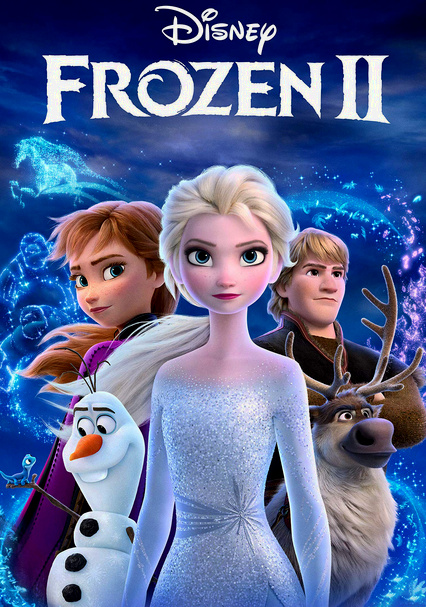
Frozen II-2019

Frozen II-2019

Director Chris Buck, Jennifer Lee

Starring Kristen Bell, Idina Menzel

Scott’s Review #1,043

Reviewed July 22, 2020

Grade: B

Six years after the enormous success of Frozen (2013) comes the follow-up, Frozen II (2019).

Surprisingly, the long gap of time between creations is a long gap of time between creations, but the beauty of animation is that these characters do not age unless creators want them to.

The adventure story is fun, incorporating a bit of history, which always creates depth, but also charts familiar territory as the first installment.

The film showcases lovely visuals and songs, which usurp the other elements. Breeding so much familiarity, there seems little need for a third chapter, though I’d bet my bottom dollar another will emerge.

We are reintroduced to Anna (Bell) and Elsa (Menzel) as little girls when they are tucked into bed by their father, King Agnarr of Arendelle, one night.

He relays a story about his father (their grandfather), a treaty made with a neighboring tribe, a dam, and a magical Enchanted Forest.

As a youngster, Agnarr barely escapes alive after a fight erupts with the other tribe, causing his father’s death, and enraging the spiritual elements of the forest. There is also a key mention about Anna and Elsa’s parents’ lost ship, which is apparently how they died.

Fast-forward to the present day, Elsa and Anna are adults, three years after the events of the first film. Elsa, the one with ice powers, runs her happy kingdom with Anna serving as Princess.

They live in peace and harmony with familiar characters, Olaf, the snowman created by Elsa, Kristoff, Anna’s boyfriend, and Sven, his reindeer.

When Elsa begins hearing mysterious voices calling to her from the mountains, she pursues them only to reawaken the spirits and threaten her kingdom and her people. The group must come to the rescue to retain harmony, learning the reason for Elsa’s powers in the process.

Frozen II has a “nice” feel, which is positive and negative. A family-friendly film with a feminist, female perspective is beneficial, crafting a positive and inspiring message for youngsters, especially females, who watch it.

Anna and Elsa control their destiny, are empowered to go after what they want, and achieve results.

They also support each other, share sisterly love rather than being rivals, and treat people fairly.

The adventure that the girls and their friends face will end happily, that much we know. Slight peril emerges when Anna goads and then flees from gigantic earth spirits, Olaf melts and is assumed dead, and Elsa is also thought dead in the forest.

Still, these are aspects added for dramatic effect, and the safe feel of the film ensures that all major characters will remain in happily ever after harmony.

When Kristoff awkwardly attempts to propose to Anna throughout the film, we are sure he will eventually do the deed, which he does.

I criticized Frozen for limiting diversity in its production, which is corrected in Frozen II. Mattias, leader of a group of Arendelle soldiers, is a strong and protective character and is black.

As an LGBTQ presence, one is only hinted at.

When Kristoff befriends Ryder over their love of reindeer, Ryder admits he knows nothing about girls. Mention must be made of Elsa’s barbie doll-like appearance with her bright blue eyes and long blonde hair.

Does she have to look that stunning? Might impressionable girls get the idea that looks are most important?

Let’s hope not.

The best parts of the film are the musical numbers, which feel more enhanced than those in the first Frozen. Using the same song composers, the tunes feel slightly less poppy. The most emotional number is “Into the Unknown”, which possesses a mysterious quality and powerful, compelling lyrics.

Its message is to go for it, which can be interpreted as conquering fears or trying something new. The sound is anthem-like and superior to “Let it Go”.

Frozen II (2019) is a predictable yet fun affair, infused with Scandinavian elements, featuring mountains, fjords, and a gorgeous landscape that provides the necessary cold-weather ambiance and magical quality.

The visuals are lavish, bright, and sophisticated.

Part II is a slightly more mature affair but on par with Frozen and wisely targets the right audience. Tastes change, so if Part III is made, filmmakers might want to consider a deeper plot or additional details to maintain interest.

Oscar Nominations: Best Original Song-“Into the Unknown”

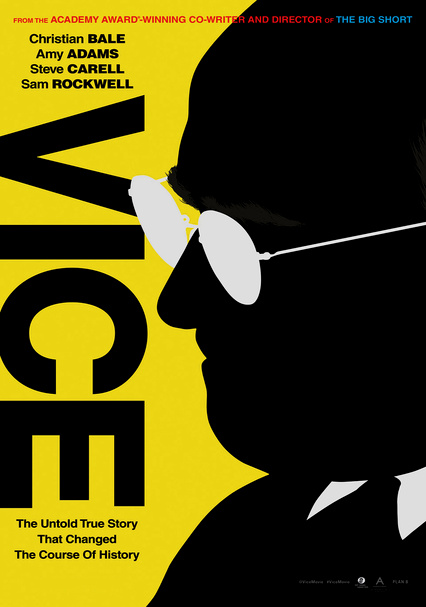
Vice-2018

Vice-2018

Director Adam McKay

Starring Christian Bale, Amy Adams, Steve Carell

Scott’s Review #849

Reviewed December 31, 2018

Grade: A

Following 2015’s The Big Short, Adam McKay once again creates an intelligently written, thought-provoking political film based on facts and historical accounts.

With Vice (2018) he focuses on former Vice President Dick Cheney and his rise through the political ranks to second in command.

Brilliant and wise in every way, the film is fair-minded in its approach. Predictably, in this era of “fake news,” it will be embraced by liberals but shunned by conservatives.

In the first seconds of Vice, a disclaimer appears stating that Cheney was a private man with secrets, but the filmmakers did their best to relay accurate information. The salty language in this clip will likely elicit chuckles, but McKay stays the course with his statement.

Immediately, the film flashes to the September 11 attacks with Cheney sitting in crisis mode, about to make an important decision.

Vice then retreats to 1963 Wyoming as a drunken college-aged Dick Cheney (Christian Bale) is pulled over for erratic driving after a barroom brawl. He is nearly dumped by his girlfriend and future wife Lynne Cheney (Amy Adams), who threatens to find another man if Dick does not straighten out.

He manages an internship and an admiration for Donald Rumsfeld (Steve Carell), a staunch Republican and White House Chief of Staff, and begins his political climb.

In clever form, the film is narrated by a character named Kurt (Jesse Plemons), who we do not know is connected to Cheney until the end of the film. This adds an added measure of intrigue to the overall film, as we know a secret will be revealed.

Vice is also unique in direction, with constant back-and-forth timeline scenes and quirky humor throughout. Are the Cheneys portrayed as ridiculous? No, but sardonic humor is directed at them as their ambitions and power-hungry motivations are completely exposed.

The film does a great job of taking the viewer through the political state of Cheney’s administration, roughly the early 1970s until 2008, when Obama took office. The Clinton years are completely skipped, but that is more to do with Cheney being in the private sector rather than an intentional slight.

The Nixon years and the George W. Bush years are given hefty screen time and the latter is portrayed as nearly a buffoon as Rockwell portrays him as a boozy, dumb frat boy.

Bale is startlingly good as Cheney and deservedly steals the show. In addition to the forty-pound weight gain, the actor endured the facial and hair treatments (props to the makeup department!) and became the man.

His body movements, smile, and speech patterns are daringly good. With a sneer and a calculating grin, we see the wheels spinning in Cheney’s head numerous times, and Bale is incredible at portraying these thoughts to the audience.

The film contains many well-known actors in vital supporting roles worth noting. The depictions of the following are examples of excellent casting with spot-on representations: Tyler Perry as Colin Powell, LisaGay Hamilton as Condoleezza Rice, Sam Rockwell as George W. Bush, Alison Pill as Mary Cheney, and Lily Rabe as Liz Cheney.

All portrayals are excellent to watch, especially for viewers who remember the real-life people involved.

Some will undoubtedly complain that the film has a “liberal slant” and portrays Cheney as power-hungry and self-serving. While this is a valid point, and McKay makes left-leaning choices, the director bravely carves the film into an experience that goes both ways.

More than a few scenes (including the final scene) justify Cheney’s actions, in his mind anyway. Claiming to do what is suitable for the people and be a true American, his actions and yearning for power can be understood to some degree, or perhaps by some people.

Vice (2018) is controversial and undoubtedly divisive, which is unsurprising given the current state of American politics. It tells an inspiring and rich story of an elusive politician’s life and policies, daring to be forgotten, that still resonate across the United States.

The more I ponder this film’s importance, the greater it becomes, but stay past the credits for arguably the best moment in the movie and of monumental importance in 2018.

Oscar Nominations: 1 win-Best Picture, Best Director- Adam McKay, Best Actor- Christian Bale, Best Supporting Actor- Sam Rockwell, Best Supporting Actress- Amy Adams, Best Original Screenplay, Best Makeup and Hairstyling (won), Best Film Editing

Raiders of the Lost Ark-1981

Raiders of the Lost Ark-1981

Director Steven Spielberg

Starring Harrison Ford, Karen Allen

Scott’s Review #757

Reviewed May 15, 2018

Grade: A

A film that kicked off the tremendously successful and ever-so-fun 1980s trilogy, Raiders of the Lost Ark (1981) is a treasure in the adventure genre time capsule.

Director Steven Spielberg embarks on the journey of one of the most highly visible film heroes in of Indiana “Indie” Jones, a swashbuckling, aww shucks kind of guy.

Harrison Ford is perfectly cast in a role that perfectly fits him and, besides Han Solo, defined him during the decade- the best role of his career if you ask me.

Wonderful to watch in sequence with the even more superb Indiana Jones and the Temple of Doom (1984), these two films are a pure pleasure as our hero faces dangerous obstacles at every turn while either chased by or pursuing sinister robbers or other undesirables.

All the while Indie keeps his familiar sly grin and numerous jokes to entertain audiences.

Raiders of the Lost Ark has it all with superior writing, editing, cinematography, art direction, sound, and visual effects.

They reaped many Oscar nominations, quite uncommon for an adventure tale, but the merits were warranted. Atypical compared to other films of this type, the film is not overly saturated with phony machismo or unnecessary “guy” stuff, but rather appealing and genuine.

The time is 1936 and archaeologist Indiana Jones works as a professor at a University. Known for retrieving ancient artifacts he is contacted by Army intelligence officers who ask him to help stop the Nazis from acquiring the Ark of the Covenant which they believe will make their armies invincible, allowing them to conquer the world in a sinister fashion.

Events lead Indie to Marion (Karen Allen), who harbors resentment towards him for a failed past romance.

The rest of the film follows the pair throughout Nepal and Cairo in an attempt to recover the Ark before the Nazis do.

Raiders of the Lost Ark contains all of the elements of a successful “hit” movie and has blockbuster written all over it. This is not a slight against the film, but rather a testament to all involved.

Led by the successful Spielberg who knows how to connect all the dots, first and foremost Ford infuses charisma into his character so that the audience enjoys his sensibilities and desire for the truth.

Indie is intent on protecting humankind so Spielberg carves a “good versus bad” approach- making the villainous Nazis the antithesis of Jones which creates a clear rooting value.

My favorite scene in the film is nicknamed the “face-melting scene” and contains state-of-the-art special effects that compelled and mesmerized me and also led to light nightmares for any kid under the age of twelve.

The way that the bad guys see swirling, benevolent ghosts- first beautiful and peaceful, but soon turning deadly- cause their faces to melt off or shrivel-the scene is both inventive and dramatic.

Not to be dismissed as trite or fluff are the exciting and memorable scenes dubbed “the snake scene” and “the rolling boulder scene”.  In the former Indie wryly admits his fear and trepidation of snakes as he must traverse a huge pit filled with thousands of them and he comes face to face with a deadly King Cobra.

In the latter scene, Indie must outrun a speeding boulder as he takes an ancient artifact from a sacred spot inside a cave, causing boulders to collapse around him.

Both scenes are enormous fun and the immeasurable edge-of-your-seat sequences.

I never sensed much chemistry between actors Ford and Allen, but writing the characters of Indie and Marion as former lovers adds a good bit of tension and sparring between the characters- this provides some good fodder and humorous situations.

Thankfully the romance between the two is neither the focal point of the film nor all too important, but rather, in the safety that the 1980’s cinema was- merely a necessity.

Raiders of the Lost Ark (1981) is a superb adventure film holding up better than it should decades beyond release. The film is rich with good old-fashioned action, a charismatic hero, thrills, intrigue, and a good history lesson for those interested in the build-up to World War II.

The accounts are fictional of course, but Spielberg offers a fine 1980s cinematic experience that’s got it all.

Oscar Nominations: 4 wins-Best Picture, Best Director-Steven Spielberg, Best Original Score, Best Sound (won), Best Art Direction (won), Best Cinematography, Best Film Editing (won), Best Visual Effects (won)

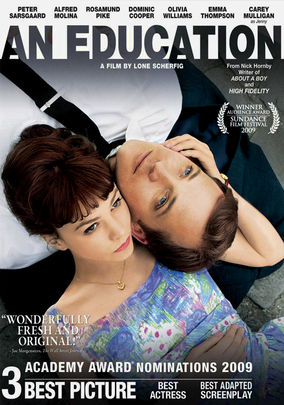
An Education-2009

An Education-2009

Director Lone Scherfig

Starring Carey Mulligan, Peter Sarsgaard

Scott’s Review #584

Reviewed January 4, 2017

Grade: B+

An Education, a British film released in 2009, is a small, little gem of a film. The story-telling and the acting are very good.

Since it is a British film, the accents can be a little distracting for some, but I enjoyed it very much.

It tells the story of an intelligent, college-driven teenager, named Jenny (Mulligan), who falls in love with an older, charismatic man (Sarsgaard). She is faced with conflict from her family and teachers, most notably her father, played by Alfred Molina.

The individuals in her life have differing opinions on which path Jenny should choose in her life. This leads to the main conflict in the film.

The setting is rainy, cold, London in 1961. Headed for Oxford and a successful career (not common for a female in those days), Jenny is willing to risk it all for love, but is she being taken advantage of?

The film is romantic, comical, and serious all rolled into one. The story is nothing original, to be frank, but specifically, the excellent acting makes it worth seeing.

An Education (2009) proves filmmakers can take a good story, told before, and make it compelling to an audience.

Carey Mulligan deservedly received an Oscar nomination for this film and made her debut as a high-caliber young actress to watch.

Oscar Nominations: Best Picture, Best Actress-Carey Mulligan, Best Adapted Screenplay

Independent Spirit Award Nominations: 1 win-Best Foreign Film (won)

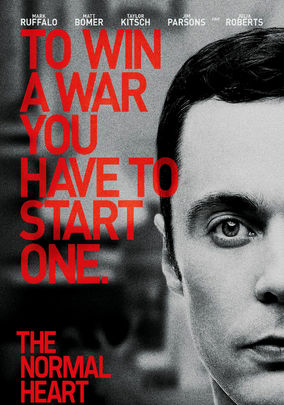
The Normal Heart-2014

The Normal Heart-2014

Director Ryan Murphy

Starring Mark Ruffalo, Matt Bomer

Scott’s Review #198

70302186

Reviewed December 1, 2014

Grade: B+

The Normal Heart is a 2014 HBO television movie based on the true story of Ned Weeks, an openly gay AIDS activist/writer, played by Mark Ruffalo.

The film is set during the period when the epidemic first surfaced, from 1981-1984, and the challenges and frustrations faced, mostly within the gay community, to bring exposure and assistance to the disease.

Weeks was famous for establishing a group of passionate members who banded together to attempt to hurdle these struggles.

The film was produced by Brad Pitt.

This is wonderful to know as films with this content (AIDS) are often tough to produce. It’s wonderful that Pitt’s wealth and influence were used effectively.

At a vastly different time in the country to be gay, the government did very little to assist with financing funding for treatment or researching a cure for it, which is the main point of the story.

The talented cast makes this film what it is.

Matt Bomer plays Ned’s closeted gay lover, Felix Turner, one of the many casualties of the deadly disease. Bomer lost forty pounds in preparation for the role.

Julia Roberts plays polio-stricken doctor, Emma Brookner, who was instrumental in helping the sick when few others within the medical community wanted to.

Other actors providing support are Alfred Molina, who plays Ned’s supportive, powerful, attorney and brother, and Joe Mantello, who has a terrific meltdown scene as his anger and anguish over the disease not being taken seriously by the government finally bubble to the surface.

Finally, Mark Ruffalo plays Ned competently, but why the slight feminization of the character? The real Ned Weeks was masculine. A needless stereotype the film (or Ruffalo) chose to pursue.

The film shows the discrimination faced by AIDS victims, from an airline pilot refusing to fly a plane carrying a sick patient, to an electrician refusing to enter a patient’s hospital room to fix a television set.

This is sad when one realizes how ridiculous these unfounded fears proved to be.

According to the film’s statistics, a major point of the film is how the United States Government, specifically President Reagan, did very little in the way of funding or even wanting to discuss the issue for years following the initial outbreak, resulting in thousands of lost lives.

And why exactly is Reagan considered a great President?

It makes one ponder. It was only due to beloved Hollywood star Rock Hudson acquiring and dying from the disease and Elizabeth Taylor using her star power to get people involved that finally led to the topic being discussed and action taken on a federal level.

My slight criticism of the film is that it looks and feels like a television movie similar in texture to Behind the Candelabra (2013), another HBO film.

The colors are bright and vivid and look television-like. could have used darker lighting and perhaps a gloomier more dower feel, especially given the subject matter involved in the story.

Otherwise, thumbs up and respect for bringing this story to millions of viewers and hopefully educating those who were not there.

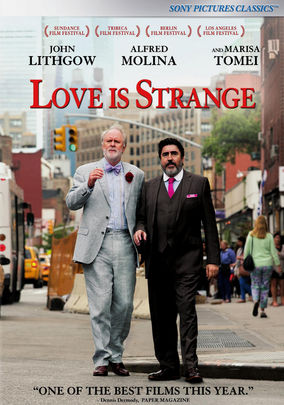
Love Is Strange-2014

Love Is Strange-2014

Director Ira Sachs

Starring John Lithgow, Alfred Molina

Scott’s Review #174

70299861

Reviewed September 24, 2014

Grade: B

Love Is Strange (2014) is sweet, though not nauseatingly sentimental, looking at many different types of relationships, at the forefront is the same-sex couple, Ben and George, played by John Lithgow and Alfred Molina respectively.

They are a successful New York City couple of a certain age, together for nearly thirty years, and finally legally wed in a low-key ceremony surrounded by friends and family.

George teaches music at a strict Catholic high school where the students and staff know and love him and his new husband. The bishop is not supportive of his marriage and he is unceremoniously fired.

This causes Ben and George to become homeless and rely on family and friends for a roof over their heads.

The film features several secondary character relationships.

Ben’s nephew and wife balance busy careers with a temperamental, rebellious, confused son; Ben’s niece from Poughkeepsie seems neurotic.

Neighbors who are gay police couples have loud parties seemingly every night. Marisa Tomei, who plays Ben’s niece by marriage, Kate, and Charlie Tahan as Joey, Ben’s great-nephew are probably the most prominently featured in the supporting cast.

While well-meaning and accommodating, Kate bottles her anger and comforts herself with nightly consumption of red wine. Joey lashes out at his great Uncle in frustration criticizing his artwork and scolding him for using his teen friend in a portrait, a friend whose sexuality is unclear.

Most other characters are not fleshed out well and are there to move the plot along. This is slightly disappointing. I would have preferred a bit more backstory regarding the rest of the cast.

Throughout the film, a few clues are dropped surrounding Joey and his friend’s sexuality, but not pursued further than on the surface.

I was curious about the cop’s back story. How long have they been together? Do they face conflict at work? Numerous scenes show both cops in uniform while running errands or visiting the hospital, which seems to be the film’s desire to emphasize that cops can be masculine and gay- a fact I love, yet the characters are only one-dimensional.

Why is Ben’s niece neurotic? This is also not pursued at all.

The film belongs to Lithgow and Molina. The two have such effortless, natural chemistry that the audience instantly believes they have been together for decades. The fact that Lithgow and Molina are lifelong friends in real life surely adds to the realism and naturalness.

Ben is the yin to George’s yang. The performances of Lithgow and Molina are so understated and calming that one might overlook how excellent they are since they are both low-key characters.

Love Is Strange (2014) is a film about strength, courage, loyalty, and perseverance through life’s challenges.

It is a sensitive and lovely film.

Independent Spirit Award Nominations: Best Feature, Best Male Lead-John Lithgow, Best Supporting Male-Alfred Molina, Best Screenplay