Category Archives: Dave Franco

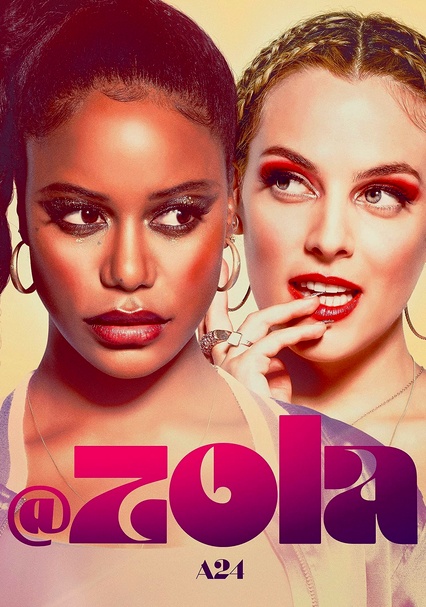
Zola-2021

Zola-2021

Director Janicza Bravo

Starring Taylour Paige, Riley Keough, Colman Domingo

Scott’s Review #1,290
Reviewed August 16, 2022

Grade: A-

I’ve said this before when speaking about cinema, but it bears repeating. I treasure the independent film genre and the creativity it allows. Usually, it’s a small group or sometimes even only one person with a vision and the ability to bring it to the big screen.

Budgets are almost always tight, but that’s a good thing. Remember how 1978’s Halloween was made on a shoestring budget and took over the world?

Zola (2021) is an outstanding example of the freedom allowed in independent filmmaking.

The film is not for everyone, and I think it knows this. Marketed as a black comedy, it’s a blend of drama, humor, and a dark story that can be difficult to watch at times.

Comic moments are contained within, but sometimes it’s unclear whether we are supposed to laugh or cringe.

I was enthralled by the film, not only for its compelling story but also for its instances of visual magnificence, such as the dazzling opening shot of lead character Zola (Taylour Paige) in multiple forms of bubbles and sparkles, surrounded by quick editing shots.

She boldly asks the audience, “Y’all wanna hear a story about why me and this bitch here fell out? It’s long but full of suspense.”

From the moment the first line is uttered, we know we are in for something sassy, salty, and dangerous.

Gorgeous and technically superior cinematography mixed with sex, drugs, and foul language would resurface throughout the film.

The story is loosely based on a viral Twitter thread from 2015 by Aziah “Zola” King and the resulting Rolling Stone article “Zola Tells All: The Real Story Behind the Greatest Stripper Saga Ever Tweeted” by David Kushner.

Eventually, portions of the tale would prove to be embellished.

Zola (Paige) is a Detroit waitress who strikes up a new friendship with a customer, Stefani (Riley Keough), who convinces her to join a road trip weekend of dancing and partying in Florida.

What at first seems like a fun trip quickly turns into a deadly journey involving a pimp, Stefani’s clueless boyfriend, some Tampa gangsters, and other unexpected adventures.

Director Janicza Bravo, a New York University graduate, is someone to watch out for. Zola is her first full-length feature and reminds me quite a bit of Tangerine (2015) and American Honey (2016), two superior independent films.

At other times, the film contains a sprinkling of the underappreciated 2019 film Hustlers starring Jennifer Lopez.

Bravo is not afraid to delve into the down-and-dirty lives of characters that most people would quickly dismiss or avoid altogether. Stories about strippers, prostitutes, and pimps can be a tough sell.

The sex work industry is not always pretty.

Zola contains the raunchiest scene I have ever seen. As Zola and Stefani sit on the toilet, going to the bathroom, the camera pans from overhead, revealing not only their naked bums but also the waste excreted into the toilet.

The setting of Florida, where much of the action takes place, hits home to me, as I recall several boozy vacations in various parts of the state. A somber gloominess enshrouds the characters as they traverse an otherwise bright and sunny landscape.

I love the detail and mixture of pretty and poisonous, but I was left knowing very little about the personal lives of the characters. I wanted to know how Zola and Stefani ended up where they did.

Considering the subject matter, Bravo thankfully doesn’t make the film violent or abusive. Instead, she peppers the dark comedy and over-the-top turns with her characters, especially the pimp (Domingo) and Stefani.

When Zola (2021) ends, I am left with an unsettling feeling of uncertainty and a lack of conclusion that I wish were different. Still, the creativity and the ability to create desperate characters willing to do anything to make some cash is fascinating.

Independent Spirit Award Nominations: 1 win-Best Film, Best Director-Janicza Bravo, Best Female Lead-Taylour Paige (won), Best Supporting Male-Colman Domingo, Best Screenplay, Best Cinematography, Best Editing
21 Jump Street-2012

21 Jump Street-2012

Director Phil Lord, Chris Miller

Starring Channing Tatum, Jonah Hill

Scott’s Review #992

Reviewed February 20, 2020

Grade: C+

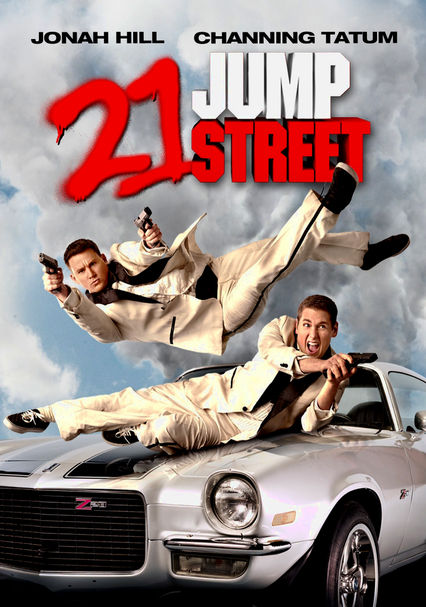
21 Jump Street (2012) is a nostalgic ode to the general style of the 1980s, more specifically a popular television series that ran from 1987 to 1991.

The teen police drama launched the successful career of actor Johnny Depp.

He starred as the good-looking leader of a team of young police officers who can pass for high school students, and infiltrate potential drug rings, prostitution circles, or other such shenanigans.

The film is hardly high art nor cinematic genius. The gags are silly and trite, other times not funny at all. But the film contains a freshness that feels cool, sleek, and fun and a throwback to the decade of materialism, and the film never apologizes for this.

The combination of stars Jonah Hill and Channing Tatum have nice chemistry, turning a standard buddy film into something bearable to watch.

The film is formulaic, but not dull.

The filmmakers strive for an action-comedy hybrid even though the series was only conventional drama and taught a lesson with each episode. They also change course and focus on two characters instead of a group making it more of a guy movie.

Honor roll student Morton Schmidt (Jonah Hill) and popular underachieving jock Greg Jenko (Channing Tatum) reunite seven years after graduating high school at the police academy where they are studying to be cops.

Eager to leave their juvenile problems, and their dislike for each other behind, they use their youthful appearances to go undercover at a local high school as part of a Jump Street unit.

As they trade in their guns and badges for books and bagged lunches, Schmidt and Jenko risk their lives to investigate a violent and dangerous drug ring.

They slowly realize that high school is nothing like they left it just a few years earlier, and they revisit the terror and anxiety of being a teenager again and all the issues they assumed they had left behind.

The film is mediocre and while there is nothing wrong with the film, nothing is outstanding about it either. As the setup poises the audience, Morton and Greg are opposites in every way and must come together to achieve a common goal.

This is a standard cliche told countless times in films such as Stir Crazy (1983) and 48 Hours (1982), the reference being one of the 1980s.

Speaking of the decade of excess, 21 Jump Street achieves what it sets out to in this regard with a clever nod to a revived scheme from that decade.

Set in present times, the film is nonetheless a nod to teen films of the day.

Wild comedy and lavish adventures are in order in every high school situation imaginable. Dating, AP chemistry class, and the senior prom are heavily promoted so that any viewer above the age of twenty-five can reminisce.

A fun and necessary quality is the inclusion of a few of the original cast of the television series-Holly Robinson Peete, Peter DeLuise, and Johnny Depp all appear in cameo roles. This is a treat for fans of the original series and a tribute to its creation, though nothing else is utilized very well and no other history ever quite measures up.

Robinson Peete’s role is nice because she appears as a police officer.

While doing little to honor the television series it is based on, instead of churning out more of a male cop film, the incorporation of the original cast does deserve praise.

The lead actors are charismatic and clever in their roles which saves the film from being a disaster.

21 Jump Street (2012) kvetches too far into slapstick instead of sending an important message to its audience, which it could have.

The box-office hit was followed in 2014 by an unnecessary remake, aptly entitled 22 Jump Street.

If Beale Street Could Talk-2018

If Beale Street Could Talk- 2018

Director Barry Jenkins 

Starring Kiki Layne, Stephan James

Scott’s Review #854

Reviewed January 8, 2019

Grade: A

2018 proved to be a year where filmmakers of color prided themselves in telling stories of diversity, inclusion, social injustice, and the never-ending challenges of minorities.

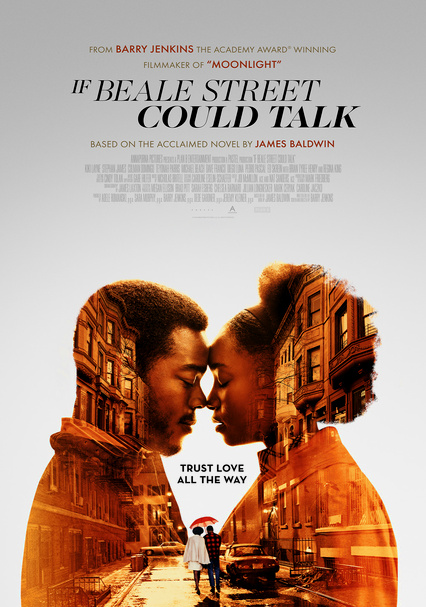
One of the year’s best films is If Beale Street Could Talk (2018), a lovely piece of storytelling by director Barry Jenkins. His other major work, Moonlight (2016), is a similarly poignant and melancholy experience.

The film is based on a novel by James Baldwin.

The title is explained in the first dialogue of the film. Beale Street exists in New Orleans, but thousands of streets exist in other cities. It is a metaphor for discrimination and unnecessary struggles that black folks continue to endure.

Right away, the audience knows that an important story is to be told.

The wonderful part of If Beale Street Could Talk is the combined elements that lead to brilliance.

Tish Rivers (Kiki Layne) and Fonny Hunt (Stephan James) have known each other since childhood. Growing up in a Harlem neighborhood, their families are interconnected and community-centered.

Events begin in 1973 when Tish realizes she is pregnant. Ordinarily, a happy occasion, this situation presents a major challenge because Fonny is imprisoned for a crime he did not commit.

A woman has accused him of rape and a corrupt policeman has positively identified Fonny as the rapist despite this being a logistical impossibility. Tish is determined to prove his innocence before the baby arrives with the assistance of her family.

The story is non-linear. Jenkins begins the film in the present day with Tish breaking the news of her pregnancy to him and then notifying her family.

As the film progresses, more of Fonny and Tish’s love story is explored. The couple falls in love, has romantic dinners, and nervously makes love for the first time. In this way, the film becomes a tender story of young love.

The social injustice and family drama are carefully mixed amid the central romance.

The film impresses with warm touches, ingenious cinematography, and a musical score that left me resounding with pleasure at the intricate and intimate details. The frequent use of jazz music over dinner or as the Rivers family sips celebratory wine adds sophistication to many scenes.

The film’s texture is muted and warm, giving it a subdued look that is genuine to the quiet and timeless nature of the production.

A plume of cigarette smoke can be seen in nearly every scene, as most of the characters smoke. Since the period is the 1970s, the authenticity is there, and a glamorous image is portrayed.

Smoking enhances the sophistication of the characters and adds to the tremendous cinematography.

Several scenes of simple dialogue crackle with authenticity and passion. In one of the best scenes, Fonny’s friend Daniel, a recent parolee, stays for dinner, and the friends talk while consuming beer and cigarettes.

The lengthy scene is poignant and tremendous with meaning. Daniel recounts his experience in prison and how black men are victims of the whims of white men and the terror involved in that. The scene is powerful in its thoughtfulness and a foreshadowing of Fonny’s impending trauma.

The supporting characters are stellar and add to the bravura acting troupe.

Regina King as Sharon Rivers gives an excellent performance when she bravely travels to Puerto Rico and confronts Fonny’s accuser, hoping to get her to modify her story. The scene is laden with emotion and honest dialogue.

The other notable actors are Colman Domingo and Teyonah Parris, who play Tish’s father and sister, respectively. Both do wonders in fleshing out the Rivers family as strong and kind people.

Jenkins is careful to add benevolent white characters to offset the other dastardly white characters. An example is the kindly old woman who comes to the rescue of Fonny and Tish and berates the cop.

The Jewish landlord who agrees to rent a flat to the pair is portrayed as decent and helpful, and finally, the young lawyer who takes Fonny’s case is earnest and understanding.

If Beale Street Could Talk (2018) continues talented director Barry Jenkins’s plunge into the depths of being one of the modern greats. With a beautifully visual and narrative film, he creates an experience sure to win more fans.

The ending is moving yet unsatisfying, as there are so many more miles to go in the race for prison justice. Adapting an important story of race and repression based on skin color is a powerful and detailed affair.

I cannot wait to see what Jenkins comes up with next.

Oscar Nominations: 1 win- Best Supporting Actress- Regina King (won), Best Adapted Screenplay, Best Original Score

Independent Spirit Award Nominations: 3 wins- Best Feature (won), Best Director- Barry Jenkins (won), Best Supporting Female- Regina King (won)

The Disaster Artist-2017

The Disaster Artist-2017

Director James Franco

Starring James Franco, Dave Franco

Scott’s Review #781

Reviewed July 2, 2018

Grade: B

The Disaster Artist (2017) is a biography-comedy that I found to be middle of the road to primarily good if I’m judging in overall terms- most I liked with a bit of criticism.

Due to the many accolades, I confess to having anticipated a bit more from the finished product and hardly finding it a masterpiece.

Still, I was both impressed and unimpressed by James Franco’s performance in the lead role. I was awed at the actor’s emergence as a director, and the Los Angeles setting is great.

At times the film teeters almost into bad slapstick or shtick, and a bit silly, and as much as I respect his performance, this criticism is directed at Franco. Nobody can deny his acting talent if he chooses the right films.

His attempt to make his character peculiar is noticeable within seconds, so it seems Franco also makes him a bit of a goof, and I was not able to take the character seriously all of the time.

And the weird accent threw me.

This film is based on the nonfiction book The Disaster Artist. The book chronicles the making of 2003’s The Room, not to be confused with the 2015 film Room. The Room was considered amateurish and one of the worst movies ever made.

Told repeatedly that his acting stinks, oddball Tommie Wiseau (James Franco), a European-American aspiring actor, decided to screw Hollywood and produce, direct, and star in his film.

Wiseau has an endless amount of bank funds, which he uses towards the film. Roommate and friend Greg Sestero (Dave Franco) stars in the movie and thus gets his big break. The duo and various others pitch in to create the project, which suffers from ineptness on the part of Wiseau.

The Los Angeles setting resonates with me, as does the recurring theme of struggle in the Hollywood scene. These are significant pluses of the film as a whole.

Los Angeles can appear to be a sunny and glamorous town, but beneath its shiny exterior, it always has a gloomy, dark underbelly.

The film realistically depicts struggle and success, from the central characters to the supporting players, making it resemble an ensemble.

Thousands struggle daily for a break, and no respect or appreciation is given. The Disaster Artist scores a win by focusing on this.

When Tommie brazenly approaches an influential producer in a restaurant, he is unceremoniously dismissed for having no talent and told he will never get anywhere. In addition to Tommie, several actors associated with the film struggle.

In a fantastic scene, an older actress states that being on a bad movie set beats any other job by miles. The message here is that people in Hollywood are there because they genuinely love it.

The sweet, empowering theme of friendship and empowerment is also to be celebrated, especially given the cutthroat backdrop. Tommie and Greg are best friends and have each other’s backs through thick and thin.

Neither gives up on the other, even during the initial audience reaction to The Room premiere.

Could the film have been slightly darker? Yes, indeed, as very few scenes of drug destruction or the porn that many hopeful talents turn to are mentioned. But the film is not about that. It’s an enchanting tale of hope and fun.

It is interesting to note, and not evident to me while watching the film, that brothers James and Dave Franco play opposite one another. While there is somewhat of a physical resemblance, the chemistry works between the two actors as best friends.

James delivers a worthy portrayal of an unusual character with a strange dialect, long, stringy brown hair, and seemingly cross-eyed. The role is comedic and ideally suited for an unusual actor like Franco- he must have had a ball with the part.

Movies about movie-making always fascinate me. What goes on behind the scenes?

The Disaster Artist (2017) provides enough good film meat to make it an overall good experience. It stays true to some fine Hollywood history—the famous James Dean is referenced, and the spot where he died is even visited—nice touch! Franco is both good and disappointing in the main role.

All in all, this one is worth watching for those who enjoy filmmaking, Hollywood, or L.A.-set films.

Oscar Nominations: Best Adapted Screenplay

Independent Spirit Award Nominations: Best Male Lead-James Franco

Milk-2008

Milk-2008

Director Gus Van Sant

Starring Sean Penn, Josh Brolin

Scott’s Review #744

Reviewed April 18, 2018

Grade: A

Milk is a 2008 film that successfully teaches its viewers both a valuable history lesson about the introduction of gay rights into the United States culture, as well as to the prolific leader associated with this, Harvey Milk.

The film belongs to Sean Penn, who portrays Milk, but is also a fantastic biopic and learned experience appreciating his wonderful journey through the 1970s- mainly in San Francisco and New York City.

Moreover, Milk portrays a gay character not played for laughs as many films do but portrayed as a hero.

Harvey Milk was the first openly gay person ever to be elected to any political office, winning a seat on the San Francisco Board of Supervisors in 1977.

The film, however, opens in 1978, after a stunning announcement of Harvey Milk’s assassination along with the Mayor of the city, which was met with much heartbreak.

The film then returns to 1970 as we meet Penn as Milk and follow his decade-long battles and prosperity of changing the gay culture.

Having seen actual footage of Harvey Milk, Penn perfects the mannerisms and the speech patterns of Milk giving him an immediate passionate and likable persona. The political figure had such a whimsical and innocent style all his own that Penn perfectly captures.

His determination for honesty and fairness is admirable and inspiring and Milk seems like he was an innately good person.

Particularly heartbreaking is Penn’s facial reactions during his assassination scene-a scene that director Gus Van Sant brilliantly shoots as a follow-up to a joyous scene when Proposition 6 is defeated.

As a troubled colleague, Dan White (Brolin), (rumored to be himself closeted and struggling with self-identity), fires several shots into Harvey at City Hall, the scene is filmed in slow motion for additional dramatic effect and poignancy.

The look of pain and sadness on Milk’s face will undoubtedly bring tears to even the most hard-hearted viewer.

The film shows the many close relationships that Milk formed throughout the 1970s, including his steady lover Scott Smith, played by James Franco. The two actors share solid chemistry as they are both fun-loving and driven in what they hope to achieve.

Sadly, Milk’s drive eventually outweighs Smith’s as they ultimately drift apart, but retain a special bond. Emile Hirsch is nearly unrecognizable as Cleve Jones, a young man who Harvey inspires and mentors throughout the pivotal decade.

A minute criticism noticed while watching Milk is that, except for Penn, many of the supporting characters (Hirsch, Franco, and especially Alison Pill) seem to be “dressed up” in 1970s costumes, giving a forced rather than authentic feel.

The costume designers seem intent on making them look so realistic that it backfires and looks more like actors made up to look like they are from the 1970s.

Penn, however, looks and acts spot-on and stands out from the rest of the cast by miles.

An inspiring biography of a legendary political figure, Harvey Milk, led by a fine lead actor (Penn), deserving of the Best Actor Oscar he was awarded, Milk is an astounding story of both triumph and tragedy.

The film successfully portrays a time when a class of people was not treated fairly and equal rights were barely a possibility and the uprising that occurred in large part due to one man and his followers.

Milk (2008) is a wonderful testament to a time gone by and the accomplishments achieved since then- a truly inspiring and tragic message.

Oscar Nominations: 2 wins-Best Picture, Best Director-Gus Van Sant, Best Actor-Sean Penn (won), Best Supporting Actor-Josh Brolin, Best Original Screenplay (won), Best Original Score, Best Costume Design, Best Film Editing

Independent Spirit Award Nominations: 2 wins-Best Male Lead-Sean Penn, Best Supporting Male-James Franco (won), Best First Screenplay (won), Best Cinematography

The Lego Movie-2014

The Lego Movie-2014

Director Phil Lord, Chris Miller

Starring Chris Pratt, Elizabeth Banks

Scott’s Review #284

70289949

Reviewed October 24, 2015

Grade: D

A child’s movie in every sense of the word, The Lego Movie (2014) is silly and amateurish. It contains a hackneyed plot and a fast pace that makes the viewing experience quite unpleasant.

Computer-animated and primarily created by imagery, a scene involving two human beings interspersed among all the animations only makes the plot more sappy, overwrought, and predictable.

The film is a complete dud and a waste of energy save for one lone catchy song appearing throughout the film. I am perplexed why this film received mostly positive reviews as I did not share the same sentiment.

The premise is too complex for the target audience, in a Lego universe, where all of the characters are Lego pieces, a mysterious wizard- Vitruvius, attempts to protect a superweapon (Kragle) from the evil Lord Business.

While he fails, he prophesies that a person named “The Special” will one day find the Piece of Resistance capable of stopping the Kragle.

Kragle turns out to be superglue in the human world, as a cameo with Will Ferrell reveals he is the human version of Lord Business and refuses to let his young son play with Dad’s Lego set, thereby threatening to keep the set stationery with glue.

Inevitably, this leads to a tender scene with Dad and his son.

I did not find The Lego Movie engaging story-wise or visually and I was bored during most of the experience.

Admittedly, modern animated films are not my favorite genre- I miss the days of the classic Disney drawing-style films like Bambi or Dumbo both in the 1940s.

The major flaw is the frenetic pacing of the film. Did the powers that be think that all youngsters and parents dragged along suffer from attention deficit disorder? There was no time to pause and ponder what was going on in the story since immediately it was on to the next scene.

The action is non-stop so the film seemed like one long action sequence.

The main character of Emmett, a young Lego piece characterized by everyone as dull is voiced by Chris Pratt. Emmet stumbles upon a young woman named Wyldestyle looking for something at his construction site- she assumes he is The Special and they race to save the world from Lord Business.

Emmet, as far as a lead character goes, is likable enough, and predictably, a romance develops between him and Wyldestyle. We meet various creative characters like Batman and Princess Unikitty.

The film contains a sickeningly catchy song called “Everything Is Awesome” that will stick in the viewer’s head whether desired or not and that is the strongest part. It is not that the song is lyrically great or anything, but it is fun and hum along.

Overly high octane and an uninteresting plot make The Lego Movie (2014) perhaps appealing to young kids in the seven to ten range, but it is a forgettable and tedious experience for this grown-up.

The ending of the film leaves room for the inevitable sequel.

Oscar Nominations: Best Original Song-“Everything Is Awesome”