Category Archives: Paul Walter Hauser

The Naked Gun-2025

The Naked Gun-2025

Director Akiva Schaffer

Starring Liam Neeson, Pamela Anderson

Scott’s Review #1,501

Reviewed November 20, 2025

Grade: B-

With different levels of cinema for audiences to choose from, The Naked Gun (2025), a reboot of a long-dormant franchise, is meant for a particular spoof comedy fan who expects goofiness over a heavy subject matter.

It’s not The Godfather (1972), 2001: A Space Odyssey (1968), or Vertigo (1958), and pondering a more profound meaning or luxuriating in great visual art will not happen.

Instead, for some tepid chuckles and escapist fare from a rough day at work or a family matter one is hoping to run away from, director Akiva Schaffer crafts a smirky one-liner riddled experience in lunacy.

The fourth in The Naked Gun franchise, and the first in over 30 years, the plot follows the son (Liam Neeson) of Lt. Frank Drebin, also named Frank Drebin, as he steps into his father’s footsteps to prevent the closure of Police Squad.

Fans know that Leslie Nielsen played bumbling Frank senior in the first three installments, while George Kennedy played his sidekick, Captain Ed Hocken. Priscilla Presley played love interest Jane Spencer.

Essentially, Nielsen is replaced by Neeson, Kennedy by Paul Walter Heiser, and Jane by Pamela Anderson.

Preseley does quickly appear in a cameo (if you could even call it that), sitting on a sofa watching television.

While it is familiar territory to someone like me, who has seen only one other in the series and barely remembers it, the pattern is very one-note and more of a retro greatest hits compilation than anything new and noteworthy. 

If we’re talking the 1980s, think Police Academy for a similar reference, and there is little reason I see to dust the franchise off the shelf.

We meet the new Lieutenant Frank Drebin Jr. of the LAPD Police Squad, who single-handedly dispatches a gang of bank robbers while disguised as a schoolgirl.

The fact that he morphs from a 3-foot-tall girl into a 6-foot-tall grown man is expected to be plausible.

Unbeknownst to Drebin, the bank heist is a distraction to steal a gadget called the “P.L.O.T. (“Primordial Law Of Toughness”) Device” from a safe deposit box by the film’s villain Richard Cane (Danny Huston), who is intent on reverting the human race to primal animals who kill each other.

This is to make sure that the world’s billionaires are safe to rule the planet.

The audience is not expected to wonder who will be left to serve the billionaires, or otherwise do the world’s grunt work.

The fewer plot points asked, the better.

Predictably, hard-edged Police Chief Davis (CCH Pounder) reassigns Frank when his over-the-top law enforcement becomes a legal liability.

From there, we watch Drebin eat bad food, have diarrhea, and suffer further embarrassments while working alongside Beth Davenport (Anderson), a crime novelist, to figure out why her brother died in a car accident deemed a suicide.

It’s hard to believe Neeson is the same actor who received an Oscar nomination for playing Oskar Schindler in the 1993 masterpiece Schindler’s List.

Still, shifting to an action star in 2008 proves that some actors accept projects to stay relevant.

While the plot is inane and easy to dissect with over-the-top plot points, overacting, and silly potty jokes, it can almost be overlooked for simple moments that bring a sliver of joy.

The chemistry between Neeson and Anderson is not bad, mainly because the actors know how to create it. As they banter and deliver monotone dialogue, the woodenness actually becomes an asset.

The scenes that made me smile were solely between the duo as they embraced the lines served to them to the best of their ability. Creating enough comic wit to remain entertaining, I clamored for more between the two and less of the ridiculousness of everything else.

Neeson and Anderson are the saving grace in an otherwise shit show.

The Naked Gun (2025) knows what kind of film it is, which helps level-set expectations. There is something refreshingly silly about anticipating a bad movie and having fun with it nonetheless.
Cruella-2021

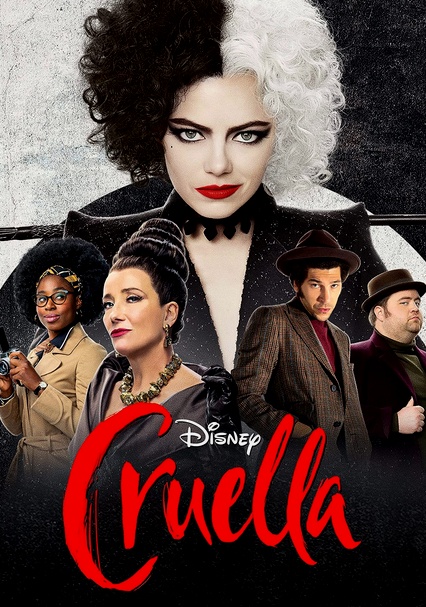
Cruella-2021

Director Craig Gillespie

Starring Emma Stone, Emma Thompson

Scott’s Review #1,197

Reviewed November 19, 2021

Grade: A-

One of the first red carpet premieres to emerge amid the deadly Covid-19 pandemic, Cruella (2021) is a wickedly funny delight and celebrates the return of cinema to the theaters.

What a fabulous choice.

The makeup, hairstyling, costumes, musical score, and the title character herself make this film loud, proud, and lots of fun.

It’s not too dark for the entire family to enjoy, but far from fluff, either. Suspension of disbelief is mandatory since it’s pure fantasy and not to be dissected for its numerous plot holes and ridiculous antics.

Dogs, people, and costumes fly around in frantic motion to fulfill their every motivation.

The film is way better than anticipated, which is always a treat. It’s not that I wasn’t expecting quality, but I didn’t expect to be entertained and enthralled quite as much as I was.

The experience carried me away.

The live-action force sheds light on the backstory of Cruella de Vil, made famous, of course, as the dastardly villain in the animated Disney feature 101 Dalmatians from 1961.

Her life and intentions are explored in a story similar to Oliver Twist, with a 1970s style. Orphaned young, she must survive the mean streets of London during the punk rock era. She becomes an expert pickpocket and ingenious thief while doubling as the humble fashion upstart Estella.

Estella befriends a pair of young thieves who adore her appetite for mischief, and together they construct a cozy life for themselves and their furry friends. While working as a cleaning lady, Estella is discovered by the ruthless and unkind Baroness von Hellman (Emma Thompson), a fashion legend.

Their complex relationship sets in motion revelations that harken back to Estella’s deceased mother, causing her to embrace her wicked side and become the fashionable, revenge-bent Cruella.

Emma Stone basks in the spotlight as Cruella with ravaging fury and a twinkle in her eye. An incredible actress who has played roles in Birdman (2014), La La Land (2016), and The Favourite (2018), Stone goes full-throttle in her dual role, making them as opposite as possible.

She’s terrific and carries the bombastic film with seeming ease.

Thompson is just as good as the Baroness, a woman with a heart of stone and most similar to Miranda in The Devil Wears Prada (2006). With a snap of her fingers or a glance, she expects to be served and pleased, happy to take credit for other people’s work. It’s a toss-up which character I hate more.

Stone and Thompson are delicious together and chew up the scenery, especially when they spar and attack each other. These scenes are wickedly delightful, and a key to their past may link them forever.

The Baroness is difficult to like, as she attempts to kill Estella/Cruella twice.

The actresses make magic together.

Besides the clear parallels to Oliver Twist, Cruella also mirrors Spider-Man with the alter-ego premise. I saw her as a superhero. Traditionally, Cruella is portrayed as evil and fiendish, but here she is the rooting favorite. This may turn some off, but I loved this facet and the complexity of the character.

To go deeper, the Baroness is more like the animated Disney character Cruella than Cruella is!

I joyously anticipated which 1970s rock song would come next, as nearly every sequence incorporated this genre of music. Bands like Blondie, Queen, and Black Sabbath appear, along with fascinating, modern takes on some of the best hits of the period. This adds a wealth of depth and relevance.

What about the costumes? Oh, how gorgeous they are! Numerous dresses, gowns, and other accessories are featured. The sheer number of outfits and designs in the film is astounding.

My favorite appears as Cruella unfolds a flowing dress from a limousine that stretches for miles and miles, much like a domino effect. It’s flashy and beautiful.

Rumors abound that Stone has signed on for a sequel to Cruella (2021). As long as a more thought-out story continues to be developed, the character can remain as complex as she is entertaining. The style, locale, and time make the film a fantastical retelling of a fantasy.

Oscar Nominations: 1 win-Best Costume Design (won), Best Makeup and Hairstyling

Richard Jewell-2019

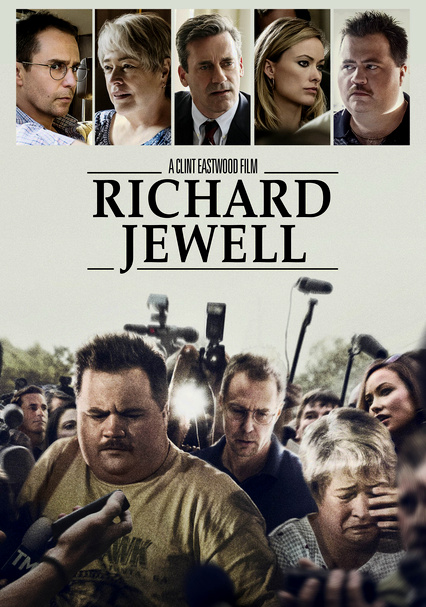
Richard Jewell-2019

Director Clint Eastwood

Starring Paul Walter Hauser, Sam Rockwell, Kathy Bates

Scott’s Review #1,035

Reviewed June 19, 2020

Grade: B

With most Clint Eastwood films, especially in the latter part of his career, one should expect a mainstream story with a conservative edge. The man has lost his touch with age, unlike greats like Martin Scorsese.

This may not always make for the most cutting-edge cinematic experience, but the results can still be compelling.

Richard Jewell (2019) was not on my radar, but for the last minute, a surprising Oscar nomination for Kathy Bates.

I am still smarting that she presumably took the last spot over the snubbed Jennifer Lopez (Hustlers-2019).

But I digress.

As anticipated, the project has a predictable edge and a safe feel, Eastwood sending a nasty note to the media and the FBI shaming them for their corruption and ineptness.

The biography, centering around the Centennial Olympic Park bombing and its aftermath during the 1996 Summer Olympic Games in Atlanta, Georgia, tells the story in a nicely paced way but feels light, pulling too much of a right-wing slant.

Lead actor Paul Walter Hauser is the standout of the film, bringing empathy and heroism to his portrayal of the one and only Richard Jewell.

Our title character is an overweight, average-looking man who lives with his mother in a modest apartment in Georgia. He works as a supply clerk in a small law firm where he meets arrogant attorney Watson Bryant (Rockwell).

They bond over video games and become fast friends.

The time is 1986.

Jewell, aspiring to become a police officer, lands a job as a security guard at Piedmont College, where he is subsequently fired for overstepping his grounds. Finally, he begins a job running security for a concert series near the Olympic Games.

He has a keen eye for law enforcement and is passionate about doing his job well.

Hauser, who had supporting roles in I, Tonya (2017) and in BlacKkKlansman (2018), has reached his breakout role.  Hauser makes the character likable and loyal. Law and order are his passions, and he eats, sleeps, and breathes life.

The actor makes it clear to the audience that Richard is not dumb. He is brilliant but has not been handed an easy life. The relationship with his mother is touching, and he genuinely wants to protect those whom he serves.

As far as the supporting roles go, Rockwell is fantastic as Watson, who ultimately defends Richard against the FBI. With wit, sarcasm, and outrage, his passion comes across on screen as a gruff but loyal friend.

Other big-name stars are not as lucky with their roles.

Jon Hamm plays FBI Agent Tom Shaw, a made-up character who wants to railroad Richard at all costs. He tricks Richard into confessing, which he then records. Olivia Wilde is Kathy Scruggs, an unpleasant journalist who will trade sex for stories.

The character is unlikable, and rumors abound that the writing is sharply embellished. Both Hamm and Wilde suffer from one-note characters.

Let’s discuss Kathy Bates’s performance.

Bates is a legendary actress and well-regarded. In the film, her best role is that of the maniacal Annie Wilkes in Misery (1990). Over the past few years, she has brightened the small screen with daring and unique roles on American Horror Story. Her role as the sympathetic and kindly Bobi Jewell is not one of her best.

There is nothing wrong with her performance, but the character never has a big, memorable scene.

Unclear is the historical accuracy of the story, and my hunch is that liberties could offer good drama. Inexplicable is the omission of anything related to the real bomber, who is never mentioned.

What were his motivations? Whatever happened to him? Viewers can conduct their research, but a notable omission is not including this.

The story only centers around Richard’s accusers and attempted railroading simply because he fits the profile of a bomber. The film could have gone further.

Also, viewers are left with no knowledge that Richard traditionally put a rose on one of the bombing victims’ graves or other niceties that could have been included.

Why did Eastwood need to hammer home the point that Richard was fretting about the perception that he may have been gay? True or false the point feels like a homophobic tidbit thrown in to appeal to a likely redneck audience.

Richard Jewell (2019) will not appear on Eastwood’s “greatest hits” of top films or even top 10 lists. Mystic River (2003) and Million Dollar Baby (2004) would get my votes for “best of” the year.

The film is only a slightly above-average biography of a falsely accused man who eventually gains justice. The spin is a politically conservative one, portraying the main characters as heroes who meet unfortunate circumstances.

Oscar Nominations: Best Supporting Actress- Kathy Bates

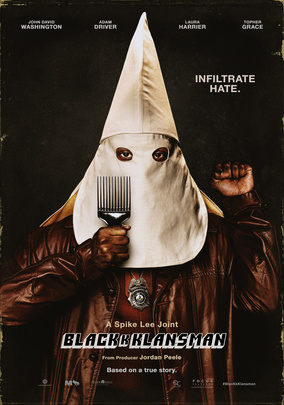
BlacKkKlansman-2018

BlacKkKlansman-2018

Director Spike Lee

Starring John David Washington, Adam Driver

Scott’s Review #802

Reviewed August 14, 2018

Grade: A

Spike Lee’s latest offering, BlacKkKlansman (2018), is a brilliant effort and oh so timely given the tumultuous political climate in the United States in 2018.

Despite the film being set in the early 1970s, the racial issues and tensions that Lee examines are sadly still an enormous problem today. Lee infuses some humor and even romance into the drama, so the film is not too preachy or heavy.

A grand and relevant effort that all should watch.

As the film commences, we are treated to a clip from the 1939 classic Gone With the Wind, and BlacKkKlansman concludes with prominent clips of racial tensions circa 2017.

The timeline is crucial and influential, as the film clearly demonstrates that racism is still alive and well.

Lee, a known liberal, clearly puts a left spin on his work. BlacKkKlansman will likely not be seen by conservative filmgoers, which is sad, as valuable lessons can be learned by viewing this piece.

The story is based on a true story memoir written by Ron Stallworth, the first black police officer to be hired by the Colorado Springs police department. He successfully infiltrates the local chapter of the Ku Klux Klan with startling results.

The film begins with a speech by a doctor (Alec Baldwin) offering a “scientific explanation” of white superiority in 1957. Fast-forward to the early 1970s, where the rest of the film occurs.

Ron is initially hired by the police force as part of a progressive initiative for diversity, but he quickly moves into a detective role. He manages to pose as a KKK member via telephone while another detective, Flip Zimmerman (Adam Driver), goes to meetings in person.

Lee’s focus is clearly on the overall content and message of the film, and therefore, little character development is achieved. I admittedly did yearn to know the “hows ” and ” whys” of many of the characters, but the film is not really about the characters individually, and I am okay with this.

Why did Ron desire so much to become a police officer? What was his childhood like? How did Patrice become President of the black student union? What was her childhood like? What upbringings did some of the KKK members have?

Indeed, not enough time would have been allowed to answer these questions—minor gripe.

Lead actor John David Washington, son of Denzel Washington, was unknown to me before watching this film. He is tremendous in his role, as is Driver in his supporting role of Zimmerman, but again, these are not character-driven roles.

Washington has tremendous chemistry with his love interest, played by Laura Harrier. Ron and Patrice discuss politics and dance the night away, but she is an activist and a cop, making their chances of a happily ever after tough to imagine. Their romance is atypical of most films as it is based on intelligence and not silly, melodramatic aspects.

On the acting front, Topher Grace as the racist David Duke is tremendous. With a kindly demeanor mixed with a bubbling under the hatred of blacks and Jewish people, Lee makes sure he is the foil.

A delicious scene towards the end of the film, when Duke gets his comeuppance of sorts, is well done and received a thunderous roar from the theater audience.

Lee is careful to ensure the bad guys get their just due and are all portrayed as complete fools. With a false sense of nationalism, many hate minorities simply because they feel they are taking over their beloved country.

Not to harp on this, but BlacKkKlansman will attract those who already agree with Lee’s beliefs and politics. If only those who disagree would give the film a chance. Unlikely.

The final five minutes of BlacKkKlansman arguably are the most pivotal experience of the entire film, but they have nothing to do with the actual story portrayed in the rest of the production.

Lee concludes the 1970s portion of the film satisfyingly, then fast forwards to the horrific events that took place in Charlottesville, Virginia, in 2017 when protesters clashed with a racist group, resulting in an innocent woman’s death.

The controversial remarks of President Trump, refusing to cast blame on the racist group, are shown. Sitting in a crowded movie theater, these clips had the most significant reaction from the audience, with some flipping Trump the finger, while others sobbed in anguish and disbelief that we have achieved so little as a nation.

Rarely has a more pertinent or meaningful film been made for the current political climate in the United States. BlacKkKlansman (2018) brilliantly ties racism spanning one hundred and fifty years together and shows how it still exists.

Amid this message, however, lies a great drama containing humor and importance.

Oscar Nominations: 1 win-Best Picture, Best Director-Spike Lee, Best Supporting Actor-Adam Driver, Best Adapted Screenplay (won), Best Original Score, Best Film Editing

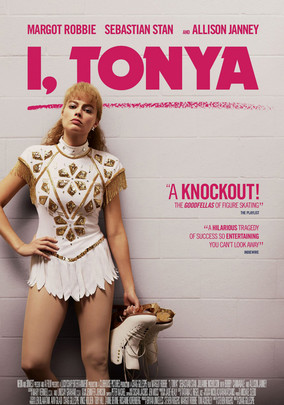
I, Tonya-2017

I, Tonya-2017

Director Craig Gillespie

Starring Margot Robbie, Allison Janney

Scott’s Review #712

Reviewed January 10, 2018

Grade: A-

I, Tonya is a 2017 biopic telling of the life and times of the infamous American Olympic figure skater, Tonya Harding, notorious, of course, for her alleged involvement, along with her husband and his friend, in the attack of fellow skater, Nancy Kerrigan during the 1994 Winter Olympics.

The event drew monumental media coverage after the attack, with the uncertainty of Harding’s knowledge or involvement, and her subsequent guilt or innocence continues to be debated.

The film itself is a dark and violent comedy, never taking itself too seriously. It immediately presents the disclaimer that the stated “facts” in the film are open to interpretation and depend on who you ask.

I, Tonya isn’t preachy or directive to the viewer but instead offers up the skater’s life and times in story form.

The film features tremendous performances by Margot Robbie and Allison Janney, as well as Tonya and her despicable mother, LaVona.

I, Tonya, is told chronologically, culminating with “the incident” in 1994.

However, the story begins in the mid-1970s, as Tonya, just a tot at the tender age of four, is as cute as a button and shrouded in innocence. One cannot help wonder if director Craig Gillespie, known for independent films, purposely made this wise casting choice.

We see Tonya, once an innocent child, journey into a life of violence, abuse, and tumultuous living. Harding grew up cold and hard and endured an abusive, complex relationship with her mother, the pressures to be the best skater never ended.

Even upon achieving success, Tonya never felt good enough or loved by her mother.

We then experience Tonya as a fifteen-year-old girl, fittingly first meeting her boyfriend and later, husband Jeff, Gillooly played well by actor Sebastian Stan. The early scenes between the two are sweet, tender, and fraught with the emotions of first love.

As explained by the actors, this was a short-lived time of bliss, and the relationship soon disintegrated into abuse, rage, and chaos.

The main point is to debate Harding’s guilt or innocence, which Gillespie peppers throughout, so it is unclear what to believe or how the audience should think.

“Interpretation” is the key here. Some may see Harding as a victim of life’s circumstances and the hardships she had to endure and may place sympathy upon her. Others may view Harding as off-putting, potty-mouthed, and even icy and violent herself, with a big chip on her shoulder.

In one scene, she publicly belittles the hoity-toity judges who never give her a break and give her less-than-perfect scores.

A clever technique that the film delivers is to have the actors frequently speak to the camera, thus the audience. This is achieved by either interview style or for the action in the film to cease and either Robbie, Janney, Stan, or whomever, turn to the camera and express their version of the events.

I, Tonya possesses a creative, edgy, indie feel.

How brilliant are the performances of both Robbie and Janney?

Robbie, a gorgeous woman, portrays a “red-neck” to the hilt. Through her bright blue eyes, her face is quite expressive—relaying pain, anger, and a seldom triumph. The film often slants the scales in a sympathetic way towards Harding, but it is Robbie’s talents that make us feel this sympathy.

Janney hits the jackpot with a delicious role she sinks her teeth into. A cold-hearted, vicious character, through facial expressions, we occasionally glimpse LaVona, perhaps softening, but as we do, the character does something even more despicable.

A good surprise for fans who remember the real-life events and the real-life players will be treated to a sequence of the honest Tonya, LaVona, Jeff, and Shawn Eckhardt, which play over the film ending credits.

How similar in looks are Robbie to Harding, with her feathered, frizzy, 1980s-style hairdo, and Janney, a dead-ringer for the boozy, chain-smoking LaVona, with her mousy brown bob haircut, complete with scruffy bangs?

Viewers will leave theaters confused, unsure, or perhaps perplexed by what they have just seen, but they will most certainly feel thoroughly entertained and may even depart chanting some upbeat 1980s rock tunes that the film uses throughout.

Thanks to fantastic acting and a strong story, I, Tonya is a success.

Oscar Nominations: 1 win-Best Actress-Margot Robbie, Best Supporting Actress-Allison Janney (won), Best Film Editing

Independent Spirit Award Nominations: 2 wins-Best Actress-Margot Robbie, Best Supporting Female-Allison Janney (won), Best Editing (won)