Category Archives: Bill Camp

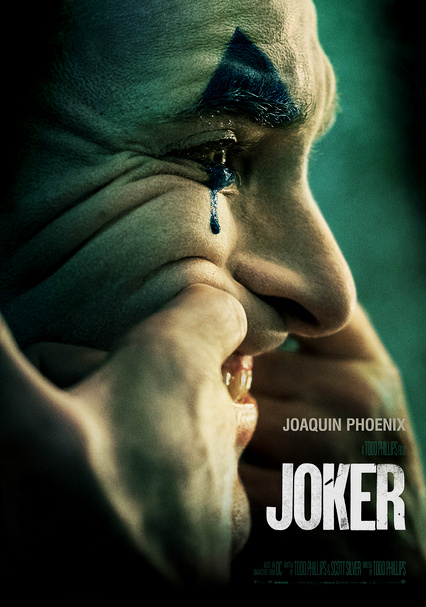
Joker-2019

Joker-2019

Director Todd Phillips

Starring Joaquin Phoenix, Robert De Niro

Top 250 Films #166

Scott’s Review #953
Reviewed November 1, 2019

Grade: A

Joker (2019) is a film that has divided audiences. Some love it, others loathe it. The experience is not your standard fun, superhero fare, with a hero’s rescue and the good triumphing over evil.

Despite the parlay into Batman territory, the film smacks the viewer across the face with its brutality, violence, and social and psychological injustices.

Joaquin Phoenix pummels the audience with an angry and bitter portrayal of the title character, easily one of the best performances of the year.

In one of the first scenes, before we even know the character, we experience a long, close-up of Phoenix laughing hysterically. We wonder what is so funny, before the revelation that he, Arthur Fleck, suffers from a nervous condition that causes inappropriate outbursts.

The year is 1981, and the fictional Gotham City, clearly a mirror image of New York City, serves as the setting. Times are tough, and crime is rampant.

Arthur lives in a dumpy apartment with his sickly mother, Penny (Frances Conroy), and visits a social worker regularly to receive his prescription medicine.

Arthur finds meager work as a party clown and aspires to be a stand-up comedian. After a gang attacks him in an alley, Arthur’s co-worker, Randall, encourages him to take a gun. Arthur invites his neighbor, single mother Sophie, to his stand-up comedy show, and they happily begin dating.

Finally, another person understands him. Segments of the population are disenfranchised and impoverished as Thomas Wayne, a billionaire philanthropist, runs for mayor of Gotham. A strange connection develops between Arthur, Penny, and Thomas, becoming central to the plot.

Can we discuss Phoenix’s bravura performance for a moment?

Suppose anyone thinks that Heath Ledger was phenomenal when he portrayed the same character in 2008’s The Dark Knight. In that case, they will be elated by Phoenix, who elevates the character to an entirely new level.

What Phoenix adds is strong sympathy for Arthur/the Joker and a care for the character. We feel sorry for him, but should we? He is a villain after all. One could easily debate whether his character can be considered the bad guy or the hero.

Regardless of the assessment, the performance is unforgettable.

A turn-off to some, which I found tremendously powerful, is the role reversal in the portrayal of the Wayne family, Bruce, and Batman characters.

Always deemed the “good guys”, in Joker, Thomas Wayne is self-centered, pompous, and embodies a sense of entitlement and snobbery.

Bruce is a young boy, but the implication is that the family is unkind, and what might the child grow up to believe?  Why is Batman/Bruce Wayne heralded as good and the Joker evil? It turns the tradition upside down into a twisted mind warp, and this is wonderfully creative and thought-provoking.

The best scene in the film, which triggers much of the subsequent violence and chaos, occurs when Arthur is invited to appear on a late-night talk show hosted by Murray Franklin (Robert De Niro). A week earlier, Franklin had played a humiliating clip of Arthur poorly performing stand-up.

Arthur decides to appear in full “Joker” attire, and the eventual discussion and words lead to tragic events. The scene is tense, intelligently written, and combative as the men spar over politics and class distinction.

Lastly, the musical score is dark, haunting, and mesmerizing without overtaking the film. Many key scenes of Arthur dancing and posturing are masterful, with the inclusion of the bombastic music.

He is a celebratory character, in his mind at least, and the music fuses into the scene with gusto and power. The combination of clowns and an incredible score adds significantly to the production.

Joker (2019) showcases a marvelous acting performance on the part of Phoenix, which combines a haunting musical score in its depth.

Providing a social commentary for people experiencing poverty and disenfranchisement, this film will divide viewers, probably based on preconceived expectations of a traditional Marvel-type superhero event.

The film offers much more than safer films like Wonder Woman (2017) or Black Panther (2018) ever could- a dark and violent character study.

Oscar Nominations: 2 wins-Best Picture, Best Director-Todd Phillips, Best Actor-Joaquin Phoenix (won), Best Adapted Screenplay, Best Original Score (won), Best Sound Editing, Best Sound Mixing, Best Cinematography, Best Makeup and Hairstyling, Best Costume Design, Best Film Editing
Passing-2021

Passing-2021

Director Rebecca Hall

Starring Tessa Thompson, Ruth Negga

Scott’s Review #1,222

Reviewed January 22, 2022

Grade: A

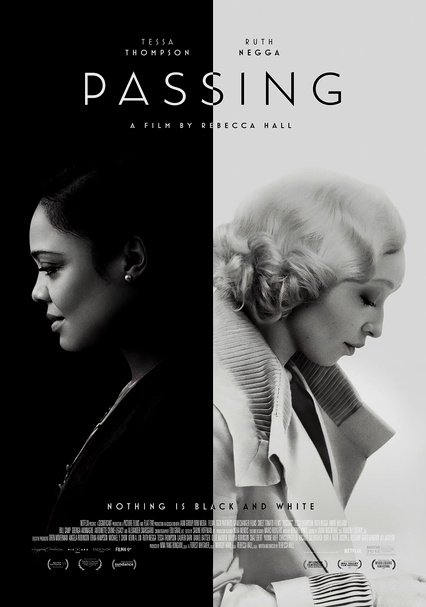
Passing (2021) is a quiet film brimming with importance. It’s the feature directorial debut of Rebecca Hall, and she hits a home run with a movie pleasing both visually and from a storytelling perspective.

The title of the film equates to the word ‘passing’, referring to three different meanings, as the viewer will need to wait until the end to figure it out.  I was not able to deduce the third meaning until I read the synopsis and was left in a state of shock.

The setting is 1920s New York City, a polished time when status and sophistication meant everything. Unfortunately, despite the liberal-leaning metropolis, racism is still alive and kicking.

The first scene shows a pair of well-dressed ladies entering a store, commenting how thankful they feel that their children have only met ‘colored’ people who are members of their staff. The message is clear that they think anyone of dark skin is a leper.

Passing is a film about race, but so much more.

Tessa Thompson plays Irene Redfield, a well-to-do light-skinned black woman who is married to a successful doctor, Brian (André Holland). They reside in Harlem in a predominantly black neighborhood.

Irene is respected and is also able to walk amongst cultured white people and ‘pass’ for white. She is treated differently when she does.

One day, Irene stops for a sandwich at a posh hotel. She runs into her childhood friend Clare (Ruth Negga), who is also of mixed race. Clare completely passes for white and is married to a successful and handsome banker, John Bellew (Alexander Skarsgård).

He makes no secret of despising black people.

As Irene and Clare reconnect, Clare begins to immerse herself in the black culture and specifically in Irene’s life. She flirts with many black men and grows close to Brian, much to Irene’s chagrin. Irene becomes both jealous and enamored with Clare.

They both risk their established lives as they soul-search for their truths.

Passing is not conventional, and that’s what I admire and love about it. While watching, I never knew what direction the film was going in, and I missed one subtle, yet essential, detail- Irene’s fascination with Clare.

The complex relationship is shaken to the core in a jarring final sequence during a winter party in a luxury apartment.

Hall makes the monumental good decision to film in black and white cinematography, thus making the racial subject and tones all the more powerful.

Visually, this is never more evident than when Clare stands beside a darker-skinned black character. The contrast is astounding and made me believe how everyone would be fooled into thinking she is a white woman.

The story of two cultured black women navigating life in the early twentieth century is compelling enough, but the underlying themes that emerge add depth to the meaning of Passing, layering it with a wealth of emotional complexity.

The film reminds me of the 2002 masterpiece Far from Heaven. Visually brilliant and both offering stories about race, they are also tragic. Nobody ends up happy or fulfilled, and a terminal sense of loss is palpable in each. A tortured, well-manicured central character exists in both films.

Negga has received the lion’s share of praise for playing Clare, but Thompson is also flawless.

Both actresses are brilliant in their portrayals of characters who are very much alike. They strive for perfection but are nonetheless living in fantasy worlds, whether they realize it or not. It’s tough to convey this to audiences, but they do in measured calmness.

The film shows that we all pretend just a little bit and pass it off sometimes, don’t we?

It’s a scary realization.

My standard modus operandi when I review a film is to think whether it stays with me after the credits roll or if it is quickly dismissed from my train of thought.

Passing (2021) has powerfully remained in my mind and caused me to ruminate and peel back the onion more and more in this tremendous and stylistic effort.

Independent Spirit Award Nominations: 2 wins-Best Supporting Female-Ruth Negga (won), Best Cinematography (won)

Vice-2018

Vice-2018

Director Adam McKay

Starring Christian Bale, Amy Adams, Steve Carell

Scott’s Review #849

Reviewed December 31, 2018

Grade: A

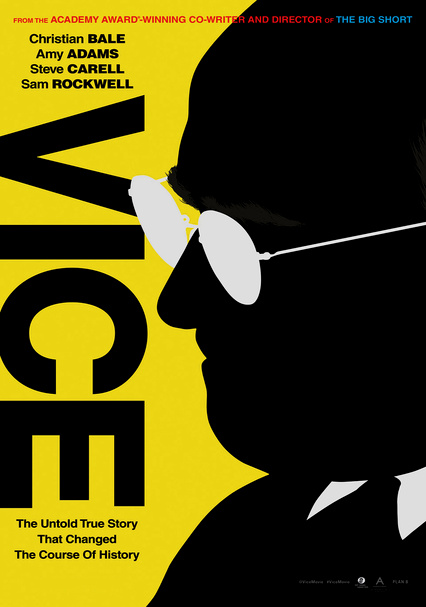
Following 2015’s The Big Short, Adam McKay once again creates an intelligently written, thought-provoking political film based on facts and historical accounts.

With Vice (2018) he focuses on former Vice President Dick Cheney and his rise through the political ranks to second in command.

Brilliant and wise in every way, the film is fair-minded in its approach. Predictably, in this era of “fake news,” it will be embraced by liberals but shunned by conservatives.

In the first seconds of Vice, a disclaimer appears stating that Cheney was a private man with secrets, but the filmmakers did their best to relay accurate information. The salty language in this clip will likely elicit chuckles, but McKay stays the course with his statement.

Immediately, the film flashes to the September 11 attacks with Cheney sitting in crisis mode, about to make an important decision.

Vice then retreats to 1963 Wyoming as a drunken college-aged Dick Cheney (Christian Bale) is pulled over for erratic driving after a barroom brawl. He is nearly dumped by his girlfriend and future wife Lynne Cheney (Amy Adams), who threatens to find another man if Dick does not straighten out.

He manages an internship and an admiration for Donald Rumsfeld (Steve Carell), a staunch Republican and White House Chief of Staff, and begins his political climb.

In clever form, the film is narrated by a character named Kurt (Jesse Plemons), who we do not know is connected to Cheney until the end of the film. This adds an added measure of intrigue to the overall film, as we know a secret will be revealed.

Vice is also unique in direction, with constant back-and-forth timeline scenes and quirky humor throughout. Are the Cheneys portrayed as ridiculous? No, but sardonic humor is directed at them as their ambitions and power-hungry motivations are completely exposed.

The film does a great job of taking the viewer through the political state of Cheney’s administration, roughly the early 1970s until 2008, when Obama took office. The Clinton years are completely skipped, but that is more to do with Cheney being in the private sector rather than an intentional slight.

The Nixon years and the George W. Bush years are given hefty screen time and the latter is portrayed as nearly a buffoon as Rockwell portrays him as a boozy, dumb frat boy.

Bale is startlingly good as Cheney and deservedly steals the show. In addition to the forty-pound weight gain, the actor endured the facial and hair treatments (props to the makeup department!) and became the man.

His body movements, smile, and speech patterns are daringly good. With a sneer and a calculating grin, we see the wheels spinning in Cheney’s head numerous times, and Bale is incredible at portraying these thoughts to the audience.

The film contains many well-known actors in vital supporting roles worth noting. The depictions of the following are examples of excellent casting with spot-on representations: Tyler Perry as Colin Powell, LisaGay Hamilton as Condoleezza Rice, Sam Rockwell as George W. Bush, Alison Pill as Mary Cheney, and Lily Rabe as Liz Cheney.

All portrayals are excellent to watch, especially for viewers who remember the real-life people involved.

Some will undoubtedly complain that the film has a “liberal slant” and portrays Cheney as power-hungry and self-serving. While this is a valid point, and McKay makes left-leaning choices, the director bravely carves the film into an experience that goes both ways.

More than a few scenes (including the final scene) justify Cheney’s actions, in his mind anyway. Claiming to do what is suitable for the people and be a true American, his actions and yearning for power can be understood to some degree, or perhaps by some people.

Vice (2018) is controversial and undoubtedly divisive, which is unsurprising given the current state of American politics. It tells an inspiring and rich story of an elusive politician’s life and policies, daring to be forgotten, that still resonate across the United States.

The more I ponder this film’s importance, the greater it becomes, but stay past the credits for arguably the best moment in the movie and of monumental importance in 2018.

Oscar Nominations: 1 win-Best Picture, Best Director- Adam McKay, Best Actor- Christian Bale, Best Supporting Actor- Sam Rockwell, Best Supporting Actress- Amy Adams, Best Original Screenplay, Best Makeup and Hairstyling (won), Best Film Editing

The Killing of a Sacred Deer-2017

The Killing of a Sacred Deer-2017

Director Yorgos Lanthimos

Starring Colin Farrell, Nicole Kidman

Scott’s Review #774

Reviewed June 15, 2018

Grade: A

For fans of Greek director Yorgos Lanthimos, who created such disturbing and bizarre films as 2009’s Dogtooth and 2015’s The Lobster, The Killing of a Sacred Deer (2017) will be a treasure.

As with those films, the odd story and the peculiar acting styles are prevalent, making the film quite the experience.

I relish the film and its unusual nature. It offers a cinematic experience that is insightful, mesmerizing, extreme, and, quite frankly, brilliant.

Steven Murphy (Farrell) is an esteemed cardiac surgeon who “befriends” a troubled teenage boy named Martin (Barry Keoghan), whose father had died years earlier as a result of Steven’s negligence.

They fall ill when Martin slowly insinuates himself into Steven’s family life. Martin threatens to kill the entire family unless Steven kills either his wife Anna (Nicole Kidman) or one of his two children- the victim can be of his choosing.

The creepy premise is enormously intriguing as the conclusion cannot be foreseen.

A basic yet deep storyline is wonderfully spun, with many possible plot directions.

After forty-five minutes or so of the audience wondering why Steven and Martin meet secretly in diners, hospital corridors, or other remote areas, the teen boy’s true motivations come to the surface as he rapidly and calmly puts his cards on the table for Steven.

Surprisingly, none of the characters are particularly sympathetic.

One would assume that the Murphy family- wholesome, affluent, and astute, would garner audience support, but we slowly peel back the onion on each character.

With a gorgeous house in a quiet Cincinnati neighborhood, Steven and Anna (a doctor herself) are sometimes harsh and physical with their kids. In contrast, the kids (Bob and Kim) develop a strange fascination with Martin.

In this way, each character is peculiar and has dire motivations as the plot unfolds.

Lanthimos is quietly becoming one of my favorite new directors. He slowly churns out one disturbing film after the next. His clear Stanley Kubrick influences bubble to the surface, particularly in The Killing of a Sacred Deer.

The score is crisp with uniqueness, with plodding and sudden bombastic classical music pieces eliciting emotions like surprise and terror from the audience.

From a visual perspective, fans of Kubrick will no doubt notice the long camera shots and slowly panning camera angles. The hospital’s long and foreboding hallways are prominently featured as we follow a character walking along the corridors.

This is highly reminiscent of the Overlook hotel sequences in the 1980 Kubrick masterpiece, The Shining.

One particularly jarring nuance in the film is the speech patterns of most of the actors—clearly dictated by Lanthimos and also present in 2015’s The Lobster.

The character of Steven talks very quickly but with a monotone delivery and in a matter-of-fact style; Kim and Martin also speak this way. I didn’t notice the quality as much with Kidman’s Anna, but Farrell went to town.

I’m not sure this works throughout the entire film since the mannerisms give off almost a comical element.

This uniqueness makes the film more quirky and decidedly non-mainstream, which is to be celebrated.

The climax of the film is brutal.

As Steven brandishes a loaded shotgun, the family gathers in their family room, Anna fussing over her new black dress. As the group dons pillowcases, Steven goes Russian roulette-style on the family, randomly firing a shot until one member is killed.

When the remaining family members see Martin at the diner the next day, they give him icy, hateful looks.

The entire scene is done without dialog and is tremendously macabre.

Rest assured, I am eagerly awaiting Lanthimos’s next project (reportedly already in the works) and hope against hope he continues to use the superb Colin Farrell, the brilliant Nicole Kidman, and newcomer Barry Keoghan again.

Thanks to tremendous acting, a riveting score, and enough thrills and creeps to last a lifetime, The Killing of a Sacred Deer (2017) is at the top of its game.

Independent Spirit Award Nominations: Best Supporting Male-Barry Keoghan, Best Cinematography

Loving-2016

Loving-2016

Director Jeff Nichols

Starring Joel Edgerton, Ruth Negga

Scott’s Review #527

80099974

Reviewed November 26, 2016

Grade: A

Loving (2016) is a quiet film.

Subdued and poignant, it is an important historical story to tell and jarring to be transported back to the 1950s Southern style, where interracial marriage was not only illegal, but children of interracial couples were barely considered human beings.

This is to say nothing of the views of their parents, specifically of law enforcement.

Sadly, circa 2016, we all should be aware that racism is still alive and well in the United States, and this film is a reminder of how much further we need to go.

The true story of the landmark 1967 Loving vs. Virginia Supreme Court case is the basis for this film.

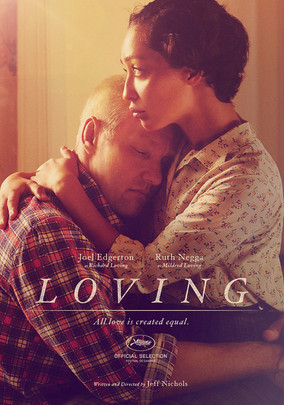
The time is 1958 in Virginia, and a sweet, working-class couple, Richard and Mildred, are very much in love. Richard-white and Mildred-black are met with some sideways glances around town but generally have a strong, supportive family and friend structure, although both families are pretty poor.

They enjoy spending time with friends in bars and racing cars.

When Mildred becomes pregnant, Richard purchases a plot of land for them and asks Mildred to marry him. Despite the challenges this will create, they are wed in Washington, D.C. Once they return to Virginia, they are arrested for violating anti-miscegenation laws prohibiting interracial marriage.

The couple eventually sued the state of Virginia, leading to a unanimous Supreme Court ruling a decade later.

As a film, Loving is thoughtful and introspective.

The audience questions who we are to decide who someone loves. This can apply to same-sex couples as easily as interracial couples.

The film, led by director Jeff Nichols, creates many quiet scenes of thoughtfulness on the faces of leads Edgerton and Negga.

Furthermore, several scenes of peril encompass the film.

The Lovings constantly threaten to be discovered as they secretly return to their forbidden home state to give birth to their son, only wanting Richard’s mother to perform the birth. The tense scene where Mildred is dropped off on a deserted back road is well shot; the camera constantly focuses on the road and the threat of a car coming by at any moment.

Edgerton, a fantastic actor and director, performs tremendously as a quiet, stoic, blue-collar man who is madly in love with his wife and sees nothing wrong with it simply because it is not the norm.

He is poorly educated, but Edgerton gives him underlying intelligence and a basic understanding of cherished love and more than once calmly utters, “But I love my wife.”

To him, it is that simple. Richard will also use any necessary measures to protect his family, as any man would. Edgerton’s squinting blue eyes portray suspicion, warmth, and love.

Negga is equally compelling as calm and loyal Mildred.

One might expect Mildred to finally explode with rage as she faces obstacle after obstacle, raising three kids in an environment she does not want, yet she never does.

Negga embodies the character with sweetness, wide-eyed passion, and longing for a better life. Mildred tries not to get her hopes up with each impending court date, but Negga successfully portrays the character with many different emotions and complexities.

My favorite scenes of hers involve Mildred gazing at her husband, her eyes filled with love and pride.

Nichols wisely does not spend much time in the courtroom, a positive aspect of the film. Sure, we get the occasional scene of Richard and Mildred facing the court, but the film does not take a different approach than necessary.

Despite a landmark decision coming from Loving’s marriage, the film is a love story between a good man and a good woman who happens to be of different races.

What a lesson every viewer can learn from Loving (2016).

Oscar Nominations: Best Actress-Ruth Negga

Independent Spirit Award Nominations: Best Director-Jeff Nichols, Best Female Lead-Ruth Negga

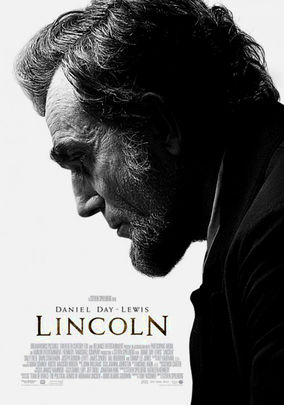
Lincoln-2012

Lincoln-2012

Director Steven Spielberg

Starring Daniel Day-Lewis, Sally Field, Tommy Lee Jones

Scott’s Review #476

70251896

Reviewed September 10, 2016

Grade: A

Lincoln is a 2012 film, which received a slew of Academy Award nominations. There appear to be differing opinions about the film itself, however.

Lincoln has audiences divided over whether it’s a brilliant film or a snore-fest.

My opinion leans decisively toward the former.

I recognize that (especially the first half) the film is slow-moving, but I found it engrossing and well-made.

Even the subtle aspects (costumes, art direction, lighting) are masterfully done.

I found Daniel Day Lewis’s (Abraham Lincoln) lengthy stories intriguing, not dull and found it to be a wonderful history lesson.

Steven Spielberg does what he does best- he creates a Hollywood film done well. He also has done controversial, shocking, or experimental, but the mainstream fare is his forte.

This film is not for everyone, but if you can find the patience it will be an enlightening experience. If nothing else, a thing or two may be learned.

Oscar Nominations: 2 wins-Best Picture, Best Director-Steven Spielberg, Best Actor-Daniel Day-Lewis (won), Best Supporting Actor-Tommy Lee Jones, Best Supporting Actress-Sally Field, Best Adapted Screenplay, Best Original Score, Best Sound Mixing, Best Production Design (won), Best Cinematography, Best Costume Design, Best Film Editing

Compliance-2012

Compliance-2012

Director Craig Zobel

Starring Dreama Walker, Ann Dowd

Scott’s Review #435

70229062

Reviewed June 30, 2016

Grade: A

Compliance (2012) is a ninety-minute riveting experience that will leave you thinking, talking, and feeling for days or weeks after viewing it.

The film is that intense.

The fact that it is based on true events is even more startling. It is, at times, quite disturbing and unsettling to watch, and if one likes their movies happy and wrapped in a bow, this will not be for you, but for film fans who truly want an emotional experience check it out.

At times I wanted to scream at the characters, look away from the screen, and shake my head in disbelief.

A truly riveting experience.

Major props to actress Ann Dowd, who does a bang-up job as the restaurant manager, and main character. What an amazing talent this actress is.

My range of emotions toward this character (sympathy, confusion, anger, disbelief) blew me away.

Compliance (2012) is one of the best modern films of late.

Independent Spirit Award Nominations: Best Supporting Female-Ann Dowd

Black Mass-2015

Black Mass-2015

Director Scott Cooper

Starring Johnny Depp, Joel Edgerton

Scott’s Review #278

Black_Mass_(film)_poster

Reviewed September 28, 2015

Grade: B+

A dark tale of crime, corruption, and Irish mob ties encompass Black Mass (2015), a drama based on the life and times of infamous Boston crime lord Whitey Bulger.

Set primarily in Boston, with a segue to sunny Miami during the 1970s and 1980s, the film mainly focuses on the intricate dealings between Bulger and childhood friend John Connelly. Now FBI, he uses Bulger as an “informant” to secretly bring down an Italian mafia figure, but slowly becomes more involved in Bulger’s sinister world.

Beginning in 1975, the film is authentic in its use of the styles, cars, and looks of the times in Boston during that period. Plausibility is apparent, and powerful acting is shown from top to bottom.

The stellar cast of Black Mass and the hefty cast features an array of well-known and capable actors, adding realism.

Led by Johnny Depp as Whitey, Depp gives an eerie, hypnotic performance as his bright blue eyes sparkle in a devious way.

Whitey is ruthless and will do whatever is needed to keep power and control. Like Connelly, Joel Edgerton is arguably the film’s lead character, though Depp gets top billing. Edgerton, in real life handsome, appears frumpy, and as a regular Joe type.

Supporting turns by Benedict Cumberbatch, as Whitey’s powerful Senator brother, is crafty and sleek, but corruption shrouds him.

Kevin Bacon, Dakota Johnson, Peter Sarsgaard, and Julianne Nicholson portray smaller yet pivotal roles and all do a fine job.

The screenplay is intelligently written. The story is quite dark and there are no laughs or light moments.

There are numerous deaths, the victims shot at point-blank range, but also two deaths in particular, where the victim’s suffering is prolonged and the scenes are cringe-worthy. The film is very violent and given the subject matter, is riddled with foul language.

One impressive aspect of Black Mass is the character-driven tale and that it is based on a real-life person adds to this.

Not only is Bulger fleshed out, but John Connelly is written very well. Gradually becoming immersed in the crime world as opposed to the world of law, we see Connelly sink deeper and deeper into Bulger’s world, and not so unwillingly either.

He loses his wife Marianne (Nicholson) along the way as she tires of the danger and corruption surrounding her. A chilling scene occurs when Bulger confronts Marianne in her bedroom, after observing negative vibes from her, and warns her in a flirtatious way, never to cross him.

As he caresses her face and slowly firms his grip, it is a rather frightening scene.

The dialogue is crisp. When Bulger is invited to a steak dinner at Connelly’s house, there is awkward tension at the dinner table. Jovial small talk over the preparation of the delicious marinated steak everyone is eating comes to the forefront as Bulger asks Connelly’s partner to reveal his family secret recipe for the favorite steak he has ever eaten.

When the partner eagerly confesses the recipe, he is coldly quizzed whether he would give up Bulger’s secrets as easily.

This is one of the best scenes in the film.

Comparisons to Goodfellas (1990) are evident but without the fun. I thought of The Departed (2006) throughout the viewing as well.

I think director Scott Cooper goes for and successfully achieves, good straight-forward, dark story-telling. Take the number of killings. The organized crime world is dirty, intense, and unkind and Black Mass portrays this well.

Black Mass (2015) is a success on many levels. The superior acting, detailed writing, and truthfulness create a good film. Just be sure to remember it’s a heavy one.

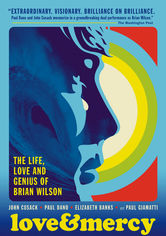
Love and Mercy-2015

Love and Mercy-2015

Director Bill Pohlad

Starring John Cusack, Paul Dano

Scott’s Review #258

80017274

Reviewed July 17, 2015

Grade: B+

The life and times of the Beach Boys’ famous and troubled lead singer, Brian Wilson, is finally played out on the big screen (apparently many attempts were made to make a film) as Love and Mercy (2015) chronicles his difficult upbringing, unrivaled success, and his interesting life in later years.

He suffered from schizophrenia, traveled down a paranoid, nervous path, and was manipulated by a family friend who served as his doctor and main caregiver.

Thankfully, he weathered the storm due to his future wife, and remarkably still performs and entertains in 2015.

His musical career began in the 1960s.

The biopic features many well-known Beach Boys tunes to hum along to and be entertained by. It’s not a happy film nor a downer either.

It’s somewhere in the middle of the two and the life story of a rock star.

There is a risk in this. If the film is too sentimental it will fail. Love and Mercy do it correctly.

The film is not a sing-along, trip-down-memory lane film for lighthearted film fans. Rather, it is dark, murky, and troubling at times (the psychedelic scene when a young Brian is imagining different voices and noises in his head is rather frightening).

Wilson is played by two actors, first in the 1960s and later in the 1980s.

Paul Dano stars as a young Wilson in the early stages of his career, filled with passion for life, art, music, and talent beyond belief, but clearly in the onset stages of paranoia, thanks to his critical father. He is a demanding, angry man, possibly envious of Brian’s talents as a songwriter, who always wanted more from Brian.

Wilson’s father managed Brian and his brothers success but at a huge cost, and was ready to bail when the “next big thing” came along.

Miraculously, through conflict with his father and other members, Wilson completed the Beach Boys masterpiece, Pet Sounds, a groundbreaking album from the late 1960s. The film shows the struggles faced to achieve this success.

In later years John Cusack takes over the role of Brian. By this point in his life, he is damaged and he is a full-blown neurotic, insecure, and dependent on his psychotherapist, Dr. Landy, brilliantly played by Paul Giamatti.

Landy has control of Wilson’s assets and will destroy anyone who interferes in this.

The scenes in which he screams at and berates a drugged-out Brian Wilson to create music are tough to stomach. When Wilson romances their future wife Melinda Ledbetter, played by Elizabeth Banks, she ultimately saves his life as she is determined to rescue Brian from the wicked abuse and adjust the toxic levels of medications he was kept on.

I left the movie theater unsure of the factual accuracy and pondered the following questions.

Did Brian’s wife swoop into his life and “save” him as neatly as the film explains? How instrumental was the maid in this process? Was the Wilson brothers’ father as much a monster as the movie portrayed him? Was Giamatti’s vicious psychotherapist role true to life or were the aspects of Love and Mercy embellished ever so slightly for moviemaking magic?

One wonders, but from a film perspective, Love and Mercy (2015) works well as a work that takes risks, does not go for softness or niceness, and gives a character study that is quite admirable.

Independent Spirit Award Nominations: Best Supporting Male-Paul Dano

Birdman-2014

Birdman-2014

Director Alejandro G. Iñárritu

Starring Michael Keaton, Edward Norton, Emma Stone

Scott’s Review #190

80000643

Reviewed November 6, 2014

Grade: A

Birdman (2014) is a unique art film that, happily, has garnered major exposure and publicity because a movie like this runs the risk of receiving praise and notice only from the art-house crowd itself.

The film’s star, Michael Keaton, portrays Riggan Thomson, a former action hero superstar from the 1990s, who was made famous for the “Birdman” character he created.

Having made sequels to the film, his career has since dried up and he hopes to establish credibility and prove himself a real actor by writing, directing, and starring in his play.

The film is set in and around the Broadway theater in New York City.

As opening night approaches, he struggles to pull everything together and emit a successful production while faced with an injured terrible actor, a difficult actor, his insecurities, and a miserable theatre critic destined to ruin his big chance.

To make matters worse, his daughter Sam, played by Emma Stone is a recovering drug addict who hangs around the theatre distracting actors with her charm and good looks.

Naomi Watts and Edward Norton play Leslie and Mike, other cast members in the production. Watts is sympathetic as the emotional actress with a heart of gold who finally has her dream of performing on Broadway realized.

Norton, outstanding as Mike, is blunt yet socially awkward and can only perform truthfully on stage.

Keaton is simply a marvel as he plays a dark and vulnerable man. He hates and wishes to shed his ridiculous movie persona of yesteryear and secretly cringes when recognized by fans. He uses it with a voice inside his head when he played “Birdman” years earlier.

The uniqueness of the film is the use of what seems like one long take as the action rarely stops and is ongoing. The film belongs to Keaton, who wonderfully relays vulnerability, pain, and fear within with an outward persona of bravery and masculinity.

Throughout the film I wondered, is Riggan suicidal? What is real and what is imagined? Are certain scenes foreshadowing later events?

The film has much depth.

One marvels at how art imitates life, is Keaton portraying himself? He was the original Batman in the successful superhero franchise beginning in 1989 and his career tanked shortly after.

Birdman is a comeback film for him and he is devastatingly good.

Norton’s character Mike impressed me. He is blunt flawed, scared, and addicted to the stage.

Stone has one particularly brilliant scene as she lambasts her father and with regret, later on, tells him that the world has moved on without him and that he is irrelevant just like everyone else. It is a powerful scene.

In another, Riggan is locked outside the theater during the performance, clad only in his underwear. How on earth will he return to the stage and complete the show? The quick slights at current Hollywood superstars playing superheroes, specifically Robert Downey Jr. are deliciously naughty.

It is impossible to predict what will come next and the film is very New York theater style. Keaton’s run-in with a theater critic in a cocktail bar is the best scene in the film as the critic’s vicious critique of “You’re a celebrity, not an actor” resonates with both pain and tremendous anger for Riggan.

Riggan is a sensitive, struggling man and Keaton so wonderfully shows his vulnerability in every scene.

Oscar Nominations: 4 wins-Best Picture (won), Best Director-Alejandro G. Iñárritu (won), Best Actor-Michael Keaton, Best Supporting Actor-Edward Norton, Best Supporting Actress-Emma Stone, Best Original Screenplay (won), Best Sound Editing, Best Sound Mixing, Best Cinematography (won)

Independent Spirit Award Nominations: 3 wins-Best Feature (won), Best Director-Alejandro G. Inarritu, Best Male Lead-Michael Keaton (won), Best Supporting Male-Edward Norton, Best Supporting Female-Emma Stone, Best Cinematography (won)

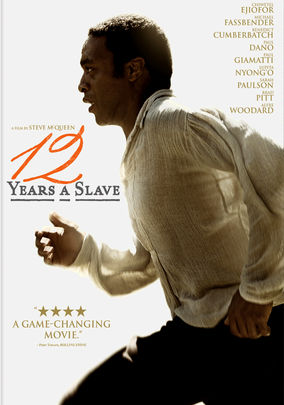
12 Years a Slave-2013

12 Years a Slave-2013

Director Steve McQueen

Starring Chiwetel Ejiofor, Lupita Nyong’o, Michael Fassbender

Scott’s Review #62

70284282

Reviewed June 24, 2014

Grade: A

At the time of 12 Years a Slave’s (2013) release, a ton of buzz began circulating. Was it that good?

Considered the front-runner to win the Best Picture statue, it did go on to win the top honor.

The film is not easy to watch. It is brutal and heart-wrenching at times. I will spare the details, but the most intense scene involves a whip.

There are scenes of torture, degradation, and cruelty against the slaves by the slave owners.

While tough to watch, I applaud the film for not glossing over the atrocities of slavery. Some have criticized it for being a retread of similar films, but I disagree. It is worlds more intense than watered-down versions.

However, the film is not a downer.

Yes, a class of people is beaten down and victimized, but they also rise above and never give up hope. The fact that it’s a true story and a book was written on the subject by the real Solomon Northup makes it all the more powerful.

The performances are outstanding (Ejiofor, Fassbender, Paulson, and Nyong’o).

The look and cinematography are sharp and I love the distinctiveness of the north and south scenes. The setting is stifling hot and dreary.

There are at least two scenes where the camera pans on a shot and holds it for seemingly an eternity until an action occurs, which makes the scenes effective.

While difficult to watch, 12 Years a Slave (2013) should be viewed by everyone to see how far society has come, not forgetting how far we still need to go to eliminate discrimination and victimization.

Oscar Nominations: 3 wins-Best Picture (won), Best Director-Steve McQueen, Best Actor-Chiwetel Ejiofor, Best Supporting Actor-Michael Fassbender, Best Supporting Actress-Lupita Nyong’o (won), Best Adapted Screenplay (won), Best Production Design, Best Costume Design, Best Film Editing
Independent Spirit Award Nominations: 5 wins-Best Feature (won), Best Director-Steve McQueen (won), Best Male Lead-Chiwetel Ejiofor, Best Supporting Male-Michael Fassbender, Best Supporting Female-Lupita Nyong’o (won), Best Screenplay (won), Best Cinematography (won)