Tag Archives: Talitha Bateman

Countdown-2019

Countdown-2019

Director Justin Dec

Starring Elizabeth Lail, Jordan Calloway

Scott’s Review #999
Reviewed March 12, 2020

Grade: B

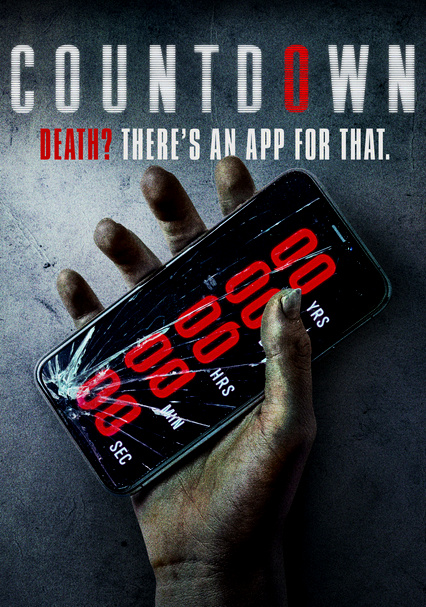
Countdown (2019) is a modern horror film that accomplishes what it intends to do- it entertains the audience.

With jumps, frights, and some comedic elements, it borrows heavily from the Final Destination (2000-2011) and Happy Death Day (2017-2019) franchises.

The film does not reinvent the wheel, conventionally steering the course. The superstitious elements become hokey and unbelievable, but the film has enough momentum to offer a solid product, especially pleasing to genre fans.

When a young nurse (Elizabeth Lail) downloads an app that claims to predict precisely when a person is going to die, it tells her she only has three days to live. With time ticking away and death closing in, she must find a way to save her life before time runs out.

She struggles to figure out how to delete the app while piecing together the puzzle to break a curse and thwart a threatening demonic spirit. Her sister is also threatened.

Director Justin Dec, a newcomer to the cinema, does not waste any time beginning the action, as events debut at a college keg party. A group of revelers decides to play a drinking game after downloading the new Countdown app, which is supposed to determine how long you have left to live.

Thinking the app is a joke, unlucky Courtney (Anne Winters) is startled to see that she has only three hours to live. After refusing to drive home with her drunken boyfriend, Ethan, she is murdered at home by an evil spirit, while Ethan crashes his car, a tree spearing through the seat that Courtney would have been sitting in.

With this sequence, the audience is hooked, as the pacing is well-maintained. With the app clock ticking down dangerously towards zero, a theme heavily promoted throughout the film, we can’t wait to see how or if Courtney is killed.

Red herrings, like a man following her or a shower curtain that moves, are presented for good suspense. Assumed to be the “main girl”, Courtney’s death is surprising, and the main title then appears, fooling the audience. There is more to come.

Carrying a horror film is not easy, but actor Lail rises to the occasion. Resembling a young Christina Applegate, Quinn is strong and independent. Many of the scenes take place at the hospital where she works, though she also makes time to see her father and sister.

Quinn’s mother has recently died, and Quinn blames herself. She connects with Matt (Jordan Calloway), who lost his brother after stealing his toy. Quinn is a character that viewers can admire and emulate.

Countdown deserves credit for incorporating a wide range of diversity. Matt is black, making his romance with Quinn an interracial one. Several Asian, Latino, or Black characters are featured in many scenes, showcasing a diverse representation of multiculturalism.

Unfortunately, and surprisingly, no LGBTQ characters are featured. Comic relief store owner, Derek (Tom Segura), would have been the perfect character to make gay, but this was not to be.

To build on this, a timely and progressive Me Too side story is added, when a well-respected doctor at the hospital makes a move on Quinn. He reports the incident to Human Resources when she rebuffs his advances. She is suspended, without an investigation, until other women come forward throughout the film.

While this would be an essential message in another type of film, the relevance does not work or fit the rest of the story.

The ninety-minute running time is a splendid approach, so the film never drags or dulls. The final twenty minutes or so are a letdown as Quinn and a priest realize that to break the curse, one must trick it by having someone else die out of sequence.

This is all too like Final Destination, but not as good, as Quinn ends up fighting with the spirit, killing herself with an overdose of morphine, while drawing a circle on her arm where a syringe with Naloxone can subsequently revive her.

For a new director eager to break into the horror genre, Justin Dec borrows heavily from previous films, presenting a copycat story that is paced perfectly. It provides enough interest and good casting to warrant a follow-up.

Due to low box-office returns, I doubt Countdown (2019) will become a mainstay franchise, but Dec may have a promising future ahead of himself.
Love, Simon-2018

Love, Simon-2018

Director Greg Berlanti

Starring Nick Robinson

Scott’s Review #789

Reviewed July 17, 2018

Grade: B+

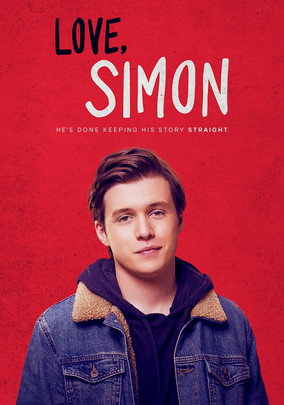
Love, Simon (2018) is a friendly, mainstream, LGBT film focused on a likable central character. Given the myriad dark films within this genre, the film is refreshing, usually ensconced in the independent genre.

Finally, a wholesome, family-oriented “coming out” story is upon us, and the film succeeds in spades. Perhaps a shade too “happily ever after” with a couple of stereotypes among the supporting characters, Love. Simon is a film to be heralded and certainly recommended.

Popular high school senior Simon (Nick Robinson) has a close circle of friends, hip parents, and an affluent existence in the suburban USA. Seemingly “having it all,” he is nonetheless filled with angst and harbors a deep secret—he is gay.

Closeted, he finds solace with a similarly closeted male student through the school website.

Determined to find out who his classmate is, he embarks on a way to discover his secret crush’s identity while being blackmailed by another schoolmate.

Young newcomer Nick Robinson is an absolute gem and carries the movie successfully. This is in stark contrast to another 2018 release starring a newcomer who failed (A Wrinkle in Time). Alas, Robinson has charm, charisma, wholesome looks, and an earnest persona, which are perfect traits for a coming-of-age film such as Love, Simon.

The audience will instantly root for the teen to find happiness and come to terms with the dreaded coming out to family and friends, which any gay person can relate to.

An enormous positive to the film is that Simon is okay with being gay- it’s the telling of other people that bothers him. He daydreams about starting fresh next year as an out and proud college freshman.

He worries that coming out will ruin his final year of high school and change his relationships with his circle of friends. But he is never ashamed or self-harming in his preference for men.

Lesser, but still significant, high points to the film are the rich diversity among the supporting players.

Several of Simon’s friends are black, and his parents are liberal, open-minded, and well-rounded. Of course, they will be accepting of their son’s chosen lifestyle.

Love, Simon also features diversity among the teachers. The theater teacher is not only black but also a champion for LGBT fairness. These qualities are always a breath of fresh air in film, especially when the target audience undoubtedly is younger.

The filmmakers succeed at breaking a key barrier with Love, Simon. As often is the case, LGBT-themed films target the LGBT audience, which makes sense.

In the case of Love, Simon, the film is an experience that the entire family can watch together, regardless of anyone’s sexual preferences. This detail is critical, as LGBT matters should be considered daily.

At the risk of pigeon-holing, the fact that Simon is masculine and popular and not the slightest bit effeminate or girly is undoubtedly a key to the film’s success.

On that note, the film does add an extremely effeminate and outgoing supporting character named Ethan. I am not sure this character is necessary other than to contrast with Simon.

Perhaps to drive the point home, Simon is a cool, macho guy, and Ethan is not. In one scene, it is assumed that Simon and Ethan are boyfriends, and Simon seems mildly disgusted by this. I’m not sure this subplot works or serves the film’s overall message very well.

Love, Simon contains frequently seen supporting character types that bring us seasoned filmgoers back to the days of the 1980s teen coming-of-age films like Pretty in Pink (1986) and Sixteen Candles (1984).

Several subplots involving characters having crushes on other characters, while another character likes them, are added to the mix for fun and a little drama.

The conclusion is sweet as the initial mystery of “who is the other gay student?” is finally revealed amid a lovely scene of Simon waiting on a Ferris wheel for his online admirer to arrive.

In a purely inclusive moment, the entire school surrounds the newly united couple and beams with pride as the duo tenderly kisses. Mass audience members are exposed to a heartfelt moment and an enormous lesson in dignity and spirit.

Director Greg Berlanti creates a lovely Hollywood film that is rich with diversity, a powerful story, and an inclusive element.

Sure, the film is not heavy and either skims over or misses discussions of powerful emotions that many gay youngsters face, but it is nonetheless a brave and necessary story in its own right.

Love, Simon (2018) is classy, tender, and quite a pleasant experience.

Annabelle: Creation-2017

Annabelle: Creation-2017

Director David F. Sandberg

Starring Anthony LaPaglia, Stephanie Sigman, Talitha Bateman

Scott’s Review #672

Reviewed August 17, 2017

Grade: B+

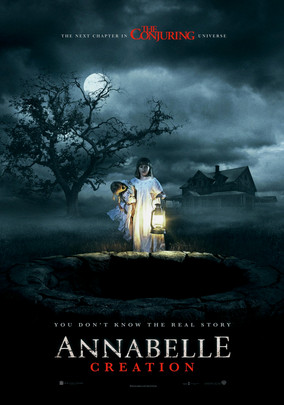
Annabelle: Creation (2017) is a prequel to the successful 2014 horror film entitled Annabelle and the fourth installment in a total of the popular The Conjuring series (2013-present).

Over just a few years, these films have become well-crafted, intertwined stories in the modern supernatural horror genre.

Compared to another latter-day horror franchise, Saw, Annabelle/The Conjuring elicits more of the classic spook factor rather than the gore associated with the Saw franchise (2004-present).

The time is 1943, set somewhere in the desert and mountainous region of California. Dollmaker Samuel Mullins (Anthony LaPaglia) and his wife Esther (Miranda Otto) live a cheerful existence with their young daughter, Annabelle, whom they nickname Bee.

The family attends church services regularly and plays cute games of hiding and seeking in their vast farmhouse and land. When one sunny day, Bee is struck and killed by a passing car, the couple is devastated beyond repair.

Twelve years later, a group of orphans led by Sister Charlotte (Stephanie Sigman) are invited by Mr. Mullins (Mrs. Mullins is now bedridden due to a mysterious accident) to spend some time at the farmhouse when their orphanage shuts down.

The six orphans, led by best friends Janice (Talitha Bateman), and Linda (Lulu Wilson) embark on the quiet farmhouse and immediately are met by strange goings-on, most notably a life-sized doll living inside a forbidden room, which Janice inevitably stumbles upon out of curiosity.

Stricken with polio, Janice has been left a disabled person, unable to move around very well.

As Janice discovers the creepy doll, or shall we say, Janice awakens the doll from a strange closet covered with bible verses, the doll terrorizes the girls. It wreaks havoc on Janice and Linda in particular.

An evil entity inhabits the doll, and the peculiar circumstances following Annabelle’s death years earlier rise to the surface as secrets are revealed and demons seek refuge in the farmhouse.

Annabelle: Creation is exceptionally well made and inundated with scary elements of surprise. The farmhouse, in particular, is a fantastic setting for a horror film—the remote locale, the eerie quiet, and the dark, unfamiliar layout of the house all come to fruition throughout the film.

Specifically, a scarecrow, a stairwell chair-lift, and the years between 1943 and 1955 are of special importance.

Besides the common horror elements that the film uses to its advantage, it is just downright scary and tense. On plenty of occasions, the cameras are positioned so that a figure or object could easily be lurking behind a particular character but out of sight from the audience.

Sometimes, nothing appears, and the scene goes on, but other times, a scare occurs that makes us jump out of our seats—this is good, classic horror at its finest. One knows not what is, or could be, coming next.

I did not find Annabelle: Creation predictable in the slightest, which makes the film succeed.

As if I was not entertained enough throughout the film, the final set of scenes, now some twelve years after 1955, brings us to the very beginning of 2014’s Annabelle. We witness the very first scenes of that picture, now making perfect sense and weaving the two films together in a compelling fashion.

Apt viewers will remember that Annabelle begins with a horrific, brilliantly crafted, and shot home invasion scene. Now, the storyline will make more sense, and viewers will experience an “oh wow” moment.

I was left with a couple of slight gripes about Annabelle: Creation.

The character’s appearances are quite modern-day—not the clothes per se, but the hairstyles, mannerisms, and figures of speech—and I never, for a second, believed the time was the mid-1950s.

To build on this point, and at the risk of an honest historical inaccuracy critique, a black orphan would never have resided with white orphans, let alone be one of the “popular girls,” nor would the orphans ever have been led by a sexy, Indian nun wearing heavy mascara.

I get that the filmmakers deemed inclusiveness a higher priority over historical accuracy. Still, these details are noticed and readily apparent as not having existed if the film were “real life.”

Furthermore, the point was repeatedly hammered home that the film was a massive supporter of Christianity and went out of its way to promote the goodness of religion over evil.

Annabelle: Creation (2017) reaffirms my belief that good, old-fashioned horror films can still be successfully made in the modern era, using elements firmly etched in the genre but used in a contemporary, scary, and sinister way.

Here’s hoping the creators come up with another good idea and create another segment in this thrilling dual franchise.