Category Archives: Tilda Swinton

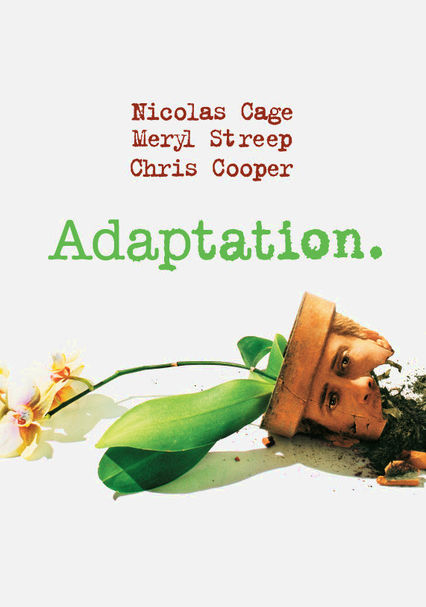
Adaptation-2002

Adaptation-2002

Director Spike Jonze

Starring Nicolas Cage, Meryl Streep, Chris Cooper

Scott’s Review #1,064
Reviewed September 24, 2020

Grade: B+

Adaptation (2002) is a kooky film that is recommended for all writers or lovers of the written word, especially for those ever having suffered from writer’s block.

The film is wonderful for people who are either curious or obsessed (me!) with how a novel is turned into a screenplay.

With an A-list cast featuring Nicolas Cage and Meryl Streep, the offering is credible and not just a bumbling indie experiment with no budget. Stars must get paid, which allows the film a mainstream audience, and awards.

The film will be too weird for some. There is a measure of conceit and self-indulgence (it’s set in Los Angeles after all!) that is sometimes off-putting, but I adored the premise too much and chomped at the bit at what I was offered.

It’s quite non-linear and the characters sometimes do things that are weird or out of turn.

Adaptation is different (in a good way) and is recommended for its oddness as I cannot think of another film like it, though Being John Malkovich (1999) would be close. Director, Spike Jonze would later create Her (2013) and, of course, directed Malkovich too.

Charlie Kaufman wrote the screenplay and the central character is Charlie Kaufman, played by Cage, who also plays Kaufman’s brother Donald, a mooch. Charlie is self-loathing and disheveled but somehow likable. He struggles mightily to bring words into his head as he nervously sits at his typewriter day after day when he is tasked to adapt the novel, The Orchid Thief, into a film.

The novel’s author, Susan Orlean, played by Meryl Streep, intimidates Charlie, who decides to pay her a visit to New York City.

This film features the best work of Cage’s career. An actor who is “not for everybody”, the performance rivals that of Leaving Las Vegas (1995), in which he won an Academy Award.

A dual role is tough to play, but the actor does so with bombast and confidence, making the characters very different from each other and making me forget they were Cage.

Too often sinking to inferior action films like Face/Off (1997) or Con Air (1997), the actor wisely had an epiphany or something and made a wise decision. Cage does best when he goes for wacky- Raising Arizona (1987) is proof of that.

The supporting players, specifically Streep and Cooper are fantastic. Streep could fart through a film and still give a great performance and you can tell she enjoys the part of Susan, allowed to let loose. Her character loves sex and drugs and is not above devious shenanigans to get her way.

Cooper, who won the Oscar, is delicious as John Laroche, a theatrical character with missing front teeth, who is the secret lover of Susan.

Both provide great entertainment.

Adaptation simply feels good for a thought-provoking writer providing oodles of “writer things” to ponder and discuss with friends after the credits roll. Many scenes are rich with layered dialogue and rife with originality making the words sparkle with pizzazz.

And there are enough twists and turns to keep viewers guessing.

One of the most original and kooky films you will ever see, Adaptation (2002) pairs well with Being John Malkovich (1999) for an evening of the odd and absurd, but also films not altogether hard to follow.

The satirical Hollywood theme will both please and annoy but it’s all good fun and a lesson in creative art cinema.

Oscar Nominations: 1 win-Best Actor-Nicholas Cage, Best Supporting Actor-Chris Cooper (won), Best Supporting Actress-Meryl Streep, Best Adapted Screenplay
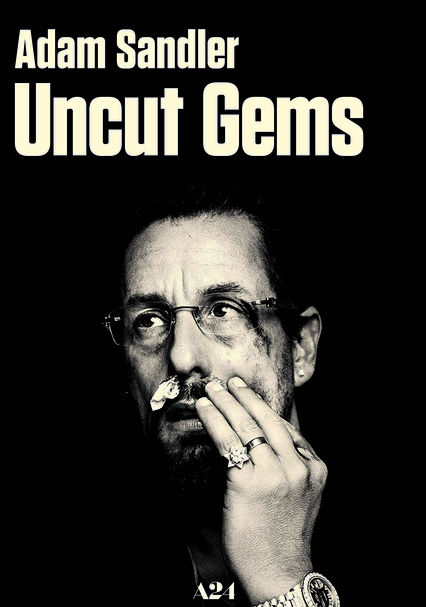
Uncut Gems-2019

Uncut Gems-2019

Director Ben Safdie, Josh Safdie

Starring Adam Sandler, Idina Menzel

Scott’s Review #1,049

Reviewed August 5, 2020

Grade: A-

The Safdie brothers have quickly emerged as a directing force to be reckoned with, producing two “gems” in only three years.

Co-written by Ronald Bronstein, the final product is jagged, fast-paced, and frighteningly intense.

Uncut Gems (2019) follows up the similarly themed Good Time (2017), giving star Adam Sandler his most significant role yet.

Yes, his performance even rivals the brilliant one in Punch-Drunk Love (2002), leading him to his first Independent Spirit Award win for Best Male Lead.

He was robbed of an Oscar nomination. We can’t have everything.

Playing a loud-mouthed Jew is hardly new territory for the actor. Think of most of his screwball comedies from the 1990s and 2000s before he delved into serious actor territory. In the dreadful Jack and Jill (2011), he played two of them!

But a trip down memory lane is surely not what the actor prefers; instead, he undoubtedly prefers to veer off course to more mature movies for the latter part of his film career. Uncut Gems made money, so let’s hope so.

We meet Howard Ratner (Sandler) following his first-ever colonoscopy, which leaves him anxious and irritable.

On better days, he is needier and a somewhat lovable teddy bear as he carries on an affair with his employee, Julia (Julia Fox), and his estranged wife Dinah (Idina Menzel), who has agreed to a divorce after Passover.

Howard runs KMH, an upscale jewelry store in the Diamond District section of New York City. How he manages to land and carry on with both gorgeous ladies is a mystery, but Dinah is a kept woman, and Julia’s father is in the jewelry industry, thus explaining why Howard is.

There is something particularly charismatic about Howard that draws other characters and the viewers to him.

As revealed at the beginning of the film and the main storyline, Howard has made a deal with Ethiopian Jewish miners in Africa to obtain a valuable black opal and sell it to him at a low price, presumably so that he can make a substantial profit from it in the United States.

It is also quickly established that Howard is a mess, owing $100,000 to his brother-in-law and loan shark. To complicate matters, his shady business associate brings basketball star Kevin Garnett into Howard’s shop.

After spotting the opal, he asks to borrow it for one night with his NBA Championship ring as collateral. This cannot end well, and it doesn’t.

The subsequent activity in Uncut Gems is crude, foul-mouthed, and off-putting to some. I have friends who watched eight or twelve minutes of it and either turned it off or left the theater in a huff.

If you are expecting a comedy rife with potty jokes or other juvenile humor, look elsewhere.

This is the real deal, with a deadly ending that is impossible to imagine. I loved the settings of Manhattan, Long Island, and Mohegan Sun in Connecticut the best.

The Safdie brothers have two major knacks. They can craft tense, edge-of-your-seat crime thrillers like nobody’s business with a pulsating backdrop and a herky-jerky editing style. They can also catapult A-list actors teetering on the verge of being typecast for specific roles into the deep waters of creativity and sink or swim risk.

No better example than Robert Pattinson’s risky turn as a grizzled bank robber in Good Time (2017), shedding his sterile, pretty-boy image that The Twilight (2008-2013) films brought him. This led to his fantastic turn in The Lighthouse (2019).

The soon-to-be household name directing team does not deserve all the credit, though, even though the men serve in a variety of key positions, including acting, editing, shooting, mixing sound, and producing their films.

Sandler has become an interesting and versatile actor as he forges into the drama vein. Happy to roll up his sleeves and do an indie film for little money (like he needs it!), he proves that an unlikeable character can have hints of likability, black humor, and pizzazz.

He completely embodies Howard, making the audience love and hate him. He balances two women, schemes to get rich, and neglects his kid’s school play, yet he is appealing.

Let’s ceremoniously proclaim 2019 as the year that stars previously known for generic films, determined to break out with challenging and fantastic roles, were shunned by the Academy.

Jennifer Lopez, shockingly snubbed for Hustlers (2019), is being punished for years of mediocre films such as Maid in Manhattan (2002) and Monster-in-Law (2005), which join her compadre Sandler in two of the biggest snubs of the decade, with Uncut Gems (2019).

Perhaps an Oscar will be in their future if they stay the course and remain true to the work.

Independent Spirit Award Nominations: 3 wins- Best Feature, Best Male Lead-Adam Sandler (won), Best Director-Benny Safdie and Josh Safdie (won), Best Screenplay, Best Editing (won)

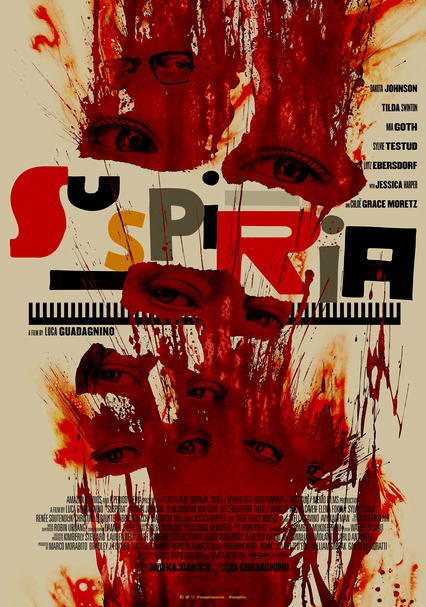
Suspiria-2018

Suspiria-2018

Director Luca Guadagnino

Starring Dakota Johnson, Tilda Swinton

Scott’s Review #864

Reviewed February 7, 2019

Grade: B-

Dario Argento’s 1977 creative masterpiece is the original Suspiria, an orgy of style and visual spectacles carefully immersed within a standard slasher film appropriate for the times.

Some might deem it foolish to attempt a remake.

Argento’s film contains comprehensive and defined story elements, while the new Suspiria (2018) changes course with a brazen attempt to achieve the same mystique as the original. Instead, it offers a plodding and mundane story that is almost nonsensical and does not work.

Thankfully, a bloody and macabre finale brings the film above mediocrity.

Director Luca Guadagnino, fresh off the Italian and LGBT-themed Call Me by Your Name (2017), a bright film peppered with melancholy romance and lifestyle conflict, could not be more different from Suspiria.

The respected director parlays into the horror genre with two of Hollywood’s top talents, Tilda Swinton and Dakota Johnson, and a nice nod to the original film with a small appearance by leading lady Jessica Harper.

The premise of Suspiria remains intact, as the period is once again 1977, and the location remains Berlin, Germany. Susie Bannion (Johnson) is a gifted American dancer who joins the prestigious Tanz dance academy run by a coven of witches, where she unearths demonic tendencies.

Coinciding with her arrival is the disappearance of another student, Patricia Hingle, and the revelation that her psychotherapist Josef Klemperer (Swinton) has Patricia’s journals chronicling details of the dastardly coven.

From an acting perspective, Swinton impresses the most as she tackles three distinctive roles: an elderly and troubled psychotherapist, artistic director Madame Blanc, and Mother Marko, an aging witch.

Each character is vastly different, allowing the talented actress to immerse herself in the various characters. She is so convincing that I did not realize while watching the film that she played the psychotherapist or that a female played the character.

I admit to not being a fan of Dakota Johnson for perceptively using her Hollywood royalty to rise the ranks to film stardom or her lackluster film roles thus far—think Fifty Shades of Grey or the innumerable sequels—but she does not do much for me in the central role of Susie.

The miscast is more palpable compared to Harper’s rendition of the role decades earlier.

Johnson is predictably wooden and quite painful to watch, especially matched against a stalwart like Swinton in many scenes. Lithe and statuesque, the young actress does contain the physical qualities of a dancer, so there is that.

As a stand-alone film, my evaluation of Suspiria might be less harsh, but the original Suspiria is held at such lofty heights that this is impossible.

The problem is with the screenplay, as compelling writing is sparse. Much of the plot makes little sense and does nothing to engage the viewer at the moment. Slow-moving and meandering, lacking a spark or an abrupt plot breakthrough, I quickly lost interest in what was going on.

The interminable running time of over two and a half hours is unnecessary and unsuccessful.

Before I rake entirely Suspiria across the coals, my cumulative rating increases with the astounding and garish final sequence, which features a plethora of blood and dismemberment in a sickening witches’ sabbath.

As Klemperer lies incapacitated after being ambushed by the witches, one girl is disemboweled, followed by decapitation, as the bold use of red is blended into the lengthy sequence. As the withered and bloated Mother Markos relinquishes her title, an incarnation of Death is summoned, and heads explode.

The finale plays out like a horrible dance sequence.

To add to the above point, the visuals and cinematography are its highlights. By using mirrors and possessing a dream-like quality, the film looks great and harbors an eerie, stylistic, and deathly crimson hue. The resulting project is one of spectacle and intrigue rather than a sum of its parts.

Rather than approaching the film with an introspective or cerebral motif, it is recommended that you simply go with the flow and let it fester.

Guadagnino deserves credit for bravely attempting to undertake the creation of such a masterpiece and bringing it to audiences in 2018.

Suspiria (2018) lacks plot or pacing and is the second runner-up to the original. The story is not worth making heads or tails of since it is not interesting enough to warrant the effort.

Ultimately, skip this version and stick to the brilliance of the Argento effort, or better yet, do not compare the two films at all.

Independent Spirit Award Nominations: 2 wins- Best Cinematography (won), Robert Altman Award (won)

Isle of Dogs-2018

Isle of Dogs-2018

Director Wes Anderson

Voices: Bryan Cranston, Edward Norton

Scott’s Review #831

Reviewed November 15, 2018

Grade: B+

Anybody familiar with a Wes Anderson production knows what they are in store for, and Isle of Dogs (2018) is par for the course.

With zany narratives and fantastic art direction, the film has a familiar stamp. Most resembling his other notable stop-motion film, Fantastic Mr. Fox (2009), Isle of Dogs offers what is to be expected- an intelligent and odd project by a visionary creative mind.

Anderson provides the film with a timely, corrupt government-type message that strongly resonates in 2018. In this way, Isle of Dogs, while animated, is so much more than a cookie-cutter story or a wholesome film for kids.

The director shows bravery in focusing on the corruption prevalent in today’s world and the fight for justice by ordinary people living under authoritarian control.

Set in dystopian Japan, a recent outbreak of canine flu causes corrupt Mayor Kobayashi to banish all dogs from society to the vast wasteland of Trash Island, where they will live out their days with other ostracized canines.

A brave twelve-year-old boy named Atari, who happens to be the mayor’s nephew, steals a plane and crash-lands on the island to rescue his beloved dog, Spots.

With help from a pack of dogs led by a former stray named Chief, the group sets out to find Spots and ultimately expose the government conspiracy. Obstacles abound as the mayor has sent a robot dog to return Atari and make mincemeat of any dog in its path.

Meanwhile, a professor, Tracy Walker, is on the cusp of discovering a serum as an outspoken American exchange student investigating the conspiracy.

Isle of Dogs is incredibly original and offers bravura visuals. From the lush and bright Japanese culture to the tired and haggard look of many dogs living on the island, the film is a treat for the eyes. The shimmering richness of the city is elegant and feels alive and powerful.

What I admire most about the film is its creativity and the blast of left-of-center storytelling, which blows away most animated offerings of today.

Many contain a robust helping of “cute”, which can turn off a mature viewer. With a target audience of the tween age, what is in it for adults? To sit there with a youngster and pretend to be jovial?

Isle of Dogs is not a crowd-pleaser; it is better than that. Anderson crafts a serious and timely message that begs to be absorbed by the careful viewer.

Assuredly, Anderson cannot escape providing a subtle allegory on an evil leader stirring the pot against the most helpless in our society. This point is timely and well thought out, especially in the tumultuous United States.
Could this be why an American character (Tracy) was added?

As dynamic as Anderson’s creativity is, the story in Isle of Dogs does not always embrace the viewer, and the jarring dialogue is tough to follow.

Standard in his films, the pacing is strange, the conversations between characters are odd, and the film lacks a truly welcoming or warm quality.

Therefore, the film is not an easy watch. And the dogs all speaking English rather than Japanese, with American accents, must be overlooked.

Critics and detractors of Wes Anderson need not see Isle of Dogs (2018) as they will be in store for typical Anderson fare. In addition, those seeking a standard mainstream animated feature will be disappointed.

Those with a more open-minded approach to cinema will revel in the film’s stunning look and the powerful message bubbling under the surface.

Oscar Nominations: Best Animated Feature Film, Best Original Score

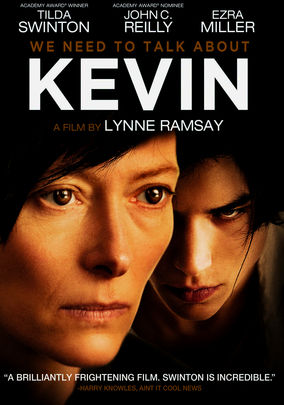
We Need to Talk About Kevin-2011

We Need to Talk About Kevin-2011

Director Lynne Ramsay

Starring Tilda Swinton, Ezra Miller, John C. Reilly

Scott’s Review #785

Reviewed July 9, 2018

Grade: A

We Need to Talk About Kevin (2011) is a tremendously disturbing independent drama with eerie similarities to the infamous Columbine school shooting massacre.

The point of view of the film is from the perspective of Eva (Tilda Swinton), a haggard, troubled mother doubting her love for her violent teen son.

Swinton was shamefully overlooked for an Academy Award nomination despite her brilliant and breathtaking role. The overall film itself is equally astounding and powerful.

Adapted from a Lionel Shriver novel, the events of the film begin in present times after tragedy has occurred. Eva, once a successful, writer of affluent means, now lives alone in a rundown house near a prison where she frequently visits her son Kevin (Ezra Miller).

She is now reduced to working a mundane job in a travel agency while terrorized by neighbors who blame her for her son’s machinations. Chillingly, Eva ponders the warning signs Kevin exhibited throughout his childhood and tortures herself with thoughts of what she could have done differently to prevent the shootings and the death of her loved ones.

Uniquely, the film segues to before Kevin was even born. Eva and her husband Franklin (John C. Reilly), happily welcome their baby boy, but he is immediately “not right” and difficult and cold towards her.

This behavior continues over the years as Kevin is distant towards Eva, but warm and adoring towards his father, leading to mental games and the death of a pet. When Eva and Franklin have another child things get progressively worse leading to tragic events.

The film is a pure masterpiece with riveting acting performances all around (especially Swinton) and a slow, plodding pace. This is a perfect aspect of the film because there is a continuous gloomy and moody vibe.

Director, Lynne Ramsay, reveals all in the beginning moments of the film so we know how events will transpire, but the pure enjoyment is the development of the characters.

Dad, Franklin, and daughter, Celia, are around, but the film belongs to the characters of Eva and Kevin and their relationship with each other.

Many questions will be asked throughout the film (I know I asked myself these questions).

Should any blame be cast upon Eva or is she purely innocent? How about Franklin? Is Kevin just a “bad kid”? Was Eva wrong for breaking Kevin’s arm in anger, or justified? Should Eva have never had kids because of her earlier doubts? Should she have been more proactive in getting treatment for Kevin?

Swinton delivered her career-best performance and while she was recognized with a Golden Globe nomination, the ultimate gold statuette (Oscar) alluded to her. I find this to be troubling especially since she won for 2007’s Michael Clayton, a very good performance, but not on the same level as Eva.

Swinton is one of the great modern actresses and hopefully, great roles will continue to follow this treasured star.

Almost on par with Swinton is a young talent, Ezra Miller. A relative newcomer in 2011 he appeared in the indie gem The Perks of a Wallflower (2012) and in later years traversed into more mainstream fare like Trainwreck (2015) and Suicide Squad (2016).

We Need to Talk About Kevin remains his best and most challenging effort.

One of the best sequences occurs during the school massacre scene. Shot at night time (and in my adopted hometown of Stamford, Connecticut!) the sequence involves flashing police lights and chaos as Eva approaches the school in horror. With no dialogue, we see Kevin enter the school and render the doors useless as an escape route.

Terrified students are murdered as Kevin erupts with maniacal rage. The scene is downright chilling and incredibly effective.

2017’s The Killing of a Sacred Deer reminds me quite a bit of We Need to Talk About Kevin in tone and style, so much so that I wonder if the latter was watched and studied before the former.

Either way, the duo could be watched subsequently for a double-dose of teenage maniacs.

With a bleak and dark tone, We Need to Talk About Kevin (2011) offers a story that has a clear message. Never discussing the hot topic of gun control, guns are not used in the slaughter, a bow is, weapon restrictions will nevertheless be an obvious discussion point.

This film is one to be observed, savored, dissected, and thought about after the finale, and is one to be remembered as a great piece of cinema.

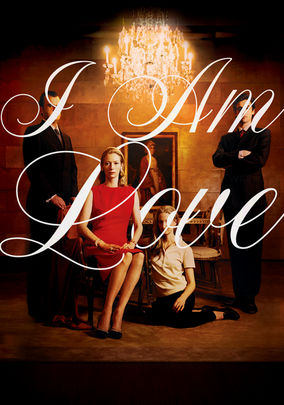
I Am Love-2009

I Am Love-2009

Director Luca Guadagnino

Starring Tilda Swinton

Scott’s Review #545

Reviewed December 11, 2016

Grade: A

Tilda Swinton shines in I Am Love,  an amazing Italian film from 2009 that I wish received wider recognition, but alas, some of the best films do not receive their due.

Swinton stars as a matriarch of a wealthy Italian family, who owns a successful business. To make this film very authentic, it was shot in and around Milan and contains a highly stylish and exquisite appearance.

It is a grand film with high-class set pieces and a great look. I do not hesitate to categorize it as an artistic, female version of The Godfather because it is that good.

It focuses on the family as a whole but more so on Swinton’s character, who is bored and unhappy with her life and yearns for passion and feeling.

One day she meets a friend of her sons and drama ensues.

The boy is only half her age, but they share a passion that awakens her from her doldrums. The conflict in the film is how the affair looks to society and affects the family business- not to mention detrimental to her marriage.

I Am Love (2009) is a great film that should be discovered by those looking for a gorgeous film with great drama.

Oscar Nominations: Best Costume Design

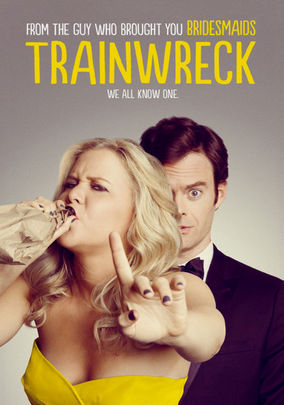
Trainwreck-2015

Trainwreck-2015

Director Judd Apatow

Starring Amy Schumer, Bill Hader

Scott’s Review #463

80036402

Reviewed August 13, 2016

Grade: B

Trainwreck is a raunchy 2015 comedy/romantic comedy that lends its success largely to its star.

Amy Schumer makes this film as good as it can be (after all, she wrote it) and despite the raunchy girl power themes that are currently the popular trend in films of this genre, Trainwreck has some laughs and good times thrown in, thanks to Schumer.

Judd Apatow directs, who has successfully made a gazillion of these types of films in modern times.

The film does teeter off into predictability toward the conclusion. It has its moments of fun and is not boring.

Unapologetic, sexually promiscuous, and boozy, Schumer plays a successful magazine writer (Amy) given an assignment she despises- interview a sports medicine doctor, named  Aaron (played by SNL alum, Bill Hader).

Amy hates sports and knows nothing about them, she also goes from man to man, nothing serious, and is currently dating a sexy bodybuilder named Steven (John Cena), who she thinks may be gay.

Predictably, Amy and Aaron fall in love.

In typical fashion, Trainwreck contains stereotypical characters or characters who are merely there to bounce off the main action.

SNL alum Vanessa Bayer, and Tilda Swinton are the most obvious examples, as the loyal best friend and rigid, type-A boss, respectively.

Brie Larson and Colin Quinn co-star as Amy’s family members. Both give one-note performances that are fine, but unspectacular, and one surmises that Brie Larson agreed to this role before her Oscar-winning turn in Room (2015).

Despite the comedy clichés, I had some good fun with Trainwreck.

Schumer is likable as an ordinary girl, think of her as the new Melissa McCarthy, to whom many people can relate. I am not sure Schumer and Hader had the best chemistry, but the point was that she found love with a “regular” guy, a tad dull, to counter-balance her big, loud personality.

And they do make a charming pair.

Some scenes work. When Amy encourages a naked Steven to “talk dirty to her” in the bedroom and he attributes everything to bodybuilding, the scene is funny.

When Amy and Steven banter with an angry couple at the movie theater, fall flat.

Certainly not high art, for the raunchy comedy genre, Trainwreck is a treat and entertaining to watch, in large part due to the comedic talents of Amy Schumer.

More often than not, when the masses rave about a current comedy as being “great”, I am usually disappointed. While Trainwreck (2015) is not great, it is good, with some laughs.

Otherwise, it is a rather by-the-numbers film.

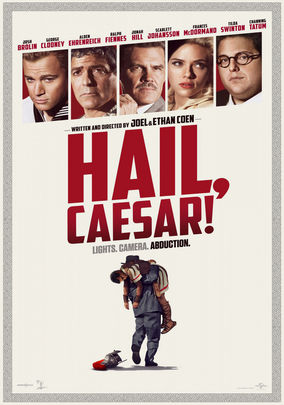
Hail, Caesar!-2016

Hail, Caesar! -2016

Director Ethan Coen, Joel Coen

Starring George Clooney, Channing Tatum

Scott’s Review #377

80074084

Reviewed February 16, 2016

Grade: B+

Hail, Caesar! (2016) is a quirky film created and directed by the Coen Brothers, who are known for offbeat films such as Fargo (1996), No Country for Old Men (2007), and Raising Arizona (1987).

Hail, Caesar is a satirical comedy about the Hollywood film industry during the post-World War II period of the 1950s.

The film features a bevy of current Hollywood talent, including George Clooney, Channing Tatum, Josh Brolin, and Scarlett Johannsen, including singing, dancing, and scandalous matters.

All give fine performances and add humor and wit to the film.

The plot centers on the character of Eddie Mannix (Brolin), a celebrity “fixer” and real-life person who works as an executive for Capitol Pictures and whose primary responsibility is to ensure that famous Hollywood stars remain out of trouble.

The period is 1951, a particularly scandalous time in pictures. One of the biggest stars of the time, Baird Whitlock (Clooney), is suddenly kidnapped and held for ransom while completing a big epic film for the studio.

Mannix must race to keep the crisis out of the news and safely get Whitlock back.

Indeed, there are interesting subplots, including handsome yet talent-less Western actor Hobie Doyle, hired by the studio to appear in a sweeping period piece directed by suave Laurence Laurentz (Ralph Fiennes), and DeeAnna Moran (Johannsen), unmarried and with a “bun in the oven,” determined to keep herself out of the tabloids.

I loved the look of the film, as numerous films occur within it. The 1950s set pieces and designs are exquisite, particularly the period piece set, lavishly designed with classic doors, a staircase, flowers, and a cast dressed to the nines.

It brings back an extravagant time.

The film is a satire, to be sure. Still, it also addresses the serious subject of communism (especially for that period), Russia, and Russian defectors, all involved in a plot to prove a valuable point.

Despite the film being a comedy, this is worth serious consideration. Many Hollywood writers make money for the studios and are rewarded with underwhelming salaries.

The same holds true in Hollywood today.

This point can spill over into other walks of life as well, and the point of the “little man gets screwed” is explored. Communism is also explored throughout the film as the central message- an important message that resonates.

Another interesting tidbit that Hail, Caesar!Mentionss, though only on the surface, is the burgeoning onslaught of television programming.

Suddenly, an increasing number of people were purchasing TVs and avoiding the glamour of films, opting instead for the comfort of their couches.

What a different time it was!

An intriguing, favorite character of mine belongs to Channing Tatum’s portrayal of Burt Gurney, a Gene Kelly-like character famous for singing and dancing numbers. A sizzling sailor dance gives edge and sexuality to the film.

A revealing scandal involving Burt and Laurence is fantastic and delicious.

My favorite scene belongs to Frances McDormand, who shamefully only appears in one scene- quite memorable. As film editor C.C. Calhoun, she diligently shows Mannix film dailies in the hopes of discovering a clue in the disappearance of Whitlock. When her scarf gets caught in the projector, hilarity and grotesqueness ensue.

It is a classic Coen Brothers comedy.

Hail Caesar! (2016) succeeds as a witty, comical throwback to a wonderful time in film history, with a political edge that historians will appreciate and Coen Brothers fans will relish.

Perhaps not their most creative or memorable, but enjoyable all the same.

Oscar Nominations: Best Production Design

Only Lovers Left Alive-2014

Only Lovers Left Alive-2014

Director Jim Jarmusch

Starring Tilda Swinton, Tom Hiddleston

Scott’s Review #237

Only_Lovers_Left_Alive_English_film_poster

Reviewed April 24, 2015

Grade: B

Only Lovers Left Alive (2014) is a bizarre trip into the strange and unusual world of vampires.

The film, moving slowly, becomes hypnotic, grabbing me into the plot, though the plot itself seems almost secondary to the gothic mood and dark ambiance of the film.

Thanks to the wonderful Tilda Swinton, who I find mesmerizing in every film role she appears in, the methodical film never completely bored me and, at times, even fascinated me.

Set in present times, Swinton and Tom Hiddleston play vampires named Adam and Eve, who are lovers separated geographically. Adam is a musician living in a vast Victorian house in Detroit and Eve resides in Tangier.

Realizing that Adam is lonely and suicidal, Eve makes the international trek to the United States to be with her love. While they begin enjoying a quiet existence immersed in music and thoughts, Eve’s rebellious sister Ava (Mia Wasikowska) from Los Angeles adds havoc to their lives.

Also cast in the film is John Hurt, who plays Marlowe, an ancient vampire assisting Adam and Eve, who succumbs to sickness due to tainted blood.

The film is a creative, atmospheric offering from edgy independent film director Jim Jarmusch, known for such left-of-center fare as Broken Flowers (2005) and Coffee and Cigarettes (2003), which are visual and visceral achievements.

While I did not completely love this film, feeling that the actual story is the weakest area, the magical and beautiful arrangements almost make up for any shortcomings.

Set entirely at night (when vampires are awake) and featuring several shots of Adam and Eve posed naked or almost naked in lovely, artistic angles, I think the film is going for a “look” as much as for storytelling and not completely centering on the plot.

It is also a lovely romantic film, though not in the typical sense of silly misunderstandings, and comical moments, but rather in romantic artistry, as Adam and Eve connect spiritually.

Married hundreds of years ago, Adam and Eve have been inexplicably separated by thousands of miles and coasts, though the reason is not explained.

Why are they the few remaining vampires alive? Does the human race know they are vampires or think they are odd-looking people? They both have money to burn and pay a high cost for being vampires as they either pay a contact to steal blood from hospitals to survive or obtain the blood elsewhere.

They are tempted to bite humans but resist those urges. The film does not explain why they are two of the few vampires left in the world or other questions. Adam, supposedly a famous musician, is wealthy beyond words and lives in a haunted-looking mansion surrounded by music and musical instruments.

The plot holes, of course, are secondary to me. None of them matter.

The film has beautiful moments- it is musically centered and Adam and Eve on more than one occasion engage in beautiful, tender dances the film is a pure love story, but a very left-of-center one.

I admire the film’s creativity and going where most filmmakers do not dare to go. Jarmusch dares to be different and deserves much praise.

The negative for me was the pacing of the film- the story almost does not matter as the film feels more like an experience in art than a “mainstream” film containing strong plot points and focus.

Only Lovers Left Alive (2014) is a different type of film and one worth admiring.

Independent Spirit Award Nominations: Best Female Lead-Tilda Swinton, Best Screenplay

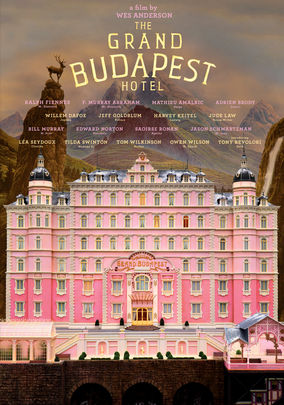
The Grand Budapest Hotel-2014

The Grand Budapest Hotel-2014

Director Wes Anderson

Starring Ralph Fiennes, F. Murray Abraham

Scott’s Review #143

70295915

Reviewed July 30, 2014

Grade: B+

The Grand Budapest Hotel (2014) is a witty and unique film by director Wes Anderson, who has also directed similarly quirky films,  notably Monsoon Kingdom (2012) and The Royal Tenenbaums (2001).

The famous story of the history of the Grand Budapest Hotel is recounted, over dinner, by the current owner Zero (played by F. Murray Abraham), and an inquisitive guest (Jude Law).

The film then goes back to the 1930s and shares the story of the actual history of the hotel.

The main story centers on the head concierge, Gustave, (Ralph Fiennes), and his antics involving older wealthy blonde women, a murder, stolen art, and a missing will.

Gustave is a ladies’ man, and bisexual, who spends time with the rich women who stay at the hotel.  Fiennes does an excellent job as the quick-witted, almost manic Gustave.

This sets off a series of interesting, mysterious events for the remainder of the film that turns into a whodunit yarn.

The visual aspects usurp the story. The art direction is amazing. The sets are constructed so perfectly and ingeniously that they almost look like animated sets or like a dollhouses.

The costumes and makeup are flawless.

The story tends to be tough to follow at times and is just not as strong as the other aspects of the film, although this is not to be interpreted as the story is not good- it is entertaining, but nothing more.

It’s just that the other aspects of the film are magnificent and the story is secondary. It’s an odd film, certainly, but unique and interesting.

Well-known Hollywood stars appear- Tilda Swinton, Edward Norton, Adrien Brody, Willem Defoe, and Harvey Keitel.

Oscar Nominations: 4 wins-Best Picture, Best Director-Wes Anderson, Best Original Screenplay, Best Original Score (won), Best Production Design (won), Best Cinematography, Best Makeup and Hairstyling (won), Best Costume Design (won), Best Film Editing