Category Archives: Peter Ramsey

Minority Report-2002

Minority Report-2002

Director Steven Spielberg

Starring Tom Cruise, Colin Farrell, Samantha Morton

Scott’s Review #1,318

Reviewed November 27, 2022

Grade: B+

If you study his body of film work, the fascinating thing about acclaimed director Steven Spielberg is the growth and groundbreaking cross-genre categorization of many of his films.

Traversing blockbuster popcorn films like Close Encounters of the Third Kind (1977) and E.T. the Extra-terrestrial (1982) to heavy drama with the 1993 masterpiece Schindler’s List, the man can do it all.

With 2002’s Minority Report, he bravely delves into science-fiction territory with a crime thriller and action tint. The film is tough to follow and mostly reminds me of Inception (2010), a Christopher Nolan vehicle influenced by this film.

Despite the cerebral tone, Minority Report is a fascinating study of futuristic crime-fighting styles with enough twists and turns to keep me engaged though I confess at times having no real idea what was going on plot-wise.

The casting of Tom Cruise is a major win. Who better to carry a film like this except maybe Bruce Willis though Cruise is a better actor. Nonetheless, he is believable as a crime chief with a slick edge and a wicked smile.

Unsure whether or not to trust him he remains at the heart of the success of the film.

Based on a story by science fiction writer Philip K. Dick, ‘Minority Report’ contains a perfect premise to bring to the big screen. Set in Washington D.C. in 2054, police are now intelligent enough to utilize psychic technology to arrest and convict murderers before they commit their crimes.

The setup is fabulous and rife with possibility.

Cruise plays Chief John Anderton, the head of this Precrime unit, and is himself accused of the future murder of a man he hasn’t even met. Following an audit, it is predicted that in thirty-six hours, Anderton will kill a man who is a stranger to Anderton.

Anderton flees, prompting a manhunt led by Witwer (Colin Farrell).

It is revealed that Anderton joined the Precrime program after his son was kidnapped and never found. He is depressed, withdrawn, and addicted to hard drugs, and his wife Lara (Kathryn Morris) has since left him.

But is this all a setup and are others involved in the conspiracy?

The plot goes way off the rails in terms of explanation or logic but the fun is in trying to put the never-ending puzzle pieces together. Truthfully, after a while, I simply gave up this approach and enjoyed the visual eye candy and terrific futuristic style.

I rarely am a proponent of visuals over storytelling but the intelligence of the sequences and the thrilling nature of the acting assured me there was something there. I just wasn’t completely getting it.

Since it’s directed by Spielberg I was confident that the complexities I was being served were not shit. I was comforted by this knowledge and my enjoyment escalated.

Enough props can’t be handed out for Cruise’s dynamic performance parlayed by the coldness and harshness of the overall tone of the film.

Many of Spielberg’s films are heartwarming but this was not to be found in Minority Report (2002) and I liked it even more for that reason.

Spielberg gets another win by suckering me into a cinematic world that he magically can create. This time with perplexities and perhaps even some influence from the Matrix (1999) movies.

Oscar Nominations: Best Sound Editing
Backdraft-1991

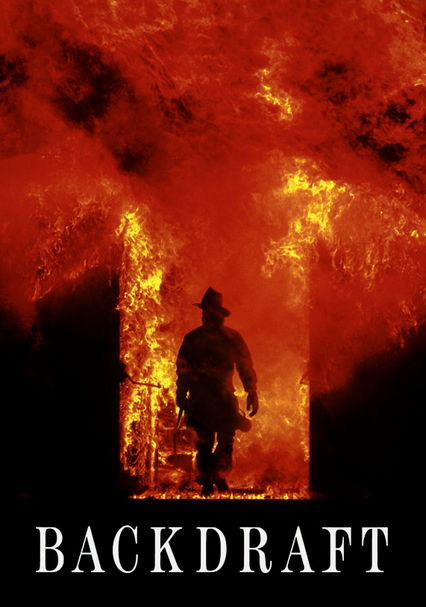
Backdraft-1991

Director Ron Howard

Starring Kurt Russell, William Baldwin

Scott’s Review #1,216

Reviewed January 2, 2022

Grade: B

Backdraft (1991) is a highly entertaining yet completely implausible action, thriller film directed by Ron Howard. If made today it would be on par with Chicago Fire or any other of the slew of similar procedural NBC television shows that currently exist.

The film is even set in Chicago just like the television series.

The story involves an arsonist on the loose and the subsequent investigation to catch them.

Howard is an influential and respectable director but his films frequently harbor the safe territory rarely veering too left of center. With Backdraft, I assumed I would get a by-the-numbers masculine film and that is exactly what I received.

The beefy cast includes Kurt Russell, Billy Baldwin (brother of Alec), and Robert De Niro with Jennifer Jason Leigh and Rebecca De Mornay serving as secondary female characters.

Chicago firefighting brothers Stephen (Russell) and Brian (Baldwin) have been rivals since childhood. Brian, struggling to prove himself as a worthy firefighter, transfers to the arson unit where he aids Inspector Don Rimgale (De Niro) in his current investigation. There is a rash of fires involving oxygen-induced infernos called backdrafts.

But when a conspiracy implicating a crooked politician and an arsonist leads Brian back to Stephen, he is forced to overcome his brotherly competitiveness to crack the case.

Anyone involved in their local fire department or who has a strong sense of loyalty or brotherhood in a blue-collar vein will love Backdraft for its message. The strong family unit that shrouds most firehouses or police stations is prevalent throughout the film which brings a united and community feeling.

It’s a nice feeling and sets the tone for the viewer to feel a part of things and root for the heroes to defeat whoever is responsible for the arsons. Could it be an unstable member of the fire community or an outsider harboring a grudge?

The story, despite being somewhat of a whodunit is not the strongest aspect of Backdraft nor much of a reason to tune in and follow. Too often the writing is lazy or languishes in television drama territory with obvious and melodramatic situational setups.

The realism is not there. The fire sequences are completely stagey and meant to perfectly parlay the story elements rather than have an identity of their own.

With all that said, the star of the film is the visuals that give Backdraft its adventure and edge-of-your-seat thrills. Even though I knew the fires and explosions were manipulated I felt like I was inside a burning room with the hissing and crackling sounds of the fire and wind enveloping me.

It’s all for dramatic purposes of course but the state-of-the-art special effects are cool to experience.

This is the key to the success of a film like Backdraft and enough for me to keep watching and become invested in the entire work.

Yes, many characters are types and despite the big A-list stars Russell and Baldwin are the only ones who have much of anything to do. Their brotherly relationship though fraught with friction is at the heart of the characters though sometimes the corny dialogue slips into soap opera territory.

Backdraft (1991) is a cinematic Hollywood mainstream film that works on many levels. Forget the lazy storylines and the predictability factors for a minute. It provides a blazing-hot inferno of sharp visuals that are to be commended and appreciated for their merits.

Oscar Nominations: Best Sound Effects Editing, Best Visual Effects, Best Sound

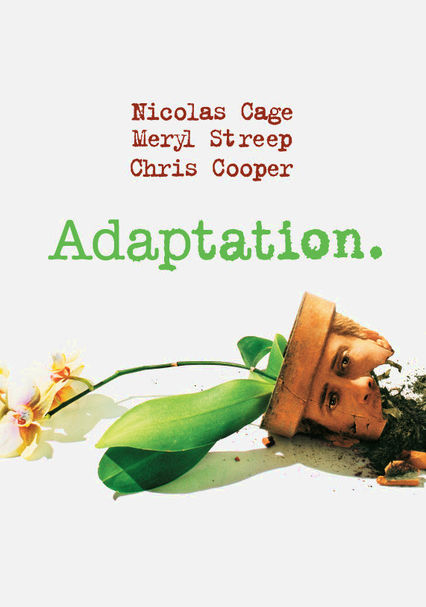
Adaptation-2002

Adaptation-2002

Director Spike Jonze

Starring Nicolas Cage, Meryl Streep, Chris Cooper

Scott’s Review #1,064

Reviewed September 24, 2020

Grade: B+

Adaptation (2002) is a kooky film that is recommended for all writers or lovers of the written word, especially for those ever having suffered from writer’s block.

The film is wonderful for people who are either curious or obsessed (me!) with how a novel is turned into a screenplay.

With an A-list cast featuring Nicolas Cage and Meryl Streep, the offering is credible and not just a bumbling indie experiment with no budget. Stars must get paid, which allows the film a mainstream audience, and awards.

The film will be too weird for some. There is a measure of conceit and self-indulgence (it’s set in Los Angeles after all!) that is sometimes off-putting, but I adored the premise too much and chomped at the bit at what I was offered.

It’s quite non-linear and the characters sometimes do things that are weird or out of turn.

Adaptation is different (in a good way) and is recommended for its oddness as I cannot think of another film like it, though Being John Malkovich (1999) would be close. Director, Spike Jonze would later create Her (2013) and, of course, directed Malkovich too.

Charlie Kaufman wrote the screenplay and the central character is Charlie Kaufman, played by Cage, who also plays Kaufman’s brother Donald, a mooch. Charlie is self-loathing and disheveled but somehow likable. He struggles mightily to bring words into his head as he nervously sits at his typewriter day after day when he is tasked to adapt the novel, The Orchid Thief, into a film.

The novel’s author, Susan Orlean, played by Meryl Streep, intimidates Charlie, who decides to pay her a visit to New York City.

This film features the best work of Cage’s career. An actor who is “not for everybody”, the performance rivals that of Leaving Las Vegas (1995), in which he won an Academy Award.

A dual role is tough to play, but the actor does so with bombast and confidence, making the characters very different from each other and making me forget they were Cage.

Too often sinking to inferior action films like Face/Off (1997) or Con Air (1997), the actor wisely had an epiphany or something and made a wise decision. Cage does best when he goes for wacky- Raising Arizona (1987) is proof of that.

The supporting players, specifically Streep and Cooper are fantastic. Streep could fart through a film and still give a great performance and you can tell she enjoys the part of Susan, allowed to let loose. Her character loves sex and drugs and is not above devious shenanigans to get her way.

Cooper, who won the Oscar, is delicious as John Laroche, a theatrical character with missing front teeth, who is the secret lover of Susan.

Both provide great entertainment.

Adaptation simply feels good for a thought-provoking writer providing oodles of “writer things” to ponder and discuss with friends after the credits roll. Many scenes are rich with layered dialogue and rife with originality making the words sparkle with pizzazz.

And there are enough twists and turns to keep viewers guessing.

One of the most original and kooky films you will ever see, Adaptation (2002) pairs well with Being John Malkovich (1999) for an evening of the odd and absurd, but also films not altogether hard to follow.

The satirical Hollywood theme will both please and annoy but it’s all good fun and a lesson in creative art cinema.

Oscar Nominations: 1 win-Best Actor-Nicholas Cage, Best Supporting Actor-Chris Cooper (won), Best Supporting Actress-Meryl Streep, Best Adapted Screenplay

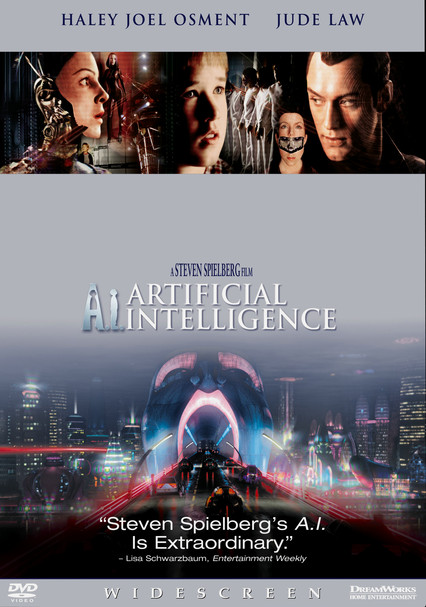
A.I. Artificial Intelligence-2001

A.I. Artificial Intelligence- 2001

Director Steven Spielberg

Starring Haley Joel Osment, Jude Law

Scott’s Review #1,052

Reviewed August 13, 2020

Grade: B+

A bit of a history lesson about the film A.I. Artificial Intelligence (2001).

The final cinematic version is based on the 1969 short story “Supertoys Last All Summer Long” by Brian Aldiss, which was purchased and developed by director Stanley Kubrick in the 1970s.

Left unfinished for years, and the subsequent passing of Kubrick after he had started to collaborate with Steven Spielberg, the film was finally carved into a final project by Spielberg.

Upon close study, the film possesses the mark of both directors with the edge going to Spielberg.

The tone of the story contains a creepiness and oddity familiar to fans of Kubrick, like he may have been thinking along the lines of a similar theme to the brilliant 2001: A Space Odyssey (1968).

Both center around robots and a futuristic world. Spielberg adds a humanistic, sympathetic, and slightly melancholy edge as he did with E.T. the Extra-terrestrial (1982) so that we adore the main character and want justice for him.

In contrast, Kubrick made his version of an extra-terrestrial in 2001: A Space Odyssey a scary villain. The results are mostly good, but uneven in parts.

The premise is solid and grasps our attention. The time is the twenty-second century when the polar ice caps have melted and submerged many coastal cities. It’s also a time when humans live side by side with “mechas,” or sentient robots.

Henry and Monica Swinton are suffering because their son Martin has a rare disease and is placed in suspended animation.

They are given a Mecha child capable of experiencing love. Henry and Monica fall in love with David and, in a plot twist worthy of a daytime soap -opera, Martin returns to life, becomes jealous of David in a plot reminiscent of The Good Son (1993), tries to frame David for monstrous deeds, and David is nearly shipped off to parts unknown.

This is Spielberg’s first crack at screenwriting in nearly twenty-five years, since Close Encounters of the Third Kind (1977) and he does a decent job. No secret is that both films, along with E.T. the Extra-Terrestrial have common themes so he feels comfortable with these subjects.

The humanity is there, but the screenplay is often too busy with story points coming and going at a rapid pace. I wanted a deeper dive into Henry and Monica to feel more about their characters and what makes them tick. I felt their pain of having (sort of) lost a child, but not why they needed to fill the void so quickly.

Osment is insanely good in a film so complex that his performance could have easily been overshadowed by the other elements.

Instead, he powers through adding complexities to a character the audience falls in love with, aching and yearning along with him. David is faced with terrible, life-changing news of not only being adopted but of not even being human.

His determination to find out who he truly is takes the viewer down a path of both entertainment and adventure, but also of bitter emotion.

A.I. Artificial Intelligence (2001) has a lot going on and critically speaking, maybe too much. Spielberg fleshes out the original short story and tasks the viewer with enduring a global warming message, important, but a trite overdone, and sympathizing with David, the lonely robot boy.

The story becomes an exciting adventure and the complexities between being human and being almost human are explored, but not quite satisfactory.

Osment and Law are terrific with dazzling chemistry and the visuals and musical score are astounding. Osment should have received a Best Actor Oscar nomination to follow the one he got for The Sixth Sense (1999).

Oscar Nominations: Best Musical Score, Best Visual Effects

A Nightmare on Elm Street 5: The Dream Child-1989

A Nightmare on Elm Street 5: The Dream Child-1989

Director Stephen Hopkins

Starring Robert Englund, Lisa Wilcox

Scott’s Review #1,032

Reviewed June 12, 2020

Grade: C+

When one compares A Nightmare on Elm Street 5: The Dream Child (1989) to the first A Nightmare on Elm Street (1984), made merely five years prior, the latter is shockingly bad, but rated on its own merits it is okay with both creative and silly moments.

The franchise feels exhausted at this point, a long rest is recommended, as too many cheesy and doltish moments make this installment more of a comic failure with rarely any scary or sinister moments.

A watered-down and forgettable entry in a series once blooming with potential.

Sadly, it would only be two years before another Nightmare was released.

With a mother theme complete, nearly all the parents and children involved in Freddy Krueger’s original story-line dead and buried, a dream sequence double-shot contained within parts 3 and 4, the logical next idea is to utilize a child story.

This is not a bad idea given that Freddy was accused of child molestation, but the intention to produce a spawn of Freddy is less than marvelous. The Child’s Play franchise (1988-2019) took this cue with Seed of Chucky in 2004.

Once again, a year has passed since the events of the previous entry as Alice (Lisa Wilcox) and Dan (Danny Hassel) cheerily date and enjoy their lives together as they graduate from high school. They are accompanied by friends Greta, Yvonne, and Mark.

When Alice has a strange dream about a nun, a mental hospital, and an attack by patients, Dan stresses that she controls her dreams.

As the dreams persist she begins to have nightmares of Freddy and a strange baby. When Alice and Dan learn they are pregnant, things become violent when Dan and the others are systematically killed off in their dreams while Alice is deemed “crazy”.

A pleasantry to mention is that at least the film offers a slight measure of consistency and continuity as we are reintroduced to Alice and Dan, familiar characters from Part 4.

The film wisely keeps the same actors to avoid the jarring disruption that existed in Part 4 when a startling recast was made of its main character from Part 3. Johnson and Jordan are not the greatest actors nor are the supporting cast, but the great acting ability is a nicety not a necessity in slasher films.

The visuals are also entertaining, which has habitually been good throughout each of the chapters. Some animated sequences emerge, particularly within the dream sequences.

The kills and attacks are also well crafted as when a comic book artist is terrorized by Freddy and when one victim, Greta, eats herself alive. There is more humor to the kills than in other installments.

Greta’s death is almost revenge against her controlling mother, who is weight-conscious. When Greta chokes to death (in real life) she drops dead in front of her mother and their dinner guests.

The scene is macabre black humor.

Otherwise, the film is very familiar territory. The baby topic culminates in a wacky sequence that does not work well and is implausible even for a horror film.

In dreams, Freddy is feeding his victims to the baby (strangely, named Jacob- wouldn’t Freddy Jr. have been cleverer?) as nourishment to make him be like Freddy. In the real world, Dan’s (now dead) parents demand the baby from Alice when it is born.

This is a silly television afternoon special moment. The story concludes with Alice going to sleep to fight Freddy and save her son, which she naturally does.

At the risk of beating a dead horse, 1989 was a paltry year in cinema specifically in the slasher genre.

Quite successful during the late 1970s and the early 1980s, it became over-saturated and riddled with carbon copies. A Nightmare on Elm Street 5: The Dream Child (1989) is a forgettable film offering little to distinguish itself from other chapters. In its defense, how could it, be the fifth release in six years?

A feeble attempt by the studio to capitalize financially on a name brand that has run out of steam.

Spider-Man: Into the Spider-Verse-2018

Spider-Man: Into the Spider-Verse-2018

Director Peter Ramsey, Rodney Rothman, Bob Persichetti

Voices Shameik Moore, Hailee Steinfeld, Lily Tomlin

Scott’s Review #881

Reviewed March 30, 2019

Grade: B+

There have been many film versions of Spider-Man.

To my recollection, the first series consisted of three installments, directed by Sam Raimi: Spider-Man (2002), Spider-Man 2 (2004), and Spider-Man 3 (2007), all starring Tobey Maguire in the title role.

These were the good old days.

Andrew Garfield took over in 2012 and 2014 to mixed reviews before the superhero was merged into Captain America and The Avengers films, as well as one or two additional solo outings. This is where I lose track.

Finally, through all the incarnations comes the very first computer-animated film based on the Marvel Comics character.

Spider-Man: Into the Spider-Verse (2018) was an enormous box-office success as well as a critical success, winning the coveted Best Animated Feature Oscar.

My choice would have been for the dark and sarcastic Isle of Dogs, but the former has impressive merits and grand animation that are astounding to the eyes.

Towards the climax, the film teeters into familiar and predictable territory from a story perspective, though admittedly, the superhero and animated genres are not my favorites.

Miles Morales is a Brooklyn teenager, bright, energetic, and likened to an average city kid. His father, Jefferson Davis, is a muscled policeman who is no fan of Spider-Man, the heroic masked man who prevents city crime, outshining the cops daily.

While close to his father, Miles is much more connected to his uncle, Aaron Davis, despite his father and uncle having a distant relationship.

When a hungry spider bites Miles, he immediately begins exhibiting Spider-Man-like abilities and stumbles upon others with similar stories.

The teen meets super-villain Wilson Frisk (a not-so-subtle Donald Trump parody if ever I saw one), who is intent on accessing a parallel universe to retrieve his deceased wife and son. Events involving a USB drive and the “real” Spider-Man, Peter Parker, also living in a parallel universe, come into play.

The overly complex story is not the best part of the experience, and I began to lose interest in the hows and whys, especially when compared to the escapist and marvelous, super-cool animations.

Spider-Man: Into the Spider-Verse deserves great praise for making the film’s central character ethnically mixed (Hispanic and Black), a first in the franchise’s history.

This diversity, evident in Black Panther (2018), is all the rage now in the superhero genre, along with gender equality, a slogan once deemed a “guy’s movie.”

This is a delight to witness, with hopefully even more of a slant towards richer diversity. Are Asian, gay, or physically impaired characters coming next?

The film looks fantastic, with creative and slick modern animation and graphics that never waver throughout the nearly two-hour running time, which is lengthy for an animated feature.

Styled and bright, the film’s most striking appeal lies in its colors, shapes, and sizes. The metropolitan New York City is a treat to witness, as the creators not only focus on Manhattan, but also on Queens and Brooklyn, boroughs that are often forgotten in favor of Manhattan’s glitz and bustle.

The clever re-titling of FedEx trucks to Red Ex is worthy of mention.

With its glitzy look, fast-paced action, and interesting villains, Spider-Man: Into the Spider-Verse (2018) is an impressive feat and a deep dive into the possibilities of combining the superhero and animated genres.

This is around the corner due to the critical, audience, and award notices that surround this film. If only the story contained more twists and turns and fewer standard genre-pleasing qualities, the possibilities would be endless.

Oscar Nominations: 1 win- Best Animated Feature Film (won)

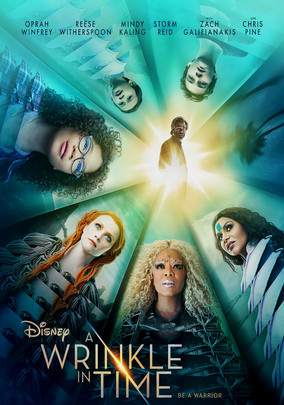
A Wrinkle in Time-2018

A Wrinkle in Time- 2018

Director Ava DuVernay

Starring Storm Reid, Oprah Winfrey, Reese Witherspoon

Scott’s Review #788

Reviewed July 16, 2018

Grade: C

A Wrinkle in Time (2018) is a film I had high hopes for, given the enormous marketing push, first-rate cast, and especially the acclaimed female director involved with the project, Ava DuVernay (Selma, 13th).

Additionally, having admired the 1962 novel, I expected a rich, earthy, and mysterious experience. Sadly, whether it be a “too many cooks in the kitchen” situation given the star power involved, or some other factors leading to a disconnect, this film disappointed me.

It’s not terrible, but it suffers from miscasting, too much CGI, and a story that is not very compelling.

Thirteen-year-old Meg (Storm Reid) is having a tough time in school. Smack dab in the “awkward phase,” she is picked on by schoolmates because her father (Chris Pine) has disappeared, presumably having ditched the family.

In reality, he is a scientist transported to another world after solving the question of humanity’s existence.

After Meg and her family are visited by a strange woman named Mrs. Whatsit (Reese Witherspoon), Meg, her little brother Charles Wallace, and Meg’s crush, Calvin, time-travel to find a way to save her father.

Fans who have read the fantastic novel written by Madeleine L’Engle will most certainly be disappointed since many details of the film are vastly different from the written page.

DuVernay attempts to take the film out of the 1960s and into 2018 (I have no issue with that), but the film feels so slick and modern with the visual elements and heavy use of CGI that the story suffers enormously.

The film is gorgeous, especially in the sweeping outdoor scenes, but in this case, too many bells and whistles spoil A Wrinkle in Time.

The three strange women characters, Mrs. Whatsit, Mrs. Who (Mindy Kaling), and Mrs. Which (Oprah Winfrey), are completely butchered. In the novel, each is portrayed as peculiar, mysterious, and similar to witches: frumpy, awkward, yet lovable.

In the film, however, they are colorful, glamorous, and empowered, but lack uniqueness or intrigue.

I am all for female empowerment, but the characters just felt wrong.

Kaling is fine in the most minor role, but in the case of Witherspoon and Winfrey, it appears to be a case of “we have big stars, let’s find roles for them.” A tough sell with Mrs. Which is to think of Oprah as anyone other than….well, Oprah!

Witherspoon’s attempts to be goofy and the comic relief of the film do not work.

The casting of newcomer Storm Reid is lackluster. I have no issue with the character of Meg being changed to bi-racial, I feel that’s a plus in the modern age. However, the actress is not the greatest, appearing both sullen and wooden in various scenes.

Nor does she have any chemistry with her love interest, Calvin.

This is a shame since the theme of young love would have been a nice addition to the film and was a coming-of-age element in the novel.

At the risk of being overly critical, A Wrinkle in Time is not a total disaster either. The progressive and heroic message of the overall film is quite inspiring if kids watch the film (and since it is Disney-produced and heavily advertised, I can see no reason why they wouldn’t), they will be exposed to a nice message of good conquering evil.

On a side note, the villain is safe and hardly conjures up much fright, so parents need not worry about the film being too scary.

With heaps of buzz and anticipation regarding A Wrinkle in Time (2018), the film seemed poised to become a blockbuster hit and a great spring flick. Instead, critics and audiences alike have largely derided it.

With creative genius, star power, and a considerable budget, something ran amok as the final product is fair to middling.

Let’s hope director Ava DuVernay gets her groove back with her next project- I expected more.