Category Archives: Amanda Seyfried

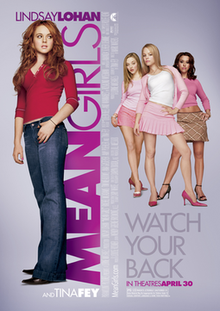
Mean Girls-2004

Mean Girls-2004

Director Mark Waters

Starring Lindsay Lohan, Rachel McAdams, Tina Fey

Scott’s Review #1,433
Reviewed July 21, 2024

Grade: B+

Upon its release, I doubt that the creators of Mean Girls (2004) knew how big of an influence the film would become. Not only becoming a box office hit it also became a Broadway musical with a reboot twenty years later.

It’s also one of those films everyone has heard of and immediately knows what it’s about.

After reading a self-help book about high school social cliques, Tina Fey, who stars in it, wrote the screenplay. The book also delved into school bullying and its damaging effects.

Mean Girls the film is intended to be a comedy and skirts over the horror and contempt that is the reality of vulnerable students being picked on by mean girls. I doubt that in real life ‘mean girls’ victims’ would appreciate a comedy based on their terror and ridicule.

A darker version while depressing would also be closer to reality. I took Mean Girls as a fantasy.

Nonetheless, the film is a roaring success if for no other reason than examining the insecurities and hierarchies of the high school (and middle school years) which ninety percent of adults would likely soon forget forever.

This is powerfully done via comedy so that we can all laugh at the over-the-top and hypocritical actions of the characters in different scenarios.

It’s fun to watch because it takes us back to a time in cinema when its star Lindsay Lohan was an up-and-coming sensation, and before co-stars Rachel McAdams and Amanda Seyfried were Oscar-nominated actors.

Cady Heron (Lohan) is a sophisticated yet naïve student, educated in Africa by her scientist parents. When her family moves to the suburbs of Illinois, Cady gets to experience public school and experiences the cruel laws of popularity that divide her fellow students into tightly-knit cliques.

She unwittingly finds herself in the good graces of an elite group of cool students dubbed “the Plastics,” but soon realizes how her shallow group of new friends earned this nickname. They are led by Regina (McAdams), a rich, popular mean girl.

Things quickly go south after Cady becomes smitten with Regina’s ex, Aaron (Jonathan Bennett).

Despite the title, the film is for anyone with teenage angst, a crush on a fellow student, or feeling either left out or part of a group at the expense of other unpopular kids.

The message of mean girls is universal and therapeutic since audiences can cheer along with Cady especially when she exacts her revenge on queen bee Regina in hilarious form.

The cat-and-mouse play between the two characters is merciless and delightful in the cruel measures to one-up the other in pure comical fashion.

Lohan and McAdams deserve kudos for energetically infusing the characters with likability even during scenes when they should be hated.

Cheering when Regina gets hit by a bus never felt so good.

The writing is astounding and surprisingly good with vicious quick wit and humorous scene after scene.

Wisely, the film ends after one hour and thirty-seven minutes which is a perfect length for a teenage comedy. Anything longer might have made it drag because the ending isn’t unexpected or a huge surprise.

Since we assume Cady will emerge victorious, which she does, the conclusion is satisfying and the event hints at a sequel.

The film is peppered with diversity which is also an enormous win. The principal of North Shore High School, Mr. Duvall (Tim Meadows) is black while other ethnic characters appear.

This provides a nice progressive message.

Watching the film twenty years following its release I never expected to enjoy it quite so much as I did. This is a testament to the power of Mean Girls (2004), director Mark Waters, and Tina Fey who create something that holds up well.
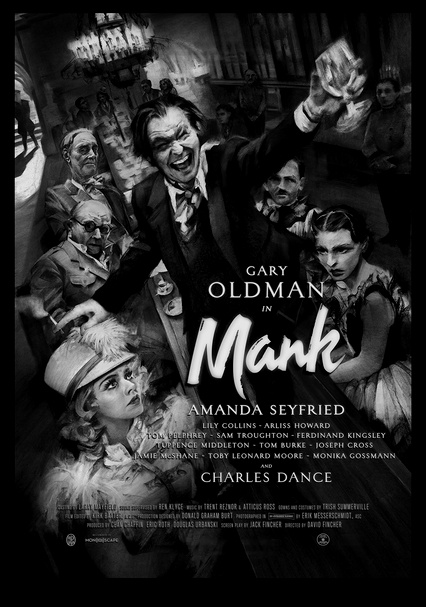
Mank-2020

Mank-2020

Director David Fincher

Starring Gary Oldman, Amanda Seyfried, Tom Pelphrey

Scott’s Review #1,110

Reviewed February 9, 2021

Grade: A

Everyone knows that Citizen Kane (1941) is one of the greatest films ever made. Well, I hope so anyway. Almost always appearing at the top of ‘best of’ lists, its merits are justified, and its creativity astounding. In a word, it’s groundbreaking.

The visual beauty, tone, and lighting are exceptional, to say the least. But this review is not meant to kiss the ass of that treasured masterpiece.

Mank (2020) is a film that is a love letter to the Golden Age of Hollywood. For those unfamiliar with Citizen Kane, please see the movie immediately, or the beauty of Mank will be missed.

The film celebrates the brilliance of Citizen Kane by offering new fans a glimpse into the creation of the movie while breathing life into the 1930s and 1940s film for new and younger fans to experience.

It also gives classic film fans something to sink their teeth into and a reaffirmation of their passion for the cinema. Film lovers will adore Mank.

The project stems back to the 1990s when director David Fincher’s father, Jack, began work on the film. It never came to fruition, and Jack Fincher died in 2003.

Eventually, the project was officially announced, and filming took place around Los Angeles from November 2019 to February 2020.

The film is about Citizen Kane specifically, but is so much more than that.

It’s part biography about alcoholic screenwriter Herman J. Mankiewicz (Gary Oldman) as he scrambles to finish writing Citizen Kane, given a tight deadline while also trying to recover from a broken leg. He is hired by the famous Orson Welles (director and star of Citizen Kane) to pen the script without any credit.

As terrific as Oldman is, as he always is, Mank also explores and dissects the politics of California of that time, the impending Nazi regime that soon led to World War II, and the rich and powerful producers.

It harkens back to the 1930s so genuinely that I felt I was living this important decade through my cinematic eyes. How different Hollywood was then!

Oldman is the star of a large cast with many actors being given small yet important roles. Nearly unrecognizable with a bloated beer belly and stringy hair, Herman is a lifelong boozer.

Mank spans ten years, from 1930 to 1940, and goes back and forth between the years. Mankiewicz dictated dialogue to his secretary, Rita (Lily Collins), in one scene while visiting the set of films made in the early 1930s.

Fun fact- Collins is the daughter of British pop artist Phil Collins and is on the cusp of a big career.

With his wit and humor, never afraid to call a spade a spade, or insult billionaire American businessman William Randolph Hearst (Charles Dance), he offends glamorous starlets over an extravagant dinner, forcing them to depart one by one as he gets drunker and drunker.

Never a big fan of Amanda Seyfried, the actress impresses with a fabulous performance, the best of her career. Playing Marion Davies, the inspiration for a character in Citizen Kane, she befriends Mankiewicz platonically, and the pair become close.

Seyfried nails it with a giving performance.

Tom Pelphrey plays Herman’s handsome brother, Joseph, on the cusp of becoming a famous writer and director, and the actor is terrific.

The look of Mank is delicious. The black and white cinematography pays homage to Citizen Kane, employing a stark contrast of dark and light in a gorgeous form.

Two great scenes come to mind- In 1933, Herman and Marion go for a stroll in a lavish courtyard, where they bond over discussions on politics and the film industry. It’s a benevolent and sweet scene where many topics are explored and embraced, and it is a definite ode to Hollywood.

The other takes place within the Hearst Mansion, directly before the scene as mentioned above, where a drunken Herman lets loose on some of the Hollywood elite. He insults Louis B. Mayer, founder of the famous MGM studios, the most famous and influential of all studios.

A gem is the addition of so many historic Hollywood figures, a treasure chest for fans of old cinema. Joan Crawford, Great Garbo, and Bette Davis are featured, although if you blink, you’ll miss them.

A terrific suggestion is to work double-time and follow up a viewing of Mank with Citizen Kane (I did!) for further appreciation of the film. A gift is realizing how the characters who appear in the classic film are based on real-life characters in Mankiewicz’s world.

Mank (2020) should be appreciated and revered for its lovely hybrid of crisp dialogue and wry comedy based on a real-life Hollywood director, and its cinematography and visual appreciation of a long-ago era of cinema.

I hope this inspires some to appreciate and salivate over films created almost a hundred years ago.

Oscar Nominations: 2 wins-Best Picture, Best Director-David Fincher, Best Actor-Gary Oldman, Best Supporting Actress-Amanda Seyfried, Best Production Design (won), Best Cinematography (won), Best Costume Design, Best Makeup and Hairstyling, Best Original Score, Best Sound

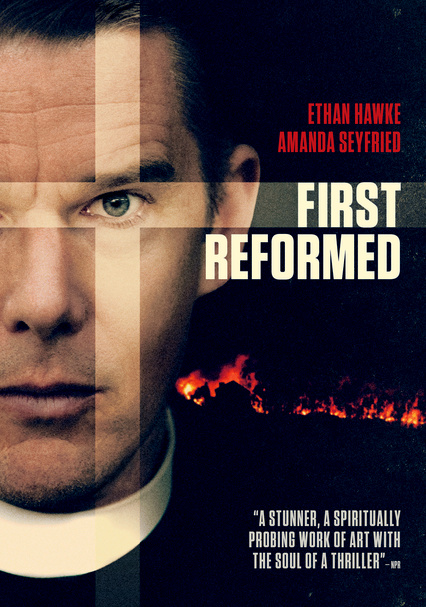
First Reformed-2018

First Reformed-2018

Director Paul Schrader

Starring Ethan Hawke, Amanda Seyfried

Scott’s Review #870

Reviewed February 22, 2019

Grade: B+

First Reformed (2018) is a dark, independent film that has received a great deal of buzz for the raw and daring risks it takes and the brave performance by its star, Ethan Hawke.

Directed by the same man who wrote the screenplay for Taxi Driver (1976), Paul Schrader, the film is a character study of one man’s efforts for benevolence and normalcy after experiencing insurmountable tragedy. He wrestles with his demons and questions his faith in the church.

The film is a heavy, raw drama, and not for those looking for a feel-good experience.

Reverend Ernst Toller (Hawke) is an alcoholic, residing in bleak and barren upstate New York, presumably near Buffalo. He serves as a Protestant minister at a historically significant yet sparsely populated church.

Another, more modern congregation takes over the establishment with a large following. Ernst has recently been dealt a significant blow with the death of his son in the Iraq War after encouraging him to enlist.

When Mary (Amanda Seyfried), a young pregnant woman, asks Ernst to guide her radical and troubled husband, Ernst’s life spirals out of control.

Ernst is determined to keep a journal for precisely one year and then subsequently burn it. He chronicles his feelings, thoughts, and doubts as narrated by Hawke. Schrader, who directed and wrote First Reformed, succeeds at making the film feel personal and conflicted.

He creates a quiet experience, masked by underlying turmoil and even a suffocating existence. Ernst’s angry protege is an environmentalist determined to change the minister’s views and succeeds in pointing out life’s hypocrisy.

The season is winter, and the elements are cold and depressing in First Reformed. From the crisp air and the clutching small-town grasp, Schrader makes the audience feel stifled, so we relate to Ernst, even though we may not share his views or beliefs.

He is a kind man, helpful, and even-keeled, but wrestles with constant demons.  Despite his role as a minister, what the film does well is resist carving a traditional tale of religious conflict or even questioning Ernst’s sexuality.

The film is set in a much darker context and doesn’t focus on a single theme.

Where Schrader loses me is with Ernst’s questionable actions, which sometimes come out of left field. The conclusion is both perplexing and unsatisfying.

As the character prepares for a desperate act of brutality, indeed a shock for the audience who has him figured out, he suddenly changes course due to the appearance of Mary. They embrace, and the film ends, but what are his intentions towards Mary? He is fond of her, but are his feelings pure friendship or something more emotional?

Sadly, we never find out, nor do we know, where he channels all of his feelings from.

Hawke’s dynamic portrayal of Ernst is never better. The supporting characters lack much appeal or interest. Mary is nice enough but is a tad clingy, and her numerous requests to talk or have Ernst come by to visit get tedious.

Seyfried does what she can with the role, but is the second banana.

Cedric the Entertainer as Pastor Joel Jeffers lacks appeal, and the dowdy character of Esther, meant to be a potential love interest for Ernst, is instead bothersome and portrayed as a pest.

First Reformed (2018) has shades of appeal, and the main character is well-substantiated and deep, but ultimately, the film does not come together as well as it might have.

The finale underwhelms, and after the significant buildup to the character’s changing thoughts and motivations, too much was left unclear. Schrader deserves props for attempting to create an edgy experience with a unique and daring character, but could have wrapped the film up in a tidier way.

This would have served the film better.

Oscar Nominations: Best Original Screenplay

Independent Spirit Award Nominations: Best Feature, Best Director-Paul Schrader, Best Male Lead-Ethan Hawke (won), Best Screenplay

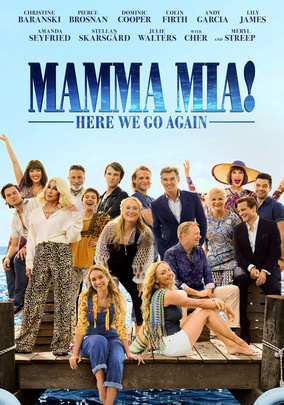
Mamma Mia! Here We Go Again-2018

Mamma Mia! Here We Go Again- 2018

Director Ol Parker

Starring Lily James, Amanda Seyfried

Scott’s Review #797

Reviewed July 31, 2018

Grade: B+

My expectations for Mamma Mia! Here We Go Again (2018) was not lofty, nor was I anticipating drivel. I expected (and was in the mood for) a summer popcorn musical flick with fun and dancing, and little in the way of analysis or requiring too much thought.

I can proudly say that this film fulfilled my expectations —it delivers its intent, and sometimes, that is exactly what the doctor ordered.

The film is enthusiastic and lively, with the musical numbers serving as the standouts.

In an immediate plot twist, it is revealed that the main character, Donna (Meryl Streep), died a year earlier, and her daughter Sophie (Amanda Seyfried) is planning a lavish reopening of her hotel on the beaches of Greece.

The film serves as both a sequel and a prequel, as events also go back to 1979 when a young Donna (Lily James) graduates from college and embarks on a journey to “find herself”.

She travels extensively and meets her three beaus (anyone who saw the 2008 original will be familiar with this plot), and the film is excellent at pleasingly connecting the events of both films.

Mamma Mia! Here We Go Again is hardly high art and not intended to be. Truthfully, it is a bit sub-par to the original, as some of the musical numbers are “secondary” ABBA songs. The biggest hits were used in the 2008 film.

The overall plot feels a bit forced and not exactly compelling, especially since we know the eventual result of Donna’s relationships. The story seems geared towards a bombastic finish.

But the sheer fact that the song and dances are interspersed throughout the film makes it enjoyable enough.

The film plays more like someone’s fantasy than a real-life sequence, and liberties must certainly be taken.  Everything always seems to go Donna’s way, and events merely fall into place- if only real life were that way!

The introduction of Donna’s mother (Sophie’s grandmother)—explained to be a rich and famous singer residing in Las Vegas—is a way to add the legendary Cher to the story. Disappointingly, the star does not appear until the end of the film, more like a cameo appearance.

This leads me to the film’s best parts, which occur during the final thirty minutes. As Sophie’s grand hotel reopening party comes to fruition (a devastating storm thrown into the story is purely for dramatic effect), all details fall into place in magical form.

Hundreds of party guests show up, Donna’s beaus reunite, and the aforementioned absentee grandmother (Ruby) makes a grand entrance via helicopter (in stiletto heels naturally).

In this way, the grand finale is superior to the rest of the film.

Cher, still looking gorgeous at age seventy-two, is the pure highlight of the film, and it kicks into high gear when she appears. Considering all of the hype and press surrounding a film reunion between Cher and Meryl Streep- they starred together in 1983’s Silkwood- it should be no real surprise that Streep’s deceased Donna appears.

The two best scenes come at the end of Mamma Mia! Here We Go Again! As much as the lavish Cher demands the grand finale in terms of glamour and song, Streep’s touching duet with Sophie will bring tears to the viewer’s eyes and capture the emotional element of the film.

As Streep and Seyfried churn out a gorgeous rendition of “My Love, My Life,” the actresses’ mother-daughter relationship is lovely and will fondly remind audiences of the chemistry in the 2008 film.

Regarding Cher, the revelation that Ruby is a long-lost lover of the hotel manager, Fernando (Andy Garcia), is sweet and romantic. Despite limited screen time, the duo shares fantastic on-screen chemistry, so much so that I yearned to know the back story of their relationship.

Do we only know that they were madly in love in 1959? Why did it not work out?  Regardless, Cher’s version of the song “Fernando” is both appropriate and enchanting.

Mamma Mia! Here We Go Again (2018) is a summer film sure to please audiences eager for a fluffy musical.

With bright and cheerful Greek island locales, lavish oceans, and bombastic feel-good pop sensibilities, this film was marketed well and shares enough connection with 2008’s Mamma Mia! to enrapture and please audiences who enjoyed the first version.

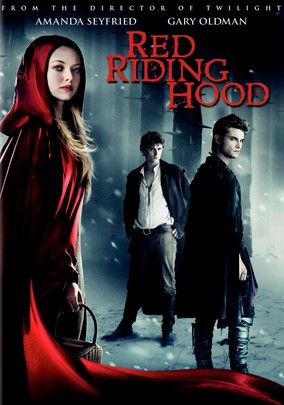
Red Riding Hood-2011

Red Riding Hood-2011

Director Catherine Hardwicke

Starring Amanda Seyfried, Gary Oldman, Julie Christie

Scott’s Review #477

70167073

Reviewed September 10, 2016

Grade: B-

I was hesitant to see Red Riding Hood (2011) in the theater because it seemed like more of a rental to me.

While it is far from high art, it is an above-mediocre thriller riding the current popularity of the vampire-lite genre.

It tells the tale of a teenage girl living in a medieval village that is being attacked by a mysterious wolf. The wolf, however, is human at times.

The fact that it stars young actors known in current American cinema, it is unsurprising that a love story is written.

I thought the movie was decent, but not great. The whodunit is good as we wonder who the wolf in disguise is, and the cinematography is excellent.

I bought the period’s authenticity.

Being treated to Julie Christie in a current film is always a treat, but at times the movie is quite sappy and Twilight-ish. It is directed by the same director Catherine Hardwicke so this is not surprising.

Overall, Red Riding Hood (2011) is not a bad watch.

Lovelace-2013

Lovelace-2013

Director Rob Epstein, Jeffrey Friedman

Starring Amanda Seyfried, Peter Sarsgaard

Scott’s Review #133

70241594

Reviewed July 24, 2014 

Grade: B

Lovelace (2013) is an account of famous 1970’s porn star, Linda Lovelace, and her rise to stardom and inevitable fall from the spotlight, difficult family life, abusive relationships, and her attempt to escape the porn world for good.

The film portrays the story from Lovelace’s point of view based on her tell-all autobiography and spins her in a very sympathetic way.

Whether all of her abuse and struggles that Lovelace claimed are to be believed is up to the viewer.

Lovelace, the film, comes across as similar to Boogie Nights (1997)- even the 1970s soundtrack is eerily alike, but inferior to that masterpiece.

The only character whose past is fully delved into is Linda Lovelace who is the sole focal point; the others are simply an extension of her character.

One major issue I found with the film is the casting of Amanda Seyfried as Linda Lovelace.

Seyfried does not have the plain Jane or girl next door characteristics that the actual Lovelace had. She comes across as soft and gentle, much too much for this particular role.

Conversely, the casting of Sharon Stone and Peter Sarsgaard is excellent as each is dynamic in their respective roles. Stone should have received much more acclaim than she did for her role.

As Lovelace’s mother, she is gritty, steely, and unsympathetic.

The film contains a whos who of Hollywood names involved in small roles.

Another issue is the film seems like a made-for-television movie and considering the subject matter is the porn industry, it seems awfully watered down and not harsh enough.

Lovelace (2013) is entertaining enough to keep one’s interest but is not riveting or in-depth enough to be a major success.