Category Archives: Bob Balaban

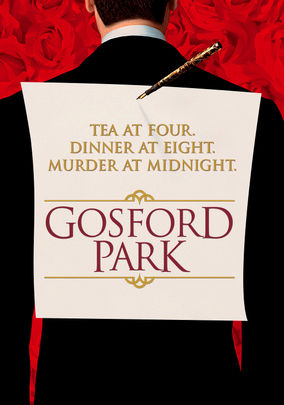
Gosford Park-2001

Gosford Park-2001

Director Robert Altman

Starring Maggie Smith, Helen Mirren, Ryan Phillippe

Top 250 Films #105

Scott’s Review #350
60021796

Reviewed January 9, 2016

Grade: A

Somewhere between the brilliant PBS series of the 1970s and the ultra-modern cool of Downton Abbey (also PBS) lies the masterpiece that is Robert Altman’s 2001 gem, Gosford Park.

Ironic is that the creator, writer, and executive producer of Downtown Abbey, Julian Fellowes, wrote the screenplay of Gosford Park.

No wonder, combined with Altman’s direction, they created genius.

The period is 1932 and the wealthy, along with their servants, flock to the magnificent estate of Gosford Park, a grand English country home. The guests include both Americans and Brits and everyone is gathered for a shooting weekend- foreshadowing if ever there was.

Following a dinner party, a murder occurs and the remainder of the film follows the subsequent police investigation, and the perspectives of the guests and the servants as a whodunit ensues.

Many of the character’s lives unravel as secrets are exposed.

Sir William, the murder victim, is a powerful industrialist. After he announces he will withdraw an investment, the ramifications affect many of the guests so that the set-up is spelled out for the audience.

At the risk of seemingly nothing more than a plot device- it is so much more than that.

During a pheasant shoot, Sir William receives a minor wound thanks to a stray birdshot- is this intentional or merely an accident? When Sir William meets his fate that evening, the potential suspects pile up.

If there are two compelling aspects to a great film, they are a good old-fashioned whodunit and an enormous cast, all potential suspects.

What makes Gosford Park exceptional is that every character is interesting in some way and all are written well.

Secrets abound for miles in this film and are revealed deliciously. Torrid affairs, sexuality secrets, and blackmail abound as revelations make their way to the surface and Altman knows exactly how to cast doubt or suspicion on many of his characters.

The compelling relationship between American film producer Morris Weissman and his valet, Henry Denton (Ryan Phillipe), along with the domineering head housekeeper, Mrs. Wilson (Helen Mirren) are my favorite characters and dynamics.

How clever that Maggie Smith would play similar roles as stuffy aristocrats in both Gosford Park and Downton Abbey.

Rich in texture is the balancing between the haves and the have-nots and how those characters mix (sometimes in secret rendezvous!)

Typical of Altman films, the character dialogue commonly overlaps, and the actors largely improvise the script. In addition to being an actor’s dream, this quality gives a dash of realism to his films and Gosford Park is no exception.

Since there are so many characters and so many plots and sub-plots going on at once, my recommendation is to watch the film at least twice to fully comprehend the layers of the goings-on.

Gosford Park (2001) will become more and more appreciated.

Oscar Nominations: 1 win-Best Picture, Best Director-Robert Altman, Best Supporting Actress-Helen Mirren, Maggie Smith, Best Screenplay Written Directly for the Screen/Original Screenplay (won), Best Art Direction, Best Costume Design
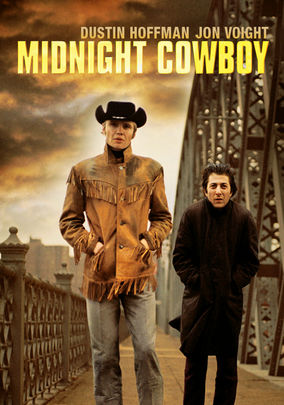
Midnight Cowboy-1969

Midnight Cowboy-1969

Director John Schlesinger

Starring Dustin Hoffman, Jon Voight

Top 250 Films #212

Scott’s Review #24

759322

Reviewed June 17, 2014

Grade: A

Midnight Cowboy is a masterpiece from 1969 that remains the only Best Picture Oscar winner to be rated “X” and, sadly, would probably not be made today.

It tells the tale of a friendly, trusting cowboy who moves from Texas to New York City and is challenged to survive the brutal streets any way he can.

Throughout the film, he meets several interesting, unsavory characters and experiences life in the bowels of NYC as drug use and prostitution are explored.

I did not find this to be as much of a downer as many others did, but rather a story of survival.

The grittiness of NYC is wonderfully portrayed, with many locales featured (Times Square).

Jon Voight and Dustin Hoffman are exceptionally cast and have great chemistry, though the film is by no means a “buddy movie”.

Sylvia Miles has a memorable one-scene feature.

It’s bleak, raw, and intense at times, and Midnight Cowboy (1969) is great filmmaking.

Oscar Nominations: 3 wins-Best Picture (won), Best Director-John Schlesinger (won), Best Actor-Dustin Hoffman, Jon Voight, Best Supporting Actress-Sylvia Miles, Best Screenplay Based on Material from Another Medium (won), Best Film Editing

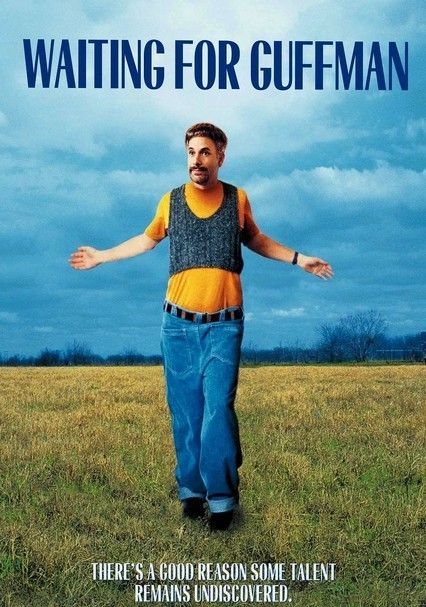
Waiting for Guffman-1996

Waiting for Guffman-1996

Director Christopher Guest

Starring Christopher Guest, Eugene Levy, Catherine O’Hara

Scott’s Review #1,145

Reviewed May 24, 2021

Grade: B+

Somehow mocking local community theater troupes with questionable talent couldn’t be funnier with the right premise and an outstanding cast.

The added fun of midwestern traditions like barbeques good manners and spot-on imitations put on display for humor works well.

They should be celebrated and appreciated in Waiting for Guffman (1996).

The hysterical Best in Show (2000) is probably my favorite Christopher Guest film but Waiting for Guffman is a hoot and hollering good time.

The ‘B+’ rating comes largely because Guffman is an opening act to the fab Best in Show. They can easily be watched back to back and perhaps should for further cherishing.

When the town of Blaine, Missouri approaches its sesquicentennial, the residents decide to celebrate by performing a musical revue called “Red, White, and Blaine.”

Flamboyant director Corky St. Clair (Christopher Guest) is determined to return to Broadway success by casting untalented but passionate individuals to perform.

Eugene Levy, Fred Willard, and Catherine O’Hara play the main cast members.

When Corky reveals that influential theater agent Mort Guffman will attend the opening, the cast is convinced that they will be rewarded with accolades and appearances on the Broadway stage if they perform successfully.

They become titillated, flustered, and manic as the pressure of opening night approaches.

I daresay, some folks from the midwest United States or those faithful to the local theater may not enjoy Wating for Guffman but I sure did. Most of the characters are written as buffoons and lacking any talent.

The hysterics come because they think that they possess what they lack.

The aforementioned Guest, Levy, Willard, and O’Hara work so well together they are the reason Waiting for Guffman is so damned funny! The comic timing between the actors is flawless and timed perfectly.

Levy and O’Hara appeared together in the Canadian television sketch comedy series SCTV in the 1970s and 1980s before hitting the jackpot with the television series Schitt’s Creek in later years so a fun thing to do is watch them in whatever they appear in together.

They are that good!

There abound many stereotypes in Waiting for Guffman since Corky is written as a walking gay stereotype with mascara and flamboyancy. The irony is that he reportedly has a wife who is never seen so the audience can draw their conclusions.

Given the casting and the director, Christopher Guest takes on acting and directing duties, the experience is largely improvisational and witty result.

Guest treats his actors, and himself, to famous Director Robert Altman’s mantra of letting his actors release and act on their terms, presumably knowing the characters better than anyone else.

The tactic works. Too often comedies are stagey and situations forced in an attempt to make the viewer laugh because he or she thinks they are supposed to laugh.

My favorite characters unsurprisingly are Ron and Sheila Albertson (Willard and O’Hara) as travel agents/amateur performers. They are zany and unpredictable and their antics cannot be superseded by anyone else.

Recommended mostly for the artistic and the improv comedy crowd. The spoofs are all over the place and fans of documentaries and talent shows can appreciate the gags.

Waiting for Guffman (1996) targets an intelligent audience craving fresh and original comedy. Being a cinema fan largely immersed in drama and horror, I was won over nonetheless.

The only drawback is the film pales in comparison to the brilliant Best in Show (2000) with largely the same cast and tone, but still should be watched.

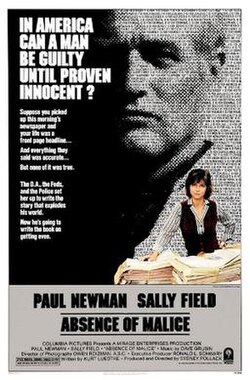
Absence of Malice-1981

Absence of Malice-1981

Director Sydney Pollack

Starring Paul Newman, Sally Field

Scott’s Review #1,055

Reviewed August 20, 2020

Grade: A-

Absence of Malice (1981) is a terrific, slick crime thriller that while compelling and way above average in content, feels like a studio creation and a starring vehicle for its two A-list stars.

There is little wrong with this since Paul Newman and Sally Field are top-notch talents and the resulting project has tension, thrills, and a relevant concept.

I loved the Miami locales as the hot and steamy atmosphere helped set the proper tone tremendously with sizzling romance and intrigue. Despite feeling manipulated by the casting, the film nonetheless feels fresh and authentic.

The film compares to 1976’s magnificent All the President’s Men as far as story and looks go, though Absence of Malice is much more mainstream.

The former has more grit and dirt while the latter adds some romance that may or may not have been a wise decision and the chemistry between Newman and Field is mediocre, but it’s the story that works.

In rock n roll terms, Absence of Malice is the opening act to All the President’s Men’s headliner. They make a perfect double-bill.

Field plays Megan Carter, an ambitious young journalist who writes a scathing article implicating Michael Gallagher (Newman), a successful liquor wholesaler with ties to a criminal family, with the disappearance of a labor leader.

When he confronts Megan, she sees his side, and the duo team up to find the truth. Complicating matters is their mutual attraction which leads to romantic interludes.

The initial setup seems like a ploy to have Megan and Michael at odds and then fall madly in love. Fortunately, the story has more depth than that.

Any trite 1980s or 1990s romantic comedy uses the same trick. No, not only do sparks fly but the characters realize that Megan was duped to write the article. This sets off a series of events to figure out who wants to frame Michael and why. And why Megan has been “chosen” to help see this through.

There is plenty of political espionage and other things to keep the audience engaged. Similar genre films would flood movie theaters throughout the decade becoming watered down.

If Absence of Malice was released in 1988 or 1989 it would not have had the same effect as it did upon release in 1981.

The soggy 1980s style of filmmaking had not yet appeared, so I like to think of Absence as more of a 1970s film.

Sally Field is a Nancy Drew type, a sleuth determined to solve a mystery. She is assertive, yet feminine with a trendy hairstyle.

Newman is, well, Newman. Aging handsomely with his dazzling blue eyes he can charm the pants off any woman. I didn’t quite buy the romantic element and not because he is at least twenty years older than she. He is suave and charming, and she is so strait-laced that the romance doesn’t work.

The film would have been better as a buddy film with a male and a female buddy.

Supporting stars flesh the film out nicely, especially Melinda Dillon who is fabulous in the role of Teresa Perrone, the conflicted friend of Michael’s who serves as his alibi.

In a nicely crafted side story, she suffers because her abortion is revealed to the public. Teresa, a devout Catholic must decide between life and death. Admirable is it to give a supporting character a good, juicy story.

Pollack is the right director for the job and he successfully crafts a thriller that is laden with liberal beliefs and serves up a message film without losing the tension.

Absence of Malice (1981) has snippets of style and tone reminiscent of some of his other films like They Shoot Horses, Don’t They (1969), The Way We Were (1973), and The Electric Horseman (1979).

My mind wanders thinking about a potential Robert Redford/Jane Fonda pairing instead of Field and Newman, or some combination of a Barbra Streisand/Newman/Redford/Fonda mix.

I am not sure if Absence of Malice (1981) is still on anyone’s radar, but some forty years later the message couldn’t be timelier.

When journalists are regularly attacked by government officials for providing “fake news” or “alternate facts” this film is a refreshing reminder that more often what they seek is to uncover corruption and get to the truth.

Oscar Nominations: Best Actor-Paul Newman, Best Supporting Actress-Melinda Dillon, Best Original Screenplay

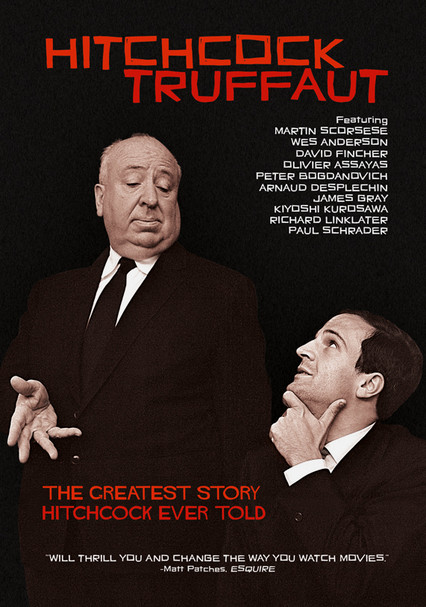
Hitchcock/Truffaut-2015

Hitchcock/Truffaut -2015

Director Kent Jones

Starring Wes Anderson, Martin Scorsese, David Fincher

Scott’s Review #933

Reviewed August 21, 2019

Grade: B+

A documentary about film and film-making is a worthy watch for any rabid lover of cinema, and when the subject at hand is Alfred Hitchcock, any fan must certainly chomp.

I remember Hitchcock/Truffaut (2015) appearing at my local independent theater at the time of release but missed my chance to see it.

The misstep having been undone, the work is fine, and the result is an abundance of riches, serving as a fly on the wall for those wishing to listen to two geniuses speak, or merely observe the clips of great films and revel in the creativity.

Already possessing a hefty knowledge of Hitchcock does not dull my perspective, nor do I take for granted the appreciation served.

For an entry-level fan of the director or French film director, Francois Truffaut, the title must be added to one’s “to see” list.

The documentary serves as inspiration and fulfillment for cinema lovers. Billed as side-by-side directors in the title, the documentary treats Hitchcock as the teacher and Truffaut as the student, especially given the age difference between the two men.

Truffaut interviewed Hitchcock in 1962 during a lengthy week-long discussion in a windowless Hollywood office, where the former soaked up the latter’s knowledge and points of view like a sponge.

Truffaut was already a well-regarded filmmaker at age thirty-two, with gems such as The 400 Blows (1959) already under his belt.

Truffaut then wrote a book about the conversations with Hitchcock, and director Kent Jones brings it to life in documentary form, telling his audience why the book had a tremendous impact on cinema while teaching the audience a thing or two about the movies.

The production analyzes film-making from technique to style to clothing, actors, and in between. The main crux is the technique Hitchcock used to create tension and suspense, manipulating the audience every step of the way.

A plethora of his films are featured which is a personal joy to see, most importantly the documentary is clever enough to build to Hitchcock’s most memorable sequence of all, the shower sequence in Psycho (1960), the director’s most recent film, and now, easily his most notorious.

Hollywood titans such as Martin Scorsese, David Fincher, Wes Anderson, and Richard Linklater, arguably geniuses, explain the influence that Hitchcock provided them.

Listening to these formidable directors whimsically praise and dissect Hitchcock’s analysis and explain how he led to their blossoming is a wonderful aspect.

Hitchcock/Truffaut (2015) is a treat for die-hard fans of Hitchcock or Truffaut- or both.

Conversations and interviews with other famous directors show the heavy influence, love, and appreciation for an ingenious suspense director and an equally unique French New Wave director.

A thirty-two-year age difference separated the two men, but they appear as natural as close colleagues.

Great minds do think alike.

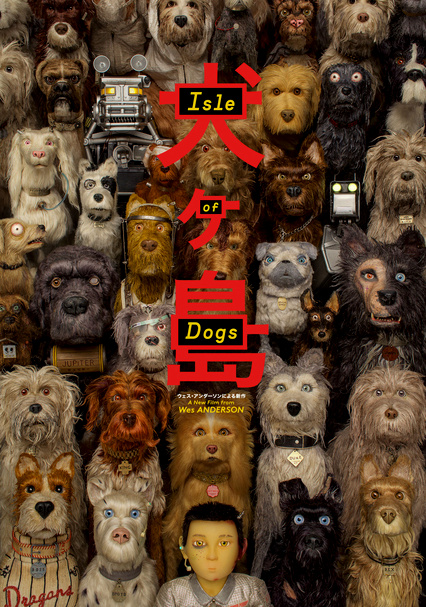
Isle of Dogs-2018

Isle of Dogs-2018

Director Wes Anderson

Voices: Bryan Cranston, Edward Norton

Scott’s Review #831

Reviewed November 15, 2018

Grade: B+

Anybody familiar with a Wes Anderson production knows what they are in store for, and Isle of Dogs (2018) is par for the course.

With zany narratives and fantastic art direction, the film has a familiar stamp. Most resembling his other notable stop-motion film, Fantastic Mr. Fox (2009), Isle of Dogs offers what is to be expected- an intelligent and odd project by a visionary creative mind.

Anderson provides the film with a timely, corrupt government-type message that strongly resonates in 2018. In this way, Isle of Dogs, while animated, is so much more than a cookie-cutter story or a wholesome film for kids.

The director shows bravery in focusing on the corruption prevalent in today’s world and the fight for justice by ordinary people living under authoritarian control.

Set in dystopian Japan, a recent outbreak of canine flu causes corrupt Mayor Kobayashi to banish all dogs from society to the vast wasteland of Trash Island, where they will live out their days with other ostracized canines.

A brave twelve-year-old boy named Atari, who happens to be the mayor’s nephew, steals a plane and crash-lands on the island to rescue his beloved dog, Spots.

With help from a pack of dogs led by a former stray named Chief, the group sets out to find Spots and ultimately expose the government conspiracy. Obstacles abound as the mayor has sent a robot dog to return Atari and make mincemeat of any dog in its path.

Meanwhile, a professor, Tracy Walker, is on the cusp of discovering a serum as an outspoken American exchange student investigating the conspiracy.

Isle of Dogs is incredibly original and offers bravura visuals. From the lush and bright Japanese culture to the tired and haggard look of many dogs living on the island, the film is a treat for the eyes. The shimmering richness of the city is elegant and feels alive and powerful.

What I admire most about the film is its creativity and the blast of left-of-center storytelling, which blows away most animated offerings of today.

Many contain a robust helping of “cute”, which can turn off a mature viewer. With a target audience of the tween age, what is in it for adults? To sit there with a youngster and pretend to be jovial?

Isle of Dogs is not a crowd-pleaser; it is better than that. Anderson crafts a serious and timely message that begs to be absorbed by the careful viewer.

Assuredly, Anderson cannot escape providing a subtle allegory on an evil leader stirring the pot against the most helpless in our society. This point is timely and well thought out, especially in the tumultuous United States.
Could this be why an American character (Tracy) was added?

As dynamic as Anderson’s creativity is, the story in Isle of Dogs does not always embrace the viewer, and the jarring dialogue is tough to follow.

Standard in his films, the pacing is strange, the conversations between characters are odd, and the film lacks a truly welcoming or warm quality.

Therefore, the film is not an easy watch. And the dogs all speaking English rather than Japanese, with American accents, must be overlooked.

Critics and detractors of Wes Anderson need not see Isle of Dogs (2018) as they will be in store for typical Anderson fare. In addition, those seeking a standard mainstream animated feature will be disappointed.

Those with a more open-minded approach to cinema will revel in the film’s stunning look and the powerful message bubbling under the surface.

Oscar Nominations: Best Animated Feature Film, Best Original Score

Howl-2010

Howl-2010

Director Rob Epstein, Jeffrey Friedman

Starring James Franco

Scott’s Review #491

untitled

Reviewed October 9, 2016

Grade: B+

Howl (2010) is a compelling courtroom drama biopic starring James Franco who is wonderfully cast.

This role, despite being in a small film with little recognition, cements Franco’s talents as an edgy actor who is willing to tackle challenging work rather than sticking to mainstream safe fare.

Franco has become one of my favorite young actors. He is so diverse and believable in any role he takes on.

The story is about 1950s poet Allen Ginsberg and his trial to determine whether his poems were art or should be banned for being indecent.

Much of the action transpires inside the courtroom and the film wisely mixes animation (in scenes of Ginsberg reading his poetry) in between traditional scenes.

The film allows the viewer to get to know the characteristics of Ginsberg. He was troubled (his sexuality, delusions, stints in a mental hospital), for sure, but also had a true, authentic love of writing and poetry, which is inspiring in an age of digital technology.

Sometimes good old-fashioned words are the truest art.

Howl (2010) is an interesting little film.

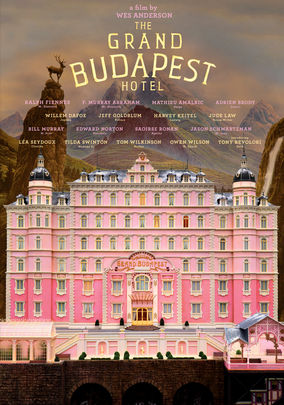
The Grand Budapest Hotel-2014

The Grand Budapest Hotel-2014

Director Wes Anderson

Starring Ralph Fiennes, F. Murray Abraham

Scott’s Review #143

70295915

Reviewed July 30, 2014

Grade: B+

The Grand Budapest Hotel (2014) is a witty and unique film by director Wes Anderson, who has also directed similarly quirky films,  notably Monsoon Kingdom (2012) and The Royal Tenenbaums (2001).

The famous story of the history of the Grand Budapest Hotel is recounted, over dinner, by the current owner Zero (played by F. Murray Abraham), and an inquisitive guest (Jude Law).

The film then goes back to the 1930s and shares the story of the actual history of the hotel.

The main story centers on the head concierge, Gustave, (Ralph Fiennes), and his antics involving older wealthy blonde women, a murder, stolen art, and a missing will.

Gustave is a ladies’ man, and bisexual, who spends time with the rich women who stay at the hotel.  Fiennes does an excellent job as the quick-witted, almost manic Gustave.

This sets off a series of interesting, mysterious events for the remainder of the film that turns into a whodunit yarn.

The visual aspects usurp the story. The art direction is amazing. The sets are constructed so perfectly and ingeniously that they almost look like animated sets or like a dollhouses.

The costumes and makeup are flawless.

The story tends to be tough to follow at times and is just not as strong as the other aspects of the film, although this is not to be interpreted as the story is not good- it is entertaining, but nothing more.

It’s just that the other aspects of the film are magnificent and the story is secondary. It’s an odd film, certainly, but unique and interesting.

Well-known Hollywood stars appear- Tilda Swinton, Edward Norton, Adrien Brody, Willem Defoe, and Harvey Keitel.

Oscar Nominations: 4 wins-Best Picture, Best Director-Wes Anderson, Best Original Screenplay, Best Original Score (won), Best Production Design (won), Best Cinematography, Best Makeup and Hairstyling (won), Best Costume Design (won), Best Film Editing

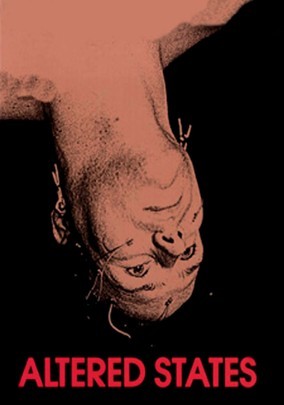
Altered States-1980

Altered States-1980

Director Ken Russell

Starring William Hurt

Scott’s Review #82

246472

Reviewed July 1, 2014

Grade: B-

Altered States (1980) is a trippy, strange horror/sci-fi hybrid film (William Hurt’s debut film) that is visually quite impressive, but the story is too far-fetched and implausible to be taken seriously.

It feels like an earlier version of The Fly, but inferior to that particular film.

Hurt plays an abnormal psychology professor obsessed with experimental schizophrenic hallucinatory drugs, which he takes, causing him to ultimately experience episodes of being half man, half ape through the use of a sensory deprivation tank, and a strange Indian tribe comes into play.

It’s a very silly premise but somehow is believable to a point, especially in the first act.

The ending of the movie proved ridiculous and uninteresting to me and seemed extremely disjointed as an entire film.

There were lots of behind-the-scenes troubles with this film, which could explain the unbalanced feeling.

Otherwise, the sporadic weird colors and patterns during the scientist’s episodes were effective.

Drew Barrymore’s first film (she plays a toddler).

Oscar Nominations: Best Original Score, Best Sound

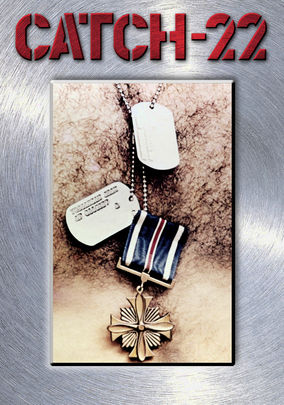
Catch-22-1970

Catch-22-1970

Director Mike Nichols

Starring Alan Arkin, Bob Balaban, Martin Balsam

Scott’s Review #41

60020883

Reviewed June 18, 2014

Grade: B

Catch-22 (1970) is a satirical film similar in subject matter to Robert Altman’s M*A*S*H, released the same year, though admittedly, I have not seen that film yet.

It does remind me of Dr. Strangelove (1964) and Slaughterhouse-Five (1972) in their anti-war theme.

This film is well-made and certainly effectively portrays the outrageousness and lunacy of war.

Most of the characters are portrayed as crazy, albeit in a darkly humorous, over-the-top way.

Alan Arkin is wonderful as the protagonist trying to find a way out of the island of Italy, where he and his fellow pilots are stationed.

At times, the film feels disjointed and hard to follow, which I understand the novel is too (I have not read the entire book), but Catch-22’s (1970) message comes across loud and clear.