Category Archives: P. J. Soles

Halloween-1978

Halloween-1978

Director John Carpenter

Starring Jamie Lee Curtis, Donald Pleasence

Top 250 Films #9

Top 40 Horror Films #3

Scott’s Review #114
569090

Reviewed July 16, 2014

Grade: A

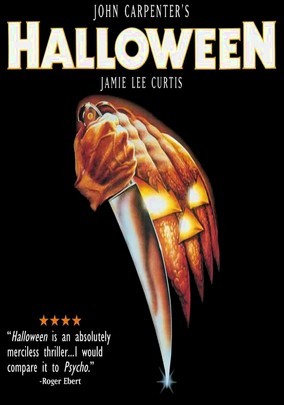
 Halloween is an iconic horror film from 1978 that set the tone for the barrage of slasher films to follow throughout the 1980s and into the 1990s.

Today, the film continues to hold up incredibly well, and I am proud to list it as not only one of my favorite horror films (which I watch religiously every Halloween) but also one of my favorite films of all time.

The focus is on style and substance over gore (the film contains little of it), and the score is one of the scariest and most effective in cinematic history.

The premise of the film is simple- a homicidal maniac is on the loose in a sleepy little town named Haddonfield, Illinois, targeting three female babysitters on a crisp Halloween night.

The audience knows that the six-year-old little boy dressed as a clown on a dark Halloween night years ago, who butchered his older sister to death, is the now grown-up culprit.

What we do not know, nor should we, is what his (Michael Meyers’) motivation is.  This confusion only adds to the impact.

Subsequent remakes have added complexities to the character, albeit unnecessarily so; however, in the original, we see a seemingly happy child with stable parents and a good life.

Similar stories have been told throughout film history. But Halloween is simply one of the greatest horror films ever made.

As simple as the story is, the way the film is made makes it a masterpiece. Everything about Halloween is mesmerizing – the lighting is perfect, the ambiance, the brilliant, scary musical score, the battle between good and evil, and the feeling of a chilly Halloween night.

Highly unusual for its time, the point of view of the killer and heavy breathing are prevalent throughout the film, which will startle and scare the viewer. The opening shot is through the eyes of a masked six-year-old kid wearing a clown mask.

The unique technical aspects continue to evolve.

Director John Carpenter had a vision for this film, and thankfully, no studio influence compromised it, as it was an independent film on a shoestring budget.

The Hitchcock influences are evident in the character names, such as Sam Loomis, and in many scenes where someone watches the action or peers around a corner or through a window, making the viewer anxious and nervous.

Set in small-town USA, a frightening element of the film is that it could happen anywhere, and the location is ingenious. There is very little blood, let alone gore. It is needless. It is the creepiness that makes the film brilliant.

The three teenagers are perfectly cast- Jamie Lee Curtis is the serious bookworm, P.J. Soles and Nancy Keyes are the flirtatious bad girls. Still, the chemistry is excellent, and the audience buys them as best friends.

The jump-out-of-your-seat moments are incredibly well-timed, and it is one of the few genuinely scary films.

Forget the horror genre alone- Halloween (1978) is one of the greatest films ever made.
Carrie-1976

Carrie-1976

Director Brian De Palma

Starring Sissy Spacek, Piper Laurie

Top 250 Films #63

Top 40 Horror Films #14

Scott’s Review #325

352989

Reviewed January 5, 2016

Grade: A

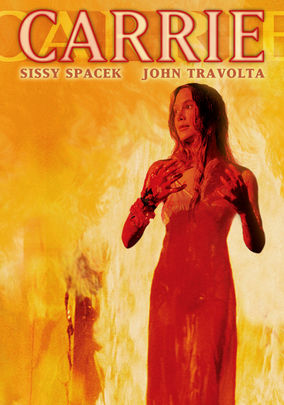
Carrie is a 1976 horror film adapted from Stephen King’s novel of the same name.

Many King adaptations have failed, but Carrie (along with The Shining) is among the best.

Going beyond the scope of horror and receiving more than one major Oscar nomination (largely unheard of in horror), Carrie influenced films and filmmakers for decades beyond its release.

This is due mainly to the dream-like and breathtaking direction of mood master Brian De Palma.

By this time (2016), the film and the character of Carrie White were legendary.

Carrie (Sissy Spacek) is a lonely suburban teenager, ostracized by her classmates for being “weird”. Her mother (Piper Laurie) is a devout Christian who spreads the word of god amongst the neighbors.

Carrie has a special ability to move things, usually during anger- this is called telekinesis.

After a humiliating incident in the girl’s locker room when Carrie begins menstruating, one of the nicer girls in the class, Sue Snell (Amy Irving) feels sorry for Carrie and convinces her boyfriend, Tommy Ross, to take Carrie to the prom.

When others in the class take revenge upon Carrie with a sick joke, things take a horrific turn.

Betty Buckley as the empathetic gym teacher, Miss Collins, and John Travolta and Nancy Allen, as dastardly Billy and Chris, also star and are perfectly cast.

The direction in the film is second to none. De Palma adds interesting camera work throughout the film.

During a tender, lovely prom dance between Carrie and Tommy, the camera circles the pair repeatedly, giving a spellbinding, but not dizzying quality.

The use of slow-motion in the important “pig blood” scene is immeasurably effective.

The seemingly eternal time it takes for the blood spilling to occur, and the camera (in slow motion) goes from Sue to Miss Collins to Chris to the bucket of blood is fantastic.

The list of inspired and intense scenes goes on and on- from the climactic scene between Carrie and Mrs. White to the “jump out of your seat” final scene.

The acting is also worthy of high praise. Spacek and Laurie deservedly received Oscar nominations for their work. Spacek elicits so much rooting value into her role with a shred of psychosis bubbling just beneath the surface.

Carrie wants to fit in and have a happy life so the audience is immersed in her corner and celebrates her short-lived happiness with Tommy at the prom. Spacek is just perfectly cast.

Laurie on the other hand exudes crazy in every sense, but we do feel pangs of sympathy for her. We largely believe she cares for her daughter and wants to protect her from the dangerous world.

Carrie (1976) is a masterpiece that continues to hold up well and influence generations who can relate to school bullying,  taunting, and the desire to see the nasty popular kids get their just desserts.

More than a great horror film, it is a revered classic with a dreamy, moody vibe.

One of my all-time favorites.

Oscar Nominations: Best Actress-Sissy Spacek, Best Supporting Actress-Piper Laurie

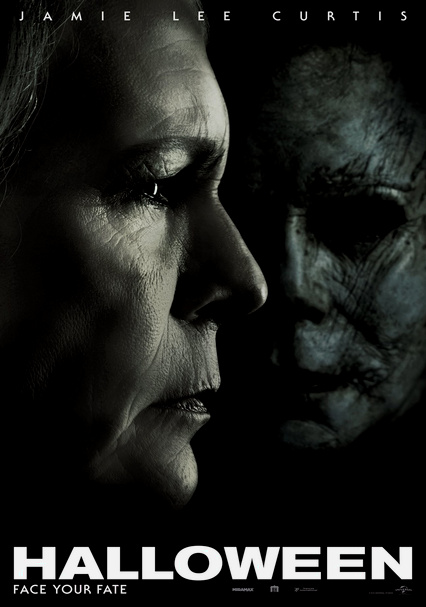
Halloween-2018

Halloween-2018

Director David Gordon Green

Starring Jamie Lee Curtis, Judy Greer

Scott’s Review #823

Reviewed October 23, 2018

Grade: B+

Let’s be honest—nobody will ever be able to top or recreate the iconic 1978 masterpiece Halloween, so any real attempt is a moot point.

Throughout the subsequent decades, many sequels or remakes have emerged, largely disappointing or turning the franchise into a joke.

With the latest incarnation of Halloween (2018), director David Gordon Green gets it right by creating a follow-up to the original, skipping all the other films. Scoring Jamie Lee Curtis as Laurie is a significant win and seemingly dozens of neat references to the original gem.

Set forty years to the day (Halloween Eve and Halloween, naturally!), the audience is first given a summary of killer Michael Meyer’s (Nick Castle) time spent in Smith Grove Sanitarium once captured following the 1978 Haddonfield killing spree.

Two journalists visit Myers in captivity and attempt to make him speak after forty years of silence by mentioning Laurie Strode and showing him his notorious Halloween mask.

Conveniently, he will be transferred to a maximum-security prison the following day. We know that Meyers will escape.

Meanwhile, Laurie has been living with post-traumatic stress disorder since her attack and lives in a constant state of paranoia.

With two failed marriages and a daughter, Karen (Judy Greer), who is traumatized by her mother’s anxiety, Laurie’s life has not been easy. As an aside, I love how Laurie dons the same hairstyle she had at age seventeen.

While she awaits Michael’s inevitable return, Laurie’s secluded house is peppered with traps and guns, allowing her to be at the ready at any moment. Despite her problems, Laurie is close to her granddaughter, Allyson (Andi Matichak).

When the inevitable happens and Michael escapes by presumably causing a bus accident off-screen, the action truly begins. The coincidence of this happening on Halloween night is to be expected and embraced.

Audiences who see the film are certainly not new to the genre. The target audience is the crowd who either grew up with the original or generations who followed and were introduced to it.

Therefore, the film is wise not to try to reinvent the wheel, giving fans what they expect. The opening graphics (the eerie orange writing and the glowing jack-o-lantern) are intact, as is the “introducing” credit for its heroin—in this case, Matichak.

There are several certainties about a horror film like Halloween. We know there will be “kills,” and we know there will be an inevitable showdown between Laurie and Michael Myers to conclude the film.

The fun is in the trip we take to get there. Who will be slashed and how? A butcher knife? Other Halloween delights?

Since there are arguably three female leads and three generations of Strodes, will the film make one of them feel Michael’s deadly wrath?

Halloween works; a significant reason is the countless nods to its past. Many scenes pay homage to attention-paying fans, creating riches and nostalgic memories.

Allyson’s boyfriend’s father’s name is Lonnie—undoubtedly the kid Dr. Loomis scared away from the Meyers’ house forty years ago. Then there is a neighbor woman wearing curlers and slicing a sandwich with a butcher knife, whom Michael steals the knife from an ode to Halloween II (1981).

Finally, as Allyson sits in the back of her class and glances out the window, she sees not Michael, but Laurie standing across the street, staring at her.

These gems are in large part thanks to clever writing and study.

There are a couple of negatives to mention. I am not crazy about Judy Greer’s casting as Jamie Lee Curtis’s daughter. The actresses look nothing alike, and Curtis does not seem old enough to be Greer’s mother.

Furthermore, attempts to add some comic relief moments—two bumbling police officers talking about brownies, Allyson’s goofy father, and the salty tongue of the kid one of the babysitters sits for—do not work.

How great would it have been to include P.J. Soles, Nancy Loomis, or Kyle Richards in cameos? Since Curtis and Castle returned, I wanted more familiar faces.

In wise form, Gordon Green leaves the window open for a potential sequel, so stay for the end credits. My wish would be for this to parlay to the aftereffects of the killings on the same night, which Halloween II (1981) did so successfully.

The possibilities are endless if the box office returns are strong enough and Curtis is on board for another installment.