Category Archives: Timothy Hutton

Ordinary People-1980

Ordinary People-1980

Director Robert Redford

Starring Mary Tyler Moore, Donald Sutherland, Timothy Hutton

Scott’s Review #1,500

Reviewed November 15, 2025

Grade: A

Ordinary People (1980) demonstrates that a quiet film with excellent writing and superb acting can pack an emotional punch, surpassing the gimmicks or action sequences that other films often employ to draw attention.

It’s character-driven and tells a story of a family tragedy and the ramifications and complications that affect the surviving members. The emotional intelligence that director Robert Redford embeds in the film is astonishing.

Deservedly winning the 1980 Best Picture Academy Award, it proves how crucial good writing and good characters are to a quality film.

Significantly, it propelled 1970s television sitcom star Mary Tyler Moore, known until then as the iconic girl-next-door type, into cinematic respectability.  Her narcissistic, uptight character was uncharted territory and a career risk for the actor who ended up exceeding expectations.

Tortured by guilt following the death of his older brother, Buck, in a sailing accident, we meet the alienated teenager Conrad Jarrett (Timothy Hutton) right off the bat, following a failed suicide attempt.

Returning home to his affluent Chicago suburban life following an extended stay in a psychiatric hospital, Conrad tries to deal with his mental anguish and also reconnect with his mother, Beth (Mary Tyler Moore), who has grown bitter after the accident.

His emotionally wounded father, Calvin (Donald Sutherland), tries to gently repair the family damage with the help of a psychiatrist, Dr. Berger (Judd Hirsch), who begins to treat Conrad.

The screenplay, written by Alvin Sargent, is based on the 1976 novel by Judith Guest.

Combined with Redford’s masterful direction, the story never shifts to a soap opera direction with Calvin or Beth having affairs, turning to booze, or other showy plot devices, intent on stirring up drama.

Instead, it’s about how they and Conrad handle their trauma. Each has an individual view of the events, who they blame, and how they cope with such trauma.

The audience can easily empathize and relate to the incidents if anyone has faced a death, loss of a job, an accident, a divorce, or any such upheaval in their lives.

The posh autumnal suburban landscape is enveloped by Redford, which enhances the experience. The Jarretts’ affluence is put to good use as they attend local theater, play golf, take European vacations, and can afford to send Conrad to a psychiatrist.

Exterior shots of large suburban homes, accompanied by luxury cars, housekeepers, well-manicured lawns, and sleek golf courses, all convey the comforts of life.

It makes their pain a bit more understandable as they, especially Beth, soak in luxury as a way of comforting herself from the loss of her son.

Can’t their money help alleviate some of the suffering?

I had mixed emotions about Beth’s character. Appearing to be a cold bitch with Conrad and the assumption that she favored the dead son, she never visits Conrad in the hospital after his suicide attempt, instead fleeing to Europe on vacation. She engages in small talk with him rather than caring for him.

What kind of mother could do that?

But I realize that she is hurting too, and when she becomes teary-eyed or crumbles in her husband’s arms, I feel genuine sympathy for her, a testament to Tyler Moore’s talents.

My favorite character, though, is Conrad (Hutton).

Via flashbacks, we see the closeness of the brothers’ relationship and the action that occurred during the drowning.

Hutton delivers on many levels. Whether staring into the distance, pondering events, exploding with rage, tenderly sharing a date with a blossoming love interest, Jeannine (Elizabeth McGovern), or struggling with a friend, Karen, his performance is always inspiring.

Ordinary People (1980) marks his directorial debut; Redford crafts a family drama rich in layers and a beautifully moving pace that draws the viewer into the lives of the primary characters.

The still taboo of mental illness and therapy is also embraced, showing that expressing feelings is better than repressing emotions.

Oscar Nominations: 4 wins-Best Picture (won), Best Director-Robert Redford (won), Best Actress-Mary Tyler Moore, Best Supporting Actor-Timothy Hutton (won), Judd Hirsch, Best Adapted Screenplay (won)
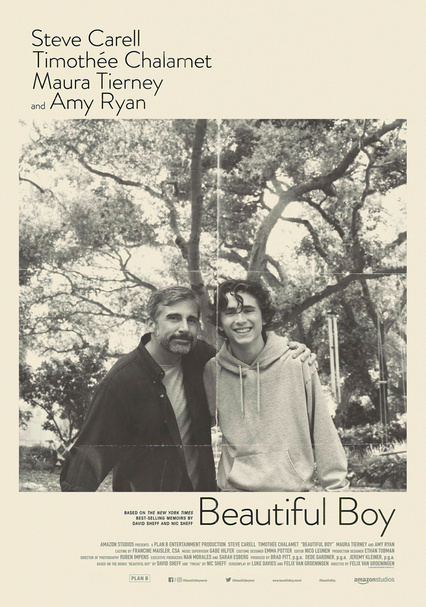
Beautiful Boy-2018

Beautiful Boy-2018

Director Felix Van Groeningen

Starring Steve Carell, Timothée Chalamet

Scott’s Review #835

Reviewed November 23, 2018

Grade: A-

Beautiful Boy (2018) tells a humanistic and vital story about the ravages of drug addiction and how the issue affects not only the person with an addiction but the entire family unit. Nestled within the powerful writing is a lovely father/son relationship and the duo’s trials and tribulations over the years.

The film feels pure and honest, with rich storytelling and many good acting performances.

Beginning in the present, David Sheff (Steve Carell) realizes that his son Nic (Timothée Chalamet) has been missing for two days. When Nic finally arrives at the Sheff household, he is strung out and sick.

David suspects Nic has been abusing drugs, and all parties agree that Nic needs professional help and a stint in a rehab facility. However, nobody realizes the depths of Nic’s addiction.

When Nic checks out early and goes on a bender, the film begins to segue back and forth between periods of Nic’s recovery and his many relapses. It also presents scenes of David and Nic’s relationship during their childhood years.

The best parts are the conversations and moments between father and son, and their enduring love. David’s second wife, Karen (Maura Tierney), and Nic’s mother, Vicki (Amy Ryan), are also in the mix.

The screenplay is based on memoirs written by David and Nic Sheff. The chronicles of their journey include triumph and heartbreak over many years as recovery and relapse become frequent parts of their lives, threatening to tear them apart or result in Nic’s ultimate death.

The road to recovery is not an easy path.

Carell and Chalamet wonderfully portray the primary characters, David and Nic. The fact that the actors do not resemble each other is quickly forgotten as their dynamic is emotional and palpable, and they share easy chemistry.

Carell is a strong actor, capable of infusing his character with strength and calm while slowly falling apart at the seams.

He loves his son and wants him to recover, but he finally accepts that he needs to let him go. This moving realization is Carell’s best scene.

Chalamet, boyish and innocent-looking, is perfectly cast. With kind blue eyes and a mop of raven hair, the actor could easily pass for twelve years old. This only enhances the tragedy of youth ravaged by drug abuse.

These qualities are mirrored by those of his girlfriend Lauren (Kaitlyn Dever). She also possesses a fresh-faced, clean look, which strengthens the message.

Ryan’s and Tierney’s performances in what could easily be throwaway “wife roles” must be mentioned.

For a while, I thought Tierney was in a marginal role until she finally had a wonderful scene in which her frustration reached a boiling point. Fuming with rage, she attempts a car chase with Nic, only to finally crumble into tears, realizing how the mess has changed her as a person.

Ryan also sinks her teeth into a teary role, almost blaming herself for Nic’s problems.

The film wisely presents statistics to hit home further, mainly the low percentage recovery rate of most crystal meth users. A single-digit success rate on this note is frightening; the user requires more and more substance to feel anything close to the first high they experienced.

A pivotal scene occurs at the film’s end as David and Karen attend a support group. As they tearfully listen to a woman’s story of the recent death of her addict sister, we are left to wonder if Nic has also died.

Kudos to a powerful cameo performance by actress Lisa Gay Hamilton.

The sunny California setting benefits the film and starkly contrasts the darkness of New York City, where Nic attends school. With multiple exterior shots of San Francisco and Los Angeles, the metropolitan scope is vast and cruel for drug users.

Easily accessible to anyone with the motivation to obtain drugs, the streets of San Francisco are portrayed as hard and drug-infused, mainly when David drives around desperately looking for Nic.

Featuring a story told before but rarely from the family perspective, Beautiful Boy (2018) does what it sets out to do and does it splendidly.

Careful not to soften the challenges and sufferings of the person with an addiction, the devastation they bring to their loved ones is also showcased. The sound and emotional father/son relationship may be the film’s best part.