Category Archives: David Gordon Green

Halloween Ends-2022

Halloween Ends-2022

Director David Gordon Green

Starring Jamie Lee Curtis, Andi Matichak, Rohan Campbell

Scott’s Review #1,309
Reviewed October 19, 2022

Grade: B+

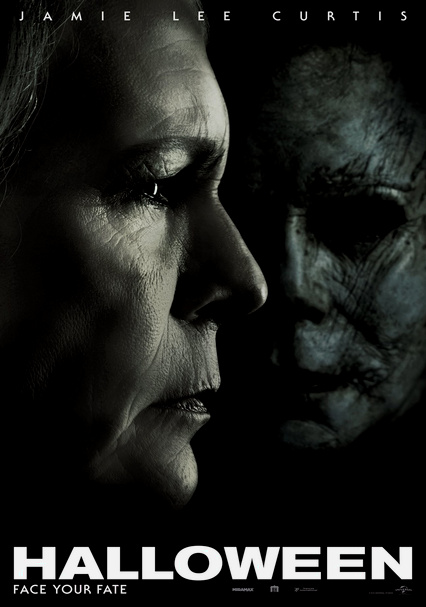
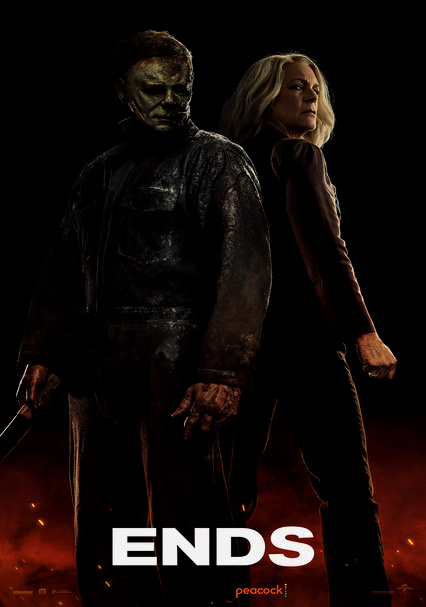
As a bit of a rewind for newer fans of the series or altogether non-fans, Halloween Ends (2022) is a slasher film that is the sequel to Halloween Kills (2021), and the thirteenth installment in the legendary Halloween franchise.

It is reported to be the final film in the trilogy of sequels that commenced with the 2018 film, Halloween, which directly follows the 1978 film and disregards all other entries.

It’s as if nothing more happened after knife-wielding Michael Meyers toppled from a suburban terrace and escaped one Halloween night long ago.

Time will tell if this is indeed the final farewell, but the film wraps things up nicely, and it feels like a satisfying ending.

Halloween Ends is unconventional and murky in parts that intrigued me more than confused me. But rest assured, there is enough mayhem and creative kills to satisfy bloodthirsty audiences- it just takes some patience to get there.

I’m not sure all diehard fans will be satisfied with the film.

There are some twists and turns to maneuver through and some perplexities with a couple of leading characters, but I’m careful not to give too much away.

Over forty years since being terrorized while babysitting one Halloween night, Laurie Strode is writing her memoir as she tries to put the trauma of her past behind her. Since she still resides in the small town of Haddonfield, Illinois, this will not be easy when the sudden death of a young boy sets off terrifying events.

The opening sequence is compelling despite not even involving Laurie, Michael, or Laurie’s granddaughter, Allyson (Andi Matichak)!

The introduction of male babysitter Corey (Rohan Campbell) breathes fresh life into the complex family tree within the small town, and an event causes the young man to become Haddonfield’s new pariah.

Corey is a nice addition as he dates Allyson and becomes involved in the family drama with Michael Meyers, becoming a significant connection.

I’m keeping this vague so I don’t spoil the fun. Still, the romance between Corey and Allyson is particularly evident during a scene where they spend the night together outside a local radio station.

Reminiscences of Laura Dern and Kyle MacLachlan’s characters in David Lynch’s masterpiece Blue Velvet (1986) are set amid a hauntingly cerebral musical score that lends the film an arthouse look and feel. The young romance is shrouded by oncoming chaos, but they cannot stay away from each other.

A fun fact and a nod to the strong film history of the franchise is that John Carpenter, director of the original Halloween, and his son, Corey, provide the music in Halloween Ends.

Some of Corey’s and Allyson’s sequences feel poetic and dreamy, which is the opposite of what a ‘normal’ Halloween film feels like.

Not to be outdone by poetic filmmaking, the director David Gordon Green makes sure any bullies, sluts, or sexual creatures get their due by being fittingly hacked to bits or suffering crushed skulls to pay for their sins.

One even gets ensnared in barbed wire and then unceremoniously run over.

My favorite kills include a comical tongue removal that ends up making an album skip, and a stabbing and impaling onto a door, an apparent reference to Bob’s death in the original.

Inevitably, the film belongs to Laurie and Michael, and their showdown is no surprise. I was salivating for this final blood feast from the get-go, and it doesn’t disappoint.

Laurie’s kitchen is conveniently stocked with a set of sharp, shiny knives, which allows for a healthy dose of crimson-red blood soaking.

I could have used more nods to history. Besides the carbon copy killing of Bob, an old photo, and quick clips of scenes from the original, there isn’t a whole lot.

Bringing the original actors and characters to the fold in Halloween Kills worked well, but all little Lindsey Wallace (Kyle Richards) gets to do is serve drinks at the local bar and listen to other characters’ problems.

My money is that we haven’t seen the last of Michael Meyers, but Halloween Ends (2022) will satisfy those looking for the expected Halloween trimmings with a dash of creative filmmaking.

Other than a couple of missed opportunities, it remains true to its audience.
Halloween Kills-2021

Halloween Kills-2021

Director David Gordon Green

Starring Jamie Lee Curtis, Judy Greer, Anthony Michael Hall

Scott’s Review #1,190

Reviewed October 31, 2021

Grade: B+

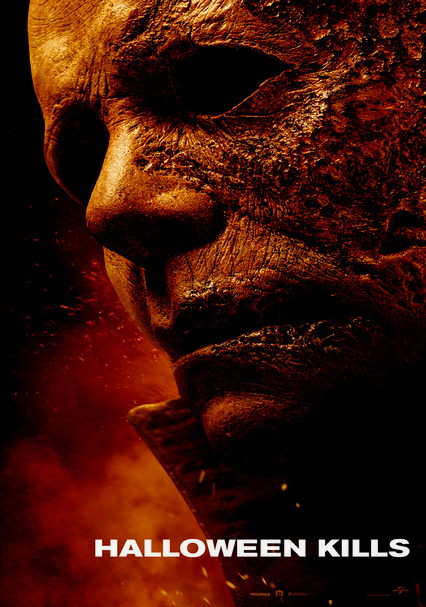
The second installment in a planned trilogy of the iconic Halloween franchise, which began in 1978, Halloween Kills (2021) is a frightfully effective “middle sibling”.

Bridging the gap between Halloween (2018) and the highly anticipated Halloween Ends (2022), the film has enough gory kills and bloodletting to satisfy any horror fan.

The plot is furthered, and the groundwork is laid for the next installment.

The nods to history, with several actors reprise their characters from the original film, are an enormous treat for fans and a true pleasure to see. The writing regarding history is excellent, and it effectively weaves these characters into the story with newer ones. Jamie Lee Curtis, of course, stars as the terrorized Laurie Strode.

Picking up where Halloween-2018 left off on Halloween night (naturally), a wounded Laurie (Curtis) is whisked away to Haddonfield Hospital to recover while confident that she has finally killed her nemesis, Michael Meyers, by burning him to death.

She is joined by her daughter Karen (Judy Greer) and granddaughter Allyson (Andi Matichak) since the trio left the masked maniac caged and burning in Laurie’s basement. Or so they thought.

Spoiler alert- Michael is far from dead.

Continuing his ritual bloodbath held on Halloween night, Michael roams the quiet streets of Haddonfield. At the same time, the fed-up townspeople rise against their unstoppable monster and form a vigilante mob led by Tommy Doyle (Hall).

They continue to chant “Evil dies tonight” in anticipation of Michael’s demise.

Kyle Richards (Lindsey Wallace), Nancy Stephens (Nurse Marion Chambers), and Charles Cyphers (Sheriff Brackett) return to the action with prominent supporting roles.

Their additions are a significant win for me, and presumably, for any fan of the franchise. It’s on par with welcoming old friends back into one’s life with open arms after a long absence.

The fact that they provide a historical background is the icing on the cake. Brackett’s daughter, Annie, one of the first of Michael’s victims, is celebrated and shown via flashbacks.

Marion’s close friendship with Michael’s doctor, Sam Loomis (Donald Pleasence), is also mentioned. He is seen via computer-animated imagery when the events go back to 1978.

The decision by director/writer David Gordon Green, along with co-writers Scott Teems and Danny McBride, to frequently revisit the events of 1978 is uncompromising and relevant, reminding old fans of the story’s history and teaching novice fans how the dots connect.

It’s a brilliant decision.

The diversity offered in Halloween Kills is a breath of fresh air and progressive. An interracial couple, a same-sex couple, and a black couple are added with respect, dignity, and without stereotypes. They are everyone’s neighbors and an accurate representation of the community.

As residents of the cursed Meyers house, Big John and Little John are portrayed as tough and intelligent, avoiding the comic relief that often shadows gay characters.

A few death scenes are extended to show the victim’s pain and suffering instead of the usual quick and easy slice ’em and dice ’em style. This will make the squeamish a bit nervous, but that’s half the fun of horror films, right?

The typical throat-slashings and eye gouging are included, but many of the minor characters are likable, witty, and clever, and not written as complete morons.

In contrast to the original Halloween, the residents of Haddonfield now seem more blue-collar and red necks than upper-middle-class.  I chuckled when Laurie yelled “sheep” to the venomous residents who were chasing a man assumed to be Meyers (he wasn’t).

I surmised that maybe the filmmakers were sticking it to the dolts who blindly follow political leaders in a cultish way, devoid of thought.

Before anyone thinks that Halloween Kills (2021) is a work of art, it isn’t. There exists enough silly dialogue to make anyone snicker, but that’s what slasher films are all about. They are meant to be fun, and this Halloween installment doesn’t disappoint.

The film is sheer entertainment done well and makes me anticipate the next and “final” Halloween chapter. But, as long as the movie remains a hit at the box office, the killings will go on and on and on and on.

Halloween-2018

Halloween-2018

Director David Gordon Green

Starring Jamie Lee Curtis, Judy Greer

Scott’s Review #823

Reviewed October 23, 2018

Grade: B+

Let’s be honest—nobody will ever be able to top or recreate the iconic 1978 masterpiece Halloween, so any real attempt is a moot point.

Throughout the subsequent decades, many sequels or remakes have emerged, largely disappointing or turning the franchise into a joke.

With the latest incarnation of Halloween (2018), director David Gordon Green gets it right by creating a follow-up to the original, skipping all the other films. Scoring Jamie Lee Curtis as Laurie is a significant win and seemingly dozens of neat references to the original gem.

Set forty years to the day (Halloween Eve and Halloween, naturally!), the audience is first given a summary of killer Michael Meyer’s (Nick Castle) time spent in Smith Grove Sanitarium once captured following the 1978 Haddonfield killing spree.

Two journalists visit Myers in captivity and attempt to make him speak after forty years of silence by mentioning Laurie Strode and showing him his notorious Halloween mask.

Conveniently, he will be transferred to a maximum-security prison the following day. We know that Meyers will escape.

Meanwhile, Laurie has been living with post-traumatic stress disorder since her attack and lives in a constant state of paranoia.

With two failed marriages and a daughter, Karen (Judy Greer), who is traumatized by her mother’s anxiety, Laurie’s life has not been easy. As an aside, I love how Laurie dons the same hairstyle she had at age seventeen.

While she awaits Michael’s inevitable return, Laurie’s secluded house is peppered with traps and guns, allowing her to be at the ready at any moment. Despite her problems, Laurie is close to her granddaughter, Allyson (Andi Matichak).

When the inevitable happens and Michael escapes by presumably causing a bus accident off-screen, the action truly begins. The coincidence of this happening on Halloween night is to be expected and embraced.

Audiences who see the film are certainly not new to the genre. The target audience is the crowd who either grew up with the original or generations who followed and were introduced to it.

Therefore, the film is wise not to try to reinvent the wheel, giving fans what they expect. The opening graphics (the eerie orange writing and the glowing jack-o-lantern) are intact, as is the “introducing” credit for its heroin—in this case, Matichak.

There are several certainties about a horror film like Halloween. We know there will be “kills,” and we know there will be an inevitable showdown between Laurie and Michael Myers to conclude the film.

The fun is in the trip we take to get there. Who will be slashed and how? A butcher knife? Other Halloween delights?

Since there are arguably three female leads and three generations of Strodes, will the film make one of them feel Michael’s deadly wrath?

Halloween works; a significant reason is the countless nods to its past. Many scenes pay homage to attention-paying fans, creating riches and nostalgic memories.

Allyson’s boyfriend’s father’s name is Lonnie—undoubtedly the kid Dr. Loomis scared away from the Meyers’ house forty years ago. Then there is a neighbor woman wearing curlers and slicing a sandwich with a butcher knife, whom Michael steals the knife from an ode to Halloween II (1981).

Finally, as Allyson sits in the back of her class and glances out the window, she sees not Michael, but Laurie standing across the street, staring at her.

These gems are in large part thanks to clever writing and study.

There are a couple of negatives to mention. I am not crazy about Judy Greer’s casting as Jamie Lee Curtis’s daughter. The actresses look nothing alike, and Curtis does not seem old enough to be Greer’s mother.

Furthermore, attempts to add some comic relief moments—two bumbling police officers talking about brownies, Allyson’s goofy father, and the salty tongue of the kid one of the babysitters sits for—do not work.

How great would it have been to include P.J. Soles, Nancy Loomis, or Kyle Richards in cameos? Since Curtis and Castle returned, I wanted more familiar faces.

In wise form, Gordon Green leaves the window open for a potential sequel, so stay for the end credits. My wish would be for this to parlay to the aftereffects of the killings on the same night, which Halloween II (1981) did so successfully.

The possibilities are endless if the box office returns are strong enough and Curtis is on board for another installment.

Goat-2016

Goat-2016

Director Andrew Neel

Starring Ben Schnetzer, Nick Jonas

Scott’s Review #762

Reviewed May 23, 2018

Grade: D

Goat (2016) is a film that made me angry for one hour and forty minutes. I deride it completely.

Incorporating outrageous and unnecessary scenes for no other reason than to offend, the film fails to achieve either a lesson learned or any central point.

I understand what the filmmakers were going for by portraying fraternities as evil and their members as monsters. Goat never provided logic, much character development, or any good intentions.

I was left disturbed by what I had just seen.

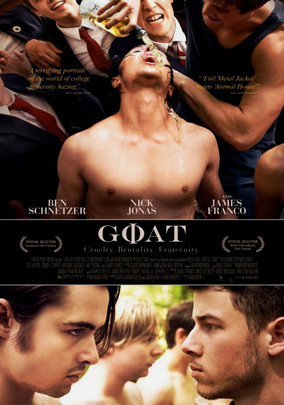
College student Brad Land (Ben Schnetzer) is viciously attacked by two peers following a party one summer night. As the police search for the assailants, Brad begins the fall semester at a college attended by his older brother Brett (Nick Jonas).

There, he decides to pledge a fraternity during “Hell week,” enduring one humiliation and degradation after another. When a fellow pledge dies following the fraternity’s abuse, someone rats the fraternity out, with Brad as the likely suspect.

Brad is an interesting study. The protagonist makes his first mistake by giving ominous-looking strangers a lift home. At this point, we feel sympathy for the character and should root for him throughout the film, but I didn’t.

As nasty as the fraternity brothers are, it is not until nearly the end that Brad ever stands up to any of them, and he oddly refuses to point the finger at his assailant despite being right in the police lineup.

I found the character all over the place and never knew his motivations.

Most other characters (including the victimized pledges) have little rooting value and are primarily one-dimensional “frat boys” written poorly.

The writers of the script do their best to make fraternity brothers look awful- they beat, berate, humiliate, and degrade not only the pledges, but they barely treat females or animals any better.

This isn’t comforting to witness since there is little point. The humiliation scenes continue as if we are watching the same scene repeatedly.

Ludicrous scenes of the guys drinking, acting belligerent, using anti-LGBT slurs, and taunting each other commenced almost from the get-go.

A ridiculous cameo by James Franco goes nowhere and makes little sense other than his character being a former frat boy the current members looked up to. If I had a nickel for every “bro,” “dude,” or “man” used in the film to show machismo, I’d be a rich man.

In the final segment, the film makes a feeble effort to humanize Brett, who is hot and cold towards his brother all along (this is never explained).

They also write a few of the frat boys as feeling sorry for the sudden heart attack suffered by one of the pledges, but this only fueled me with rage as unknown was whether they were genuine or wanted to save their asses (they caused his death!).

My vote goes for the latter.

The only prop I will give to Goat is that it is not a middling glossy Hollywood affair and goes for the jugular in its intensity and brutality.

But the point I thought the film was trying to make (that of a thought-provoking look at the problem of fraternities) only made me hate fraternities and develop a negative view of them.

From the despicable scenes where the frat feeds a poor goat chocolate laxatives and forces a blindfolded pledge to eat what’s thought to be excrement to the concussion they give a pledge before he succumbs to a heart attack, the film is not an easy watch.

Too many scenes feel overly hammered home and redundant, and the conclusion is unsatisfying. We are left with Brett and Brad gazing out at the spot where Brad was attacked, and this scene does nothing to wrap up the film.

From the onset, I squirmed uncomfortably during Goat and never felt connected to the film or any of the characters.

Perhaps Goat (2016) would have succeeded or appreciated more with more development and purpose, but the film failed me.