Category Archives: Chris Pine

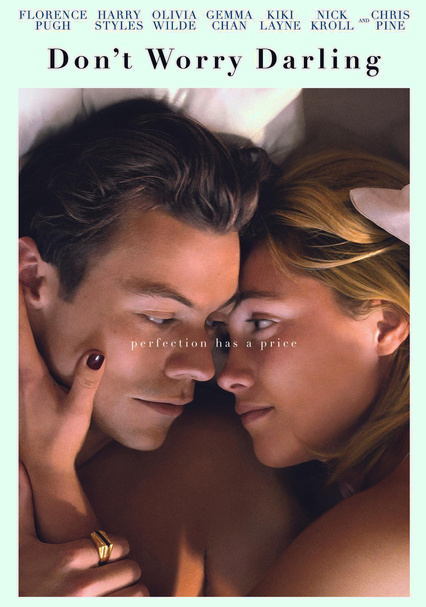
Don’t Worry Darling-2022

Don’t Worry Darling-2022

Director Olivia Wilde

Starring Florence Pugh, Harry Styles, Chris Pine

Scott’s Review #1,368
Reviewed June 9, 2023

Grade: B+

Don’t Worry Darling (2022) plays like a modern version of The Stepford Wives (1975) meets Pleasantville (1998) but with a supernatural spin and lots of much-needed modern diversity.

Not set in present times, the characters all feel very 2022 but are transplanted to a different period that only enhances an already unsettling feeling.

The sophisticated 1950s set design and art direction are a significant score, as well as the mysterious happenings that continue to shroud the central character and her surroundings.

The film never lags and, in fact, fascinates throughout. There is a continuous feeling of uncertainty, dread, and controlled chaos that assuredly will explode in the finale.

I’m not sure I quite got the conclusion right away until I read through the summary, and something about an alternate universe and different lives outside of the primary setting was revealed. Regardless, it felt unsatisfying, especially compared to the rest of the events.

But, small potatoes, I still enjoyed Don’t Worry Darling immensely.

The premise is thrilling from the start. A 1950s housewife named Alice, played by emerging star Florence Pugh, is living with her husband in a utopian experimental community. They mingle with neighbors, host lavish parties with delicious food and drink, and enjoy each gorgeous sunny day.

Daily, the men dutifully drive off to work in the distinguished Victory Headquarters while the wives cheerfully clean and scrub the windows and prepare a savory dinner, counting the minutes until their husbands return for a romp in the hay.

It all sounds too good to be true.

When a close friend Margaret (KiKi Layne) experiences a psychotic episode witnessed by Alice, she begins to worry that her husband’s glamorous company may be hiding disturbing secrets and that everything may not be as perfect as it seems.

I am becoming a big fan of Florence Pugh, who effortlessly carries the film. Impressive in both Midsommar and as Amy in Little Women, both in 2019, she possesses a specific ‘it’ factor showcased well in Don’t Worry Darling.

Pugh has many scenes with no dialogue. Ranging from a soak in the bathtub, a bizarre episode where she wraps her head in Saran Wrap, and witnessing her friend’s death, she does so much without speaking.

Successfully, the audience is taken along for the ride. We know as much as Alice does, which is nothing. It’s not that Alice hates her life; hell, she’s got it pretty good. A scrumptious roast and carrots alongside hot sex on her dining room table, the girl could do much worse.

But she knows something is off and is determined to find out what it is. Why are the women forbidden from seeing the Victory Headquarters? Why does a plane crash that only Alice sees? Why does Frank, the alpha male leader of Victory, wonderfully played by Chris Pine, keep eyeing Alice?

Impressive is the direction by Olivia Wilde, who also appears as Alice’s friend, Bunny. Along with the screenwriter, Katie Silberman, the duo crafts a piece of work with a feminist perspective turned topsy-turvy, and it’s a good angle.

Not to harp on the ending again, but the message of female empowerment, which I think is the intention of Wilde and Silberman, is unclear. A bolder message and a more finite ending would have helped cement the deal.

Still, in Wilde’s only second film, the first being the vastly different Booksmart (2019), she should only be proud of herself and the product she created.

If one is seeking an emboldened psychological thriller with twists and turns to savor, Don’t Worry Darling (2022) is a fine pick. It creeps along with appropriate plot points and a stylized visual canvas.

Spider-Man: Into the Spider-Verse-2018

Spider-Man: Into the Spider-Verse-2018

Director Peter Ramsey, Rodney Rothman, Bob Persichetti

Voices Shameik Moore, Hailee Steinfeld, Lily Tomlin

Scott’s Review #881

Reviewed March 30, 2019

Grade: B+

There have been many film versions of Spider-Man.

To my recollection, the first series consisted of three installments, directed by Sam Raimi: Spider-Man (2002), Spider-Man 2 (2004), and Spider-Man 3 (2007), all starring Tobey Maguire in the title role.

These were the good old days.

Andrew Garfield took over in 2012 and 2014 to mixed reviews before the superhero was merged into Captain America and The Avengers films, as well as one or two additional solo outings. This is where I lose track.

Finally, through all the incarnations comes the very first computer-animated film based on the Marvel Comics character.

Spider-Man: Into the Spider-Verse (2018) was an enormous box-office success as well as a critical success, winning the coveted Best Animated Feature Oscar.

My choice would have been for the dark and sarcastic Isle of Dogs, but the former has impressive merits and grand animation that are astounding to the eyes.

Towards the climax, the film teeters into familiar and predictable territory from a story perspective, though admittedly, the superhero and animated genres are not my favorites.

Miles Morales is a Brooklyn teenager, bright, energetic, and likened to an average city kid. His father, Jefferson Davis, is a muscled policeman who is no fan of Spider-Man, the heroic masked man who prevents city crime, outshining the cops daily.

While close to his father, Miles is much more connected to his uncle, Aaron Davis, despite his father and uncle having a distant relationship.

When a hungry spider bites Miles, he immediately begins exhibiting Spider-Man-like abilities and stumbles upon others with similar stories.

The teen meets super-villain Wilson Frisk (a not-so-subtle Donald Trump parody if ever I saw one), who is intent on accessing a parallel universe to retrieve his deceased wife and son. Events involving a USB drive and the “real” Spider-Man, Peter Parker, also living in a parallel universe, come into play.

The overly complex story is not the best part of the experience, and I began to lose interest in the hows and whys, especially when compared to the escapist and marvelous, super-cool animations.

Spider-Man: Into the Spider-Verse deserves great praise for making the film’s central character ethnically mixed (Hispanic and Black), a first in the franchise’s history.

This diversity, evident in Black Panther (2018), is all the rage now in the superhero genre, along with gender equality, a slogan once deemed a “guy’s movie.”

This is a delight to witness, with hopefully even more of a slant towards richer diversity. Are Asian, gay, or physically impaired characters coming next?

The film looks fantastic, with creative and slick modern animation and graphics that never waver throughout the nearly two-hour running time, which is lengthy for an animated feature.

Styled and bright, the film’s most striking appeal lies in its colors, shapes, and sizes. The metropolitan New York City is a treat to witness, as the creators not only focus on Manhattan, but also on Queens and Brooklyn, boroughs that are often forgotten in favor of Manhattan’s glitz and bustle.

The clever re-titling of FedEx trucks to Red Ex is worthy of mention.

With its glitzy look, fast-paced action, and interesting villains, Spider-Man: Into the Spider-Verse (2018) is an impressive feat and a deep dive into the possibilities of combining the superhero and animated genres.

This is around the corner due to the critical, audience, and award notices that surround this film. If only the story contained more twists and turns and fewer standard genre-pleasing qualities, the possibilities would be endless.

Oscar Nominations: 1 win- Best Animated Feature Film (won)

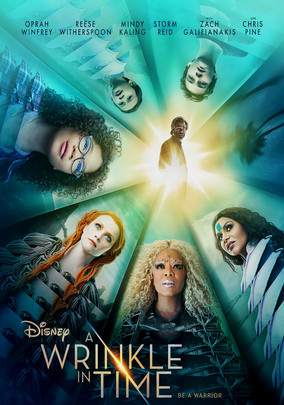
A Wrinkle in Time-2018

A Wrinkle in Time- 2018

Director Ava DuVernay

Starring Storm Reid, Oprah Winfrey, Reese Witherspoon

Scott’s Review #788

Reviewed July 16, 2018

Grade: C

A Wrinkle in Time (2018) is a film I had high hopes for, given the enormous marketing push, first-rate cast, and especially the acclaimed female director involved with the project, Ava DuVernay (Selma, 13th).

Additionally, having admired the 1962 novel, I expected a rich, earthy, and mysterious experience. Sadly, whether it be a “too many cooks in the kitchen” situation given the star power involved, or some other factors leading to a disconnect, this film disappointed me.

It’s not terrible, but it suffers from miscasting, too much CGI, and a story that is not very compelling.

Thirteen-year-old Meg (Storm Reid) is having a tough time in school. Smack dab in the “awkward phase,” she is picked on by schoolmates because her father (Chris Pine) has disappeared, presumably having ditched the family.

In reality, he is a scientist transported to another world after solving the question of humanity’s existence.

After Meg and her family are visited by a strange woman named Mrs. Whatsit (Reese Witherspoon), Meg, her little brother Charles Wallace, and Meg’s crush, Calvin, time-travel to find a way to save her father.

Fans who have read the fantastic novel written by Madeleine L’Engle will most certainly be disappointed since many details of the film are vastly different from the written page.

DuVernay attempts to take the film out of the 1960s and into 2018 (I have no issue with that), but the film feels so slick and modern with the visual elements and heavy use of CGI that the story suffers enormously.

The film is gorgeous, especially in the sweeping outdoor scenes, but in this case, too many bells and whistles spoil A Wrinkle in Time.

The three strange women characters, Mrs. Whatsit, Mrs. Who (Mindy Kaling), and Mrs. Which (Oprah Winfrey), are completely butchered. In the novel, each is portrayed as peculiar, mysterious, and similar to witches: frumpy, awkward, yet lovable.

In the film, however, they are colorful, glamorous, and empowered, but lack uniqueness or intrigue.

I am all for female empowerment, but the characters just felt wrong.

Kaling is fine in the most minor role, but in the case of Witherspoon and Winfrey, it appears to be a case of “we have big stars, let’s find roles for them.” A tough sell with Mrs. Which is to think of Oprah as anyone other than….well, Oprah!

Witherspoon’s attempts to be goofy and the comic relief of the film do not work.

The casting of newcomer Storm Reid is lackluster. I have no issue with the character of Meg being changed to bi-racial, I feel that’s a plus in the modern age. However, the actress is not the greatest, appearing both sullen and wooden in various scenes.

Nor does she have any chemistry with her love interest, Calvin.

This is a shame since the theme of young love would have been a nice addition to the film and was a coming-of-age element in the novel.

At the risk of being overly critical, A Wrinkle in Time is not a total disaster either. The progressive and heroic message of the overall film is quite inspiring if kids watch the film (and since it is Disney-produced and heavily advertised, I can see no reason why they wouldn’t), they will be exposed to a nice message of good conquering evil.

On a side note, the villain is safe and hardly conjures up much fright, so parents need not worry about the film being too scary.

With heaps of buzz and anticipation regarding A Wrinkle in Time (2018), the film seemed poised to become a blockbuster hit and a great spring flick. Instead, critics and audiences alike have largely derided it.

With creative genius, star power, and a considerable budget, something ran amok as the final product is fair to middling.

Let’s hope director Ava DuVernay gets her groove back with her next project- I expected more.

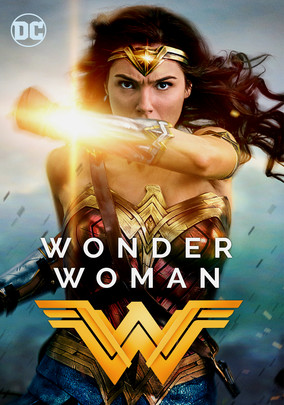
Wonder Woman-2017

Wonder Woman-2017

Director Patty Jenkins

Starring Gal Gadot, Chris Pine

Scott’s Review #696

Reviewed November 20, 2017

Grade: B

Wonder Woman is a 2017 summer offering (and a mega success) firmly nestled in the comfort of the superhero adventure genre. It is unique because it is directed by a woman in a male-dominated field.

This must be championed, and the film has a palpable, female-empowering quality that I adore since it is still lacking in most mainstream movies.

However, at times, the film teeters too much around predictability and possesses many traditional superhero elements, such as good versus evil, climactic fight scenes, and stock villains.

But liberties must be taken, and overall, I saw the film as a female-driven work.

The fact that the masses celebrated Wonder Woman is terrific news.

Director Patty Jenkins, notable for having previously tackled weighty subject matter in films such as 2003’s Monster, is at the helm of this project and embodies her lead character with a good blend of earnestness, pizzazz, and heart.

“Wonder Woman” is a likable character, and newcomer Gal Gadot, who is unknown to me, is interesting casting. There are a myriad of young Hollywood “names” who could have championed the part—Scarlett Johansson or Jennifer Lawrence may have been palpable in the role.

Seemingly brave, Gadot takes command of the character and fills her with substance.

We meet “Princess Diana” as a young girl living on the protected Amazon island of Themyscira, inhabited only by females. It is around 1918, amid the harsh reality of World War I, though the members of the tribe know nothing about the war or any other current events—nor do any males live on the island.

Most women are trained warriors, presumably to protect the island from potential dangers. It is soon revealed that Diana has special powers, and after meeting a lost American soldier, Steve Trevor (Chris Pine), she embarks on a mission to save the world from the ravages of war.

Mixed in with the main story is a briefly mentioned ancient legend of Zeus’s son Ares plotting to return and destroy the Amazons, whom Zeus created.

My only issue with Wonder Woman as a whole is with the story.  The plot is not weak, but simply put- it is nestled in Hollywood predictability rather than containing surprises.

Despite deserved kudos for the characterization of Diana, the story ultimately turns ho-hum like many superhero films—peppered with the inevitable battle scenes.

The genre-specific “save the world” is played to the hilt as Diana takes it upon herself to stop the war, believing that people are not entirely bad. With this thought, Diana finally learns a valuable lesson about the complexities of human beings.

Wonder Woman contains a moralistic tale, but then there are more battle scenes.

The villains are mainly cartoon-like, which is what one might expect for a film of this kind.  Chemist Isabel Maru/Doctor Poison (Elena Anaya) dons a mask to hide a disfigured face (intentionally to test the poison gas), and General Erich Ludendorff (Danny Huston) plans to destroy all of humanity.

These characters are straight out of comic books and contain no redeeming qualities.

Contrary to where the main story may be a tad lacking, the romantic element is nicely done. The scenes involving Diana and Steve are sweet and romantic, making them fun to watch and a good balance against the action sequences.

Gadot and Pine have great chemistry, adding humor, so the scenes are not forced. As Diana sees Steve naked for the first time, a clever sexual flirtation develops, and a sly lesbian backstory is briefly hinted at.

Diana remarks with a smirk that men are only needed for procreation and that the women on the island “can satisfy themselves.” The duo also has a play of words about his “manhood.”

Due to Wonder Woman’s success, a sequel, again directed by Jenkins, is in the works. My hope is that because of the box office performance, the talented director can take many more liberties and push the envelope further, as she did with Monster.

Wonder Woman (2017) is a good film, so we hope the next installment will be great.

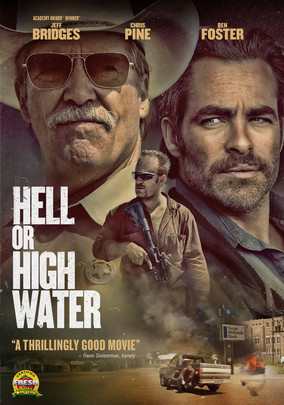
Hell or High Water-2016

Hell or High Water-2016

Director David Mackenzie

Starring Jeff Bridges, Chris Pine, Ben Foster

Scott’s Review #609

Reviewed January 16, 2017

Grade: B+

Hell or High Water (2016), a splendid tale of bank robbers chased by law enforcement officers in rural western Texas, is reminiscent of the Coen Brothers’ No Country for Old Men (2007) or a classic Sam Peckinpah film from the 1970s.

The film provides a good story with a morality tale, so the viewer is unsure who to root for—the good gr tad guys. This gives the film substance compared to the typical action-guy film, which is done to death.

Odd, quirky, minor characters are interspersed throughout the film, which adds comedy and a unique feel.

David Mackenzie directed the film, but up until now, it has been unknown to me.

Chris Pine and Ben Foster play Toby and Tanner, two brothers who embark on small-town bank robberies to save their recently deceased mother’s ranch.

Tanner (Foster) is the more seasoned criminal, having spent time in jail and being more volatile than his brother. Toby (Pine) is a family man with two kids and is more intelligent and sensible than his brother.

Two Texas Rangers, Marcus Hamilton (Bridges), a grizzled man weeks away from retirement, and his partner, Alberto Parker (Gil Birmingham), pursue them.

What I enjoyed most about this film is the authenticity of the setting.

The film was shot in New Mexico but meant to be in West Texas. This is believable, and the cinematography is gorgeous. The vastness of the land and the sticky desert heat are filmed very well.

Small-town Texas is portrayed as tiny characters introduced as townspeople, giving much credo to the film.

My favorites are the diner waitress-smitten with the handsome Toby (and her $200 tip), and t-bone waitress- grizzled and rude after forty-four years in the same place. Their sassy and abrasive behavior works and adds much to the film.

Dale Dickey is a treat in any film, and her turn as a bank employee is a joy.

How nice to see Chris Pine in a challenging role. His character is conflicted morally. Not wanting to hurt anyone, he struggles with the robberies and wants to do right by his kids and mother.

He is a decent man caught in uncertain circumstances, and Pine does an excellent job of portraying him, proving that the actor is becoming more than just a pretty face.

Bridges plays anger quite well, and it is nice to see the actor succeeding career-wise in his golden years. His Texas Ranger character is determined to uphold the law. Still, below the surface, he is more than a bit worried about his upcoming retirement, closing a chapter in his life that is undoubtedly important to him.

His relationship with his partner is jovial and buddy-like, but is there an underlying physical attraction between the men?

The film does not go there, but perhaps on a subconscious level, it is hinted at.

A fantastic scene laced with tension occurs near the film’s end when two of the main characters are killed. It is a stand-off of sorts atop a desert mountain ridge. One of the characters loses it, which results in a shoot-out and a shocking loss of life.

The scene is excellent in that it is a good, old-fashioned shoot ’em up done well.

Hell or High Water (2016) is a gritty action film with excellent elements, nice characterization, and clean fun. It’s a throwback to a long-time crime western without the standard stock characters.

This film is more layered than the traditional and intelligently written, achieving something unique.

Oscar Nominations: Best Picture, Best Supporting Actor-Jeff Bridges, Best Original Screenplay, Best Film Editing

Independent Spirit Award Nominations: 1 win-Best Supporting Male-Ben Foster (won), Best Screenplay, Best Editing

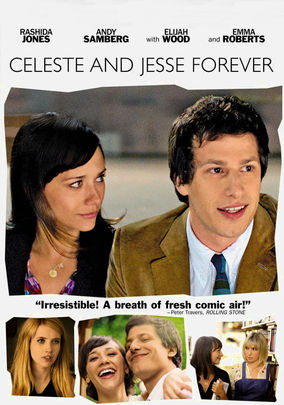
Celeste and Jesse Forever-2012

Celeste and Jesse Forever-2012

Director Lee Toland Krieger

Starring Rashida Jones, Andy Samberg

Scott’s Review #421

70227647

Reviewed June 19, 2016

Grade: D

Celeste and Jesse Forever (2012) was a major dud for me.

I am not a fan of romantic comedies, but since the film received a nomination for an Independent Spirit Award for Best First Screenplay, I decided to watch it.

Why this film was nominated for that award I cannot understand. Perhaps someone knows someone who knows someone?

There is nothing impressive about the writing whatsoever. It’s a tried and true romantic comedy formula: couple together, the couple splits, the couple reunites, throw in some misunderstandings for good measure and that is pretty much the film.

The central characters and supporting characters are either dull, annoying, or both.

To be fair, there is nothing loathsome about the movie, but rather, it’s your standard-by-the-numbers romantic comedy that warrants no award nominations.

Bland.

Independent Spirit Award Nominations: Best First Screenplay

Into the Woods-2014

Into the Woods-2014

Director Rob Marshall

Starring Emily Blunt, Meryl Streep

Scott’s Review #241

70305948

Reviewed May 8, 2015

Grade: B

Based on the stage production of the same name, Into the Woods (2014) is a feature-length Disney film that incorporates several different fairy tales into the main story.

The film is a fantasy musical with numerous songs performed by the cast, featuring a large ensemble of seasoned actors.

The classic fairy tales are modern versions of Little Red Riding Hood, Rapunzel, Jack and the Beanstalk, and Cinderella.

The action mainly revolves around a baker and his wife (James Cordon and Emily Blunt) who are sad and lonely because they cannot conceive a child due to a long-ago curse put upon the baker’s family by a witch- played by Meryl Streep.

Circumstances surrounding the baker’s father caused the once beautiful witch to be turned ugly. The witch offers a bargain to the baker and his wife- if they bring her four items (a white cow, a red cape, yellow hair, and a gold slipper) for a special potion, she will lift the curse, enabling them to conceive a child and live happily ever after.

This prompts the couple into the dark forest to obtain the requested items. From this point, the couple intersects with other characters from the fairy tales as they all question various aspects of their lives.

There are subsequent stories- the witch is Rapunzel’s adoptive mother and keeps her locked in a tower to prevent her from being hurt by the world.

Cinderella (Anna Kendrick) escapes her taunting stepsisters and attends a ball only to flee when noticed by the handsome prince (Chris Pine).

Jack attempts to sell beans to provide food for his mother- and Little Red Riding Hood brings sweets to her Grandmother but is confronted by the Big, Bad, Wolf (Johnny Depp), a strange Woman Giant is stomping through the forest searching for Jack.

All these stories revolve around the baker and his wife’s efforts to retrieve the witch’s requests.

The production and art direction in the film is great. I love the dark, gloomy forest, which translates so well on the screen and gives the magical effect of a mysterious, secret forest.

I enjoyed the songs quite a bit- especially the catchy “Into the Woods”. However, some of the songs are quite one-dimensional and bland and not discernible from each other, let alone memorable.

The duet of the Prince’s, “Agony” is silly and useless to the plot, with gyrations, and dance moves.

Meryl Streep- dynamic in anything she appears in again steals the show as the vile witch turns beautiful at the end. She has a fantastic solo number mid-story, entitled “Stay with Me”.

One drawback I found with the film is, at times it drags a bit and I was not sold on the casting of Anna Kendrick as Cinderella.  Something about her performance was lacking, perhaps she was not as sympathetic or convincing as another actress might have been.

Also, I would have enjoyed seeing Johnny Depp as the Wolf be more prominently featured and a larger role for the Woman Giant. As integral as she is to the plot, it was tough to get a clear glimpse of her face let alone anything more substantial.

An entertaining feast of fairy tales immersed in one film, Into the Woods (2014) has some compelling moments but lost opportunities that bring it far from the reaches of a masterpiece level.

A solid film, but not a great film.

Oscar Nominations: Best Supporting Actress-Meryl Streep, Best Production Design, Best Costume Design