Category Archives: Kaitlyn Dever

Dear Evan Hansen-2021

Dear Evan Hansen-2021

Director Stephen Chbosky

Starring Ben Platt, Kaitlyn Dever, Amy Adams

Scott’s Review #1,258
Reviewed May 25, 2022

Grade: A-

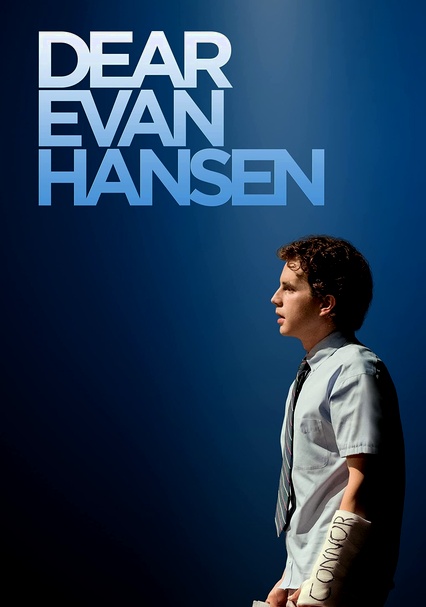
From the very first scene, Dear Evan Hansen (2021) grabbed me by the collar and never let me go. Providing an emotional wallop that mixes perfectly with meaningful and catchy pop songs, the film is one that nearly everyone can relate to.

The oftentimes painful world of teenage angst is the central storyline, and the dangerous and unfortunately too timely pandemic of mental illness is examined in heartwrenching form.

Dear Evan Hansen has a relevance that I found to be powerful and profound, leaving me not soon forgetful of the experience.

I had never seen the hugely popular Broadway stage version, so I only had a limited understanding of what the story was about going in.

Still, as much as the subject matter is of great importance, the film’s follow-through is what is tremendous and emotional, with superb acting all around.

Tony, Grammy, and Emmy Award winner Ben Platt reprises his stage role as the anxious, isolated high schooler named Evan Hansen who craves companionship and understanding.

He suffers the same quandary that many fellow teenagers face in a world rendered impersonal and heartless. He tries to survive the pressures and the chaos of the social-media age.

Lonely, he meets a young man named Connor Murphy (Colton Ryan) who is as wounded as Evan is. They have an odd first (and only) exchange after which Connor steals a therapy assignment of Evan’s, a letter to himself.

Soon after, Connor commits suicide, and his parents, played by Amy Adams and Danny Pino, assume that the boys were best friends.

Evan lies about the events to spare Connor’s parents, which ultimately leads to events spiraling out of control.

I’m well aware of the outpouring of negative reviews that have been hurled at the film, and I don’t understand nor agree with any of them.

My hunch is that the stage version may have been even more potent because it’s a live production and the raw emotion is right there, but the film does right by it.

Sure, Platt looks older than a teenager. The actor was twenty-seven years old when he filmed Dear Evan Hansen and a mere twenty-two or so when it appeared on Broadway, but so what? With talent as superior as he is, why cast a movie star?

I didn’t hear anyone complain when Olivia Newton-John played the iconic role of Sandy, a seventeen-year-old in Grease (1978) at the ripe old age of thirty.

Sometimes a suspension of disbelief is required.

Platt is a terrific casting choice and encompasses the role of Evan completely. He is shockingly good in dramatic scenes or when he comically fumbles over his words. His dramatic voice perfectly infuses the production’s most recognizable number You Will Be Found.

Besides, there are big stars in Dear Evan Hansen. Amy Adams plays the emotionally drained but hopeful Cynthia Murphy, blessed with affluence at the price of losing a son. Julianne Moore plays the haggard nurse and financially struggling mother of Evan.

Both are fabulous.

The film is directed by Stephen Chbosky, who is responsible for the terrific and sorely underappreciated film adaptation of the novel The Perks of Being a Wallflower (2012), which he also wrote. He knows how to tell a coming-of-age story.

There are a couple of foul balls to be aware of, but the emotion to be felt far exceeds these pesky matters.

The film occasionally overplays its casting with the inclusion of a few stock characters, like the Indian technology wizard and the perky, straight-A student with the same problems as everyone else. Still, the characters don’t have enough to do to make them bothersome.

The chemistry between Platt and Kaitlyn Dever as the romantic interest is only tepid, but I didn’t watch this film for the teen romance.

I could not disagree with the torrent of negative reviews for Dear Evan Hansen (2021) more, and urge anyone reading this review to take in the film and be prepared for a tearjerker that feels authentic and justified in its existence.

Booksmart-2019

Booksmart-2019

Director Olivia Wilde

Starring Beanie Feldstein, Kaitlyn Dever

Scott’s Review #1,113

Reviewed February 17, 2021

Grade: A-

I usually avoid teenage coming-of-age comedies, or more to the point, being not of that demographic, they are not usually even on my radar.

The only reason I saw Booksmart (2019) is for the Independent Spirit Award it won and the Golden Globe nomination it achieved. Still, I was skeptical of what the appeal of two female teenage bookworms who decide to become party animals would have on me.

Boy, was I wrong? The film is a fabulous and fast-paced experience that I enjoyed immensely.

Director Olivia Wilde, in her very first effort, delivers the goods, believe it or not. She takes a genre told to death and knocks it on its keister, offering a fresh and creative spin on a tried-and-true formula that feels anything but formulaic.

There is diversity, inclusiveness, and heart for miles without the feeling that these add-ons were done intentionally for a modern spin.

Before I get carried away too much Wilde carefully keeps the standard moments of teenage angst, rejection, breakups, and makeups, and there are one or two of the commonplace high school “types”- loner, jock, weirdo, etc. but evident is a strong LGBTQ+ stronghold including one of the leading female characters. Booksmart sure feels authentic to me.

Molly (Beanie Feldstein) and Amy are forever friends.

The girls study, they giggle, they hang out, and they share their problems, both sexual and otherwise, with each other. The kicker is that Molly is straight and Amy is gay. Amy is happily “out” and nobody gives a damn.

Her parents, played in small but juicy parts by Will Forte and Lisa Kudrow, are hilarious and progressive in their approach to understanding a gay child. They incorrectly assume that Molly and Amy are a couple, which the girls use to their advantage.

Anyway, Amy and Molly are intelligent and look forward to graduation day and attending great schools. Once they realize that their fellow students who, in their minds, slack off and party, are also going off to Ivy League schools, they panic.

They realize they have wasted four years studying and decide to finally let their hair down the night before graduation, intent on attending a popular boy’s (and Molly’s crush) party.

The situations the duo get themselves into are clever and witty, and the most fun in the film. Feldstein and Dever have exceptional chemistry, and I bought them as best friends from the moment of their first scene.

When they have a knock-down, drag-out argument towards the end of the film, it’s acting at its finest, which made me feel proud.

I admire young talent with great acting chops and pride in their craft, and Feldstein and Dever both have it.

Wilde peppers much of the film with hip and trendy pop songs that surprisingly enhance rather than detract from the viewer’s enjoyment. The lyrics match the specific events of the particular scene.

The romanticism is pivotal as the crushes Molly and Amy have are not necessarily who they wind up with at the end of the film, which naturally culminates on graduation day. I love how their ceremony includes no parents.

The creativity within Booksmart is admirable.

When Molly and Amy trip on a hallucinogen, they accidentally imagine they are Barbie dolls. The scene is laden with hilarity as they bend, twist, and turn. Later, Molly imagines a dance with Nick amid a colorful, slow-motion sequence that is beautiful, while Amy has an awkward, unexpected sexual experience with a mean girl.

Booksmart (2019) is quite R-rated, almost shockingly so, which is not a negative. It’s a positive. Too many films of this ilk try to soften how teenagers speak and the feelings they have, which are usually sexual.

It’s raunchy and not for the younger teen set, but mature audiences will reminisce about their high school days.

Independent Spirit Award Nominations: 1 win-Best First Feature (won)

J. Edgar-2011

J. Edgar-2011

Director Clint Eastwood

Starring Leonardo DiCaprio, Armie Hammer, Naomi Watts

Scott’s Review #1,099

Reviewed January 12, 2021

Grade: A

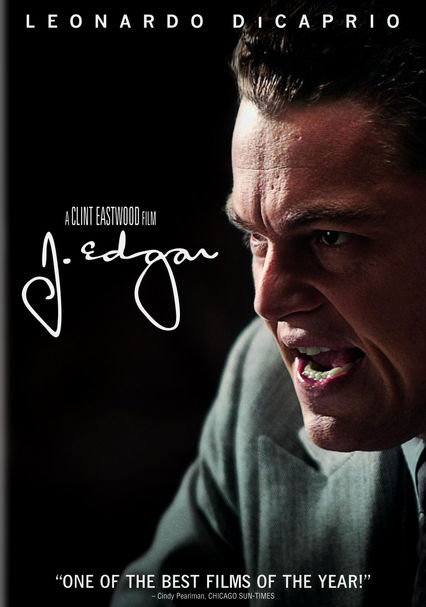
When director Clint Eastwood and actor Leonardo DiCaprio align, exceptional things can happen. This is evidenced by J. Edgar (2011), a compelling and well-constructed drama with a biographical and character-driven focus.

One gets inside the head and psyche of the title character, J. Edgar Hoover, the head of the Federal Bureau of Investigations, with DiCaprio playing him flawlessly.

The film is left-of-center, surprising for the mainstream director, though his film-making style is familiar. Eastwood does what he does best by constructing a slick and “Hollywood” experience.

There are not daring camera angles or unique uses of light that Stanley Kubrick might use.  He creates a steady affair that will appeal to the American heartland, getting butts to the movie theater on his name alone.

The film opens in 1919 when a young Hoover (DiCaprio) is tasked with purging radicals from the United States and obtaining their secrets, something he’d carry with him for decades. He meets a new Secretary, Helen Gandy (Naomi Watts), whom he makes an awkward pass and an even more awkward marriage proposal.

She refuses, and they become professional and personal allies.

The story then plods along with historical stops through the decades like the Lindbergh baby kidnapping, Martin Luther King Jr., and Richard Nixon.

Hoover is always involved in these escapades.

Hoover, who served as the head of the bureau from 1924 until he died in 1972, was a powerful and ruthless man.

Eastwood carefully dissects him, professionally and personally. He never married, lived with his mother, traveled, and enjoyed dinners with one man who in death, bequeathed his estate.

You do the math.

He was a gay man when one couldn’t be an openly gay man. Thus, he is conflicted, and Eastwood does a great job of showing the demons he wrestles with.

The relationship between Hoover and lawyer, Clyde Tolson (Armie Hammer) is my favorite part of J. Edgar because it’s interesting and humanistic.

DiCaprio and Hammer give outstanding performances with flawless chemistry and charisma.

When Hoover professes his love for Tolson and quickly recants his statement then professes love for an actress, we view his turmoil. He loves Tolson but cannot bear to accept it even though it would free him from his chains.

Despite the tender nature of the sequence above or that his mother was a traditional, no-nonsense, shrew, Hoover is not portrayed as a hero. He was a complicated and damaged man and Eastwood hits this point home.

He blackmailed Martin Luther King Jr., kept sexual secrets on several Hollywood stars, and participated in various abuses of power.

The film does admit that the director also instituted fingerprinting and forensic measures that reduced crime.

Those who desire a straightforward lesson in history may be slightly perturbed by the focus on Hoover’s personal life. Eastwood could have easily made Hoover’s career the only facet of the production-enough material that exists for this.

Instead, we get to see the inner workings of the man. Kudos for this.

Dustin Lance Black, who wrote Milk (2008), a portrait of a gay man, is back at the helm serving as a screenwriter. But the two films are not modeled after one another. They are very different animals.

While Milk celebrates a man refusing to deny who he and others are, demanding their just civil rights, J. Edgar provides the narrative of a man fleeing from who he is.

Offering a rich and complex biography of a tortured man, the audience is exposed to a person wrestling with inner turmoil. Hoover was a famous man, but the film could easily represent those thousands of men who could not bring themselves to accept who they were.

The largest praise goes to DiCaprio who makes us sympathize, pity, and admire the complexities of his character.

J. Edgar (2011) hits a grand slam.

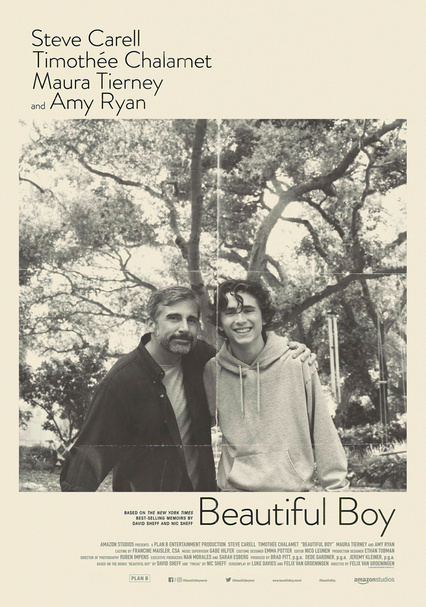
Beautiful Boy-2018

Beautiful Boy-2018

Director Felix Van Groeningen

Starring Steve Carell, Timothée Chalamet

Scott’s Review #835

Reviewed November 23, 2018

Grade: A-

Beautiful Boy (2018) tells a humanistic and vital story about the ravages of drug addiction and how the issue affects not only the person with an addiction but the entire family unit. Nestled within the powerful writing is a lovely father/son relationship and the duo’s trials and tribulations over the years.

The film feels pure and honest, with rich storytelling and many good acting performances.

Beginning in the present, David Sheff (Steve Carell) realizes that his son Nic (Timothée Chalamet) has been missing for two days. When Nic finally arrives at the Sheff household, he is strung out and sick.

David suspects Nic has been abusing drugs, and all parties agree that Nic needs professional help and a stint in a rehab facility. However, nobody realizes the depths of Nic’s addiction.

When Nic checks out early and goes on a bender, the film begins to segue back and forth between periods of Nic’s recovery and his many relapses. It also presents scenes of David and Nic’s relationship during their childhood years.

The best parts are the conversations and moments between father and son, and their enduring love. David’s second wife, Karen (Maura Tierney), and Nic’s mother, Vicki (Amy Ryan), are also in the mix.

The screenplay is based on memoirs written by David and Nic Sheff. The chronicles of their journey include triumph and heartbreak over many years as recovery and relapse become frequent parts of their lives, threatening to tear them apart or result in Nic’s ultimate death.

The road to recovery is not an easy path.

Carell and Chalamet wonderfully portray the primary characters, David and Nic. The fact that the actors do not resemble each other is quickly forgotten as their dynamic is emotional and palpable, and they share easy chemistry.

Carell is a strong actor, capable of infusing his character with strength and calm while slowly falling apart at the seams.

He loves his son and wants him to recover, but he finally accepts that he needs to let him go. This moving realization is Carell’s best scene.

Chalamet, boyish and innocent-looking, is perfectly cast. With kind blue eyes and a mop of raven hair, the actor could easily pass for twelve years old. This only enhances the tragedy of youth ravaged by drug abuse.

These qualities are mirrored by those of his girlfriend Lauren (Kaitlyn Dever). She also possesses a fresh-faced, clean look, which strengthens the message.

Ryan’s and Tierney’s performances in what could easily be throwaway “wife roles” must be mentioned.

For a while, I thought Tierney was in a marginal role until she finally had a wonderful scene in which her frustration reached a boiling point. Fuming with rage, she attempts a car chase with Nic, only to finally crumble into tears, realizing how the mess has changed her as a person.

Ryan also sinks her teeth into a teary role, almost blaming herself for Nic’s problems.

The film wisely presents statistics to hit home further, mainly the low percentage recovery rate of most crystal meth users. A single-digit success rate on this note is frightening; the user requires more and more substance to feel anything close to the first high they experienced.

A pivotal scene occurs at the film’s end as David and Karen attend a support group. As they tearfully listen to a woman’s story of the recent death of her addict sister, we are left to wonder if Nic has also died.

Kudos to a powerful cameo performance by actress Lisa Gay Hamilton.

The sunny California setting benefits the film and starkly contrasts the darkness of New York City, where Nic attends school. With multiple exterior shots of San Francisco and Los Angeles, the metropolitan scope is vast and cruel for drug users.

Easily accessible to anyone with the motivation to obtain drugs, the streets of San Francisco are portrayed as hard and drug-infused, mainly when David drives around desperately looking for Nic.

Featuring a story told before but rarely from the family perspective, Beautiful Boy (2018) does what it sets out to do and does it splendidly.

Careful not to soften the challenges and sufferings of the person with an addiction, the devastation they bring to their loved ones is also showcased. The sound and emotional father/son relationship may be the film’s best part.

The Spectacular Now-2013

The Spectacular Now-2013

Director James Ponsoldt

Starring Miles Teller, Shailene Woodley

Scott’s Review #161

70267439

Reviewed August 29, 2014

Grade: B

The Spectacular Now (2013) is a coming-of-age independent film that tells the story of a romance between two unlikely high school seniors.

Sutter (Miles Teller) is a popular student who takes a shine to smart loner Aimee (Shailene Woodley) and the two develop a strong bond as they each struggle with parental issues while being opposite social types.

She is college-bound and motivated, he lives in the now with no thoughts of the future. But somehow they forge a connection.

The success of this film lies with Teller and Woodley who each give nice performances and the chemistry between them is evident.

At first, I neither bought Teller as a traditionally popular kid nor Woodley as the friendless recluse, but somehow the film works as each has a rooting value to them.

Sutter’s ex-girlfriend Cassidy, whom he still has feelings for is played by Brie Larson, and the character is rather undeveloped, needless, and not much rooting value for her or competition for the main couple.

Interestingly, alcohol and alcoholism are touched on as the two leads drink quite heavily and regularly for being only eighteen years old, but glossed over.

I think the film is more about the romance between the two rather than any social issues.

There are capable supporting performances by Jennifer Jason Leigh, Kyle Chandler, and Mary Elizabeth Winstead.

Shailene Woodley received an Independent Spirit Award nomination for Best Actress, but Miles Teller received no nomination and I am surprised as I thought he was a bit better than she was and had the meatier role.

The Spectacular Now (2013) is hardly anything groundbreaking, but a nicely told story that is authentic and admirable for a teen film.

Independent Spirit Award Nominations: Best Female Lead-Shailene Woodley, Best Screenplay

Short Term 12-2013

Short Term 12-2013

Director Destin Daniel Cretton, Lakeith Stanfield

Starring Brie Larson

Scott’s Review #149

70272893

Reviewed August 6, 2014 

Grade: C+

Having just viewed Short Term 12 (2013), I am not sure I am getting all of the “this movie is brilliant” or “beyond amazing”, or glowing praise surrounding the film.

The film is set in a group home for troubled teens and centers around the supervisor of the home named Grace (Brie Larson). Grace runs the home with her boyfriend and other twenty-something, mostly former troubled youths.

The film’s focal point is Grace and both her problems (she is pregnant and her abusive father is being released from prison) and her relationships with the teens currently staying in the group home.

The film is fairly engaging but seems a bit forced and not gritty enough given the subject matter.

I enjoyed the relationship between Grace and a new charge, Jayden, whom she befriends. The group of teens is almost too perfectly cast, however- with a mix of races and stereotypes, the kids did not come across as genuine.

I would have liked to see more backstory for some of the kids besides the two that were given one.

Subjects were introduced but not followed through with- Why was Grace’s father never introduced onscreen? Where was the mother? Her childhood issues were mentioned only in passing. Some of Grace’s actions were unrealistic and out of character for a counseling supervisor.

Would she smash the windows of one of the teen’s father’s cars out of anger and not consider the repercussions? And what was with the constant poop jokes, especially in the first ten minutes?

That was dumb and out of place.

The film feels glossed over and I didn’t feel the realism- almost like a CBS television drama with swear words added to seem harsher. The subject was brave, but many more details could have been delved into and explored in Short Term 12 (2013).

Independent Spirit Award Nominations: 1 win-Best Female Lead-Brie Larson, Best Supporting Male-Lakeith Stanfield, Best Editing (won)